UNAIDS Executive Director and Inequality Council urge G20 to back bold network on medicine production and address the social determinants of pandemics
At the G20 preparatory meeting in Brazil, Executive Director of UNAIDS and Under-Secretary-General of the United Nations, Winnie Byanyima, today urged governments to support a new G20 Alliance, proposed by the Brazilian government, to enable life-saving medicines to be produced in every part of the world. Co-Chair of the Global Council on Inequality, AIDS, and Pandemics Sir Michael Marmot also called on G20 delegates to address the social determinants of pandemics, such as education and human…
New report from UNAIDS shows that AIDS can be ended by 2030 and outlines the path to get there
A new report released today by UNAIDS shows that there is a clear path that ends AIDS. This path will also help prepare for and tackle future pandemics and advance progress towards achieving the Sustainable Development Goals. The report, ‘The Path that Ends AIDS’, contains data and case studies which highlight that ending AIDS is a political and financial choice, and that the countries and leaders who are already following the path are achieving extraordinary results.

Improving data collection to improve national AIDS responses
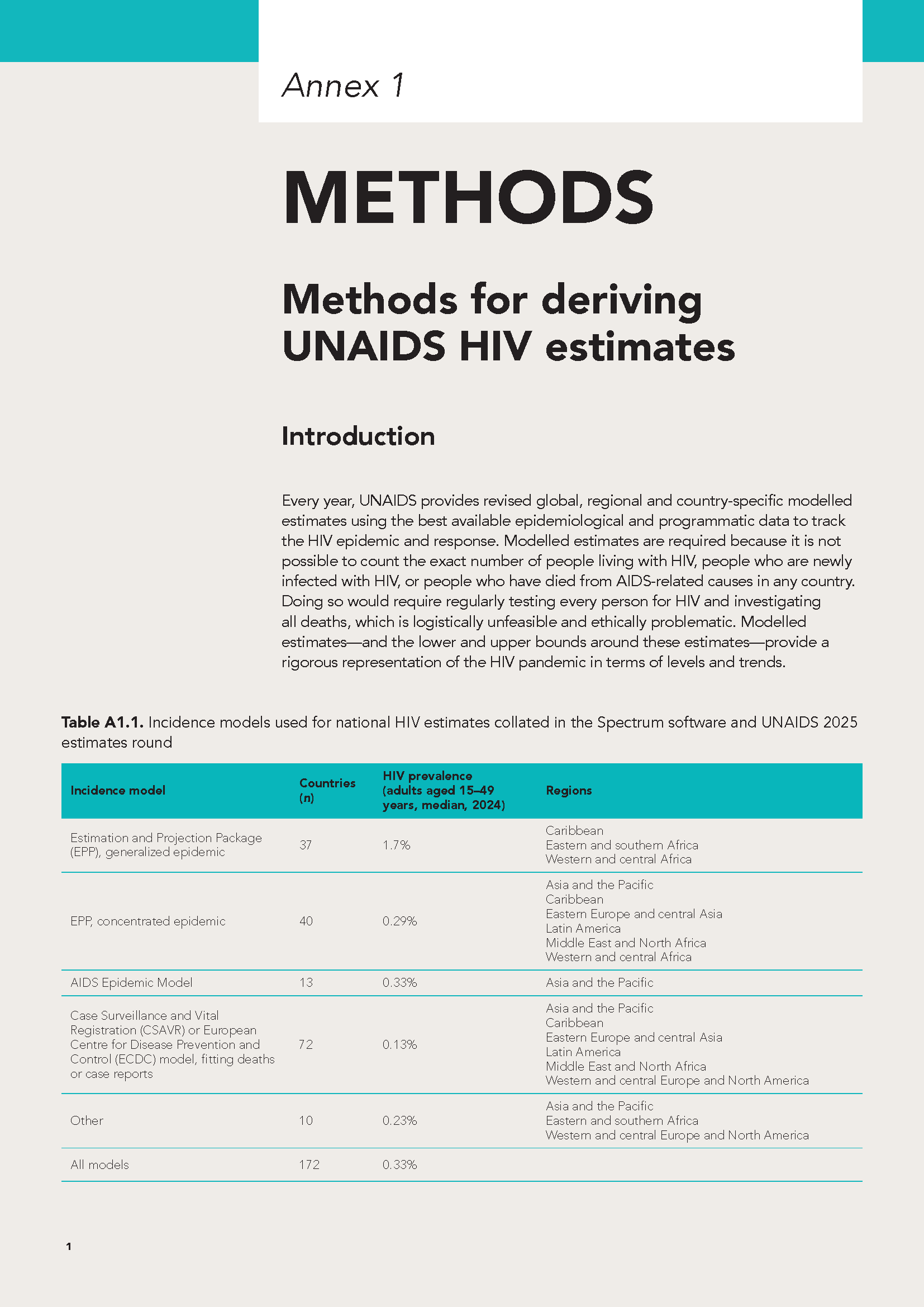
During a regional UNAIDS HIV estimates workshop in Bangkok, Thailand, groups gathered around laptops to discuss national insights, including the growing HIV infections among gay men and men who have sex with men (MSM) in the Philippines, the high mother-to-child transmission rate in India, and the expansion of the epidemic among some more at-risk groups.
Inequalities are blocking the end of the AIDS pandemic, say UN
Analysis by the UN ahead of World AIDS Day reveals that inequalities are obstructing the end of AIDS. On current trends the world will not meet agreed global targets on AIDS. But the new UNAIDS report, Dangerous Inequalities, shows that urgent action to tackle inequalities can get the AIDS response on track.
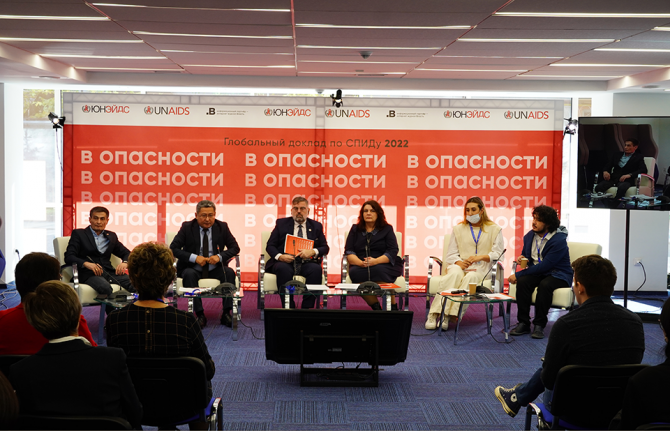
Eastern Europe and Central Asia may face an accelerated increase in new HIV infections and AIDS-related deaths because of the humanitarian crisis gripping the entire region
Global shocks, including the COVID-19 pandemic and the war in Ukraine, have further exacerbated risks for the HIV response in Eastern Europe and Central Asia. The growing HIV epidemic and several waves of migration and refugee crises in the region require urgent and considerable efforts to ensure access to essential HIV services for all people in need. Officials and community representatives from several countries of the region have discussed how to address those challenges using the…
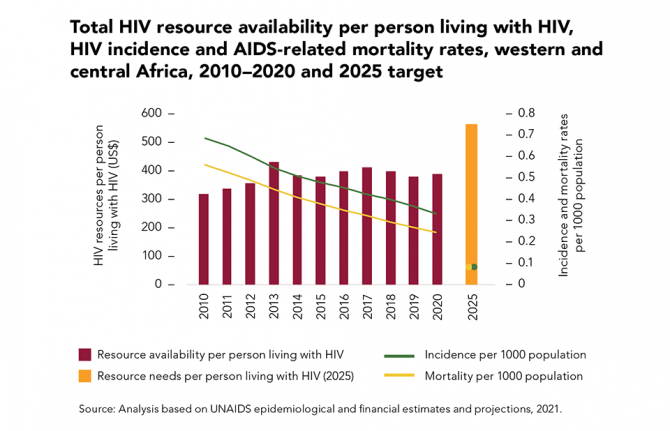
Financial shortfalls hold back the HIV response in western and central Africa
Underinvestment in the HIV responses of low- and middle-income countries was a major reason why the global targets for 2020 were missed. Financial resource availability during the past five years was consistently below the resources needed, and in 2020 it was 29% less than the US$ 26 billion target for that year (in constant 2016 US dollars).
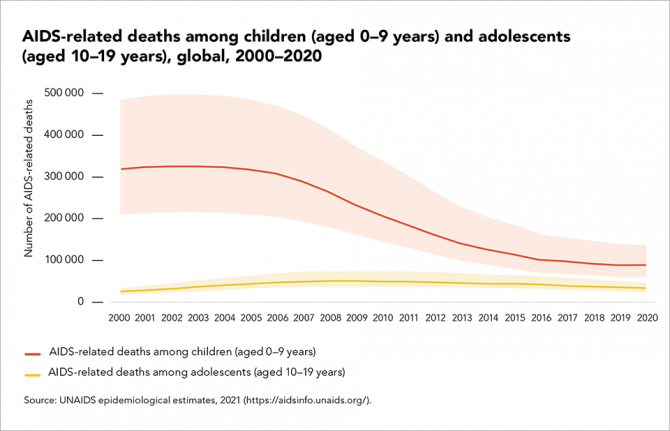
Slow progress on AIDS-related deaths among adolescents
Current inequalities in HIV testing and treatment for children living with HIV and trends in historical coverage of services to prevent vertical (mother-to-child) transmission of HIV are driving year-on-year trends in AIDS-related mortality.

UNAIDS report shows that people living with HIV face a double jeopardy, HIV and COVID-19, while key populations and children continue to be left behind in access to HIV services
The UNAIDS Global AIDS Update 2021, launched today, highlights evidence that people living with HIV are more vulnerable to COVID-19, but that widening inequalities are preventing them from accessing COVID-19 vaccines and HIV services.
Forty years on and new UNAIDS report gives evidence that we can end AIDS
UNAIDS urges world leaders to adopt a bold political declaration on HIV at the United Nations General Assembly High-Level Meeting on AIDS, being held in New York and online next week, and to commit to achieving a new set of targets for 2025 to end AIDS by 2030
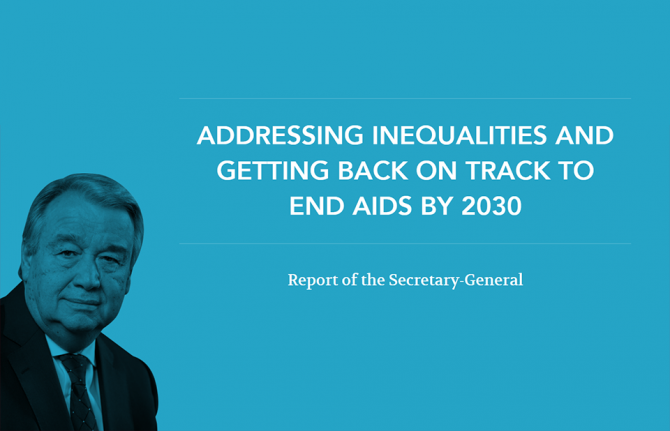
United Nations Secretary-General calls for a greater focus on ending inequalities to end AIDS
Forty years since the first AIDS cases were reported and just weeks before the United Nations General Assembly High-Level Meeting on AIDS, the United Nations Secretary-General has released a new report with recommendations and targets to get the world back on track to end AIDS