UNAIDS appoints the artist OUM as National Goodwill Ambassador in Morocco
MHAMID AL GHIZLANE, 2 November 2024 — The Joint United Nations Programme on HIV/AIDS (UNAIDS) is pleased to announce the appointment of renowned Moroccan artist OUM as its National Goodwill Ambassador in Morocco. The prestigious announcement was made at the Taragalte Festival, held from November 1-3, 2024, in Mhamid El Ghizlane, where OUM proudly serves as the festival's ‘Godmother.’ OUM’s influence and commitment to social change will play a vital role in UNAIDS' efforts to combat HIV/AIDS in…
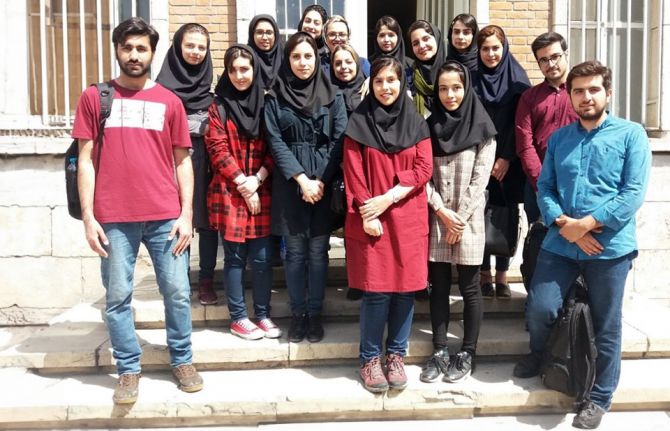
A transformative journey: Parisa's decades-long battle against HIV stigma and discrimination
Undeterred by adversity, Parisa embarked on a relentless mission for human rights, determined to combat the pervasive stigma and discrimination surrounding HIV. Initially, she immersed herself in seminars and conferences, volunteering tirelessly at counselling centres, where she shared her own experiences to chip away at the stigma and discrimination.
UNAIDS expresses deep concern over the passing of new anti-LGBT legislation in Iraq
The Joint United Nations Programme on HIV/AIDS (UNAIDS) is deeply concerned about the impact of the harmful new legislation in Iraq amending the 1988 anti-sex work law to criminalize LGBTQ+ people. The legislation imposes a prison sentence of between 10 and 15 years for same-sex sexual relations. Transgender people face up to three years imprisonment for expressing their gender or receiving gender affirmation care. Individuals also face up to seven years for promoting homosexuality. And up to…
![Sudanese refugees gather as Doctors Without Borders (MSF) teams assist the war wounded from West Darfur, Sudan, in Adre hospital, Chad on June 16, 2023 [Mohammad Ghannam/MSF via Reuters]](/sites/default/files/styles/large/public/sudan_960.jpg?itok=fqyF8jis "Sudanese refugees gather as Doctors Without Borders (MSF) teams assist the war wounded from West Darfur, Sudan, in Adre hospital, Chad on June 16, 2023 [Mohammad Ghannam/MSF via Reuters]")
Sudan’s unsung heroes: Protecting people living with and affected by HIV amidst conflict and famine
One year ago, on 15 April 2023, armed conflict broke out in Sudan between the Sudanese Armed Forces and the Sudanese Rapid Support Forces. Since then, the situation has worsened. The hostilities, which were initially centred in Khartoum State, have intensified and rendered over half the country inaccessible.
Regional network of people living with HIV launched in the Middle East and North Africa
The HIV epidemic in the Middle East and North Africa is still growing—an estimated 20 000 new HIV infections in 2019 marked a 25% increase over the 16 000 new infections in 2010. The region is far from controlling its HIV epidemic and HIV treatment coverage is low, with only 38% of people living with HIV accessing HIV treatment in 2019, resulting in 8000 people dying from AIDS-related illnesses in the region.
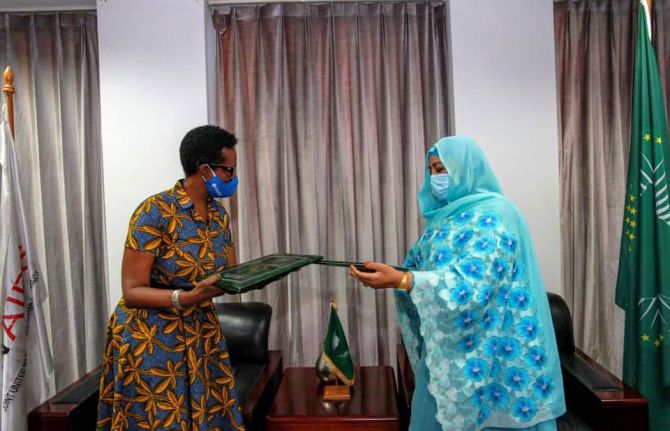
UNAIDS renews partnership with the African Union for a stronger and more resilient AIDS response in Africa
UNAIDS and the African Union have signed a new memorandum of understanding (MoU) to reinforce their partnership and to recommit member states to end AIDS through the Catalytic Framework to End AIDS, TB and Eliminate Malaria in Africa by 2030.
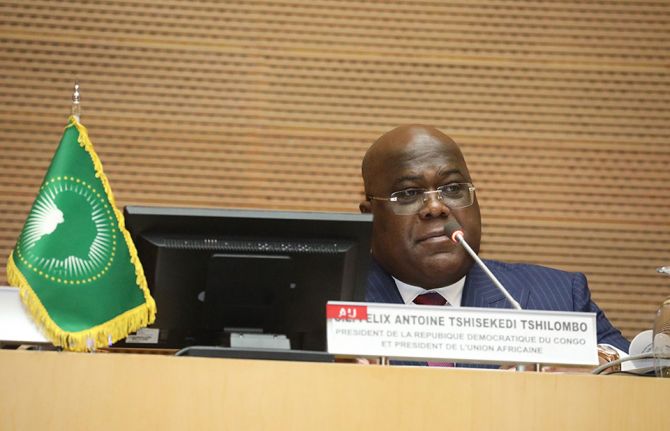
Félix Tshisekedi, President of the Democratic Republic of the Congo and 2021 African Union Chair, calls on his peers to learn from HIV and strengthen health systems
The President of the Democratic Republic of the Congo and new Chair of the African Union, Félix Tshisekedi, urged Member States not to forget devastating global epidemics, such as malaria and AIDS, and learn from them to strengthen health systems, including the reinforcement of the Africa Centers for Disease Control and Prevention.
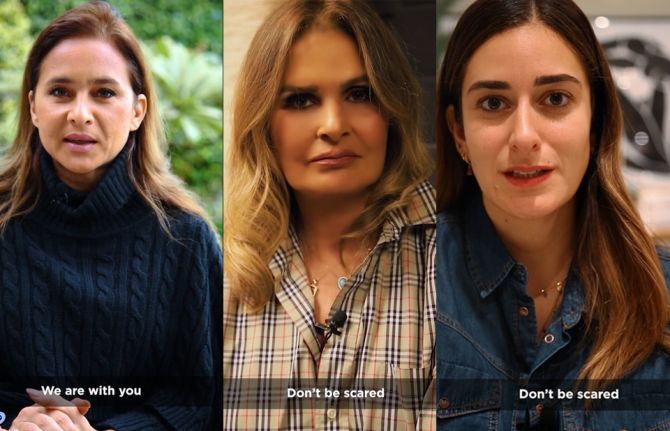
New awareness campaign on gender-based violence in the Middle East and North Africa
Like HIV, the COVID-19 pandemic thrives on inequalities and inequities. In addition to its impact on people’s health, the COVID-19 pandemic has resulted in significant increases in gender-based violence around the globe, including in the Middle East and North Africa.
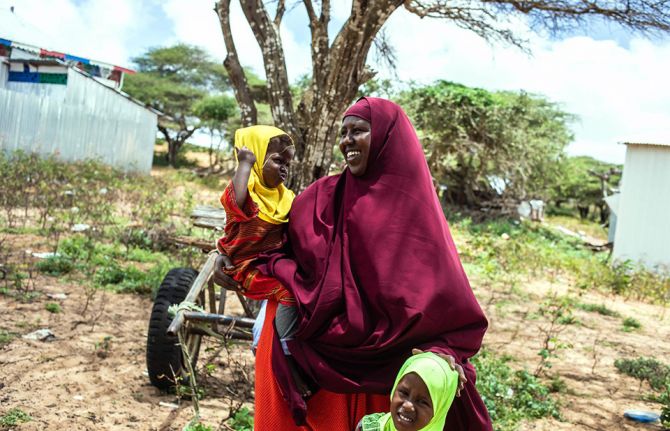
Somalia: building a stronger primary health care system
In the first year of the Stronger Collaboration, Better Health: The Global Action Plan for Healthy Lives and Well-being for All (GAP), 12 signatory agencies have engaged with several countries to help them achieve their major health priorities. The initial focus has been on strengthening primary health care and sustainable financing for health. Somalia is one of the countries where progress under the GAP is most advanced and where its added value has been most clearly demonstrated.

UNAIDS supporting people stranded in Egypt to access HIV treatment
The UNAIDS Country Office for Egypt has been working on COVID-19 from the start of the pandemic in the country, establishing a direct line of communication with the National AIDS Program and working with it to ensure the continuation of HIV treatment by everyone on it and to help non-nationals in Egypt to get supplies of antiretroviral therapy.