

Feature Story
Church strengthens role in AIDS response
15 septembre 2006
15 septembre 2006 15 septembre 2006
“Every person living with HIV should have access to the treatments made available by medical science and churches must advocate for this to happen,” was the powerful declaration that came out of the first meeting of the current Central Committee of the World Council of Churches (WCC).
The declaration was part of a ‘Statement on churches’ compassionate response to HIV and AIDS,’ which was adopted by the Central Committee (the main decision-making body of the WCC) in Geneva at the beginning of September. The Statement on AIDS is the third of its kind to be issued by the Committee since 1986.
“It is commendable that the Central Committee has produced such a strong statement on churches’ response to HIV,” said Calle Almedal, UNAIDS Senior Adviser, Partnerships Development. “The statement is substantive and will encourage dialogue within the Church on many difficult AIDS-related issues.”
The ecumenical movement has been engaged in the AIDS response for over 20 years. As early as 1986 the executive committee of the WCC cautioned, “Churches as institutions have been slow to speak and to act, that many Christians have been quick to judge and condemn many of the people who have fallen prey to [HIV]; and that through their silence, many churches share responsibility for the fear that has swept our world more quickly than the virus itself.”
In the newly adopted Statement, the Committee calls on churches and Christians to promote greater involvement of people living with HIV in churches’ response to the epidemic and to adopt inclusive workplace policies for people living with HIV. It also acknowledges that, “Many of us (churches) have been complicit in stigmatizing and marginalizing people living with HIV by their silence, their words and their deeds.”
The statement also recognises that churches need to promote open discussions on issues related to sexuality, gender-based violence and intravenous drug use. It also focuses on areas of churches’ response to AIDS where there is continual disagreement and called for reflection on churches’ response to those who engage in high risk sexual activity or drug use including the appropriate means of prevention.

Photo credit: World Council of Churches.
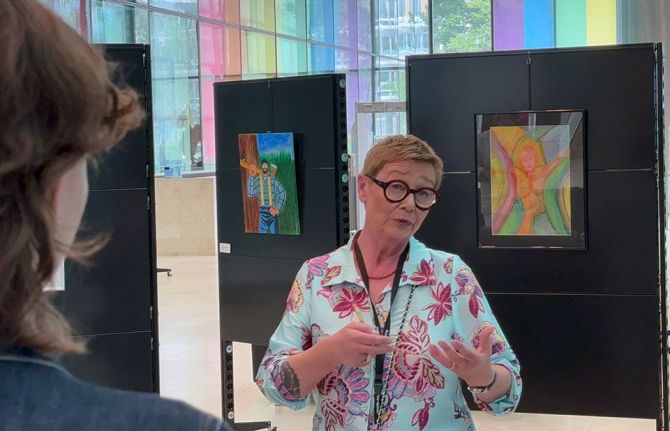
Rev. Samuel Kobia addressing the Indigenous Peoples'
pre-Assembly meeting, February 2006
“Churches in particular need to correct the flawed theology and practices that equate sin with disease and that put morality over compassion," said Reverend Dr Samuel Kobia, WCC general secretary.
UNAIDS supports churches’ efforts to reach out to their own membership to make all churches safe places for people living with HIV to talk openly without fear of stigma and discrimination. UNAIDS also supports churches in their outreach efforts in comprehensive prevention, care and support for all affected groups and recognizes that their vision on working with AIDS is with a very long term perspective. Furthermore UNAIDS gives technical assistance on AIDS to, and collaborates with, churches working on HIV related theology, and sees this as sustainable development in the AIDS response.
In an effort to encourage churches to be more inclusive of people living with HIV, the WCC recently teamed-up with key partners in the AIDS response including the African Network of Religious Partners living with or personally affected by HIV, the Global Network of People Living with HIV and the International Community of Women Living with HIV on a campaign to provide guidance to churches in encouraging the active participation of people living with HIV in church life.
The WCC's Ecumenical HIV/AIDS Initiative in Africa (EHAIA), launched in 2002 has been encouraging churches to become ‘HIV competent’ in order to; indicate clearly that stigma and discrimination against people living with HIV is against the will of God; understand fully the severity of the AIDS epidemic in Africa; take into consideration pastoral, cultural and gender issues; and use its resources and structures to provide care, counselling and support for those affected.
Dr Manoj Kurian, the WCC programme executive for health and healing, said “The EHAIA is responding to the burning needs of people. Through its five EHAIA offices the WCC is making it possible for church leaders and their congregations to speak honestly about AIDS, formulate relevant liturgy and theology, and to act practically in response.”
The World Council of Churches brings together more than 340 churches, denominations and church fellowships in over 100 countries and territories throughout the world and represents more than 560 million Christians. For more information visit http://www.oikoumene.org/
Related links:
The Central Committee of the World Council of Churches "Statement on churches' compassionate response to HIV and AIDS"

Feature Story
Tajikistan and Kyrgyzstan: a window of opportunity
14 septembre 2006
14 septembre 2006 14 septembre 2006
While the AIDS epidemic in Eastern Europe and Central Asia continues to grow and is affecting more and more societies in this region, the epidemics in Tajikistan and Kyrgyzstan have remained relatively small.
In 2005 UNAIDS estimated that 4,900 people were living with HIV in Tajikistan and 4,000 in Kyrgyzstan. That same year, it was estimated that AIDS claimed less than 100 lives in each country.
During her visit to the region in July 2006, the UN Secretary General’s Special Envoy on HIV/AIDS in Asia and the Pacific Dr. Nafis Sadik, congratulated both countries for their efforts to prevent the spread of HIV, saying that with continued national leadership and international assistance Tajikistan and Kyrgyzstan had a real possibility getting ahead of the epidemic.
However, despite the relatively low numbers of people living with HIV and of AIDS-related deaths in both countries, recent surveys show evidence of growing numbers of HIV infections among injecting drug users, prisoners and sex workers.
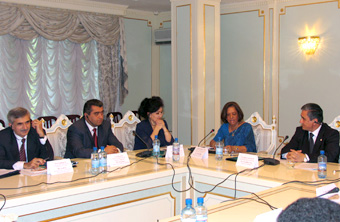
(left to right): Dr Amanullo Gaibov, Secretary of National Coordination Committee on HIV/AIDS, Tuberculosis and Malaria of the Republic of Tajikistan; Dr Zievuddin Avgonov, Deputy Minister of Health of the Republic of Tajikistan; Dr Rano Abdurakhmanova, Director of Department on Social, Health, Women and Family Affairs, President’s Office of the Republic of Tajikistan; Dr Nafis Sadik, UN Secretary General’s Special Envoy on HIV/AIDS in Asia and the Pacific; Dr Nusratullo Faizulloyev, Minister of Health of the Republic of Tajikistan (Chair of the Partnership Forum)
“This data is very alarming, since there are many factors that contribute to the spread of the HIV epidemic,” said the Minister of Health, Dr. Faisullaev during a presentation of the country’s National Plan on AIDS. “If we continue the way we do the HIV epidemic will become generalized,” he added.
Underlining her call for continued comprehensive efforts to curb the epidemic, Dr. Sadik stressed that HIV prevention must be the mainstay of the national response, and urged both governments to commit to ensuring that a wide range of prevention programmes are made available to the general population through high-level advocacy and education at the national and regional level. “To be successful, HIV prevention must make use of all approaches known to be effective, not implementing exclusively one or a few select actions in isolation,” said Dr. Sadik.
Dr Sadik also emphasized that all stakeholders must be involved in the response to AIDS, especially with regard to prevention activities. In Tajikistan she met with a group of women’s NGOs and with a group of people living with HIV to learn more about their situation, what they need and how they can contribute to the AIDS response.
Acknowledging that faith based organizations have a critical role to play, Dr Sadik also met with the rector of the Tajik Islamic University to advocate for greater involvement of faith based organizations. She also discussed with him the importance of preventing and reducing the stigmatization of people living with HIV, promoting tolerant attitudes, the protection of women’s rights in reproductive health and the prevention of sexually transmitted diseases.
(left to right): Dr Nafis Sadik, UN Secretary General’s Special Envoy on HIV/AIDS in Asia and the Pacific and Mr Felix Kulov, Prime-Minister of Kyrgyz Republic.
“Tajikistan and Kyrgyzstan provide living examples that prevention works to contain the epidemic,” said Dr Sergei Furgal from UNAIDS European Regional Support Team in Geneva. “Their efforts should be acknowledged and some countries may find lessons to draw from their experience with HIV,” he added.
Related links
More on Tajikistan
More on Kyrgyzstan
Related

 Cities leading the way to achieving key targets in the HIV response
27 septembre 2023
Feature Story
China’s Olympic effort to raise AIDS awareness
12 septembre 2006
12 septembre 2006 12 septembre 2006In 2008, top athletes from around the world will gather in China to attempt to run, jump, swim and pole-vault themselves into the records book at the XXIX Olympic Games. And as China warms up to host the games, building of stadiums and amenities across the country, a parallel initiative is taking place to raise awareness about HIV among the thousands of construction workers involved in preparing Beijing for the Olympics.

More than 200 workers gathered at one such awareness raising activity held recently at a construction site in Beijing. Through exhibitions and the distribution of AIDS-related pamphlets, posters, playing cards and condoms, workers were able to find out information about HIV and how to protect themselves and others. A special question and answer session, informative entertainment and other awareness raising activities were conducted.
Organized by the China AIDS/STD Prevention and Control Foundation and the Beijing Health Bureau, the event involved special presentations by UNAIDS Executive Director Peter Piot, the Beijing Construction Commission, a worker on one of the sites and the China AIDS Prevention Foundation.
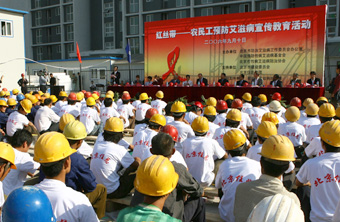
“Targeting workers involved in the construction of Olympic venues as well as workers at the many other building sites all over China is an extremely important and big task. Migrant workers are often particularly vulnerable and at risk as they are away from their families for very long periods of time and can lack the information and skills necessary to protect themselves from HIV,” said Mr. Joel Rehnstrom, UNAIDS Country Coordinator in China.
The initiative for raising awareness among migrant workers was launched in 2005 by the State Council AIDS Working Committee office together with 12 government ministries. The initiative is being rolled out over 20 Olympic sites over the next six months. With many construction workers coming from different parts of China specifically to build the facilities, the events aim to reach out to as many people as possible from a wide variety of communities and backgrounds and to highlight sport as a key arena for promoting HIV prevention activities, particularly among young people.
In 2004, UNAIDS signed a Memorandum of Understanding with the International Olympics Committee, combining efforts to enhance the role of sports organisations in the fight against AIDS at community and national levels, and to organize AIDS awareness activities with coaches, athletes and sports personalities.
Photo credit: UNAIDS/Li Mingfang
Related links
UNAIDS Executive Director visits China 7-12 September
UNAIDS China website
Related
Cities leading the way to achieving key targets in the HIV response
27 septembre 2023
Feature Story
China province project reaches out to young people
06 septembre 2006
06 septembre 2006 06 septembre 2006The guidebooks call it ‘remote’, ‘undiscovered’ – China’s south-western province of Guizhou is home to some examples of extreme natural beauty including China’s largest waterfall, the ‘Huangguoshu’ and the Zhijin Caves, famous for their massive-scale stalagmite stone pillars.
But despite its remote location and idyllic surroundings, the province, like every other in China, is increasingly affected by HIV. From a few individual reported cases in 1993, it is currently estimated that about 37,000 people in Guizhou are living with HIV. There are signs of the epidemic becoming progressively generalized and increasingly women are becoming infected.
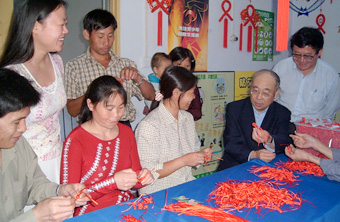
With hope and help – A self-help group for people living with HIV in Guizhou
A joint HIV prevention and care project, run by Guizhou provincial authorities, and UNAIDS` Cosponsor UNICEF is making some headway towards tackling the growing figures and at the same time involving people and groups from all sectors in the AIDS response. Established in 2001, the project focuses particularly on young people, tackling the often difficult issue of injecting drug use and its crossover with HIV, as well as providing care and support for people living with HIV.
“The initiative contains three key areas – development of a strategic plan on AIDS involving high-level advocacy and media mobilization; HIV prevention among children and young people in and out of school and within drug rehabilitation centres; and care and support to children living with HIV and their families,” said Christian Voumard, UNICEF Representative and chairman of the UN theme group on AIDS in China.
The project aims to build and involve all key officials and provincial groups in the AIDS response. Vice Provincial Governor of Guizhou Wu Jiafu underlines how the initiative has helped bring people together. “As government officials, we now know how we can work together with multiple sectors to confront AIDS and support people living with and affected by HIV. This network is now implementing the national policies and local policies to support young people, people living with HIV and their families to fight against the disease and its social impact,” he said.
“Though the resources here are very limited, we’re confident that we can get ahead of the HIV epidemic with the participation of all these young people and people infected and affected,” he added.
Results so far have been extremely encouraging. Provincial policies on HIV have been put in place and training sessions with authorities and project managers are already underway. Since the project’s inception, 45 high schools have developed curriculum on HIV and drug use prevention in eight of the province’s prefectures, reaching more than 70,000 children and young people.
Voluntary testing and counselling services have been set up within seven drug rehabilitation centres across the province.
“By knowing my HIV status and with all the knowledge of prevention of HIV, I will stop sharing needles with my friends and engaging in high risk sex,” said one young man at the Tongren prefecture drug rehabilitation centre.
Through the initiative, gradually people living with HIV are being brought to the forefront of the response in the province. A number of self-help groups of people living with HIV have been developed with the participation of 50 people living with HIV. More than 100 family members and 26 children and their families participated in care and support campaigns in the prefectures of Guiyang and Tongren, receiving community based care for family life and schooling.
“I never imagined it could be possible that authorities and big organizations would care about us –people living with HIV—and our children,” said one man living with HIV from Tongren prefecture who has been involved in the programme. “I lost my hope because of the pain of disease, social discrimination and poverty, but this is helping to restore the hope by supporting me and my children.”
UNICEF was the first major donor on AIDS in Guizhou province and provided some of the ground work for other donors’ work in the area. Programmes supported by the US Center for Disease Control and the Global Fund to Fight AIDS, TB and Malaria (Round 4) have since benefited from this in their support to Guizhou.
UNICEF will continue to support the project in their new 2006-2010 programme and activities will be expanded to include prevention of mother to child transmission of HIV (PMTCT) and increasing care and support for children affected by AIDS.

The joint project in Guizhou is focusing particularly on young people
“This programme has been an example of bringing together a variety of different groups within the AIDS response – and crucially invovles young people and people living with HIV,” said UNAIDS Country Coordinator for China, Joel Rehnstrom.
“We are seeing the project help reduce numbers of new infections, as well as break down the barriers and taboos of involving people living with HIV – which in turn is breaking down stigma and discrimination related to HIV.”
UNAIDS Executive Director Peter Piot is visiting China from 7 – 12 September to encourage continued leadership and commitment and to mobilize a truly multi-sectoral response to AIDS in China. As part of his visit, Dr Piot is participating in a three-day mission to Guizhou, visiting the Hui Long community and Zhijing County. Dr Piot will meet with representatives of provincial government and city leaders and visit various key sites that focusing on HIV and drug use.
Related links
UNICEF China website
More on China
Related
Feature Story
Summer caravan drives forward HIV prevention efforts in Morocco
04 septembre 2006
04 septembre 2006 04 septembre 2006Caravanning in Morocco has taken a whole new meaning with a special summer caravan travelling around the country in a quest to raise awareness about HIV prevention among young people.
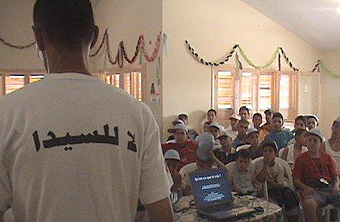
Parking at some of Morocco’s most popular resorts from the Atlantic and Mediterranean coasts to the remote Atlas Mountains sites, the caravan has visited 19 youth campsites where more than 7000 young men and women have stayed during their holidays.
The SIDAmobile initiative’s caravan is run by the Moroccan-based organization ‘Association de Lutte Contre le SIDA’ in Morocco (ALCS) and the Ministry of State for Youth.
“In Morocco, we are very sensitized to the importance of intensifying prevention efforts towards young people because they are particularly vulnerable to HIV infection and also because they represent the future,” said President of the ALCS, Hakima Himmich.
At each stopover, the facilitators –all doctors who have been specially trained to work with young people on the issue of HIV— initiated open and frank discussions about sex and sexually transmitted diseases (STDs). In less than a month, the caravan distributed some 35 000 flyers on HIV and 15 000 condoms were given to young people at their request. Also more than 700 people asked for, and received, a confidential HIV test with counselling.
“It’s the first time I have done an HIV test”, said a participant of the summer camp Assilah Corniche. “There is nothing wrong about it but it’s not very common in my neighborhood to be open about sex, especially for girls.”
“It’s good to learn about HIV and how it spreads,” added another young woman in the same campsite. “Now I know how people become infected with HIV and I learned how to protect myself,” she added.
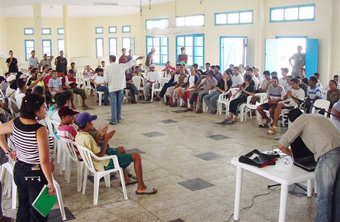
In Morocco, only an estimated 12% of women aged 15 to 24 are able to identify ways to prevent HIV. “We are trying to create an environment that enables people, especially the younger ones, overcome some of the taboo associated with sex and give them an opportunity to talk about their concerns and ask questions,” said My Ahmed Douraidi from ALCS and coordinator of the SIDAmobile initiative. “This is the first step for any HIV prevention work,” he added.
Praising this grass root prevention initiative and recognizing the importance of high level leadership and commitment, Kamal Alami from UNAIDS office in Morocco said that “HIV prevention on the ground is far more effective when programmes are tailored to audiences”.
“In Morocco, the high level support we receive creates many opportunities, such as music festivals, popular celebrations etc. that we can seize to disseminate prevention messages among young people,” he added.
The summer caravan stems from a collaborative effort between ALCS, the State Secretary for Youth and the United Nations Population Fund (UNFPA)
Related links
United Nations Population Fund (UNFPA)
Association de Lutte Contre le SIDA (ALCS)
Related
Feature Story
Universal access: New push from African civil society
01 septembre 2006
01 septembre 2006 01 septembre 2006UNAIDS welcomes the African Civil Society Coalition as a significant stakeholder in the process to move towards universal access by 2010.
Thirty representatives from the African Civil Society Coalition on HIV and AIDS attended the International AIDS Conference in Toronto to push forward the agenda on universal access to prevention, treatment, care and support for all Africans.

The African Civil Society Coalition was recently established to work on key advocacy challenges in Africa, review AIDS strategies and provide a platform for energising HIV and AIDS campaigns by African civil society groups. The Coalition joins together a range of civil society groups including, women’s groups, youth networks, associations of people living with HIV, the media and faith based organisations.
The Toronto conference was an opportunity not only for the Coalition to promote the need to scale-up the response in Africa at an international level, but was also a chance to meet with other key actors to discuss ways forward and the active involvement and participation of African civil society in the decision making processes.
“It is extremely important that such a Coalition exists,” said UNAIDS’ Director of Country and Regional Support, Michel Sidibe. “It empowers small scale organizations and gives them more visibility at regional and international level”.
Midway through the conference, the Coalition met with the Joint United Nations Programme on HIV/AIDS (UNAIDS) to discuss practical steps for ensuring that the Coalition is fully involved in the process of setting national targets to scale up towards universal access to HIV prevention, treatment, care and support by 2010.

UNAIDS is urging countries to set up, through transparent and fully inclusive processes, ambitious national targets to move towards universal access. As agreed in the Political Declaration adopted in June at the 2006 United Nations High Level Review. “We believe that at this period in history, when the world seems to be united in the drive towards achieving universal access, African civil society groups must come together strongly to play critical roles in the national and regional responses,” said Omololu Falobi from the Nigerian non governmental organization, Journalists Against AIDS. “Civil society must play an active role with national governments, regional institutions such as the African Union and stakeholders such as UNAIDS in the movement to scale up the AIDS response,” he added.
Members of the Coalition are meeting in Mombassa, Kenya mid-September, to develop strategic directions for enhanced civil society participation in target-setting process and in monitoring accountability by African governments towards universal access benchmarks for 2008 and 2010.
UNAIDS encourages similar civil society networking initiatives around the world. “The movement to scale up towards universal access is a momentum that we have to seize together. Because mutual accountability will produce better results, we will seek every opportunity to build bridges between state and non state actors,” said Michel Sidibe.
The XVI International AIDS Conference, a biennial event, this year brought together some 24,000 participants from around the world to present the latest findings and share the latest evidence, ideas and lessons learned in AIDS research, policies and programmes.
Related links
UNAIDS at XVI International AIDS Conference
The partners of the African Civil Society Coalition on HIV and AIDS include:
AIDS Rights Alliance of Southern Africa
ActionAid International - Africa
African Council of AIDS Service Organisations (AfriCASO)
African Microbicides Advocacy Group (AMAG)
Central African Network of AIDS Service Organisations (CANASO)
Civil Society Network on HIV/AIDS in Nigeria (CISHAN)
CREDO for Freedom of Expression and Associated Rights
Eastern African National Network of AIDS Service Organisations (EANNASO)
Global Youth Coalition on AIDS (GYCA)
Journalists Against AIDS (JAAIDS) Nigeria
Network of African People Living with HIV/AIDS (NAP+)
Treatment Action Campaign (TAC)
Open Society Initiative for Southern Africa (OSISA)
Oxfam International
Panos Institute Global AIDS Programme
Southern African AIDS Information Dissemination Service (SAfAIDS)
Society for Women and AIDS in Africa (SWAA)
World AIDS Campaign
Related
 Empowering youth to lead Togo’s HIV response
31 octobre 2024
 Interactive health and HIV game app reaches more than 300 000 young people in Côte d’Ivoire
09 septembre 2024
 Bridging gaps: sex education saves lives in Central African Republic
03 septembre 2024
Feature Story
Revival of old traditions brings hope to orphans in Swaziland
30 août 2006
30 août 2006 30 août 2006In times gone by, the ‘KaGogo’ (literally ‘grandmother’s house’) was an integral part of every Swazi homestead – a place of refuge or a neutral site for discussing family matters and resolving disputes. Now the spirit of ‘KaGogo’ is being revived as a way of mobilizing communities in the response to HIV.
Heralded as an example of ‘best practice’ by UNAIDS, KaGogo social centres are being constructed across the country to serve as a meeting place for orphaned children where HIV prevention, care and support activities can take place. Often centres are doubling up as ‘Neighbourhood Care Points’, where education and food are provided.
“Using KaGogo social centres as part of the AIDS response in Swaziland is a new initiative based on traditional ways which people understand and respect,” said UNAIDS Country Coordinator in Swaziland, Mulunesh Tennagashaw. “They empower local communities to look after their orphaned children within their own traditional structure.”
The KaGogo centres respond to the need to support the overwhelming numbers of orphans in Swaziland. There are currently an estimated 63,000 children orphaned by AIDS and extended families are finding it increasingly difficult to cope.
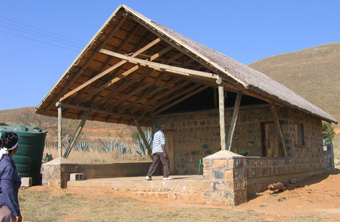
One of the new 'KaGogo' social centres in Swaziland, traditional meeting places now being used to provide essential services for orphaned children. Credit: UNAIDS/R. Evans
Construction of the centres began in 2003 and the KaGogo programme has made huge progress in a very short time. So far 50% of the centres have been completed nation-wide, and a further 30% have been constructed up to roof level. All the KaGogo social centres in Swaziland have been built by the communities themselves who provided labour and local materials.
Mambane’s KaGogo Centre
The KaGogo centre in the Mambane Community, Lubombo region—one of the most remote, poorest and driest parts of Swaziland—is built solidly out of local stone and has a large, airy veranda where meetings are held. It also doubles up as the Neighbourhood Care Point where food and education are provided—the only one in the community.
Under the thatched veranda about 40 children sit on plastic chairs doing sums in shared, well-thumbed maths sheets. The children range in age from seven to 17 years of age. For these and over 40 others registered with the centre, these represent their only school lessons. In addition to educational support, the children are provided with two meals of maize porridge and bean soup a day.
Lungile Matse is one of the volunteer teachers and a caregiver at the KaGogo centre. Recently widowed, and with five children of her own to care for, she still finds time to come to the centre every morning, five days a week.
Lungile and the other volunteers teach maths, siSwati and English using work sheets and books provided by UNICEF. The education they provide here is designed for children of primary school age who haven’t had the chance to go to school, but several of the children attending are older.
A chart on the wall shows that 18 of the children have no parents or are ’double orphans’. Twenty-three have only one parent and 42 are classified as ’vulnerable’. Carers say that many more children would like to come to the centre but live too far away or are too young.
The Mambane community has been badly hit by recurrent drought in recent years, leading to a growing food crisis. The KaGogo social centres have become a central point for distribution of emergency food. UNAIDS Cosponsor organization, the World Food Programme has been providing food at the Mambane centre since July 2005.
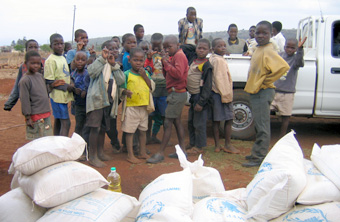
World Food Programme has been providing food to the KaGogo in Mambane since July 2005
“Other hungry children come here looking for food,” said Busisiwe Mazibuko, another of the caregivers. “But we only have enough to give the children here. It’s very hard to turn the other children away but we can’t feed more. We have been trying to grow vegetables for the Care Point, but water is scarce and we don’t have enough seeds.”
In Mambane and across Swaziland, it is envisaged that the community KaGogo social centres will eventually be able to provide other essential services for orphaned and vulnerable children, whilst enabling them to continue living in the community they belong to. Whilst the centres can be used for pre-schooling and non-formal schooling, both for children and adults, the Government is keen that KaGogo centres should be used prepare children for school and channel them into mainstream education.
“I believe the orphans of my areas should be looked after by the people of that community, and not somebody else. We can sustain these kids of ours in the community, using community resources and land. I strongly believe that as a community, we can solve most of the problems, provided we are given financial support,” said Chief Sipho Shongwe, Minister of Health and Social Welfare.
The National Emergency Response Council for HIV and AIDS in Swaziland (NERCHA) and the Global Fund to Fight AIDS TB and malaria provided financial and technical contributions to the KaGogo Social Centre initiative. The estimated cost of each centre is US$ 10 000.
Related links
Helping Ourselves: Community Responses to AIDS in Swaziland
More on Swaziland
World Food Programme
The Global Fund to fight AIDS, Tuberculosis and Malaria
Related
Feature Story
‘Butterfly Brigade’ takes flight to promote HIV prevention in the Philippines
28 août 2006
28 août 2006 28 août 2006In an unusual partnership with provincial authorities, a group of gay activists calling themselves the ‘Butterfly Brigade’ are leading an innovative community awareness campaign on sexual health and HIV prevention in the Philippines. Their work combines wide-reaching public education with social marketing of condoms and care for people living with HIV.
 Health education class is mandatory for massage parlour workers in Kalibo.
The Brigade was founded five years ago by a small group seeking to share knowledge within their own community. Since this time their efforts have blossomed into a network of 164 volunteers, mostly gay men, who run classes in 17 municipalities throughout Aklan province—in high schools and colleges, and within health programmes for women and men involved in sex work.
The Aklan province contains many booming resort areas where the campaign is making a critical difference. By day, the idyllic beaches are full of sunbathers, children frolicking in the water and tourists taking scuba diving lessons. By night, much of the province is a party zone, as local and foreign travellers sway to the music of reggae bands or drink beer in waterfront bars.
“Almost anyone could be at risk of acquiring HIV or another sexually transmitted infection,” said Municipal Health Officer Dr Adrian Salaver. “We can educate people about HIV prevention to try to help reduce those risks.”
HIV prevalence in the Philippines is estimated to be less than 0.1 per cent, one of the lowest rates in the region. But few people have been tested, and experts suspect the real numbers of people living with HIV to be higher. Widespread sex work, inconsistent condom use, early sexual initiation and multiple partnerships could trigger a more serious epidemic, as has occurred in other countries.
Aklan health officials recognize that the Butterfly Brigade’s frank approach to sexuality and strong prevention messages are part of an effective response to this threat. They started working with the initial core group in 2001 with support from the United Nations.
Members were trained to teach other gay men about the ways HIV is spread and how to protect themselves. As the trainers’ expertise increased, they developed their own curriculum and innovative techniques. They became known in their towns as health advocates and were asked to work with wider audiences.
One group that has benefited are the women who work in Aklan’s massage parlours and similar entertainment venues. Following awareness raising drives, employees are now required to have a health certificate indicating they have been tested for sexually transmitted infections (STIs) and have attended a class on disease prevention and condom use.
 Photo: Albert Ilarina teaches sex workers to use condoms and avoid infection.
Albert Ilarina, chairperson of the Butterfly Brigade, teaches these classes at the Social Hygiene Clinic run by the Women’s Health and Safe Motherhood Project in Kalibo’s hospital.
Twenty-year old Grace has participated in some of Albert’s classes. Grace works in a massage parlour to support her small son and daughter. She earns 200 pesos (about $4) a day, but can make more if she leaves with a client and negotiates a price for other “services”. She explains how the Butterfly Brigade classes have underlined how important it is to try to negotiate condom use with clients. “Sometimes I use condoms, but about three of every five customers don’t want to use them,” she says. “I have had gonorrhoea but I never knew about HIV before. Now I am scared. I want to buy condoms and start using them every time.”
Benefits from the Butterfly Brigade’s initiative are evident throughout the province. The Aklan health system now offers a “full package” of HIV-related services, including condom promotion, voluntary testing and counselling, and care. Last year the United Nations provided antiretroviral drugs for 14 people living with HIV; the Global Fund to Fight AIDS, Tuberculosis and Malaria now supports their treatment.
“The Butterfly Brigade is fun to be a part of and we do help,” says Butterfly co-founder Nono Bantigue, a municipal counsellor in Balete and chair of the town’s Committee on Women’s and Children’s Welfare.
The programme also provides HIV awareness training to police officers and merchants, as well as to boatmen and tricycle drivers. Brigade members have also persuaded Boracay officials to let them install a condom vending machine in an area known as a pickup spot.
“Local governments, the provincial health office and the local business sector have all recognized our work,” reports Bantigue. With support from the United Nations, municipal mayors and provincial health officials from all over the country have visited Aklan with a view to replicate its peer education network.
“The Butterfly Brigade are helping raise awareness and break down stigma – which is key to getting ahead of the epidemic in the Philippines,” said UNAIDS Country Coordinator for the Philippines, Dr. Marlyn Filio-Borromeo.
Related
Feature Story
India launches ‘grassroots’ outreach for HIV
08 août 2006
08 août 2006 08 août 2006India’s villages and towns join hands in the AIDS battle
New Delhi, August 8: The government of India has launched its largest ever outreach on AIDS to the country’s elected representatives with the hosting of first national convention of District Council Chairpersons (Zilla Parishad Adhyakshas) and Mayors.
The convention, which was held at the National conference centre in New Delhi at the beginning of August, brought together more than 500 representatives from the local town and village governance mechanisms- ‘Panchayati Raj’ and ‘nagarpalika’ institutions - to join the AIDS response at the district level.
A joint initiative of the Government of India, the National Aids Control Organization (NACO), the Parliamentarians’ Forum on HIV/AIDS and the Joint United Nations Programme on HIV/AIDS (UNAIDS), the convention is part of an effort to build a country wide community of locally elected leaders in the rural and urban areas who have the potential to influence policies, programming and resource management., making mainstreaming a reality in the Indian context.
With an estimated 5.21 million people aged between 15 and 49* living with HIV in India, the country has launched a major response in the fight against HIV. Working in this way at the district level, the ‘Zilla Parishad initiative’ is a step towards strengthening local responses at the grassroots level – through communities and households - and increase communities ability to face and respond to HIV and AIDS.
“India’s District Chairpersons and Mayors wield a large amount of influence that can be positively directed in creating awareness and removing stigma in the drive against HIV. They can ensure HIV related issues are addressed through proper planning and budgetary allocation and as community leaders they can address stigma and discrimination by dispelling myths about the epidemic,” said Dr. Denis Broun, Country Coordinator, UNAIDS, who spoke at the convention.
The convention delegates were also addressed by Shri Oscar Fernandes, Union Minister and Convener, Parliamentarians’ Forum on HIV/AIDS; Shri Mani Shankar Aiyer, Union Minister for Panchayati Raj; Dr. Anbumani Ramadoss, Union Minister for Health and Family Welfare, Shri Jaipal Reddy, Union Minister for Urban Development and Ms. K. Sujatha Rao, Director General , NACO.
As part of the convention, discussions took place on the rural and urban contexts of AIDS in India. HIV related targets and programmes were shared with the objective of achieving seamless implementation across the nation. In seeking support of the decentralized authorities, this Convention becomes the basis of decentralized planning envisaged in ‘Phase III’ of the National AIDS Control Programme, which is expected to be launched in November 2006.
“The challenges that the HIV epidemic poses need to be addressed at the district and community levels. By involving the Zilla Parishad chairpersons we are working towards tackling the epidemic at the level where it touches individual lives,” said Ms. Sujatha Rao, Director General, NACO.
Given the influence and access of District Council Chairpersons and Mayors at town and village levels they can make significant differences in the AIDS response by influencing district development plans to ensure HIV related activities are included and appropriate budgets allocated and allocating their own funds to the response. They can also advocate with heads of various departments (especially health and education) to introduce systems that can help reduce stigma and discrimination and provide relevant information and referrals to communities who access their services. As community leaders they can talk about HIV in all fora to further address stigma and discrimination and as political representatives they can advocate to bring HIV to the top of the political agenda.
Highlighting the critical role of local-level institutions in the HIV and AIDS battle, Shri Oscar Fernandes, Convenor of the Parliamentarians’ Forum on HIV/AIDS said, “Zilla Parishad Chairpersons have many strategic advantages which will enable them to influence the HIV programmes at the district level. The aim of this Convention is to sensitize district level representatives and thus make a difference to the HIV situation in the country at the grassroots level.”
The Convention concluded with the signing of a Declaration of Commitment by the District Chairpersons and Mayors. The declaration outlines the way forward and pledges sincere engagement in the HIV response at the district and community levels.
*NACO figures, 2005
Related links
UNAIDS India
National AIDS Control Organization (NACO)
Photographs from the event:

(left to right): Kumari Shelja, Minister of Urban Employment & Poverty Alleviation, Mr. Oscar Fernandes, Union Minister and Convenor Parliamentarians’ Forum on HIV/AIDS; Mr. Anbumani Ramdoss, Union Minister of Health and Family Welfare; Mr. Manishankar Aiyar, Union Minister for Panchayati Raj; Shri Jaipal Reddy, Union Minister for Urban Development at the Convention
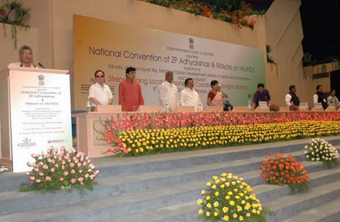
Shri Sitaram Yechuri, Honourable Member of Parliament addresses the Convention
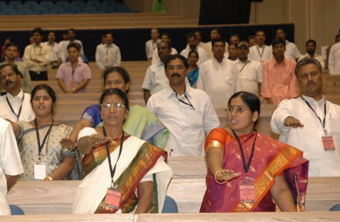
ZP Adhyakshas and mayors pledging support to the AIDS response.

ZP Adhyakshas and Mayors signing the Oath of Commitment.
Related
Empowering youth to lead Togo’s HIV response
31 octobre 2024
Bridging gaps: sex education saves lives in Central African Republic
03 septembre 2024
Cities leading the way to achieving key targets in the HIV response
27 septembre 2023
Feature Story
UNAIDS Executive Director meets with Prime Minister of India
03 août 2006
03 août 2006 03 août 2006
Dr Peter Piot met with Indian Prime Minister Dr Manmohan Singh. The Prime Minister's leadership has put the AIDS response on the national political agenda. As the Chairperson of the National Council on AIDS, Dr. Singh has developed a multi-ministerial task force comprising of 31 ministries and seven state governments for a coordinated multi-sectoral response to the HIV epidemic in India.
Related

 Thailand’s Mplus: HIV services delivered in style
13 décembre 2022
 Preventing transmission and tackling stigma: The power of U=U
12 décembre 2022