

Feature Story
Accountability; main message on World AIDS Day
20 octobre 2006
20 octobre 2006 20 octobre 2006
Marcel van Soest, Executive Director of the World AIDS Campaign
Executive Director of the World AIDS Campaign, Marcel van Soest speaks to UNAIDS about the history of the World AIDS Campaign, how people can become involved in this year’s events and why ‘accountability’ is such a crucial theme for World AIDS Day 2006.
Q: Could you tell us how and why the World AIDS Campaign was created?
A: The World AIDS Campaign has a long history, it was established by UNAIDS in 1997-98 when it was a part of the UNAIDS Secretariat. In 2001, there was huge concern within UNAIDS when AIDS appeared to be slipping off the political agenda. So UNAIDS held a number of consultations with different stakeholders, particularly with Non-Governmental Organisations (NGO’s), and came to the conclusion that the World AIDS Campaign needed to be strengthened and made into more of an independent campaign with greater civil society involvement and leadership.
So in 2004, exactly two years ago in September, the World AIDS Campaign was established as an independent campaign outside of the UN and outside of Geneva. UNAIDS of course still plays a strong supporting role but it no longer has a decision making role, this is now the job of the different civil society groups.
Q: How is the World AIDS Campaign governed?
A: For the last two years we have been working very hard on getting the right structure for the Global Steering Committee which now represents the different constituencies including internationally and globally organized actors with country memberships or country affiliates.
For example, the Global Union Federations which represent all the country trade unions all over the world are part of our Global Steering Committee. Faith-based and religious leaders, the youth movement and the women’s movement are also represented. As are the traditional actors in the AIDS response like the NGO’s and networks of people living with HIV. We are still reaching out to academics, researchers and the media who will hopefully join the Global Steering Committee shortly.
So these actors actually own the World AIDS Campaign and we are a small international support team that helps to strengthen mobilization and connect messaging from all the different campaigns on AIDS that exist at the international as well as the country level. We try to facilitate and contribute to a stronger social movement that is really needed to actually get things done in this world.
Q: How does the World AIDS Campaign decide on the themes for the campaigns?
A: The way that it works at the moment is that the International Support Team consults with all the different partners in the AIDS field from around the world to discuss the key issues throughout the year. We feed a lot of that information and insight into the discussions that are then brainstormed by the Global Steering Committee where all different constituencies of Civil Society have a seat and who then agree upon a strong theme.
This is how, two years ago, this Global Steering Committee adopted ‘Stop AIDS. Keep the Promise.’ as the focus, a tagline for the coming years, with the recommendation that there would be a variation on the theme each year for World AIDS Day. Last year the theme was ‘Make the Promise’ and this year it’s ‘Accountability’.
Q: Why is World AIDS Day such an important date in the yearly calendar?
A: World AIDS Day was introduced by the World Health Organisation on 1 December 1988. This was the first time that attention around the world was focused for one day in the year on AIDS. It provided a unique opportunity to highlight the seriousness of the epidemic.
Since 1988 World AIDS Day has developed into a huge event. It has become so big that in many countries it is no longer only just one day; but a whole week of events and activities. It starts with the launch of the new statistics in the AIDS Epidemic Update the week before World AIDS Day – and during the whole of the following week more and more events are taking place involving stakeholders from all over the world so it has become a very important day in the yearly calendar.
But of course one day a year is not enough, which is one of the reasons why the World AIDS Campaign was established to really look beyond World AIDS Day and keep the attention focused on AIDS issues and themes throughout the year.
Q: As you say, the theme of this year’s World AIDS Day is “Accountability”. What inspired this theme?
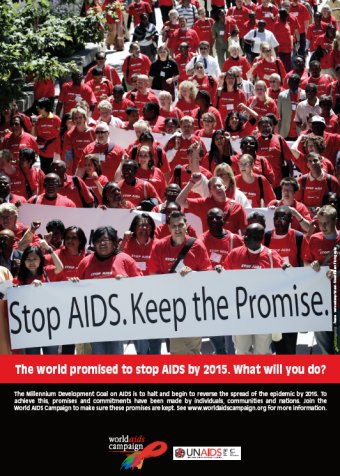
2006 World AIDS Day poster – part of the resource kit available from the World AIDS Campaign
A: Accountability came up in the discussions a year ago as 2006 is an important year in the AIDS response. A number of key events have taken place this year including; the High Level Meeting on AIDS, held at the UN in New York in June which was the five year review of the Declaration of Commitment on AIDS; the five year review of the Abuja Declaration in Africa; the Toronto AIDS Conference; and on the 14 November it will be five years since the Doha declaration was signed on access to generic drugs. 2006 also marked the 10 years of UNAIDS and the 25 years of AIDS.
2006 is a year of looking back to learn from the past and looking forward to see how to plan and strategise further on issues like Universal Access.
So having these important moments this year we felt that it was the right time and that focus was needed on accountability because of the strong significance this year holds in the AIDS response.
World AIDS Day is crucial for accountability because we know what works and we need to find out why programmes that work have not been implemented in light of Universal Access and country target setting. We want to make sure that the world is informed and aware and that all the leaders know that the public and civil society are watching and that we are very serious about all these promises.
Q: Who is the message of accountability targeted at this World AIDS Day?
A: This message is for all kinds of leaders from all the stakeholders including civil society and the business sector, the multilaterals like the UN and all the governmental leaders. It ranges from the top influential leaders, like the leaders of the G8 for example, right down to local community leaders so that grassroots groups can really look at promises and commitments that leaders have made and make sure that they are held accountable. It’s really to show that these promises are now being monitored and that they must be kept.
Q: The theme is a continuation of last year’s theme – is this a long-term campaign?
A: ‘Stop AIDS. Keep the Promise.’ is a tagline that we want to keep at least until the end of 2010, because of the Declaration of Commitment targets as well as the Universal Access commitments for 2010. We will be reviewing whether the same tagline will continue until 2015 in line with the UN Millennium goals or whether we will change to another tagline. But for now World AIDS Day each year will have different variations of the theme whilst keeping the tagline ‘Stop AIDS. Keep the Promise.’
Q: How can organizations and individuals become involved in this year’s World AIDS Day activities?
A: People can get involved in many different ways. For example on the World AIDS Campaign website we have a calendar where more and more organisations are now listing information on their planned activities for World AIDS Day.
So people can have a look at the website to find out what’s happening in their country or in their region. If they can’t find an event near to them there is also a partners page where all the World AIDS Campaign partners in countries are listed so that people can contact them to find out more. People can also contact their own local AIDS organisations, see what’s happening locally and find out how they can engage in events or offer their support.
We try to make sure that organisations are linking up locally with other organisations so that at least there is some kind of communication between the different organisations to enable them to link up together afterwards and combine their efforts.
If people or organisations want to set up their own events on World AIDS then we have a range of resources available to them on the World AIDS Campaign Website. For example we have a CD-Rom that provides ideas and gives information on what different groups are doing on World AIDS Day. We have designed a model this year using the colour red and on the CD-Rom there are all kinds of ideas about how they can organise a simple event using the colour red to target leaders on accountability issues.
Q: Are there any other materials you can provide people with who are planning to hold an event on World AIDS Day?
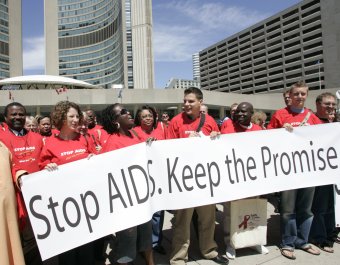
Faith pre-conference attendees march in support of “Stop AIDS. Keep
the Promise during AIDS 2006 in Toronto” from the
World AIDS Campaign Credit: Stuart Nimmo
A: This year we have more resources available than any previous years. We have posters which are designed in such a way that they are easily adaptable to include local relevant key messages as the wording and even the pictures on the posters can be changed or modified for the countries that have the resources to print them locally.
The printed posters and CD-Roms are partly being distributed by the WHO/UNAIDS distribution system but can also be ordered from the World AIDS Campaign website where the International Support Team will send the packages.
The posters come with the CD-Rom which contains information on possible topics and messaging for World AIDS Day and has a full spectrum of ideas for events and what different groups like faith, labour or NGO’s are doing on the day. We also have PSA’s, videos and photos available.
Q: How can people share information about their events?
A: People can post information about their events on the WAC website. If they go to the home page and click on the WAD 2006 Events calendar there is a form which they can fill in directly on the website, through this they can post their own text and photos on the site.
Beyond the events page they can always send further campaign information to the World AIDS Campaign helpdesk at info@worldaidscampaign.org and we will be happy to post on the website for them.
Q: What are the plans for next year?
A: We are currently having discussions for on the plans for next year, but we are hoping to make it bigger and better than ever. We are planning to adapt the theme locally as we would like to stimulate and bring resources for materials for posters, CD-Roms to the sub-regional level.
We want to give people information on how events can be organised jointly between, for example, trade unions, religious leaders and networks of people living with HIV. We are very keen on the idea of joint messaging and are looking forward to developing a great range of materials for next year’s events.
Keep checking our website for more information as the plans develop!
Links:
World AIDS Campaign
http://www.worldaidscampaign.info/
More on World AIDS Day 2006
http://www.worldaidscampaign.org/wadcd2006/en/day.html
Download materials and resources for World AIDS Day 2006
http://www.worldaidscampaign.info/index.php/en/resources/world_aids_day_resources
Related
Feature Story
UNAIDS Special Representative Mary Fisher honored
16 octobre 2006
16 octobre 2006 16 octobre 2006Dr. Jane Aronson, founder and executive medical director of the WWO,
honors Mary Fisher with the organization's second annual Orphan
Ranger Award.
On 16 October, the Worldwide Orphans Foundation (WWO) honored UNAIDS Special Representative Mary Fisher in recognition of her longstanding AIDS efforts, particularly as a determined advocate for women and children living with and affected by HIV worldwide. Ms. Fisher was honored at the WWO's Second Annual Benefit Gala held in New York City.
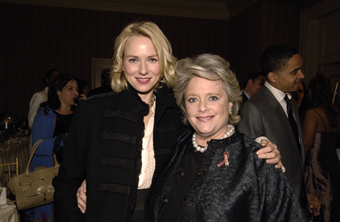
UNAIDS Special Representatives Mary Fisher (right) and Naomi Watts
The event was emceed by Whoopi Goldberg, the prolific actress and comedian, and Katie Couric, anchor and managing editor of the CBS Evening News with Katie Couric, raised millions of dollars to support the WWO's ongoing work on behalf of children orphaned by AIDS and other circumstances, and was attended by many notable figures, including UNAIDS Special Representative and renowned actress, Naomi Watts.
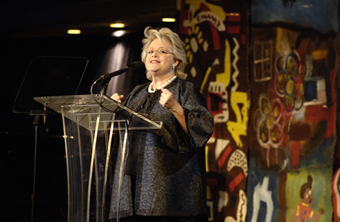
UNAIDS Special Representatives Mary Fisher
Since her appointment as UNAIDS Special Representative in May 2006, Ms. Fisher has undertaken UNAIDS fact-finding missions to Zambia and Rwanda, highlighting the socio-economic impact of HIV on women and girls.
In addition, Ms. Fisher has recently spoken at a number of high-level U.S. and international fora, including at the historic 1 June "Evening of Remembrance & Hope: Uniting the World Against AIDS" in the UN General Assembly Hall, sounding an urgent call for greater attention and action in the global response to AIDS.
All photos credits : UNAIDS / W. Lee
Related links
 Press Release: Worldwide Orphans Foundation Raises over $1.2 Million
Related
 The First Fallen but We Will Overcome
03 novembre 2022
 Popular and dedicated singer Samba Peuzzi calls for ending HIV infections among children
16 juin 2022
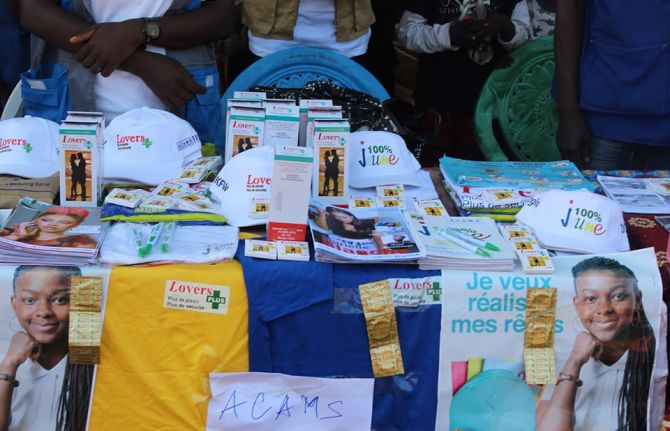 Commemorating World AIDS Day in the Central African Republic
06 décembre 2021
Feature Story
UNAIDS Executive Director visits Japan
12 octobre 2006
12 octobre 2006 12 octobre 2006The Department of Global Health and Socio-epidemiology at Kyoto University has become a ‘UNAIDS Collaborating Centre’, following a signing ceremony between the Joint United Nations Programme on HIV/AIDS (UNAIDS) and the Kyoto University that took place in Japan on October 12th 2006.
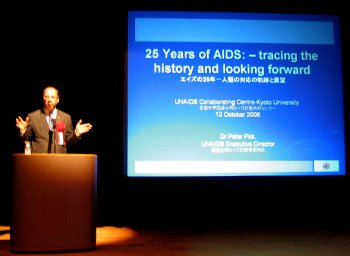
Peter Piot delivers keynote speech at the University of Kyoto: “25 years of AIDS: tracing the history and looking forwards”.
As UNAIDS Collaborating Centre, the department will make an important contribution to the global and regional promotion of HIV prevention efforts, using its innovative methodological approach called "socio-epidemiology", which integrates qualitative with quantitative methods, and sociological with epidemiological viewpoints and draws upon considerable experience and accomplishments in researching on sexual behaviours and HIV intervention.
The collaboration with UNAIDS aims to strengthen HIV prevention among people most at risk of HIV infection in developing countries, East Asia and Japan, with a particular emphasis on youth.
To achieve this goal, the collaboration will focus on four key areas:
- Research - supporting policy making by means of facilitating socio-epidemiological research on HIV prevention in developing countries, East Asia and Japan
- Training - Training personnel capable of creating culturally appropriate prevention programmes drawing upon the socio-epidemiological approach.
- Communication - Accumulating the evidence for HIV prevention practice and communicating this worldwide
- Networking - Facilitating HIV prevention networking in East Asia.
The Collaborating Centre will be headed by Dr Masoko Ono-Kihara, a leading socio-epidemiologist and a founder of the ‘Wellbeing of Youth in Social Happiness’ model for HIV prevention among young people.
UNAIDS Executive Director Peter Piot welcomed the collaboration at the ceremony in Kyoto marking the signing of the agreement where he delivered a keynote speech on “25 years of AIDS: tracing the history and looking forwards”.
Dr Piot was visiting Japan to meet with senior officials from the new Japanese administration including Mr Takeshi Iwaya the new Senior Vice Minister in the Ministry of Foreign Affairs and with Congressman Mr Keizo Takemi.
UNAIDS Collaborating Centre is a non-UN entity that has been designated by the UNAIDS Secretariat to carry out specific activities in priority areas of the Secretariat or the response to HIV/AIDS epidemic. Collaborating Centres have clearly defined deliverables and timelines and contribute significantly to global or regional efforts.
- Following a consultative process with the UNAIDS Secretariat, the Collaborating Centre functions can include:Promote, support and implement relevant research, and disseminate and utilize the results of such research;
- Provide selected support targeted at strengthening national capacities for an expanded response to HIV/AIDS, especially in developing countries;
- Organise international learning events, policy dialogue, produce or review guidelines and other documents;
- Participate in technical resource networks established by UNAIDS Secretariat for the identification, collection and dissemination of best practices, and provision of technical support.
Related

 Thailand’s Mplus: HIV services delivered in style
13 décembre 2022
 Preventing transmission and tackling stigma: The power of U=U
12 décembre 2022
Feature Story
UN General Assembly discusses Violence against Women
10 octobre 2006
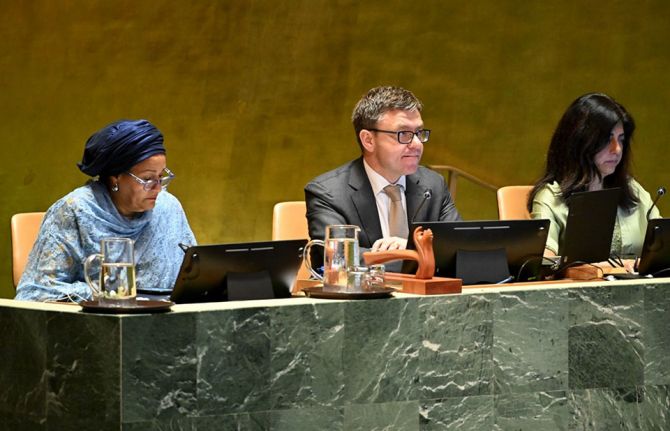
10 octobre 2006 10 octobre 2006In early October the advancement of women was debated at the 61st session of the United Nations General Assembly. One of the most critical items on the agenda was the Secretary-General's in-depth study on all forms of violence against women.
The study highlighted that for many women worldwide, the threat of violence exacerbates their risk of contracting HIV. Fear of violence prevents women from accessing information on HIV and AIDS, being tested, disclosing their HIV status, accessing services for the prevention of HIV transmission to infants and receiving treatment and counseling, even when they know they have been infected. Studies show the increased links between violence against women and HIV and demonstrate that HIV infected women are more likely to have experienced violence, and that women who have experienced violence are at higher risk for HIV.

Credit: UNAIDS/L.Gubb
The paper was prepared at the request of the UN General Assembly. It discusses the causes and consequences of violence and lists a series of recommendations for action at national and international level, including by United Nations bodies themselves.
“The study exposes critical gaps in current efforts to address violence against women,” said Purnima Mane, Director of UNAIDS’ Policy, Evaluation and Partnerships Division. “Although the world is now paying more attention to women’s rights in general, it has made pitifully little progress in reducing violence against women. And this is impacting seriously on our ability to get ahead of the AIDS epidemic.”
“The UNAIDS-led Global Coalition on Women and AIDS has made reducing violence against women one of its top priorities,” said Violeta Ross Quiroga, a member of the Global Coalition’s Leadership Council. “Wherever you find violence – whether it’s physical, psychological, or sexual – there will be AIDS. HIV entered my life through violence, as it has for so many.”
This week’s General Assembly discussion and the Secretary General’s study offer an opportunity to strengthen work on the linkages between violence against women and HIV. The study calls on States to integrate efforts to prevent and reduce violence against women into HIV programmes. It calls on the UN system to clearly identify how violence against women affects the effective implementation of their mandates, and to link their response to such violence to their work on issues such as HIV and AIDS, poverty eradication, food security, humanitarian responses, health, education, legal and judicial reform or crime prevention.
Related
Feature Story
Amazonians unite to fight stigma in Brazil
04 octobre 2006
04 octobre 2006 04 octobre 2006Stigma and discrimination against people living with HIV is commonplace in the Amazon region of Brazil. In an effort to change attitudes and increase awareness about AIDS, people living with HIV in the heart of the Amazonian territory have come together to try to encourage people to learn about the epidemic and break down AIDS-related stigma.
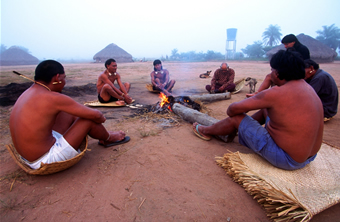
Credit : UNDP/C. Goldgrub
RNP+ is providing support to native Amazonians living with HIV
“In the northern region of Brazil, living with HIV is very difficult,” said Laurinha Brelaz, who has been HIV-positive for 13 years. “It is hard to get information, to show our faces and be open about our HIV status. The afro-Brazilian, native indigenous and Amazonian river people living with HIV are in constant fear of discrimination and stigma,” she explained.
Mrs. Brelaz is a member of Rede Nacional de Pessoas Vivendo com HIV/AIDS (RNP+), a Brazilian network of people living with HIV, based in São Paulo. RNP+ was created more than ten years ago and began working in the Manaus area of the Amazon State last year. The network seeks to support people living with HIV and focus on HIV prevention projects for native Amazonians.
“We want to support the Brazilian government in building public health policies. In the Amazon State, many people living with HIV are mistreated by public health staff. There are many cases of discrimination, especially towards HIV-positive women who particularly suffer prejudice. If we raise awareness about HIV in public opinion, people living with HIV will be confident enough to show their faces as part of society,” affirmed Mrs Brelaz.
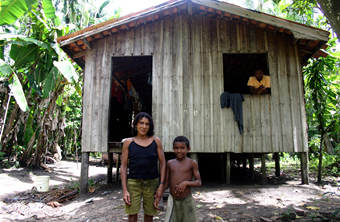
Credit : UNICEF/BRZ/J.Simões
Native Amazonians often live in remote areas with little or no access to health care systems
According to a Brazilian Health authorities report, AIDS incidence in Amazon State increased from 3.7 cases per 100,000 inhabitants in 1994 to 15.7 in 2004. “In the Northern states the biggest challenges are related to access to health services. This is mainly due to geographical obstacles, and the need to expand the structure of health services to treat the local population. In order to strengthen the response to AIDS in the region, we need to improve health care systems, and encourage the involvement of civil society organizations,” said Mrs. Mariangela Simão, Director of the Brazilian National Programme on Sexually Transmitted Diseases and AIDS.

Credit : UNICEF/BRZ/J.Simões
By 2004, AIDS incidence had grown to 15.7 cases per 100,000 inhabitants in the Amazon state
The response to AIDS in the Amazon also goes beyond health issues. Recently RNP+ Amazonas mobilized civil society to participate in a Workshop for Awareness of Social Actors on HIV/AIDS sponsored by UNAIDS and ILO. “In the Amazon, there is a great opportunity to scale-up access to services for people living with HIV. A successful response cannot be achieved without the full engagement and participation of people living with HIV,” said Dr. Laurent Zessler, UNAIDS Coordinator Brazil. This partnership aims to develop actions on HIV in the workplace, including support to workers living with HIV in the Amazon region. The participants received information and material on HIV from UNAIDS, ILO, the Brazilian National Programme and various NGOs. The project also received support from local and State governments and National Trade Unions in the region.

Credit : L. Brelaz
Laura Brelaz, member of the Brazilian network of people living with HIV - RNP+
Partnerships between domestic and international actors are becoming increasingly fundamental to working on AIDS issues in inland Brazil. Mrs. Laurinha Brelaz represents the network of people living with HIV in the UN Expanded Theme Group on AIDS. “In the beginning of the epidemic, people living with HIV used to feel very alone. Nobody knew what HIV or AIDS was. So, people living with HIV built-up this network. Today, we are known internationally,” she explained proudly. “Our goals are to fully participate in the decision making at all levels, including state and municipal health councils and AIDS commissions, in order to build health policies together, fight for a high quality public health system and restore our dignity,” she said.
The work, led by Brazilian civil society in the Amazon region, still depends on strengthening their financial sustainability. “Financial issues are still the main obstacle we need to overcome. We are receiving some resources from National and local governments, but we intend to approach international sponsors as well,” Mrs. Brelaz highlighted. When asked about plans for the future, Mrs. Brelaz answered, “In the Amazon we intend to implement the same standard of quality of life for people living with HIV as in other areas of Brazil.” Now RNP+ Amazonas are planning for the next annual meeting of people living with HIV in the region.
Feature Story
Emerging epidemics in Eastern Europe on the agenda
28 septembre 2006
28 septembre 2006 28 septembre 2006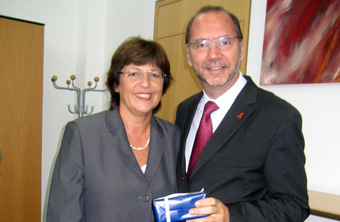
Ms Ulla Schmidt, Federal Minister of Health of Germany welcomes Dr Peter Piot, Executive Director of UNAIDS
The emerging epidemics in Eastern Europe and Germany’s commitment to increasing HIV awareness were one of several topics under discussion with German Health Minister Ms Ulla Schmidt and Dr Peter Piot the Executive Director of UNAIDS. On his recent trip to Germany he also met with the Health Committee of the German Federal Parliament, the State Secretary and Parliamentary State Secretary, the National AIDS Council. Dr Piot also met with the Minister for Cooperation and Development, Ms Wiezcorek-Zeul to talk about the importance of keeping AIDS high on the agenda during Germany’s presidency of the G8 in 2007.
UNAIDS Executive Director was in Germany from 26-28 September to participate in a range of meetings to discuss ways forward and continued commitment to the AIDS response.

The visit kicked off with a meal at the Kaffee Graefe, a café in Berlin run by people living with HIV. The café is part of a project to train people living with HIV, particularly migrants, to give them skill sets which will help them to integrate more easily into the workplace. As well as the café there is a successful catering business where people are trained in cookery and catering, waitering and waitressing, and small business management. Dr Piot was joined for the dinner by representatives from the German AIDS organisations Deutsche AIDS Hilfe, Aktionsbündnis AIDS, Seutsche Siftung Weltbevölkerung, Deutsche AIDS Siftung and Positive Aktion, to exchange views and discuss AIDS related issues and concerns.

(left to right): Mr Gernot Erler, Minister of State at the Federal Foreign Office, Germany; Dr Peter Piot, UNAIDS Executive Director; Dr Christoph Zöpel, President of the German United Nations Association, Deutsche Gesellschaft für die Vereinten Nationen DGVN at an event organized by the German United Nations Association and the Federal Foreign Office of Germany.
Highlighting UNAIDS as a test case for UN reform, Dr Piot presented at an evening event organised by the German United Nations Association and the Federal Foreign Office of Germany.
On the last day, Dr Piot met with the Head of the Office of the Federal President and the Committee for Economic Cooperation and Development. He wrapped up the visit with discussions on ways of building on existing partnerships in countries with the Managing Director of the German development agency GTZ and German development bank KfW.
Related links
View photographs from Executive Director's visit to Germany
Kaffee Graefe

Feature Story
Cambodia’s HIV Hotline – advice and counselling just a phone call away
27 septembre 2006
27 septembre 2006 27 septembre 2006When young housewife and mother Kiri* learned she and her young son had tested positive for HIV, she didn’t know where to turn. “I had so many problems hidden in my heart. I didn’t dare tell my problems to anyone. Keeping this secret from people made me so distressed that sometimes I wanted to kill myself to escape from this suffering,” she said.
But Kiri found strength and support by picking up the telephone. She dialled the special ‘Inthanou’ (the Khmer word for ‘Rainbow’) hotline – a unique free, anonymous and confidential telephone counselling service established by a local NGO in 2000 to provide vital HIV information, support, counselling and referral – and help was at hand.
“After contacting the Inthanou hotline, I felt relieved and much less distressed after discussing my long-hidden problems. Now I can express my feelings to someone without any fear because: Firstly: No one knows who I am. Secondly: The conversation is confidential. Thirdly: I can discuss issues concerning my personal health problems and receive good advice and encouragement,” she explained.
Kiri is one of many benefiting from the Inthanou hotline. Since its creation in August 2000, the initiative has reached almost 300,000 people, most of them aged between 15 and 24.
The hotline is the result of a partnership with a telephone company in Cambodia, which provides two free telephone lines that are available in all of the county’s provinces. Funded by UNAIDS Cosponsor organization UNICEF, the French Embassy and other donors, the hotline runs six days a week from 11:00 to 20:00 and receives an average of 200 calls per day. In 2005 the hotline received a total of 63,228 calls.
Inthanou employs nine trained counsellors who provide information on HIV and reproductive health and when necessary refer callers to Voluntary Counselling and Testing Centres, as well as other medical services including Sexually Transmitted Infection clinics, access to treatment and care, and networks of people living with AIDS for psychosocial support.
“The hotline is not only providing information but it is also referring services that are available in the country. In this way the hotline is making a real impact on people’s lives, and is making a difference,” said Fabrice Laurentin, Project Officer for UNICEF Cambodia.
For Kiri, referrals from the hotline have led to her being able to access antiretroviral treatment from a local NGO. For others, the hotline has had equally positive impacts such as referrals which have lead to people living with HIV being able to access small grant funding to set up businesses.
The hotline is regularly promoted through various media, particularly TV and radio as well as via advertisements in magazines, t-shirts, key-rings and pamphlets that are widely distributed. In 2004 a special poster campaign was conducted featuring some of the country’s top sporting stars. In August 2006, the National AIDS Authority and UNICEF launched another special poster campaign promoting greater awareness of HIV among young women and encouraging them to use the free Inthanou HIV hotline.
“I really hope that this campaign will reduce women’s shyness about AIDS-related issues and encourage them to call the hotline,” said Dr. Loun Monyl, Inthanou Coordinator.
Inthanou also has a web site (www.inthanou.org) which provides online information on HIV and prevention and treatment services, as well as useful advice and testimonies of people living with HIV and other members of the public who have accessed the hotline for more information and assistance.
One young man tells his story on the web site: “I have had sex with my closest friend and I rarely thought about using condoms. I believed that having sex with a man was safe,” he explained.

One day as he was reading a magazine he came across Inthanou’s hotline number, advertising that the hotline provides anonymous and confidential information related to HIV and STDs. He called the hotline and counsellors advised him that having unprotected sex with a male partner, is a high risk behaviour for transmission of HIV and STDs. The counsellor gave him helpful advice about how to reduce the risk of HIV infection. Having consulted the hotline, he acknowledges that the hotline counsellor gave him important information about HIV. “I am now interested in finding out more about issues related to health and HIV. I often call Inthanou counsellors when I have questions,” he said.
“Ithanou is reaching out to all sectors of the population. Its anonymous and confidential service makes it easier for people to start talking about issues that are often taboo. In this way it is encouraging dialogue on issues of HIV and STIs and is helping break down stigma and discrimination,” said Jane Batte, Social Mobilization and Partnerships Advisor, UNAIDS Cambodia.
"You can protecty yourself against HIV, use condoms... If you want to know more about HIV and AIDS, please call 012 999 008/012 999 009" - Poster from the 2004 campaign uses famous Cambodian boxing star to raise awareness.
The hotline aims to build on its current service and, with additional funding, hopes to continue to answer tens of thousands of calls and refer at least 12,000 callers to appropriate government and NGOs medical and non-medical facilities every year.
“We want to reach out and make a difference to as many people as possible. With Inthanou, help is just a phone call away,” said hotline Coordinator Dr Monyl.
According to the UNAIDS Global Report 2006, at 1.6%, adult national HIV prevalence in Cambodia was one-third lower in 2005 than in the late 1990s—due mainly to a combination of rising mortality rates and HIV prevention efforts that helped reduce unprotected paid sex. However, the country is still burdened with one of the worst epidemics in Asia with women constituting a growing share of people living with HIV – an estimated 47% in 2003, compared with 37% in 1998.
*names have been changed to protect identity
Testimonials used in this story appeared first on the Inthanou web site – http://www.inthanou.org
Related links
http://www.inthanou.org
http://www.unicef.org
|
|
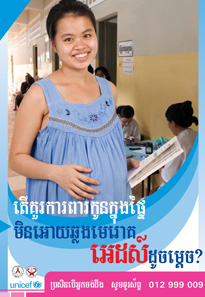
"Do you know how to protect your baby from HIV? If you want to know call 012 999 009"
Poster from the 2006 UNICEF / National AIDS Authority poster campaign targets pregnant women. |
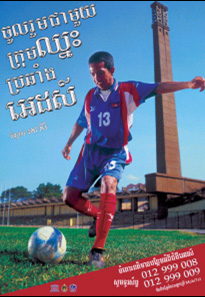 |
"Be part of the winning team against HIV/AIDS... If you want more information about HIV/AIDS, please call 012 999 009/012 999 008" Poster from the 2004 campaign uses a famous Cambodian football player to raise awareness. |
 |
"Someone with HIV can swim with me...If you want to know more about HIV and AIDS, please call 012 999 008/012 999 009" Poster from the 2004 campaign uses a famous Cambodian swimmer to raise awareness. |
|
|
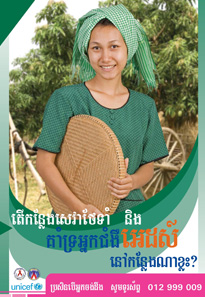
“Where to access care and support related to HIV and AIDS? If you want to know, please call 012 999 009”
Poster from the 2006 UNICEF / National AIDS Authority poster campaign targets farm worker |
 |
"Run faster than AIDS, use condoms... If you want more information about HIV/AIDS, please call 012 999 009/012 999 008" Poster from the 2004 campaign uses a famous Cambodian runner to raise awareness. |
 |
“Where to do an HIV test? If you want to know, call 012 999 009” Poster from the 2006 UNICEF / National AIDS Authority poster campaign targets female workers |
Related
 Empowering youth to lead Togo’s HIV response
31 octobre 2024
 Bridging gaps: sex education saves lives in Central African Republic
03 septembre 2024
Feature Story
HIV: ‘Risks and Responsibilities’
25 septembre 2006
25 septembre 2006 25 septembre 2006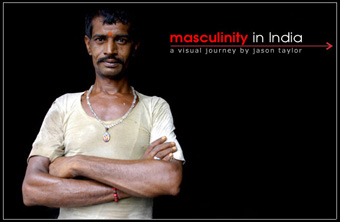
Despite evidence establishing male-to-male sex as one of the driving forces of HIV transmission in Asia and the Pacific, only a few HIV interventions are strategically focusing on prevention, treatment, care and support for men who have sex with men in the region.
The need to build and strengthen programmes for men who have sex with men was addressed at the Male Sexual Health and HIV in Asia and the Pacific International Consultation, held in New Delhi from September 23 to 26, 2006.
The theme of the Consultation ‘’Risks & Responsibilities’’, signifies the increased risks that men who have sex with men face through sexual practices and cultural vulnerabilities, and the risks of not addressing these with adequate, appropriate and sufficiently funded HIV prevention, treatment care and support interventions. This also flags the responsibilities of men for protecting themselves and their partners, and the responsibilities of governments, donors and other stakeholders in ensuring resources and environments that enable good-quality HIV programmes and services for prevention, treatment, care and support.
The International Consultation brought together governments, policy-makers, donors, researchers, grassroots and community based organisations across Asia and the Pacific to provide a space for dialogue and learning, to enable expansion, strengthening and scaling up of strategies addressing male sexual health and related HIV vulnerabilities. In addition, the consultation will provide an opportunity to inform and develop strategic advocacy initiatives and deliberate on key policies related to these issues.
 Visit the "Masculinity in India" website by Jason Taylor (flash, 491Kb)
Speeches
23 September 2006
Statement by Most Reverend Desmond Tutu, Anglican Archbishop Emeritus of Cape Town
23 September 2006
Speech by Purnima Mane, Director, Policy, Evidence and Partnerships UNAIDS
23 September 2006
Opening speech by JVR Prasada Rao, Director, Regional Support Team UNAIDS
Related links:
Risks and Responsibilities , Male Sexual Health and HIV in Asia and the Pacific International Consultation
Related
Thailand’s Mplus: HIV services delivered in style
13 décembre 2022
Preventing transmission and tackling stigma: The power of U=U
12 décembre 2022
Feature Story
UNITAID launched
20 septembre 2006
20 septembre 2006 20 septembre 2006
For many years, the international community has been looking for new tools to ensure sustainable financing for development and the fight against hunger and poverty. In this spirit, Brazil, Chile, France, Norway and the United Kingdom have taken the initiative in creating UNITAID, an international drug purchase facility, which will help scale up access to drugs and diagnostics to fight AIDS, malaria and tuberculosis for people who need them most in developing countries. This new initiative is funded primarily by innovative financing mechanisms such as the tax contribution on air tickets.
UNITAID was officially launched on Tuesday 19 September on the day of the opening of the 61st session of the General Assembly of the United Nations. The event was opened with a statement by UN Secretary-General Kofi Annan, followed by a series of statements by Brazilian President Luiz Inacio Lula da Silva, French President Jacques Chirac, Norwegian Prime Minister Jens Stolenberg, Chilean Foreign Minister Alejandro Foxley Rioseco and British Minister for Development Gareth Thomas. Congolese President Sassou N’GUESSO spoke in his capacity as Chairman of the African Union.
“UNITAID is a model of its kind for many reasons. It is an approach that can be made to work rapidly. It is flexible, in that more countries can easily join the original members. And it is a lean mechanism which complements the existing global architecture for health, inside and outside the UN system,” said the UN Secretary General at the opening.
UNITAID is the culmination of long efforts on the part of the international community to mobilize a portion of resources generated by globalization to benefit development.
In 2004, over a hundred countries acceded to the New York Declaration on Action against Hunger and Poverty and 79 countries endorsed the Declaration on Innovative Sources of Financing for Development that was adopted on 14 September 2005 at the United Nations in New York.
The Paris Conference, held on 28 February and 1 March 2006, resulted in the establishment of a pilot group of 44 countries that committed to work on implementing such financing. It was at the end of the Paris Conference that France proposed to create the international drug purchase facility.
“New innovative sources of financing are absolutely necessary,” said UNAIDS Executive Director Dr. Peter Piot on the occasion of the Paris meeting. “The demand for ARVs will constantly rise in the next few years. More and more people will get sick and more and more people will know they have HIV. That’s why it’s so important that we develop long term sustainable funding mechanisms which will allow us to continue treating people in 20 or 40 years,” he said.
At the High Level Meeting on AIDS that took place at the UN Headquarters in New York on 2 June 2006, Brazil, Chile, France and Norway drafted a Joint Declaration on UNITAID outlining its mission, key principles and objectives. Since then, the founding countries and partner organizations have identified priority activities for each disease and determined the way in which UNITAID is to operate.
As of today, 19 of the 44 pilot group countries have taken initial steps to introduce an air-ticket solidarity levy: Brazil, Chile, Cambodia, Cameroon, Congo, Côte d’Ivoire, Cyprus, France, Gabon, Guinea, Jordan, Luxembourg, Madagascar, Mauritius, Mali, Nicaragua, Norway, South Korea and the United Kingdom.
Chile, Côte d’Ivoire, France, Gabon and Mauritius are already implementing a voluntary contribution mechanism. Other countries are preparing to join the UNITAID effort.
The United Nations system is working closely with UNITAID to support the initiative as it moves forward. UNAIDS’ Cosponsor the World Health Organization will host the Fund and the Secretariat of UNITAID.
At its last meeting in June 2006, UNAIDS’ governing body expressed its support for UNITAID as an example of innovative financing. UNAIDS has provided advice and support throughout the conception and development of the initiative and will continue to work with UNITAID, particularly on facilitating relations within the UN system.
Related links
Read the Secretary General’s opening statement
Read the document describing the UNITAID initiative
Visit the UNITAID web site
WHO statement: WHO welcomes launch of UNITAID
February 2006: Feature story - ‘Innovative AIDS funding takes off’
Feature Story
Fighting stigma against sexual minorities in Latin America
19 septembre 2006
19 septembre 2006 19 septembre 2006Marcela Romero became a woman in heart, soul and body at the age of 17. This decision changed her life completely. No longer would ‘Marcelo’ (her name at birth) be the favourite uncle or pride of the family. Instead Marcela faced scorn and rejection.
“Knowing that your family wishes you had never existed or listening to the constant question what did I do to have a person like this in the family is very painful,” Marcela explained.
After having to drop out from school in Argentina due to reaction to her new appearance, Marcela was forced to sell sex to survive financially. During this time, Marcela became HIV positive.
Marcela’s experiences are typical of transsexuals in Latin America and other parts of the world as they face rejection from their families, marginalization within wider society and other forms of stigma and discrimination.

Marcela Romero (right of photograph), Coordinator of the Latin American Transsexual Network (REDLACTRANS)
“This is the reality of the gay, lesbian and transsexual population in Latin America. We are permanently treated as fascinating objects for investigation or contempt and not as individuals with rights,” said Marcela, explaining that despite her wish to be considered a woman, she is still obliged to carry and present her male identification papers to keep within the country’s law. In Latin America, stigma and discrimination of sexual minorities often goes hand in hand with HIV-related discrimination.
“Sexual violence is a reality for many sexual minorities and often sex work is the only viable option to make a living for transgender and transsexual people who are marginalized in mainstream society. Unless HIV prevention and stigma eradication programmes are designed by and for these communities they will continue to be more vulnerable to HIV,” said UNAIDS Head of Civil Society Partnerships, Andy Seale.
Marcela is working hard with others in the same situation as her to respond to and reduce the kind of stigma and discrimination she faces every day. As coordinator of the Latin American Transsexual Network (REDLACTRANS), she recently took part in a meeting in Brazil, in which other representatives from more than 20 Latin American countries gathered to address the issue of discrimination against sexual minorities and its effects on the AIDS response.

(right to left): Dr Pedro Chequer, UNAIDS Country Coordinator for Argentina, Chile, Uruguay and Paraguay; Marcela Romero, Coordinator of the Latin American Transsexual Network (REDLACTRANS)
Within the discussions at the meeting, a strategic guidebook to help fight discrimination against sexual minorities, and reduce its impact on HIV, was presented for discussion. “This guidebook will be a useful instrument for countries, especially those that lack on legislations and laws that ensure the basic human rights to these important populations,” said Pedro Chequer, UNAIDS Country Coordinator for Argentina, Chile, Uruguay and Paraguay. More than 80 countries around the world, especially in Asia, Africa, Central America and the Caribbean, currently punish homosexuality as a crime.
The meeting was an initiative of the Horizontal Technical Cooperation Group (HTCG), that comprises more than 21 Latin American countries, and the UNAIDS Regional Support Team for Latin America. The guidebook is expected to be ready for distribution later this year.
“We are committed to stopping the crimes and abuses against gay, lesbian and transsexual populations which can lead to a higher HIV risk. This goal can only be achieved through public policies that respect sexual orientation and human rights,” said Carlos Passarelli, HTCG’s Joint Director.
Arturo Diaz, from the Mexican non-governmental organization, Letra S, stated that this type of discrimination “affects the daily lives of the gay, lesbian and transsexual populations in personal, emotional and professional aspects, as well as health”.
As stated in the Declaration of Commitment on AIDS, UNAIDS is working on initiatives to join efforts with governments, civil society and the media of all the Latin American countries to fight stigma and discrimination through coordinated action as part of a wide response to the AIDS epidemic.
The path ahead is long, but as Marcela has seen, stigma and discrimination can be broken down gradually, moving towards the ultimate goal of total eradication. “Before only my best friend would accept me, now my Mum has started to come around as well,” she said. “Things are changing – it’s little by little, but they are changing for the better.”
Related links
Horizontal Technical Cooperation Group of Latin America and the Caribbean on HIV/AIDS
Letra S
PAHO - HIV/AIDS-Related Stigma and Discrimination in the Health Sector
PAHO - Estigma y Discriminación por el VIH/SIDA en el Sector Salud
PAHO - Time to Stop Homophobic Crimes in Latin America and the Caribbean
PAHO - Es hora de poner fin a los crímenes homofóbicos en América Latina y el Caribe