

Feature Story
African Union and UN launch bold initiative to scale up HIV prevention in Africa
19 avril 2006
19 avril 2006 19 avril 2006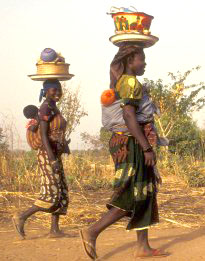
In an attempt to step up the pace of HIV prevention in Africa, the African Union and United Nations launched a new initiative last week to scale up HIV prevention programmes in Africa.
The campaign, which was kicked off in Addis Ababa, Johannesburg, Khartoum, and Ouagadougou, is a follow up to the Declaration adopted by African Ministers of Health in 2005, declaring 2006 as the “Year for Accelerating HIV Prevention in the African Region”.
HIV prevention deserves more serious attention if the goal of coming as close as possible to universal access to HIV prevention, treatment and care by 2010 is to be met. Without effective prevention activities, the impact of AIDS will become even more severe as more people becoming newly infected.
“AIDS responses must be exceptional, but not isolated, requiring balancing of political momentum on AIDS and putting countries in the lead” said UNAIDS Director for Country and Regional Support, Michel Sidibe. He also stressed the need for an appropriate balance between emergency action and long term commitment.
According to UNAIDS, AIDS poses the greatest threat to security and development in Africa. As a result, HIV prevention and treatment should be scaled up urgently. The number of new HIV infections in Africa must be dramatically reduced in the next few years to ensure that treatment, care and support remain economically and socially sustainable.
Despite efforts to fight AIDS in sub-Saharan Africa, 3.2 million people were infected with HIV last year. HIV infections are rising most rapidly among young people under the age of 25 and women.
The African prevention campaign is expected to build a powerful political and social movement that can finally reverse and stop the spread of HIV, which claimed 2.4 million African lives in 2005 alone. Sub-Saharan Africa continues to be the region worst-affected by the epidemic with close to 26 million people living with HIV.
Related

Feature Story
Miss Universe calls on young Russians to get tested for HIV
06 avril 2006
06 avril 2006 06 avril 2006Wearing one of the T-shirts created in the “Designers against AIDS” project, Natalie Glebova, Miss Universe 2005, helped kick start Russia’s Fashion Week 2006/07 and to raise AIDS awareness.
This was Natalie’s first trip back to her birthplace since she moved to Canada at the age of 12. She felt AIDS was too important an issue to miss an opportunity to talk with Russia’s young people about HIV.
“I urge young Russians, who are disproportionately affected by the epidemic, to help prevent the spread of HIV” Natalie said. “By getting tested, learning more about HIV and how to prevent transmission, and being tolerant towards people living with HIV, everyone can make a contribution in the AIDS response.”
Natalie’s recent three-day visit to Moscow included a round table discussion with experts on HIV testing, meetings with policy makers at the State Duma of the Russian Federation, discussions with representatives of the community of people living with HIV, as well as meetings with Russian celebrities and opinion leaders in business and media.
“Misinformation about AIDS, along with stigma and discrimination, is one of the greatest challenges that we must overcome to prevent further spread of the epidemic and improve the lives of people living with HIV,” she said.
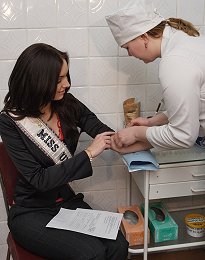
Increasing awareness about AIDS has been the official cause of the Miss Universe competition since 1998. In 2005 Natalie Glebova began her reign with a trip to South Africa where she publicly took an HIV test, highlighting the importance of knowing one’s HIV status. Since then she has continued raising awareness and urging young people – especially young women– to know their HIV status.
“According to the latest UNAIDS estimates, up to 1.4 million people in the Russian Federation are living with HIV. “A striking fact is their young age. 80% of people living with HIV in Russia are under 30, and the proportion of women among new HIV cases is growing fast” said Bertil Lindblad, UNAIDS Representative in the Russian Federation. By contrast, in North America and Western Europe, only 30% of all people infected are under 30.
During her stay in Moscow, Natalie met with people living with HIV to discuss challenges they face and means for improving the situation. She took a public HIV test and attended a confidential consultation at a Moscow clinic, to raise awareness about the importance of access to voluntary and confidential testing and counseling services. She also held meetings with policy makers to discuss how to improve access for Russians to these crucial services.
“Today, information is the only vaccine against HIV. Natalie’s visit to Russia makes a very tangible contribution to raising awareness, reducing stigma and, ultimately, saving lives,” said Avet Khachatrian, Director of Programs in Russia for Transatlantic Partners against AIDS. “Her dedication to the global AIDS response encourages public dialogue about HIV and strengthens the cross-sectoral cooperation that is essential to effectively respond to the epidemic,”
“The fight against AIDS in Russia is a fight to save a generation of young people at risk of getting infected” said Mikhail Rukavishnikov, Director of Community of People Living with HIV. “Natalie is a role model for young people in Russia who may be not aware of the need of getting tested. She is an inspiration and a critical voice for AIDS awareness, tolerance towards people living with HIV and prevention in Russia and worldwide.”
Natalie Glebova also reached out to mobilize the creative community and business circles in Russia to actively join the AIDS response, and raised awareness through media interviews as a spokesperson for the cause.
The visit to Russia was organized by UNAIDS, Transatlantic Partners Against AIDS, The Global Health Council and The Miss Universe Organization.
Related links
Transatlantic Partners Against AIDS
The Global Health Council
Miss Universe Organization
Related
Feature Story
‘Positive partnerships’ break down AIDS-discrimination in Thailand
30 mars 2006
30 mars 2006 30 mars 2006Heralded by UNAIDS as an example of ‘best practice’, a project that offers small loans to enable people living with HIV set up businesses is helping break down stigma and discrimination in Thailand.
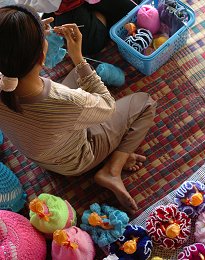
Photo: UNAIDS/O.O'Hanlon
When married mother Nang Noi was told she had HIV three years ago, the fear of the disease and of the social rejection that might go with it was overwhelming. “I cried for five days straight. I did not think I could go on,” she said.
But through her own personal courage, the support of family and friends, and her involvement in a project that has given her the opportunity to set up two small businesses with her sister, Nang Noi has found ways to face her fears and counter AIDS-related stigma and discrimination.
Nang Noi set up two small businesses – selling dried seafood snacks and offering traditional Thai massage – using a micro-credit business loan through Thailand’s biggest non-governmental organization, the Population and Community Development Association (PDA).
Funded by the Pfizer Foundation in Thailand, the PDA project – entitled the ‘Positive Partnership Project’ - offers loans to partnerships of people living with HIV and a ‘’buddy’’(often a friend or family member who is not living with HIV) to set up small business ventures.
As part of the terms of the project, each ‘buddy’ undertakes to be a community ambassador for people living with HIV. ‘Buddies’ talk to friends and neighbors about the realities of HIV, trying to replace fear around HIV with facts.
‘There is a great deal of stigma against people living with HIV - even when it comes to bank loans. A widespread – and unfounded - notion existed in Thailand that people living with HIV wouldn’t be able to pay back loans,’’ said PDA founder, Senator Mechai Viravaidya.
“We felt this theory could and should be tested.”
“We realized that to really make a difference, we needed to tackle the need for people living with HIV to sustain their livelihoods and to break down stigma simultaneously,’’ he added.
Since the official launch of the project in January 2004, around 750 partnerships running micro businesses such as food-selling, motorcycle repair and craft-making have started up, supported by PDA centers in north, northeast and central Thailand. By October 2005, PPP loan repayment rates of 84% exceeded the rate of repayments within the general Thai banking system.
‘’Nobody is more motivated to succeed than the people who are receiving these loans,’’ said Senator Mechai.
Taking charge of their professional lives, people living with HIV involved in the project report feeling an increase in respect shown towards them by others, and a growth in their own feelings of self-respect.
And surveys of community members in PPP project areas indicated that ten months after the loans schemes began ‘anxiety levels’ around (or fear of) AIDS and stigma against people living with HIV had dropped from around 47% to around 14%.
‘’In the beginning our neighbors were afraid to buy Nang Noi’s food. But after I talked to them, and explained the realities of HIV they slowly began to change and now regularly buy from us,’ said Nang Noi’s sister and PPP partner Ngeun.
Patrick Brenny, UNAIDS Country Coordinator for Thailand, underlined the vital role the project plays for Thailand and for UNAIDS work in the country: ‘’Two of the most critical challenges facing persons living with HIV infection in Thailand today are the lack of sustainable livelihoods and the challenges of stigma and discrimination, both of which are priority areas for UNAIDS’ work in Thailand,” he said.
‘”The PPP is an excellent example of addressing the longer-term economic well-being of people living with HIV and their families, while at the same time tackling the community-based stigma and discrimination which hampers the integration of HIV positive individuals and their families into those very same communities,” he explained.
“As more and more people living with HIV in Thailand gain access to antiretroviral therapy through the National Health Security Scheme, the importance of the PPP and similar initiatives will grow in order to address both the economic as well as the social- and community-support challenges facing persons living with HIV infection and their families here in Thailand,” said Brenny.
Related links
Population and Community Development Association
Related

 Thailand’s Mplus: HIV services delivered in style
13 décembre 2022
 Preventing transmission and tackling stigma: The power of U=U
12 décembre 2022
Feature Story
Brazilian designer: condoms, basic as jeans, necessary as love
16 mars 2006
16 mars 2006 16 mars 2006
Photo: Daniel Delaunay
Thousands of condoms pile in the corner. Buckets of paint lie on the shelf. She cuts, twists, shapes, melts, pastes, colors, crochets and sculpts, with her fingers and nails stained black. 365 hours later, a colourful elegant gown made of 6,500 condoms debuts.
Adriana Bertini, a Brazilian artist living in São Paulo, uses expired or defective condoms as raw material to make pieces of art. Her creations include ornate evening dresses, vivid bikinis, elegant shawls, flowery carnival costumes, and other plastic arts.
"I want my art to be visible everywhere, reminding people of the necessity of HIV prevention" Bertini says. “I prefer working more with the figurines, because I noticed that they make people think about the meaning of ‘Wear against AIDS’.”
Bertini started her career at Brazil's fashion houses, and made her first dress from condoms in 1997. Since then, the designer has made around 200 sculptures, 80 tapestries and 160 figurines from condoms. The most condoms she has ever used on a gown - around 80 thousand - was on one wedding dress.
"My idea is to promote condom use not as a commercial fashion but as a conceptual fashion, be it conscious or subconscious. The idea is to wear them at the right time, not just as a trend, on clothes" says Bertini.
Bertini started working in HIV prevention in 1994, after she spent time with HIV positive children as a volunteer for GAPA, an HIV prevention group. "In the beginning, I worked with condoms but not necessarily in the context of AIDS," the designer says "The AIDS issue came along with my work with children living with HIV. I realized that I could use fashion for AIDS awareness."
“I volunteered to do the HIV prevention work,” says Bertini, who at the time did not know anyone living with HIV. “Then I made friends who were HIV positive and this stimulated me even more to promote prevention. Today, I have already lost some dear people to AIDS. I think this is the minimum I can do, being a conscientious person faced with a problem of this magnitude. ‘If you have conscience, act'.”

Adriana Bertini. Photo: Rodrigo Cibantos
Bertini’s designs can be seen at fashion shows and in magazines, or are exhibited in museums. “The focus is not on wearing my gowns, but on introducing condoms into everybody’s lives, breaking taboos and giving the public a chance to ponder.”
While Bertini’s designs are often shown in Brazil, she has also had important international exposure. Her work was exhibited at the International AIDS Conference in Barcelona, Spain, in 2002, and at the 15th International AIDS Conference in Bangkok, Thailand, in 2004, among others. She has also proposed an exhibit in the cultural programme of the 16th AIDS Conference in Toronto this coming August: “I am waiting for the selection to be finalized.”
Reactions of the public to her designs vary. Some people whisper about it, others laugh or dismiss it as inappropriate, and then there are those who want to meet her and tell her their problems.
“There a lot of parents who want to thank me because it was through my art that they’ve reached out to their children to talk about sexuality,” she says.
All her material comes from condom manufacturers, and the proceeds from the sales of dresses - prices range from $700 to $5,000 - go directly to organizations involved in the fight against AIDS. Bertini and her HIV-positive apprentices do not make their living directly from their work, but instead rely on sponsors.
"I'm not doing this to make money but rather as a social act, as art aimed at others. I hope that by using condoms to create something new, I can inspire reflection, foster discussion, and challenge taboos." says Bertini who is quickly becoming well-known in international activism circles.
The 34 year-old was awarded with the Nkosi Johnson Community Spirit Award in 2004 by the International Association of Physicians in AIDS Care, Washington DC, (IAPAC) in recognition of her 10 years of artistic activism. "You understand, condoms must become as basic as a pair of jeans and as necessary as a great love," Bertini emphasizes.
Related links
Adriana Bertini official website

Feature Story
Papua New Guinea strengthens its national AIDS response
13 mars 2006
13 mars 2006 13 mars 2006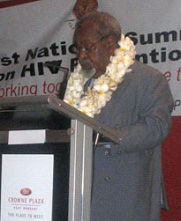
The Prime Minister of Papua New Guinea, the Right Honorable Grand Chief Sir Michael Somare, opened the summit with the key note address.
During the First National HIV Summit recently held in Port Moresby, Papua New Guinea’s Prime Minister reaffirmed a three-fold budget increase for the National AIDS Council to address the country’s growing AIDS crisis.
The Right Honorable, Grand Chief Sir Michael Somare, Prime Minister of Papua New Guinea, called for an immediate expansion of treatment and care for people living with HIV, and urged leaders of civil society, interfaith groups and the private sector to work more closely with the government to stem new HIV infections sweeping the Pacific island nation. “The epidemic is increasing its hold on Papua New Guinea,” he said.
Papua New Guinea has the highest HIV prevalence in the Pacific, with national estimates placing the number of HIV infections at approximately 64,000.
“What has to happen out of this summit is action and more of it,” said Annmaree O’Keeffe, Australia’s Special Representative for HIV/AIDS. She cited the alarming findings of a recent AusAID study which projected that the number of people living with HIV in Papua New Guinea could reach half a million by 2025 if the epidemic is left unchecked.
Public health data in Papua New Guinea indicate that combined factors such as the rising number of STIs, low condom use among commercial and non-commercial partners, as well as domestic violence against women, all contribute to the rapid spread of HIV infection.
HIV is primarily transmitted through heterosexual sex and women aged 15 to 29 are twice as likely to be infected with HIV then men in the same age group, as relationships between young women and older men are common. In remote highland areas, tribal traditions such as arranged marriages also reflect gender inequality issues.
“We have the real potential to lose the women of Papua New Guinea to the epidemic,” said Dr Jacqui Badcock, UNDP Resident Representative and UN Resident Coordinator. “We need to intervene on behalf of women,” she said.
Dr Badcock also stressed that the UN Joint Plan to support the National AIDS Strategic Plan - which includes ARV treatment programs and the Monitoring and Evaluation of HIV and AIDS programs - must adopt the best practices model for HIV prevention.
“The absence of people living with HIV in Papua New Guinea’s AIDS response is one of its greatest weaknesses,” said Maura Mean of the NGO Igat Hope in reference to the absence of any people living with HIV on the National AIDS Committee. She emphasized that people living with HIV must be directly involved in shaping Papua New Guinea’s national policy: “It is time for us to come out of the shadows.”
Related
Feature Story
Economic security for women key to HIV prevention
08 mars 2006
08 mars 2006 08 mars 2006
A new paper published today by the UNAIDS-led Global Coalition on Women and AIDS (GCWA) shows that when women have an income and a safe place to live, they are much better able to negotiate abstinence, fidelity, and safer sex. Economic security, the paper stresses, is a major factor in enabling women to protect themselves from HIV.
Today, however, of the 1.2 billion people living on less than US $1 a day, 70% are women. They also represent almost half of all people living with HIV globally.
When women are economically and financially dependent on male partners and family members, their bargaining power over sexual matters can be reduced, making them more vulnerable to HIV. Where women lack property rights, they suffer restricted economic options, reduced personal security, poverty, violence, and homelessness. Poverty can also encourage risky livelihood measures, such as enduring an abusive relationship or engaging in unsafe sex in exchange for money, housing, food or education.
Women whose partners fall sick and die, particularly of AIDS, frequently suffer discrimination, abandonment, and violence. In some regions, when their husband dies, women can lose their homes, inheritance, possessions, and livelihood. “My husband’s family took farm equipment, livestock, cooking pans, bank records, pension documents, house utensils, blankets and clothes… They said they had bought me [with a dowry] and therefore I had no voice in that home” says Emily Owino of Kenya.
With sick children, and no money to buy food or clothes, Emily went to stay with her own family. When she came back to take up residence in her marital home, she discovered that her land and her last few possessions had been taken. “I was destitute,” she says.
To help women like Emily, the UNAIDS-led Global Coalition works on securing women’s property rights. In 2005, it initiated a small grants programme to support nine organizations in sub-Saharan Africa that are implementing innovative projects to advance women’s property rights in the context of HIV and AIDS.
The Zimbabwe Widows and Orphans Trust (ZWOT) is one such organization. “The widows who come to ZWOT have absolutely nothing” says founder Susan Zwinoira. “Their morale is low and they have no resources. They often come to us looking for legal assistance. We start by getting as much information as we can from the widow and then we determine which route is best to follow. Negotiations with the family are sometimes successful. But where they fail, matters can end up with the police, in court… Every Tuesday and Thursday we receive a welcoming reception. We have even started to call them “Widows’ days”.
Another grant recipient is the Rwanda Women's Network. Its Director Mary Balikungeri explains: “The Network was established in 1995 to support widows and orphans who survived the genocide. We started a low-cost housing project for widows and constructed about 200 houses all over the country which are now occupied by widows. We are also promoting nutritional gardening. Each woman who was given a small house has a small gardening plot but it is too small. We plan to negotiate with local authorities to provide us with a collective farming plot.”
Securing property and inheritance rights for women and girls has clear value in HIV prevention. Many promising initiatives are using microfinance and skills training to improve women’s access to economic assets, such as land, property and credit, and to reduce their vulnerability to HIV.
Read the Global Coalition on Women and AIDS Issues Brief on Property Rights
Related links
Global Coalition on Women and AIDS
Zimbabwe Widows and Orphans Trust
Related
Feature Story
Salif Keita performs at UNAIDS fundraising concert in Athens
03 mars 2006
03 mars 2006 03 mars 2006
On 1 March Salif Keita, one of the world’s greatest musicians, was in Athens performing in front of a packed audience at the Greek Opera House. This was a unique event as it was the first time a concert, other than classical music, was held at the Opera House. The concert was a fundraising event for UNAIDS, organized by Ms Mero Kececioglu-Kylicas, UNAIDS Special Representative and President of the Foundation for Greek Action in Africa.
Prior to the concert opening, UNAIDS Executive Director Dr Peter Piot reminded the audience that AIDS affects everyone. “There isn’t a single country untouched by the epidemic,” he said. He went on to describe AIDS as “one of the greatest challenges and threats to the 21st century”, given that it has killed more than 25 million people and infected an additional 40 million worldwide. He concluded on a hopeful note by saying, “we can defeat this epidemic if every one of us gets involved in fighting it, in whichever way we can….because united, we can win.”
Dr Piot was in Athens as part of his first official visit to Greece. He met with the Greek Minister of Health, Dimitrios Avramopoulos, and Deputy Minister of Foreign Affairs, Evripidis Stylianidis, to strengthen collaboration between UNAIDS and the Greek Government. Their discussions focused on the fight against AIDS in the world’s worst-affected region, sub-Saharan Africa, as well as on the Balkans and the former Soviet republics, which are experiencing rapidly growing epidemics. The Greek Government is in the process of developing a cooperation agreement with UNAIDS.
During the meetings, Greece reiterated its commitment to the fight against AIDS, focusing particularly on the need to tackle human trafficking from the Balkans and the former Soviet republics. Immigrants from these regions, as well as from Africa, make an important portion of Greece’s population of 9 million, and there has been an influx of sex workers into Greece. This is why human trafficking has been a priority for the Greek government. The Greek government and AIDS NGOs are responding to the problem by offering free health services, including HIV testing, counseling, and treatment through the public health systems.
The number of people living with HIV in Eastern Europe and Central Asia reached an estimated 1.6 million in 2005 – a twenty-fold increase in less than 10 years. Russia has the biggest AIDS epidemic in Europe with an estimated 860,000 people living with HIV. Russia’s and Ukraine’s epidemics continue to grow at a rapid pace due to the interplay between injecting drug use and unsafe sex. HIV is affecting larger parts of society, with more women testing HIV-positive each year.


Feature Story
Innovative AIDS funding takes off
28 février 2006
28 février 2006 28 février 2006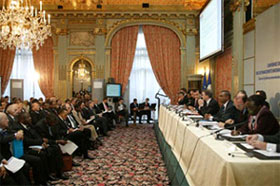
Plenary session at the CCI in Paris. Photo: © F. de La Mure/MAE
For several years now, the international community has been looking for new tools to ensure sustained financing for development and the fight against poverty. A recent international conference on “Solidarity and Globalization: innovative financing for development and against pandemics”, held in Paris, brought together more than one hundred countries from the around the world as well as,18 international organizations and 60 NGOs to discuss the implementation of innovative financing for development. Since the declaration of 14 September 2005 which encourages further work on an international solidarity contribution the principle of innovative sources of financing is now receiving support from a large part of the international community.
French President Jacques Chirac announced that several countries agreed to use an air-ticket tax to respond to AIDS, TB and malaria. This innovative source of funding would be used to facilitate access to HIV treatment by assuring the long-term production of ARVs. This tax is expected to generate revenue of up to € 200 million per year for France alone.
Programmes that work to alleviate poverty and to help achieve the Millennium Development Goals need long-term stability and continuity and can suffer from the unpredictable flow of funds. Without new sustainable long term funding mechanisms it will be difficult to scale-up HIV prevention, treatment, care and support and come as close as possible to universal access by 2010. “New innovative sources of financing are absolutely necessary,” said UNAIDS Executive Director Dr. Peter Piot.
During the conference France proposed the creation of an international facility for drug purchases providing sustainable and affordable access to ARV treatment. This kind of facility could assure the pharmaceutical industry of continuous funding and demand which could then in turn lower drug prices. “The demand for ARVs will constantly rise in the next few years. More and more people will get sick and more and more people will know they have HIV. That’s why it’s so important that we develop long term sustainable funding mechanisms which will allow us to continue treating people in 20 or 40 years” said Dr. Piot.
In addition to France and Chile which have already adopted the legislation and the UK which has a similar tax, Brazil, Norway, Niger, Madagascar and Mauritius announced that they would immediately create an airline ticket tax. Seven other countries are expected to make similar announcements. Approximately 30 countries will take part in a working group for the creation of a tax in the long-term.
Feature Story
UNAIDS and partners reach out to young military recruits in Brazil
27 février 2006
27 février 2006 27 février 2006
Packed with 750 young navy cadets, the Rio de Janeiro’s Naval School hosted representatives from the Brazilian Ministries of Defense and Health, UNAIDS and UNFPA to launch the STD, HIV and AIDS Prevention Programme in the Armed Forces and Military Academies.
Conceived as a follow-up to the 2004 Agreement between UNAIDS and the Brazilian Government to strengthen prevention among the country’s conscripts, the project aims to enhance military capacity to plan, monitor and evaluate prevention activities.
The programme will also integrate HIV prevention in military schools curricula and Armed Forces training courses. “There is a correlation between low education, low information and HIV. Those who have more access to information are better protected” said Admiral Carlos Edson Martins da Silva, Coordinator of the Programme in the Brazilian Ministry of Defense.
With more than 310,000 personnel stretched across the country, the Armed Forces are a key actor in Brazil’s HIV prevention. Brazil’s well structured health services are available not only to military personnel, but also to civilians in remote regions otherwise without access to public health services. Brazilian Government also produces generic antiretroviral drugs that are available to the population at reduced prices.
New course materials include a training guide and a peer education toolkit, and are specifically adapted to the Brazilian setting. “Providing information alone is not enough. We need to change attitudes and you will be the agents of this change”, Dr. Andrea Boccardi, UNAIDS Latin America Regional Advisor for AIDS, Security and Humanitarian Response addressed the navy aspirants attending the launching ceremony.
HIV prevention efforts in Brazil’s Armed Forces date back to the 90’s. The research carried out between 1996 and 2000 by Brazilian Ministry of Health shows a consistent increase in the use of condoms among young conscripts, from 38% in 1997 to 50% in 2000.
For more information, please contact Naiara G. da Costa Chaves (UNAIDS - Brasil) naiara@undp.org.br
Feature Story
On the frontline: Chinese star speaks out on AIDS
21 février 2006
21 février 2006 21 février 2006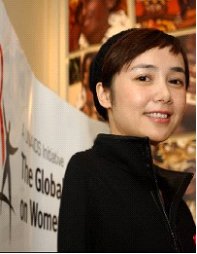
Wenli Jiang won China’s highly-revered ‘Flying Goddess Award’ for Best TV Actress in 1999. Her husband, Changwei Gu, is a cinematographer-turned-director, who won the Silver Bear at 2005 Berlin International Film Festival with Peacock. They have a 5 year-old son.
Photo by Xinhua.
The first time Chinese TV star Wenli Jiang took part in a public HIV prevention and awareness raising event, in 2003, she was decidedly nervous.
Standing on a temporary stage set up in the most popular shopping section in Beijing, she looked out at the shoppers, holding a sheaf of condoms in her hand.
Crowds started to form as passers by recognized Jiang, who shot to fame in China through a TV series called “Holding Hands” where she played a modern housewife disillusioned with her marriage.
“I felt quite embarrassed that first day,” said Jiang, “but the more I participated in these kinds of events, the more I got used to them and felt comfortable.” So much so that in 2004, Jiang handed out 6,000 condoms in one hour in Bangkok’s red-light district with fellow Chinese actor Cunxin Pu.
A Leadership Council member of the UNAIDS-led Global Coalition on Women and AIDS – and the first female spokesperson in China’s HIV prevention campaign – Jiang explains why she is so committed to fighting AIDS and the stigma surrounding it.
“I feel a sense of responsibility to help people living with HIV, and call for the elimination of misunderstanding and discrimination against them,” said Jiang. She is especially interested in promoting the recognition of women and children’s rights.
Her interest in the AIDS response began in 2002 when she made a TV spot with a young boy living with HIV. “The first time I met the little boy living with HIV I felt so shocked and sympathetic. I had a strong desire to do something to make a difference.”
Now, Jiang is well-known for promoting awareness about HIV prevention in China. Her face can be found on HIV prevention posters in subway stations and along main streets in many Chinese cities, including the capital Beijing.
In February, 2004, Jiang joined fellow actress Emma Thompson and other celebrities and leading figures working to reduce the impact of AIDS on women and girls at the London launch of the UNAIDS-initiated Global Coalition on Women and AIDS.
“The London meeting was my turning point,” said Jiang, “I was captivated by the passion of the UNAIDS staff and other delegates from other 24 countries. I realized that besides just attending meetings and events, I could really move my commitment forward.”
In 2005, Jiang invited an 11-year-old child living with HIV from the Anhui province, to live with her family for a number of days. “I wish all children living with HIV could be free to go anywhere and do anything that they want without being discriminated against,” Jiang said.
UNAIDS Country Coordinator for China Joel Rehnstrom underlines the importance of Wenli Jiang’s involvement in the fight against AIDS for the country. "Celebrities such as actress Wenli Jiang play an important role in China in raising awareness about AIDS. By appearing in public with a person living with HIV, Wenli Jiang helps reduce fear, shame and stigma related to AIDS," he said
Wenli Jiang’s first book, entitled Wenli Talks about AIDS was published last December. All profits from this book will be donated to AIDS related organizations, said Jiang. “The book introduces basic information about AIDS, and shares my experiences as an HIV prevention activist with readers,” Jiang said. “I want to make readers aware – and then ignorance of AIDS cannot be used as an excuse.”
“My dream would be for everyone in China to volunteer as an AIDS activist,” said Jiang, “Please do tell your friends and relatives to keep away from drugs, use condoms and lead a healthy life,”
“My objective this year is to shoot a documentary about AIDS in China. Everything is being planned now,” she said excitedly, “it will be my directorial debut.”
Related
 Cities leading the way to achieving key targets in the HIV response
27 septembre 2023