

Feature Story
International consultation on Islam and AIDS
28 Noviembre 2007
28 Noviembre 2007 28 Noviembre 2007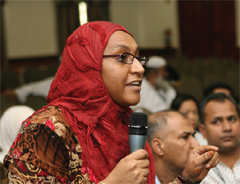
The conference brings together Islamic scholars,
AIDS practitioners and people living with HIV to
help generate and develop practical responses to
AIDS by the Islamic community.
Photo credit: Islamic Relief
“UNAIDS welcomes the involvement of Islamic religious leaders and scholars in the response to AIDS,” said UNAIDS Director of Partnerships and External Relations Elhadj As Sy during the plenary address of the ‘Islam and AIDS’ conference taking place in Johannesburg, South Africa, from 26 – 30 November. “The key messages of this conference are to halt the spread of HIV, care for the sick and eliminate stigma and discrimination faced by people living with HIV,” he added.
Hosted by Islamic Relief Worldwide, the conference brings together Islamic scholars from a diverse range of Islamic traditions, AIDS practitioners and people living with HIV to help generate and develop practical responses to AIDS by the Islamic community. “The conference aims to develop and subsequently apply approaches to AIDS which are both effective and Islamically sound. These approaches will be jointly developed and will be based on Islamic teachings of trust, respect and other examples of good practice. They will also build upon existing Muslim and interfaith declarations related to AIDS,” said the organizers.
Declarations of intent will be issued by each of the conference participants, stipulating what participants will do to contribute to addressing AIDS and to dealing with its consequences for individuals and communities.
Links:
Visit the official web site of the conference
Feature Story
First Global Parliamentary Meeting on AIDS
28 Noviembre 2007
28 Noviembre 2007 28 Noviembre 2007

Michel Sidibe, UNAIDS Deputy Executive Director,
highlights the important role of parliamentarians
at the opening ceremonies of the First Global
Parliamentary Meeting on AIDS .
Photo credit: UNAIDS
The First Global Parliamentary Meeting on AIDS was opened on Wednesday 28 November in Manila by Mr Manny Villar, President of the Senate of the Philippines.
Around 200 participants from around the world are attending the three-day meeting which has been organized by the Inter-Parliamentary Union in cooperation with the Senate of the Philippines and in close collaboration with the United Nations Development Programme and the Secretariat of the Joint United Nations Programme on HIV/AIDS (UNAIDS).
It is the first time that Parliaments from all over the world have been convened to jointly discuss the part they have to play in responding to the AIDS epidemic. The main aim of the event is to enhance the commitment and collaboration of Parliaments worldwide as crucial stakeholders in the AIDS response.
During his opening address, UNAIDS Deputy Executive Director, Michel Sidibe highlighted the important role parliamentarians have to play in the global response to the epidemic, “As Parliamentarians you are opinion-leaders and decision-makers. What you say matters. You can encourage informed debate. You can address prejudice and misconceptions. You can lead by example,” he said.
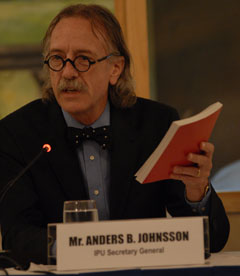
Michel Anders B. Johnsson, Secretary General of
the Inter-Parliamentary Union, presents “The
Handbook on Taking Action”.
Photo credit: UNAIDS
The meeting is being held ahead of World AIDS Day (1 December) under the main theme of ‘Leadership’. In addition, five sub-themes will be discussed in plenary sessions or panel discussions; stigma and discrimination; affordability of drugs; vulnerable groups; legalization and criminalization issues; and budgeting.
A range of keynote speakers have been invited to contribute to the sessions including Dr Nafis Sadik, UN Secretary-General’s Special Envoy on AIDS for Asia and the Pacific, Mr Marcel van Soest, Executive Director of the World AIDS Campaign and Justice Michael Kirby, from the High Court of Australia.
One of the highlights of the meeting will be the launch of a handbook for Parliamentarians entitled, ‘Taking action against HIV’. The handbook will serve as both a call to action for parliamentary leadership and a reference book that parliamentarians and their staff may consult for information and guidance on specific issues in relation to the AIDS response.
Links:
Download final conclusions
Read press release
Read UNAIDS Deputy Executive Director's statement
Download Taking action against HIV - A handbook for parliamentarians
Read also - Brazil shares best AIDS practice with parliamentarians (29 June 2007)
Related
 Indian partners reflect on a year after sex workers’ human rights affirmed
05 de octubre de 2023
 A rainbow of hope for LGBTQI+ people in rural Japan
17 de mayo de 2023

Feature Story
UN Special Envoy speaks out on violence against women
26 Noviembre 2007
26 Noviembre 2007 26 Noviembre 2007
Approximately 60% of HIV adults living with HIV in
sub-Saharan Africa are women.
Photo credit: UNAIDS/L.Taylor
In a special statement to mark International Day Against Violence Against Women and the start of the annual ‘16 days of Activism Against Gender Violence’ (November 25), the UN Secretary General’s Special Envoy on AIDS for Africa, Elizabeth Mataka, asks ‘ when it comes to women, why are we so slow to act?’
“I have been reflecting on exactly what ‘violence’ in the violence against women means. The more I thought about the subject, the more I realized that violence now has many shapes and colours, it has transcended the violence of physical, sexual and psychological assault, touched down on political and economic harm and now moved into the space of complicity by silence,” Ms Mataka said.
Highlighting the recent epidemiological data released by UNAIDS and WHO, Ms Mataka underlined that approximately 60% of HIV adults living with HIV in sub-Saharan Africa are women. “This information, I am aware, is not new – women in our region have for many years been what has been coined ‘the face of the epidemic’ - but what this new data has done is brought home the realization that nothing, nothing has changed for women. When it comes to women, why are we so slow to act? “ she said.
“With statistics such as these, we are facing a critical emergency, we are rapidly moving towards an Africa without women. Allowing this to happen is violence against women. You may not conduct a physical assault, but being silent is being complicit and non-action is now a violent act,” she added.
The 16 Days of Activism Against Gender Violence is an international campaign that was started by the Center for Women's Global Leadership (CWGL) in 1991. The 16 Days runs from November 25, International Day Against Violence Against Women to December 10, International Human Rights Day to symbolically link violence against women and human rights and to emphasize that such violence is a violation of human rights.
This 16-day period also highlights other significant dates including December 1— World AIDS Day.
Links:
Read the full statement by Elizabeth Mataka
Read more on International Day Against Violence Against Women on the UNIFEM web site
Related
 Walk in my shoes — UNAIDS Board devotes key session to HIV, adolescents and youth
20 de diciembre de 2013
 Know your HIV status: First European testing week takes off
27 de noviembre de 2013
 Asian Football Confederation and UNAIDS team-up to raise awareness of HIV
26 de noviembre de 2013
Feature Story
AIDS on the agenda at Commonwealth Heads meeting
26 Noviembre 2007
26 Noviembre 2007 26 Noviembre 2007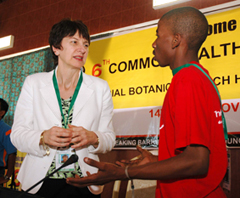
UNAIDS Deputy Executive Director Ms Deborah
Landey talking with the Commonwealth Youth
Delegate from Botswana Thata Kebadire. Entebbe
Uganda.17 November 2007.
The need to further engage young people in the AIDS response was a key element of discussion at the recent Commonwealth Heads of Governments Meeting (GHOGM), which took place in Kampala, Uganda.
UNAIDS Deputy Executive Director Deborah Landey joined Uganda AIDS Commission Director General Dr David Kihumuro Apuuli and youth representatives Johnah Josiah of Kenya and Mobafa Baker of Trinidad in a plenary session at the meeting, focusing on the health of young people. During her intervention, Ms Landey discussed the importance of engaging young people in the HIV response.
The Commonwealth Heads of Government Meeting is a biennial meeting convening representatives from 53 member states. The commitment to young people played a significant part in this year’s meeting, which was officially opened by the Head of the Commonwealth, Her Majesty Queen Elizabeth II.
Deborah Landey took part in the meeting as part of a country visit to Uganda where she also met with various leaders in Uganda’s AIDS response from government and civil society.
Links:
Read UNAIDS Deputy Executive Director's speech
View photo gallery of UNAIDS Deputy Executive Director's visit
Visit the CHOGM 2007 Uganda Web site
Feature Story
International consultation on AIDS estimates: Recommendations
16 Noviembre 2007
16 Noviembre 2007 16 Noviembre 2007An International Consultation on AIDS Epidemiological Estimates, convened jointly by the UNAIDS Secretariat and WHO, was held on 14-15 November 2007 in Geneva, Switzerland. The meeting brought together more than 30 technical experts and country epidemiologists from around the world to review the current processes and methodologies used by UNAIDS and WHO to produce HIV estimates at the country, regional and global level.
The consultation recognised that the new set of draft UNAIDS/WHO country estimates for 2007 is based on the best available data and methodologies.
The meeting participants made a number of recommendations for future improvements. These included:
- Independent scientific review of the estimation process and methodologies should take place on a regular basis, involving experts who have not been directly implicated in the production of the methodologies and the estimates;
- Countries should be encouraged to collect data of better quality and representativeness and increased assistance should be provided to countries. Data should come from a range of sources, such as sentinel surveillance sites, as well as population-based surveys, though careful consideration must be given to the strengths and limitations of each data source (for example non response bias in surveys). Surveillance of most at risk populations, such as sex workers, injecting drug users and men who have sex with men, must be strengthened to try to reach more accurate estimates of population sizes and HIV prevalence;
- Country ownership should continue to be a key feature of HIV surveillance and data collection, with training involving a wide range of stakeholders including local epidemiologists, civil society and government representatives;
- Surveillance should be integral to the design, implementation and evaluation of HIV programmes in country. UNAIDS and WHO should build capacity of country counterparts to analyse surveillance data leading to an improved understanding of the dynamics of the epidemic and how programmatic resources might be best used; and
- Special studies may be required to assess aspects such as AIDS-specific mortality rates and the quality and coverage of treatment resources.
The UNAIDS secretariat and WHO will release the global 2007 HIV estimates on 21 November 2007 in time for World AIDS Day. UNAIDS and WHO will continue to work with experts and country counterparts to systematically review the methods used to derive HIV estimates and ensure they reflect up to date scientific evidence and research.
Links:
Read more on the process behind AIDS estimates
Read more on the International consultation on AIDS estimates
Related
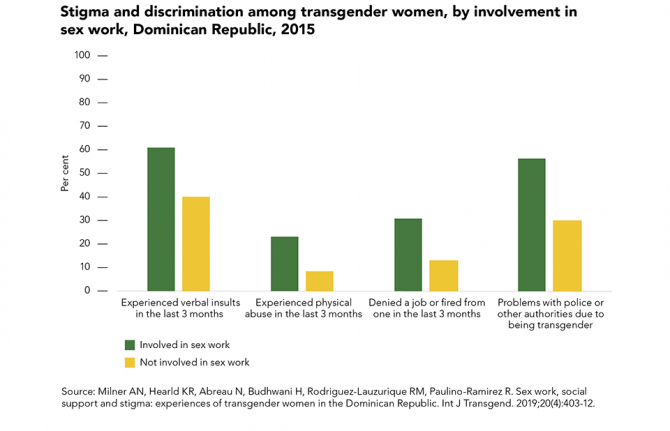 Transgender sex workers face frequent abuse
29 de marzo de 2022
 Many key populations avoid health services
21 de febrero de 2022
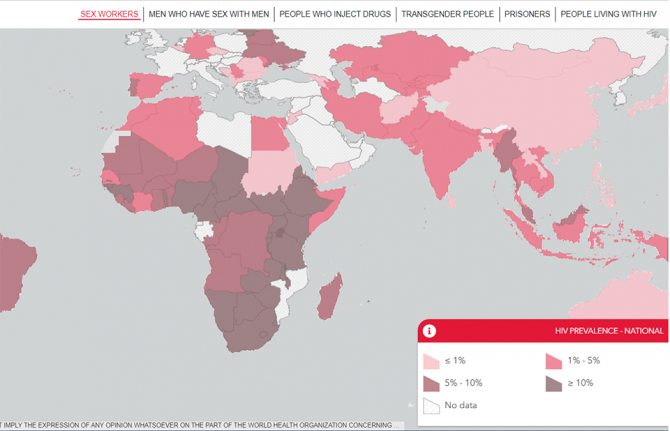 New indicators added to Key Populations Atlas
06 de enero de 2022
Feature Story
International consultation on AIDS estimates
13 Noviembre 2007
13 Noviembre 2007 13 Noviembre 2007
Over the last eight years, estimates of HIV prevalence, incidence and mortality have been produced in close collaboration with countries, using methods developed by a reference group of internationally renowned scientists.
In producing these estimates, the UNAIDS Secretariat and WHO use the best available data and latest analytic methods. As this data improves the estimates are revised, sometimes significantly.
In July 2007, India announced revised estimates of HIV prevalence and the number of people living with HIV that were less than half the previous estimates. New regional and global estimates being prepared for release in the 2007 AIDS Epidemic Update report are expected to include further downward revisions in some countries.
In the light of these changes, UNAIDS felt that it was timely that an independent and authoritative review of the process for AIDS estimates is carried out. With this in mind, UNAIDS is bringing together a group of some 30international experts and country practitioners to review the methods and process used to generate AIDS data.
The consultation is being held on the 14-15 of November at the UNAIDS Secretariat headquarters in Geneva. The objectives of the meeting are to review the current methodology used by the UNAIDS Secretariat and WHO and to look at ways to improve the methodology and its application in producing AIDS estimates. As part of the consultation, representatives from a number of countries will provide country perspective on country methods and process and how this is linked to the UNAIDS/WHO process.
At the end of the meeting, a report will be drafted containing the findings of the review and recommendations for improvement of the process for development and use of methods. As in previous years, UNAIDS Secretariat and WHO will be releasing the latest estimates on the epidemic, for 2007, in time for World AIDS Day on December 1st.
UNAIDS and WHO will continue to systematically review the methodology used to ensure that the methods used to analyze data are the best to our knowledge and will modify AIDS estimates when new scientific data, research and analysis supports such change.
Links:
Read more on the process behind AIDS estimates
Related
Transgender sex workers face frequent abuse
29 de marzo de 2022
Many key populations avoid health services
21 de febrero de 2022
New indicators added to Key Populations Atlas
06 de enero de 2022
Feature Story
Gearing up for World AIDS Day 2007
13 Noviembre 2007
13 Noviembre 2007 13 Noviembre 2007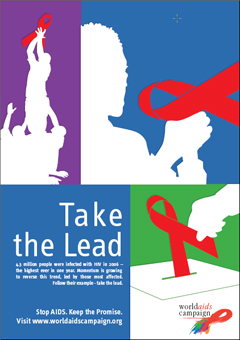
This year, World AIDS Day—that takes place
on December 1— will focus on leadership, the
theme set by the World AIDS Campaign under the
five-year slogan “Stop AIDS, Keep the Promise”.
With less than a month to go before this year's World AIDS Day, events to commemorate the day are being organized all over the world. This year, World AIDS Day—that takes place on December 1— will focus on leadership, the theme set by the World AIDS Campaign under the five-year slogan “Stop AIDS, Keep the Promise”.
World AIDS Day is a day when people from around the world come together within a single effort to raise awareness about HIV and to express global solidarity with people living with HIV. But World AIDS day is not just about raising awareness. It also provides a global opportunity to urge governments and leaders for all promises on AIDS to be kept as well as an opportunity to demonstrate commitment and action on AIDS.
In designating leadership as the World AIDS Day theme for the next two years (2007 – 2008), the World AIDS Campaign highlights both the political leadership needed to fulfill commitments that have been made in the response to AIDS – particularly the promise of universal access to treatment, prevention, care and support – and celebrating the leadership that has been witnessed at all levels of society.
In preparation for this year’s World AIDS Day, the World AIDS Campaign has produced a wide range of new materials to be used by people and organizations that want to set up their own events on World AIDS Day. These materials are available on the World AIDS Campaign Web site. World AIDS Campaign materials are intended to provide organizations who have limited resources with access to meaningful campaigning materials as well as enhancing solidarity within the global response to AIDS by working through a united effort.
The materials available consist of posters, leaflets and CD-ROMs in a number of languages, including French, Spanish, Russian, Swahili and English. Other language versions, particularly African languages, are also offered via electronic distribution. The printed posters and CD-ROMs can also be ordered from the World AIDS Campaign web site.
The web site also has a calendar of events where more and more organizations are now listing information on their planned activities for World AIDS Day so people can browse the different events planned in their country or region.
For the 2007 celebrations, the World AIDS Campaign has also produced, in collaboration with UNAIDS, a public service announcement on this year’s leadership theme that is being distributed to promote the day and/or can be shown during events.
UNAIDS founded the World AIDS Campaign originally as a loose partnership of UN agencies, governments and all sectors of civil society to campaign around specific themes related to AIDS. The World AIDS campaign is now an independent NGO based in Amsterdam, the Netherlands, and is governed by a Global Steering Committee of global constituency-based AIDS networks comprised of the Global Network of People Living with HIV/AIDS, the International Community of Women Living with HIV/AIDS, the Youth Coalition, the Global Unions Programme on HIV/AIDS, the International Council of AIDS Service Organizations, the Ecumenical Advocacy Alliance, and the International Women’s AIDS Caucus. UNAIDS and the Global Fund to Fight AIDS, TB and Malaria are non-voting members.
Links:
Visit the World AIDS Campaign web site
Related
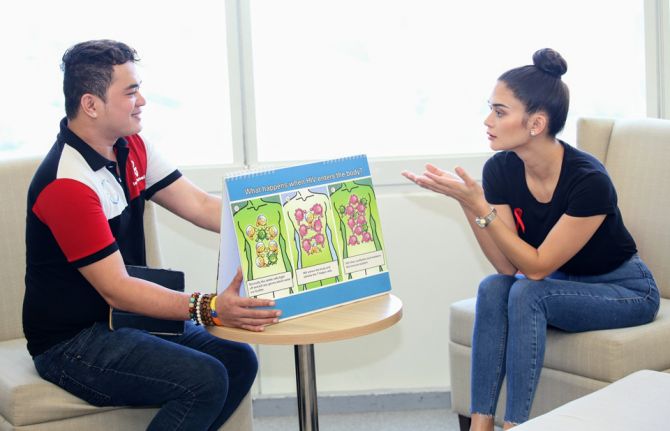 UNAIDS Goodwill Ambassador Pia Alonzo Wurtzbach ramps up HIV advocacy efforts
09 de agosto de 2017
 Immune Nations
23 de mayo de 2017
 Germany—ending AIDS by 2020
12 de mayo de 2017
Feature Story
Noticias destacadas de la XXXVIII Conferencia mundial sobre salud pulmonar
12 Noviembre 2007
12 Noviembre 2007 12 Noviembre 2007Los reportajes que se presentan a continuación se redactaron por la organización NAM y se encuentran publicadas en su página web.
200 000 personas mueren cada año debido a que el tratamiento conjunto del VIH y la tuberculosis sigue fallando a escala global.
Los programas de VIH todavía no integran el tratamiento y la prevención de la tuberculosis, que continúa siendo la principal causa de mortalidad entre las personas que viven con el VIH, según se expuso en la sesión de apertura de la trigésimo octava Conferencia mundial sobre salud pulmonar en Ciudad del Cabo.
El doctor Alasdair Reid, de TB/VIH Liaison en ONUSIDA señaló: “Si todas las personas que viven con VIH se sometieran a pruebas de diagnóstico de tuberculosis, se podrían salvar miles de vidas”.
Ver artículo completo en http://www.aidsmap.com/en/news/EB1B111D-F861-4F76-8AA1-40FD572044D8.asp (en inglés)
La amenaza de la tuberculosis MDR
Los expertos alertaron, poco tiempo antes de que comenzara la 38 Conferencia mundial sobre salud pulmonar en Ciudad del Cabo (Sudáfrica), de que el creciente problema de la tuberculosis resistente a múltiples medicamentos (MDR) amenaza con echar por tierra los esfuerzos realizados, a menos que se aumente la inversión en el control y el diagnóstico.
Este año, la conferencia se celebra en Sudáfrica para destacar el problema que supone la tuberculosis resistente a múltiples medicamentos en las regiones más afectadas por el VIH a nivel mundial.
El descubrimiento de un brote de tuberculosis resistente a múltiples medicamentos entre pacientes que vivían con el VIH en el pueblo de KwaZulu-Natal en Tugela Ferry el año pasado afectó al ámbito del tratamiento de la tuberculosis y del VIH, y puso de manifiesto la necesidad de una mejor integración del tratamiento de estas dos enfermedades.
Según el doctor Haileyesus Getahun, del departamento de la asociación Stop TB de la Organización Mundial de la Salud, que participó en el taller sobre tuberculosis XDR y MDR en el contexto del VIH, organizado por el Grupo de acción por el tratamiento (Treatment Action Group) en colaboración con la asociación Stop TB: “La tuberculosis XDR es el punto de partida para asegurar un mejor futuro al tratamiento del VIH mediante el refuerzo del control de la tuberculosis”.
Ver artículo completo sobre tuberculosis del tipo XDR y MDR de la 38 Conferencia mundial sobre salud pulmonar en Ciudad del Cabo: http://www.aidsmap.com/en/news/40A6BE12-72BC-4B9E-ACBE-9348DD330091.asp (en inglés)
Principales hallazgos científicos de la conferencia:
Sigue creciendo el brote de tuberculosis XDR en Tugela Ferry
Recientemente doscientas sesenta y seis personas en la ciudad sudafricana de Tugela Ferry han sido diagnosticadas con tuberculosis XDR en el mayor brote del mundo de tuberculosis extremadamente resistente a los medicamentos. Además se han detectado 205 casos más de MDR, y ocho trabajadores de la Church of Scotland Hospital en Tugela Ferry han muerto de tuberculosis MDR o XDR. El doctor Tony Moll ha informado de que el 84% de los pacientes de tuberculosis XDR ha muerto.
El sur de África, el lugar con mayor número de pacientes de MDR
El estudio de los informes sobre tuberculosis MDR realizados con los datos disponibles por la doctora Ruth McNerey de London School of Hygiene, muestra que diez de las 20 regiones con mayor incidencia de tuberculosis MDR por cada 100 000 habitantes se localizan en el sur de África y ocho de cada diez, en Sudáfrica. La mayor incidencia se encontró en Karakalpakistán, un distrito de Uzbekistán (35 casos por cada 100 000), seguido por Kazajstán (22 por cada 100 000) y cuatro provincias de Sudáfrica (Limpopo, el noroeste de Mpumalanga y KawaZulu-Natal) con 1-15 casos por cada 100 000 notificaciones.
El doctor McNerey apuntó que, aunque los casos de tuberculosis MDR comprendieran una baja proporción del número total de casos de tuberculosis en la región, su incidencia en la población fue alta.
El riesgo de tuberculosis MDR se ha incrementado en los casos de personas con tuberculosis que viven con el VIH en Ucrania.
El análisis de todos los casos de tuberculosis en el distrito de Donetsk, una gran ciudad industrial también seriamente afectada por el VIH al sur de Ucrania, muestra que, de entre los 1 293 pacientes de tuberculosis consecutiva a los que se les diagnosticó citología positiva entre julio de 2005 y junio de 2006, el 15,5% de aquellos a los que se les diagnosticó tuberculosis la primera vez, padecía tuberculosis MDR. Entre quienes habían sido previamente tratados contra la tuberculosis, el 41,5% tenía tuberculosis resistente a múltiples medicamentos.
Los investigadores ucranianos descubrieron que el 21% de los enfermos de tuberculosis vivía con el VIH y que el índice de tuberculosis MDR era significativamente superior en pacientes que vivían con el VIH, los cuales tenían un 50% más de riesgo de que se les diagnosticara tuberculosis MDR como primera infección de tuberculosis.
Se intensifica la detección de tuberculosis en personas con VIH: Búsqueda de síntomas múltiples
Existen estudios procedentes de Camboya y Etiopía que sugieren que, si el personal sanitario considerara más síntomas además de la tos, aumentaría el número de diagnósticos de tuberculosis en personas VIH-positivas.
La investigación en Camboya, publicada por los doctores Michael Kimerling y Kevin Corn, reveló que una tos de tres semanas era un factor menos determinante en el diagnóstico de tuberculosis que la fiebre prolongada y la pérdida repentina de peso durante el mes anterior, mientras que el estudio en Etiopía reveló que centrarse sólo en la tos supondría pasar por alto el 56% de los casos en personas que viven con el VIH.
Las directrices actuales de la OMS, orientadas hacia la detección de la tuberculosis mediante citología negativa (que es más común en personas con VIH), recomiendan una amplia búsqueda de síntomas, entre los que se incluyen la tos, la fiebre prolongada, la pérdida de peso, la sudoración nocturna y la inflamación de los nodos linfáticos. Además de la tos, existen otros síntomas que pueden ser indicadores particularmente importantes de tuberculosis en pacientes con tuberculosis extrapulmonar, que es también más común en personas con VIH.
Los índices de mortalidad por MDR más bajos de Sudáfrica se deben a un seguimiento individualizado
Según un estudio nacional, los pacientes de la provincia noroccidental de Sudáfrica tienen menos posibilidades de morir por tuberculosis MDR que los del resto del país; probablemente debido a un tratamiento individualizado. Incentivos como el apoyo nutricional, el transporte al centro de tratamiento de tuberculosis MDR tras una revisión, una red de comunicaciones para pacientes de MDR y un seguimiento activo para aquellos que no han completado el tratamiento han hecho posible que el riesgo de morir por tuberculosis sea 9,5 veces inferior que en la provincia de Eastern Cape y 4,2 que en la de Gaunteng.
El índice de mortalidad en los pacientes MDR y con VIH, independientemente de su localización en Sudáfrica, era 3,6 veces mayor y 4,2 en aquellos con resistencia a la ofloxacina. Todas estas diferencias resultaron de gran importancia estadística.
Enlaces:
Más información sobre la conferencia
Web oficial (en inglés)
Feature Story
Princess Stephanie of Monaco visits Madagascar
09 Noviembre 2007
09 Noviembre 2007 09 Noviembre 2007
L to R: Mme Setou Kaba, UNAIDS Country
Coordinator, Sarah Ravalomanana, daughter of the
president of Madagascar, HSH Princess Stephanie,
Mr. Marc Ravalomanana, President of Madagascar,
M. Fenosoa Ratsimanetrimanana, Secretaire
Executive of the National AIDS Council (SE/CNLS),
and UN Resident Coordinator Dr. Xavier Robert Marie
Leus.
UNAIDS Special Representative HSH Princess Stephanie of Monaco visited Madagascar to raise awareness around HIV-related stigma and discrimination. The visit was the first in her role as UNAIDS Special Representative and she met with a number of different groups and organisations working on AIDS issues in the country.
Appointed UNAIDS Special Representative in October 2006, the Princess is a keen advocate for AIDS issues and has been President of the Monegasque association ‘Fight AIDS Monaco’ since 2004. Fight AIDS Monaco is a group that works primarily on disseminating accurate information about HIV, HIV prevention issues and providing support to people living with and affected by HIV.
During her trip to Madagascar, the Princess took the opportunity to visit some of the projects funded by Fight AIDS Monaco and pledged to continue to support their work.
She also visited several hospitals and centres that offer voluntary counselling and testing services. At one of the centres, the Municipal Bureau of Hygiene, she spoke with staff to learn more about how voluntary counselling and testing is integrated in the wider hospital services.
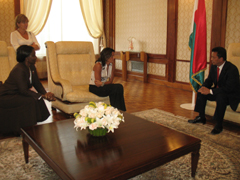
At the presidential palace (Iavoloha) the Princess
met with the President of Madagascar Marc
Ravalomanana and Mme Setou, UNAIDS Country
Coordinator.
She also met with the President and members of “Finoana Fanantenana Fitiavana” which translates as “belief, hope and love”, and is an association of people living with HIV housed within the Bureau of Hygiene. The association is the first in Madagascar to provide psychosocial support to people living with HIV and has served as a model for the 23 other associations now offering similar services across Madagascar. The President explained to the Princess how the association supports its members to live positively with HIV despite the daily challenges they face and the fears that many people have in living openly with HIV.
At the Befelatanana Joseh Raseta hospital, the Princess met with medical staff engaged in providing nutritional support and care for people living with HIV through an emergency fund. The fund finances nutrition for patients who are unable to pay for themselves. The Princess encouraged the initiative and the efforts already demonstrated by the hospital and ensured her continued support through her association “Fight AIDS Monaco”.
The Princess also visited Sambatra Izay Salama, a local non-governmental organisation providing support to people living with HIV. She was invited to observe various activities at the centre including a session on education and information for commercial sex workers and voluntary testing and counselling activities.
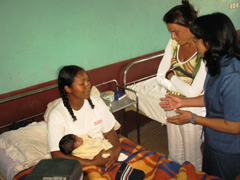
HSH Princess Stephanie visited a district health
centre which offers PMTCT serices and which has
benefited from donations from “fight aids Monaco”
to refurbish the hospital to improve its services.
The Princess met with the director of the hospital
and visited women at the maternity ward.
One of the Princesses’ main areas of interest is working with children and learning more about how they become vulnerable to HIV infection. At the Grain de Bitume center - an association working on re-socializing street children and children who have been abused – she had the opportunity to play with the children and enjoy a circus performance they organized in honour of her visit. The efforts of the association contribute to reduce the vulnerability of the children to HIV.
Focusing on sharing key messages related to reducing stigma and discrimination, the Princess met with national and local leaders involved in the national AIDS response. This included discussions with the President of the Republic Mr. Marc Ravalomanana, who is personally engaged in the response to AIDS, and M. Fenosoa Ratsimanetrimanana, Executive Secretary of the National AIDS Council and who coordinates the national response to AIDS in Madagascar. The Princess congratulated the President for his engagement in the response to AIDS and remarked that the high level of investment in HIV prevention programmes is a great example which many countries will surely look to.
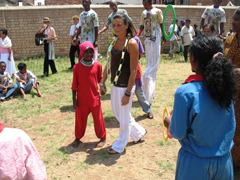
At the Grain de Bitume center - an association
working on re-socializing street children and children
who have been abused – the Princess had the
opportunity to play with the children and enjoy a
circus performance
The Princess set aside time to discuss directly with representatives from civil society and local associations of commercial sex workers, people living with HIV and groups of men who have sex with men. They shared their experiences on how stigma and discrimination affects their daily life. The princess gave words of support and encouragement, recognizing the impact stigma is having on their lives, and urged that we fight discrimination together by making correct information about HIV available in order to educate those that discriminate in society as stigma and discrimination is usually a result of ignorance.
She recognized the difficulty they faced in sharing their experiences and living openly with HIV, and that people who take that step often risk loosing their employment and encountering negative reactions from family and friends.
All the participants agreed that working together as partners in the response was the best way to try to overcome the problems related to stigma and discrimination in Madagascar.
Links:
Read more on UNAIDS Special Representative HSH Princess Stephanie of Monaco
Visit the Fight AIDS Monaco Web site
Related
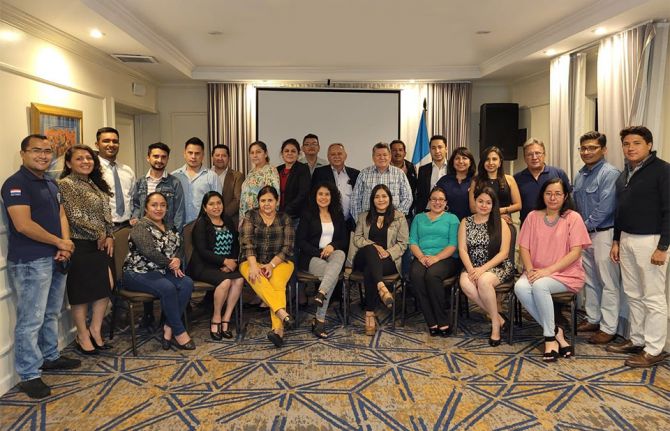 Seeking justice for HIV-related discrimination in the workplace in Guatemala
18 de diciembre de 2023
 The First Fallen but We Will Overcome
03 de noviembre de 2022
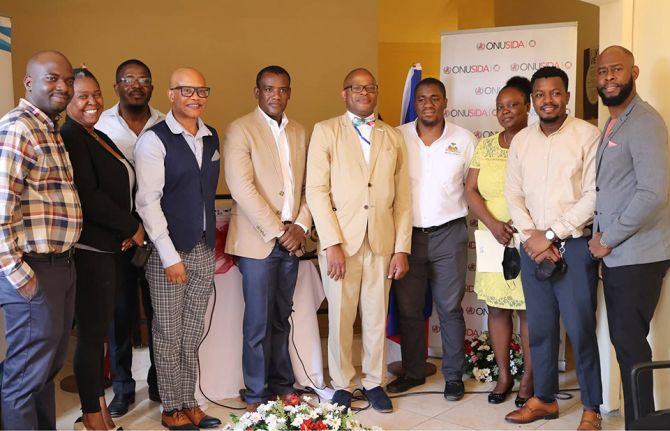 A model for serving key populations from Haiti
16 de agosto de 2022
Feature Story
XXXVIII Conferencia mundial sobre salud pulmonar
09 Noviembre 2007
09 Noviembre 2007 09 Noviembre 2007
Noticias destacadas de la XXXVIII Conferencia mundial sobre salud pulmonar
ONUSIDA trabaja en colaboración con la organización NAM para facilitar informes sobre los principales avances científicos y otras novedades que se traten en la XXXVIII Conferencia mundial sobre salud pulmonar, que se celebra en Ciudad del Cabo (Sudáfrica) del 8 al 12 de noviembre.
La asociación NAM, con sede en el Reino Unido, proporciona información sobre el VIH, se encarga de la página web informativa www.aidsmap.com y publica el boletín electrónico sobre el tratamiento del sida “HIV & AIDS Treatment in Practice”.
Leer más
Visite el sitio web de nam's (en inglés)
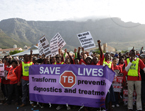
Marcha global para recaudar fondos contra la tuberculosis
Cerca de 5 000 activistas procedentes de todo el mundo participaron en la marcha a favor de una mayor inversión internacional en programas contra la tuberculosis e investigación en Ciudad del Cabo. Los participantes, encabezados por Zackie Achmat de Campaña de acción por el tratamiento (TAC), presentaron una petición a los organizadores de la Conferencia mundial sobre salud pulmonar. La tuberculosis, a pesar de poderse prevenir y tener tratamiento, continúa siendo una de las mayores causas de enfermedad y muerte entre las personas que viven con el VIH. Los activistas destacaron la lentitud del progreso en investigación y desarrollo de nuevos medicamentos y maneras de diagnosticar la tuberculosis; en 40 años no ha aparecido ningún fármaco nuevo y la única prueba capaz de detectar la tuberculosis, que tiene más de cien años, es poco fiable, especialmente en el caso de personas que viven con el VIH.
El tema de la conferencia, que se inaugura hoy en Ciudad del Cabo es “Afrontar el reto del VIH y la resistencia a múltiples medicamentos en la prevención y tratamiento de la tuberculosis”. La marcha fue organizada por Campaña de acción por el tratamiento (TAC), el Proyecto legal del sida y ARAS, una red de organizaciones para los derechos humanos y el sida en los países del sur de África.

La principal conferencia sobre tuberculosis se centra en el VIH
Se espera que más de 3 000 delegados asistan a la principal conferencia anual sobre tuberculosis, que comenzó el jueves en Ciudad del Cabo (Sudáfrica). El tema de este año para la 38 Conferencia mundial sobre salud pulmonar es “Afrontar el reto del VIH y la resistencia a múltiples medicamentos en la prevención y tratamiento de la tuberculosis”. Además, la conferencia también tratará otros asuntos internacionales clave para la salud pulmonar, tales como el control del tabaquismo, la salud pulmonar infantil y el asma.
Leer más
XXXVIII Conferencia mundial sobre salud pulmonar
Enlaces:
Visite el sitio web de la conferencia (en inglés)
Lea las actualizaciones diarias de la conferencia por NAM (en inglés)
Webcast:
Ver la cobertura en línea de la XXXVIII Conferencia mundial sobre salud pulmonar de kaisernetwork.org (en inglés)
Related
Walk in my shoes — UNAIDS Board devotes key session to HIV, adolescents and youth
20 de diciembre de 2013
Know your HIV status: First European testing week takes off
27 de noviembre de 2013
Asian Football Confederation and UNAIDS team-up to raise awareness of HIV
26 de noviembre de 2013