Feature Story
Aprender de la experiencia
19 Enero 2007
19 Enero 2007 19 Enero 2007
Fotografía: UNAIDS/K.Hesse
Literalmente hay miles de programas relacionados con el sida en todo el mundo. Con tal variedad de enfoques y metodologías, compartir la información sobre las iniciativas que han tenido éxito es crucial para el desarrollo actual y la mejora de los programas.
Para ayudar a llevar a cabo este proceso de intercambio de conocimiento, el ONUSIDA empezó en 1997 a elaborar la “Colección de Prácticas Óptimas”, una serie de publicaciones que incluyen desde directrices, noticias y documentos sobre políticas a estudios de caso, manuales y análisis de retos y respuestas particulares, todo ello diseñado para promover la formación, intercambiar experiencias y potenciar a las personas y a los colaboradores involucrados en la respuesta al sida.
“Saber lo que funciona y lo que no, y bajo qué circunstancias o limitaciones culturales, puede ayudar, hoy y en el futuro, a dar forma a programas sobre el sida”, afirmó Alistair Craik, coordinador de la colección. “La Colección de Prácticas Óptimas ofrece una amplia gama de experiencias de primera mano enriquecedoras que resultan muy útiles y que se pueden repetir.”
Fotografía : UNAIDS/G.Pirozzi
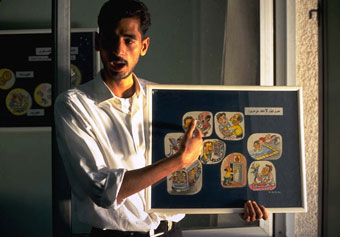
La colección del ONUSIDA presenta ejemplos de programas de todo el mundo que han sido todo un éxito y que pueden inspirar a los responsables de formular políticas, a los directores de programas y a otros interesados en la respuesta al sida.
Actualmente, la colección cuenta con cerca de 140 títulos en inglés, de los cuales 100 también están disponibles en francés, 75 en español y 50 en ruso. Una evaluación externa llevada a cabo en 1999 y, de nuevo, en 2003, mostró que la Colección de Prácticas Óptimas del ONUSIDA es una fuente de información ampliamente respetada por aquellas personas que trabajan en el campo del sida, entre otras, las que trabajan en organizaciones no gubernamentales, ministerios de salud y diferentes comunidades.
“La colección también incluye algunos enfoques no convencionales, como la colaboración con curanderos tradicionales en la respuesta al sida. Estos ejemplos de ‘prácticas óptimas’ pueden ayudar a que la gente encuentre formas novedosas y eficaces de afrontar la epidemia de las que probablemente no hayan oído hablar antes”, añadió.
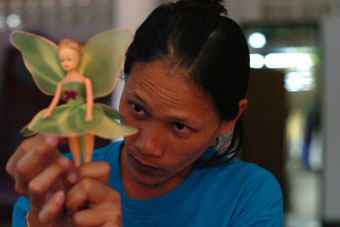
La Colección del ONUSIDA cubre una amplia gama de temas, como los programas sobre el VIH en el lugar de trabajo, la prevención del VIH entre usuarios de drogas inyectables, los programas centrados en hombres que tienen relaciones sexuales con hombres, y las respuestas al sida basadas en la fe.
Fotografía : UNAIDS/O.O'Hanlon
Las ideas para las nuevas publicaciones de Prácticas Óptimas surgen de diferentes fuentes: personas involucradas en la respuesta, responsables de formular políticas y de tomar decisiones sobre los programas a nivel local, nacional e internacional,etc. El ONUSIDA también trabaja en colaboración con sus diez copatrocinadores para desarrollar información relacionada con el VIH dentro de sus respectivas áreas de especialización. También ha colaborado con el ACNUR y la OIT para elaborar dos publicaciones enfocadas a los programas sobre el VIH en los campos de refugiados y en el lugar de trabajo.
Para que un programa sea considerado una ‘práctica óptima’ para la colección del ONUSIDA, debe cumplir una serie de criterios. En primer lugar, debe ser éticamente sólido. También debe ser pertinente, razonable en cuanto al coste, sostenible y reproducible. Un grupo de expertos del ONUSIDA y de otras organizaciones del sistema de las Naciones Unidas revisan las publicaciones sobre Prácticas Óptimas.
“Distribuimos copias de las nuevas publicaciones gratuitamente a las personas involucradas en la respuesta al sida en los países de ingresos bajos y medianos. Las versiones completas también están disponibles en la página Web del ONUSIDA,” afirmó Craik.
En los próximos meses, el ONUSIDA ofrecerá una selección de programas para la Colección de Prácticas Óptimas en su página Web.
Enlace:
Ver la Colección de Prácticas Óptimas
Related
 Walk in my shoes — UNAIDS Board devotes key session to HIV, adolescents and youth
20 de diciembre de 2013
 Know your HIV status: First European testing week takes off
27 de noviembre de 2013
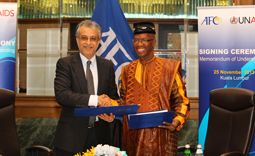 Asian Football Confederation and UNAIDS team-up to raise awareness of HIV
26 de noviembre de 2013
Feature Story
Sida: captar el mensaje
17 Enero 2007
17 Enero 2007 17 Enero 2007
Una pareja se besa en la escalera: el subtítulo “abrazar” se desliza a través de la pantalla. Una mujer embarazada acaricia su estómago: el texto “amar” aparece sobre la imagen. Mujeres, hombres, jóvenes, amigos, parejas, familias,… todo representado en un anuncio del servicio público de 30 segundos que ofrece mensajes sobre el sida para animar a los espectadores a que siempre se protejan a sí mismos y a los que aman.
Este anuncio de Argentina, producido en 2004 para fomentar la concienciación pública, es uno de los cerca de 200 anuncios publicitarios sobre el VIH que han sido reunidos en una antología especial en DVD. Estos anuncios del servicio público, emitidos por televisión a lo largo de 10 años, fueron producidos por la Organización Panamericana de la Salud (OPS).

La colección de dos discos, titulada “VIHdeo América”, reúne anuncios producidos desde 1995 hasta 2005 con el objetivo de compartir la información, la historia y las experiencias sobre el uso de la televisión en campañas del VIH para fomentar un nuevo enfoque a las comunicaciones sobre el sida.
De Argentina a Venezuela, de Chile a Uruguay, la recopilación recoge ejemplos de 24 países y está dirigida principalmente a los profesionales de la comunicación implicados en la respuesta al sida. Los productores expresan en la ficha informativa que acompaña a los DVD su deseo de que la recopilación ayude a los comunicadores de la región a analizar y evaluar el trabajo realizado en los últimos diez años, con el fin de informar adecuadamente sobre las futuras campañas que se emitirán por televisión.

“En nuestra región, los países lanzan campañas contra el VIH en los medios de comunicación casi cada año. Los carteles y los folletos circulan, pero los anuncios televisivos apenas cruzan las fronteras nacionales, ya que las televisiones tienden a emitir sus contenidos solo dentro de los territorios nacionales. A menudo, los países vecinos no tienen idea de lo que otros países han desarrollado para la televisión. “VIHdeo América” ayuda a acabar con este silencio”, afirmó Paulo Lyra, experto de la OPS en comunicación social, quien participó en la producción del DVD. “La televisión es un medio bastante caro, especialmente en los países que pagan por tiempo de emisión. Por lo tanto es imperativo aprender cuál es la mejor manera de utilizar este medio para futuras comunicaciones sobre el sida,” añadió.
Los productores de “VIHdeo América” señalan que el objetivo de la antología no es “exhibir” las mejores prácticas, sino que es absolutamente necesario analizar críticamente los anuncios, especialmente los que fueron producidos en los primeros años de la antología, para asegurar que los anuncios del servicio público sobre el VIH emitidos tienen un efecto positivo, no negativo.

“Al mismo tiempo que pueden tener un efecto positivo, somos conscientes de que los medios de comunicación también pueden fomentar el estigma y la discriminación. Por ejemplo, algunos de los anuncios más antiguos apelan al miedo o parecen culpar a los “grupos vulnerables”. Lo que debemos hacer es preguntarnos críticamente si los nuevos anuncios han roto con esta tradición, y basándonos en estas experiencias, asegurar que los futuros anuncios acaben con la discriminación y lleguen a la gente que más los necesita”, afirmó Lyra.
Con títulos como “Love Safely” (Ama con seguridad), “Welcome to Condom County” (Bienvenido al Condado Condón) o “Know AIDS- NO AIDS” (Conoce el sida, evita el sida), los anuncios incluidos en la antología muestran una gran variedad de escenarios y situaciones. Todos los anuncios tienen subtítulos en inglés y español. Algunos presentan un tono serio, otros utilizan el humor para hacer llegar el mensaje. “Brasil, por ejemplo, produjo una serie, ‘Braulio’, sobre un hombre que hablaba a su pene. Esto fue en 1995 y fue bastante revolucionario en su momento. Pero lo hicieron, y es un ejemplo de como los comunicadores del sida pueden ampliar sus horizontes,” declaró Lyra.
“Los medios de comunicación pueden ser una herramienta poderosa para la respuesta al sida. Analizar lo que ha funcionado y lo que no en los últimos años puede ayudar a los comunicadores a encontrar una forma mejor y más amplia de transmitir los mensajes adecuados,” afirmó Annemarie Hou, Jefa de Asuntos Públicos y Comunicaciones del ONUSIDA.
“VIHdeo América” se puede solicitar a través de la Organización Panamericana de la Salud. Para más información, visite www.paho.org/vihdeoamerica.
Fotograías: vihdeoamericas/PAHO
Related
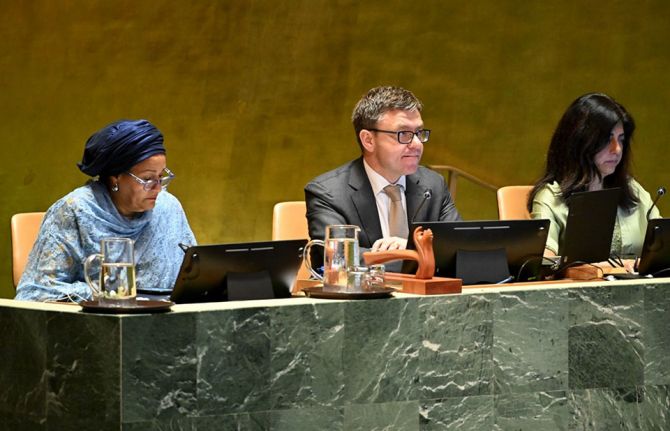 United Nations General Assembly debate highlights the need for urgent action to ensure that progress in the HIV response is accelerated and sustained
26 de junio de 2024
 Cities leading the way to achieving key targets in the HIV response
27 de septiembre de 2023
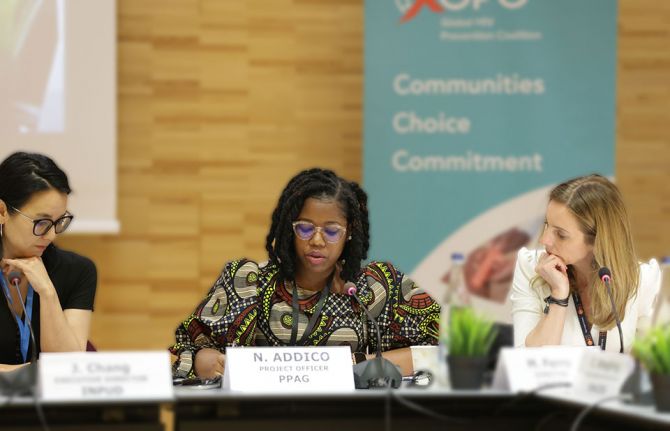 The urgency of HIV prevention among adolescent girls and young women
01 de junio de 2023
Feature Story
Signs of progress in global response to Children and AIDS
16 Enero 2007
16 Enero 2007 16 Enero 2007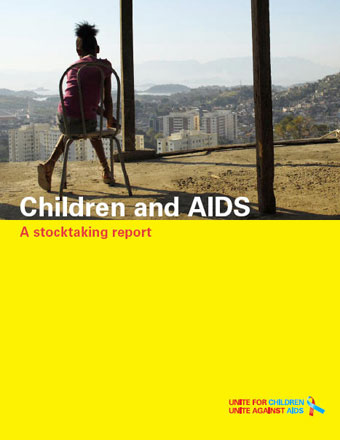
Photo credits : UNICEF
Just over a year ago, UNIC EF, UNAIDS and other partners launched Unite for Children, Unite against AIDS initiative to highlight the missing face of the child in the AIDS response.
On Tuesday, 16 th January 2007 UNICEF released the “Children and AIDS: A Stocktaking” report summarizing progress on children and AIDS since the initiative was launched in October 2005 and highlighting important breakthroughs and progress noted in the global response to Children and AIDS since the campaign launch. Such achievements include real progress noted in some countries in preventing HIV transmission from mothers to children and providing treatment for children living with AIDS.
“There is an urgent need to help children impacted by AIDS,” UNICEF Executive Director Ann M. Veneman said. “Unite for Children, Unite against AIDS is focused on ensuring treatment for HIV-positive children, prevention of mother-to-child transmission and assisting children who have been orphaned by AIDS. We must build momentum to achieve positive results for children.”
Within the UNICEF report, findings are presented on four key areas: preventing mother-to-child transmission, access to AIDS treatment, preventing new HIV infections and support to orphans and vulnerable children.
Preventing mother-to-child transmission
The stocktaking report finds that there are signs of considerable progress in the area of preventing transmission of HIV from mother to child (PMTCT). Some high-prevalence countries in Eastern and Southern Africa have shown particularly encouraging results. In Namibia for example, the percentage of HIV-infected pregnant women who received treatment for preventing HIV transmission to their infants increased from six per cent in 2004 to 29 per cent in 2005. In South Africa the percentage increased from 22 per cent in 2004 to 30 per cent in 2005.
However, despite these gains, the report details how the overall percentage of pregnant women receiving treatment for preventing transmission remains extremely low. In 2005, it was estimated that only nine per cent of pregnant women with HIV in low- and middle-income countries were receiving treatment for preventing HIV transmission to their children.
Access to AIDS treatment
The report also notes particular momentum in the provision of treatment to children living with AIDS, a result of improved testing, better health worker skills, lower drug prices and simpler formulations. Several countries – including Botswana, India, Rwanda, South Africa and Thailand – have been able to scale up HIV treatment for children by integrating it into treatment sites for adults.
Globally, still only one in ten children needing antiretroviral treatment receives it. However, prices of antiretroviral drugs for children have come down dramatically over the past 12-18 months. The report notes that in 2006, the Clinton Foundation HIV/AIDS Initiative negotiated a reduction in the cost of paediatric AIDS treatment to less than $0.16 per day, or $60 per year, helping to spur competition in the development of paediatric formulations.
Preventing new HIV infections
HIV Prevention responses are displaying renewed attention on the need to focus strategies on adolescents and young people most at risk, according to the report. The report notes that young women should be specially targeted since globally, a higher number of young women are being infected than men.
New evidence suggests that declining HIV prevalence in Kenya, urban areas of Cote d’Ivoire, Malawi and Zimbabwe, and in rural areas of Botswana, has resulted from the adoption of safer sexual behaviour by young people. In more than 70 countries surveyed, testing and use of counselling services increased from roughly 4 million people in 2001 to 16.5 million in 2005.
Supporting orphans and vulnerable children
The disparity between orphans and non-orphans in access to education is being significantly reduced in several countries, partly due to the abolition of school fees, according to the report.
The report notes that collecting and disaggregating data by age group and gender is one of the most vital, simple and effective ways of putting children on the AIDS agenda. This report uses for the first time a baseline against which new and existing data can be measured in order to identify discernible trends regarding children and AIDS.
Links:
Read Stocktaking report (2 MB, pdf)
Read 'Preventing mother to child transmission (PMTCT)' Fact Sheet (37 kb, pdf)
Read 'Providing pediatric treatment' Fact Sheet (37 kb, pdf)
Read 'Prevent infection among adolescents and young people' Fact Sheet (37 kb, pdf)
Read 'Protecting and supporting children affected by AIDS' Fact Sheet (39 kb, pdf)
Know more about "Unite for Children, Unite against AIDS" campaign (1,4 MB, pdf)
Visit "Unite for Children, Unite against AIDS" Web Site
Related
Feature Story
Sesión especial sobre el sida en la cumbre de la ASEAN
13 Enero 2007
13 Enero 2007 13 Enero 2007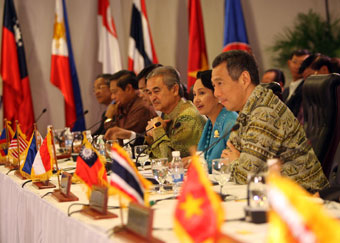
J.Carual-PCPO
“El sida no es una tormenta pasajera, sino una amenaza a largo plazo para el desarrollo y la seguridad nacional en Asia”, informó el ONUSIDA en la Sesión Especial sobre el VIH y el sida celebrada como parte de la decimosegunda Cumbre de la Asociación de las Naciones del Sureste Asiático (ASEAN), el sábado 13 de enero.
En una sesión extraordinaria sobre el sida, los Jefes de Estado de 10 países de la ASEAN estudiaron el informe especial del Director Ejecutivo del ONUSIDA, Dr. Peter Piot, sobre la situación de la epidemia mundial de sida en la región de la ASEAN y los retos a los que se enfrentan estos países. Es la primera ocasión en la que se ha invitado a un organismo externo a informar sobre el sida ante la Cumbre de Jefes de Estado.
Asia es la segunda región del mundo con mayor número de personas que viven con el VIH y el número de infecciones continúa en aumento. Según las últimas estimaciones, la región de la ASEAN, que incluye a Brunei Darussalam, Camboya, Indonesia, Laos, Malasia, Myanmar, Filipinas, Singapur, Tailandia y Viet Nam, presenta una de las epidemias más importantes de Asia. Se estima que en 2006 había 1,6 millones de personas que vivían con el VIH en la región de la ASEAN y que en algunos países hasta el 1,5% de los adultos viven con el VIH.
“Todavía nos encontramos en las fases iniciales de la epidemia en Asia y debemos multiplicar y mantener los esfuerzos, no bajar la guardia”, reitera el informe del ONUSIDA. “El hecho más preocupante para los países de la ASEAN es que el sida afecta a los sectores más productivos de la población, a la fuerza de trabajo que constituye el motor del desarrollo económico de la región”.
Al remarcar que el sida es “uno de los retos más decisivos de nuestro tiempo”, el informe del ONUSIDA subraya la amenaza que supone el sida en la región para la consecución de prácticamente todos los Objetivos de Desarrollo del Milenio. Sin embargo, también señala que se puede preparar una respuesta duradera a la epidemia.
También debe considerarse una prioridad la participación significativa de las organizaciones de base comunitaria y de la sociedad civil, especialmente las personas que viven con el VIH, en las respuestas nacionales al sida. Asimismo, se señala la importancia del liderazgo personal de los Jefes de Estado en cuanto al sida se refiere. “La amenaza del VIH no desaparecerá en uno o cinco años. El ONUSIDA y el mundo están pendientes de ustedes y de su liderazgo firme respecto al sida”, declara el informe.
El informe explica como un número significativo de países de la región ha progresado significativamente al priorizar a las comunidades más vulnerables, es decir, los jóvenes, profesionales del sexo y sus clientes, hombres que tienen relaciones sexuales con hombres y usuarios de drogas inyectables, en las respuestas nacionales al sida. A corto plazo, es urgente aumentar la escala y el tamaño de los programas que se centran en las poblaciones más expuestas en la región. Al mismo tiempo, estos programas deben tener en cuenta los factores que impulsan la epidemia dentro de los países, tales como las desigualdades por razón de sexo, la homofobia y el estigma relacionado con el VIH.
La sesión especial de la ASEAN sobre el sida en 2007 se celebró como respuesta a la resolución aprobada en la séptima Cumbre de la ASEAN, celebrada en Brunei Darussalam en noviembre de 2001, donde los Jefes de Estado y de Gobierno de la ASEAN acordaron convocar la “Sesión especial sobre el VIH y el sida” conjuntamente con la decimosegunda Cumbre de la ASEAN en 2007, con el objetivo de mostrar el compromiso de la ASEAN para tomar medidas contra el sida e impulsar a las respuestas regionales para actuar con urgencia.
En representación del Director Ejecutivo del ONUSIDA, Dr. Peter Piot, la Directora Ejecutiva Adjunta, Deborah Landey, asistió a la Cumbre de la ASEAN y presenció la Sesión especial.
Tras la sesión especial, los Jefes de Estado de la ASEAN deben adoptar una declaración sobre el sida, afirmando su compromiso para dar prioridad, conducir y fortalecer los programas nacionales sobre el sida asegurándose de que las políticas y los programas se dirijan especialmente a las poblaciones más expuestas y necesitadas de la región. “Esta declaración pasará a formar parte de la historia y del léxico permanente de la ASEAN”, declaró el portavoz de la ASEAN, Victoriano Lecaros, Embajador de Filipinas en Malasia.
Como parte de la sesión especial, el Secretario General de la ASEAN, Ong Keng Yong, distribuyó su propio informe a los Jefes de Estado en Cebú. En este informe, el Secretario General observó que “el compromiso del liderazgo y la voluntad política son para hacer frente a los retos originados por la propagación del VIH y el sida”. También informó a los líderes de la ASEAN sobre los progresos realizados desde 2001. Asimismo, expuso los puntos clave de acción para 2006- 2010 a través de un plan de trabajo operativo para el tercer programa regional de la ASEAN sobre el VIH y el sida.
“Las futuras respuestas de la ASEAN incluirán iniciativas de diferentes sectores y una colaboración más estrecha con el sector privado, la sociedad civil y las personas que viven con el VIH”, afirmó Ong Keng Yong, quien también enumeró los principales elementos de dichas respuestas en la declaración sobre el sida, prestando una atención especial al “compromiso de integrar el VIH en las prioridades de desarrollo para reducir tanto el impacto del desarrollo en la transmisión del VIH como el impacto de la epidemia de VIH en el desarrollo, en consonancia con los compromisos de la ASEAN con los Objetivos de Desarrollo del Milenio y la decisión de la Asamblea General de las Naciones Unidas de 2006.”
Enlaces:
Leer los Compromisos de la ASEAN con el sida (en inglés)
Leer el comuunicado de prensa del ONUSIDA: "Urge un liderazgo decisivo para una respuesta sostenida al sida en Asia sudoriental" ( en | fr | es | ru )
Leer el informe del Director Ejecutivo del ONUSIDA para los Jefes de Estado de la ASEAN (en inglés)
Visitar el sitio web de la decimosegunda Cumbre de la ASEAN
Visitar el sitio web de la secretaría de la ASEAN
El sida en la región de la ASEAN en cifras (en inglés)
Feature Story
Lo que las palabras esconden
03 Enero 2007
03 Enero 2007 03 Enero 2007Palabras como “VIH-positivo” o “personas que viven con el VIH” están remplazando gradualmente a “enfermo de sida” o “víctimas de la enfermedad”, términos que solían aparecer con frecuencia en la literatura sobre el VIH. ¿Cuál es la causa de este cambio? ¿Cómo se produce? Y lo más importante, ¿qué significado tiene?
El VIH ha dejado de ser exclusivamente un problema médico: el riesgo de infección por el VIH y su impacto se intensifican debido a los problemas sociales, entre los que se encuentran la discriminación de la mujer y de diferentes grupos sociales marginados tales como los profesionales del sexo, los usuarios de drogas inyectables y los hombres que tienen relaciones sexuales con hombres. Lamentablemente, a menudo las personas que viven con el VIH deben hacer frente a estigma y violencia debido a su estado serológico. En los últimos diez años se ha hecho más visible que nunca la necesidad apremiante de fortalecer los derechos humanos como parte esencial de una respuesta eficaz al sida y sus efectos.
Está ampliamente aceptado que las palabras no son neutrales en el contexto del VIH. Los términos que se eligen y la forma en que se combinan las oraciones para expresar ideas u y ofrecer información tiene un profundo efecto en la manera en que se comprenden los mensajes y se reacciona, o no, ante ellos. Una selección cuidadosa de las palabras desempeña por tanto una labor esencial en el impulso y el fortalecimiento de la respuesta al VIH.
En la Secretaría del ONUSIDA en Ginebra, un pequeño equipo reflexiona sobre esta cuestión y estudia los problemas y los cambios que se producen continuamente en el campo del VIH. Su objetivo es ofrecer un conjunto de recomendaciones sobre los usos de la lengua que sean científicamente precisos, promuevan los derechos humanos universales y la dignidad de los individuos, se puedan comprender con facilidad y respeten las diferentes formas con las que las personas quieren que se les denomine.
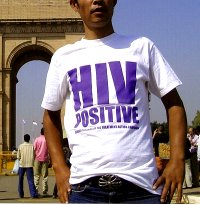
El respeto y la potenciación del individuo
es un principio básico de las recomendaciones del ONUSIDA.
Créditos: ONUSIDA
Por ejemplo, elegir términos que se centran en comportamientos y no en la pertenencia de un miembro a un grupo es un criterio acertado para evitar el fomento del estigma y la discriminación. Es preferible utilizar “mayor riesgo de exposición al VIH”, “relaciones sexuales sin preservativo” o “uso de equipo de inyección no estéril” que generalizar y decir “grupos de alto riesgo”. Pertenecer a un determinado grupo no expone al individuo a un mayor riesgo, sino que son sus comportamientos los que pueden hacerlo.
El respeto y la potenciación del individuo es otro principio básico de las recomendaciones del ONUSIDA para evitar términos tales como “víctima del sida” o “enfermo de sida”. “Estos términos implican que el individuo no puede hacer nada, no tiene control sobre su vida,” afirmó Alistair Craik, coordinador de las Orientaciones Terminológicas del ONUSIDA. “Es preferible usar personas que viven con el VIH”, añadió.
Referirse a una persona que vive con el VIH como víctima inocente (que se usa muchas veces para describir a niños VIH-positivos o personas que han contraído el VIH por vía clínica) implica equivocadamente que aquellas personas infectadas por otras vías merecen de alguna manera ser castigadas. Es preferible utilizar de manera consistente “personas que viven con el VIH” o “niños que viven con el VIH”.
Las Orientaciones Terminológicas del ONUSIDA ofrecen también consejos a los autores para que eviten errores frecuentes. Por ejemplo, no se debe escribir “virus del sida” porque es científicamente incorrecto. “No existe un virus del sida”, dijo Craik. “El VIH (virus de la inmunodeficiencia humana) es lo que en última instancia causa el sida (síndrome de inmunodeficiencia adquirida), que es un síndrome de infecciones y enfermedades oportunistas.” Y añade: “Por eso las personas no pueden infectarse por el sida, sino por el VIH”. “Ya que VIH significa virus de la inmunodeficiencia humana, “es redundante utilizar ‘el virus del VIH’”, remarcó Craik. “Igualmente, es redundante escribir acerca del ‘Trabajo sexual comercial’; los términos ‘comercio sexual’ y ‘venta de servicios sexuales’ son más precisos y concisos.”
Los ejemplos citados son ilustraciones de lo que los autores pueden encontrar en las Orientaciones Terminológicas del ONUSIDA. Este breve conjunto de recomendaciones tiene como objetivo promover un lenguaje que sea sensible a las cuestiones de género, no discriminatorio, culturalmente apropiado y que promueva los derechos humanos universales. “Queremos que los lectores comprendan que las Orientaciones Terminológicas del ONUSIDA son solo recomendaciones: diferentes escritores tienen diferentes ‘voces’; diferentes organizaciones tienen diferentes áreas de especialización y puede que elijan definir sus propias preferencia y estilos, lo cual no es solo algo positivo sino además recomendable”, comentó Craik.
El ONUSIDA subraya que sus recomendaciones terminológicas son un trabajo en continua evolución, ya que constantemente surgen nuevos problemas y dinámicas.
Enlaces:
Orientaciones Terminológicas del ONUSIDA (Marzo de 2007) (pdf,125.02Kb)
Resumen de las Orientaciones Terminológicas del ONUSIDA (pdf, 25.9Kb)
Related
 The First Fallen but We Will Overcome
03 de noviembre de 2022
 Popular and dedicated singer Samba Peuzzi calls for ending HIV infections among children
16 de junio de 2022
 ArtPositive—art to raise awareness around HIV-related stigma and discrimination
01 de octubre de 2021
Feature Story
UNAIDS in action 2006
22 Diciembre 2006
22 Diciembre 2006 22 Diciembre 20062006 has been an important year in the AIDS response. The number of people living with HIV rose to almost 40 million, the highest number ever, however declines in infection rates were observed in some countries, as well as positive trends in young people's sexual behaviours. HIV Prevention efforts were shown to be working in a number of countries, highlighting the need to urgently scale up, expand and adapt prevention programmes to address the different drivers of the epidemics.
Political commitment to the AIDS response was at its highest level to date which was reflected at the 2006 High Level Meeting on AIDS at the UN in New York. Heads of State and Government and representatives of States and Governments came together to debate key AIDS issues and unanimously adopted a political declaration on AIDS. During the meeting countries also pledged to set ambitious national targets for universal access to HIV prevention, treatment care and support. By the end of 2006 many countries had already set their targets.
In 2006, key developments were brought to light in the field of scientific research—including increased emphasis on microbicide development and findings relating to male circumcision. More people than ever before were receiving antiretroviral treatment and funds pledged for the AIDS response reached their highest levels to date.
2006 also marked 25 years since the virus was first discovered over which time some 25 million people have died of AIDS.
2006 was also the 10 th anniversary of the Joint United Nations Programme on HIV/AIDS (UNAIDS) during which time UNAIDS has spearheaded many innovative initiatives that have accelerated the AIDS response worldwide.
In 2006 , UNAIDS enlisted the help of a number of new special representatives to strengthen communication of key messages and reach out a broader audience than ever before.
Below are some of the highlights and key events which took place during 2006.
| JANUARY | |
| AIDS: everybody’s business | |
 |
Business leaders met in Davos in January for the 2006 World Economic Forum, many turned their attention to the issue of the increasing impact of AIDS in the workplace. |
| The road towards universal access | |
|
As requested by the General Assembly in resolution 60/224 adopted in December 2005, UNAIDS secretariat and co-sponsors started facilitating inclusive, country-driven processes to identify practical actions for scaling up AIDS services towards universal access. Thousands of people from all walks of life were mobilized to seize this extraordinary opportunity. Between January and March, more than 100 low- and middle-income countries held broad public debates about what needs to be done to turn back the epidemic. Seven regional consultations were held. The UNAIDS secretariat also convened a multipartner Global Steering Committee. |
|
| FEBRUARY | |
| The need to invest in HIV prevention | |
|
A study, published in Sciencexpress in February, indicated that increased spending on HIV prevention would not only prevent more than half the new infections that would occur from 2005 to 2015, but would actually produce a net financial saving as future costs for treatment and care are averted. |
|
| World not doing nearly enough to protect children affected by AIDS | |
|
In February, the Global Partners Forum, hosted by UNICEF and the UK Department for International Development, brought together 90 international organizations, NGOs and governments in a special effort to ramp up practical responses for children affected by the AIDS epidemic. |
|
| Innovative AIDS funding takes off | |
|
An international conference on “Solidarity and Globalization: innovative financing for development and against pandemics”, held in Paris in February, brought together representatives from more than one hundred countries, 18 international organizations and 60 NGOs to discuss the implementation of innovative financing for development. |
|
| AIDS mission to Rwanda to discuss next steps in AIDS response | |
|
In February, leading representatives from Luxemburg, the United Kingdom’s Department for International Development, UNICEF and the Joint United Nations Programme on HIV/AIDS visited Rwanda for a two-day, high-level mission to gain a joint perspective on the progress of the national AIDS response and the ongoing challenges it faces. |
|
| MARCH | |
| Economic security for women key to HIV prevention | |
| |
A new paper published in March by the UNAIDS-led Global Coalition on Women and AIDS showed that when women have an income and a safe place to live, they are much better able to negotiate abstinence, fidelity, and safer sex. Economic security, the paper stressed, is a major factor in enabling women to protect themselves from HIV. |
| Positive partnerships break down AIDS-discrimination in Thailand | |
| |
Heralded by UNAIDS as an example of ‘best practice’, a project that offers small loans to enable people living with HIV set up businesses is helping break down stigma and discrimination in Thailand. |
| Global access to HIV therapy tripled in past two years, but significant challenges remain | |
|
A new report by the World Health Organization (WHO) and the Joint United Nations Programme on HIV/AIDS (UNAIDS) shows that the number of people on HIV antiretroviral treatment (ART) in low- and middle-income countries more than tripled to 1.3 million in December 2005 from 400 000 in December 2003. Charting the final progress of the "3 by 5" strategy to expand access to HIV therapy in the developing world, the report also says that the lessons learned in the last two years provide a foundation for global efforts now underway to provide universal access to HIV treatment by 2010. |
|
| APRIL | |
| Declaration of Commitment on HIV/AIDS: five years later – Report of the Secretary General | |
|
The report of the Secretary-General provided an update on progress in the global AIDS response since the 2001 special session, identified critical challenges and made urgent recommendations to strengthen efforts at the global, regional and country levels. |
|
| UNAIDS assessment report on the road towards universal access released | |
|
Reaching the Millennium Development Goal on HIV and AIDS – to halt and reverse the spread of the epidemic by 2015 – requires far greater access to HIV prevention services and AIDS treatment, care and support than is currently available. The assessment report includes an analysis of common obstacles and recommendations for overcoming them by integrating HIV prevention, treatment, care and support with broader health and social services. |
|
| President Putin calls for urgent measures to stem the HIV epidemic in Russia | |
| |
President Vladimir Putin gathered the Presidium of the State Council to discuss the HIV epidemic in Russia. In a groundbreaking move, the State Council examined all aspects of the growing epidemic in the country and agreed on a set of measures that will strengthen Russia’s response to the epidemic in an unprecedented manner. |
| MAY | |
| Launch of the 2006 Report on the global AIDS epidemic | |
| |
On the eve of the 2006 High Level Meeting on AIDS in New York UNAIDS launched the 2006 Report on the global AIDS epidemic, featuring the latest AIDS estimates and new trends. The report, a special edition marking UNAIDS' 10th anniversary, contained the most in-depth data from countries to date, based on progress reports from 126 countries. |
| Eastern Europe and Central Asia are facing the challenge | |
| |
Under the theme “facing the challenge” the first Eastern European and Central Asian AIDS conference welcomed around 1500 participants in Moscow from 15 to 17 May. The conference provided an important forum for political leaders, scientists and researchers, people living with HIV and representatives from civil society to take stock of the AIDS response in the region. |
| JUNE | |
| Agenda for action on women and AIDS | |
|
On 1 June, the UNAIDS-led Global Coalition on Women and AIDS launched a new Agenda for Action - calling for massively scaled-up funding for AIDS programmes for women and girls; the effective enforcement of laws that affirm and protect women's rights, and greater involvement in women (particularly positive women) in forums where AIDS policies and programmes are decided. |
|
| 2006 High Level Meeting on AIDS | |
| |
High-level representatives of over 140 UN Member States, including nearly a dozen Heads of State and Government, met in June to review progress towards achieving the agreed goals of the Declaration of Commitment on HIV/AIDS adopted at the UN General Assembly Special Session on AIDS in 2001. The 2006 High Level Meeting on AIDS concluded with a renewed political commitment and agreement on future action to reverse the global AIDS epidemic and reduce its impact. |
| Gauging progress in Malawi | |
| |
Dr. Peter Piot, Executive Director of UNAIDS and Sir Suma Chakrabarti, Permanent Secretary, United Kingdom Department for International Development visited Malawi to review progress made in the country’s AIDS response. Malawi’s political leadership and commitment in accelerating universal access to HIV prevention, treatment care and support was one of the focal points of the visit. |
| JULY | |
| Investigating the impact of AIDS in Asia and the Pacific | |
|
A new body to study the spread and impact of HIV and AIDS in the Asia Pacific region was launched in July in New Delhi. The Independent Commission on AIDS in Asia and the Pacific consists of 10 leading economists, scientists, civil society representatives and policy-makers from across the region. |
|
| UN Secretary-General meets pharmaceutical companies to discuss access to treatment | |
| |
The UN Secretary-General met with CEOs from the world’s leading pharmaceutical companies and UN officials in New York to explore ways to expand access to HIV treatment and care in low-and-middle income countries. The meeting was the first of its kind to include both research and development - or ‘brand name’ – pharmaceutical companies, generic development companies and UN bodies. |
| Health leaders welcome infectious disease focus at G8 | |
| |
In advance of the G8 summit, the leaders of the four key health policy and financing organizations - the World Health Organization (WHO),UNAIDS, the Global Fund to Fight AIDS, Tuberculosis and Malaria, and the GAVI Alliance - jointly welcomed the focus on infectious diseases and urged the G8 leaders to continue their commitments to improving the health and lives of people in the world's poorest countries. |
| AUGUST | |
| UNAIDS Executive Director meets with Indian Prime Minister | |
|
Dr Peter Piot met with Indian Prime Minister Dr Manmohan Singh in August. The Prime Minister's leadership has put the AIDS response on the national political agenda. As the Chairperson of the National Council on AIDS, Dr. Singh has developed a multi-ministerial task force comprising of 31 ministries and seven state governments for a coordinated multi-sectoral response to the HIV epidemic in India. |
|
| XVI International AIDS Conference, Toronto, Canada | |
| |
Over the week 13-18 August, 24,000 people participated in the XVI International AIDS Conference, including high-profile guests such as former US President Bill Clinton, Bill and Melinda Gates, leaders from governments, the science sector, civil society, people living with HIV, youth and women’s groups, United Nations officials, business, the private sector and the entertainment sector. UNAIDS took part in a wide variety of satellites, sessions and events over the week. |
| Uniting for HIV Prevention | |
| |
UNAIDS, civil society, treatment activists, private sector and governments call for ‘out of the ordinary partnerships’ to intensify HIV prevention efforts. |
| SEPTEMBER | |
| Responding to AIDS in China | |
| |
UNAIDS Executive Director Peter Piot visited China in September to encourage continued leadership and commitment and to mobilize a multi-sectoral response to AIDS. |
| Emerging epidemics in Eastern Europe on the agenda | |
|
In September, UNAIDS Executive Director Dr Peter Piot visited Berlin to discuss ways of strengthening collaboration between UNAIDS and Germany and to promote continued commitment to the AIDS response. Dr Piot met with Government Ministers, parliamentary representatives, the National AIDS Council and NGO representatives. |
|
| OCTOBER | |
| Setting ambitious national targets: The next step on the road towards universal access | |
| |
In October, UNAIDS published new, operational guidelines to support countries’ efforts to set ambitious national targets that reflect international commitment to scale up significantly towards the goal of universal access to comprehensive prevention programmes, treatment, care and support by 2010. |
| NOVEMBER | |
| Asia Pacific: Call for action on AIDS | |
| |
Asia and Pacific countries with low HIV prevalence rates called for action to increase targeted HIV prevention efforts and funding for AIDS, at the ‘Low to Zero’ Asia Pacific regional conference on universal access to HIV prevention, treatment, care and support in low prevalence countries, that took place in Mongolia in October. |
| UN Secretary General visits UNAIDS, Geneva | |
| |
In one of his final public appearances as UN Secretary General, Kofi Annan visited UNAIDS in Geneva on Monday 20 November. The Secretary General urged the international community to continue to “fight to bring the global AIDS epidemic under control.” |
| UNAIDS/WHO launch 2006 AIDS epidemic update | |
| |
UNAIDS launched the new joint UNAIDS/WHO report, AIDS Epidemic Update 2006, featuring updated global and regional AIDS estimates and new trends in the epidemic’s evolution on 21 November 2006. |
| DECEMBER | |
| World AIDS Day 2006 | |
| |
With nearly 40 million people living with HIV in 2006, this year's World AIDS Day theme of 'accountability' was a poignant reminder that we all have a role to play in the AIDS response and we are all accountable for the promises we have made. On 1 December events took place around the globe to commemorate this special day of remembrance and hope. |
| Setting targets for universal access to HIV prevention, treatment, care and support | |
| |
Throughout 2006, countries across the world have been taking positive steps to accelerate their national response in order to halt and reverse the AIDS epidemic by 2015. By the end of 2006, a number of countries had already set ambitious national targets, while others, building the process into their existing national strategic planning cycle, are due to continue this process throughout the coming months. |
| Statement on trial findings regarding male circumcision and HIV | |
|
UNAIDS and its Cosponsors, WHO, UNFPA, UNICEF and the World Bank, release a joint statement regarding the announcement by the US National Institutes of Health that two trials assessing the impact of male circumcision on HIV risk are being stopped on the recommendation of the NIH Data Safety and Monitoring Board (DSMB). |
|
Related
Walk in my shoes — UNAIDS Board devotes key session to HIV, adolescents and youth
20 de diciembre de 2013
Know your HIV status: First European testing week takes off
27 de noviembre de 2013
Asian Football Confederation and UNAIDS team-up to raise awareness of HIV
26 de noviembre de 2013
Feature Story
2006 World AIDS Day events
21 Diciembre 2006
21 Diciembre 2006 21 Diciembre 2006To view the pictures from World Aids Day events you require the Flash Plugin Download it here.

World AIDS Day 2006 commemoration at UNAIDS/WHO
The World AIDS Day celebration at UNAIDS/WHO Headquarters in Geneva, was organized by the UN family, missions, NGO's, humanitarian organizations, people living with HIV and faith communities. The lighting and placing of red candles forming a ribbon and the signing of promises onto a commemorative ribbon were two of the activities that took place after the opening remarks by Dr. Peter Piot, Executive Director, UNAIDS and other special guests.

World AIDS Day 2006 commemoration in Nigeria
UNAIDS coordinated the UN support to the WAD ceremony, including exhibition stands with condom promotion and demonstration and drama performances. UNAIDS and UN staff also participated in the rally of PLHIV to the National Assembly and to the office of the Minister of the Federal Capital Territory.

World AIDS Day 2006 commemoration in South Africa
The UNAIDS Country Office in South Africa in partnership with Cricket South Africa uses sport as a platform for promotion of HIV Prevention. The pictures were taken during . UNAIDS and Cricket South Africa decided to use the Standard Bank International Pro20 Cricket Match between South Africa and India played in Johannesburg, South Africa on the 1st of December 2006 to commemorate World AIDS Day.
The Captain of the South Africa Cricket Team – Graeme Smith gave a speech on the impact of HIV in South Africa, the need to support people living with HIV, and the importance of knowing your HIV status.
Public Service Announcements (PSAs) from the World AIDS Campaign were also broadcasted during the match (as shown in pictures)

World AIDS Day 2006 commemoration in Panama
UNAIDS RST Office for Latin America in coordination with UNAIDS Panama carried out two visibility events for the commemoration of the WAD. One was carried out in the Miraflores Locks of the Panama Canal and the other at the Tocumen International Airport.

World AIDS Day 2006 commemoration in Papua New Guinea
The World AIDS Day was a symbolic event in Port Moresby used as a platform to promote HIV testing and counseling under the national theme “Stop AIDS: You have the right to know’. The national preparations for the 2006 World AIDS Day were facilitated by the civil society umbrella body PACSO (PNG Alliance of Civil Society Organization) which is supported by UNAIDS-PNG.

World AIDS Day 2006 commemoration in Macedonia
The World AIDS Day in Macedonia was organised jointly by UNAIDS, the Ministry of Health and local NGOs, and took place in a shopping Mall in its capital, Skopje. There were two info-educational stands where young people from local NGOs offered information on AIDS prevention and distributed booklets, condoms and red ribbons to all visitors, while mobile NGO teams circulated throughout the mall attracting people to write massages that were used to create a “Red message Ribbon”. During the WAD, a photographic exhibition on AIDS, consisting of 40 photographs made by young people, was also inaugurated.
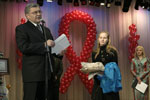
World AIDS Day 2006 commemoration in Belarus
UNAIDS supported the Belarusian Youth Festival of Universities “Stop AIDS. Keep the Promise” held in Minsk 1 December 2006. The Youth Festival was organized by all Universities within the National Plan of Actions on the World AIDS Day 2006. Every University contributed to the Festival with their projects on anti-stigma, health behavior and life skills. The Festival was opened by the Vice-Minister of the Ministry of Health.
Another WAD activity sponsored by UNAIDS was the “Leave Positively!” event organized by the NGO of PLHIV “Positive Movement”. The event scenario was centered around a concert where participants wrote messages to PLHIV. The exhibition of the Red Bells messages will start a tour among self-support groups of PLHIV all over Belarus.

World AIDS Day 2006 commemoration in Burundi
The commemoration of the World AIDS Day 2006 in Burundi extended to all 17 provinces of the country. The Burundi Alliance against AIDS (ABS), a network of 140 national associations, mobilized its members across the country to work closely with the provincial governments to organize World AIDS Day events and present their achievements from the past year. Delegations of high government representatives visited all provinces of the country, where communal ceremonies included parades, film screenings, photo exhibits, sports competitions and cultural performances. Delegates from networks of people living with HIV, the National Alliance against AIDS, and Women and Youth groups addressed local audiences. The President of the Republic launched the National Strategic Plan for 2007-2011.

World AIDS Day 2006 commemoration in Lesotho
The World AIDS Day commemoration in Lesotho was marked by the support of King Letsie III to the national plans to address AIDS in the country. The King also launched the first ever "Know Your Status" campaign during the World AIDS Day commemorations .
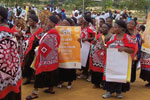
World AIDS Day 2006 commemoration in Swaziland
The UNAIDS Country Office in Swaziland in partnership with the Swaziland Government, the national AIDS coordinating body, as well as several national and international NGOs working in Swaziland commemorated World AIDS Day with a Ten Day Campaign leading up to the climax day on December 1st. During the campaign offices across the country displayed candles with the red ribbon and promises boxes where people were encouraged to make a pledge and keep the promise. On December 1st a march and run were held to commemorate World AIDS Day 2006. The event also featured songs by the traditional women’s regiment (Lutsango), dramas and songs by school children, music, and dance all focused on HIV. There were also information booths by NGOs working on HIV in the country, and mobile testing units in line with the focus on HIV Prevention.

World AIDS Day 2006 commemoration in Thailand
UN agencies and civil society organisations teamed up to organise a World AIDS Day event led by UNESCO and Thai Red Cross. The event, which took place at Lumpini Park and Thai Red Cross Compound in Bangkok on the 1st of December 2006 was billed as the “Condom Chain of Life Festival” and included setting a new Guinness Book of Records mark for the world’s longest chain of condoms intended to raise awareness around HIV prevention. The World AIDS Day commemoration included a parade organized by the Thai Red Cross involving HRH Princess Somsawalee, games, activities and performances around AIDS issues. Tents and pavilions were organized by UN agencies and NGOs working on HIV related issues to disseminate information.
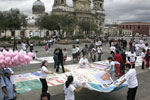
World AIDS Day 2006 commemoration in Guatemala
To commmemorate The International World AIDS Day 2006, El Día Mundial en la lucha contra el SIDA, the activity of Quilts in the Central Park, in front of Palacio Nacional de la Cultura, Guatemala City, Guatemala, C.A.
World AIDS Day 2006 commemoration in Egypt
As part of the Sailing the Nile for the Millenium Development Goals (MDGs) project, initiated by the UN and its partners, eight felucca boats, each representing a Goal, sail the Nile to promote action to fulfill the MDGs in Egypt. On December 1st, the boats stopped in Beni-Suef to promote the 6th MDG, that aims to combat HIV, malaria and other diseases, and to commemorate World AIDS Day. The organised events included HIV education training-of-trainers sessions with youth and the promotion of volunteerism; workshops with religious leaders to spread AIDS awareness messages; and welcome the feluccas with a parade, display of banners, song and dance performances. In addition to the activities planned in Beni-Suef, AIDS awareness campaigns were orchestrated by local organizations in Cairo, Sohag, Qena, Luxor, Aswan, and Assiut, with events ranging from awareness-raising and training-of-trainers to competitive sports and dramatic performances.
Related
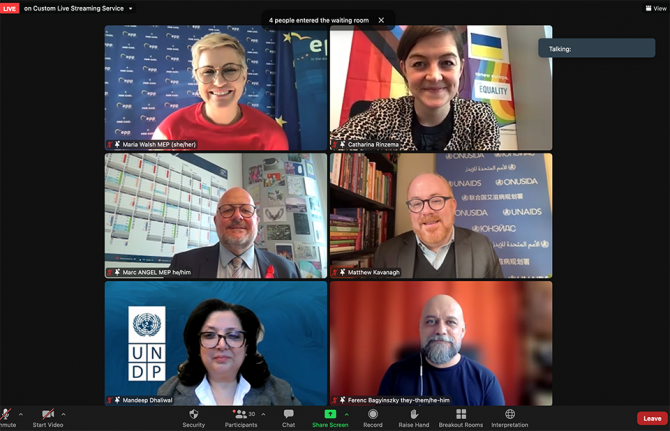 Engaging the EU in the Global Partnership on Zero Discrimination Day
03 de marzo de 2022
 The case for anti-discrimination legislation in Jamaica
01 de marzo de 2022
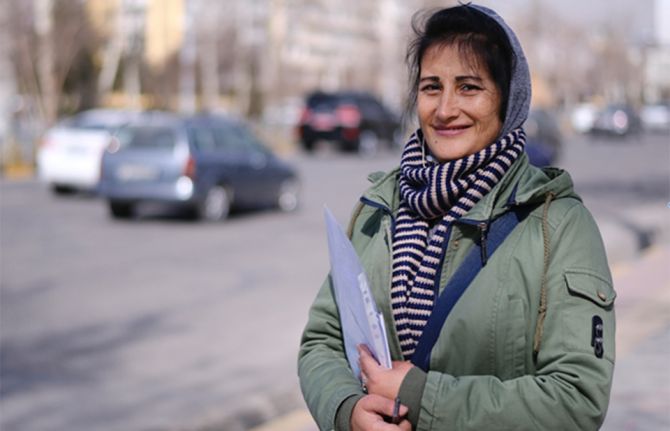 “An HIV diagnosis should not be a guilty verdict—it’s just a diagnosis"
01 de marzo de 2022
Feature Story
A faith-based response to HIV in southern Africa
20 Diciembre 2006
20 Diciembre 2006 20 Diciembre 2006Nazareth House, a faith-based organization located in Cape Town, was the first Catholic orphan care institution in South Africa to provide paediatric antiretroviral therapy for the HIV-positive orphans it cares for.
The Sisters of Nazareth House are currently caring for 35 children made orphans by AIDS and 20 adults living with HIV, most of whom, due to the complexity or severity of their symptoms can no longer care for themselves or be cared for by their family or community.

Photo credits : UNAIDS/L. Alyanak
Like Nazareth House, many faith-based initiatives have been on the front-line of the epidemic since its devastating effects on the population became apparent in Africa. Nowadays, faith-based organizations, which often reach the most remote communities, as well as being prominent in large urban centres, are uniquely placed to provide a range of quality HIV-related services (from training of home-based caregivers to provision of antiretroviral therapy) to those in need.
However, the valuable work of organizations within the Catholic Church based upon their religious principles sometimes lacked the coordination and level of support needed to improve the effectiveness of their responses to the AIDS epidemic.
It was under these circumstances that the Southern African Catholic Bishops’ Conference (SACBC), in partnership with the Catholic Medical Mission Board, launched the Choose to Care initiative. The initiative, supported by funding from the Bristol-Meyers Squibb Foundation and other sources, started in 2000 as a coordinated response to the overwhelming need to provide HIV-prevention education, care and support to communities in the southern African region.
“Since 2000 the SACBC AIDS Office has coordinated the response of the Catholic Church to AIDS in South Africa, Swaziland and Botswana, strengthening and building on existing programmes, as well as helping to initiate new ones. The continuum of Choose to Care in most of the programmes and projects linked to the SACBC has seen commitment to prevention, care and support to people infected and affected by AIDS,” stated Mr. Johan Viljoen, Programme Manger of Choose to Care Project.
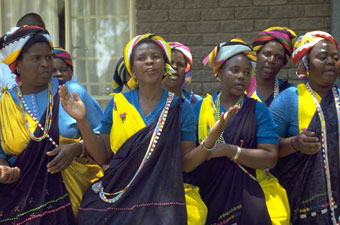
Photo credits : UNAIDS/L. Gubb
At first the Choose to Care projects were engaged in providing prevention and care services. However, the provision of treatment to those living with HIV, particularly orphans and vulnerable children, has become one of their main activities. The sites supported by the SACBC providing antiretroviral therapy aim at complementing government programmes in areas where government-funded antiretroviral therapy is not available, notably in resource-poor communities.
Nazareth House was one of the first sites where antiretroviral therapy was provided as part of the Choose to Care initiative. By replicating similar small-scale programmes implemented through the diocesan and parish system, the Catholic Church has been able to scale-up HIV programmes that remain rooted in and responsive to the needs of local communities.
This approach has been proven to be effective as is shown in a study recently researched and written by Rev. Robert J. Vitillo, Special Adviser on HIV for Caritas Internationalis. The study has now been published as part of the UNAIDS Best Practice Collection as an example of how a coordinated response to the epidemic made by a faith-based organization has increased HIV prevention education, care and support to communities affected by AIDS as well as complementing governments’ efforts to achieve universal access to prevention, treatment, care and support.
“The highly variable nature of the epidemic has been met with a wide variety of Best Practice responses. The Choose to Care initiative is especially interesting as it provides evidence that a large scale response to HIV may be achieved through support, coordination and guidance given to a large number of locally-rooted small-scale programmes,” noted Alistair Craik, Best Practice Manager, UNAIDS.
Drawing upon independent research the study shows that the Choose to Care projects are valued both for their compassion and practical effectiveness. Further proof of the strength and effectiveness of the Choose to Care model is provided by the fact that since 2005 when, as planned, funding support ceased, the great majority of projects have continued, sustained by new sources of support.
Feature Story
Joint UNAIDS / DFID delegation visit to India
19 Diciembre 2006
19 Diciembre 2006 19 Diciembre 2006AIDS leaders from the United Kingdom and the Joint United Nations Programme on HIV/AIDS (UNAIDS) came together in India for a joint mission to gain greater insight into the country’s AIDS response. During the four-day visit, Sir Suma Chakrabarti, Permanent Secretary at the Department for International Development (DFID) and Dr Peter Piot, Xecutive Director of UNAIDS met with political leaders, senior government officials and parliamentarians, students, representatives from non governmental organizations and from the donor community.
As part of the mission, the delegation visited Patna in the North Indian state of Bihar on Saturday 16 December where Dr Piot and Sir Chakrabarti noted the significant progress made in this province since their last visit, including the establishment of India’s first ‘Legislative Forum on HIV and AIDS’ to raise AIDS awareness among policy makers in the state and to build capacity to address the challenges posed by AIDS.
|
|
Dr. Peter Piot, Executive Director, |
|
Mr. Nitish Kumar, Chief Minister of Bihar |
|
Dr.Peter Piot. Executive Director, UNAIDS addressing the gathering of Elected People’s Representatives in the State Capital of Patna on 16th December 2006 |
|
Sir Suma Chakrabarthi, Parmanent Secretary of the Department for International Development (DFID) addressing the gathering |
|
Heads of the Joint Mission Dr. Peter Piot, Executive Director, UNAIDS and Sir Suma Chakrabarti, Parmanent Secretary of the Department for International Development (DFID) greeting His Excellency R.S.Gavai, the Governor of Bihar State and the Chancellor of Patna University with the Speaker of Bihar Legislative Assembly, Mr. Uday Narain Chowdhury during the interactive session with students at the Wheeler Senate Hall, Patna University, Patna on 16th December 2006. |
|
A cross section of the gathering at |
In New Delhi, the joint delegation met with political leaders and senior officials including the Indian Minister of Health and Family Welfare, Dr. Anbumani Ramadoss, the Indian Minister of Finance, P. Chidambaram and Sitaram Yechury, Polit Bureau Member of the Communist Party of India.
|
Dr. Peter Piot, Executive Director UNAIDS and Sir Suma Chakrabarti, Parmanent Secretary of the Department for International Development (DFID) during their meeting with Dr. Anbumani Ramadoss, Indian Minister of Health & Family Welfare in New Delhi, India on Monday 18 December 2006 |
|
Dr. Anbumani Ramadoss, Indian Minister of Health & Family Welfare with Dr. Peter |
|
Dr. Peter Piot, Executive Director UNAIDS and Sir Suma Chakrabarti Parmanent Secretary of the Department for International Development (DFID) meet with Sitaram Yechury, Polit Bureau Member of the Comunist Party of India |
|
From left to right Indian Minister of |
|
Dr. Peter Piot, Executive Director UNAIDS and Sir Suma Chakrabarti, Parmanent Secretary of the Department for International Development (DFID)exchange notes after meeting with Indian Finance Minister P. Chidambaram outside his office at North Block in New Delhi, India on Monday 18 December 2006. |
Photo credit for New Delhi : S. Sharma
Related
 Indian partners reflect on a year after sex workers’ human rights affirmed
05 de octubre de 2023
 A rainbow of hope for LGBTQI+ people in rural Japan
17 de mayo de 2023

Feature Story
Local initiatives push for change in India
18 Diciembre 2006
18 Diciembre 2006 18 Diciembre 2006
Photo credits : UNAIDS/M. Jensen
Political leaders in the north Indian State of Bihar were urged to rapidly scale up HIV awareness, prevention, care and support by AIDS leaders from the United Kingdom and the Joint United Nations Programme on HIV/AIDS (UNAIDS) during a special joint delegation visit on Saturday 16 December. At the same time, the delegation commended the commitment in the State to achieving these aims.
On a one-day visit to Bihar at the invitation of the State Government of Bihar, Sir Suma Chakrabarti, Permanent Secretary, Department for International Development (DFID) of the United Kingdom and Dr Peter Piot, Executive Director of UNAIDS, met with key political figures and visited the University. The joint delegation commended the political leaders’ resolve to fight AIDS and called for sustained political commitment, greater support from development partners and continued participation of elected representatives in strengthening a decentralized response to the HIV epidemic.
The joint mission was an opportunity to explore how local responses to the AIDS epidemic can be supported and strengthened through initiatives that are locally sensitive and aligned with commitments made at the global level.
In July 2006, Bihar became the first north Indian state to establish a legislative forum with a formal constitution and institutional mechanism for elected representatives to address AIDS issues in the State. The “Bihar Legislative Forum on HIV and AIDS” was launched as a way to raise awareness among political leaders in the State at all levels and to support a stronger capacity of all sectors to address the challenges posed by AIDS.
Since the inception of the forum, Bihar leaders have been advocating this approach with their political peers. Six other states in the northern region of India have now committed themselves to replicate the Bihar model. However, it was emphasized that leaders’ commitment is only one of the steps for a successful AIDS response.
In his speech at the Bihar Legislative Assembly, Dr. Peter Piot indicated that the state had to face “the challenge of strong leadership, management and coordination of all AIDS activities and the challenge of reaching ALL of Bihar’s people to effectively prevent and treat HIV infection.”
Sir Suma Chakrabarti emphasized that “action is needed to spread accurate messages so that people, especially women, can protect themselves. Action is also urgently needed to tackle stigma and discrimination faced by people living with HIV.”
As part of the visit, the joint delegation met representatives of the government, the legislature, civil society, United Nations staff and donor agencies to explore ways to improve the coordination of resources for AIDS control at all levels. The delegation recommended that the technical and financial resources of development partners be pooled to ensure that the Bihar AIDS response keeps pace with the evolving nature of the epidemic, and to ensure that technical and financial support is in line with the needs of the State AIDS Control Society to reach all high risk groups. “The State AIDS Control Society should regularly inform you, the people’s representatives, on the progress of the HIV control programme in Bihar,” argued Dr. Peter Piot, in speaking to the Bihar Legislative Forum.
Although Bihar’s HIV prevalence rate is lower than the national HIV prevalence rate of 0.9%, the social drivers of the epidemic make it particularly vulnerable. One in six people are migrating to urban centres in search of work and a better standard of living. Wide-spread stigma and misconceptions are causing marginalization and exclusion. The state’s vulnerabilities are compounded with a backdrop of increasing levels of sex work and low levels of condom use.
During the visit to Bihar, the joint delegation emphasized the need for a muti-sectoral response, including HIV prevention, treatment, care and support. Nothing less than such a comprehensive response can ensure that all people living with HIV and all those people at high risk of infection have access to vital HIV services. DFID and UNAIDS underlined their support to Bihar in its continuous efforts to control the AIDS epidemic.
The one-day visit to Bihar was part of a wider joint DFID / UNAIDS mission to India in which Dr Piot and Sir Chackrabarti will also meet with political leaders, senior government officials and parliamentarians, students and representatives from non governmental organizations and from the donor community in Delhi.
RHC
Related
Indian partners reflect on a year after sex workers’ human rights affirmed
05 de octubre de 2023
A rainbow of hope for LGBTQI+ people in rural Japan
17 de mayo de 2023