Documents
Мобильность населения и СПИД: ЮНЭЙДС Технический обзор
07 мартаа 2001 года.
С учетом того, что сегосня в мире миллионы людей мигрируют или перемещаются с места на место, существует насущная необхосимость принятия ответных мер, чтобы отреачировать на их особую уязвимость к ВИЧ/СПИДу. Такие меры очень важны для обеспечения эффективности национальных программ по борвбе со СПИДом во многих странах, характеризующихся высоким уровнем миграции и мобильности населения. Они также имеют большое значение для обеспечения эффективности региональных и междннародных программ по борьбе я ВИЧ/СПЯДом.

Documents
AIDS, poverty reduction and debt relief : a toolkit for mainstreaming HIV/AIDS programmes into development instruments
13 мартаа 2001 года.
For poor countries, where Poverty Reduction Strategy Papers (PRSPs) serve as the country’s agenda for poverty reduction, it is crucial for country-level managers to make credible proposals for the inclusion of HIV/AIDS in their poverty reduction efforts. Yet, while several countries have effectively done so, many others have not. This toolkit is addressed primarily to those responsible for getting the HIV/AIDS agenda into the country’s broader development efforts. It is also aimed at officials of agencies such as nongovernmental organizations and the international financial institutions, which work with countries on PRSPs and Highly Indebted Poor Country (HIPC) documents. The document examines issues such as the potential benefits of giving HIV/AIDS a prominent place in PRSPs and HIPC agreements; the contribution of National AIDS Programmes to poverty reduction; and the essential HIV/AIDS contents in the PRSP and HIPC documents.
Documents
HIV-NAT
30 мартаа 2001 года.
The HIV Netherlands Australia Thailand
Documents
The male latex condom
07 мая 2001 года.
10 Condom Programming Fact Sheets
Documents
The African AIDS Vaccine Programme
09 мая 2001 года.
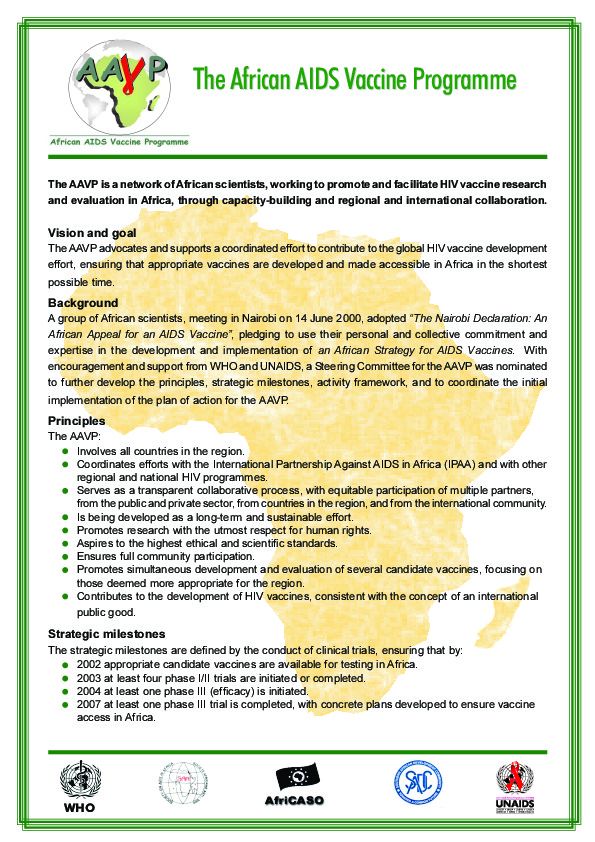
In June 2000, a group of African scientists met in Nairobi and pledged to use their personal and collective expertise to develop/implement an African strategy for AIDS vaccines, thus forming the African AIDS Vaccine Programme (AAVP). This two-page document discusses the AAVP’s principles (i.e. it promotes research with the utmost respect for human rights, aspires to the highest ethical and scientific standards, and ensures full community participation), strategic milestones, and activity framework.
Documents
HIV prevention needs and successes : a tale of three countries
10 мая 2001 года.
Worldwide there is a growing body of knowledge about successful interventions to reduce the spread of HIV/AIDS. Success is certainly not limited to industrialized countries. In developing countries, prevention activities aimed at changing behaviours and associated social norms can and do work, not only on a large scale but also at the national level. To demonstrate this, data and experiences from three countries—Senegal, Thailand and Uganda—with differing cultures and different levels of the epidemic, are presented in this booklet.
Documents
Азиатскаясетьпо снижениювреда: Поддержка мер противодействия распространению БИЧ и иньекционного наркопотребления в Азии
11 мая 2001 года.
Предлагаемое исследование показало, что Азиатская сеть по снижению вреда имеет необходимый потенциал для того, чтобы снова стать решающим катализатором ответных действий, способствовать приобретению навыков проведения масштабных профилактических мероприятий, а также оказывать поддержку всем членам общин в их работе. Оглядываясь назад, я убеждён, что Межстрановая группа вместе с ко-спонсорами и партнёрами и Азиатская сеть по снижению вреда со многими её квалифицированными членами споцобны делать зчачительный вклад. Взаимодействуя друг с другом, мы способны снизить заболеваемость ВИЧ-инфекцией и вред, связанный а наркотиками, среди потребителей наркотиков в Азии, а также обеспечить уходом и поддержкой тех, кто в ней нуждается.
Documents
CSM Global Directory
16 мая 2001 года.
Global Directory of Condom Social Marketing Projects and Organisations
Documents
Guidelines for using HIV testing technologies in surveillance : selection, evaluation and implementation
14 июня 2001 года.
As the HIV/AIDS epidemic imposes an ever-larger burden on the world, second generation HIV surveillance becomes more critical in understanding the trends of the epidemic and making sound decisions on how best to respond to it. In the context of second generation HIV surveillance, these laboratory guidelines suggest methods for selecting, evaluating and implementing HIV testing technologies and strategies based on a country's laboratory infrastructure and surveillance needs. The guidelines provide recommendations for specimen selection, collection, storage, and testing, and for the selection and evaluation of appropriate HIV testing strategies and technologies to meet surveillance objectives. Because accurate results are important in biological surveillance of HIV, quality assurance measures are addressed. The guidelines also include a glossary of terms used in the document. These technical guidelines are written for HIV surveillance coordinators and other health professionals involved in HIV testing for surveillance purposes in developing countries. They are part of a series of operational guidelines for second generation HIV surveillance systems.
Documents
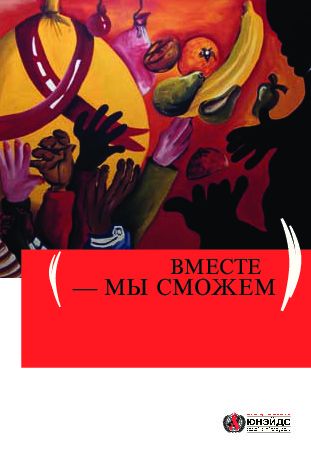
Вместе- мы сможем: Руководство в эпоху СПИДа
21 июня 2001 года.
Где бы ни бозникала эпидемия ЦПИДа, ее усугувляют существующие социально-экономические проблемы. В конечном итоге эффективиость нашего руководства будет определяться тем, насколько убедутельно мы будем решать проблемы нищеты, неравенства и неадекватности инфраструктур - факторов, обусловливающих развитие этой страшной болезни. Только таким образом мы сможем расширить возможности граждан, общин и стран, что поможет им в полной мере исполнять свою роль лидеров в борьбе против БИЧ/СПИДа.