

Feature Story
Seguimiento de la sesión especial de las Naciones Unidas: Un mundo apropiado para los niños + 5
18 Diciembre 2007
18 Diciembre 2007 18 Diciembre 2007
©UNICEF/HQ07-2010/Markisz La declaración adoptada por la Asamblea General identificó la erradicación de la pobreza como la meta global más importante que afrontan los niños.
La conmemorativa reunión plenaria de alto nivel dedicada al seguimiento del resultado de la sesión especial de la ONU celebrada en 2002 ha finalizado con la aprobación de una nueva Declaración de Niños que reafirma las obligaciones presentadas hace cinco años.
El 13 de diciembre de 2007 más de 140 delegaciones gubernamentales aprobaron la Declaración que aborda la mejora de la vida de los niños.
Además de los jefes de estado y de gobierno, alrededor de 130 delegaciones de alto nivel se reunieron en la sede de la Organización de las Naciones Unidas para la conferencia cumbre con el objetivo de evaluar el progreso de Un mundo apropiado para los niños, un Plan de acción que establecieron los gobiernos en 2002.
Veinte niños participaron en la sesión plenaria como miembros de sus delegaciones nacionales. Cientos de ONG se reunieron también en Nueva York para debatir y apoyar cuestiones relacionadas con la infancia.
 © UNICEF/HQ07-1930/Susan Markisz Ann M. Veneman (en el centro) con (de izquierda a derecha) el presidente del Comité de los derechos del niño Yanhee Lee, el director ejecutivo de ONUSIDA Dr. Peter Piot, el profesor Ernesto Schiefelbein y el director regional del Plan Internacional Dr. Deepali Khanna.
El día anterior a la apertura de la sesión plenaria, UNICEF publicó un nuevo informe (“Progreso para los niños: examen estadístico de Un mundo apropiado para los niños”) sobre lo bien que está haciendo el mundo al reunir sus obligaciones a nivel global.
Este informe analiza el progreso hacia los Objetivos de Desarrollo del Milenio en 4 áreas prioritarias para los niños: el fomento de la vida sana, la educación de buena calidad, la respuesta al sida y la protección contra el abuso, la explotación y la violencia.
“Éste es el informe de Progreso para la infancia más completo hasta ahora”, dijo la directora ejecutiva de UNICEF, Ann M. Veneran, a los participantes de la reunión de Town Hall en la sede de UNICEF el 10 de diciembre.
El foro abierto presentó un panel de expertos, en el que se encontraban Peter Piot, director ejecutivo de ONUSIDA, y Yanhee Lee, del Comité de los derechos del niño.
También estaban presentes los representantes de más de 50 ONG, a quienes se animó a que opinaran sobre el informe y a que compartieran sus experiencias de su trabajo en un gran número de programas para niños. Los jóvenes delegados del Foro Juvenil de esta semana, patrocinado por UNICEF, también se unieron al debate.
Right Hand Content
Copatrocinadores:
Leer los informes de UNICEF sobre la reunión plenaria “Un mundo apropiado para los niños +5”
Publicaciones:
Declaración de la reunión plenaria conmemorativa de alto nivel, destinada al seguimiento de los resultados del periodo especial de sesiones sobre la infancia
Avances para la infancia: repaso estadístico de “Un mundo apropiado para los niños +5”(diciembre de 2007) (pdf, 3.62 Mb)
Related
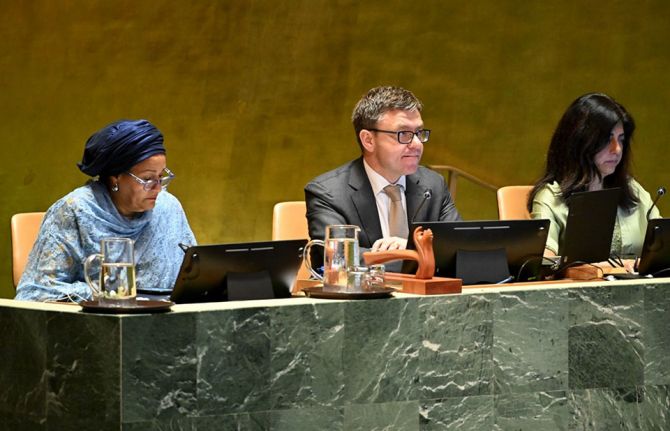 United Nations General Assembly debate highlights the need for urgent action to ensure that progress in the HIV response is accelerated and sustained
26 de junio de 2024
 A Thank You letter to the American people from the Executive Director of UNAIDS: PEPFAR is the Greatest Contribution Made by Any Country to Ending AIDS
12 de junio de 2023
 United for ending cervical cancer, HIV and inequities for women and girls
17 de noviembre de 2022
Feature Story
ONUSIDA estrena diseño y presenta mejoras en su sitio web www.unaids.org
14 Diciembre 2007
14 Diciembre 2007 14 Diciembre 2007
Nuevo diseño para la página de inicio de ONUSIDA, 14 de diciembre de 2007.
¡Bienvenido a la versión actualizada de la web de ONUSIDA!
ONUSIDA tiene el placer de presentarles el nuevo diseño y sistema de navegación de su sitio web, así como una muchas características nuevas, entre las que se encuentran el “boletín de noticias de los copatrocinadores”, el nuevo “Centro de Recursos”, el “Centro multimedia” y un menú de navegación mejorado. De esta manera, esperamos que las mejoras aunadas de funcionalidad y usabilidad supongan una experiencia de navegación más satisfactoria para nuestros usuarios.
Pretendemos simplificar la búsqueda de información en el sitio web sobre el sida, el trabajo de ONUSIDA y sus copatrocinadores a todos nuestros usuarios (entre quienes se cuentan personas procedentes del ámbito de la promoción y defensa de la causa, la política, la medicina, los medios de comunicación y la investigación, así como otros miembros de la comunidad). También facilita el acceso a los recursos técnicos clave, la posibilidad de aprender sobre nuestros copatrocinadores y ayuda a estar al día de las últimas noticias de ONUSIDA.
Nuevas características
Entre las nuevas características podemos encontrar un nuevo diseño de la página de inicio con menús de navegación desplegables, un boletín de noticias, el nuevo apartado “recursos” que contiene todos los datos y recursos clave de ONUSIDA, un nuevo diseño de la sección de publicaciones y del centro multimedia con vídeos y materiales fotográficos y de audio.
Annemarie Hou, jefa de Comunicación e Información pública, declaró: “Nuestro objetivo era diseñar un sitio web más intuitivo y completo y reducir la repetición de material”.
“El estreno del nuevo Centro de Recursos destaca el papel de ONUSIDA como fuente de información sobre la epidemia y ofrece conocimientos ampliados gracias a la colaboración con nuestros socios y otros participantes”.
Le invitamos a explorar el nuevo sitio y agradecemos enormemente su colaboración. No dude en contactar con nosotros y comunicarnos sus ideas y sugerencias vía e-mail: webmaster@unaids.org.
Related
 Walk in my shoes — UNAIDS Board devotes key session to HIV, adolescents and youth
20 de diciembre de 2013
 Know your HIV status: First European testing week takes off
27 de noviembre de 2013
 Asian Football Confederation and UNAIDS team-up to raise awareness of HIV
26 de noviembre de 2013
Feature Story
US Senate Committee discusses AIDS
13 Diciembre 2007
13 Diciembre 2007 13 Diciembre 2007
UNAIDS Executive Director Dr Peter Piot address US Senate Committee
At a special hearing - "Meeting the Global Challenge of AIDS, TB and Malaria" - UNAIDS Executive Director Dr Peter Piot addressed the US Senate Committee on Health, Education, Labor and Pensions (HELP) about AIDS, the work of UNAIDS to address the epidemic and the critical difference that the US President's Emergency Plan for AIDS Relief (PEPFAR) has made in the AIDS response.
Also addressing the Committee in Panel I were U.S. Global AIDS Coordinator, Ambassador Mark Dybul and Director of the US Centers for Disease Control and Prevention. Joining Dr Piot in Panel II were World Vision HIV educator Princess Zulu, Professor of the University of California, Dr Norman Hearst and Vice Chair of the IOM Evaluation Committee, Dr Helen Smits.
Resources:
Read written testimony provided by UNAIDS Executive Director Dr Piot to the US Senate committee on Health, Education; Labor and Pensions (HELP)
Read follow up questions submitted by HELP to Dr Piot
External links:
More on 'Meeting the Global Challenge of AIDS, TB and Malaria' - US Senate Committee web site
View the hearing
Related
 UNAIDS launches new approach to ensure the long-term sustainability of the HIV response
19 de enero de 2024
A Thank You letter to the American people from the Executive Director of UNAIDS: PEPFAR is the Greatest Contribution Made by Any Country to Ending AIDS
12 de junio de 2023
 Investments in HIV, health and pandemics are vital for economic recovery in Africa
15 de febrero de 2022
Feature Story
Por la eficiencia de los ensayos clínicos sobre el VIH en la mujer
13 Diciembre 2007
13 Diciembre 2007 13 Diciembre 2007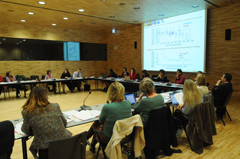
Durante el encuentro patrocinado por ONUSIDA, la Coalición mundial sobre la mujer y el sida (GCWA), el Centro internacional de investigación sobre la mujer (ICRW) y la farmacéutica Tibotec hicieron recomendaciones en relación a tres aspectos principales: aplicación de programas y políticas, investigación y promoción y defensa.
Un grupo de expertos en salud de diferentes organismos internacionales, organizaciones no gubernamentales y de investigación, universidades, así como el sector industrial acordaron llevar a cabo una serie de medidas que aseguren que las intervenciones y los ensayos clínicos sobre el VIH se diseñen y lleven a cabo para satisfacer las necesidades de las mujeres, grupo que cada vez presenta mayores índices de contagio.
Tras dos días de reunión en la sede de la Secretaría de ONUSIDA en Ginebra, el grupo de los allí reunidos identificaron las áreas en las que es necesario que se siga investigando, entre las que destacan los efectos de la desigualdad de género en las intervenciones sobre el VIH. A su vez, se comprometieron a extender la promoción y defensa de la mujer y de los ensayos clínicos entre la comunidad donante, los gobiernos y el sector industrial.
Kathleen Cravero, directora de Prevención de crisis y recuperación del Programa de las Naciones Unidas para el Desarrollo, calificó el resultado de “alentador” y declaró que el asunto de la mujer y el VIH por fin estaba cobrando la atención que merecía. “Si me pongo a hacer memoria, hasta hace poco no era habitual que se le prestase atención a este asunto”, explicaba a los delegados.
Aunque la mitad de quienes viven con el VIH en todo el mundo son mujeres, pero la cifra asciende por encima del 60 por ciento en África subsahariana donde los índices de contagio están aumentando entre las adolescentes.
Sin embargo, las mujeres no cuentan con la suficiente representación en los ensayos clínicos para los tratamientos y las estrategias de prevención. Las razones son varias, y en parte históricas, con especial relevancia en los países en desarrollo, donde además se incluyen entre tales razones factores culturales y socioeconómicos, como puede ser la falta de poder de la mujer.
Según acordaron los delegados, las soluciones para resolver estos problemas deben ir más allá de las consideraciones estrictamente biomédicas y contemplar así aspectos estructurales, entre los que se incluya la pobreza.
Durante el encuentro patrocinado por ONUSIDA, la Coalición mundial sobre la mujer y el sida, el Centro internacional de investigación sobre la mujer (ICRW) y la farmacéutica Tibotec hicieron recomendaciones en tres aspectos principales: en aplicación de programas y políticas, en investigación y en promoción y defensa.
Los principales temas que se identificaron fueron el asunto general sobre el papel que desempeña la mujer en los ensayos clínicos, las diferencias de género, la falta de conocimiento en temas tales como los diversos efectos de las cargas virales en hombres y mujeres, el desarrollo de competencias, las oportunidades para la investigación, la eficiencia en la difusión de los conocimientos comprobados, las cuestiones sobre salud sexual y reproductiva en los adolescentes, entre las que se incluyen el aborto y el embarazo en mujeres que viven con el VIH.
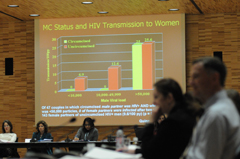
La mitad de quienes viven con el VIH en todo el mundo son mujeres, pero la cifra asciende por encima del 60 por ciento en África subsahariana donde los índices de contagio están aumentando entre las adolescentes.
Dados los crecientes índices de contagio que se detectan entre los adolescentes en determinadas partes del mundo, su participación en estos ensayos se está convirtiendo en un asunto crucial. Este sector social requería más información preliminar sobre las ventajas y desventajas de dichos ensayos antes de que pudiesen hacerse recomendaciones claras al respecto.
Los objetivos para la promoción y defensa circunscribirían a los organismos reguladores, a los que se animaría a seguir insistiendo en la inclusión de más mujeres en los ensayos clínicos, así como de organismos de la investigación, de publicaciones médicas, de la industria y de donantes tales como el Fondo Global. Además, se requeriría que la industria fijase unos objetivos para incluir a las mujeres en las pruebas.
Durante la sesión, a la que asistieron más de cincuenta expertos en diversas facetas de la respuesta al sida, se asignaron planes de acción futuros a las diferentes organizaciones participantes. Por ejemplo, la Coalición mundial aceptó encargarse de la investigación de los asuntos estructurales de intervención, mientras que ONUSIDA dirigirá la cuestión de la buena práctica de participación (GGP).
Se propuso que la Organización Mundial de la Salud, ONUSIDA y el Fondo de Población de las Naciones Unidas (UNFPA) convocaran una reunión extraordinaria para discutir cuestiones que conciernan a parejas en las que una parte es seropositiva y la otra no ( a menudo denominadas parejas serodiscordantes), y asuntos tales como la fertilidad y la profilaxis preexposición.
El grupo, que publicará un informe detallado sobre el resultado de la reunión también considerará el presentar “un boletín” acerca de los ensayos de VIH, evaluando hasta qué punto estos han involucrado a las mujeres.
Fotografía: UNAIDS/O.O'Hanlon
Documentación:
Políticas y orientaciones:
Prácticas óptimas de participación en los ensayos biomédicos de prevención del VIH (pdf, 733.22 Kb) (en inglés)
Asociados:
Coalición mundial sobre la mujer y el sida (en inglés)
Centro internacional de investigación sobre la mujer (ICRW) (en inglés)
Tibotec (en inglés)
Reportajes:
Serie de tres partes para la web
Parte 1: Cuestiones éticas referentes a las pruebas del VIH
Parte 2: El papel de la mujer en las pruebas del VIH
Parte 3: Reunión de expertos sobre la mujer y los ensayos clínicos sobre el VIH
Más acerca de la reunión- Mujeres e investigación sobre el VIH
Información relacionada:
Más acerca de la investigación biomédica.
Enlaces externos:
Investigación sobre la prevención del VIH: cronología completa (en inglés)
Publicaciones:
Consideraciones éticas en los ensayos biomédicos de prevención del VIH (pdf, 750.32kb) (en inglés)
Prácticas óptimas de participación en los ensayos biomédicos de prevención del VIH (pdf, 733.11Kb) (en inglés)
Related
 The urgency of HIV prevention among adolescent girls and young women
01 de junio de 2023
 Asia Pacific women living with HIV speak out about rights violations
08 de marzo de 2023
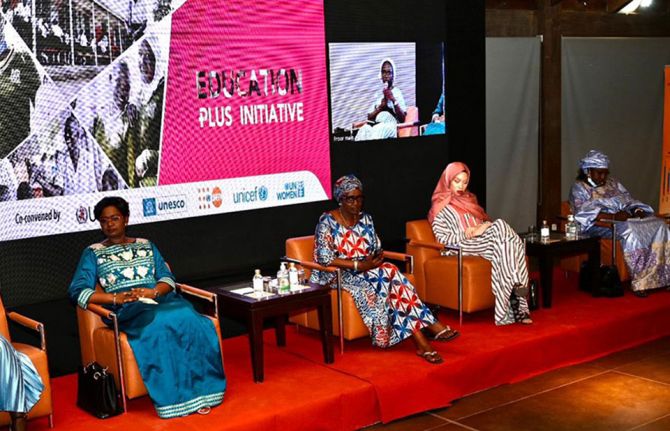 Young women leaders in Senegal push for more education for their peers
24 de mayo de 2022
Feature Story
Women and HIV research
11 Diciembre 2007
11 Diciembre 2007 11 Diciembre 2007
Meeting at UNAIDS in Geneva, health experts said
that cultural and social barriers can still stop women
taking part in HIV trials in sufficient numbers, while
too little is known about the effects of biological
differences between the sexes in such areas as the
impact of HIV drugs.
Women and adolescent girls are on the frontline in the AIDS epidemic but getting them the special treatments, HIV prevention strategies and protection they need will require a varied, multi-disciplined response -- medical, social and economic, health specialists agreed.
Meeting at UNAIDS in Geneva, health experts from international agencies, non-governmental organisations (NGOs), research institutions and the private sector, said that cultural and social barriers can still stop women taking part in HIV trials in sufficient numbers, while too little is known about the effects of biological differences between the sexes in such areas as the impact of HIV drugs.
Winding up the first of two days of discussions on Monday 10 December, Kristan Schoultz, Director of the Global Coalition on Women and AIDS, said delegates had made a thorough review of the challenges and difficulties and the moment had come to start putting forward proposals for solutions.
“I think we have determined some of the challenges we face, (now) we need to tease out of this a way forward,” she said.
The route lay beyond a strict interpretation of the conference’s theme – “Making HIV Trials Work for Women and Girl Adolescents” -- and should include economic and social changes to address background factors such as poverty and empowerment.
“We need to highlight the difference between sex
and gender differences. Gender also brings in
social, cultural and economic issues as opposed to
the straight biological issues,” said Geeta Rao Gupta,
President, the International Center for Research on
Women (ICRW).
“We need to highlight the difference between sex and gender differences. Gender also brings in social, cultural and economic issues as opposed to the straight biological issues,” said Geeta Rao Gupta, President, the International Center for Research on Women (ICRW).
Although women account for some 50% of people infected with HIV worldwide, in sub-Saharan Africa the figure is around 60% and amongst some ethnic minorities in developed countries women also account for a disproportionate percentage. In parts of southern Africa, girl adolescents are some four times more likely to become infected with HIV than males of the same age.
For years after AIDS was first recognized in the early 1980s, medical research continued to be largely male orientated. Clinical trials involving women of child-bearing age had been banned in the United States in the late 1970s, in part because of the thalidomide scandals, and the restriction was not lifted until the early 1990s. In addition, the epidemic was initially thought largely a disease affecting men who had sex with men.
“The current research emphasis being put on microbicides for women is an illustration of the way in which priorities have changed,” said Roberta Jean Black, tropical microbicides team leader of the U.S. National Institutes of Health.
“The current research emphasis being put on
microbicides for women is an illustration of the way
in which priorities have changed,” said Roberta
Jean Black, tropical microbicides team leader of
the U.S. National Institutes of Health.
“Some of these inequalities simply represented misunderstandings of the disease and its evolution…We have responded successfully but the work is not done,” she added.
“The existing strategy was not designed with the percentage (of women) in mind. This is an iniquitous state of affairs,” declared Julie McHugh, company group chairman, virology, Tibotec.
More needs to be known about the progress of HIV in women.
“We are looking for answers for women. We now have women in menopause with HIV and we do not know anything about it,” said Heidi Nass, Director, Education and Policy Advocacy, Health HIV Care Program, University of Wisconsin. “We have seen the list (of things to do) a million times, it would be really nice to come out with action,” she added.
Gaps in understanding
There are many gaps in our understanding of HIV and how it evolves in women and the difference that gender can make, participants agreed. For example, CD4 tends to be higher in women, yet there appears to be no significant impact on the progress of the disease.
Most trials are not designed to detect sex
differences. “We are relying on safety trials from the
(rich, developed) north, and carried out on men,”
said Catherine Hankins, Chief Scientific Adviser to
UNAIDS.
But the difference can lead to delays in the timing of treatment for women. When it comes to mother-to-child-transmission (MTCT), this can have the unfortunate result that women who are not deemed sick, and are therefore not treated, are far more likely to infect their children than those who were inside the treatment threshold.
Most trials are not designed to detect sex differences. “We are relying on safety trials from the (rich, developed) north, and carried out on men,” said Catherine Hankins, Chief Scientific Adviser to UNAIDS.
There are also indications that some treatments have significant toxicity for women. Nevirapine, for example, can produce rashes and hepatic complaints. Toxicity can be one reason why women tend to abandon trials more often than men and is another area in which more research is needed.
Biologically different
Even if there are no side effects, it is possible that existing treatments may not be the best possible way of tackling HIV in women. Women are biologically different, so they need specific research.
Women in poorer countries can face a host of barriers to taking part in clinical trials. They may fear it will suggest that they are ill and lead to them being stigmatised, they could need permission from their partners or family – most people at risk are in long-term partnerships -- and they may not want to use contraception or they may fear for their future fertility.
Male circumcision provides no protection for women, although there could be secondary benefits for women, but more needs to be learned.
Difficult considerations
The whole question of trials for adolescents was thick with difficulties. Even a standard definition of what constitutes an adolescent is difficult to establish.
“Communities are very sensitive about involving young girls in trials for fear that they are promoting sexual activity,” said Gita Ramjee, Director, HIV/AIDS Lead Programme and HIV Prevention Research Unit, South African Medical Research Council.
Summing up the changes needed to help women and adolescent girls, Isabelle de Zoysa, senior adviser on HIV/AIDS at the World Health Organisation said: “We are looking how we move through gender unbiased, through gender sensitive to gender transforming.”
The conference, ‘Making HIV Trials Work for Women and Adolescent Girls’, takes place in Geneva on 10 – 11 December 2007. The meeting is co-sponsored by UNAIDS, the Global Coalition on Women and AIDS, the International Centre for Research on Women (ICRW), and Tibotec.
All photo credit: UNAIDS/O.O'Hanlon
Links:
Read part 1 - Meeting ethical concerns over HIV trials
Read part 2 - The role of women in HIV trials
Read part 3 - Experts meet on women and HIV clinic trials
More on biomedical research
HIV Prevention Research: A Comprehensive Timeline
Global Coalition on Women and AIDS
Tibotec
International Center for Research on Women (ICRW)
Publications:
Ethical considerations in biomedical HIV prevention trials (pdf, 750kb)
Good participatory practice guidelines for biomedical HIV prevention trials (pdf, 3.04Mb)
Related
The urgency of HIV prevention among adolescent girls and young women
01 de junio de 2023
Asia Pacific women living with HIV speak out about rights violations
08 de marzo de 2023
Young women leaders in Senegal push for more education for their peers
24 de mayo de 2022
Feature Story
Human rights and universal access
11 Diciembre 2007
11 Diciembre 2007 11 Diciembre 2007Human rights and its links to reaching the goal of universal access to HIV prevention, treatment, care and support was central to the discussions of the eighth meeting of the UNAIDS Reference Group on HIV and Human Rights, an independent advisory body to UNAIDS, that took place on 3-5 December 2007 in Geneva.
“The most critical issues in the HIV response are human rights issues, and UNAIDS [needs to] frontline these to push the HIV response towards universal access to HIV prevention, treatment, care and support,” said Reference Group Chair Mark Heywood when he summarized the Group’s conclusions to UNAIDS Deputy Executive Director (Programme) Michel Sidibe.
The Group – which includes HIV activists, lawyers, a High Court judge, people living with HIV, people working with sex workers and drug users, academics and the UN Special Rapporteur on the Right to Health – addressed a range of issues, including accountability for universal access commitments, human rights in the context of sex work and drug use, promotion of gender equality in national HIV responses.
Recent trends of criminalizing HIV transmission were also discussed. The Reference Group expressed its concern about the tendency of parliaments to criminalize HIV transmission and highlighted an increasing conflict between the push to help people get tested for HIV in order to get HIV treatment and the move to prosecute people who transmit HIV. It asked that UNAIDS empower its staff to work against this trend and urge governments to put in place the kind of laws that will really help stop the transmission of HIV: laws to protect the equality of women and to protect them against violence, laws to protect people living with HIV against discrimination, and laws to ensure sufficient programmes for HIV prevention for all populations groups in need of them.
The Reference Group also expressed concerns about reports of mandatory HIV testing. “We fully support the scale up of testing and counselling services as a human rights imperative, but providers must do so in a way that is based on dignity,” Heywood said in his summary report to UNAIDS. The Reference Group called for greater monitoring of this issue, as well as advocacy and technical assistance to ensure that mandatory testing practices are put to an end.
UNAIDS Deputy Executive Director, Michel Sidibe underlined the important role of UNAIDS staff in country – across the co-sponsored, joint UN programme – as human rights advocates. “AIDS will remain if we don’t deal with the human rights issues,” he said.
“All of our staff should be human rights oriented. We know that human rights must be at the basis of programmes that address the realities of those most vulnerable and those most affected by HIV,” he added.
He noted that much more work needs to be done to make HIV programmes respond to the local dynamics of the epidemic.
“Priority setting in national responses has generally not addressed the major challenges – the major vulnerabilities, issues of stigma, discrimination, gender inequality, and other human rights violations. We need better situation analysis, better understanding of the contextual factors, and we have to act on that information,” Sidibe said.
Audio:
Listen to Mark Heywood, Head of AIDS Law Project and National Secretary of Treatment Action Campaign (TAC)
Listen to Sofia Gruskin, Director of the International Health and Human Rights Program, Harvard School of Public Health
Links:
Read more on the UNAIDS Reference Group on HIV and Human Rights
Read more on Human Rights
Read UNAIDS Executive Director's statement on Human Rights Day 2007
Related
 Peru approves groundbreaking law to extend health coverage for migrants with HIV and TB
21 de octubre de 2024
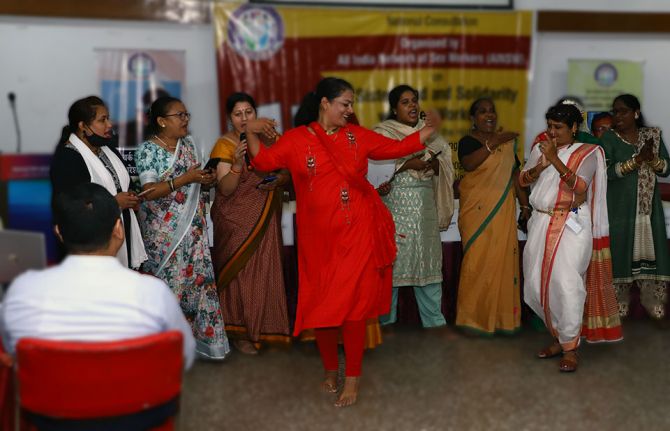 Indian partners reflect on a year after sex workers’ human rights affirmed
05 de octubre de 2023
Feature Story
Experts meet on women and HIV clinic trials
07 Diciembre 2007
07 Diciembre 2007 07 Diciembre 2007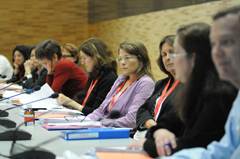
The conference, ‘Making HIV Trials Work for
Women and Adolescent Girls’, is co-sponsored by
UNAIDS, the Global Coalition on Women and AIDS,
the International Centre for Research on Women
(ICRW), and Tibotec.
Specialists on AIDS and women’s health are meeting in Geneva from December 10-11 to review the latest developments in research into preventing and treating HIV among women and adolescent girls from HIV infection, and to make recommendations on priorities and strategies.
The conference, ‘Making HIV Trials Work for Women and Adolescent Girls’, is co-sponsored by UNAIDS, the Global Coalition on Women and AIDS, the International Centre for Research on Women (ICRW), and Tibotec. The Global Coalition is an alliance of civil society groups, networks of women living with HIV and U.N. agencies; ICRW presses for women’s needs to be integrated into the design and implementation of programmes and policies; and Tibotec is an international pharmaceuticals company.
In the last of three articles focusing on HIV clinical trials ahead of the conference, senior representatives of the sponsoring organisations were asked about the challenges of getting women involved in sufficient numbers in HIV trials, the current state of research into prevention and treatment strategies for women and what they hoped the two-day meeting could achieve.
Catherine Hankins, Chief Scientific Adviser to UNAIDS, was asked why the conference was being held now?
Hankins: Although great strides have been made in recent years to include women as participants in HIV treatment and prevention trials in adequate numbers to draw conclusions relevant for them, challenges remain in recruitment, retention, study design, pregnancy, and meaningful engagement of women in trial design, conduct, and monitoring. It is also clear that adolescent girls who are at very high risk of HIV exposure in some settings must participate in trials before the final results of efficacy in adults are known so that licensing of an effective product can proceed for both adolescents and adults at the same time. This conference focuses on the progress thus far, the challenges ahead, and solutions.
Question: Women make up an increasing percentage of people living with HIV, particularly in Africa. Do current international research programmes adequately reflect this?
Hankins: Yes, many of the Phase III efficacy trials underway for HIV prevention are taking place where incidence in women is highest – sub-Saharan Africa. These include microbicide trials, PrEP trials, trials of herpes simplex-2 suppression, and the vaccines trials.
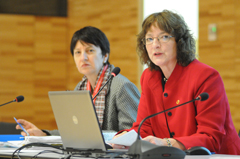
Catherine Hankins: "Combination prevention is key.
This means increasing the choices that women and
girls have to use synergistically at different times of
their lives and in different circumstances to protect
themselves from HIV".
Question: So what are the most promising lines of investigation? Is enough being done to find effective prevention tools and treatment for women?
Hankins: The first to report (already in 2008) will be the Carraguard microbicide trial and the herpes simplex-2 suppression trials. A number of other trials are underway but we are in this for the long haul. The amazingly consistent compelling results of the male circumcision trials may not be repeated for other HIV prevention products at quite the same efficacy level. Combination prevention is key. This means increasing the choices that women and girls have to use synergistically at different times of their lives and in different circumstances to protect themselves from HIV.
Question: What do you see coming out of this conference?
Hankins: Strong steps toward defining a research agenda, recommendations for policy and programmatic actions, and an advocacy strategy.
Kristan Schoultz, Director of the Global Coalition on Women and AIDS, was asked how the situation regarding women and AIDS had evolved since the coalition, which was launched by UNAIDS in 2004, and what she felt the coalition had achieved?
Schoultz: GCWA - together with women's groups and partners across the globe – has worked to put women's issues high on the agenda of top international AIDS forums. In 2006, U.N. Member states renewed and strengthened their commitments to scale up AIDS responses, and to address obstacles and barriers to access, particularly for women and girls. The ways in which gender inequalities and gender dynamics affect individual choices and behaviours are better understood and the issues facing women in a world of AIDS are more prominent in global and national advocacy.
However, the situation of women and girls in the AIDS response continues to be a major concern. We see rising rates of HIV infection among women in some regions and national AIDS responses have yet to sufficiently address the challenges and constraints women face in their everyday lives. We need to see more concerted work towards legal frameworks which secure women's rights, more funding for concrete programmes that benefit women, and greater participation of women's organizations in national decisions on AIDS programmes and budgets.
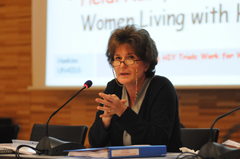
Kristan Schoultz: "Trials may need to investigate
the socioeconomic position of women and offer
support to potential trial participants".
Schoultz: Within any trial, three issues must be addessed: scientific justification, safety, and benefits for the community. With respect to women, challenges all essentially relate to safety and benefit. While women comprise a growing share of HIV infections every year, they are still underrepresented in HIV clinical trials which test the safety and efficacy of drugs. Drugs tested only on men can be dangerous for women. To get the gender-specific data that are needed, vaccine trials will need to enrol enough women and men to detect gender differences. Drugs work differently with female chemistry, and furthermore, drugs to help those conditions that emerge only in women may never be tested. From a medical viewpoint, women do not reap as much from advances in medical technology. At present, more women are now being enrolled in clinical trials. But many of the factors that affect women’s access to health services -- decision-making on health care, their social responsibilities, stigma associated with high-risk behavior, the threat of violence -- are the same barriers to their involvement in clinical trials. Simple factors, such as physical access to the location of the study, availability of child or family care, inhibit their participation. Trials may need to investigate the socioeconomic position of women and offer support to potential trial participants.
A huge challenge for women and adolescent girls is exercising their autonomy in participating in trials. The process of enrollment, securing informed consent, and protecting them from the risks that can result from research participation is fraught with deeply embedded social norms which are largely biased towards males. Gender-sensitive approaches are key when designing consent and recruitment procedures and risk-reduction interventions in HIV clinical trials.
Question: What contribution can this conference make?
Schoultz: UNAIDS and the Global Coalition on Women and AIDS are keen to have guidance on the links and complications of sex and gender on HIV treatments. We hope this meeting will deepen our understanding of these intersections in various clinical research areas. We hope that this meeting will help get HIV clinical trials done right for women.
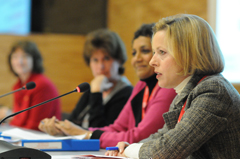
Julie McHugh: "Twenty five years of this epidemic
has taught us that women and girls are at the heart
of any successful response to HIV".
Julie McHugh, Company Group Chairman, Tibotec, was asked about what are currently the most promising avenues of research in HIV anywhere and for her company in particular.
McHugh: There has been a renewed push across the AIDS field recently with new treatments coming to patients with high genetic barriers to resistance, and superior efficacy and tolerability. This is an area that Tibotec is actively engaged in. Equally important are the development of new technologies and approaches that will simplify prevention and treatment approaches - in the fields of microbicides and Pre Exposure Prophylaxis particularly. But the key challenge for anyone concerned about reversing the global AIDS epidemic is making sure we have genuine partnerships between communities, international agencies, NGOs and the private sector to bring these new advances to women and girls. Highlighting this urgent need is the rationale for us holding this forum in Geneva.
Question: Do you feel that enough is being invested in HIV research worldwide?
McHugh: On the one hand, you could say that there is never enough being invested or conducted in HIV research. However, signficant increases in resources and commitments have been made in recent years across the public and private sectors. What we have to do is to ensure that these resources are most effectively used - and again, this calls for more enlightened and long term partnerships between sectors.
Question: What do you hope will come out of this conference?
McHugh: We want to raise awareness with policy makers and researchers of the importance of placing women and girls at the centre of HIV research. Twenty five years of this epidemic has taught us that women and girls are at the heart of any successful response to HIV.
All photo credit: UNAIDS/O.O'Hanlon
Links:
Three-part web series
Part 1: Meeting ethical concerns over HIV trials
Part 2: The role of women in HIV trials
Part 3: Experts meet on women and HIV clinic trials
More on biomedical research
HIV Prevention Research: A Comprehensive Timeline
Global Coalition on Women and AIDS
Tibotec
International Center for Research on Women (ICRW)
Publications:
Ethical considerations in biomedical HIV prevention trials (pdf, 750kb)
Good participatory practice guidelines for biomedical HIV prevention trials (pdf, 3.04Mb)
Related
The urgency of HIV prevention among adolescent girls and young women
01 de junio de 2023
Asia Pacific women living with HIV speak out about rights violations
08 de marzo de 2023
Young women leaders in Senegal push for more education for their peers
24 de mayo de 2022
Feature Story
Art as an inspiration
07 Diciembre 2007
07 Diciembre 2007 07 Diciembre 2007
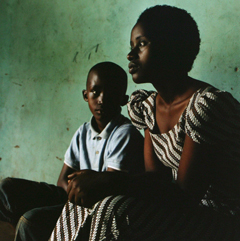
During the Rwanda leg of the visit, Jonathan met
Margaret, who not only became the subject for his
pictures—and part of the Art for AIDS collection--
but an inspiration for his life.
In February 2006, internationally renown photographer Jonathan Torgovnik travelled to Kenya, Tanzania and Rwanda for Newsweek magazine to cover the 25 years of AIDS through the eyes of UNAIDS Executive Director Peter Piot. During the Rwanda leg of the visit, Jonathan met Margaret, who not only became the subject for his pictures—and part of the Art for AIDS collection--but an inspiration for his life. In a special interview for the three-part series on Art for AIDS, Jonathan tells http://www.unaids.org/ his story.
Tell us about what happened in Rwanda
Well, in February 2006, I was on assignment for Newsweek in East Africa for the special issue on the 25 anniversary of AIDS. With Geoff Cowley (Newsweek health correspondent), we travelled through Kenya, Tanzania and Rwanada – with Peter Piot most of the time, following him, as the story was looking at 25 years, through Dr Piot’s eyes and life. In every country we went to, we also visited people living with HIV. In Rwanda, during one of the interviews, we met a woman named Margaret. She is a genocide survivor who was raped during the fighting and as a result contracted HIV. We also learned she had a child as result, and that probably, he too was living with HIV. Margaret took us through what had happened to her. Frankly, this was the most horrific interview I had ever heard. The level of brutality and sexual violence she went through was unthinkable, not to mention the memory of the slaughter of all her family. There were just so many multiple levels of trauma that she had gone through, and is still going through 13 years later.
What did this prompt you to do?
I found her story incredible and wanted to investigate more into the issue of children being born from rape, and what happens to them. So I started to investigate and found out that an estimated 20,000 children were born from rape during the genocide. I decided to go back several times and chronicle these women and their children’s stories through photography and words, to give them a voice. Sixty percent of women I interviewed had also contracted HIV from their rapists. And because of all the stigma attached to rape and HIV, these women and their children are often completely ostracised from community. All the women I have spoken to—about 30 now—feel the future for their children is very bleak. I asked them what would they do for these children if they could do something and they all underlined education as key. So I decided to start a foundation to raise money to pay for secondary school education for the children.

A selection of photographs by Jonathan Torgovnik
from the Kenya, Rwanda, Tanzania mission are
showcased in the UNAIDS ART for AIDS collection.
We raise money by publicising the stories, the chronicles of these women – placing them in mainstream magazines throughout the world and asking for donations. We have had some extremely generous donations after articles appeared in Germany, Spain and the UK. The response from the German public was particularly big. Leveraging the media and publishing the stories – giving the women a voice – works in all ways. We are reaching millions and so creating awareness and then mentioning the foundation with the hope that readers will send in donations.
We understand one of your Rwanda portraits has just won a big prize?
Yes, the annual UK National Portrait Gallery portrait prize! It’s an open submission, so I submitted some work and out of 7,000 one of the Rwanda portraits won first prize. It’s wonderful for me as a photographer but again here we have another opportunity to create awareness and to get the stories out there. Following the prize for example, the BBC picked the story, which helped leverage it some more.
How has your Rwanda experience changed you?
This project has changed my life – I have never worked on a subject or project where I have felt such a sense of mission, on the artistic side and humanistic side. And I have become much more interesting in covering other issues like this. Doing the trip with Dr Piot and hearing his stories and life history, hearing how dedicated he is to AIDS, really inspired me to continue working on this subject.
A selection of photographs by Jonathan Torgovnik from the Kenya, Rwanda, Tanzania mission are showcased in the UNAIDS ART for AIDS collection.
Links:
Visit the Foundation Rwanda web site
Read - More than words: ART for AIDS
Three-part series on Art for AIDS:
Part 1: Art for AIDS: A sculptor’s voice
Part 2: Art as an inspiration
Part 3: More than words: ART for AIDS
Read feature story - Contemporary African art and AIDS
Read feature story - Secretary General visits UNAIDS, Geneva
Feature Story
President focuses on AIDS in Mexico
06 Diciembre 2007
06 Diciembre 2007 06 Diciembre 2007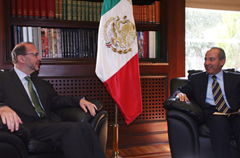
Dr Piot commended the President on his
commitment to making AIDS a priority and
particularly for the AIDS policies which have been
developed by the President’s administration.
As part of a six-day visit to Mexico, the Executive Director of UNAIDS, Dr Peter Piot, met with Mexico’s President, Felipe Calderon Hinojosa, to discuss ways of increasing collaboration to strengthen the response to AIDS in the country.
Dr Piot commended the President on his commitment to making AIDS a priority and particularly for the AIDS policies which have been developed by the President’s administration.
Also on the agenda were discussions around Mexico’s decentralized approach to the AIDS response, which has proved to be particularly effective. Dr Piot emphasized that the local capacity which has been built-up through this model should be used as an example for other countries to follow.
The meeting came just two days after Dr Piot commemorated World AIDS Day in Mexico at the X National congress on AIDS 2007. Following-up on the 1 December theme of Leadership, Dr Piot encouraged the President of Mexico to continue his leadership on south-to-south collaborations on AIDS together with leaders from other countries in Latin America.
Looking ahead to 2008, the two men discussed the upcoming International AIDS Conference which Mexico will be hosting next August. This will be the first time that the event has been held in Latin America. President Calderon recognized the importance of next year’s conference and has already made plans to be present at the opening ceremony, news which was warmly welcomed by Dr Piot.
Links:
Read UNAIDS Executive Director's speech at the closing ceremony of the X national congress on AIDS 2007
Read more about World AIDS Day
Related
Feature Story
Art for AIDS: A sculptor’s voice
06 Diciembre 2007
06 Diciembre 2007 06 Diciembre 2007
"Fighting HIV is not a one man show – it involves
not just UNAIDS but a lot of organizations and
countries. It involves everyone".
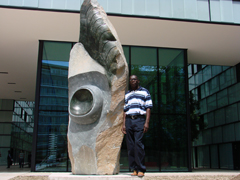
Artist Mike Munyaradzi was born in 1967 in Guruve, Zimbabwe. The son of world famous sculptor Henry Munyaradzi, Mike started his apprenticeship at the early age of 13 under the guidance of his father. In the second part of a special three part series on Art for AIDS. Mike shares his experiences as an artist and discusses the meaning of his Eradication sculpture and how artists have a role to play in the AIDS response.
How and why did you first become involved in the Art world?
I grew up with it. I probably started doing work when I was only 13 years old – from that age I was able to make small things – watching and trying to copy my father. I didn’t go to an art school - I learned from him.
What are your inspirations and influences in your art?
Mainly nature - from animals. And from the culture of my tribe, the Shona and Ndebele people. I also get a lot of inspiration from the modern world we are living in and then from the natural shapes of the stone itself. Whenever I look at a raw stone, I try to say to myself, ok, what can I bring out of that shape naturally?
You learned from your father – what was the best lesson he gave you?
The best thing I think is he told me to respect the natural shape of the stone. He used to say to me “whenever you are working with a stone, try not to destroy the natural shape of the stone, try to harmonize, work in accordance with the natural shape.” I To me, every raw stone is a sculpture in waiting – it just needs to be brought out.
‘Eradication’ – can you tell us how this whole project started?
The idea of commissioning a piece came out of collaboration with Dimitris from Ruwa Gallery and UNAIDS. It needed to be a big stone, and it was very difficult to find the right one. Drawings were sent to and fro and eventually I started working on the sculpture and one day they said ok stop - that’s great! The sphere represents the globe. I hollowed it out as if I were cleaning – and that represents the efforts being made. Fighting HIV is not a one man show – it involves not just UNAIDS but a lot of organizations and countries. It involves everyone.
We need to cleanse the earth, not just of HIV but also of malaria, TB, global warming. The sculpture represents throwing out everything dead from our mother earth and reconstructing it. I put in three spheres – one on one side and two on the back. They symbolize joint efforts - not one person, not one organization but a lot of people. The one at the top is complete, it’s emerging out of the rock - it’s a new world coming out of the rock.
The leaf at the top – what does this signify?
The leaf signifies the .life in this world as we know, trees are life and that is the symbol of the life we are all trying to keep afloat with all the problems we are having – so that is the symbol of the leaf.
Sometimes it might be difficult to explain to them
about HIV – about preventative methods, about
what young people should do. But with art we are
free to show that we should be able to protect
ourselves.
Some days I would wake up and look at the rock, before it was even a sculpture, and try to see what it was suggesting to me. The globe at the front was actually in the stone and what I needed to do was follow the shape and hollow it out. We’ve just been talking about the leaf – in fact that natural shape was in the raw stone – if you look at the raw stone it was like a leaf.
Sometimes I’d run out of ideas and all I could do was walk around the stone and look at it. Another morning I’d wake up full of ideas and get straight down to work. I’d also seek the opinions of other people, other artists.
What do you hope people are going to get out of the sculpture?
I hope they see the need to work together to eradicate the problems of our mother earth. I hope they understand why the globe is so smooth – I could have made it rough, spiky, but I wanted to say: “OK, we’ve got these problems but it doesn’t mean it’s the end of the world. We can still work on them and get over them.”
In my country, Zimbabwe, and in Africa, there is a lot of stigma, but there is work going on to dispel that stigma. I hope my sculpture will contribute to that and will encourage more organizations to become involved in HIV-related work
Art coming out of Zimbabwe is traditionally more figurative – your piece is more abstract, how feel about this?
It’s true that before, I wasn’t doing a lot of abstracts. But now, since ‘Eradication’, I’ve become motivated to try some more. “Eradication” was a good challenge.
As an artist, what is your role in the AIDS response?
We artists can play a major role. I can naturally sculpt something in relation to AIDS and show it to my people. Sometimes it might be difficult to explain to them about HIV – about preventative methods, about what young people should do. But with art we are free to show that we should be able to protect ourselves.
Will you continuing working on AIDS issues?
I will, especially after this project, yes.
Links:
Three-part series on Art for AIDS:
Part 1: Art for AIDS: A sculptor’s voice
Part 2: Art as an inspiration
Part 3: More than words: ART for AIDS
Listen to interview with sculptor Mike Munyaradzi
Read feature story - Contemporary African art and AIDS
Read feature story - Secretary General visits UNAIDS, Geneva