

Feature Story
“Overwhelming and Inspiring”
09 Octubre 2007
09 Octubre 2007 09 Octubre 2007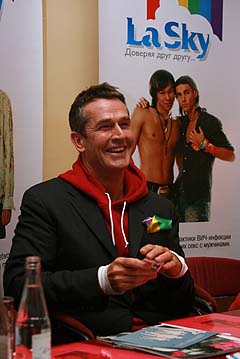
Rupert Everett, the film and theatre actor
(My Best Friend’s Wedding, Another Country), and
Special Representative of UNAIDS visited Moscow
and St Petersburg 23 – 26 September, to learn
more about AIDS and tuberculosis in Russia and
to help raise awareness about these two important,
inter-linked diseases.
Rupert Everett, the film and theatre actor (My Best Friend’s Wedding, Another Country), and Special Representative of UNAIDS visited Moscow and St Petersburg 23 – 26 September, to learn more about AIDS and tuberculosis in Russia and to help raise awareness about these two important, inter-linked diseases.
“I’m very grateful to everyone in Moscow and in St Petersburg who took the time to meet and share their experiences with me,” said Mr Everett at the end of his visit.
“It has been a very busy three days: overwhelming and inspiring. Denial, pre-existing stigma and prejudices are nourished by the presence of HIV and TB in society as a whole. These are powerful forces that act as roadblocks on the journey towards an effective response to the spread of HIV and TB.
”Rupert Everett has been active in the AIDS response for many years, but this was his first official trip with UNAIDS since his appointment as Special Representative in December 2006.
UNAIDS regional director, Bertil Lindblad, welcomed Rupert Everett’s visit as a way to help focus on key areas of the Russian response.
“People in the public eye like Rupert Everett can inspire and motivate others to unite against AIDS.
”During the first part of his visit, he visited the Republic Clinical Hospital for the Treatment of Infectious Diseases just outside St. Petersburg. The centre treats children who have been abandoned and / or are living with HIV.
Dr. Evgeny Voronin, the Chief Physician of the hospital and Head of the National Clinical Centre for Children’s AIDS, explained:
”There are about 2000 children in Russia today who are HIV positive. The main problem is integrating these children into regular social life and providing them with qualitative education so they can fully develop,” he said.
In St, Petersburg Everett and the UNAIDS team met with staff and outreach workers of “LaSky”, a project supported by PSI (Population Services International), the Global Fund and the Ford Foundation, providing information and prevention services among men who have sex with men. The meeting was held in one of the most popular gay clubs in St. Petersburg and the group shared their experiences and challenges in reaching out to young gay men in 10 regions of Russia.
At St Petersburg City Infectious Hospital N30, Rupert Everett met doctors and learned about working with injecting drug users who are living with HIV. He also heard from representatives of the non-governmental organization Humanitarian Action and other activist groups who provide HIV prevention services as well as support for people living with HIV. Humanitarian Action also arranged a field visit for Everett to one of its outreach sites where prevention services, including needle exchange and counseling, are provided in a fully equipped bus serving several parts of St. Petersburg.
The number of officially registered people living with HIV in Russia in May 2007 was approximately 386,000. However it is widely believed that the actual number could be up to 1.1 million.
Traveling on to Moscow, Everett met with representatives of a network of people living with HIV, NGO practitioners, UNAIDS Cosponsoring agencies and volunteers.
HIV and tuberculosis are closely linked, each worsening the impact of the other and disproportionately affecting the poorest and most marginalized people in society. According to the World Health Organization, TB is the leading cause of death in people living with HIV in Russia, accounting for 59% of such deaths in 2006. Most of those who died were between the ages of 25 and 34.
In Moscow, Mr Everett visited the Centre for TB treatment at the Moscow Clinical TB Hospital N7, met with staff and children being treated at the hospital as well as representatives of the Ministry of Health TB Programme and WHO which supports comprehensive TB activities in Russia.
At the end of his visit, the actor spoke of his hopes to develop his support:”I hope that UNAIDS can continue to play an active part in the future to bring the government, the NGOs and the advocacy groups closer together in a united response to AIDS and TB.”
Links:
Read more about UNAIDS' Special Representatives
Related
 Moldova expands harm reduction services to all prisons
05 de mayo de 2023
 LGBTQ+ shelter in Lviv provides lifeline to displaced Ukrainians
27 de febrero de 2023
Feature Story
Empresa y sida
03 Octubre 2007
03 Octubre 2007 03 Octubre 2007
El sector empresarial no sólo dispone de los recursos, sino que también entendió la importancia de la inversión en el futuro hace ya tiempo, y es esta lejana meta la que debe introducirse en el campo de la respuesta mundial a la epidemia.
“El sector empresarial está preparado para desempeñar un papel principal en la respuesta mundial al VIH”, dijo el director de la UNESCO durante un Simposio especial sobre la visión internacional para la futura atención médica en entornos de recursos escasos. El evento lo organizó Heineken International el miércoles 3 de octubre en Amsterdam.
A través de un vídeo dirigido al simposio, el Dr. Piot puso de manifiesto el poder que posee el sector empresarial para llegar a millones de personas que viven con el sida, empezando con programas contra el VIH en el lugar de trabajo. El Dr. Piot pidió un incremento de la participación del sector privado para reforzar los sistemas sanitarios, la creación de proyectos dirigidos al público aprovechando la pericia y el alcance del mundo empresarial, la formación de sociedades públicas y privadas y la financiación de todas estas iniciativas a largo plazo.
“El sector empresarial no sólo dispone de los recursos, sino que también entendió la importancia de la inversión en el futuro hace ya tiempo, y es esta lejana meta la que debe introducirse en el campo de la respuesta mundial a la epidemia”, manifestó él.
Heineken ha demostrado estar muy implicada con la respuesta al sida, mediante el compromiso por parte de la dirección para la puesta en práctica de programas de respuesta al VIH por todo el mundo. “Como consecuencia de la epidemia en África, Heineken ha promovido avances en sus propias clínicas mediante la mejora de la atención médica y la atracción de personal médico altamente cualificado. Esto ha dado lugar a la creación de una considerable infraestructura, que proporciona atención médica a 30 000 personas sólo en África, incluyendo personal, parejas y niños”, afirma la compañía en su página web.
El Heineken Symposium alentó al diálogo entre empresas y asociaciones externas tales como ONUSIDA en lo relativo a la mejora que puede experimentar la empresa si se implica en atención médica y otras actividades relacionadas. Otros oradores del simposio fueron; Dr. Henk Rijckborst, director de Asuntos Sanitarios de Heineken International; profesor Joep Lange de la Universidad de Amsterdam; Bert Koenders, ministro holandés de Cooperación y Desarrollo; profesor Gilbert Lenssen, presidente de la European Academy of Business in Society ; y Jean-François van Boxmeer, presidente del consejo de administración de Heineken N.V.
Durante el video, el Dr. Piot subrayó el compromiso de ONUSIDA para expandirse y profundizar en el trabajo y asociación con el sector empresarial y afirmó que es urgente mirar más allá de los sistemas sanitarios y de la atención médica a la hora de tratar con el sida, debido a que la mayoría de las actividades de prevención no son de naturaleza médica.
El Dr. Piot insistió en que la respuesta al sida por parte del sector empresarial requerirá en adelante una participación continua en el Consejo de Administración, así como recursos fijos para la respuesta al sida a largo plazo y la creación de asociaciones públicas y privadas cada vez más innovadoras.
“El sida estará presente en generaciones futuras y en diversas regiones del mundo con un posible incremento del impacto sobre la empresa. Dada la coyuntura de epidemia de sida, es necesario que el sector empresarial se convierta en un asociado totalmente comprometido a largo plazo”, concluyó el Dr. Piot.
Enlaces:
Ver la grabación de video del Dr. Piot para el simposio (Mpeg, 458Mb) (en inglés)
Visitar la web del Heineken Symposium (en inglés)
Related
 UNAIDS launches new approach to ensure the long-term sustainability of the HIV response
19 de enero de 2024
 Welcoming Ukrainian refugees in Germany: big test for all
21 de abril de 2022
 Investments in HIV, health and pandemics are vital for economic recovery in Africa
15 de febrero de 2022
Feature Story
AIDS focus at ASEAN Summit
01 Octubre 2007
01 Octubre 2007 01 Octubre 2007
Asia has the second largest number of people living with HIV in the world and its share of the global epidemic is increasing. Faced with such challenges, countries across the region are stepping up commitment to fight AIDS and putting AIDS and its effects at the centre of many political and socio-economic discussions.
At the 12 th Summit of the Association of South East Asian Nations (ASEAN), that is meeting in Cebu, Philippines from 10-15 January, the issue of AIDS will be high on the agenda as the ten participating Heads of State consider AIDS at an extraordinary session to be held on Saturday 13 th January.
According to latest estimates, the ASEAN region – which includes Brunei Darussalam, Cambodia, Indonesia, Lao PDR, Malaysia, Myanmar, Philippines, Singapore, Thailand, Viet Nam -shows the most severe epidemics within Asia. At their 7 th Summit held in Brunei Darussalam in November 2001, the ASEAN Heads of State and Government passed a resolution to convene the “Special Session on HIV and AIDS” in conjunction with the 12th ASEAN Summit in 2007, to signal ASEAN’s commitment in combating AIDS and to give impetus to regional responses in taking urgent action.
At the Session, the ASEAN Heads of State will discuss AIDS, its effects and the regions response, and will consider a special report on the epidemic from the Executive Director of the Joint United Nations Programme on HIV/AIDS (UNAIDS). The report is intended to brief the leaders on AIDS epidemics globally and in the region, and the challenges AIDS presents. This is the first time an external body has been invited to report to the Heads of State Summit on AIDS.
Following the Special Session, the ASEAN Heads of State are expected to adopt a Declaration on AIDS, affirming their commitment to prioritize, lead and strengthen national AIDS responses. “[This Declaration] will form part of the permanent history and lexicon of ASEAN,” said ASEAN Spokesperson, Philippine Ambassador to Malaysia Victoriano Lecaros.
Representing UNAIDS Executive Director Dr Peter Piot, UNAIDS Deputy Executive Director Deborah Landey will attend the ASEAN Summit.
Related
 Indian partners reflect on a year after sex workers’ human rights affirmed
05 de octubre de 2023
 A rainbow of hope for LGBTQI+ people in rural Japan
17 de mayo de 2023

Feature Story
ONUSIDA se compromete a "hacer rendir el dinero" en el Fondo Mundial
27 Septiembre 2007
27 Septiembre 2007 27 Septiembre 2007
El jueves 27 de septiembre los líderes mundiales se reunieron en Berlín (Alemania) para anunciar sus promesas de aportación económica destinada al Fondo mundial para la lucha contra el sida, la tuberculosis y la malaria para los próximos tres años. Allí el director ejecutivo de ONUSIDA, el Dr. Peter Piot hizo hincapié en el compromiso adoptado por las Naciones Unidas para "hacer rendir el dinero con el propósito de ayudar a que las contribuciones sean tan efectivas y beneficiosas como sea posible sobre el terreno".
"ONUSIDA es un importante colaborador del Fondo mundial y proporciona apoyo esencial para su trabajo" declaró.
En su declaración a los participantes de la Reunión de reposición de fondos del Fondo mundial que tuvo lugar en Berlín, el Dr. Piot enfatizó la necesidad urgente de dar ahora una respuesta de gran envergadura al sida, con el fin de evitar mayores costes en el futuro.
"La competencia técnica de las Naciones Unidas, así como su experiencia en la coordinación con los países y su disposición para trabajar con la sociedad civil contribuyen de manera muy importante al trabajo del Fondo mundial", añadió.
La intervención del Dr. Piot tuvo lugar durante la reunión en la que se comprometieron a realizar contribuciones, en la que el representante de cada delegación se dirigió a los donantes antes de que anunciasen los compromisos de subvención.
Merkel: "Dar prioridad a la salud y aumentar la coordinación"
Para inaugurar la agenda del día, la canciller alemana Angela Merkel habló a una audiencia formada por los representantes de las delegaciones nacionales procedentes de todo el mundo, entre ellas las de Estados Unidos, Reino Unido, la Federación de Rusia, Australia y la Comisión Europea. También estaban presentes delegados de organizaciones multilaterales tales como ONUSIDA y la Organización mundial de la salud, así como donantes como (PRODUCT) RED.
En su intervención, la canciller Merkel instó con carácter urgente a los países del mundo para que den prioridad a afrontar las pandemias globales del sida, la tuberculosis y la malaria. Puso especial énfasis en la necesidad de incrementar la coordinación entre los programas bilaterales y los multilaterales, y expresó su satisfacción acerca de los esfuerzos realizados, tales como el Internacional health partnership, en el que participa ONUSIDA, que comenzó su andadura el 5 de septiembre en Londres.
Merkel pidió también a los líderes económicos alemanes y de otras nacionalidades el establecimiento de una nueva práctica filantrópica para aunar esfuerzos con el Fondo mundial así como con otros programas sanitarios internacionales. Con ese propósito, se reunieron el miércoles importantes representantes del mundo financiero alemán con Kofi Annan, que preside el mecanismo de reposición de fondos para el Fondo mundial, para discutir enfoques novedosos para apoyar los programas sanitarios globales, que incluyen al Fondo mundial.
Participaron asimismo como oradores en la sesión inaugural Michel Kazatchkine, director ejecutivo del Fondo mundial; Rajat Gupta, presidente de la Junta de directores del Fondo mundial; junto con la vicepresidenta del mismo, Elizabeth Makata; y Heidemarie Wieczorek-Zeil, ministra de cooperación económica y desarrollo. El acto lo abrió Kofi Annan, anterior secretario general de las Naciones Unidas y presidente del mecanismo de reposición de fondos. En su declaración, Annan elogió el historial del Fondo mundial, y afirmó que tras cinco años "tenemos un fondo que emplea con gran éxito el dinero para salvar vidas" y que "el dinero canalizado a través del Fondo mundial es un dinero invertido de manera eficiente".
Desde su fundación en el 2002, más de 60 gobiernos, fundaciones privadas, empresas e individuos han contribuido con más de US$ 11 000 millones para ayudar al Fondo mundial. Las necesidades presupuestarias del Fondo mundial para el ejercicio del 2008 - 2010 ascienden a US$ 12 000 - 18 000 millones, imprescindibles para financiar subsidios ya existentes y nuevos programas de máxima necesidad para dar respuesta al sida, a la tuberculosis y a la malaria. Los delegados están reunidos en Berlín del 26 al 28 de septiembre para una segunda ronda de las reuniones bienales del Fondo mundial para conseguir fondos que permitan aplicar sus programas de ayuda esencial para la respuesta al VIH, la tuberculosis y la malaria en los países en desarrollo.
Related
Welcoming Ukrainian refugees in Germany: big test for all
21 de abril de 2022
 ArtPositive—art to raise awareness around HIV-related stigma and discrimination
01 de octubre de 2021
 Norway’s community organizations ensuring health, dignity and rights
17 de marzo de 2020
Feature Story
Financial resource requirements for AIDS
26 Septiembre 2007
26 Septiembre 2007 26 Septiembre 2007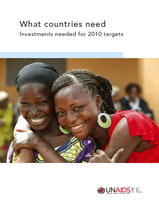
The report* puts forward three
different approaches to financing
the AIDS response
UNAIDS has released a new report on the estimated financial resources required for the AIDS response. The report, entitled Financial Resources required to Achieve Universal Access to HIV, Prevention, Treatment, Care and Support* puts forward three different approaches to financing the AIDS response including:
Scaling-up at current rates. By following the current rate of annual scale-up, the estimated resource requirements would be between US$ 14 - 18 billion in 2015, this amount would provide antiretroviral treatment for 8 million people in that year and the prevention, care, support and social mitigation targets would be far from Universal Access levels.
Universal Access by 2010. This approach envisages significant increases in available resources and an urgent and dramatic scale-up of coverage in all countries. Following this approach would provide antiretroviral treatment for 14 million people by 2010. To achieve this, the annual resource requirements would rise to between US$ 32 - 51 billion in 2010 and between US$ 45 - 63 billion by 2015. Prevention, care, support and social mitigation targets would also reach the targets consistent with universal access in 2010.
Phased scale-up to universal access by 2015. This approach assumes different rates of scale-up for each country based on current service coverage and capacity, with the achievement of different programmatic targets (prevention, care, treatment, support and social mitigation) at different times and the achievement of universal access by all countries by 2015. The approach would require between US$ 41 - 58 billion in 2015.
The estimates provided in the report, developed for 132 low- and middle-income countries, were based on the type of epidemic and nationally established targets using the latest available data.
*The 2008 version of the report is under preparation and will include revised resource needs estimates based on the latest downwards adjustments of the global prevalence data from the 2007 AIDS Epidemic Update.
Links:
Download report - Financial Resources Required to Achieve Universal Access to HIV Prevention,Treatment, Care and Support
Read report summary ( en | fr | ru | es )
Read methodology documents
Right Hand Content
Media Kit:
Report summary* ( en | fr | ru | es ) *The 2008 version of the report is under preparation and will include revised resource needs estimates based on the latest downwards adjustments of the global prevalence data from the 2007 AIDS Epidemic Update.
Fact Sheet: Universal Access
Fact Sheet: Summary of the methodology used to estimate the financial resources required for the global AIDS response
Related Links:
Universal Access
Financial Tracking
Epidemiological Estimates
Related Documents:
Critical Review of Costing Models to Estimate Resource Needs to Address Global HIV and AIDS
Novel and Alternative Approaches to Estimate Global Resource Needs to HIV and AIDS
Improving parameter estimation, projection methods, uncertainty estimation, and epidemic classification
Practical guidelines for intensifying HIV prevention
Towards Universal Access: Scaling up priority HIV/AIDS interventions in the health sector
ART for HIV infection in adults and adolescents
Related stories:
Latin America countries discuss AIDS spending (September 2007)
Funding estimates for AIDS research and development (August 2007)
New report shows increase in AIDS financing but funding still falls short (June 2007)
Related
 Peru approves groundbreaking law to extend health coverage for migrants with HIV and TB
21 de octubre de 2024
 Thailand partners develop community-led HIV care curriculum
23 de febrero de 2023
 “Be the change”: creating a voice for male sex workers in Malawi
27 de mayo de 2019
Feature Story
Se inicia en Berlín la reunión de reposición de fondos del Fondo mundial para la lucha contra el sida, la tuberculosis y la malaria
26 Septiembre 2007
26 Septiembre 2007 26 Septiembre 2007Delegados de los países donantes y de organizaciones internacionales se reunieron en Berlín el miércoles 26 de septiembre para comenzar la segunda de las reuniones bienales con el fin de recaudar fondos para sus programas que proporcionan servicios básicos de respuesta al VIH, la tuberculosis y la malaria en los países en desarrollo. A la reunión, que tendrá lugar hasta el jueves 28, asistirá una delegación de ONUSIDA encabezada por su director ejecutivo el Dr. Peter Piot. La reunión estará presidida por el anterior secretario general de la ONU Kofi Annan y copresidida por Sven Sandström, antiguo director ejecutivo del Banco mundial. La canciller alemana Angela Merkel hará una intervención en la apertura de la parte oficial de la reunión el jueves, en la que los países donantes se comprometerán a hacer contribuciones destinadas a las operaciones del Fondo mundial durante los próximos tres años.
A medida que se acercaba dicho momento, tuvieron lugar el miércoles 26, algunos eventos relacionados, entre los que se incluía el lanzamiento de una nueva iniciativa basada en el alivio de la deuda llamada "Debt2Health" (Deuda por salud). Esta iniciativa usa el canje de la deuda como un mecanismo mediante el cual un acreedor o un grupo de acreedores acepta cancelar una parte de la deuda de un país con la condición de que el beneficiario invierta una cantidad previamente acordada en un programa aprobado por el Fondo mundial. El gobierno alemán hizo la primera oferta de canje de €50 millones con la condición de que Indonesia invirtiera el equivalente a €25 millones en sanidad a través de los programas aprobados por el Fondo mundial.
Además, miembros de la sociedad civil se unieron a los participantes de la reunión con el fin de hablar sobre su relación en desarrollo, y representantes de importantes organizaciones de la salud y los derechos humanos trataron la ampliación de las respuestas sensibles a la dimensión de género en los programas sanitarios.
Desde su fundación en 2002, más de 60 gobiernos, fundaciones privadas, empresas e individuales han contribuido con más de US$11 000 millones al apoyo económico del Fondo mundial para la lucha contra el sida, la tuberculosis y la malaria. En total el Fondo mundial necesita entre US$12 000 y US$18 000 millones para el período 2008-2010. Este dinero se utilizará para dar apoyo a las subvenciones ya existentes, así como para establecer otras nuevas con el fin de dar respuesta al sida, a la tuberculosis y a la malaria.
Enlaces:
Leer documentos del Fondo Mundial sobre la reunión (en inglés)
Más información sobre los recursos necesarios para el acceso universal
Related
UNAIDS launches new approach to ensure the long-term sustainability of the HIV response
19 de enero de 2024
Welcoming Ukrainian refugees in Germany: big test for all
21 de abril de 2022
Investments in HIV, health and pandemics are vital for economic recovery in Africa
15 de febrero de 2022
Feature Story
Resource needs for AIDS in low- and middle-income countries: estimation process and methods
25 Septiembre 2007
25 Septiembre 2007 25 Septiembre 2007The estimates provided in the Financial Resources required to Achieve Universal Access to HIV, Prevention, Treatment, Care and Support report, developed for 132 low- and middle-income countries, are based on the type of epidemic and nationally established targets using the latest available data.
The data was reviewed by Technical Working Groups and by an advisory board made up of international economists and AIDS experts from donor and developing countries, civil society, United Nations agencies and other international organizations.
Methodological Annex - I
Integrating the prevention of violence against women and PEP into the HIV Programmes: preliminary framework and proposed next steps
Download full text
Methodological Annex - II
Revised Projections of the Number of People in Need of ART
Download full text
Methodological Annex - III
Methodology for Care and Treatment Interventions
Download full text
Methodological Annex - IV
Description of Interventions/Services Included in the Estimates of Resources Needed for HIV and AIDS
Download full text
Methodological Annex - V
Research & Development for new prevention technologies
Download full text
Methodological Annex - VI
UNAIDS Consultation on Global Resource Needs Estimates (GRNE) to achieve Universal Access to HIV and AIDS Services and the Millennium Development Goals, 2009-2015 (1 - 2 May 2007)
Download full text
Methodological Annex - VII
UNAIDS Consultation on Global Resource Needs Estimates (GRNE) to achieve Universal Access to HIV and AIDS Services and the Millennium Development Goals, 2009-2015 (3 - 4 May 2007)
Download full text
Methodological Annex - VIII
An Analysis of the Incremental Programme Costs: General Methodology and Assumptions
Download full text
Methodological Annex - IX
Guidance on cost estimates for IDU interventions
Download full text
Methodological Annex - X
Resource Needs Estimation Process: background
Download full text
Methodological Annex - XI
Estimating the cost of training and retaining field health workers
Download full text
Related
UNAIDS launches new approach to ensure the long-term sustainability of the HIV response
19 de enero de 2024
 Transgender sex workers face frequent abuse
29 de marzo de 2022
 Many key populations avoid health services
21 de febrero de 2022
Feature Story
Países de América Latina analizan el gasto relativo al sida
25 Septiembre 2007
25 Septiembre 2007 25 Septiembre 2007
El Dr. César Antonio Núñez, director
regional de ONUSIDA para América
Latina, subrayó la importancia de la
valoración del gasto para generar
información estratégica a la hora de
tomar decisiones.
Entender la magnitud del gasto relativo a los programas sobre el sida, de las fuentes de financiación, así como de las actividades desarrolladas mediante tales gastos resulta de vital importancia para los responsables de formular políticas, para los planificadores de programas y para los donantes internacionales. Una vigilancia efectiva de los recursos ayuda a identificar las lagunas existentes en la respuesta y a medir el grado en el que las palabras de compromiso sobre el sida se corresponden con los recursos financieros, así como también mejora la capacidad estratégica de países y donantes con el fin de destinar los recursos de una manera más eficaz.
Para lograr una mayor supervisión del gasto relativo al sida en los países de América Latina, más de 50 representantes de la región se reunieron en Panamá en un seminario especializado, creado para destacar los cambios en el proceso de clasificación técnica para el control del gasto relativo al sida, así como para ayudar a los países a hacer un mejor uso en sus análisis de la Valoración del gasto nacional relativo al sida (NASA), un mecanismo creado por ONUSIDA.
Este seminario, organizado por ONUSIDA a través de su equipo regional de apoyo para América Latina y el Centro internacional de cooperación técnica sobre el VIH/sida (CICT), también sirvió como una plataforma para analizar los obstáculos y problemas a los que se enfrentan los países a la hora de poner en práctica las valoraciones del gasto.
La NASA es una metodología que identifica los flujos financieros destinados a la prevención del VIH y a la asistencia sanitaria relativa al sida. También identifica los fondos destinados a actividades educativas, a desarrollo social y a seguridad social relacionados con el sida. La información proporcionada por la NASA ayuda a identificar el modo en el que se canalizan los fondos a diferentes grupos de personas y geográficamente, lo que ayuda en el desarrollo de Planes estratégicos nacionales y acciones de sensibilización.
El Dr. César Antonio Núñez, director regional de ONUSIDA para América Latina, subrayó la importancia de la valoración del gasto para generar información estratégica a la hora de tomar decisiones. "Es de vital importancia para que los países identifiquen si el gasto de sus recursos, ya sean nacionales o externos, se lleva a cabo en poblaciones y áreas reconocidas como prioritarias", añadió.
Carlos Passarelli, el director del CICT, insistió en el hecho de que "el Centro apoya este esfuerzo conjunto de los países para que mejoren sus capacidades a la hora de planificar y administrar los recursos, ya que esto es el punto clave para sostener la repuesta al sida en la región".
Enlaces:
Volver a Recursos financieros necesarios para el sida
Related
Feature Story
One year on: UNITAID celebrates achievements
21 Septiembre 2007
21 Septiembre 2007 21 Septiembre 2007
Over the last year, UNITAID has
committed a total of US$ 45 million
for second-line antiretroviral drugs
to fund the treatment of 65 000
patients by 2008.
One year on since its establishment, the international drug purchase facility – UNITAID – is celebrating a number of key achievements.
“In the year since it was established, UNITAID has managed to reduce the price of HIV treatments for children by almost 40%, and those for second-line antiretroviral (ARV) drugs by between 25% and 50%,” UNITAID reported.
“In collaboration with the Clinton Foundation, UNITAID has also delivered more than 33 000 paediatric treatments against AIDS and is on course to meet the needs of 100 000 children by the end of 2007.
”UNITAID was launched in September 2006 during the United Nations General Assembly. The mandate of UNITAID is to contribute to the scaling up of access to treatments for AIDS, malaria and tuberculosis in developing countries by leveraging quality drugs and diagnostics price reductions and accelerating the pace at which these are made available. UNITAID offers beneficiary countries long-term support through sustainable and predictable funding, mobilized by innovative financing mechanisms, such as a solidarity contribution on air tickets, together with multi-year predictable budgetary contributions.
Over the last year, UNITAID has committed a total of US$ 45 million for second-line antiretroviral drugs to fund the treatment of 65 000 patients by 2008. “Four countries (Botswana, Cameroon, Uganda and Zambia) have already received a first supply of second-line ARV drugs through UNITAID and a further 13 countries are currently awaiting delivery,” said UNITAID.
UNITAID is also contributing to the fight against tuberculosis together with the Global Drug Facility and the Stop TB Partnership. By the end of the year, UNITAID will have provided TB treatments to 150 000 children in 19 countries and will be supporting the provision of drugs for Multidrug - resistant TB in 17 low-income countries.
For each programme, UNITAID sets up an ad hoc partnership with existing organizations: World Health Organization, UNICEF, the Global Fund to Fight AIDS, Tuberculosis and Malaria, the Clinton Foundation, Global Drug Facility/Green Light Committee and the Stop TB Partnership.
”UNITAID is a prime example of the rapid, flexible and innovative action needed to develop a sustainable long-term response to AIDS and reach universal access to HIV prevention, treatment, care and support,” said UNAIDS Deputy Executive Director, Michel Sidibe. “In less than a year, UNITAID has shown that harmonization, simplification and coordination lead to less duplication and much more effective use of resources. It is a real model of ‘making the money work’ and scaling up of existing programmes for the benefit of the people who need it most.
Based in Geneva, the UNITAID Trust Fund and Secretariat are hosted by WHO. At present, 27 countries— of which 19 are in Africa— are members and contribute to UNITAID. At least 85% of UNITAID funds are spent in low income countries. The budget of UNITAID for 2007 is over US$ 300 million and 90% has already been committed to programmes in more than 80 countries.
Links:
Visit UNITAID's Web site
Feature Story
Improving partnership and harmonization on AIDS
21 Septiembre 2007
21 Septiembre 2007 21 Septiembre 2007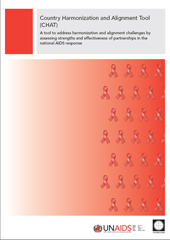
CHAT helps map stakeholders in
countries and assess the strengths
and weaknesses of their engagement
with the national AIDS response.
With increased funding and technical support resources available for AIDS, the need for coordinated, harmonized and aligned national AIDS responses has never been greater. To help countries ensure inclusive, participatory national responses to AIDS, UNAIDS with the World Bank has developed the ‘Country Harmonization and Alignment Tool' (CHAT) to help map stakeholders in countries and assess the strengths and weaknesses of their engagement with the national AIDS response. Team Leader in the Aid Effectiveness Division, Desmond Whyms, explains how the tool can help move AIDS responses forward and lead to positive action for change.
What is CHAT?
Many countries now face the challenge of having considerable amounts of money and technical support for AIDS available, but often lack strong coordination for those resources to ensure a common focus among the wide variety of national partners and international partners. CHAT aims to inspire a more inclusive national response through a survey process which first maps the various stakeholders involved in the national response and then through structured interviews with national and international partners establishes how well the national partners are engaged and how harmonized the international players are. This systematic information gathering and analysis helps to put together a picture at country level of the quality of the partnerships in the AIDS response, which then catalyses a dialogue on the strengths and weaknesses, and can help countries move forward in a more harmonized way.
How should countries use CHAT?
Every country’s AIDS coordinating authority should be doing a regular review of progress and performance, and the CHAT is designed to be a part of that process. It is also possible to use CHAT as a free standing tool if a country wants to have a more immediate overview of the quality of the national and international engagement in the national AIDS plan.
What are the necessary steps to put the tool into practice?
CHAT has been piloted in several countries in 2006. In many of the pilot countries, the administration and analysis has been done by a consultant, on behalf of the national AIDS authority. It is designed as a light process that is not burdensome for staff in the national AIDS authority. The consultant administers the appropriate questionnaires—one for national and one for international partners, and then collates and analyses the data to produce a draft report. The CHAT contains guidance on how to do this.
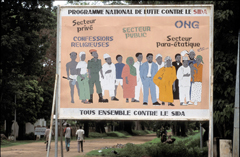
CHAT covers the range of areas in which the
national and international partners should be
engaged with the AIDS response at the country
level.
Can you give an example of some of the areas covered in the questionnaire?
CHAT covers the range of areas in which the national and international partners should be engaged with the AIDS response at the country level like strategy development, resource allocation, administration and monitoring procedures. The questions are based on what is best practice and what’s been promised by international institutions’ headquarters, following their commitments to the Paris Declaration, the Three Ones and the Global Task Team for example. By the very fact of starting to ask these questions at the country level we are starting to put pressure to move in this direction, and that we need to improve the way we work and the way we are engaging to achieve results.
The questionnaires are in the format of self reporting, for example: does your organization participate in decision making about the allocation of resources within the national AIDS budget? For many of the national partners we’ve contacted in the pilot countries, this is the first time anyone had ever really asked them these questions. The feedback has been that this exercise is empowering as all voices are being listened to.
What happens at the end of the questionnaire and analysis?
The output is an analytical report which is intended to feed into the discussions in the context of the joint AIDS review. Most of the international community has already signed up to the principles of good practice and the challenge of the CHAT is to see if those principles are being applied in a particular country to the AIDS response. This is the only tool that exists that allows us to explore this, the intention being that it will flag areas for improvement that can then be addressed through the AIDS review at national level. We can also bring the findings back to headquarters for a comparative analysis, and look at the patterns across the regions.
What are the benefits for the countries?
Most people know the quantity of the response within countries and they should know how much money is being brought by the different partners but what is less known is how well it is all adding up together and pulling in the same direction. This is a low-maintenance tool that really allows countries to start taking stock of the quality of the AIDS response in their countries in terms of harmonization and alignment between national and international partners. It will help us start making sure that we really are “making the money work” and moving towards Universal Access.
Links:
Download the Country Harmonization and Alignment Tool (CHAT) ( en | fr | es | ru )
Download flyer ( en | fr | es | ru )
Download template ( en | fr | es )
Read more about the Three Ones
Related
 In Northeast Brazil, civil society and local government collaborate to increase HIV treatment adherence
03 de abril de 2023
 Dangerous inequalities and overcoming them
18 de noviembre de 2022
 Kingston declares World AIDS Day as a commemorative day of public interest
10 de noviembre de 2021