Documents
Ввод в действие второго поколения систем эпидемиологического надзора за ВИЧ: практические методические рекомендации
10 декабря 2002 года.
Методические рекомеидации призваны служить в качестве руководства для национальных программ по борьбе со ЦПИДом (НПС) и министерств здравоохранения (М3) по реализации втого поколения систем эпидемиологического надзора за БИЧ посредством последовательного и стандартизированного процесса. Более конретно, методуческие рекомендации предназначены, прежде всего, для менеджеров программ, эпидемиологов, социологов и другух экспертов, работающих в национальиых программах над проблемами эпидемиологического надзора или сотрудинчающих с ними. К ним относятст оценка, согласование, пазработка планов и протоколов, реализацияи, наконец, мониторинг и оценка.

Documents
Action Guide for United Nations Country Teams : implementing the Declaration of Commitment on HIV/AIDS, adopted at the United Nations General Assembly Special Session on HIV/AIDS
16 декабря 2002 года.
The guide is designed to help country teams assist national governments in implementing the Declaration. It is based on 3 principles: implementation is a collective responsibility; the emphasis is on strengthening existing capacities, mechanisms and processes, and the Declaration is a unifying, motivational tool.
Documents
Всемирная кампания против СПИДа, 2002 – 2003. Концептуальная основа и основополагающие принципы деятельности: Стигма и дискриминация в связи с ВИЧ/СПИДом
06 января 2003 года.
Основное внимание Всемирной кампании против СПИДа 2002 – 2003 гг. будет сосредоточено на стигме, дискриминации и правах человека. Основная цель кампании – предотвратить, сократить и, в конце концов, повсеместно искоренить все формы и проявления стигмы и дискриминации, связанные с ВИЧ/СПИДом. Стигма и дискриминация, связанные с ВИЧ/СПИДом, являются главными препятствиями на пути предотвращения новых случаев инфицирования, предоставления
надлежащего ухода, поддержки и лечения и ослабления последствий эпидемии. Но ксенофобия и расизм не только пронизывают основные представления и культурные особенности эпидемии, они также воспроизводятся в них. Так, представители расовых и национальных меньшинств, живущие с с ВИЧ/СПИДом, часто воспринимаются не как люди, живущие в условиях маргинализации и неравенства, а как
виновники своих несчастий.
Documents
AIDS and STI prevention and care in Rwandan refugee camps in the United Republic of Tanzania
10 мартаа 2003 года.
This document examines the first large-scale HIV/AIDS/STI intervention programme to be implemented during a refugee crisis. It describes the intervention’s operational aspects, the observed impact and the effect this experience had on practices in other refugee situations, among both international and nongovernmental organizations (NGOs). It provides insights into the approaches for STI services that will be useful for reproductive health programme managers, as well as NGOs involved in relief operations. It will also be useful for district or regional health managers in identifying needed support systems for STI service delivery.
Documents
Country Response Information System : overview of the system and its plan of establishment
18 мартаа 2003 года.
Improved information and informed analysis are critical for the development of expanded national responses to AIDS. Some countries have developed HIV surveillance systems and countries are increasingly collecting information on resources allocated for AIDS programmes and projects. Responding to the needs at the national and global levels for improved information and analysis, UNAIDS has embarked on an ambitious plan to establish an information system to support national AIDS responses. This document describes the historical development of the Country Response Information System (CRIS), and the related activities undertaken by UNAIDS in 2002 and 2003.
Documents
Reaching out, scaling up : eight case studies of home and community care for and by people with HIV/AIDS, UNAIDS Case Study
23 апреля 2003 года.
The theme of this report, Reaching out, scaling up, reflects a concern that has become increasingly important in the past few years. All too often, good local-level responses to HIV/AIDS—best practices, in other words—have remained local and small-scale. The many lessons learned have not been translated into bigger projects or wider coverage.
Documents
Handbook on access to HIV/AIDS-related treatment : a collection of information, tools and resources for NGOs, CBOs and PLWHA groups
13 мая 2003 года.
Drawing on the broad experience of UNAIDS, WHO and the International HIV/AIDS Alliance, the Handbook on access to HIV/AIDS-related treatment provides nongovernmental organizations, community-based organizations and groups of people living with HIV/AIDS with a practical resource for responding to issues of access to treatment for HIV/AIDS in developing countries. The handbook will: build practical skills among NGOs, CBOs and PLWHA groups by using participatory activities and sharing experiences; provide a training resource for NGO support programmes, training organizations and individuals; facilitate ongoing learning about the HIV/AIDS-related treatment work of NGOs, CBOs and PLWHA groups. The handbook is intended to assist groups in finding ways of understanding, planning and undertaking work on HIV/AIDS related treatment. It is suitable for use with people of varying levels of experience and offers flexibility to facilitators who need to gear their work towards specific schedules and situations.

Documents
РУКОВОДЯЩИЕ ПРИНЦИПЫ ПО РАЗРАБОТКЕ КЛЮЧЕВЫХ ПОКАЗАТЕЛЕЙ
16 июня 2003 года.
Мониторинг выполнения Декларации о приверженности делу борьбы с ВИЧ/СПИДом
Documents
Where there's a will, there's a way: nursing and midwifery, champions of HIV/AIDS care in Southern Africa
17 июня 2003 года.
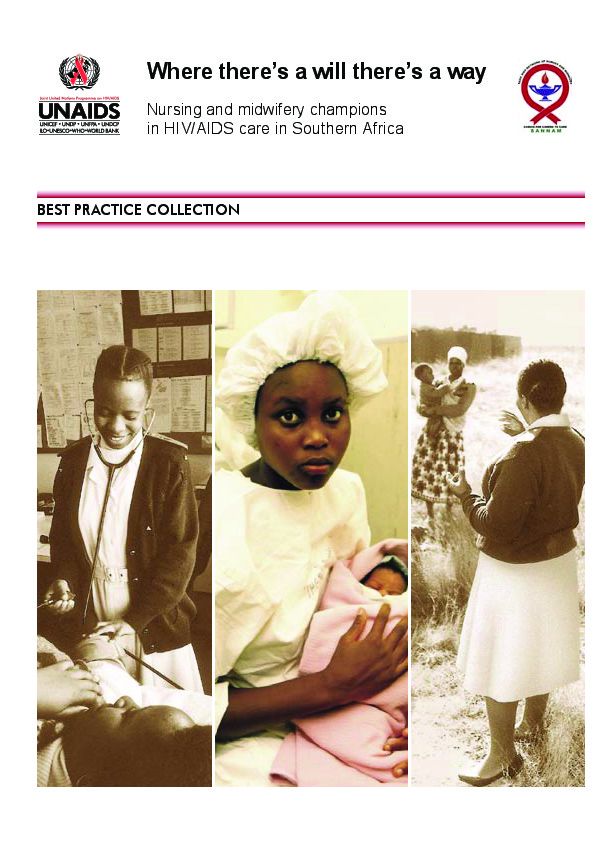
HIV/AIDS needs champions—and nurses and midwives need recognition—for providing care and support to people living with IV/AIDS, their families and communities. This publication describes nursing and midwifery champions in HIV/AIDS care in Southern Africa, who, with singular commitment and resourcefulness, are delivering good-quality care in spite of innumerable obstacles and constraints. They carry a heavy burden, and they know the meaning of the expression, “where there’s a will there’s a way”. UNAIDS and the SADC AIDS Network of Nurses and Midwives (SANNAM) celebrate just a few of the many thousands of champions who are on the front lines of care and treatment, many times feeling the sadness, shame and anger of having so little to offer. In describing the work of a few, the intention is to pay tribute to all who are doing a caring, committed job in the face of great odds, and to share the valuable lessons they have learned from experience. In addition to being of value to nurses and midwives, this report is also aimed at all those with an interest in improving the quality of care and support of people living with HIV/AIDS—especially those responsible for training, managing and supervising nursing and midwifery staff, and policy-makers within health-care services.
Documents
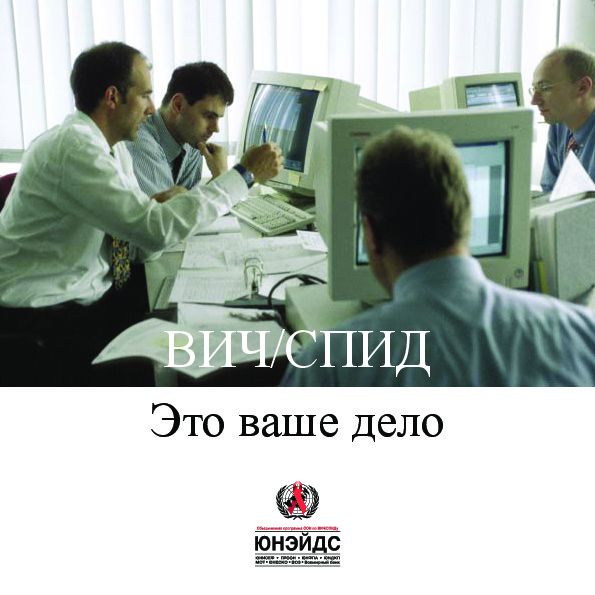
ВИЧ/СПИД: Это ваше дело
08 сентября 2003 года.
"Нам пора использовать сильные стороны делового сектора в полной мере. СПИД затрагивает деловой сектор. Распространение пандемии привело к увеличению затрат делового сектора и к уменьшению рынка. Как свидетельствуют нынешние и будущие балансовые показатели, деловое сообщество не должно оставаться в стороне, для того чтобы защитить свои практические результаты. Нам нужна ваша помощь – и нужна уже сейчас. Имеется целый ряд примеров, которые доказывают, какое беспрецедентно положительное воздействие могут оказывать корпоративные усилия в борьбе против ВИЧ/СПИДа. Пришло время превратить эти примеры в согласованные стратегические действия на
рабочем месте, в проведении пропагандистской работы и в использовании сильных сторон корпоративной сферы." —из выступления Генерального Секретаря Организации Объединенных Наций Кофи Аннана в Торговой палате США, Вашингтон, О.К., июнь 2001.