

Feature Story
Microbicides: why are they significant? (Part 1)
20 февраля 2008
20 февраля 2008 20 февраля 2008Ahead of next week’s biannual international microbicides conference Microbicides 2008 running 24 – 27 February in New Delhi we take an in-depth look at microbicides. In part 1 of this 2-part series we look at why they are considered significant in the response to HIV. In part 2 the challenges to the development of this biomedical prevention technology will be explored.
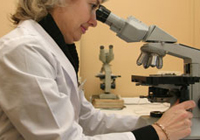
While the search for a HIV vaccine looks
set to continue for some years, many
believe that with similar investment a s
uccessful microbicide could be developed
much sooner.
With 2.5 million people newly infected with HIV in 2007 there is global consensus on the need for new HIV prevention technologies to complement existing strategies.
While the search for a HIV vaccine looks set to continue for some years, many believe that with similar investment a successful microbicide could be developed much sooner. An effective microbicide would offer significant protection to women who currently comprise about half of all people living with HIV worldwide.
UNAIDS works with number of microbicide networks to highlight the critical need for female-controlled prevention options.
Along with other global advocates, UNAIDS continues to emphasize the importance of a concerted effort to develop microbicides and make them accessible to the people that need them. Addressing women’s needs for HIV prevention is vital for curbing the epidemic.
Why do women need specific HIV protection?
It is an uncomfortable reality that many women across the globe do not have power over what happens to their own bodies.
Deep-seated social and cultural norms and the effects of gender inequality mean many women and girls live with violence or the threat of violence and are unable to successfully negotiate fidelity or condom use.
Women who sell sexual services are often unable to negotiate the wearing of condoms with their clients.
Even women abstained from intercourse before marriage and have only one sexual partner can be vulnerable to sexually transmitted infections from partners if that partner engages in unprotected sex with other women or men.
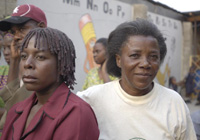
“Microbicides will be a key tool in
empowering women, and in halting the
alarming spread of HIV infection among
women” - Director of the Global Coalition
on Women and AIDS, Kristan Schoultz.
Credit: UNAIDS/C.Gira
Due to biological differences, in unprotected heterosexual intercourse women are at least twice as likely as men to acquire HIV from an infected partner. HIV data reflects this, for example among young people (15-24 years) in sub-Saharan Africa an estimated three young women are HIV-positive for every young man.
Experts believe if women have the option of using a microbicide to protect themselves from HIV it could make all the difference to their lives.
“A man may refuse to wear a condom and his partner may be powerless to insist. Access to safe and effective microbicides will offer women more choices and help them take charge of their sexual health and their future,” said Director of the Global Coalition on Women and AIDS, Kristan Schoultz.
“Microbicides will be a key tool in empowering women, and in halting the alarming spread of HIV infection among women,” she added.
What is a microbicide?
A microbicide is a compound whose purpose is to reduce the infectivity of viruses or bacteria. The term has come to refer to a potential product which would prevent the transmission of HIV and other sexually transmitted infections (STIs) inside a woman’s vagina. A rectal microbicide would act similarly to protect men who have sex with men and women during anal intercourse.
There are different candidate microbicide products currently under research and development; many are in the form of a gel or cream to be applied to the surface of the vagina. Scientists are also exploring other ways of drug delivery such as by a vaginal ring which would be inserted into the vagina and provide controlled release of an effective microbicide.
Mechanisms of action
A successful topical microbicide – applied to the vagina surface - would probably act in a combination of ways. Scientists are researching different products which would:
- Kill pathogens without damaging the healthy cells of the vagina
- Strengthen the body’s natural defence system by increasing the natural acidity of vagina inactivating athogenic viruses and bacteria
- Inhibit the virus getting into the white blood cells – the target cells of HIV
- Inhibit viral replication by using derivatives from anti-retroviral drugs
For some women, it is important that the action of the microbicide not impair their ability to conceive a baby. Both contraceptive and non-contraceptive microbicides are currently under development, as well as rectal microbicides for heterosexual women and men who have sex with men.
No silver bullet

The biannual international microbicides
conference “Microbicides 2008” will run
24 – 27 February in New Delhi under the
theme “Striving towards HIV Prevention”.
Credit: Microbicides 2008
Some advocates believe that the successful development of a microbicide would bring significant emancipation for women who due to cultural, economic and social drivers are disempowered and unable to protect themselves from HIV.
With the stakes so high, microbicides seem like a very attractive solution. However experts are realistic about the complexity of the research task and drug efficacy and urge caution over raising unrealistic expectations.
Successful microbicides products will be partially protective. Although they may be up to 80% effective in preventing the transmission of HIV during sexual intercourse, they would need to be complimented by other prevention tools in a combination prevention strategy.
A comprehensive HIV prevention package includes, but is not limited to, delaying sexual debut, mutual fidelity, reduction of the number of sexual partners, avoidance of penetration, safer sex including correct and consistent male and female condom use, and early and effective treatment for sexually transmitted infections.
In part 2 we look at the challenges in current microbicide research and development and explore why there is a large funding gap between what is needed to bring clinical trials to completion and lay groundwork for effective distribution and what is currently available. We also look at the ethical considerations of clinical trials.
Microbicides: why are they significant? (Part 1)
Related
 Two years on: UNAIDS supports Ukraine’s commitment to the HIV response
23 февраля 2024 года.
 Cities leading the way to achieving key targets in the HIV response
27 сентября 2023 года.
 The urgency of HIV prevention among adolescent girls and young women
01 июня 2023 года.
Feature Story
Overview of this year’s Conference on Retroviruses and Opportunistic Infections (CROI)
18 февраля 2008
18 февраля 2008 18 февраля 2008
15th Conference on Retroviruses
and Opportunistic Infections took place in
Boston 4-6 February 2008. Credit: CROI
The annual Conference on Retroviruses and Opportunistic Infections (CROI) began in 1994 as a small meeting of scientists studying HIV and clinicians treating people with HIV. It is now one of the most important annual HIV gatherings and provides a forum for basic scientists, clinical investigators, and global health researchers to present, discuss, and critique their investigations into the epidemiology and biology of human retroviruses and the diseases they produce.
The 15th CROI concluded in Boston on 6 February and while announced trial results were not encouraging, many significant topics were discussed. The absence of a scientific breakthrough in HIV vaccine development underscores the need to scale-up existing prevention and treatment strategies.
HSV-2 trial - No observed reduction in risk
Disappointing results were announced from trials to see if ongoing treatment of the virus that causes herpes in humans, herpes simplex virus type 2 (HSV-2), would reduce the risk of HIV transmission. HIV-negative people with HSV-2 were asked to take medication to suppress outbreaks of herpes. However, the trial results showed no difference in rates of HIV infection between individuals who had taken the medication and those who hadn’t.
Scientific data shows a link between HSV-2 infection and susceptibility to acquiring HIV infection and there are other on-going trials exploring different aspects of this link, so researchers remain cautiously hopeful about this avenue of research.
Male circumcision
Previously-released data from the studies of male circumcision in Uganda which were stopped in December 2006 were presented by trial investigator Maria Wawer. One trial explored whether circumcising a HIV-positive man reduced the risk of HIV transmission to his HIV-negative female partner. Results showed a trend towards increased HIV transmission from men to their female partners. This trend was more notable, although still not statistically significant, when the men resumed sex before their wound had healed completely.
While this data is not new, its presentation at CROI gave an opportunity for discussion and analysis of its implications. Advocates stressed the necessity for all male circumcision programmes to directly address women’s increased vulnerability to infection by sex with a recently-circumcised, HIV-positive man.
UNAIDS Chief Scientific Adviser Dr Catherine Hankins said, “This underlines the importance of considering male circumcision as part of a comprehensive prevention package which includes couple counselling and post-surgery advice involving both partners. Couples should consider a mutual commitment to abstinence until the wound is healed completely.”
UNAIDS guidelines recommend that all men undergoing male circumcision should be clearly instructed and supported to abstain from sexual intercourse until certified wound healing, which normally can take up to six weeks, to avoid increasing the risk of both acquiring and transmitting HIV.
Most importantly, individuals must understand that male circumcision does not afford complete protection against HIV infection and that it must not replace other prevention strategies such as correct and consistent use of male and female condoms, reduction in the number of sexual partners, avoidance of penetration, and treatment of sexually transmitted infections.
Vaccines
Last September there was a disappointing failure in Merck’s adenovirus- based HIV vaccine candidate. The consensus from experts at CROI was that it was important for scientists to go back to the drawing board of basic science to get a better understanding of the workings of the virus and the responses of the human immune system. There was a call for increased investment into basic scientific research and less emphasis on expensive clinical trials, although clearly both are needed.
There is a growing acceptance that the search for the elusive HIV vaccine is set to continue for some time. This underscores the need to scale-up existing prevention and treatment strategies and highlights the importance of improving people’s access to sexual health information, access to HIV testing and counselling services and to male and female condoms.
Other interesting topics under discussion at CROI included improved screening for TB, ensuring adequate representation of women in HIV trials, aging and AIDS, and paediatric and adolescent HIV care.
Overview of this year’s Conference on Retroviruse
Related links:
Press Centre:
WHO and UNAIDS press release on male circumcision for HIV prevention (28 March 2007)
Feature stories:
Experts meet on women and HIV clinic trials (07 December 2007)
International experts review male circumcision (07 March 2007)
Publications:
Safe, Voluntary, Informed Male Circumcision and Comprehensive HIV Prevention Programming. Guidance for decision-makers on human rights, ethical & legal considerations (June 2007)
New Data on Male Circumcision and HIV Prevention: Policy and Programme Implications. (March 2007)
Related
 “My life’s mission is to end stigma and discrimination, and that starts with U = U”: a story of HIV activism in Thailand
01 мартаа 2022 года.
 How was a COVID-19 vaccine found so quickly?
09 февраля 2021 года.
Feature Story
Top scientists discuss global health challenges in Boston
15 февраля 2008
15 февраля 2008 15 февраля 2008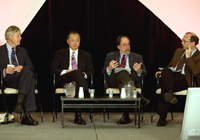
L to R: Timothy E. Wirth, President, United
Nations Foundation and Better World Fund,
Jim Yong Kim, Harvard Medical School,
David Baltimore (moderator), AAAS
President, California Institute of
Technology and UNAIDS Executive
Director Dr Peter Piot.
The 2008 Meeting of the American Association for the Advancement of Science took place in Boston, USA from 14-18 February and brought together science and technology professionals from 56 countries to discuss the latest scientific breakthroughs and challenges.
President of the AAAS, Nobel Prize winner Mr. David Baltimore, said that the event was the ‘largest and most important interdisciplinary scientific gathering of the year’. The main focus of the conference was on the power of science, technology and education, to assist less developed segments of world society while improving cooperation among developed countries and spurring knowledge-driven transformation across scientific disciplines.
Some 10,000 people attended the conference including leading scientists, engineers, educators, and policy-makers as well as members of the national and international media.
The meeting ran under the umbrella theme of "Science and Technology from a Global Perspective" and the program highlighted areas of research, new developments, and cross-cutting activities in support of science, technology and education around the world.
UNAIDS Executive Director Dr Peter Piot
spoke on a plenary panel session on
Global Health Challenges on Monday 18
February.
Among the 150 symposiums and presentations was a round table discussion on the state of public health which focused particularly on AIDS and tuberculosis; presentations on the search for a global AIDS vaccine and the challenge of comprehensive HIV control in sub-Saharan Africa.
UNAIDS Executive Director Dr Peter Piot spoke on a plenary panel session on Global Health Challenges on the closing day of the conference together with Jim Yong Kim from the Harvard School of Public Health and Timothy Worth, President of the UN Foundation and Better World Fund. The session was moderated by AAAS President David Baltimore.
Top scientists discuss global health challenges i
Related links:
Related
 Science, HIV and COVID-19—where are we headed?
08 июня 2021 года.
How was a COVID-19 vaccine found so quickly?
09 февраля 2021 года.
 New guidance on ethical HIV prevention trials published
27 января 2021 года.
Feature Story
To Our Partners
13 февраля 2008
13 февраля 2008 13 февраля 2008
It is now 12 years since UNAIDS started work, 12 years in which the Joint United Nations Programme on HIV/AIDS has matured into a truly global institution, supporting national AIDS responses in more than 80 countries.
During those 12 years, we have established close relationships with a wide range of partners—networks of people living with HIV, governments, businesses, community groups, advocacy groups, religious organizations, foundations, scientific institutions, and the United Nations family. These partnerships are critical: without them, we at UNAIDS would not be able to do our work.
Because of this, I wanted to share with you our priorities for 2008. This year we have five focus areas. First we have to make the significant domestic and international money being made available—work the best that it can. We will intensify our technical and policy support to help countries scale up towards universal access to HIV prevention, treatment, care and support. Halfway towards the Millennium Development goals—we aim to do a better job of sharing information about the progress that countries have made in reaching their targets—information that could help unblock challenges faced by others.
The second is to intensify country-level action on HIV prevention, gender equality and human rights—interrelated areas that need broad engagement. We will mobilise and build capacity to support planning, costing and implementation of prevention programmes that reduce HIV risk, vulnerability and impact. And we will work with a range of stakeholders to build demand, capacity and resources for HIV prevention, while continuing to support the further roll-out of HIV treatment.
The third is to enhance the provision of practical strategic information. The 2007 AIDS epidemic update report showed just how complex the epidemic has become. We can no longer describe this epidemic in simple global figures. We have to tell the story of what is happening in countries in all their diversity. Over the next year we will further refine our reporting on the epidemic and the response. We will continue to strengthen data collection, and work with others to enhance the analysis of this information. In August, we will publish a new Global Report on the AIDS epidemic with the most up-to-date information on progress at country level.
The fourth focus is to ensure that the AIDS response contributes to wider development processes and outcomes. We want to highlight, through reporting results, the difference that HIV programmes are making towards achieving the Millennium Development Goals. We will use this knowledge to support global policy, particularly for the health related MDGs, but also for issues such as aid effectiveness and long-term predictable financing.
And the fifth area is to develop a much longer term, more strategic approach. We have to build on what has been achieved so far, and find ways to accelerate and then sustain this in the future. The rate of new HIV infections per year is declining, but the need for prevention, treatment, care and support is increasing. We have to find new ways to fill existing gaps—notably around HIV prevention and the volatility of development assistance. Because if we don’t find ways to address those gaps now, we will not be able to sustain the AIDS response over the longer term.
So 2008 is really a year of demonstrating and building on results. It’s about making sure those results provide maximum benefit in the decades to come. We look forward to working with you to make this happen.
Best regards,

Dr Peter Piot
Executive Director
To Our Partners
Related
Feature Story
Making a difference: UNAIDS in Ethiopia
08 февраля 2008
08 февраля 2008 08 февраля 2008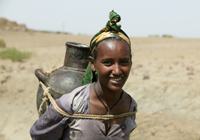
UNAIDS has provided technical assistance
in developing the National plan of action
for the forthcoming years.
Continuing with the web special series “Making a difference”, which focuses on the work of UNAIDS staff at country level, www.unaids.org talks to UNAIDS Country Coordinator in Ethiopia, Roger Salla Ntounga, his role, his motivations and how one document is making history in the AIDS response.
Roger has been the UNAIDS Country Coordinator in Ethiopia for over a year now. He manages an office of 22 staff members who help him provide services at country-level and coordination among government, civil society and the ever growing number of stakeholders involved in the AIDS response in the country.
The response to the AIDS epidemic remains a priority issue on Ethiopia’s development agenda. UNAIDS helped the HIV/AIDS Prevention and Control Office (HAPCO) – which is the equivalent of the National AIDS Commission of the Ethiopian government - to put in practice the ‘Three Ones’ principles. UNAIDS has also provided technical assistance in developing the National plan of action for the forthcoming years. “We had meetings with the Head of the HAPCO office almost every day, to go chapter by chapter. And now that the document is finished, it has come back to us for editing, printing and distribution. All partners coming to Ethiopia will have to develop their programmes based on this document,” says Dr Salla Ntounga.
“It’s a good document. Partners and donors are happy, everybody is happy with it. It will improve the AIDS response because it gives a kind of road map to everyone. It will reduce duplication of efforts and increase complementarily, which is to the benefit of the people”.
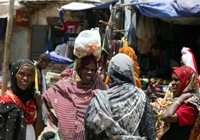
Special emphasis is required on
strengthening the capacity of civil society.
In the past two years, strong leadership on the part of the Ministry of Health has resulted in visible strengthening of the response to AIDS, in particular within the health sector. However, Special emphasis is required on strengthening the capacity of civil society. “This is a country with a very strong government and old administration where the space for civil society is not so easy, so we do everything we can to reinforce them and make sure that they are the beginning and the end of everything we do.”
Roger meets every 15 days with the network of people living with AIDS to try to point out the problems they are facing, regarding the legislation or access to resources, or building a regional network. “We are making good progress. We are recognised as really giving a voice to civil society and we have a lot of respect from a broad range of civil society members. They see us as doing very concrete things, like for example helping them to complete a plan of action or making sure that the network of people living with HIV is organised”. UNAIDS also tries to strengthen the capacity of the civil society at all levels to plan, manage and implement AIDS responses. “We have also organised training on resource mobilisation, negotiation and leadership skills. So we try to organise targeted training to improve the capacity of those who are working on AIDS”.
One of the major challenges still remaining in Ethiopia is scaling up services and reducing stigma and discrimination in rural areas. “Last week I went to the Somali region, which is far from the capital and they really benefit from outside help. I was able to talk to the two associations of women living with AIDS, and I was really able to see how hard their lives are”.
“It is a region where there is still a lot of denial, and coming out is a kind of social death. These women are openly positive about their status in a region where the traditional leaders are saying ‘it is not possible in this region for anyone to be HIV positive’. So they are really very courageous”.
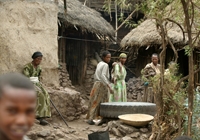
Sentinel surveillance data indicate that in
rural areas, where about 85% of Ethiopians
live, the epidemic is on the rise.
Sentinel surveillance data indicate that while in urban areas the epidemic appears to have been stabilized, in rural areas, where about 85% of Ethiopians live, the epidemic is on the rise. Girls are especially likely to be exposed to HIV, due to harmful traditional practices, early marriage (often cross-generational and often ending in divorce), female genital mutilation, abduction and violence.
“We had supported one of the groups with an income-generating activity. They had bought a laundry machine, but when people realised that it was operated by people living with HIV they stopped going to the laundry. People did not even come back to fetch their clothes”.
UNAIDS is also a member of the Donors’ HIV/AIDS Forum, a subforum of the National Partnership Forum, that is instrumental in ensuring donor coordination. “I have a regular meeting here with the Donors’ HIV/AIDS Forum, which meets every 15 days. We have to be there to make sure there is harmonisation and alignment of all the donors, and there are many here, towards the government’s national plan”.
Despite the many challenges still remaining, UNAIDS has played a crucial role in supporting the coordination of the AIDS response in the country. “I think our greatest achievement is the confidence we have been able to create about this office. It is really considered by all partners as reliable, in helping them to get access to technical support and knowledge”.
“I like working in the country office because it makes you much closer to people living with HIV, and you really see why you are involved. For example when I go to Somali region and meet those young women who have been able to come out in a very, very hostile environment, I see their courage, I see their eyes— and I also see their tears. This shows me that we still have a very long way to go!”
All photo credit: UNAIDS/P.Virot
Making a difference: UNAIDS in Ethiopia
Feature stories:
UNAIDS Deputy Executive Director in Ethiopia (Wed, 06 Feb 2008)African First Ladies meet on AIDS Mon, 04 Feb 2008 Addressing the health worker shortage crisis (Tue, 08 Jan 2008)
Addressing the health worker shortage crisis
(Tue, 08 Jan 2008)
Web special series:
Related
 Unlocking community actions in Uzbekistan
30 мартаа 2026 года.
 In Northeast Brazil, civil society and local government collaborate to increase HIV treatment adherence
03 апреля 2023 года.
 LGBTQ+ shelter in Lviv provides lifeline to displaced Ukrainians
27 февраля 2023 года.
Feature Story
Theological consultation on HIV prevention
05 февраля 2008
05 февраля 2008 05 февраля 2008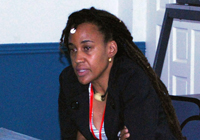
Atieno Odenyo, regional partnerships
advisor for UNAIDS in Eastern and
Southern Africa, emphasized the roles
and responsibilities of faith communities
in the international HIV arena.
The role of Christian faith in responding to the AIDS epidemic was the focus of a consultation that took place in Johannesburg, South Africa from 28 January to 2 February.
The focus of the consultation was to discuss how Christian faith and practice can deepen engagement, compassion, and effectiveness in HIV prevention efforts -- not simply by focusing on personal behavior, but by addressing the wider social, political and economic injustices in society which make some people more vulnerable to HIV infection.
The consultation, convened by the Ecumenical Advocacy Alliance, brought together 35 theologians, ethicists, practitioners and Christians living with HIV from a broad range of Christian traditions including Anglican, Baptist, Evangelical, Lutheran, Orthodox, Reformed, Roman Catholic and Uniting churches.
"We are fully aware that HIV prevention touches on very sensitive issues in many cultures and faith traditions," said Linda Hartke, coordinator of the Ecumenical Advocacy Alliance. "For us, the most important element of HIV prevention is to break the silence, particularly in Christian communities, that surrounds evidenced- based HIV prevention, including addressing vulnerability and root causes of HIV transmission," she added.
The report of the consultation will be used to promote further theological reflection and networking, building on the long and active involvement of faith-based organizations in the response to AIDS. The report, once finalized, will be available from the Ecumenical Advocacy Alliance.
Atieno Odenyo, regional partnerships advisor for UNAIDS in Eastern and Southern Africa, emphasized the roles and responsibilities of faith communities in the international HIV arena. She challenged churches and faith communities to be involved in HIV prevention on the global, national, community and individual level.
Theological consultation on HIV prevention
Related links:
Related
Feature Story
UNGASS 2008: Country progress reports
04 февраля 2008
04 февраля 2008 04 февраля 2008
In compliance with the Declaration of Commitment on HIV/AIDS signed by UN member states in June 2001, 122 countries have submitted their country progress reports to UNAIDS. The reports, submitted every two years, reflect the progress made by countries in their response to the AIDS epidemic.
The deadline for submission of the country progress reports for 2008 to UNAIDS was the 31st of January. These have been published on the UNAIDS web site as they were received and without any alteration.
In 2007 there have been substantial efforts in many countries to increase the engagement of civil society in national reporting processes. UNAIDS engaged the services of a consortium of civil society organizations led by the International Council of AIDS Service Organisations and the International Women's Health Coalition (ICASO and IWHC) to provide support through their regional networks to civil society organizations in national reporting. As a result, shadow reports were produced by civil society organizations which are available on the consortium’s web site.
The public sharing of the country reports enables open discussion and assessment of progress between the governments, civil society and other key stakeholders engaged in the national AIDS responses.
“The 2008 UNGASS reporting process is a dramatic step forward in international and country level collaborations and it is the most coordinated effort to date. It is also very exciting that civil society has become part of the process in so many countries," said Dr Deborah Rugg, Chief Monitoring and Evaluation Division, UNAIDS.
The 2008 reports mark an important time point in assessing progress towards the Universal Access to HIV prevention, treatment, care and support, and the targets set in the 2001 Declaration of Commitment. Countries were requested to report on 25 core indicators ranging from AIDS spending and Government AIDS policies to the number of people receiving anti-retroviral drugs or the percentage of most-at-risk populations reached by HIV prevention programmes.
UNAIDS will now prepare a compilation report based on the reports received which will assess the state of the global AIDS epidemic in preparation for the United Nations High-level meeting on AIDS that will take place in June in New York.
The country progress reports will also be used to inform the 2008 UNAIDS report on the global AIDS epidemic that will be launched at the upcoming International AIDS conference in Mexico.
UNGASS 2008: Country progress reports
Related
 Many key populations avoid health services
21 февраля 2022 года.
 New indicators added to Key Populations Atlas
06 января 2022 года.
 Republic of Moldova is pioneering high-tech community-led monitoring
31 мая 2021 года.
Feature Story
African First Ladies meet on AIDS
04 февраля 2008
04 февраля 2008 04 февраля 2008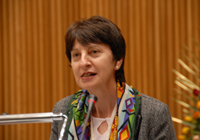
In her address to the Assembly, UNAIDS
Deputy Executive Director Mrs. Deborah
Landey commended the organization for
its success in bringing women’s issues to
the forefront, particularly the focus on
preventing mother to child transmission
of HIV.
The Organisation of African First Ladies against HIV and AIDS (OAFLA), held their 5th Extra Ordinary General Assembly in Addis Ababa from 1-2 February. More than 30 first ladies (or their high level representatives) attended the assembly which was held in parallel with the African Union Summit.
The First Lady of Ethiopia and Vice President of OAFLA, Madam Azeb Mesfin, (also hosting meeting) gave the opening remarks, followed by the First Lady of Zambia and Acting OAFLA President Maureen Mwanawasa, who urged her peers to reflect on the successes of the organization whilst planning carefully for future activities.
In her address to the Assembly, UNAIDS Deputy Executive Director Mrs. Deborah Landey commended the organization for its success in bringing women’s issues to the forefront, particularly the focus on preventing mother to child transmission of HIV. Ms. Landey stressed that significant progress had been achieved in Africa over the last decade both in terms of providing anti-retroviral treatment and in reducing HIV prevalence.
The Deputy Executive Director of UNAIDS also encouraged the First Ladies to continue their campaigns to mobilise action on preventing new infections which still remains a major challenge. “HIV prevention is the key. It is a highly complex issue. But this can be no excuse for inaction. We still have a long, long way to go to make HIV prevention truly effective,” said Ms Landey.
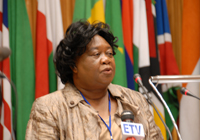
Elizabeth Mataka, UN Special Envoy in
Africa, urged OAFLA members and leaders
at all levels to take collective responsibility
in the fight against AIDS.
Elizabeth Mataka, UN Special Envoy in Africa, urged OAFLA members and leaders at all levels to take collective responsibility in the fight against AIDS. “Each of us here today has considerable influence and we have a duty and a responsibility to lend our support, advocacy and leadership to build on the extraordinary response that has so far been mobilised.”
The UN special envoy also encouraged the organisation to seek support from major funding organisations such as the Global Fund to Fight AIDS, Tuberculosis and Malaria. The Global Fund Board is now requesting countries to take particular note of the vulnerabilities of women and girls as they put forward their proposals for Round 8 funding and beyond.
African First Ladies meet on AIDS
Related links:
Related
 The power of women supporting women - Mentor program for women living with and affected by HIV in Kazakhstan
13 сентября 2024 года.
The urgency of HIV prevention among adolescent girls and young women
01 июня 2023 года.
 Leave no one behind and that includes people who use drugs
04 мая 2023 года.
Feature Story
Getting support for HIV and mental health in Africa
02 февраля 2008
02 февраля 2008 02 февраля 2008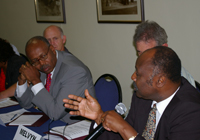
Frank Njenga, President of the African
Association of Psychiatrists and Allied
Professions presents alongside Joseph
Mbatia Director of Mental Health, Ministry
of Health, Tanzania.
Research shows that 89% of AIDS related home based care givers in the North West Province and Mpumalanga in South Africa were depressed or showed signs of depression. The research was presented at the recent World Federation for Mental Health expert forum convened in Cape Town, South Africa, on 29-31 January 2008.
The study conducted by the South African Depression and Anxiety Group and Wits University South Africa was one of several examples of the growing need for increased access to mental health care for people infected and affected by HIV.
"It is clear from our grassroots partners and members that there is demonstrated need for strengthened mental health services addressing stress management, social support and self-esteem among people living with and affected by HIV”, said the Secretary General of the World Federation for Mental Health, Preston Garrison. “Caregivers in particular, experience high levels of stress and their role can take a substantial mental health and physical toll as they care for the physical, emotional and economic needs of their family members,” he added.
World Health Organization consultant Melvyn Freeman referenced a study in Zambia that showed 85% of pregnant women diagnosed HIV positive had episodes of major depression and many had suicidal thoughts. Another study revealed an increase in depression and suicide among AIDS orphans in East and Southern Africa.

World Federation for Mental Health forum
brought together 23 leaders from different
specialties within the AIDS and mental
health fields, to explore mental health
needs for all aspects of the AIDS response.
The forum, supported by the Ford Foundation brought together 23 leaders from different specialties within the AIDS and mental health fields, to explore mental health needs for all aspects of the AIDS response. Particular attention was given to the needs of care givers, people living with HIV and vulnerable children - groups identified as often experiencing the most significant mental health challenges as a result of AIDS.
The Cape Town forum was convened in part thanks to the advocacy of national level organizations such as the Zimbabwe National Association for Mental Health which has continually pushed to raise awareness of the need for increased mental health support services for caregivers of people living with AIDS and for children who are orphaned when their parents die of AIDS.
In a key note presentation at the meeting Frank Njenga, President of the African Association of Psychiatrists and Allied Professions, offered an overview of the status of mental health in Africa emphasizing how the trauma of AIDS experienced by individuals, families and communities has significantly increased the need for an urgent scale-up of comprehensive mental health services that work in collaboration with national and local AIDS programmes.
A series of roundtable discussions explored gaps in mental health that need to be addressed in order to optimize the well-being of people infected or affected by HIV in Africa. Among the issues considered was the need to better understand how mental health problems increase the vulnerability of individuals to HIV infection and the need to train health care workers in order to reduce the mental health and HIV related stigma.
Julian Sturgeon, National Manager of the
Treatment Action Campaign , highlighted
the work of the organization's treatment
literacy programme designed to ensure
optimum adherence to treatment among
people living wtih HIV.
It was also highlighted by the participants that any new intervention should seek to support the greater empowerment of people with mental health problems to respond to their own HIV needs.
Furthermore, participants also underlined the need for a greater standardization of mental health and well being programmes to strengthen the many community based initiatives already focused on psycho-social support.
"The relationship between HIV, mental health and the pursuit of well-being is multi-layered and offers many opportunities for strengthening, scale-up and increased collaboration,” said Andy Seale, UNAIDS Senior Advocacy Adviser, East and Southern Africa Region. “Many aspects of HIV-related mental health needs have been addressed at the community level for years. However, local needs - particularly of people living with HIV and those with an increased care burden - are often inadequately addressed and programmes remain under resourced and could benefit from increased international support and advocacy,” he added.
In conclusion, it was agreed to move forward in mobilizing an Africa-wide initiative to address the complex and multiple interactions between mental health and AIDS through a focus on community-level mobilization.
The initiative will seek to mobilize further interest at the African Psychiatric Conference to be held in Ghana in April 2008, compile an online directory of joint HIV and mental health resources, develop a series of policy papers and information packs for key workers, and convene a partners' conference in early 2009 exploring the mental health consequences of AIDS for people living with HIV, their families, caregivers and communities.
Related
Feature Story
HIV positive leaders meet in Monaco
25 января 2008
25 января 2008 25 января 2008
UNAIDS Special Representative Her
Serene Highness Princess Stephanie of
Monaco during the opening of the HIV+
Monaco meeting that takes place from
24-26 January in Monaco.
Photo credit: UNAIDS/G.Luci
UNAIDS Special Representative Her Serene Highness Princess Stephanie of Monaco has convened a meeting of HIV positive leaders in her home town of Monaco. The meeting, entitled ‘HIV+ Monaco’ which is taking place from 24-26 January has been organized in collaboration with The Government of Monaco, UNAIDS, Fight AIDS Monaco and The Living with HIV Partnership.
Key leaders from networks of people living with HIV met to reflect on how they can improve knowledge and information exchange on key issues, as well as improve collaboration among groups of people living with HIV at country, regional and global levels.
"The HIV+ Monaco Conference is an important opportunity for people living with HIV to develop their advocacy agenda," said Kate Thomson, UNAIDS' Acting Chief of Civil Society Partnerships. "The meeting will be critical in ensuring that the voices of women and men from all over the world have the possibility to shape the advocacy agenda as an essential component of the global AIDS response."
The outcomes of the conference will then feed into the International ‘Living with HIV Leadership Summit’ due to take place in Mexico on 31 July to 1 August 2008 (LIVING 2008) ahead of the 2008 International AIDS Conference. “We are proud that the HIV+ Monaco Conference offers HIV positive leaders the opportunity to meet and discuss key issues affecting their lives in preparation for the Mexico Summit,” said UNAIDS Special Representative HSH Princess Stephanie of Monaco.
The HIV+ Monaco meeting will be followed by a 6-month global e-consultation to further develop thinking around issues which have been identified and gather evidence of best practice and lessons learnt for discussion at LIVING 2008.
"The road to LIVING 2008: Positive Leadership Summit begins in Monaco," said Kevin Moody from the Global Network of People living with HIV (GNP+) representing the LIVING with HIV Partnership. "The participants at the HIV+ Monaco Conference are leaders with years of experience who are committed to improving and coordinating their advocacy work through an extended consultative process that will reignite the passion within the people living with HIV movement by setting the advocacy agenda for the next couple of years."
HIV positive leaders meet in Monaco
Related
Unlocking community actions in Uzbekistan
30 мартаа 2026 года.
In Northeast Brazil, civil society and local government collaborate to increase HIV treatment adherence
03 апреля 2023 года.
LGBTQ+ shelter in Lviv provides lifeline to displaced Ukrainians
27 февраля 2023 года.