

Feature Story
ONUSIDA lanza su sitio web internacional en francés, español y ruso
20 Marzo 2008
20 Marzo 2008 20 Marzo 2008
Nuevo sitio web internacional de ONUSIDA en francés, español y ruso.
ONUSIDA ha completado la primera fase del lanzamiento de las versiones en francés, español y ruso de su sitio web internacional. Por primera vez, se ofrece una parte de la web en cada una de las 4 lenguas oficiales de la organización.
Siguiendo un proceso transparente de trabajo, ONUSIDA continuará traduciendo el contenido de aquellas secciones aún no disponibles en ruso, español y francés, y que se mostrarán entre tanto en inglés. El objetivo para mediados de este año es que el 95% del sitio web internacional sea accesible en los cuatro idiomas oficiales.
Esperamos que este paso nos permita llegar a un público mucho más amplio en todo el mundo, al que ofreceremos, a través de internet, datos sobre la epidemia de sida, recursos y documentación clave y las últimas noticias sobre el VIH.
Cada vez es mayor el número de personas que tienen acceso a las tecnologías de la comunicación en la red y que pueden participar en un proceso de intercambio de información que resulta crucial. Sin embargo, aún sigue existiendo una brecha digital que, como reconoce ONUSIDA, también es de tipo lingüístico, ya que la mayoría de los recursos técnicos, científicos y políticos de la red sólo está disponible actualmente en inglés.
“El lenguaje y el idioma son instrumentos clave de comunicación y fundamentales para acceder al conocimiento", afirmó Annemarie Hou, jefa de Comunicación e Intercambio de Conocimiento de ONUSIDA.
“Al publicar nuestros recursos en otras lenguas distintas del inglés, esperamos salvar las diferencias lingüísticas y culturales existentes y contribuir a que ONUSIDA cumpla su objetivo de promover una respuesta mucho más amplia al sida".
La transmisión del VIH no conoce fronteras sociales, culturales ni lingüísticas, por lo que, del mismo modo que la respuesta de ONUSIDA al virus debe reflejar la diversidad de la epidemia, nuestros instrumentos de comunicación también deben plasmar la pluralidad existente en todo el mundo.
El lanzamiento del sitio web internacional en español representa un paso adelante en esta dirección, garantizando una mayor divulgación de nuestros instrumentos y recursos informativos.
Como parte de esta estrategia, ONUSIDA se ha asociado con la Facultad de Traducción y Documentación de la Universidad de Salamanca (España), con el objetivo de diseñar nuevas fórmulas para el desarrollo de la comunicación sobre el sida en español.
El contenido en español del sitio web ha sido traducido por estudiantes de esta Universidad, quienes, así, además de ofrecer a ONUSIDA unas traducciones de alta calidad, disfrutan de una oportunidad única de colaborar con las Naciones Unidas y, a la vez, adquirir una mayor concienciación sobre las cuestiones relacionadas con el sida.
ONUSIDA espera y desea que se mantenga esta asociación con la Universidad, de la que también forma parte un proyecto de estudio terminológico.
“Las palabras pueden tener significados diferentes en cada situación, por lo que es muy importante ponerlas en contexto. También debemos asegurarnos de que las ideas asociadas a cada término y las relaciones semánticas entre ellos sean perfectamente comprensibles por todas las personas hispanohablantes ", dijo el vicedecano de la Facultad de Traducción y Documentación de la Universidad de Salamanca, el Dr. Jesús Torres del Rey, que coordina este proyecto.
2008, Año internacional de los idiomas
La Asamblea General de las Naciones Unidas proclamó 2008 como el Año internacional de los idiomas, y ha reconocido que la ONU debería promover el multilingüismo como un medio de fomentar, proteger y preservar la diversidad de las lenguas y las culturas en todo el mundo. Además, ha subrayado la enorme importancia de conseguir la igualdad entre los idiomas oficiales de la Organización.
Francés
350 millones de personas hablan francés en todo el mundo, ya como lengua materna ya como segunda lengua, y está presente en grandes grupos de población de 54 países. De estos, la mayoría vive en África, donde se calcula que 115 millones de africanos en 31 países hablan francés como su primera o segunda lengua.
Español
370 millones de personas utilizan el español en todo el mundo, convirtiéndolo en el tercer idioma más hablado. El español no solo es lengua oficial en España, sino también en Argentina, Bolivia, Chile, Colombia, Costa Rica, Cuba, la República Dominicana, Ecuador, El Salvador, Guinea Ecuatorial, Guatemala, Honduras, México, Nicaragua, Panamá, Paraguay, Perú, Uruguay y Venezuela. Además, está muy extendido en Canadá, Marruecos, Filipinas y Estados Unidos.
Ruso
270 millones de personas hablan ruso en todo el mundo, de los cuales 167 millones lo utilizan como su primera lengua. Es el idioma oficial de la Federación de Rusia, Belarús, Kazajstán y Kirguistán, y se habla en 31 países del mundo, incluyendo muchas de las antiguas republicas soviéticas.
Le invitamos a que visite el sitio web internacional en los siguientes idiomas:
Web internacional de ONUSIDA en francés: www.unaids.org/fr
Web internacional de ONUSIDA en español: www.unaids.org/es
Web internacional de ONUSIDA en ruso: www.unaids.org/ru
Les estaríamos muy agradecidos si nos enviaran sus comentarios, ideas y sugerencias. Pueden ponerse en contacto con nosotros por correo electrónico en: webmaster@unaids.org
ONUSIDA lanza su sitio web internacional en franc
Copatrocinadores y asociados:
2008, Año internacional de los idiomas (UNESCO)
La Asamblea General proclama 2008 como Año internacional de los idiomas, con el fin de promover la unidad en la diversidad y el entendimiento mundial. (en inglés)
Reportajes:
Traducir el conocimiento sobre sida (31 de octubre de 2007)
Enlaces externos:
Related
 UNAIDS launches the development of the new Global AIDS Strategy 2026-2031
20 de febrero de 2025
 A Quilt in the Making: UNAIDS shares learnings from its journey of Culture Transformation
26 de octubre de 2022
 UNAIDS staff member talks about the invasion of Ukraine
18 de marzo de 2022
Feature Story
Las muertes por tuberculosis aumentan entre las personas que viven con el VIH
17 Marzo 2008
17 Marzo 2008 17 Marzo 2008
(de izquierda a derecha, delante:) Michel Kazatchkine, director ejecutivo del Fondo mundial; Margaret Chan, directora general de la OMS; Peter Piot, director ejecutivo de ONUSIDA; Jorge Sampaio, enviado especial del secretario general de la ONU para la estrategia Alto a la Tuberculosis y ex presidente de Portugal; y (de izquierda a derecha, detrás:) Jorge Bermudez, secretario ejecutivo de UNITAID; Mario Raviglione, director del Departamento Alto a la Tuberculosis de la OMS; Marcos Espinal, secretario ejectivo de la Alianza Alto a la Tuberculosis: en la presentación del informe Control mundial de la tuberculosis, 2008. Ginebra, 17 de marzo de 2008.
Fotografía: OMS/C. Black
Casi 250.000 personas que vivían con el VIH murieron de tuberculosis (TB) en 2006, según un nuevo informe publicado por la Organización Mundial de la Salud (OMS).
En el informe anual Control mundial de la tuberculosis, 2008 también se indica que casi 750.000 personas seropositivas enfermaron de tuberculosis en ese mismo año, confirmando de ese modo que, pese a que su prevención y cura es por lo general factible, la tuberculosis constituye una de las principales causas de enfermedad y muerte entre las personas que viven con el VIH. De nuevo, África es el con tinente más afectado, con el 85% del total mundial de casos de tuberculosis relacionada con el VIH.
No obstante, el informe también presentaba algunas buenas noticias, puesto que se perciben signos esperanzadores, sobre todo en África, de una creciente aplicación conjunta de los programas de tuberculosis y VIH para reducir esta coinfección en las personas seropositivas. Por ejemplo, en Rwanda, el programa de tuberculosis pudo practicar las pruebas del VIH al 76% de los pacientes de TB, garantizando de ese modo su acceso a los servicios de prevención, tratamiento y atención más adecuados. Sin embargo, hace falta aún mucho más trabajo para conseguir que las personas que viven con el VIH puedan recibir mejores servicios de prevención, diagnóstico y tratamiento de la tuberculosis, puesto que, por ejemplo, en 2006 a menos del 1% de personas VIH-positivas se le realizó pruebas de detección de la TB.

Intervención del Dr. Peter Piot, director ejecutivo de ONUSIDA, en el lanzamiento para la prensa del Control mundial de la tuberculosis (Ginebra, 17 de marzo de 2008).
Fotografía: OMS/C. Black
"Según el informe, aún estamos lejos de poder ofrecer el acceso universal a unos servicios de prevención, diagnóstico, tratamiento y atención del VIH y la TB de alta calidad", afirmó el Dr. Peter Piot, director ejecutivo de ONUSIDA.
"Se han logrado evidentes avances, pero todos tenemos que hacer más para promover un sistema conjunto que permita reducir las muertes por tuberculosis entre las personas seropositivas".
La presentación oficial del i nforme, en Ginebra, estuvo a cargo de Peter Piot (director ejecutivo de ONUSIDA), Margaret Chan (directora general de la OMS), Michel Kazatchkine (director ejecutivo del Fondo mundial) y Jorge Sampaio (enviado especial del secretario general de la ONU para la estrategia Alto a la Tuberculosis y ex presidente de Portugal), a tiempo para el Día Mundial de la tuberculosis (el 24 de marzo).
ONUSIDA, la OMS, el Fondo Mundial, la Alianza Alto a la Tuberculosis, junto con nuestros asociados nacionales e internacionales, trabajarán en estrecha colaboración con el fin de conseguir el acceso universal a los servicios integrados para el VIH y la tuberculosis, así como una respuesta coordinada a ambas epidemias, que es la única manera de ser verdaderamente eficaces en este empeño.
Las muertes por tuberculosis aumentan entre las p
Copatrocinadores:
Departamento Alto a la Tuberculosis de la OMS (en inglés)
Information relacionada:
La tuberculosis y el VIH
Coinfección
Reportajes:
La tuberculosis farmacorresistente (MDR-TB), más frecuente en las personas que viven con el VIH (28 de febrero de 2008)
Eventos del Día mundial de la tuberculosis, 2007 (30 de marzo de 2007)
Si hay TB aquí, la hay en todas partes (24 de marzo de 2007)
Unir fuerzas para tratar la tuberculosis y el VIH (24 de noviembre de 2006)
Centro de prensa:
Las iniciativas mundiales para hacer frente a la TB están dando frutos, pero demasiado lentamente (17 de marzo de 2008) (en inglés)
Enlaces externos:
Alianza Alto a la TB (en inglés)
Publicaciones:
Control mundial de la tuberculosis, 2008 (pdf, 4.5Mb) (en inglés)
Preguntas frecuentes sobre la TB y el VIH (33 Kb, pdf) (en inglés)
Preguntas frecuentes sobre la tuberculosis ex tremadamente farmacorresistente (XDR-TB) (33 Kb, pdf) (en inglés)
Related
 Transgender sex workers face frequent abuse
29 de marzo de 2022
 Many key populations avoid health services
21 de febrero de 2022
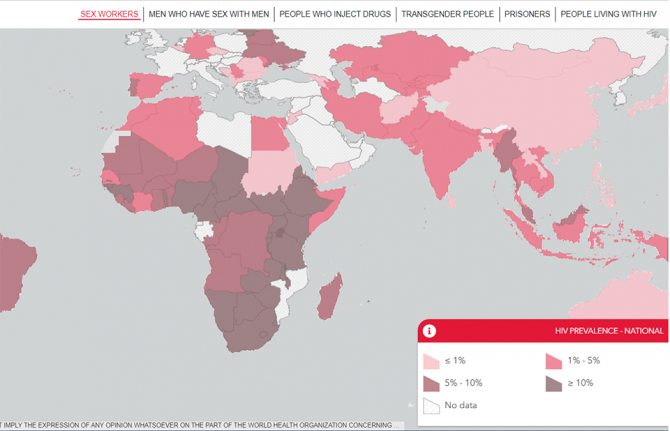 New indicators added to Key Populations Atlas
06 de enero de 2022
Feature Story
Making a difference: Jamaica
14 Marzo 2008
14 Marzo 2008 14 Marzo 2008
Miriam Maluwa, UNAIDS Country Coordinator for Jamaica, The Bahamas and Cuba, speaking at the launch of a Disability and HIV Programme in Jamaica, 3 December 2007
Credit: UNAIDS
“There are never enough hours in the day,” says Miriam Maluwa, Jamaica, the Bahamas & Cuba UNAIDS Country Coordinator. “The one thing I have learnt is that as country coordinator you have got to be responsive to the needs of the county. Like a constant half moon—there’s always the half you see and the other half that you can’t yet see, but you know is to come. And you need to be ready and responsive.”
Maluwa, who trained and practiced as a lawyer with experience of AIDS legal and human rights issues, joined UNAIDS headquarters ten years ago to head a unit on Law, Human Rights and HIV. In 2004 she was given the challenge of starting the new office for Jamaica, Cuba and the Bahamas, based in Kingston, Jamaica. “It’s not a job,” she says, “this is a personal mission. I see UNAIDS as a channel to fulfil that mission and I completely believe that I should be part of this.”
Leadership and advocacy
Alongside the unpredictable day-to-day demands and coordinating role, the office in Jamaica has a full agenda that is guided by the five UNAIDS strategic functions. Leadership and advocacy for the AIDS response has been an important one of these, and to date there have been many successes in this area. UNAIDS and its Cosponsors have put energy into moving the response beyond the health sector. As a result of this collaboration with the Government, in Jamaica there are now eight government ministries with policies and programmes for HIV.
UNAIDS Office and Cosponsors have also supported the government in the development of the Jamaica Strategic Plan for 2007- 2012, which is before the cabinet for endorsement. This $201 million plan has an integral Monitoring and Evaluation framework with embedded indicators and targets for its goal: “the achievement of universal access to prevention, treatment and care”.
Maluwa is very encouraged by the enthusiasm for the new plan. “It is so accepted that when the Prime Minister spoke at the last World AIDS Day breakfast Meeting he actually referred to the plan,” she said. “He spoke about its contents. He had no notes and he was speaking off the cuff. It was a good feeling.”
Jamaica's first ever private sector led Business Council on HIV and AIDS with 20 large companies was established in 2006.
One challenge in Jamaica is that few people know their HIV status or believe that they are at personal risk. An estimated three quarters of the some 25,000 people living with HIV in the country have not been diagnosed. The Prime Minister and his wife have drawn attention to this issue by taking HIV tests in public. During the 2007 official World AIDS Day event, which UNAIDS helped to organise, Voluntary Counselling and Testing facilities were provided and over 1000 people came forward for the service.
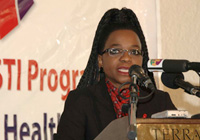
Miriam Maluwa, UNAIDS Country Coordinator for Jamaica, The Bahamas and Cuba speaking at a Prime Minister's World AIDS Day 2007 'Leadership for Life' breakfast meeting
Credit: UNAIDS
Legal reform
On the invitation of the authorities, UNAIDS Office has also played an active role in the process of HIV related legal reform. With her legal expertise Maluwa was able to support an extensive assessment of existing legislation and draw up reform proposals which have been submitted to Cabinet and discussed with the Parliamentary Joint Select Committee.
A series of reforms are being recommended including enactment of an anti Discrimination provision in the Jamaica Constitution prohibiting discrimination based on all status; amending the Public Health Act and enacting a comprehensive stand alone Anti Discrimination Act with mechanism to investigate and redress discriminatory actions and amending the Criminal Offences Act to decriminalize homosexuality.
“A lot of the value that Governments place on UNAIDS is on the technical support and our ability to provide strategic support at critical times,” says Maluwa.
Strengthening partnerships
The UNAIDS office also works to strengthen partnerships and support civil society. It has supported the development of a mini-TV series that will be broadcast in 2008. Called Red Ribbon Diaries, the series documents the lives of ordinary young Jamaicans affected by HIV. UNAIDS has also partnered with the Jamaica Council of Persons with Disabilities to implement an Island-wide prevention programme to educate deaf women and girls, and their service providers about HIV.
The Jamaican Network of Sero-positives (JN+) is supported through the provision of office space for its Board of Directors and UNAIDS also technically supports the network’s Island-wide capacity building workshops for people living with HIV and has served as Elections Returning Officer at the recently held elections of new JN+ Board.
Resource mobilisation
An achievement which Maluwa is particularly proud is UNAIDS Jamaica’s role in Chairing the Oversight Monitoring Committee of the Country Coordinating Mechanism which is implementing a model plan for resolving potential conflicts of interest between Principle Recipients and sub-recipients of the Global Fund to Fight AIDS, TB and Malaria.
This is part and parcel of the technical support to the Jamaican government, but has international relevance. “It is an innovative contribution to resource mobilisation. The Global Fund is currently publishing the Jamaica model as a Best Practice,” she said.
Personal fulfilment
Looking to the future, Miriam Maluwa sees the subsisting deep-seated culture of stigma, discrimination and homophobia as one of the main challenges to the Jamaica AIDS response.
However, important work is underway. The National AIDS Committee, in collaboration with UNAIDS Jamaica and the legal fraternity has secured free legal services from 25 lawyers to address matters of discrimination for people living with HIV and other key populations. These lawyers also support human rights workshops for the general public, media, religious leaders, people living with HIV and civil society to enhance a culture of tolerance.
“This work is personally rewarding,” says Maluwa, “because in the field you are not pushing paper, you are dealing with real issues every day. Each issue that comes to you, you are managing either the person before you or the relationship between that person and other partners you are trying to coordinate, so that everybody comes together over an issue. I find that very fulfilling because I can count on my fingers the difference that I am making every day.”
Her four years in the country office has given her new insights into UNAIDS. “The life of UNAIDS is really at country level,” she says. “It’s the best way for UNAIDS to showcase its work. Either we are there or we are irrelevant. I think the country offices bring credibility to UNAIDS, because they are what people see. We need to put our money and our efforts there.”
Making a difference: Jamaica
Feature stories:
Making a difference: UNAIDS in Ethiopia (8 February 2008)
Making a difference: UNAIDS in Ukraine (8 January 2008)
Related
UNAIDS launches the development of the new Global AIDS Strategy 2026-2031
20 de febrero de 2025
Feature Story
Responsible journalism honoured in Bangladesh
14 Marzo 2008
14 Marzo 2008 14 Marzo 2008
Award winners of the UNAIDS Bangladesh Media Awards, 13 March 2008.
Credit: UNAIDS
Four outstanding journalists were honoured on 13 March in Bangladesh for their exceptional contribution to the AIDS response through journalism at the first ever UNAIDS Bangladesh Media Awards.
There is a low HIV prevalence in Bangladesh. As a consequence, there is a relatively low level of knowledge and awareness about the disease among the general public and people living with HIV experience considerable social stigma and discrimination.
At the backdrop of the context described above, UNAIDS office in Bangladesh, in collaboration with the National Media Forum on HIV and AIDS (APLF initiative), created a platform from which ethical and responsible journalism is encouraged. The awards went to those who promoted the rights of most at risk populations and people infected and affected by HIV.
“The media in Bangladesh and elsewhere have a great responsibility to not contribute to a culture of discrimination by perpetuating stereotypes,” said UNAIDS Country Coordinator, Dan Odallo. “These award winners offer excellent examples of sensitive and informed journalism.”
First place for National Print media award was won by investigative journalist Ms. Qurratul-Ain-Tahmina for a three-part series called “Bangladesh at risk of AIDS”. Qurratul-Ain-Tahmina has been highlighting human rights and other important social issues in the media for several years.
Another winner was a popular national radio station Radio Today who took first prize in the Electronic media category for a catchy public service announcement on an HIV prevention broadcast.

A panel of guests addressed the awards ceremony. Credit: UNAIDS
The Directorate General Health, Dr S. M. Mustafa Anower highlighted the significance of the media’s role in the AIDS response. “60% of people in Bangladesh receive most of their news and information through print and electronic media, therefore media is a most powerful vehicle in the fight against HIV and AIDS,” he said.
Honourable Advisor, Ministry of Health & Family Welfare, Dr A M M Shawkat Ali, encouraged more media training for journalists who in rural areas to ensure that responsible journalism reaches everyone in Bangladesh.
“Awareness always needs to be created at the grass roots level with simple and easy to understand messages,” he said. With a low adult literacy rate of 53%, this is considered particularly important in Bangladesh.
APLF Champion for AIDS, singer Runa Lailor, congratulated the Standard Charted Bank for their financial support of the award and their partnership in the fight against AIDS. She expressed the hope that this social responsibility initiative will encourage other journalists to increase the frequency and sensitivity of coverage of AIDS issues in the media.
UNAIDS Bangladesh plans to hold the Media Awards annually.
Responsible journalism honoured in Bangladesh
External links:
Related
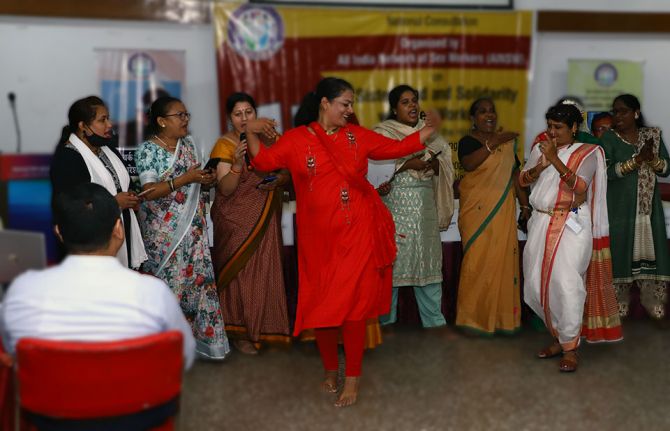 Indian partners reflect on a year after sex workers’ human rights affirmed
05 de octubre de 2023
 A rainbow of hope for LGBTQI+ people in rural Japan
17 de mayo de 2023

Feature Story
Muchos avances de los que informar: UNGASS 2008
12 Marzo 2008
12 Marzo 2008 12 Marzo 2008
La noche ya era bastante fría en Dushanbe (Tayikistán), pero además estaba cortada la calefacción del edificio, con lo que la temperatura interior había caído hasta 40ºC bajo cero. Sin embargo, ese 31 de enero de 2008 era la fecha límite para que los países enviaran sus respuestas al sistema de elaboración de informes de la UNGASS. Sin dejarse intimidar por las gélidas temperaturas, los delegados de los distintos gobiernos continuaron su trabajo para concluirlo en plazo.
Cada dos años, en cumplimiento de la Declaración de Compromiso sobre el VIH y el sida firmada por los Estados miembros de la ONU en junio de 2001, los países inforrman a ONUSIDA sobre los avances logrados en la respuesta a la epidemia de sida. Este año, tanto los países como todos los miembros a título personal most raron un extraordinario compromiso en este proceso de elaboración de informes.
Esfuerzos extraordinarios para presentar los informes a tiempo
Mientras Kenya vivía un clima de agitación civil postelectoral, los miembros de la sociedad civil y los delegados de los gobiernos ponían en riesgo su integridad física al continuar el trayecto hasta sus oficinas en medio de los disturbios callejeros para poder concluir sus informes.
El hecho de que tantos países hayan entregado sus informes de progreso, y que en algunos casos hayan tenido que realizar un esfuerzo tan excepcional para lograrlo, supone un testimonio de la seriedad con la que los Estados miembros han asumido dicha responsabilidad emanada de la Declaración de Compromiso que se adoptó de forma unánime en 2001 en el periodo extraordinario de sesiones de la Asamblea General de las Naciones Unidas sobre el VIH y el sida.
Mayor grado de cumplimiento
El 7 de marzo de 2008, 147 de los 192 países habían entregado sus informes, lo que supone un gran incremento con respecto a los 115 de 189 que lo hicieron en 2006.
Cabe destacar que el grado de cumplimiento es del 100% en el Caribe, del 95% en Europa oriental y Asia central, del 95% en América Latina y del 94% en África subsahariana.
Sin embargo, en esa misma fecha, solo habían entregado sus informes el 50% de los países de América del Norte, el 53% de Europa occidental y central y el 50% de Oriente Medio y África septentrional. Por su parte, el grado de cumplimiento de Asia oriental es del 60% y el de Oceanía, del 57%.
El alto porcentaje de entregas en varias regiones es indicativo del grado de responsabilidad pública que están dispuestos a asumir muchos países. La Secretaría de ONUSIDA publica estos informes en el sitio web de ONUSIDA tal y como los presentaron los países, sin modificación o alteración alguna. Lejos de considerarse una pesada carga burocrática, este proceso de trabajo resulta para los países una oportunidad para ofrecer una declaración pública de su compromiso y para aprovechar el ejercicio comparativo.
"La actitud que se ha apreciado en el proceso de elaboración de informes de este año no tiene precedentes por el grado de coordinación y participación, y los resultados hablan por sí solos", afirmó la Dra. Deborah Rugg, jefa de la Sección de Monitorización y Evaluación de ONUSIDA.
"Tanto los gobiernos como la sociedad civil, los copatrocinadores y la Secretaría de ONUSIDA llevaron a cabo todos ellos un esf uerzo concertado para conseguir que los informes de los países fueran más exhaustivos que nunca. El resultado hace honor al compromiso demostrado por todos los participantes, que también refleja la extraordinaria respuesta que requiere esta epidemia".
Participación de la sociedad civil
La participación de la sociedad civil constituye una parte esencial del proceso de elaboración de informes y desempeña un papel muy importante en la recopilación de los indicadores del Índice compuesto de política nacional (ICPN).
ONUSIDA convocó un consorcio de organizaciones de la sociedad civil, dirigido por el Consejo internacional de organizaciones de servicios sobre el sida (ICASO) y la Coalición internacional por la salud de las mujeres (IWHC) para prestar apoyo en el proceso de elaboración de los informes nacionales. Esta tarea se realiza a nivel region al a través de una serie de redes que trabajan en asociación con el ICASO y la IWHC.
En muchos países, la sociedad civil se ha involucrado en el proceso de elaboración de informes nacionales, ofreciendo datos sobre diferentes aspectos de tipo cualitativo o de apoyo, organizando talleres sobre este cometido o creando informes "sombra" o paralelos, que, en algunos casos, pueden presentarse también si un país no ha incluido adecuadamente a la sociedad civil en su proceso de elaboración, o no ha presentado el informe de progreso en absoluto.
En el último año, se ha producido un descenso significativo en el número de informes paralelos presentados en ONUSIDA, lo que refleja el gran esfuerzo realizado en muchos países para incrementar la participación de la sociedad civil en este proceso. De hecho, estos instrumentos paralelos a menudo permiten incorporar el punto de vista de algunos sectores marginados que, de otro modo y por diversas razones, tendrían difícil formar parte de los procesos formales de elaboración de informes.
Los informes paralelos creados por las organizaciones de la sociedad civil pueden consultarse en la web de ICASO.
La inversión da sus frutos
La Secretaría de ONUSIDA también aumentó su inversión para la formación organizando talleres regionales para encargados gubernamentales de monitorización y evaluación, y enviando a 25 asesores expertos a diferentes países para ayudarles en el proceso de elaboración de informes.
Armonización de datos
El proceso celebrado este año también consiguió un importante grado de armonización de los datos. En los casos en los que había discrepancias entre los datos de los indicadores presentados a la UNGASS y a otros organismos de la ONU (por ejemplo, las cifras de transmisión maternoinfantil o de tratamiento del VIH), se crearon equipos conjuntos de la ONU para trabajar de forma concertada con el fin de armonizar las cifras. Así, analizaron los datos y las metodologías utilizadas, para terminar acordando cuáles constituían los indicadores más válidos para cada caso.
Se trataba de la primera vez que se indentificaban divergencias en los datos a nivel mundial para después armonizarlos a nivel nacional mediante un sistema cooperativo. La Secretaría de ONUSIDA dirigió esta iniciativa, para la que se estableció un foro de trabajo compuesto por cinco copatrocinadores y asociados: la OMS, UNICEF, el PEPFAR, MEASURE/DHS y el Fondo mundial.
En opinión de los países, el proceso fue un catalizador qu e promovió un diálogo sano entre organismos y reforzó el principio de la propiedad nacional de la respuesta.
Base de datos sobre la respuesta mundial (GRD)
Cada país presenta los datos de sus indicadores de la UNGASS mediante un programa informático llamado Sistema Nacional de Información de la Respuesta (CRIS). Además, ONUSIDA ha creado una base de datos mundial de gran tamaño, conocida como la Base de datos sobre la respuesta mundial (GRD) La GRD permite realizar un mejor análisis de la respuesta mundial, país a país y región a región, y por primera vez ofrece la posibilidad de mostrar las tendencias a lo largo de distintos años sobre algunos indicadores de la UNGASS y desagregar por género y edad.
Además de permitir la importación de datos de otras fuentes, la GRD también incorporará la utilidad de inte rcambio de datos del UNGASS con copatrocinadores de ONUSIDA como UNICEF y la OMS y los equipos de apoyo regional de ONUSIDA.
Utilización de los datos del UNGASS
Los indicadores del UNGASS servirán para monitorizar los avances conseguidos para alcanzar el acceso universal a la prevención, el tratamiento y la atención en 2010, y finalmente lograr el Objetivo de Desarrollo del Milenio consistente en frenar la propagación del VIH para 2015.
Estos datos, además, constituirán la base del informe del secretario general de la ONU a la Asamblea General en junio, así como del Informe sobre la epidemia mundial de sida de 2008, que se presentará en la Conferencia Internacional sobre el sida, que se celebrará en México D.F., entre el 3 y el 8 de agosto de este año.
Dado que hemos presenciado muchos avances en el proceso de este año en lo referido a la calidad de los datos, la participación de la sociedad civil, el número de informes presentados y la capacidades de análisis de los datos, se nos presenta un panorama mucho más despejado en cuanto a la respuesta mundial a la epidemia.
La mejora en el proceso de elaboración de informes también comporta que los propios países pueden "conocer su epidemia" mejor, facilitándoles una mejor orientación de su respuesta estratégica.
Muchos avances de los que informar: UNGASS 2008
Reportajes:
UNGASS 2008: Informes de progreso de los países
Enlaces externos:
Informes paralelos de la sociedad civil (en inglés)
Publicaciones:
Directrices para el desarrollo de indicadores básicos (en inglés)
Related
 In Northeast Brazil, civil society and local government collaborate to increase HIV treatment adherence
03 de abril de 2023
 Dangerous inequalities and overcoming them
18 de noviembre de 2022
Transgender sex workers face frequent abuse
29 de marzo de 2022
Feature Story
51º periodo de sesiones de la Comisión de Estupefacientes
11 Marzo 2008
11 Marzo 2008 11 Marzo 2008
Oficina de las Naciones Unidas contra la
droga y el delito (ONUDD)
La Comisión de Estupefacientes se reunió con motivo de su 51º periodo de sesiones en Viena, del 10 al 14 de marzo de 2008. Los gobiernos asistentes valoraron los progresos realizados hasta el momento para alcanzar los objetivos que se fijaron en 1998, dentro del periodo extraordinario de sesiones de la Asamblea General (UNGASS) sobre el uso de drogas ilícitas.
Durante este 51º periodo de sesiones de la Comisión de Estupefacientes, ONUSIDA emitió una declaración que reivindicaba más inversiones y acciones programáticas para proteger los derechos humanos de los consumidores de drogas y para facilicitarles el acceso a la prevención, al tratamiento y al apoyo relacionados con el VIH. Leer la declaración de ONUSIDA (en inglés).
Las conclusiones extraídas en Viena, junto con la identificación de necesidades y prioridades para las nuevas políticas y acciones que se llevarán a cabo a partir de 2009, formarán parte de un informe elaborado especialmente para el UNGASS de 2009.
Monitorización de los resultados del periodo extraordinario de sesiones de la Asamblea General sobre el problema mundial de las drogas (UNGASS - 1998)
Durante el periodo extraordinario de sesiones de la Asamblea General sobre el uso de drogas ilícitas (UNGASS-1998), los estados miembros adoptaron una declaración política que recogía sus ambiciones y las acciones que llevarían a cabo durante la siguiente década para atajar el problema. Entre otras cosas, la declaración instaba a los gobiernos participantes a "conseguir resultados significativos y medibles en la reducción de la demanda de drogas para 2008".
Las Naciones Unidas han iniciado un proceso de evaluación que estudiará los resultados de los esfuerzos internacionales por combatir el uso de drogas ilícitas y que revisará las convenciones internacionales sobre estupefacientes. Este proceso culminará en 2009 con un periodo extraordinario de sesiones de la Asamblea General (UNGASS) que tendrá lugar en Nueva York.
51º periodo de sesiones de la Comisión de Estupef
Enlaces externos:
51º periodo de sesiones de la Comisión de Estupefacientes (en inglés)
La Comisión de Estupefacientes (en inglés)
Related
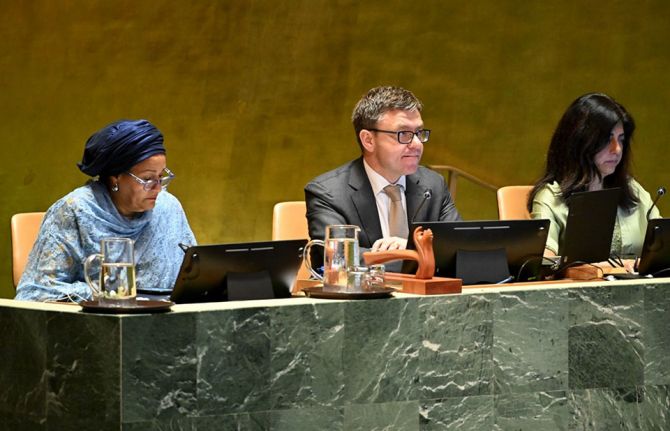 United Nations General Assembly debate highlights the need for urgent action to ensure that progress in the HIV response is accelerated and sustained
26 de junio de 2024
Feature Story
La Asociación Internacional de Clubes de Leones firma un acuerdo con ONUSIDA y UNICEF en América Central
10 Marzo 2008
10 Marzo 2008 10 Marzo 2008
El director regional de ONUSIDA, César Núñez, fue el encargado de dirigir el acto de la firma del acuerdo de cooperación Fotografía: ONUSIDA/Club de Leones
Los equipos de apoyo regional (EAR) de ONUSIDA y UNICEF para América Latina han firmado un acuerdo de cooperación con la Asociación Internacional de Clubes de Leones (Lions Clubs International) en América Central.
Dicho acuerdo va a permitir que las organizaciones unan sus fuerzas para dar respuesta al VIH. Su principal objetivo será promover el acceso universal a los medios de prevención, tratamiento y atención del VIH, así como favorecer las iniciativas de información y educación sobre salud sexual en América Central.
El documento fue suscrito por los siguientes directivos: D. Nils Kastberg, director regional de UNICEF para América Latina y el Caribe; el Dr. César Antonio Núñez, director general de ONUSIDA para América Latina; y D. Ricardo Domínguez Posada, presidente del Consejo gobernador del Distrito Múltiple D- Istmania del Club de Leones.
El presidente de la Asociación de Clubes de Leones, H.L. Mahendra Amrasurya, hizo hincapié en la importancia del papel que puede desempeñar el Club al "aunar sus esfuerzos con las Naciones Unidas con el fin de conseguir varios objetivos: por un lado, mejorar la calidad de vida de los niños, niñas, hombres y mujeres que viven con el VIH; y por otro, crear más iniciativas para evitar que esta enfermedad se siga desarrollando".
Según el director regional de ONUSIDA, César Núñez, "iniciativas conjuntas como esta, con aliados de la sociedad civil tan importantes como el Club de Leones, son las que se necesitan en nuestro país para seguir avanzado hacia una de nuestras metas: el acceso universal".

La Asociación Internacional de Clubes de Leones cuenta con 1,4 millones de miembros en 202 países del mundo. Fotografía: Asociación Internacional de Clubes de Leones
Núñez afirmó que "América Latina ha sido capaz de desarrollar prácticas óptimas relacionadas con la respuesta al VIH que se consolidarán gracias al trabajo conjunto y comprometido de la sociedad civil, los gobiernos y las organizaciones internacionales".
El siguiente pasó será preparar una carta de acuerdo entre las tres organizaciones, y un plan estratégico para definir las prioridades y concretar las acciones que se llevarán a cabo en los próximos meses. Este plan especificará las distintas actividades y su presupuesto aproximado, establecerá un acuerdo de reparto de tareas y de las diferentes responsabilidades y recursos que asumirán las organizaciones firmantes.
El acto tuvo lugar el 21 de febrero de 2008 durante el XXXVII Foro Leonístico de América y del Caribe en El Salvador, y a él asistieron seis gobernadores de los Leones, provenientes de países de América Central.
Asociación Internacional de Clubes de Leones
La Asociación Internacional de Clubes de Leones fue creada en Chicago por el empresario Melvin Jones en 1917. Jones creía que el mundo empresarial debería ver más allá de los intereses profesionales, y perseguir el progreso del mundo y de sus comunidades. De hecho, el lema de Jones, "Uno no puede llegar lejos hasta que no hace algo por los demás", recuerda a muchos Leones que el servicio comunitario es muy importante.
En la actualidad, la Asociación Internacional de Clubes de Leones es la mayor organización laica de voluntarios del mundo, con aproximadamente 44.500 clubes y más de 1.400.000 miembros en 202 países del mundo. Cabe destacar, asimismo, que colabora con las Naciones Unidades desde 1945.
Related
Feature Story
Abataka: Women shape their future
07 Marzo 2008
07 Marzo 2008 07 Marzo 2008International Women’s Day on 8 March is a global day of celebration to inspire women and celebrate their achievements. The theme of 2008 is “Investing in Women and Girls”. UNAIDS Special Representative Mary Fisher and the women artisans of the Lusaka Zambia jewellery project believe income generation projects are critical in empowering women living with HIV, enabling them to shape their future.
Employment to empower HIV positive women

UNAIDS Special Representative Mary Fisher with the artisans of the Lusaka Jewellery project.
Credit: Mary Fisher
As an advocate for those who share her HIV positive status, UNAIDS Special Representative Mary Fisher has had the opportunity to travel and meet women around the world. Listening to them she saw how employment could contribute to empowering women living with HIV, especially those living in poverty.
“Everywhere I’ve travelled,” she said, “I’ve seen women struggling to sustain themselves and their families against the burden HIV places on them”.
So in 2006 Ms Fisher began to explore sustainable income-generation ideas through which HIV positive women in Zambia and Rwanda could earn a living, care for their families and sustain their health. She met and talked with women to find a product they could make with the traditional skills they already had or could learn which could be sold at a profit.
In Lusaka Zambia the traditional craft of bead-making is getting a modern twist.
Credit: Mary Fisher
The idea of modern fashion jewellery created with the traditional craft of beading which could be promoted and sold by the internet including on Mary Fisher’s website was born.
Making an impact
Today, the jewellery project is thriving. Around 150 HIV positive women who participate in support groups at the Centre for Infectious Disease Research in Zambia (CIDRZ), a Lusaka-based HIV/AIDS research, treatment and care facility; or who live in the local Chikumbuso community, have been trained and employed as jewellery makers.
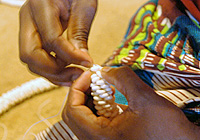
Modern jewellery designs by artist Mary Fisher are crafted by bead-crocheting.
Credit: Mary Fisher
Mary Fisher is an international artist and the combination of her modern jewellery designs with the women’s traditional craft of bead making is proving a success. The artisans practice the intricate art of bead-crocheting with materials and gemstones and sales are going well. Nearly three dozen varieties of bracelets, designed by artist Mary Fisher, are now in production, with more items on the drawing board. The women are paid for each piece they create and additional profits are invested to buy more materials and employ more women.
Fisher has named some of the jewellery pieces the Abataka Collection as Abataka means “family, community, belonging”.
“I can give my children an education”
On any given day, several dozen women artisans may gather to work on the jewellery and share life stories.
Esther’s story is typical: She contracted HIV from her husband, passed it unknowingly to four of their five children and, since her husband’s death in 2005, raises her family alone.
Before, Esther and her children often skipped doses of HIV medication because they had no food to take them with. Now, they have money for housing, for food – even for books and fees, to keep the children in school. “I am very grateful to God for the beading project so I can give my children education,” she said.
When Esther and her co-workers finish each bracelet, they mark it with a tag to which they sign their names. The signed handiworks make the bracelet makers and bracelet buyers feel like allies across the globe responding to AIDS. One group of buyers in Arizona sent photographs of themselves wearing their bracelets to the Zambian artisans with personal letters of thanks and encouragement.
Looking to the future
With their new earnings and skills from the jewellery project, HIV-positive women artisans aren’t just living day to day, but looking to the future. Many have been able to open savings accounts, start their own small businesses, and obtain better housing for their families.
Ms Fisher calls it the very definition of “the spirit of Abataka: people from around the world befriending African women on their journey. With the world’s help, these women are looking towards a brighter future".
Abataka: Women shape their future
Feature stories:
UNAIDS Special Representative Mary Fisher visits Zambia (29 August 2007)
Press centre:
World renowned artist, author and activist Mary Fisher accepts appointment as UNAIDS Special Representative (18 May 2006)
External links:
Related
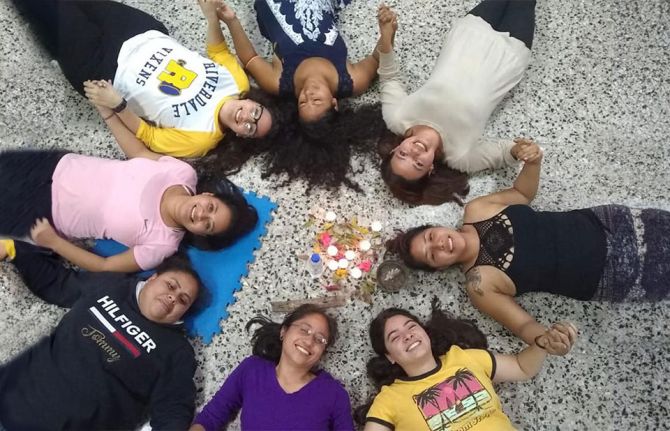 Responding to gender-based violence through sorority and information
15 de diciembre de 2023
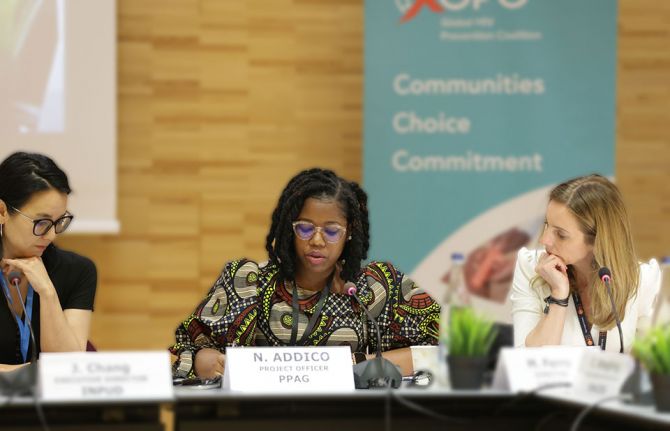 The urgency of HIV prevention among adolescent girls and young women
01 de junio de 2023
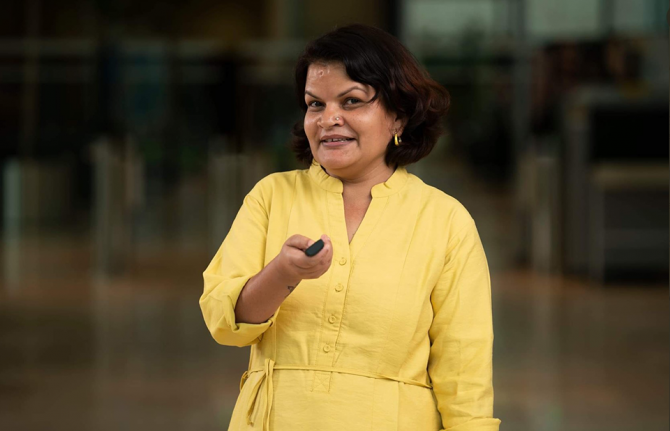 Asia Pacific women living with HIV speak out about rights violations
08 de marzo de 2023
Feature Story
Día Internacional de la Mujer, 2008: invertir en las mujeres y las niñas
07 Marzo 2008
07 Marzo 2008 07 Marzo 2008
Cada 8 de marzo se celebra en todo el mundo el Día Internacional de la Mujer. Aunque esta fecha se ha festejado desde principios del siglo XX, la ONU la fijó oficialmente en 1977 como el Día Internacional de la Mujer con el propósito de poner de relieve que el desarrollo, la igualdad y la participación activa de la mujer son necesarios para la consecución de la paz, el progreso social y los derechos humanos, amén de reconocer su contribución al fortalecimiento de la paz y la seguridad internacional.
El lema de este año es "Invertir en las muj eres y las niñas", con el que se hace un gran hincapié en la aportación económica por parte de los países a la igualdad de género. Subrayando este asunto, el tema principal del 52º periodo de sesiones de la Comisión de la condición jurídica y social de la mujer , que concluyó el día 7 de marzo de 2008, era "Financiar la igualdad de género y el empoderamiento de la mujer".
Comisión de la condición jurídica y social de la mujer
El informe del secretario general (E/CN.6/2008/2), en el que identifica y analiza los asuntos clave en la financiación para la igualdad de género y el empoderamiento de la mujer, además de indicar ciertas recomendaciones sobre políticas, orientó el trabajo de la Comisión.
ONUSIDA entregó una declaración a la Comisión de la condición jurídica y social de la mujer en el que se pone de manifiesto la relación existente entre la desigualdad de género y el incremento de la vulnerabilidad a la infección por el VIH entre mujeres y niñas adolescentes, así como la necesidad de una financiación más sostenible para conseguir la igualdad.
Leer la declaración completa de ONUSIDA
Unidos para poner fin a la violencia contra la mujer
El secretario general de las Naciones Unidas, Ban Ki-moon, inauguró el 52º periodo de sesiones de la Comisión de la condición jurídica y social de la mujer con el lanzamiento de una campaña para pone r fin a la violencia contra la mujer, que continuará hasta el año 2015, para coincidir con la fecha de los Objetivos de Desarrollo del Milenio.
 La campaña pretende movilizar a la opinión pública para garantizar que los responsables de formular políticas al más alto nivel prevengan y erradiquen la violencia contra la mujer, así como asegurar la voluntad política y el incremento de los recursos para combatir el problema.
"La violencia contra la mujer es un problema que hay que enfrentar sin demora, como deja bien claro un rápido análisis de las estadísticas. Es probable que al menos una de cada tres mujeres sea golpeada, obligada a tener relaciones sexuales o sufra otro t ipo de malos tratos a lo largo de su vida. No hay país ni cultura inmune a este flagelo ni mujer, joven o vieja, que no lo haya padecido.
Esta campaña es para ellas. Es una campaña para las mujeres y las niñas, que tienen derecho a vivir libres de violencia, tanto hoy día como en el futuro. Es una campaña dirigida a contrarrestar los incalculables costos de la violencia contra la mujer para toda la humanidad.".
- Declaraciones del secretario general de las Naciones Unidas, Ban Ki-moon, a la Comisión de la condición jurídica y social de la mujer, Nueva York, 25 de febrero de 2008.
La campaña pretende movilizar a la opinión pública con el fin de que los responsables de formular políticas al más alto nivel prevengan y erradiquen la violencia contra la mujer, así como asegurar la voluntad política y el incremento de los recurso s para combatir el problema.
La iniciativa pretende aprovechar el actual clima favorable de la Asamblea General y del Consejo de Seguridad para tomar medidas contra toda forma de violencia contra las mujeres, incluyendo las violaciones en conflictos armados o en situaciones de posguerra. Además, se inspira en décadas de trabajo llevado a cabo por activistas, grupos de mujeres u otras organizaciones civiles que continúan encabezando la lucha para sacar a la luz y hacer frente a la violencia.
Coalición mundial sobre la mujer y el sida
 Coalición mundial sobre la mujer y el sida.
Para festejar el Día Internacional de la Mujer, la Coalición mundial sobre la mujer y el sida va a presentar una serie de entrevistas a mujeres que han superado diversos retos en su trabajo con el VIH. El tema central de estas entrevistas es el de las "victorias alcanzadas por mujeres sobre el VIH y sida" y se subrayará la labor realizada por estas mujeres, que han transformado el arte de la posibilidad en un ejemplo fehaciente de liderazgo.
Visite la web de la Coalición mundial sobre la mujer y el sida para saber más
Día Internacional de la Mujer, 2008: invertir en
Asociados:
Coalición mundial sobre la mujer y el sida (en inglés)
Enlaces externos:
Unidos para poner fin a la violencia contra la mujer (en inglés)
Iniciativa de la ONU para acabar con la violencia sexual en situaciones de conflicto: "No más violaciones" (en inglés) (en inglés)
Campaña de UNIFEM "Di NO a la violencia contra la mujer"(en inglés)
Publicaciones:
Declaración de ONUSIDA en el 52° periodo de sesiones de la Comisión de la condición jurídica y social de la mujer (pdf, 55.3 Kb) (en inglés)
Iniciativa de la ONU para acabar con la violencia sexual en situaciones de conflicto (pdf, 104 Kb) (en inlgés)
Informe del secretario general de las Naciones Unidas sobre la financiación para la igualdad de género y el empoderamiento de la mujer (en inglés)
Feature Story
Partnerships and linking for action
06 Marzo 2008
06 Marzo 2008 06 Marzo 2008
The Global Health Workforce Alliance (GHWA) held the first ever Global Forum on Human Resources for Health in Kampala, Uganda from March 2-7, 2008. The GHWA, hosted and administered by the World Health Organization (WHO), has been created to identify and implement solutions to the health workforce crisis.
UNAIDS Executive Director Dr Peter Piot gave the following plenary speech on "Partnerships and linking for action".
Plenary speech by Dr Peter Piot, UNAIDS Executive Director
Kampala, Uganda 5 March, 2008.
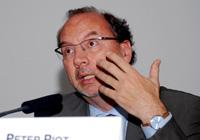
UNAIDS Executive Director Dr Peter Piot addressing plenary at the Global Forum on Human resources for Health, in Munyonyo, Kampala, 5 March 2008
Credit: UNAIDS/C. Opolot
Thank you Sigrun – and thank you for inviting me here today.
I came to Kampala for three reasons. Firstly, this Forum is one of the most important meetings in public health to take place this year. We are starting to build a coalition to address one of the greatest obstacles to health.
Secondly, I am here to pledge the firm support of UNAIDS to this initiative.
Thirdly, it is time to de-polarize this debate. Whether we invest in the AIDS response or in strengthening health systems. It is not a question of one or the other. Even when it comes to AIDS, it is not simply a question of strengthening health services but also community mobilization. We must not forget about people or health outcomes
The issue of human resources for health is complex. But we all know it’s not a new one. I lived it myself in the mid-70s in rural Zaire. But nor is it limited to Africa. Last week I was in India where this is an enormous maldistribution of human resources for health.
The shortage results from decades of under-investment by governments, donors and international agencies. It has been intensified by globalization, but globalization may also bring some of the solutions. Responsibility for the current situation is shared – between donors, national governments, NGOs, research organization and international organizations among others. We therefore have a shared duty to address it. That’s why this afternoon’s panel, with its focus on partnership, is so vital.
The debate we are having now is long overdue. And a major reason for its happening at all is AIDS!
One of the peculiar characteristics of AIDS is that it exposes injustices. AIDS - more than any other issue - has thrown a spotlight on the urgent need to strengthen human resources for health, for three reasons. Firstly, AIDS represents a significant burden on health systems. In some countries, half of all hospital beds are occupied with patients with AIDS-related illnesses. Secondly, to expand ART, and to make ART sustainable, we need strong health systems. Thirdly, being a health worker does not protect you from becoming infected. Botswana, for example lost approximately 17% of its healthcare workforce to AIDS between 1999 and 2005.
There have been good examples of how AIDS investment has helped overcome the human resources for health crisis. I remember well going to Malawi in 2004 with Sir Suma Chakrabarti, then Permanent Secretary of the UK’s DFID. AIDS had brought the health workforce literally to its knees. There was no way it could cope. It was an emergency that required exceptional measures. DFID and other donors financing the sector agreed to fund a groundbreaking initiative, the Emergency Human Resources Programme, to top up salaries for nurses and other health care workers as an incentive not to leave the country. This was totally novel: donors usually resist paying salaries, but in this case we managed to break the taboo. I’m glad to say that the Global Fund to Fight AIDS, Tuberculosis and Malaria is now supporting this programme.
This is just one example of another characteristic of AIDS: it forces us to do things differently. WHO’s “Treat, train, retain” initiative for health-workers with HIV is another new and pragmatic approach. I don’t know of any other programme that starts by addressing the health of the workers involved. It provides wins all round – to the health workers themselves, to the people who need their services, and to the health sector as a whole. So, when we are talking about strengthening health systems, let’s first make sure that people stay alive! But good partnerships require more than processes. There are too many partnerships that are not enough about results and outcomes.
AIDS funding and programming enhanced essential infrastructure for health facilities. Where HIV services have been integrated into existing service delivery sites, AIDS money helped renovate health facilities, upgraded clinics and laboratories and provided training opportunities for health care workers.
AIDS has also helped promote “task shifting”, an old concept/idea in public health – moving responsibility for certain tasks to other health-workers and community members to free up doctors and nurses to take care of other patients and to deliver other essential health services. Here in Uganda, there is an increasing trend for people living with HIV to take on tasks such as counseling for testing, adherence support, treatment literacy and to produce good quality outcomes. In Kenya, several organizations have been implementing prevention, treatment literacy and home based care programmes, which are led by people living with HIV at the community level. Women Fighting AIDS in Kenya, supported by UNICEF in Kisumu and Port Reitz General Hospitals, trained PLWHAs who were then used as PMTCT champions to provide counseling to ante-natal mothers and their partners.
We also see, particularly here in Africa that faith-based organizations play a major in the fight against AIDS providing vital HIV care and treatment services. For example, Christian hospitals and health centers are providing about 40% of HIV care and treatment services in Lesotho and almost a third in Zambia. In other countries, the formal and informal private sector is also very important.
AIDS has brought in new resources, to benefit not only HIV programmes but health systems more widely. Take for example the Haitian “accompagnateurs” – community workers who have been brought into the health workforce through the AIDS programmme. Or in Rwanda, HIV treatment and care was integrated with regular health services, resulting in better coverage for maternal and child health according to a study by Family Health International (FHI) presented at last year’s PEPFAR Implementers Meeting in Kigali. Les Mutuelles de Santé is another example of financing scheme to mobilize resources for health services.
So I have serious issues with the current wave of statements like “There’s too much money going to AIDS” or “Donors should prioritize health system strengthening”. They completely ignore the growing body of evidence that AIDS expenditure strengthens the health sector and contributes to broader development programmes, besides the fact that AIDS programmes are having measurable results, saving millions of lives. Indeed, AIDS has been an advocate for health systems strengthening.
They also seem to assume that dealing with HIV is mostly about treatment. It isn’t! For every one person we put on antiretroviral therapy, another four or five become infected with HIV. If we don’t radically enhance HIV prevention, demands for treatment will just keep on growing, placing an even greater burden on health systems in the future.
And prevention – except for PMTCT – is far more than a health issue. Prevention is a community based action. Effective HIV prevention derives from a range of multi-sectoral interventions (governments, nongovernmental organizations, faith-based organizations, the education sector, media, the private sector and trade unions and people living with HIV).
A lot of the recent surge of funding started as a direct consequence of the AIDS epidemic. AIDS advocacy did not only succeed in mobilizing money, but it also highlighted the profound disparities in health services that separated the developing countries from the developed world. It is however true that there are examples where AIDS related activities and AIDS funding are taking away health workers from other tasks. AIDS funding created new and more interesting job opportunities for doctors and nurses with NGOs and foreign aid agencies and thus can be a drain on the public sector. We have seen it happening in Malawi and in Zambia where focus of disease programmes shifted to HIV. However, and certainly in the heavily affected countries, the AIDS burdens for health services is also a reality. We need to find common solutions and ways of working together.
This brings me to my next point. AIDS has taught us about the critical value of partnerships. Tackling AIDS is one of the toughest challenges the world faces today. Like dealing with climate change, it’s tremendously complex - way beyond the capacity of any single sector or institution. It’s one of those issues that jolts us out of our comfort zone, and forces us to create new alliances with a variety of constituencies – across sectors and at state and non-state level.
UNAIDS itself is a joint programme. We are working with a wide range of constituencies – government, scientists, business, labour, and the media. One of the most important partnerships of all has been our relationship with civil society. It was the activists who kick-started the AIDS movement. Without them, we wouldn’t have achieved anything like the progress we’ve made. It’s thanks to these partnerships that we have been able to mobilize political momentum around AIDS, to leverage funding to $10 billion per year.
In the twelve years since UNAIDS was created, we’ve learnt a lot about partnerships. We’ve seen the advantages of being able to convene diverse actors from public, private, and non profit sectors – all with different strengths. They have the potential to achieve spectacular results – way beyond anything they could hope to achieve on their own.
But coordination and accountability are still important. That’s why UNAIDS established the Three Ones principles, as a framework for partnerships on AIDS. Just to remind you, these are: one agreed national action framework, one national coordinating authority and one agreed monitoring and evaluation system.
The lessons we’ve learnt through implementing the Three Ones are salutary – and very relevant to the aims of this Alliance. The Agenda for Action is right to highlight the need for “national responses to be guided by a national leadership that convenes all actors around one agreed national effort”, and to point to the importance of accountability. The challenge is to engage serious commitment at all levels – in-country, in donor capitals and international organization headquarters. This requires time and effort. But it will be time and effort well spent.
I began today by saying that addressing the shortage of human resources for health was a joint responsibility. It is something that no institution can tackle alone. It is complex, cross-sectoral and long-term. And, like AIDS, it is not a quick-fix problem and there is no one solution that fits all. This may be a major reason why so little has been done before. Another reason may be the fact that the current crisis of human resources for health is also a highly political issue and therefore any possible solutions need to have full political support. But coming together in this alliance is in itself a tremendous step forward. There is a lot at stake; therefore our response must address the emergencies of today and to draw up longer-term plans for the future.
The Agenda for Action offers a comprehensive menu of activities, but I want to suggest some very concrete actions where we can all work and benefit together.
The first is that we must build partnerships far beyond the public sector. Partnerships are crucial for the success of any solution. We must also look at the critical role of non-state actors in the provision of services and their role in the training of human resources. In many countries, 40 to 60% of health services are delivered by the private sector. We have to establish more private/public partnerships with greater engagement of the private sector, beyond workplace programmes. Equally, in many countries, particularly here in Africa, many clinics and health centers are run by faith-based organization. We need to bring them all into the policy dialogue of heath services provision.
The second is to engage the full participation of civil society. As I mentioned earlier, civil society has been at the heart of the AIDS response from the very beginning. And its presence there has been vital. Not only does civil society activism mobilize action, but community members are an invaluable source of knowledge about what works and about how to reach people. We must listen and learn from them, and at the same time invest in building their capacity to deliver alongside that of public sector.
The third is for health ministries to make improving human resource management a priority. This is implicit in the Agenda for Action. But I think we need to spell it out more clearly. Today’s crisis has come about for two reasons. Lack of investment and lack of management. There’s a lot to do, but one of the first steps should be to establish incentives for performance and raise health-worker morale.
Fourth, we need to work together to question and challenge our concepts of fiscal space, predict medium term expenditure frameworks and the suitability of salary supplementation. We have to involve ministries of finance in the discussions of solutions. We should also work together with the World Bank and IMF on these constraints.
There is also the need to address the issue of public sector pay and work conditions. To address issues such as poor infrastructure, lack of equipment and drugs, long hours and heavy workloads and lack of career development in addition to poor remuneration. This needs to be combined with putting human resources for health on the agenda of civil service reform and donor willingness support and invest in supplementing health workers’ salaries and training. Donors and countries should consider the lessons learnt from the Malawi experience.
These issues are at the heart of any assessment of countries’ ability to scale up the response and the achievements of the MDGs. They are relevant for all of the health MDGs and need close examination and a common assessment of the risks and opportunities.

Press conference at the close of Global Forum on Human resources for Health, Kampala 5 March, 2008. (From left): Chair of the board Global Health Workforce Alliance, Dr Lincoln Chen; UNAIDS Executive Director, Dr Peter Piot and Representative of Women Living with HIV in Uganda, Beatrice Were.
Credit: UNAIDS/C. Opolot
We can be very ambitious, but need clear targets, goals and a partnership, where put the institutional interest aside. Fight for common good and common goal. We need to re-set the rules and to put into practice what has been discussed globally at country level. Every research programme must include overhead (/indirect costs for strengthening capacity. This is starting to be done among largest investors in heath (GAVI; GF; PEPFAR etc).
We also need to find a practical way to compensate low and middle-income countries that are losing their skilled staff in whose education they have invested.
The final – and most relevant for this afternoon’s session - is to be serious about applying the Three Ones principles, for all parties to come together and align around a single strategic plan for strengthening human resources for health that focuses clearly not just on process but on results. One National AIDS Coordination authority and one agreed country-level monitoring and evaluation system. Such a framework has been invaluable for a well coordinated AIDS response. We are not there yet, but we have made progress.
If we make progress on action plan, it will be because have worked together. It is through diversity we will success. Pragmatic approach is needed, one step at a time, and strong leadership which will hold us together. I believe we have that leadership.
That may sound ambitious. But if we can come back in a year’s time and say we’ve made progress in these four areas, the world’s health workforce will look a lot more robust than it does today – and its population will be fitter as a result.
We have to act now and “to work together to ensure access to a motivated, skilled, and supported health worker by every person in every village everywhere.” Dr. LEE Jong-wook
Thank you.
Partnerships and linking for action
Cosponsors:
WHO - Global Health Workforce Alliance
Feature stories:
Health workforce crisis limits AIDS response (29 February 2008)
External links:
First Global Forum on Human Resources for Health 2-7 March 2008, Kampala, Uganda
Publications:
Scaling up access to HIV prevention, treatment, care and support: The next steps (UNAIDS, 2006)
Global Health Workforce Alliance Strategic Plan (WHO)
Related
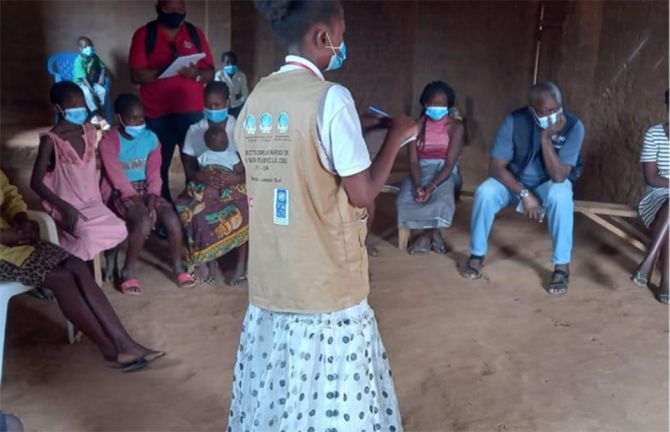 Review recommends law reform on HIV testing to help Angola reduce new HIV infections among young people and ensure treatment
11 de mayo de 2022
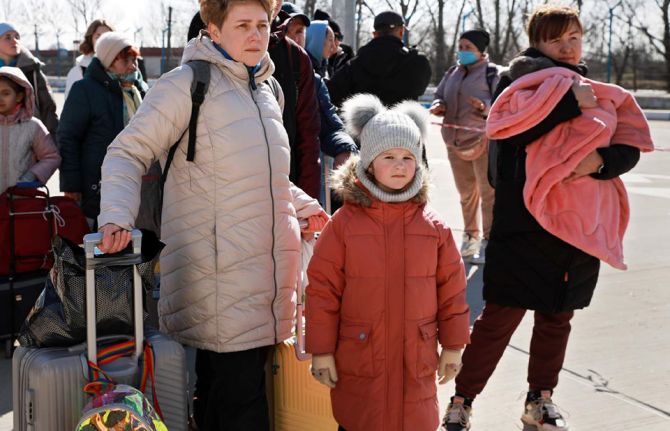 Report highlights that women and marginalized people need urgent access to health-care services in Ukraine
11 de mayo de 2022
 Key considerations to integrate HIV and mental health interventions
28 de abril de 2022