Feature Story
AIDS and Human Rights activist awarded
28 ноября 2006
28 ноября 2006 28 ноября 2006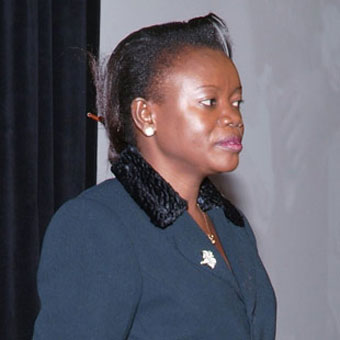
Photo courtesy of "In these times" Magazine
AIDS and human rights are inextricably linked as demonstrated by Beatrice Were, a leading advocate for the rights of people living with HIV in Uganda who recently received the Human Rights Watch Defender Award in recognition of her work.
Mrs. Were is the co-founder of the National Community of Women Living with AIDS (NACWOLA), a grassroots organization that provides services to more than 40,000 women in 20 districts of Uganda. She has served as Executive Coordinator of the International Community of Women Living with HIV/AIDS, Uganda, has worked with UNAIDS over the years and was formerly a member of the UNAIDS Reference Group on HIV and Human Rights. Beatrice Were is currently working as the National HIV/AIDS coordinator for ActionAID International and has collaborated with different organizations to re-address the HIV prevention policies towards a more evidence and rights based response to AIDS in Uganda.
Beatrice Were talks to UNAIDS about the implications of the award on her work and on the rights of people living with HIV.
What does this award mean to you?
Basically this award means that my work is being recognised but also, in a much broader sense, it means that there is recognition of HIV as a Human Rights issue and more specifically there is recognition of the rights of women living with HIV. This award has also challenged me to do more to sustain the visibility of the rights of the people living with HIV as part of the Human Rights.
Is this award going to have any repercussions on your work?
As an HIV positive activist, my work towards the promotion of Human Rights and specially those of women living with HIV has been regarded by governments or scientists as emotional or unscientific. The award gives me the opportunity to show that contributions from activists like me and contributions from women living with HIV are essential to an effective response to AIDS and specifically in protecting the rights of people living with HIV.
Please, tell us about your professional trajectory.
I started from the grassroots level by working with home-based-care programmes for people living with HIV. Soon after, I decided to start an organization to support women living with HIV, addressing issues of property rights, doing advocacy, awareness raising and fighting stigma and discrimination. Today I focus my work on policy issues, accountability and critical engagement with government, donors and stakeholders to ensure that HIV is treated as a Human Rights issue. I’m also working to address gender inequality and access to treatment and prevention as well as dealing with issues of government corruption on abuse of funds committed to AIDS programmes.
What inspires your work?
After my husband’s death, I also tested HIV positive. My in-laws wanted to grab my property, take my children and marry me to my brother in law. Although I was still a young woman then I struggled, I fought back for my rights and I started speaking out. My inspiration today comes from the fact that what I started as a personal struggle when my own rights were abused has helped and improved the live of thousands of women. I am encouraged because I have seen that the power that lies within me has changed things and I believe that any woman once they are informed and supported can also make that change happen.
What do you think the role of the community is in promoting human rights in relation to HIV?
First of all communities need to be conscious that human rights are not a favour from government, that they own those rights and that they have the power to demand governments, NGOs and civil society to respect and fulfil those rights. Communities can do a lot by mobilising themselves and use the power of numbers to speak loud to address human rights and HIV, issues of property rights of women, gender violence or marital rape. The other thing that communities can do is protect the rights of people affected by HIV by respecting them and reducing stigma. The engagement of community leaders is particularly important to lead this process.
What has changed in the last ten years in Uganda?
On the positive side, what has changed is the recognition, even up to the UN level, that people living with HIV are critical partners in the response to the epidemic. There is also consciousness and high level of awareness of women’s rights and to some extent acknowledgement of those rights has been important. However, on the negative side, what is changing in Uganda is that we are seeing a new wave of stigma through a moralisation of the disease by new and radical evangelical groups. The influence of US policy on Uganda’s prevention strategy is undermining the efforts that Uganda has made in the last 25 years. There is also corruption in Uganda, embezzlement of the Global Fund money, reduced political will by government over HIV prevention and care programmes, and when a lot of money is coming into the country to strengthen the health system, we are seeing ARVs expiring and an incompetent health system unable to deliver antiretroviral therapy to the 130.000 Ugandans who need it consistently. So it is quite disappointing that Uganda which has been a success story in its response to AIDS is now undermining human rights not respecting the right to health or the right to information by only promoting abstinence-until-marriage prevention programmes.
How do you see the future in terms of Human Rights and HIV?
Personally I see a lot of opportunities in the near future because now there is recognition by international human rights groups like Human Rights Watch or UNAIDS through its Gender and Human Rights department. I see the opportunity of using these spaces to really amplify the issues of HIV and human rights. I also see opportunities for the activism of people living with HIV (PLHIV) and the networks of PLHIV who are at grassroots level. However, it is critical for those networks to be supported so they can grow strong. I also see opportunities in the other human rights groups who are now beginning to work closely with AIDS activists. Finally, there are many treaties on HIV and Human Rights that we need now to start using as guidelines more than ever instead of having those documents lie on the shelves.
Related Links:
Related
 Tajikistan takes a positive step towards decriminalization of HIV exposure and transmission
30 января 2024 года.
 A rainbow of hope for LGBTQI+ people in rural Japan
17 мая 2023 года.
Feature Story
Stop violence against women; stop HIV
27 ноября 2006
27 ноября 2006 27 ноября 2006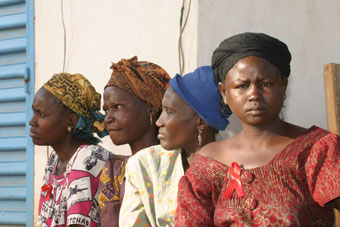
Photo credit : UNAIDS\H. Vincent\Avecc
For Ugandan mother Margaret Namusisi, violence and HIV infection are constant threats. “There are times when I tell [my husband] to use a condom but he refuses. That causes disputes. So I have sex with him so that he will provide for the children and won’t fight,” she said1. “The co-wives are dying one by one. He’s still having sex with me without a condom. If I tell him to use a condom there is such a big fight.”
Margaret’s experiences are far from unusual. For millions of women across the world, violence or the threat of violence is an every day reality. Recent research by the World Health Organization reveals that in some countries more than half of all women experience sexual violence by an intimate partner.
And for many of women, violence dramatically increases their vulnerability to HIV infection. Studies from Rwanda, South Africa and Tanzania show up to three-fold increases in risk of HIV among women who have experienced violence compared to those who have not. Violence or fear of violent reaction makes it difficult or impossible for many women to abstain from sex, to get their partners to be faithful, or to use a condom. For the same reason, women are often deterred from accessing HIV prevention, testing, treatment and care services
In South Africa, national youth surveys show that 33% of young women report they are afraid of saying no to sex and 55% have sex when they do not want to because their partner insists. More alarming still, between 20%-48% of adolescent girls aged 10-25 report their first sexual encounter was forced.
“Wherever you find violence —whether it's physical, psychological, or sexual —there will be AIDS. HIV entered my life through violence, as it has for so many, and we must actively commit to bring this to an end," said Violeta Ross Quiroga, National Chair of the Bolivian Network of People Living with HIV/AIDS (REDBOL)
In an effort to stem violence against women the Center for Women’s Global Leadership launched the ‘ 16 Days of Activism Against Gender Violence’ in 1991. Running every year from 25 November – 10 December, this international campaign highlights the fact that millions of women in every society around the world face violence every day, most often at the hands of husbands and partners, and within the so-called safety of their homes and families.
“The 16 Days Campaign brings together an incredible range of individuals and organizations to call for one thing: the elimination of violence against women,” said Sarah Russell of the UNAIDS-led Global Coalition on Women and AIDS. “The campaign is getting bigger by the year, and its message starker.”
In the past two years, the campaign has underscored the intersections between domestic violence and HIV.
“Not only does forced sex make women more liable to infection, but the fear of violent male reactions – physical and psychological - prevents many women from going to find out more about HIV,” said Russell “It discourages them from getting tested and stops them seeking treatment.”
That’s why the Global Coalition on Women and AIDS has made eliminating violence against women a priority, calling on governments the world over to enact and enforce laws that prevent violence against women, and develop strategies so that those who uphold the law know how to apply it and support survivors of violence. The Coalition also recommends that national AIDS plans integrate strategies to reduce violence against women, and link violence prevention efforts with mainstream HIV prevention and treatment services.
1 Interview with Human Rights Watch, 2003
Links:
16 Days of Activism web site
Global Coalition on Women and AIDS, section on violence
Related
 Walk in my shoes — UNAIDS Board devotes key session to HIV, adolescents and youth
20 декабря 2013 года.
 Know your HIV status: First European testing week takes off
27 ноября 2013 года.
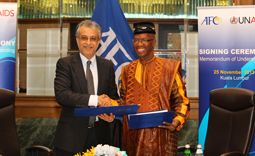 Asian Football Confederation and UNAIDS team-up to raise awareness of HIV
26 ноября 2013 года.
Feature Story
Joining forces to tackle TB and HIV
24 ноября 2006
24 ноября 2006 24 ноября 2006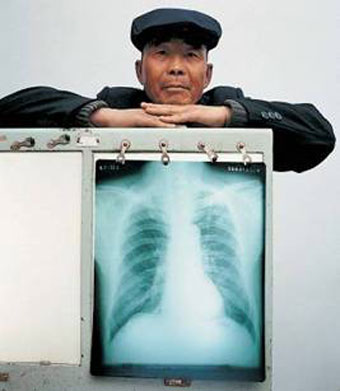 Photo credit : WHO
Tuberculosis (TB) is one of the biggest killers of people living with HIV and at least one third of the 39.5 million people estimated to be living with HIV around the world are likely to be infected with the TB bacteria. As a result of chronically poor investment in global TB control a new strain of TB is emerging that has become resistant to most of the available anti-tuberculosis drugs. Known as extensively drug resistant TB (XDR TB) this strain has serious implications for people living with HIV as it is almost untreatable in many of the countries where it is occurring leading to very high death rates. WHO and UNAIDS, together with other actors working on TB and HIV issues are stepping up action to stop the spread of TB and this deadly new strain.
TB is an infection which usually affects the lungs and is spread, like the common cold, through the air from an infectious person coughing, sneezing or even speaking. One third of the world’s population is infected with TB but only 5-10% of people who are infected with TB actually develop TB disease during their lifetimes. However, co-infection with HIV makes TB disease much more likely and one in ten people infected with TB who also have HIV will develop TB disease each year.
TB is treatable and can usually be cured in people living with HIV, however some strains of TB bacteria have now acquired resistance to one or more of the antibiotics commonly used to treat them; these are known as drug-resistant strains. Treatment for these infections is much longer and much more expensive. The recent outbreaks of tuberculosis that is resistant to almost all of the available TB drugs are giving serious cause for concern as this extensively drug resistant strain (XDR TB) is virtually untreatable when it occurs in people living with HIV and has a very high death rate.
UNAIDS has been following the developments closely. “We need to rapidly ensure prompt diagnosis and effective treatment of TB for people living with HIV in order to prevent drug resistance from developing and spreading,” said UNAIDS’ HIV/TB advisor, Alasdair Reid.
TB drug resistance arises mainly because of inadequate TB control, poor patient or clinician adherence to standard TB treatment regimens, poor quality drugs or inadequate drug supplies. People living with HIV are particularly vulnerable to developing drug-resistant TB because of their increased susceptibility to infection and progression to active TB.
At the 37th Union World Conference on Lung Health held in Paris in November 2006, the interaction between TB and HIV and the threat of extensively drug resistant TB featured prominently in the agenda. The serious implications of the new strain of XDR TB for people living with HIV were highlighted at a special plenary session held during the conference. Dr Kevin De Cock, Director of WHO HIV/AIDS Department said, “The recent emergence of a cluster of cases in South Africa has demonstrated the high mortality that XDR TB can have when associated with HIV infection. Countries with a high prevalence of HIV have been responding quickly to draw up plans for managing and preventing drug-resistant TB and this is welcomed.”
Because of the serious threat that TB and especially XDR TB poses for people living with HIV, UNAIDS and the WHO HIV and TB departments are joining forces to encourage a coordinated and concerted global effort to control TB in people living with HIV.
WHO’s Global Task Force on XDR TB have recently published a report outlining measures needed to urgently combat extensively drug-resistant XDR TB. It follows the announcement by WHO and its partners that US$ 95 million will be required to implement the recommendations in the report, to address the threat of XDR-TB in 2007 in southern Africa. WHO have also released new guidelines on how to improve the diagnosis of TB in people living with HIV.
Links:
Access WHO new guidelines.
Frequently asked questions about Tuberculosis and HIV.
WHO TB
Stop TB partnership
Presentations from the Union meeting on XDR TB can be viewed through the Kaisernetworks link on the Union website.
International Union Against Tuberculosis and Lung Disease
Related
 United for ending cervical cancer, HIV and inequities for women and girls
17 ноября 2022 года.
 Delays in global, affordable access to long-acting, injectable HIV medicines would cost lives, say AIDS campaigners
16 ноября 2022 года.
 Key considerations to integrate HIV and mental health interventions
28 апреля 2022 года.
Feature Story
2006 AIDS epidemic update launch
23 ноября 2006
23 ноября 2006 23 ноября 20062006 AIDS epidemic update launch in Germany:
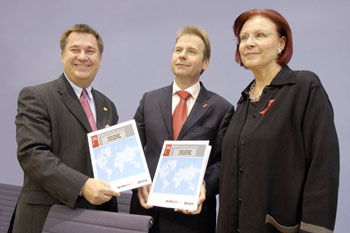
Mrs. Heidemarie Wiezcorek - Zeul, Minister for Economic Cooperation and Development of Germany, Mr. Bertil Lindblad representing UNAIDS and Dr. Ulrich Heide, Executive Director of Deutsche AIDS Stiftung during the launch of the 2006 AIDS epidemic update.
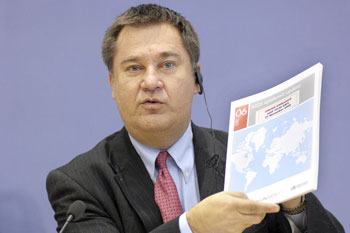
Mr. Bertil Lindblad presenting the report.
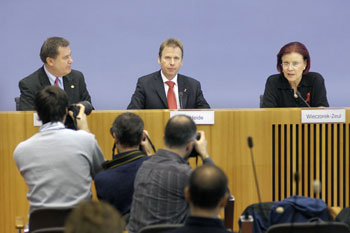
Mrs. Heidemarie Wiezcorek - Zeul, Minister for Economic Cooperation and Development of Germany, Mr. Bertil Lindblad representing UNAIDS and Dr. Ulrich Heide, Executive Director of Deutsche AIDS Stiftung addressing the press during the launch.
2006 AIDS epidemic update launch in Denmark:
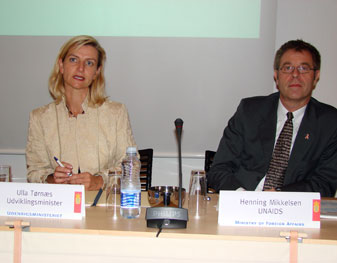
Mrs. Ulla Tørnæs , Minister for Development Cooperation of Denmark and Mr. Henning Mikkelsen representing UNAIDS.
Photo credit for Germany: T. Leukert
Photo credit for Denmark: AIDS-Fondet
Related
 Helping Ukrainian refugees with HIV treatment and support in Berlin
20 мая 2022 года.
 Welcoming Ukrainian refugees in Germany: big test for all
21 апреля 2022 года.
 Norway’s community organizations ensuring health, dignity and rights
17 мартаа 2020 года.
Feature Story
Inauguration of the new UNAIDS/WHO building
21 ноября 2006
21 ноября 2006 21 ноября 2006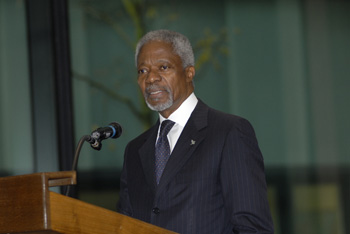
Mr. Kofi Annan, United Nations Secretary General

Dr. Peter Piot, Executive Director, UNAIDS

H.E. Ms. Gunilla Carlsson, Swedish Minister for International Development Cooperation
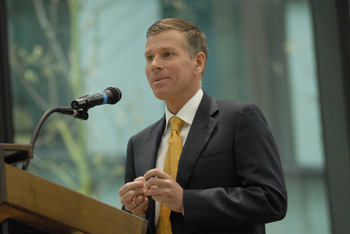
Dr. Anders Nordström, Acting Director-General, WHO
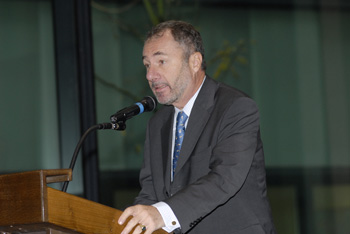
H.E. Mr. Blaise Godet, Ambassador, Permanent Representative of Switzerland to the United Nations Office and other International Organizations in Geneva.

Mr. Mark Muller, Conseiller d'Etat du Département des constructions et des technologies de l'information, Conseil d'Etat de la République et Canton de Genève.
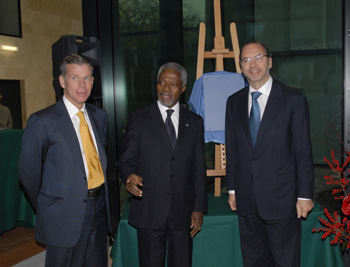
United Nations Secretary-General, Mr. Kofi Annan, Executive Director of UNAIDS, Dr. Peter Piot and Acting Director-General of WHO, Dr. Anders Nordström, during the display of the building inauguration plaque.
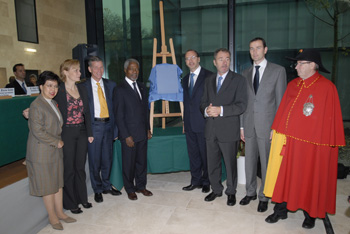
Oficial display of the building inauguration plaque.

United Nations Secretary-General, Mr. Kofi Annan, Executive Director of UNAIDS, Dr. Peter Piot and Acting Director-General of WHO, Dr. Anders Nordström, visiting the new building.
All photo credit : O. O'Hanlon
Related
Helping Ukrainian refugees with HIV treatment and support in Berlin
20 мая 2022 года.
Welcoming Ukrainian refugees in Germany: big test for all
21 апреля 2022 года.
Norway’s community organizations ensuring health, dignity and rights
17 мартаа 2020 года.
Feature Story
UNAIDS/WHO launch 2006 AIDS epidemic update
21 ноября 2006
21 ноября 2006 21 ноября 2006UNAIDS launched the new joint UNAIDS/WHO report, AIDS Epidemic Update 2006, featuring updated global and regional AIDS estimates and new trends in the epidemic’s evolution on 21 November 2006.
Key findings of the report will be presented, including:
- New evidence showing drop in HIV infection rates in several countries and among young people.
- However, global AIDS epidemic continues to grow, with some evidence of resurging epidemics.
- New data suggests where HIV prevention programmes have not been sustained and/or adapted as epidemics have changed
- infection rates in some countries are staying the same or going back up.
- HIV prevention and treatment programmes need to be sustained, adapted and focused to reach those most at risk.
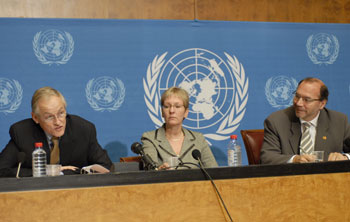 |
Executive Director of UNAIDS, Dr. Peter Piot, Ms. Karen Stanecki, UNAIDS Senior Epidemiologist and Dr. Kevin De Cock, Director of the department of HIV/AIDS at WHO during the launch of the 2006 AIDS epidemic update. |
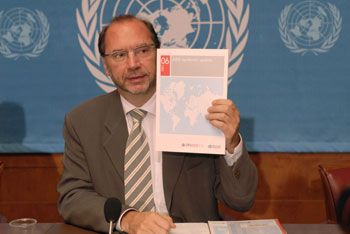 |
Executive Director of UNAIDS Dr. Peter Piot presenting the report. |
 |
UNAIDS Senior Epidemiologist, Ms. Karen Stanecki addressing the press |
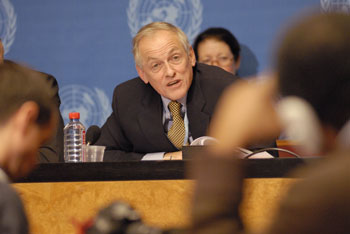 |
Dr. Kevin De Cock, Director of the department of HIV/AIDS at WHO during the press conference. |
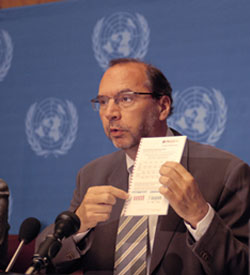 |
Executive Director of UNAIDS Dr. Peter Piot illustrating some of the information contained in the update. |
View photo gallery of the 2006 epidemic update launch in Germany and Denmark
All photo credit : O. O'Hanlon
Related
Feature Story
Secretary General visits UNAIDS, Geneva
20 ноября 2006
20 ноября 2006 20 ноября 2006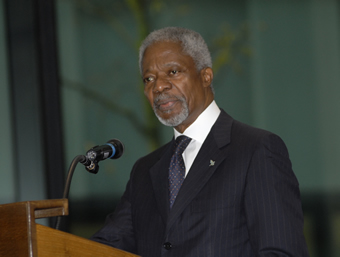
Photo credit : UNAIDS\O. O'Hanlon
The United Nations Secretary General Kofi Annan urged the international community to continue to “fight to bring the global AIDS epidemic under control” as he visited UNAIDS in Geneva on Monday 20 November.
“In a short quarter of a century, AIDS has drastically changed our world. At least 25 million people have died of it; almost 40 million live with HIV today. AIDS, tuberculosis and malaria make up the deadliest triad the world has known,” he said, on his final visit to the UNAIDS Secretariat in his capacity as United Nations Secretary General.
“But at the same time, there is more than ever reason for hope. We can see how much things have changed, how the world is joining forces,” he added.
During his term in office Kofi Annan has been a pioneer in the AIDS response calling it ‘a personal priority’. “Even as I leave the office of the Secretary General, I assure you I will continue to fight AIDS,” he said, as he officially inaugurated the new UNAIDS/WHO building which will house both the UNAIDS Secretariat and the HIV, TB and malaria departments from WHO.
UNAIDS Executive Director Peter Piot underlined the importance of the Secretary General’s contribution and commitment to the AIDS response. “ If the world is now increasing acting against AIDS it is in no small part because of the leadership of Secretary General Kofi Annan,” he said “I trust you will remain an AIDS activist as I know your commitment is a passion way beyond your duty as Secretary General,” he added.
During his visit to the new UNAIDS/WHO building – designed by Baumschlager and Eberle architechts – the Secretary General also met with several artists who’s work on and around AIDS is displayed around the new building. He then visited the UNAIDS conference room which is named after him in recognition of his exceptional contribution to the AIDS response.
“This house will not only bring UNAIDS and WHO closer together. It will also be a meeting place for ideas, a centre for dialogue, a forum bringing together people and organizations, in the UN and beyond, to strengthen the global response against AIDS, TB and malaria. In this way, the building will be a nerve centre in our mission to reach the Millennium Development Goals and build better lives for people in the 21 st century,” he said.
Also speaking at the opening of the UNAIDS/WHO building were H.E.Ms Gunilla Carlsson, Swedish Minister for International Development Cooperation and Chair of the UNAIDS Programme Coordinating Board; Dr Anders Nordström, Acting Director General of the World Health Organization, H.E Mr Blaise Godet, Ambassador, Permanent Representative of Switzerland to the United Nations Office and other International Organizations in Geneva and Mr Mark Muller, State Councillor of Geneva (Conseiller d’Etat chargé du Département des constructions et des technologies d’information, Conseil d’Etat de la République et Canton de Genève).
Read:
Speech by UNAIDS Executive Director, Dr. Peter Piot (PDF, 30 Kb)
Speech by WHO Acting Director-General, Dr. Anders Nordström (PDF, 30 Kb)
Allocution by Ambassador Blaise Godet , Mission of Switzerland to the UNOG and other I.O. (PDF, 256 Kb), on the occasion of the UNAIDS HQ inauguration ceremony in Geneva on November 20, 2006
Related
Helping Ukrainian refugees with HIV treatment and support in Berlin
20 мая 2022 года.
Welcoming Ukrainian refugees in Germany: big test for all
21 апреля 2022 года.
Norway’s community organizations ensuring health, dignity and rights
17 мартаа 2020 года.
Feature Story
Buddhist Monks raise AIDS awareness in Laos
14 ноября 2006
14 ноября 2006 14 ноября 2006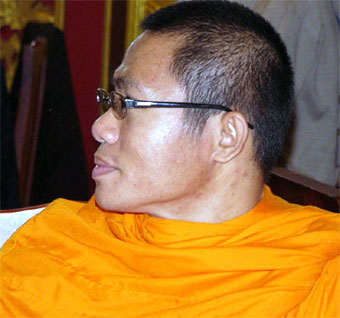
Every morning Buddhist Monk Maytryjit gets up at 3:45 am to meditate for one hour. Afterwards, he walks through the streets of Vientiane in the Lao Peoples Democratic Republic to collect his food alms.
However, this October he took time out of his usual routine to catch a flight to Pakse to attend a workshop convened by UNAIDS Cosponsor the United Nations Development Programme (UNDP) entitled Leadership for Results, which brought together more than 100 representatives from several provinces including Buddhist monks, government ministries and people living with HIV.
UNDP’s Leadership for Results training workshops aim to develop the capacity of local leaders to transform the response to AIDS by promoting leadership at all levels. A series of workshops were held, the final one in Pakse where the leaders attending formed seven “break through” groups in charge of developing proposals for a transformed response to AIDS in the country. The “break through” initiatives focused on increasing HIV prevention among women living in rural settings, improving access to condoms within the Army and increasing access to information on HIV through radio.
Ms. Setsuko Yamazaki, UNDP Resident Representative, a.i. said, “The rationale behind the Leadership for Results programme is to encourage the formation of strong leadership on AIDS related issues within all sectors, beyond those traditionally involved in the epidemic’s response.”
“This involves stimulating a deep-rooted shift within individuals, organizations and communities, to enable them to see AIDS from a new perspective, identify new possibilities and take action,” she added.
As a follow up to the workshop, the group committed to carrying out ten HIV prevention pilot projects at bus stations, markets and villages, with the aim of reaching out to thousands of people. Using radio programmes and loudspeakers, Monk Maytryjit and his group will also begin disseminating AIDS information during religious ceremonies, including one of Laos’ most significant religious festivals, the Pha That Luang (The Great Stupa or Sacred Reliquary) that is held in November.
“According to Buddhist philosophy one needs to follow the right path and an important part of our life-skills is to treat every person equally. It is important therefore to reduce stigma against people living with HIV in Laos and to help their families,” said Monk Mayrtyjit.
For more information: Ms. Yasmin Padamsee Forbes or Ms. Soukphaphone Thongsavanh
+ (856 21) 213390-5 ext. 187 or 210, yasmin.forbes@undp.org , soukphaphone.thongsavanh@undp.org
This story first appeared on the UNDP Lao web site www.undplao.org
All photo credit : Yasmin Padamsee/UNDP
Related
A rainbow of hope for LGBTQI+ people in rural Japan
17 мая 2023 года.
 Thailand’s Mplus: HIV services delivered in style
13 декабря 2022 года.
 Preventing transmission and tackling stigma: The power of U=U
12 декабря 2022 года.
Feature Story
Increased HIV services for drug users needed
14 ноября 2006
14 ноября 2006 14 ноября 2006Increasing access to HIV prevention, treatment, care and support services for drug users and their partners is crucial to addressing the issue of growing HIV infections related to injecting drug use in the Middle East and North Africa region.
This was the overwhelming conclusion reached by regional representatives from law enforcement agencies, national AIDS programmes, NGOs, researchers, community representatives, people living with HIV and UN organizations who joined at a regional workshop on the issue of HIV and drug use in the region, held in Cairo, Egypt from 5 – 8 November.
Throughout the 3-day discussions, participants from the Arab countries, Afghanistan, Iran and Pakistan affirmed that drug use is an important risk factor in facilitating spread of HIV that calls for immediate action. Joint efforts of police, national AIDS actors, NGOs, drug users and of people living with HIV were recognized as fundamental elements in the prevention of HIV among drug users and their partners.
While significant efforts are being undertaken in a number of countries to reach out with HIV preventive services to drug users communities, limited capacities coupled with discrimination against drug users hamper implementation of wider-scale programmes.
“From my personal experience and my field work on reducing harm related to drug use, I suggest training more drug users and ex-drug users –to build their skills in order to promote and implement [HIV preventive] programs in the region,” an ex-drug user and outreach worker said in the workshop.
New initiatives for building capacities of civil society actors on implementing harm reduction measures and networking in the region were discussed and examined.
“Participation in this workshop has allowed an exchange of international experiences among NGOs and governments, and a discussion of the strategic approaches to planning at the national level to protect against the harms and risks of drugs and related HIV. It has created cooperation between [national stakeholders]…and encouraged civil society actors to assist and support alternative programs for drug users,” police participants from one of the Gulf countries said.
As part of the workshop, UNAIDS and UNODC launched the finalized Rapid Situation Assessment on Drug Use and HIV in Algeria and Morocco, as well as facilitate consensus on programmatic follow up for all participating countries. WHO and the International Harm Reduction Association launched a project on strengthening the role of civil society in harm reduction for injecting drug users in the Middle East and North Africa.
Although the main mode of HIV transmission in the Middle East and North Africa remains unprotected sexual contact, injecting drug use is an increasingly important factor in the region’s epidemics.
Related
 New guidance note on decriminalizing drug use in the context of HIV
12 мартаа 2026 года.
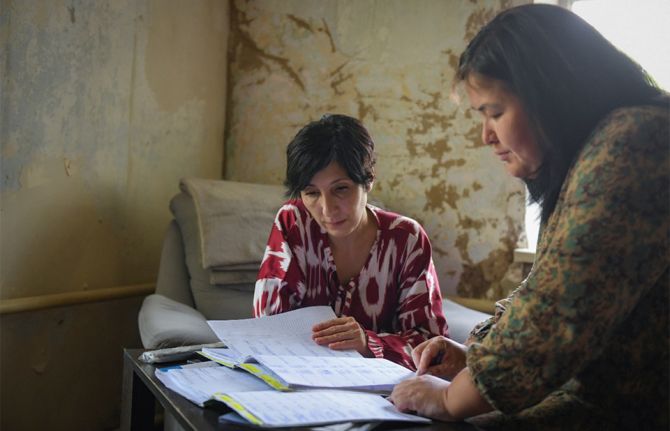 HIV services and social reintegration programmes for prisoners and newly released detainees in Kyrgyzstan at risk of collapse
08 мая 2025 года.
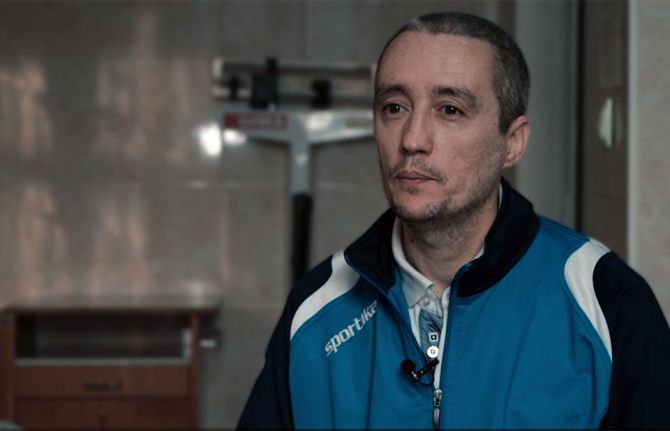 Moldova expands harm reduction services to all prisons
05 мая 2023 года.
Feature Story
Towards universal access: West and Central Africa
07 ноября 2006
07 ноября 2006 07 ноября 2006"Towards Universal Access to Prevention, Treatment, Care and Support in the West and Central African Region”
The renewed commitment to universal access to prevention, treatment, care and support undertaken by countries across the world, has paved the way in West and Central Africa to more inclusive dialogue among partners, galvanizing consensus around the core challenges currently obstructing the national response, and strengthening joint determination to scale up national programmes.
The process of scaling up towards universal access in West and Central Africa has demonstrated the positive impact that broad and collaborative partnerships can provide, bringing together actors from government, civil society, (including people living with HIV, faith-based organizations, women’s groups, networks of health NGOs, youth associations, community based organizations), the media, the private sector, and bilateral and multilateral partners. This broad partnership set the backdrop for informed and open discussion on central themes of the national consultations, for example, raising issues around the importance of prevention as a means to ensure the sustainability of treatment provision.
The UNAIDS Regional Support Team in Dakar has extensively supported the meaningful involvement of civil society which has been of varying but increasing frequency/intensity, In several countries such as Burkina Faso, Mali, Nigeria and Senegal, civil society has been actively involved in both the target setting and review processes of national strategic planning, ensuring the critical input of West African civil society into regional and global fora. This participation was ensured at the Brazzaville regional consultation and the Abuja Heads of State Summit, but more significantly, enabled African civil society to contribute to “ Africa’s Common Position to the UN General Assembly Special Session on HIV/AIDS” June 2006.
Significant momentum has built up on target setting and its follow up, facilitated by technical and financial support provided by the UNAIDS country and regional offices, the UN Country Team and UN Theme Group . Seventeen of the twenty countries who have held national consultations to date have set targets towards scaling up, with countries raising the bar of aspiration by setting far more ambitious goals for 2010, in line with the 2001 Abuja Declaration and the UN High Level Meeting of June 2006.
Progress made in West and Central Africa testifies to the central importance and utility of a strong strategic plan as the vehicle for reaching ambitious targets. Thirteen countries in all have developed nationally agreed roadmaps for scale-up over the next five years (2006-2010). Evidence suggests that those countries able to harmonize target setting with the strategic planning cycle, encountered far less difficulties in establishing targets than those who undertook a separate process. A harmonized strategic planning approach ensures that partners operate in accordance with national priorities, supporting the principles enshrined in the Three Ones and Global Task Team recommendations. In addition, it has been widely recognised that countries will only succeed in scaling up towards universal access if the critical obstacles identified during the country consultations are addressed through the national HIV strategic plans, and are complemented by regional and global level policy action.
Countries in the region have nevertheless encountered several challenges in the target setting and planning processes. In some cases, target setting has been hindered by a lack of available and reliable data, and further support is needed to establish one national M&E system, including a common database accepted and accessible by all partners. In addition, countries have struggled to cost their revised annual workplans, a process completed by six countries to date. Particular attention is needed to scale up technical capacity in this area to elaborate detailed costed annual work plans. Continued and sustained technical and financial support will be needed, for national governments and country-based civil society, to accelerate the national response .
The Regional Support Team in Dakar and the Country and Regional Support Department of UNAIDS Geneva will continue to provide technical and financial support to countries towards scaling up including the finalization of target setting and planning processes. In addition, the RST will also continue to work with the regional civil society networks in West and Central Africa to empower their respective member organization networks to play their role in the national AIDS response and to help them identify more effective means of communication and representation at key regional and global fora and institutions.

Related
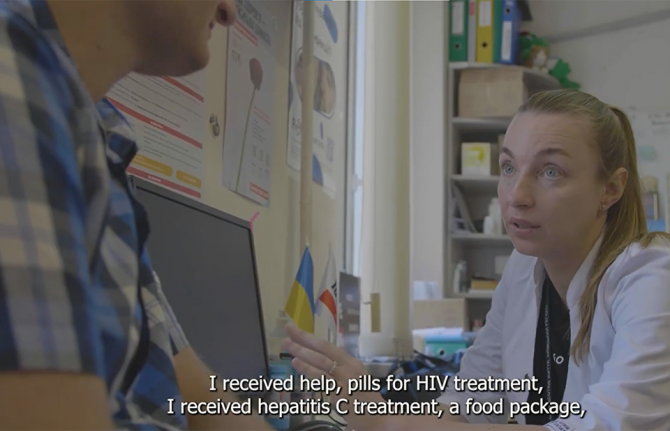 Two years on: UNAIDS supports Ukraine’s commitment to the HIV response
23 февраля 2024 года.
 Leave no one behind and that includes people who use drugs
04 мая 2023 года.