

Press Release
Moving forward on ‘Positive Health, Dignity and Prevention’ – people living with HIV set principles for engagement
08 May 2009 08 May 2009AMSTERDAM / GENEVA, 8 May 2009 – At an international technical consultation on ‘positive prevention’ convened by the Global Network of People Living with HIV/AIDS (GNP+) and UNAIDS on 27-28 April 2009 in Tunisia, experts outlined the ways in which people living with HIV should be central to HIV responses, in particular when and where those response have a direct impact on the lives of people living with HIV. The group agreed on the key elements of comprehensive ‘Positive Health, Dignity and Prevention’ (PHDP) programmes.
More than half of the 50 participants were people living with HIV who lead programmes and drive policies aimed at achieving better HIV responses and higher health and quality of life standards for people living with HIV. Along with development agencies, civil society organizations, country implementers, multilateral and UN agencies, and donor agencies, participants developed a set of values and principles as well as programmatic content and recommendations to guide the national, regional and international efforts of diverse stakeholders.
The experts stressed a human rights approach based on legal protections and a policy environment free of stigma and discrimination. They recommended programmes promote holistic health and wellness, including access to HIV treatment, care and support services, and by doing so contributions are made to the health and wellbeing of their partners, families and communities. Additionally, it was recommended that PHDP efforts should be responsive to the needs of key populations.
Kevin Moody, the International Coordinator and CEO of GNP+, stated, “To date, many positive prevention programmes have placed an undue burden of responsibility for HIV transmission on HIV positive people. The technical consultation was an opportunity to collectively frame policies and programmes within a human rights perspective and to shift the focus of preventing HIV transmission to a shared responsibility of all individuals irrespective of HIV status”.
Michael Bartos, Team Leader of the HIV prevention, care and support team at UNAIDS, added, “At the technical consultation, we learnt about work happening in many communities where people living with HIV are leading the design, programming, implementation, research, monitoring and evaluation of HIV programmes, including prevention programmes. Crucially, in coining the term ’Positive Health, Dignity and Prevention’, the group overcame the divide between HIV prevention and programmes that aim to improve the wellbeing of people living with HIV”.
The international technical consultation is part of an ongoing process of defining the role of HIV-positive people in PHDP. Further consultations at regional and national levels and with different key populations are planned to establish a common understanding of PHDP and provide guidance in developing policies and programmes globally.
A meeting report and a full set of values, principles, programmatic content and recommendations will be made public in early July 2009.
The Global Network of People living with HIV (GNP+) is a global network for and by people living with HIV. GNP+ advocates to improve the quality of life of people living with HIV. The central theme for the work of GNP+ is Reclaiming Our Lives! GNP+ programs are organized under four platforms of action: Empowerment; HIV Prevention; Human Rights; and Sexual and Reproductive Health and Rights. For more information, please visit www.gnpplus.net
UNAIDS is an innovative joint venture of the United Nations, bringing together the efforts and resources of the UNAIDS Secretariat and ten UN system organizations in the AIDS response. The Secretariat headquarters is in Geneva, Switzerland—with staff on the ground in more than 80 countries. The Cosponsors include UNHCR, UNICEF, WFP, UNDP, UNFPA, UNODC, ILO, UNESCO, WHO and the World Bank. Contributing to achieving global commitments to universal access to comprehensive interventions for HIV prevention, treatment, care and support is the number one priority for UNAIDS. Visit the UNAIDS website at www.unaids.org
Moving forward on ‘Positive Health, Dignity and P
Press centre:
Download printable version (pdf, 38.3 Kb.)
Contact:
GNP+: Martin Stolk
Tel. +31 20 423 4114
E-mail: mstolk@gnpplus.net
UNAIDS: Sophie Barton-Knott
Tel. +41 22 791 1697
E-mail: bartonknotts@unaids.org
Press Release
Football star Emmanuel Adebayor appointed as UNAIDS Goodwill Ambassador
23 March 2009 23 March 2009
Geneva, 23 March 2009 – Togolese football star Emmanuel Adebayor has been named as Goodwill Ambassador for the Joint United Nations Programme on HIV/AIDS (UNAIDS). The Arsenal star and “African Footballer of the Year” will use his sporting popularity to raise awareness about the epidemic globally, including the importance of preventing new infections among young people.
Mr Adebayor became interested in working on AIDS after seeing the impact of the epidemic in his native Togo. “Young people are most affected by the epidemic around the world,” he said. “Many of these young people aren’t aware of HIV and the risk of infection, and don’t know how to protect themselves. I hope I can help change this in my new role as UNAIDS Goodwill Ambassador.”
Mr Adebayor joins fellow footballer and UNAIDS Goodwill Ambassador Michael Ballack, working together in an HIV awareness campaign, ‘On the pitch we compete – off the pitch we are uniting the world against AIDS.’
“Sports stars like Emmanuel are excellent role models for young people,” said Michel Sidibé, executive director of UNAIDS. “I am confident that he will use the same skill and determination he has on the field in teaching young people about how to protect themselves against HIV off the field.”
UNAIDS estimates that about half of all new HIV infections occur among young people aged 15-24 and that the key to reversing the epidemic is preventing infections among this age group.
Football star Emmanuel Adebayor appointed as UNAI
Press centre:
Download printable version (pdf)
Contact:
Tina Bille
Tel. +41 79 611 0031
Email: billet@unaids.org
Sophie Barton-Knott
Tel.: +41 22 791 1697
Email: bartonknotts@unaids.org
Press Release
New executive director sets universal access to HIV prevention, treatment, care and support as top priority for UNAIDS
10 February 2009 10 February 2009Calls for $25 billion investment to ensure countries reach 2010 targets
CAPE TOWN, South Africa, 10 February 2009—On his first country visit, the new executive director of the Joint United Nations Programme on HIV/AIDS (UNAIDS), Mr Michel Sidibé outlined his vision and priorities for UNAIDS in the township of Khayelitsha.
Speaking to community and political leaders, Mr Sidibé praised the resilience and perseverance of the community working together to achieve goals in the face of incredible challenges. “I wanted to begin my public journey here, where the community response together with government, civil society and key stakeholders lead the way towards universal access in South Africa. Together they are meeting the demand for HIV prevention, treatment, care and support,” said Mr Sidibé.
Sub-Saharan Africa remains the region most heavily affected by HIV worldwide, accounting for two thirds (67%) of all people living with HIV and for three quarters of AIDS deaths in 2007. The nine countries in southern Africa continue to bear a disproportionate share of the global burden—35% of HIV infections and 38% of deaths due to AIDS.
Like other regions of the world, southern Africa is feeling the effects of the global economic crisis. Mr Sidibé stressed the need for follow through on domestic and international investment commitments to meet 2010 country targets.
“We cannot let the economic crisis paralyze us,” said Mr Sidibé. “Stimulus packages and economic adjustments should be made with a human face in mind. A mother should not have to choose between continuing AIDS treatment and feeding her children. We cannot let down the 4 million people on treatment and millions more in need today.”
Most countries have set universal access targets for 2010 that are ambitious and reach real people. For countries to reach the specific targets they have set, an estimated investment of US$ 25 billion will be required in 2010, which is US$ 11.3 billion more than is available today.
A new report today released by UNAIDS, What countries need: Investments needed for 2010 targets anticipates that nearly one third of the US$ 25 billion investment will come from domestic sources. Investments from multilateral and bilateral sources are needed for the remaining US$ 17 billion.
More than US$ 9 billion will be used for strengthening health systems and an additional US$ 9 billion will be used for providing HIV-specific health services. The investments needed would also ensure a fully funded Global Fund to Fight AIDS, Tuberculosis and Malaria, an innovative financing mechanism that countries depend on to help fund national AIDS plans.
Countries reaching their 2010 AIDS targets would show dramatic results:
- An estimated 2.6 million new HIV infections will be averted, cutting HIV incidence by nearly 50%.
- 1.3 million deaths in the next two years can be avoided.
- Approximately 6.7 million individuals will be receiving antiretroviral treatment.
- More than 70 million pregnant women will be screened and receive prevention of mother-to-child transmission services.
- HIV prevention programmes will reach 20 million men who have sex with men, 7 million sex workers, 10 million people who inject drugs, and nearly 8.1 billion male and female condoms would be distributed.
- Seven million orphans and vulnerable children would have been supported by social support programmes.
“It will not be easy to close this gap but it is achievable and absolutely necessary if we are to accelerate the pace of the response to the AIDS epidemic,” said Mr Sidibé. “Together we will help save lives—by putting more people on treatment, ensuring that pregnant women receive comprehensive antenatal care including HIV services, and that a whole generation of children will graduate from school.”
The Executive Director also called for greater accountability to make the money work better for people in need. He highlighted the need for programmes to be cost effective, strive to eliminate inefficiencies in service delivery and reduce unit costs. Better aligned and coordinated donor support will also increase the impact of investments.
In a letter to partners also to be released today, Mr Sidibé wrote that UNAIDS would re-double its efforts in helping countries realize their universal access goals including indicator mapping and targeted country support for countries that might be lagging. The letter also outlines ten areas needed to achieve universal access goals.
1. Deliver results country by country - by setting ambitious targets.
2. Promote the human rights of people living with and affected by HIV - by ending laws that impede delivery and use of AIDS related services.
3. Support political demand for universal access - by strengthening links with civil society and community groups.
4. Invest in research and apply the evidence - by continued investment in pre-exposure prophylaxis, microbicides and vaccines.
5. Prioritize prevention efforts - by making pediatric AIDS history and giving young people skills to protect themselves from HIV and violence.
6. Mobilize the resources countries need - including fully funding the Global Fund.
7. Optimize and expand partnerships - by expanding the partnership platform to bring new partners together.
8. Leverage AIDS responses to deliver broader results for people - revitalize health systems to ensure that people living with HIV do not die of TB and have access to primary health care.
9. Monitor progress - country by country and donor by donor - by ensuring transparency and accountability at all levels.
10. Plan to sustain the gains - by empowering and restoring dignity to communities and families affected by HIV and ensuring sustainable and predictable financing.
Since 2001, there has been substantial progress in delivering HIV services to millions of people, especially in low- and middle-income countries. Today, nearly 4 million people are on antiretroviral treatment. By the end of 2007, the annual number of new HIV infections had fallen to 2.7 million from 3 million in 2005. New infections among children have dropped, thanks to rapid scale up of services to prevent mother-to-child transmission of HIV. Young people in many parts of the world are waiting longer to become sexually active; having fewer sexual partners; or are using condoms. And millions of children orphaned by AIDS now have access to social support and protection. These gains have to be sustained in these tough economic times.
Back to topNew executive director sets universal access to H
Press centre:
Download printable version (pdf, 46 Kb)
Fact sheet: Investment needs (pdf, 38.1 Kb)
Fact sheet: AIDS funding 2008 (pdf, 37.7 Kb)
Contact:
Sophie Barton-Knott
Tel.: +41 22 791 1697
Email: bartonknotts@unaids.org
Publications:
What countries need: Investments needed for 2010 targets (pdf, 669 Kb)
Press Release
Highlights from the meeting of the 23rd UNAIDS governing board
17 December 2008 17 December 2008Geneva, 18 December 2008 – The governing body of the Joint United Nations Programme on HIV/AIDS (UNAIDS) met in Geneva, Switzerland from 15-17 December for the 23rd Meeting of the Programme Coordinating Board (PCB).
Under the current PCB chair, the United States of America, the meeting was attended by more than 300 participants and observers from UN Member States, international organizations, civil society, and nongovernmental organizations.
This was Dr Peter Piot’s last board meeting as Executive Director of UNAIDS. The PCB paid tribute for his leadership and acknowledged his many accomplishments, from placing and maintaining AIDS on the global political agenda and mobilizing significant resources for AIDS to establishing alliances across a range of sectors and actors.
In his remarks to the Board, Dr Piot reflected on the response and the changes he has witnessed since UNAIDS began in 1996. “AIDS has been a powerful agent for change from exposing to overcoming injustices,” said Dr Piot. “Thanks to AIDS, issues around the health workforce crisis, health systems crisis, human rights issues, gay rights issues, women’s rights issues, and gender-based violence are all on the agenda”.
The PCB welcomed the appointment of Mr Michel Sidibé as the incoming UNAIDS Executive Director. Dr Piot urged the Board to give Mr Sidibé the same support that he has received.
In his response, Mr Sidibé applauded Dr Piot’s leadership and commended his passion and vision. Mr Sidibé also spoke on his priorities going forward, including ushering in a new era of accountability, addressing stigma and discrimination and delivering on human rights, and sustaining investments. “It is time to put our collective wisdom together so that we can move decisively, with a clear focus on results, on action, delivery and effectiveness,” said Mr Sidibé.
Significant policy issues discussed at the PCB meeting included: HIV-specific restrictions on entry, stay and residence; gender-sensitivity of AIDS responses; civil society involvement in the PCB; and UNAIDS’ Unified Budget and Workplan.
Overview of key agenda items, outcomes, and recommendations:
- HIV-specific restrictions on entry, stay and residence
The Board strongly encourages all countries to eliminate HIV-specific restrictions on entry, stay and residence and ensure that people living with HIV are no longer excluded, detained or deported on the basis of HIV status. Building on a previous decision, the Board decided that no PCB meeting will be held in a country that imposes HIV-specific restrictions related to entry, stay or residence based on a person’s HIV status. UNAIDS is requested to provide a progress report to the next PCB meeting on efforts made to implement the Task Team’s recommendations. - Gender-sensitivity and guidance in the AIDS response
The Board requested that UNAIDS prepare a progress report for the 24th PCB meeting detailing the work of UNAIDS in assisting countries in developing gender equality including needs assessments for women and girls and for lesbian, gay, bisexual and transgender communities separately, emphasizing country level action, as well as follow-up actions, including the establishment of an inter-agency strategy to address HIV and women and girls in line with the strategy undertaken with lesbian, gay, bisexual and transgender populations. - Civil society involvement in the PCB
The Board encouraged Member States to consider the possibility of involving, in a capacity they deem appropriate, one or more representatives of civil society, including people living with HIV and affected communities, within their national delegations to PCB meetings, and recommends that the UNAIDS Secretariat, country offices and Regional Support Teams explore and identify ways to support Member States to involve civil society in their delegations. - Thematic session on partnership between UNAIDS and the Global Fund
The thematic session of the 23rd meeting focused on the relationship between UNAIDS and the Global Fund to fight AIDS, Tuberculosis and Malaria and issues of linkages with the international technical support architecture and public-private partnerships. - UNAIDS’ Unified Budget and Workplan
The PCB received a report on the implementation of UNAIDS’ Unified Budget and Workplan (UBW) that highlighted the activities of UNAIDS for 2006-2007. The PCB urges all countries to provide adequate resources to fully fund the 2008-2009 UBW and commit to implementation of the strategic framework for 2007-2011. - Election of officers
The PCB has elected for a one-year term Ethiopia as the Chair, the Netherlands as the Vice-Chair, and Guatemala will continue as Rapporteur of the PCB, beginning 1 January 2009
Contact
Edward Mishaud | UNAIDS Geneva | tel. +41 22 791 5587 | mishaude@unaids.orgHighlights from the meeting of the 23rd UNAIDS go
Press centre:
Download printable version (pdf, 38 Kb)
Feature story:
Dr Peter Piot delivers final report to UNAIDS' governing board as Executive Director (16 December 2008)
Contact:
Edward Mishaud
Tel: +41 22 791 5587
Email: mishaude@unaids.org
Press Release
African music star Toumani Diabaté appointed as UNAIDS Goodwill Ambassador
12 December 2008 12 December 2008Geneva, 12 December 2008 - African musician Toumani Diabaté from Mali has been appointed as a Goodwill Ambassador for the Joint United Nations Programme on HIV/AIDS (UNAIDS) to raise awareness on AIDS issues. Toumani Diabaté descends from a long line of oral historians and praise singers. He has blended this ancient West African music tradition with other modern and traditional music from across the world. In addition, he has been instrumental in introducing the Kora, a 21-string harp lute, to audiences around the world and in developing the Kora into a solo concert instrument.
“Mr Toumani Diabate will be a role model for helping to reduce stigma and discrimination faced by people living with HIV,” said UNAIDS Executive Director Dr Peter Piot. “As a UNAIDS Goodwill Ambassador, his voice will also raise awareness on the impact of AIDS on individuals and their families.”
As an international acclaimed musician and AIDS advocate, Toumani Diabaté, with his outreach and dedication, will help UNAIDS move forward the AIDS response. Today, he uses his music to empower people and spread awareness messages. Mr. Diabaté has already participated in various outreach campaigns with the Haut Conseil National de Lutte contre le Sida in Mali.
Contact
Tina Bille | UNAIDS Geneva | +41 22 791 4928 | billet@unaids.org
- An estimated 33.0 million [30.3 – 36.1 million] people living with HIV worldwide
- 2.7 million [2.2 million to 3.2 million] people newly infected in 2007
- 2.0 million [1.8 million – 2.3 million] people died of AIDS in 2007
Visit the UNAIDS Web site at www.unaids.org
African music star Toumani Diabaté appointed as U
Press centre:
Download printable version (pdf, 36.1 Kb)
Contact:
Tina Bille
Tel: +41 22 791 4928
Email: billet@unaids.org
Press Release
Mr Michel Sidibé appointed UNAIDS Executive Director
01 December 2008 01 December 2008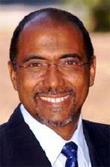
Geneva, 1 December, 2008 - On World AIDS Day the United Nations Secretary-General Ban Ki-moon has appointed Mr Michel Sidibé as the next Executive Director of the Joint United Nations Programme on HIV/AIDS (UNAIDS).
Congratulating Mr Sidibé on his appointment, outgoing Executive Director Dr. Peter Piot said, “The leadership of UNAIDS is in very capable hands. UNAIDS has a vital role to play in sustaining the progress made in the global response on AIDS.”
Accepting the appointment Mr Sidibé said, “I am indeed honoured to serve UNAIDS. The AIDS epidemic is not over in any part of the world. We have to ensure that there is strong and long term leadership and financial commitment to respond to AIDS that is grounded in evidence and human rights. I also look forward to working within the UN System and with partners from all corners of the world.”
Mr Sidibé currently serves as UNAIDS’ Deputy Executive Director – Programmes and Assistant Secretary-General of the United Nations. He brings 27 yeas of experience in international public health, development, and AIDS. With more than 20 years of service in the United Nations, he has worked for UNAIDS in Geneva since 2001 and with UNICEF in New York and in countries in Africa.
He has been the driving force behind promoting Universal Access to HIV prevention, treatment, care and support. As co-chair of the Global Task Team on improving AIDS coordination among multilateral donors and international donors, he led the effort to align multilateral contributions in support of national programmes and systems. Mr Sidibé has also served to advance the process of UN reform and strengthen partnerships between civil society, governments and people living with HIV.
For more information contact: Mahesh Mahalingam, telephone + 41 22 791 4918
Mr Michel Sidibé appointed UNAIDS Executive Direc
Press centre:
Download printable version (pdf, 36.1 Kb)
Speeches:
Read remarks by UN Secretary-General, Doha 1 December 2008
Contact:
Mahesh Mahalingam Tel:
Press Release
New HIV incidence analyses helps sharpen prevention efforts
28 November 2008 28 November 2008National HIV prevention programmes can become more successful using combination prevention approaches—this will help make the money work effectively during tough economic times
Geneva, 28 November 2008 – On the occasion of the 20th anniversary of the first observance of World AIDS Day, a new report by UNAIDS calls on countries to realign HIV prevention programmes through understanding how the most recent HIV infections were transmitted, and understanding the reasons why they occurred.
“Not only will this approach help prevent the next 1,000 infections in each community, but it will also make money for AIDS work more effectively and help put forward a long term and sustainable AIDS response,” said UNAIDS Executive Director Dr Peter Piot.
Findings from countries that have conducted studies on the modes of transmission and developed incidence estimates have highlighted three broad trends: First, patterns of epidemics can change over time and therefore such analyses must be undertaken at regular intervals. Second, in many sub-Saharan African countries with HIV high prevalence, new infections occur mainly as a result of having multiple sex partners and among discordant couples, that is where one partner is HIV positive and one is HIV negative. And finally, in many countries, even with high HIV prevalence among the general population, substantial numbers of new infections might also occur in populations at higher risk of exposure to HIV, including sex workers and their clients, injecting drug users, and men who have sex with men—groups who often receive little attention in prevention initiatives.
“The results of the modes of transmission study have assisted us in understanding the key drivers of the epidemic in Lesotho, said Keketso Sefeane, Chief Executive of the National AIDS Commission. “These results will provide input into the ongoing mid-term review of our National HIV and AIDS Strategic Plan”.
“We need the knowledge and experience of everything that offers us a better understanding of the epidemic so that we can act with more effectiveness and efficiency,” said Dr Joana Mangueira, Chief Executive of the National AIDS Coordinating Body of Mozambique. Based on these analyses, UNAIDS calls upon countries to adopt a new approach – combination prevention – which involves choosing the right mix of behavioural, biomedical and structural HIV prevention actions and tactics to suit a country’s actual epidemic and the needs of those most at risk, just as the right combination and proportions of drugs for antiretroviral treatment is now saving millions of lives.
“There is no single magic bullet for HIV prevention, but we can choose wisely from the known prevention options available so that they can reinforce and complement each other and cut back the wave of ongoing new HIV infections that is stripping away gains in treatment,” said Dr Piot.
Even though the number of new HIV infections has fallen in several countries, there are five new HIV infections for every two people put on treatment. As reported earlier in 2008, some 3 million people are now receiving antiretroviral treatment in low- and middle-income countries. The global financial crisis could lead to funding cutbacks, which, in turn, will have harmful impacts throughout the developing world generally and in the AIDS response in particular.
Global facts and figures on AIDS
- An estimated 33.0 million [30.3 – 36.1 million] people living with HIV worldwide.
- 2.7 million [2.2 million to 3.2 million] people newly infected in 2007.
- 2.0 million [1.8 million – 2.3 million] people died of AIDS in 2007.
About AIDS Outlook 09
AIDS Outlook is a new report from UNAIDS that provides perspectives on some of the most pressing issues that will confront policymakers and leaders as they respond to the challenges presented by AIDS in 2009. The report begins by highlighting some recent achievements and challenges in addressing HIV. It provides examples of how countries are applying modelling techniques to better understand HIV incidence, with the aim of reinvigorating HIV prevention. AIDS Outlook concludes with an introduction to combination HIV prevention and its application.
Contact
Mallory Smuts | +41 22 791 1697 | smutsm@unaids.org
About UNAIDS
UNAIDS is an innovative joint venture of the United Nations, bringing together the efforts and resources of the UNAIDS Secretariat and ten UN system organizations in the AIDS response. The Secretariat headquarters is in Geneva, Switzerland—with staff on the ground in more than 80 countries. Coherent action on AIDS by the UN system is coordinated in countries through UN theme groups, and joint programmes on AIDS. UNAIDS’ Cosponsors include UNHCR, UNICEF, WFP, UNDP, UNFPA, UNODC, ILO, UNESCO, WHO and the World Bank. Visit the UNAIDS Web site at www.unaids.org
New HIV incidence analyses helps sharpen preventi
Press centre:
Download printable version (pdf, 36.1 Kb)
Feature stories:
UNAIDS launches “AIDS Outlook” (26 November 2008)
Contact:
Mallory Smuts
Tel: +41 22 791 1697
Email: smutsm@unaids.org
Publications:
AIDS Outlook (pdf, 608 Kb)
Press Release
Giant red ribbons displayed on Olympic Stadium to inspire the response to AIDS in China and beyond
27 November 2008 27 November 2008Display on iconic “Bird’s Nest” highlights China’s commitment to the AIDS response
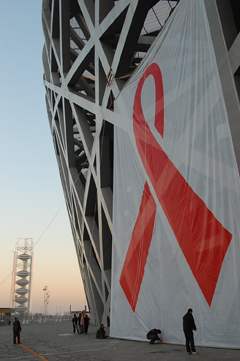
Beijing, 30 November 2008 – Chinese AIDS authorities, with the support of UNAIDS, today unveiled three giant red ribbons on the iconic National Stadium - colloquially known as ‘the Bird’s Nest’ - to mark World AIDS Day. The display illustrates China’s commitment to the AIDS response and in particular, to the fight against stigma and discrimination.
“The AIDS epidemic is not over anywhere. The AIDS ribbons on the Bird’s Nest symbolize the worldwide impact of the epidemic and the need for a unified global response,” said Dr. Peter Piot, UNAIDS Executive Director.
The red ribbon is the international symbol of AIDS awareness and is being worn by increasing numbers of people around the world to demonstrate their care and concern about AIDS issues. The ribbon is also a symbol of hope and offers symbolic support for those living with and affected by HIV and for those who have lost friends, family members and loved ones to AIDS.
Stigma and discrimination not only impact the lives of people living with HIV negatively, but also prevents people from talking openly about AIDS, which potentially places them and others at greater risk of HIV infection. People are also less likely to come forward to be tested and will hence not benefit from available treatment if they fear discrimination.
Research shows that there remain significant levels of stigma and discrimination among the general public in China. A recently published survey report presenting the results of a survey of more than 6000 respondents in six Chinese cities showed that:
- 30% of the respondents think children living with HIV should not be allowed to study at the same schools as children not living with HIV.
- Nearly 65% of the respondents would be unwilling to live in the same household with an HIV+ person and 48% of interviewees would be unwilling to eat with a person living with HIV.
“Stigma and discrimination are major obstacles in an effective response to AIDS. We need to engage all sectors of society in China to combat these issues and work together to stop the disease,” said Chen Zhu, Chinese Minister of Health.
Globally there are approximately 33 million people living with HIV. The latest estimates show that approximately 700,000 people are living with HIV in China, with approximately 50,000 new infections occurring in 2007. There were an estimated 20,000 AIDS related deaths in 2007. Sexual transmission is currently the most common way of HIV infection in China.
“Efforts such as these are essential in keeping the momentum in the AIDS response. I commend the Chinese government for illustrating their leadership in such an inspirational manner,” said Dr Piot.
Giant red ribbons displayed on Olympic Stadium to
Feature stories:
Justice Edwin Cameron adds a new dimension to China - Africa relations (31 Oct 2008)
UN Secretary General’s Special Envoy Dr Nafis Sadik urges a broader approach to AIDS in China (24 Oct 2008)
Focus on China’s AIDS response (19 Sep 2008)
Focus on China’s AIDS response (19 Sep 2008)
UNAIDS recognizes leaders in China’s AIDS response (17 Sep 2008)
Press Statement
UNAIDS expresses sadness over the passing of Swedish AIDS activist Jan-Olof Morfeldt
26 September 2008 26 September 2008Geneva, 26 September 2008 – It is with profound sadness that UNAIDS mourns the death of Jan-Olof Morfeldt, executive director of Noak’s Ark, a Swedish AIDS organization active in prevention and providing care and support for people living with HIV.
Jan-Olof passed away on 22 September 2008 after a short battle with cancer.
A pioneer in Sweden’s work around HIV, Jan-Olof was one of the founders of Noah’s Ark – Sweden’s first organization dedicated to AIDS – and devoted tremendous energy to reaching out to people living with HIV. He took a particular interest in exploring the links between AIDS and issues such as human rights and social and economic development.
Jan-Olof was an invaluable partner to UNAIDS. He will be remembered for his efforts to increase awareness of AIDS and for speaking out on the rights of people living with HIV, not only in Sweden but globally.
UNAIDS expresses sadness over the passing of Swed
Press Release
Development leaders point to significant progress in mother and child health and reduction of malaria and AIDS deaths in poorest nations
23 September 2008 23 September 2008Joint press release by GAVI Alliance, UNAIDS, The Global Fund to Fight AIDS, TB and Malaria, UNICEF
MDGs still within reach but stronger focus on the most marginalized will be required
NEW YORK, 23 September 2008 – Significant progress towards reducing child and maternal mortality is being made but to meet the Millennium Development Goals 4,5,6, strategies aimed at reaching the world’s most inaccessible, marginalized and vulnerable populations will be required, health leaders said today.
Ethiopia’s Minister of Health and the heads of four leading global health organisations, the GAVI Alliance, UNAIDS, the Global Fund to Fight AIDS, TB and Malaria, and UNICEF said that immunisation coverage, large-scale campaigns to prevent malaria and access to AIDS and malaria treatments have improved in developing countries thanks to more resources, new partnerships and technologies, stable, long-term donor support and improved coordination among health actors.
Ethiopia’s Minister Tedros Adhanom Ghebreyesus expressed his country’s strong commitment to achieving the MDGs and stated that “Ethiopia is on track to meet MDG 4” but must rely on strong donor support for its national health plan to continue its progress.
Increasing immunisation rates are recognised as essential to achieving MDG 4, a two-thirds reduction in childhood mortality by 2015, the experts said. Polio teeters on the edge of eradication; measles, a major killer of children in the poorest countries, has been dramatically reduced; malaria deaths have been cut by half in parts of Africa due to a concerted effort and expanded access and use of insecticide-treated bed nets; and the deadly Hib disease, a leading cause of meningitis, has been virtually eliminated in some parts of Africa. Last year, nearly one million more people were receiving antiretroviral therapy than in 2006, and today some three million people living with HIV are now on treatment globally – two million in sub-Saharan Africa.
Over the past eight years, global investments to fight malaria have increased ten-fold and AIDS investment eight-fold. The Global Fund alone has financed programmes worth US$11.4 billion since its creation in 2002. This unprecedented increase in resources is already showing encouraging results in reducing mortality and morbidity.
GAVI, a public-private alliance of major global health players has achieved success in delivering essential childhood vaccines in the developing world. Since its creation in 2000, GAVI’s support has prevented 2.9 million future deaths and protected 36.8 million additional children with basic vaccines. Immunisation rates have increased to more than 70% in many countries.
“Many more people are living longer and healthier lives today thanks to increased access to HIV treatment. This could not have happened without substantial financial investments and improved health systems,” said Dr Peter Piot, Executive Director, UNAIDS. “The challenge now is to sustain these gains and to ensure more equitable access for people who have been marginalized.”
“Recent statistics show that under-five mortality continued to decline in 2007,” said Ann M. Veneman, Executive Director UNICEF. “Continued success in measles and tetanus immunization rates, distribution of insecticide-treated nets (ITN), and prevention of mother to child transmission of HIV should maintain this positive trend.”
Even with these improvements, the experts agreed that to reach the MDGs and achieve equitable distribution of public health across social, gender, ethnic and geographic levels will be more complex and costly.
“However successful we have been so far, we still face major challenges in ensuring vaccines reach the most vulnerable children. It’s getting harder; the distances are getting greater and, in the areas we need to reach, the health systems are weakest. We must determine the best strategies with which to reach those girls and boys who are still missing out on immunisation,” said the GAVI Alliance’s Executive Secretary, Dr. Julian Lob-Levyt.
“The progress in fighting malaria alone can reduce child mortality enough to reach the MDG 4 target,” Dr. Michel Kazatchkine, the Executive Director of the Global Fund said. “However, the great progress we have seen recently must be consolidated into lasting, sustainable progress in mother and child healthcare.”
Pointing to the lessons learned through the AIDS response, Dr. Piot said: “Involving civil society and ensuring a rights-based approach can help strengthen health systems and deliver results to the people.”
The experts also argued that development should be led by national priorities and a country’s long-term plans.
“Altering business-as-usual and embracing a country-driven approach should be a core principle for development agencies, donor organisations and civil society organisations worldwide,” said Lob-Levyt.
For more information, contact:
Jeffrey Rowland, GAVI Alliance
+41 79 240 4559
jrowland@gavialliance.org
Edward Mishaud, UNAIDS
+41 22 791 5587
mishaude@unaids.org
Jon Lidén, The Global Fund to Fight AIDS, Tuberculosis and Malaria
+41 22 791 1723
jon.liden@theglobalfund.org
Brian Hansford, UNICEF
+1 212 326 7269
bhansford@unicef.org
The GAVI Alliance (formerly the Global Alliance for Vaccines and Immunisation) is a public-private partnership of major stakeholders in immunisation. It includes developing country and donor governments, the World Health Organization, UNICEF, the World Bank, the vaccine industry in both industrialised and developing countries, research and technical agencies, civil society, the Bill & Melinda Gates Foundation and other philanthropists.
UNAIDS is an innovative joint venture of the United Nations, bringing together the efforts and resources of the UNAIDS Secretariat and ten UN system organizations in the AIDS response. The Secretariat headquarters is in Geneva, Switzerland—with staff on the ground in more than 80 countries. Coherent action on AIDS by the UN system is coordinated in countries through UN theme groups, and joint programmes on AIDS. UNAIDS’ Cosponsors include UNHCR, UNICEF, WFP, UNDP, UNFPA, UNODC, ILO, UNESCO, WHO and the World Bank. Visit the UNAIDS Web site at www.unaids.org
The Global Fund to Fight AIDS, TB and Malaria is a unique global public/private partnership dedicated to attracting and disbursing additional resources to prevent and treat HIV/AIDS, tuberculosis and malaria. This partnership between governments, civil society, the private sector and affected communities represents a new approach to international health financing. The Global Fund works in close collaboration with other bilateral and multilateral organizations to supplement existing efforts dealing with the three diseases.
To date, the Global Fund has committed US$ 11.4 billion to more than 550 programs in 136 countries to support aggressive interventions against AIDS, tuberculosis and malaria. Programs supported by the Global Fund have provided AIDS treatment for 1.75 million people, TB treatment for 3.9 million people, and by distributing 59 million insecticide-treated bed nets for the prevention of malaria worldwide. The Global Fund provides a quarter of all international financing for AIDS globally and two-thirds of funding for TB and malaria.
UNICEF is on the ground in over 150 countries and territories to help children survive and thrive, from early childhood through adolescence. The world’s largest provider of vaccines for developing countries, UNICEF supports child health and nutrition, good water and sanitation, quality basic education for all boys and girls, and the protection of children from violence, exploitation, and AIDS. UNICEF is funded entirely by the voluntary contributions of individuals, businesses, foundations and governments.
Development leaders point to significant progress
Partners:
GAVI Alliance
The Global Fund to Fight AIDS, TB and Malaria
UNICEF
Press centre:
Download printable version (pdf, 50kb)