Documents
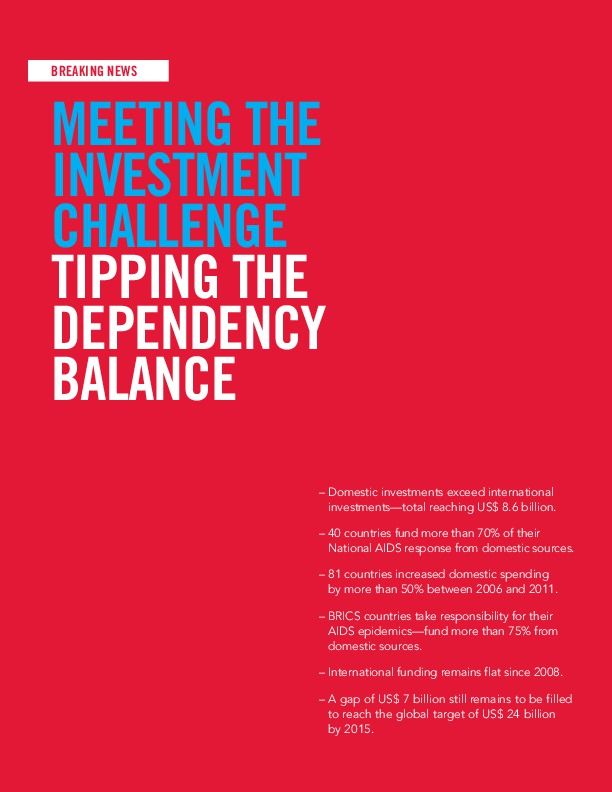
Sex workers
16 October 2014
Evidence shows that HIV prevalence among sex workers is 12 times greater than among the general population. Even in very high prevalence countries, HIV prevalence among sex workers is much higher than among the general population. An analysis of 16 countries in sub-Saharan Africa in 2012 showed a pooled prevalence of more than 37% among sex workers. Stigma and discrimination, violence and punitive legal and social environments are key determinants of this increased HIV vulnerability. Punitive environments have been shown to limit the availability, access and uptake of HIV prevention, treatment, care and support for sex workers and their clients.
Documents
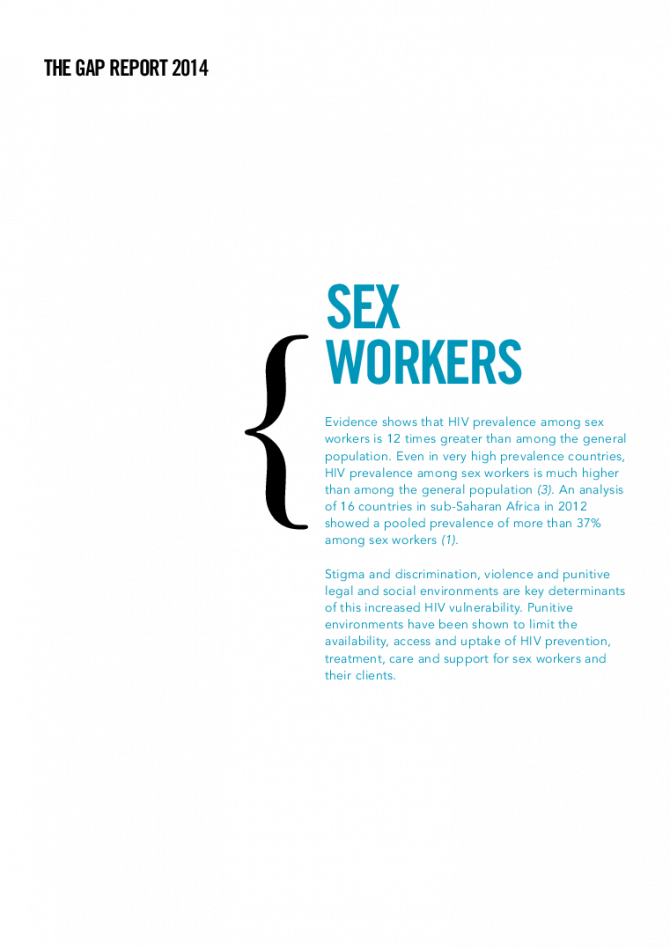
People who inject drugs
16 October 2014
It is estimated that worldwide there are nearly 12.7 million people who inject drugs. Approximately 1.7 million, or 13%, are also living with HIV. Injecting drug use is found in nearly every country. Typically, when heroin injection reaches a new community, there is an exponential increase in HIV transmission. People who inject drugs continue to face punitive legal environments, a variety of human rights abuses and have poor access to services; these and other factors combine to exacerbate their risks of acquiring HIV.
Documents
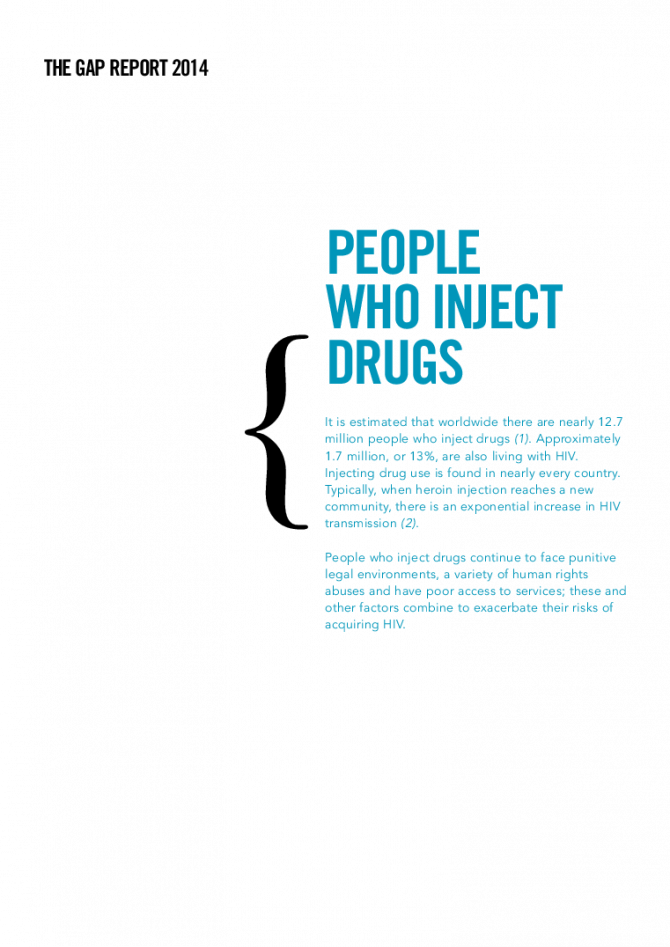
Migrants
16 October 2014
There are approximately 231.5 million international migrants. Combined with some 740 million internal migrants, this means that there are about 1 billion people on the move at any given time. Migration can place people in situations of heightened vulnerability to HIV, and has been identified in certain regions as an independent risk factor for HIV (3–5). In a majority of countries, undocumented migrants face complex obstacles, such as a lack of access to health-care services or social protection. Social exclusion also leaves migrants highly vulnerable to HIV.
Documents
Prisoners
16 October 2014
Every year, 30 million people spend time in prisons or closed settings and 10 million are incarcerated at any given point in time. Virtually all will return to their communities, many within a few months to a year. Health in prisons and other closed settings is thus closely connected to the health of the wider society. Prisons are often overcrowded due to inappropriate, ineffective and excessive criminal laws. People who are already more likely to be exposed to HIV, including people who use drugs, sex workers, and gay men and other men who have sex with men, are overrepresented in prisons and other closed settings. Overcrowding increases vulnerability to infections such as HIV, tuberculosis and hepatitis. Prisoners are also at risk of violence and disruption in HIV prevention and treatment services, including access to harm reduction measures.
Documents
Adolescent girls and young women
16 October 2014
Worldwide, there are approximately 880 million adolescent girls and young women aged 15–24 years. Despite making up 12% of the world’s population, this population is often left without a voice or control of their own bodies. Gender-based violence and limited access to health care and education, coupled with systems and policies that do not address the needs of young people, are obstacles that block adolescent girls and young women from being able to protect themselves against HIV, particularly as they transition into adulthood.
Documents
Gender matters: overcoming gender-related barriers to prevent new HIV infections among children and keep their mothers alive
14 October 2014
After more than 30 years of the HIV epidemic—and an unprecedented medical and social response—discrimination, violence, harmful gender norms and related stigma continue to pose challenges to an effective HIV response. The findings of these assessments indicate that gender-related barriers pose significant obstacles to the uptake of services that prevent new HIV infections among children and keep mothers alive—obstacles that require urgent attention. Without dedicated attempts to overcome these gender-related barriers, current efforts will meet with limited success, and the needs and rights of both women and children will remain compromised.
Documents
People living with HIV
07 October 2014
Since the start of the AIDS epidemic, more than 78 million people have been infected with HIV and 39 million have died. Acquiring HIV no longer means certain death. A person on HIV treatment in a high-income setting now has nearly the same life expectancy as a person who does not have the virus. However, only two out of five people living with HIV have access to antiretroviral therapy. Among people who do have access, great inequities exist. People living with HIV are being left behind because they are not benefitting from health care, employment, education or social protection. This is often due to stigma, discrimination, prohibitive laws and policies or a lack of services.
Documents
2013 progress report on the Global Plan towards the elimination of new HIV infections among children by 2015 and keeping their mothers alive
25 June 2013
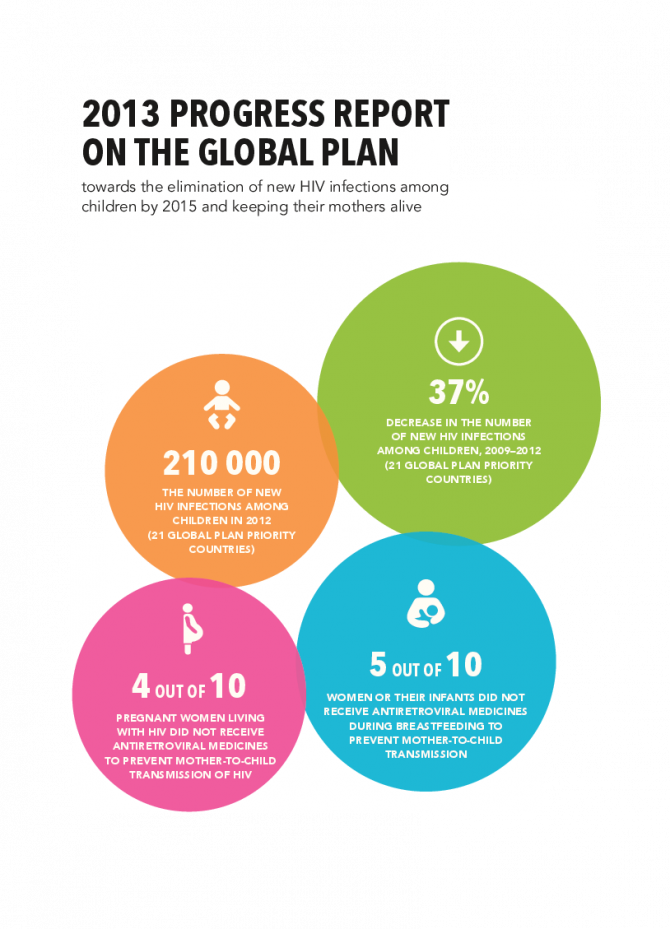
We are encouraged by the progress made by countries in reducing the number of children newly infected with HIV. Two years have passed since the launch of the Global Plan, when countries embraced the goal of moving towards eliminating new HIV infections among children and keeping their mothers alive. Since then, there has been momentum in scaling up access to HIV prevention and treatment services for women and children – especially in the 21 Global Plan priority countries in sub-Saharan Africa. Ghana and South Africa have led the way, with the largest decreases in the numbers of new HIV infections among children from 2009 to 2012.
Documents
CrowdOutAIDS Strategy recommendations for collaborating with a new generation of leaders for the AIDS response
24 April 2012
This document provides a set of recommendations for strategic actions that the UNAIDS Secretariat should undertake to collaborate effectively with a new generation of young leaders to ensure that the ambitious goals set by world leaders for the AIDS response are reached by 2015. The recommendations were compiled by an independent, youth-led Drafting Committee, in dialogue with the UNAIDS Secretariat, on behalf of more than 5000 young people who took part in CrowdOutAIDS. This document represents the first crowdsourced strategy in the history of the UN.
Documents
Breaking news supplement: meeting the investment challenge
18 July 2012
Meeting the investment challenge is a supplement of the new UNAIDS report Together we will end AIDS and provides additional information on domestic and international resources for AIDS. The supplement highlights the fact that domestic investments have surpassed global giving in 2011.