

Feature Story
AIDS focus at ICC South Africa cricket championship
10 сентября 2007
10 сентября 2007 10 сентября 2007Aussie stars support loveLife project

Nathan Bracken and Brad Hodge took time out of their preparations for the ICC World Twenty20 2007 to visit a project as part of the ICC’s work with UNAIDS and UNICEF to raise awareness on AIDS.
“Cricket can help combat HIV and AIDS”, says Graeme Smith
The Proteas skipper Graeme Smith is not only upbeat about victory in the ICC 2007 World Twenty20 but also optimistic about how cricket can add to combating HIV among children and young people.
Promoting sport and HIV prevention

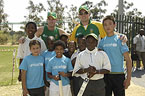
“What do you want to do when you grow up?” “Play cricket for South Africa!” the six boys cried out in unison when asked about their future aspirations. The group of 9- and 10-year-old ‘mini-cricketers’ from Alexander Township on the outskirts of Johannesburg, were at Wanderers to meet some of their heroes from the Bangladeshi cricket team, here to participate in the ICC World Twenty20 2007, taking place in South Africa from 11 to 24 September.
McCullum backs HIV and AIDS campaign
Neil McCullum wears two caps – star cricketer for Scotland on the pitch as well as a physical education teacher.
Squeezing in training sessions and international cricket play when his day job allows, Neil also manages to make time in his busy schedule to support the ICC’s HIV awareness programme by visiting children infected with or affected by HIV.
Pakistan cricket team talks about HIV prevention
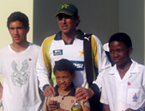
Bats flashing. Balls flying. The three young boys, their fingers intertwined in the links of the wire-mesh fence, watched mesmerized as some of their cricket idols trained on a pitch just outside of South Africa.
Cricket chief and star show AIDS solidarity in India
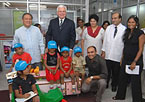
Head of the International Cricket Council (ICC), Malcolm Speed joined Indian star Virender Sehwag and Cecilio Adorna, UNICEF India country representative, in a visit to the Antiretroviral treatment centre of the Kalawati Saran Children’s Hospital in New Delhi at the end of August. The visit was part of the ICC's partnership with UNAIDS and UNICEF to raise awareness and reduce stigma around AIDS and the impact of AIDS on children through the global campaign, UNITE FOR CHILDREN UNITE AGAINST AIDS.
Stars back AIDS awareness campaign at ICC World Twenty20 in South Africa
International cricketers will highlight the situation of children and young people living with HIV as part of a far-reaching AIDS awareness campaign during the 2007 World Twenty20 world cricket championship in South Africa.
AIDS focus at ICC South Africa cricket championsh
Related
Feature Story
International Health Partnership launch
05 сентября 2007
05 сентября 2007 05 сентября 2007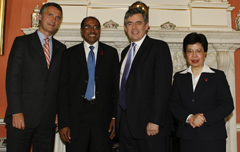 From left to right: Norwegian Prime Minister
 Jens Stoltenberg, UNAIDS Deputy Executive
Director Michel Sidibe, British Prime Minister
Gordon Brown, and Dr Margaret Chan, Director-
General of the World Health Organization
(Photo: Richard Lewis/Crown Copyright)
Leaders from donor countries, funding organizations, developing nations, and international agencies came together in London on Wednesday 5 September to launch a new international partnership to help improve healthcare systems in the developing world.
Led by the government of the United Kingdom, the International Health Partnership was launched formally by UK Prime Minister Gordon Brown at an event at 10 Downing Street, London.
The initiative aims to increase donor, country and international coordination on health and development issues in order to drive forward work on the health-related Millennium Development Goals (MDGs) – reducing child mortality, improving maternal health, and halting and reversing the spread of HIV.
Following a roundtable discussion focusing on implementation, participants signed a compact to work within countries’ national plans and improve coordination in order to address problems related to health worker staffing, infrastructure, health commodities, logistics, tracking progress, and effective financing. Partners will work together to ensure that health plans are well-designed, well-supported and well-implemented and to make their work more effective and better aligned with developing countries’ established priorities.
In a statement released on Wednesday 5 by the United Kingdom, Prime Minister Gordon Brown said, “There is no greater cause than that every man, woman and child in the world should be able to benefit from the best medicine and healthcare. Today we come together – donor governments, health agencies and developing countries – with the certainty that we have the knowledge and the power to save millions of lives through our efforts.”
In an initial phase, seven ‘first wave’ countries – Burundi, Cambodia, Ethiopia, Kenya, Mozambique, Nepal and Zambia – have joined the partnership and participated in the London event. Also attending were Heads of State and ministers from donor countries such as Norway and Canada and senior figures from international agencies, including UNAIDS. Philanthropist Bill Gates attended on behalf of the Bill and Melinda Gates Foundation.
Speaking at the event, UNAIDS Deputy Executive Director Michel Sidibe underlined the importance of the partnership. “To improve global health, it is critical that we have better coordination and mutual accountability from all parties: countries, donors, and the international organizations.” he said. “The International Health Partnership will be crucial in order to deliver on our commitments to the targets of Universal Access to HIV prevention, treatment, care, and support, and in reaching all the health-related Millennium Development Goals. The global response to AIDS has shown us that increased coordination can lead to progress. We also need to stay focused on the concrete results that we are all committed to, at the same time putting in place predictable, scaled-up financing for a long-term sustainable response.”
A joint statement from international health partners – UNAIDS, The GAVI Alliance, Global Fund to Fight Aids, Tuberculosis and Malaria, UNICEF, United Nations Population Fund, World Bank and the World Health Organization – welcomed the initiative: “We, as international health partners committed to improving health and development outcomes in the world, welcome and fully support the International Health Partnership's mission to strengthen health systems, and we congratulate those involved for setting it in motion.”
“We will be coordinated and accountable in this work and take every opportunity to capture knowledge and lessons learned in improving health programmes,” the partners stated.
The International Health Partnership is the first of several complementary initiatives being launched by donor countries over the next several weeks as part of a new Global Campaign for the Health Millennium Development Goals. More information will be featured in the coming weeks on the UNAIDS website.
Links:
Read the joint statement by international health partnersRead the UK press release
More on the International Health Partnership
Related


Feature Story
Faith leaders join in Nigeria on AIDS
04 сентября 2007
04 сентября 2007 04 сентября 2007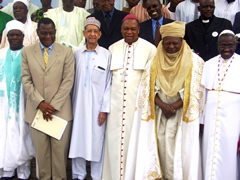
Relegious and government leaders at the opening
ceremony of the Forum.
Photo credits: UNAIDS/S. Aghaeze
Over 150 leaders from all denominations of Christian and Islamic faith communities came together in Abuja, Nigeria to take stock of faith-based organizations’ achievements and good practices within the AIDS response in the country and to examine challenges faced for the future. Hosted by the National Faith-Based Advisory Committee on AIDS – NFACA, the Forum was opened by the highest Muslim and Christian leaders in the country, the Sultan of Sokoto, Alhaji Muhammadu Saad Abubarkar III, represented by Dr Lateef Adegbite, Secretary-General of the Nigeria Supreme Council for Islamic Affairs and Most Reverend Dr John Onaiyekan, President of the Christian Association of Nigeria.
“I want the Christian and Muslim communities in this Forum to come up with a stronger position on HIV prevention, to do more for people infected and affected, and to be more involved in the campaign against stigma and discrimination,” Dr Adegbite said in his opening address.
Most Reverend Onaiyekan pleaded for more recognition and a commensurate allocation of resources to the faith-based AIDS programmes. “There is growing acknowledgement and appreciation– including among the United Nations agencies – of the tremendous role being played by religious institutions and organizations, especially in the poorer countries of the world. However, put bluntly, the money is not going to those who are doing most of the work. It is hoped that this anomaly will be redressed in good time,” he stated.
The bi-annual Forum is the third to have taken place in Nigeria to strengthen the faith-based response to AIDS in the country. The forums provided unique avenues for the Christian and Islamic faiths to interact and to strategize on their role in the national AIDS response.
At the 2007 Forum, the participants made recommendations on the way forward and on policy and strategic issues relating to HIV prevention, testing, care and support, and gender in the Forum’s communiqué. They agreed that faith-based organizations should identify their areas of competence and do more of what they do best, including HIV prevention, promoting and providing services and caring for people living with HIV. The religious leaders and scholars called for the Nigerian government to accelerate access to free medical treatment and care for all people living with HIV who need it.
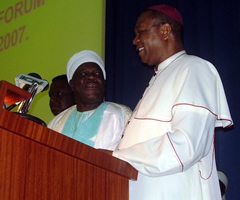
Most Reverend J. Onaiyekan and Dr Lateef Adegbite
declaring the Forum opened.
Photo credit: UNAIDS/S. Aghaeze
On the issue of HIV testing and counseling, the faith leaders committed to mobilizing their communities to access services on a voluntary and confidential basis as they had been exhorted to by Professor Babatunde Osotimehin, Director-General of the National Agency for the Control of AIDS, in his update on the status of the national response: “HIV generates harmony among faith communities. We expect this Forum to make a strong statement on how to mobilize communities to access voluntary and confidential HIV counseling and testing. Compulsory testing should not be in your vocabulary,” he said.
The Forum was organized by the National Agency for the Control of AIDS and supported by UNFPA and UNAIDS.
UNAIDS Country Coordinator Warren Naamara gave a goodwill message to participants of the Forum, underlining the importance of religious leader’s engagement in the AIDS response. “Your influence on opinions, policies, practices and attitudes reaches from the grassroots and remote communities to the very top level of government and decision-makers. Your compassion and support has always embraced the disenchanted and the vulnerable, the sick, the children and the weak in need of assistance,” he said. “Your speaking out against stigma and discrimination, against rejection and marginalization of people living with HIV, will make a world of difference to the everyday life of people infected, within and beyond their religious communities,” he added.
Links:
Read the opening address by Most Rev. John Onaiyekan, President of the Christian
Association of Nigeria
Read the goodwill message by Dr. Warren Naamara, UNAIDS Country Coordinator
Read the Forum Communiqué
Related
 Leave no one behind and that includes people who use drugs
04 мая 2023 года.
 Dangerous inequalities and overcoming them
18 ноября 2022 года.

Feature Story
Cricket chief and star show AIDS solidarity in India
04 сентября 2007
04 сентября 2007 04 сентября 2007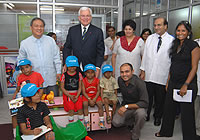
ICC chief Malcolm Speed (standing in centre),
cricketer Virender Sehwag (crouching) and
UNICEF Representative Cecilio Adorna (left)
with childrenand staff at the Kalawati Saran
Children’s Hospital in New Delhi.
Photo credits: UNICEF India/2007/Biswas
Head of the International Cricket Council (ICC), Malcolm Speed joined Indian star Virender Sehwag and Cecilio Adorna, UNICEF India country representative, in a visit to the Antiretroviral treatment centre of the Kalawati Saran Children’s Hospital in New Delhi at the end of August. The visit was part of the ICC's partnership with UNAIDS and UNICEF to raise awareness and reduce stigma around AIDS and the impact of AIDS on children through the global campaign, UNITE FOR CHILDREN UNITE AGAINST AIDS .
As well as playing an impromptu game of cricket with a group of young children, the delegation also had the opportunity to meet with children and mothers living with HIV.
“Cricket is not all about the game,” said Malcolm Speed. “Having a social awareness programme associated with it is not only an excellent way to reach out to the cricket fans but also an uplifting experience for the cricketers as well, and puts everything into perspective,” he added.
Virenda Sehwag added: “It is important for every one of us to spend time children living with HIV. It is a pleasure to be associated with the cause. When celebrities endorse a noble cause like this, it has more impact.”
In India, an estimated 70,000 children below the age of 15 are living with HIV. Worldwide, every day there are estimated to be nearly 1,800 new HIV infections in children under 15.
AIDS and young people will be a key theme of the upcoming ICC Twenty 20 World Championships being hosted by South Africa from 11 to 24 September as part of the unique partnership between the ICC, UNICEF, UNAIDS, the African Broadcast Media Partnership and the Kaiser Family Foundation, using the cricket tournament to draw attention to the impact of AIDS on the world’s children.
Links:
Watch video footage of Malcolm Speed’s visit to the Indian Children’s hospital | High | Low
Read more on the ICC Twenty20 World Championships
Read more on Unite for Children: Unite against AIDS
Related
 Young role models combat HIV stigma in Central Asia
22 июня 2023 года.
 The urgency of HIV prevention among adolescent girls and young women
01 июня 2023 года.
 A rainbow of hope for LGBTQI+ people in rural Japan
17 мая 2023 года.
Feature Story
Stars back AIDS awareness campaign at ICC World Twenty20 in South Africa
04 сентября 2007
04 сентября 2007 04 сентября 2007

The cricket World Twenty20 will focus
on children, young people and HIV.
Logo credits: ICC
International cricketers will highlight the situation of children and young people living with HIV as part of a far-reaching AIDS awareness campaign during the 2007 Twenty20 world cricket championship in South Africa.
Players, participating in the competition from 11 to 24 September in Johannesburg, will promote HIV prevention messages as part of the International Cricket Council's (ICC) ongoing partnership with UNAIDS and UNICEF.
Cricket fans will also be targeted by loveLife - South Africa's national youth HIV prevention programme - who are also partners in the initiative.
Top players, including South Africa captain Graeme Smith, Kumar Sangakkara of Sri Lanka and India's Yuvraj Singh will feature in public service announcements for the 'Unite for Children, Unite Against AIDS' campaign highlighting how HIV can affect the lives of young people. Broadcasters from 105 countries will be encouraged to use the messages that will be screened to fans on giant screens at the 27 matches during the tournament.
Other stars will visit UNICEF and loveLife community-based project activities in Cape Town, Durban and Johannesburg to promote AIDS awareness to young people and encourage them to develop life-skills to avoid HIV infection.
Players also plan to wear red ribbons in selected matches to demonstrate their support for people living with HIV.
Sri Lanka wicketkeeper-batsman Kumar Sangakkara said: "I hope people will listen to cricketers, I hope that our support helps and that it brings a different perspective to building interest in these issues and raising awareness. It's important to raise awareness any way that you can and if different voices and fresh faces help then that is good."
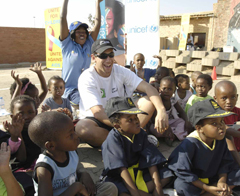
New Zealand cricketter Ross Taylor visiting
community-based project in South Africa.
Photo credits: ICC/Rebecca Hearfield
South Africa star AB de Villiers added: "I have a very soft heart and to see those children and the way they cope with HIV puts a lot of what I do as a cricketer in perspective. I have been involved in a few projects to do with 'Unite for Children, Unite Against AIDS' in different parts of the world where we have toured and it has been a very worthwhile thing to do.
"I feel a real calling to help wherever I can. The issue of AIDS is close to my heart because of the impact it has had on my country but I think we have a responsibility as high-profile sportsmen to do what we can as it helps to open eyes and it inspires people to do something about the problem. Awareness is a big factor in helping prevent the spread of HIV so the more we talk about it and keep it in the public eye the better."
India all-rounder Yuvraj Singh added: "Any social cause is important for top players playing any sport because people look up to you and you need to make them understand and educate them about issues relating to HIV. Through the ICC working with UNAIDS and UNICEF, we can deliver important messages to people all over the world."
Michael Hussey of Australia will also be supporting the campaign. He said: "When I visited an education project in the Caribbean during the ICC Cricket World Cup, I saw for myself the importance of educating young people on HIV and AIDS. UNICEF and UNAIDS play a vital role in addressing this epidemic and by supporting this partnership, by meeting young people and raising awareness of HIV and AIDS, I hope I can personally play a part in reducing discrimination."
As well as player-related activities, the 500 volunteers working at the event have all received HIV and AIDS education from loveLife health trainers, supported by UNAIDS. There will also be advertising boards at the grounds promoting the 'Unite for Children, Unite Against Aids' campaign.
The African Broadcast Media Partnership Against HIV/AIDS - a coalition of more than 50 African broadcast companies - will also be supporting the partnership, promoting player visits and event activities related to the partnership.
Cricket is popular in many of the countries that are most impacted by AIDS, including India and South Africa.
“UNAIDS has worked for many years with the ICC and the partnership has helped us reach large audiences with HIV prevention messages. Sport is a powerful force for change and the cricket players are great roles models helping us not only promote HIV prevention but also tackle the stigma and discrimination associated with HIV and AIDS,” said Andy Seale, team leader for civil society partnerships at UNAIDS.
Part of this story first appeared on the ICC web site: http://www.icc-cricket.com/
Links:
top cricketers talking about how children and young people are affected by HIV
Read feature story: Cricket chief and star show AIDS solidarity in India
Read more on the ICC Twenty20 World Championship
Read more on Unite for Children: Unite against AIDS
Related
Young role models combat HIV stigma in Central Asia
22 июня 2023 года.
The urgency of HIV prevention among adolescent girls and young women
01 июня 2023 года.
 Thailand’s Mplus: HIV services delivered in style
13 декабря 2022 года.
Feature Story
Разъяснение методологии
30 августа 2007
30 августа 2007 30 августа 2007Разъяснение методологии
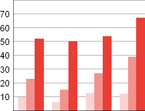
Знание состояния эпидемии и мониторинг программных ответных мер очень важны для понимания направления развития эпидемии и того, достигают ли программы желаемого результата. Для того чтобы «знать свою эпидемию», ЮНЭЙДС рекомендует использовать методологии, инструменты и программное обеспечение, которые регулярно пересматриваются и адаптируются с учетом развивающихся эпидемий и меняющихся потребностей.needs.
Improving national and regional estimates
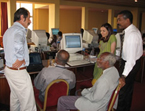
Between March and June 2007, national epidemiologists, analysts and heads of AIDS programmes from 124 countries have taken part in specialist UNAIDS training to improve and refine country HIV estimates.
Eleven regional training workshops have been conducted around the world to bring epidemiologists up to date with the latest developments in estimates tools and software packages including updated assumptions based on new evidence from research and added new features.
Results of recent population-based surveys

By mid 2007 a total of 26 countries in sub-Saharan Africa, two in the Caribbean and two in Asia had conducted nationally representative population-based surveys with HIV prevalence measurement. The results from these surveys are helping UNAIDS and goverments to refine and update AIDS estimates as new information becomes available.
2.5 million people living with HIV in India

As part of its continuous efforts to know its epidemic better, India’s National AIDS Control Organisation (NACO), supported by UNAIDS and WHO, have used improved data from more sources and revised the methodology used to analyse this new data to get a better understanding of the AIDS epidemic in India.
Read press release (en | ru | fr | es )
Related
 Eastern Europe and Central Asia may face an accelerated increase in new HIV infections and AIDS-related deaths because of the humanitarian crisis gripping the entire region
28 октября 2022 года.
 Many key populations avoid health services
21 февраля 2022 года.
 New indicators added to Key Populations Atlas
06 января 2022 года.
Feature Story
Funding estimates for AIDS research and development
30 августа 2007
30 августа 2007 30 августа 2007
The HIV Vaccines and Microbicides Resource
Tracking Working Group was created to generate
and disseminate high-quality, detailed and
comparable data on annual investments in
preventive HIV vaccine and microbicide research
and development
For a comprehensive response to AIDS, developing additional HIV prevention methods and tools to prevent HIV – such as HIV vaccines and microbicides -- is a key component.
The continuing research and development of such prevention technologies relies on adequate and efficient funding and spending – and supporting this, high quality, detailed data on investment in this area of the AIDS response is critical.
In 2004, UNAIDS, the Alliance for Microbicide Development (AMD), the AIDS Vaccine Advocacy Coalition (AVAC) and the International AIDS Vaccine Initiative (IAVI) established a collaborative project to track funding for HIV vaccines and microbicide research and development.
The HIV Vaccines and Microbicides Resource Tracking Working Group was created to generate and disseminate high-quality, detailed and comparable data on annual investments in preventive HIV vaccine and microbicide research and development and policy and advocacy activities. These data can be used to monitor current levels of effort; identify trends in investment, spending, and research focus; identify areas needing more resources and effort; assess the impact of public policies aimed at increasing investment in new prevention technologies; and provide a fact base for policy advocacy on research and development investments and allocations.
The collaboration aims to monitor progress in the implementation of the Declaration of Commitment on HIV/AIDS, adopted at the United Nations General Assembly Special Session (UNGASS) on HIV/AIDS in 2001. This declaration contains a number of global and national indicators that are being monitored on an annual basis by UNAIDS and others. The second of the global commitment and action indicators, is the “Amount of public funds available for research and development of vaccines and microbicides.”
In August 2007, the Working Group released a summary of the resource tracking efforts – the most up to date available data on sources of global funding and its allocation. These figures are produced to support larger resource needs estimations for the global AIDS response as a whole, which will be published in the later half of 2007
Among findings within the 2007 Working Group estimates on research and development are that while the current levels of funding are significant, there is a critical need to sustain and increase research and development investments for preventive vaccines, microbicides and other new options to optimally accelerate the development of and ensure eventual access to these HIV prevention tools.
As stated in the latest estimates report from the Working Group, in 2006, total global investment in preventive HIV-vaccine research and development was an estimated US$933 million, a 23% increase over 2005 funding levels. This increase in funding can primarily be attributed to new research initiatives funded through the US National Institutes of Health (NIH), Canada, the European Commission (EC) and the Bill & Melinda Gates Foundation.
However, financing needs are likely to remain substantial in the coming years, as funding is needed to explore new approaches to vaccine and microbicide design; bring novel candidates into the pipeline; support clinical trials to test the safety, immunogenicity and efficacy of new products; and translate research results, such as those for adult male circumcision, into policies and programmes.
“The HIV Vaccines and Microbicides Resource Tracking Working Group group has systematically documented the amount of financial resources needed and the actual expenditures from public sources in research and development. This is a notable example in the resource tracking world because of the good quality of its results combined with a very dynamic group that is able to translate the financial estimates into a powerful advocacy tool”, said Jose Antonio Izazola-Licea, UNAIDS Senior Adviser, Resource and Finance Analysis.
Links:
Read the full document on latest estimates on research and development investment and spending
Visit the Working Group's web site
Related
 Resources and funding for an effective AIDS response
10 июня 2021 года.
 Addressing inequalities to end AIDS: 10 years to 2030
10 июня 2021 года.
 UNAIDS shows that with the right investment we can end AIDS by 2030
26 мартаа 2021 года.
Feature Story
Визит специального представителя ЮНЭЙДС Мэри Фишер в Замбию
29 августа 2007
29 августа 2007 29 августа 2007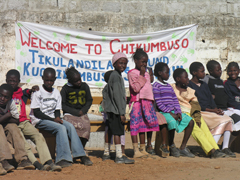
Во время своего пребывания в Лусаке г-жа Фишер
посетила несколько приютов для уличных детей
и уязвимых девочек, включая «Фонтан надежды»
и учебный центр Умойо (Umoyo).
В рамках своей работы в качестве специального представителя ЮНЭЙДС г-жа Мэри Фишер, активист по борьбе со СПИДом, общественный деятель, писательница и художница, в августе посетила Лусаку, Замбия, с целью повышения информированности о СПИДе и усиления поддержки различным инициативам в области СПИДа в стране. Путешествуя с группой руководителей американской медицины, бизнеса и благотворительных фондов, г-жа Фишер посетила несколько учреждений в столице страны, включая приют для уличных детей, общинную школу и учебный центр для девочек.
Во время своего пребывания в Лусаке г-жа Фишер посетила несколько приютов для уличных детей и уязвимых девочек, включая «Фонтан надежды» и учебный центр Умойо (Umoyo). Эти организации предоставляют информацию о ВИЧ, бесплатные медицинские услуги, материалы о профилактике ВИЧ и образовательную помощь членам местных общин.
В проекте Чикумбусо (Chikumbuso) для женщин и сирот г-жа Фишер и ее коллеги побеседовали с матерями-одиночками и вдовами, чтобы больше узнать об их приносящих доход видах деятельности, например, изготовлении браслетов, для поддержания их семей. Женщины в проекте Чикумбусо также собирают пустые пластиковые пакеты и плетут из них кошельки и сумочки, которые продаются на еженедельном «блошином рынке» в Лусаке. По словам г-жи Фишер, доход, полученный в рамках этого проекта, «не только помогает [женщинам] поддерживать самих себя и свои семьи, но становится источником гордости и надежды».

В рамках своей работы в качестве
специального представителя ЮНЭЙДС
г-жа Мэри Фишер посетила Лусаку,
Замбия, с целью повышения
информированности о СПИДе и
усиления поддержки различным
инициативам в области СПИДа в стране
Фото: ЮНЭЙДС/М. Аон
В ходе своей поездки г-жа Фишер на приеме в Доме правительства также встретилась с Морин Мванаваса, первой леди Замбии и основательницей «Общинной инициативы Морин Мванаваса». Во время приема первая леди подтвердила свою поддержку работе Мэри Фишер в сфере адвокации и заверила, что политические лидеры Замбии «привержены деятельности, направленной на то, чтобы остановить распространение ВИЧ». Будучи председателем Организации первых леди Африки и основательницей ее национального отделения в Замбии, «Общинной инициативы Морин Мванаваса», г-жа Мванаваса особенно активно работает над повышением информированности и инициированием программ по противодействию ВИЧ не только в Замбии, но и по всей Африке.
Уровень распространенности ВИЧ в Замбии остается высоким – 18%, однако в последние годы страна добилась значительного прогресса; выросло число людей, получающих антиретровирусное лечение, расширяются программы по профилактике, лечению, уходу и поддержке в связи с ВИЧ в городах и сельской местности.
Мэри Фишер является специальным представителем ЮНЭЙДС с мая 2006 г. Ее деятельность направлена на повышение информированности о профилактике, лечении, уходе и поддержке в связи с ВИЧ, с уделением особого внимания женщинам и детям. Фишер также является основательницей Фонда Мэри Фишер по клиническим исследованиям и образованию в связи со СПИДом (КИОС) при Алабамском университете в Бирмингеме и активным членом руководящего совета Глобальной коалиции по проблемам женщин и СПИДа.
Ссылки:
More information on Mary Fisher's activities as a UNAIDS Special Representative
Related
 The power of women supporting women - Mentor program for women living with and affected by HIV in Kazakhstan
13 сентября 2024 года.
The urgency of HIV prevention among adolescent girls and young women
01 июня 2023 года.
 The First Fallen but We Will Overcome
03 ноября 2022 года.
Feature Story
Первая ассоциация людей, живущих с ВИЧ в Пакистане
24 августа 2007
24 августа 2007 24 августа 2007Новая национальная инициатива ЮНЭЙДС в Пакистане направлена на обеспечение того, чтобы общины и правительство прислушивались к мнению экспертов – людей, живущих с ВИЧ, – принимая решения о лечении, уходе, поддержке и профилактике.
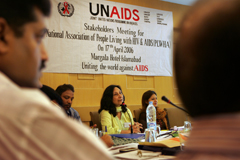
Ассоциация начала свою деятельность во
Всемирный день борьбы со СПИДом 2006 г.
при поддержке ЮНЭЙДС, ее коспонсоров из ООН
и правительства Пакистана.
Фото: ЮНЭЙДС / Дж. Мур
Двадцатичетырехлетнего Масуда только что приняли в одну из последних инициатив ЮНЭЙДС – «Ассоциацию людей, живущих с ВИЧ и СПИДом в Пакистане».
Ассоциация начала свою деятельность во Всемирный день борьбы со СПИДом 2006 г. при поддержке ЮНЭЙДС, ее коспонсоров из ООН и правительства Пакистана. Ее цель – добиться того, чтобы с людьми, живущими с ВИЧ, консультировались в процессе принятия решений о профилактике, лечении, уходе и поддержке на федеральном и провинциальном уровнях.
В соответствии с принципом расширения участия людей, живущих с ВИЧ, все члены исполнительного комитета ассоциации являются ВИЧ-позитивными. Сейчас она формирует первую сеть людей, живущих с ВИЧ в Пакистане, чтобы стать для них трибуной для согласованного высказывания своих мнений.
«По моему опыту, большинству ВИЧ-позитивных людей бывает сложно рассказать о своих потребностях, зачастую из-за бедности, низкого уровня грамотности и нехватки информации, которую они получают, - говорит Масуд. - Здесь, в Пакистане вопрос ВИЧ не считается приоритетным, и люди сталкиваются с множеством проблем в связи с лечением, уходом и поддержкой, стигмой и дискриминацией и отношением общества». Особенно сильны стигма и дискриминация в отношении детей и женщин в сельских регионах Пакистана. Этих женщин заразили их мужья; большинство из них были рабочими-мигрантами, которых выдворили из других стран, не сообщив им об их ВИЧ-статусе.
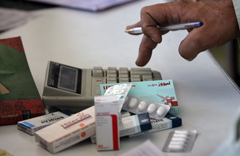
Задача заключается в том, чтобы провести
тренинги для развития навыков лидерства и
распространения медицинской информации,
в том числе о приверженности антиретровирусному
лечению. Фото: ЮНЭЙДС / Дж. Мур
Ассоциация уже начала процесс объединения небольших НПО и групп самопомощи. Задача заключается в том, чтобы провести тренинги для развития навыков лидерства и распространить медицинскую информацию, в том числе о
приверженности антиретровирусному лечению.
Получив степень магистра управления бизнесом в Лахорском университете, Масуд работает с ними, помогая им в стратегической организации, выработке политики и сборе средств.
Уже был проведен трехдневный семинар по развитию потенциала, на котором рассматривались проблемы людей, живущих с ВИЧ в Пакистане, и методы эффективной работы организации самопомощи ВИЧ-позитивных людей. Еще один двухдневный семинар по повышению уровня знаний о ВИЧ помог провести предварительную оценку и получить отзывы на недавно подготовленные буклеты и другие информационные материалы, выпущенные на урду и английском языках для людей, живущих с ВИЧ (ЛЖВ).
ЮНЭЙДС будет оказывать поддержку для проведения еще большего числа семинаров по всей стране и планирует осуществлять эту деятельность в сотрудничестве с Ассоциацией ЛЖВ, провинциальными и федеральными органами власти, и организациями гражданского общества, занимающимися вопросами СПИДа.
«Мы хотим внести вклад в улучшение жизни людей, сформировать у них чувство сопричастности, осознания их политических прав и силу духа», - говорит Масуд.
В то же время, Ассоциация намерена внести свой вклад в достижение национальной цели – «предотвратить развитие генерализованной эпидемии в Пакистане, обуздав распространение ВИЧ и СПИДа и искоренив стигму и дискриминацию в отношении инфицированных и пострадавших людей».
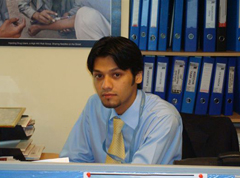
Двадцатичетырехлетнего Масуда только что
приняли в одну из последних инициатив ЮНЭЙДС
– «Ассоциацию людей, живущих с ВИЧ и СПИДом в
Пакистане». Фото: ЮНЭЙДС
*Эпидемия в стране является концентрированной и продолжает усиливаться. В Пакистане отмечается один из самых высоких уровней потребления инъекционных наркотиков в мире (4,5 на душу населения в год), а 64% потребителей инъекционных наркотиков сообщили, что пользуются нестерильным инъекционным инструментарием. Частое использование и повторное использование нестерилизованных и зараженных игл способствует высокому уровню передачи ВИЧ среди потребителей инъекционных наркотиков (10%). По оценкам Всемирной организации здравоохранения и ЮНЭЙДС, реальная распространенность может составлять 85 000 (46 000- 210 000) человек.
1 декабря 2006 г. во время официального объявления о начале работы Ассоциации ЛЖВ Страновой координатор ЮНЭЙДС д-р Альдо Ланди сказал:
«Этот первый шаг является прорывом в борьбе против стигмы и дискриминации». Он еще раз подчеркнул необходимость вовлечения ЛЖВ в работу на федеральном и провинциальном уровнях. И самое главное, отношение к ЛЖВ должно основываться на полном соблюдении прав человека.
Масуд болен гемофилией, и заразился ВИЧ при переливании инфицированной крови. В Пакистане скринингу на ВИЧ перед переливанием подвергается около 50% кровепродуктов – и ежегодно переливается около 1,5 миллиона пакетов крови. Около 18% людей, живущих с ВИЧ в Пакистане, были инфицированы таким путем.
«Я посветил многие годы своей жизни борьбе за гуманное отношение», - говорит Масуд, который участвовал в кампаниях за предоставление более качественного лечения больным гемофилией и на добровольных началах руководил проектом НПО ЛЖВ, который получал финансирование от ЮНИСЕФ, прежде чем перейти в ЮНЭЙДС.
«Я настроен очень решительно, потому что я сталкиваюсь с болью и сам ее чувствую, - говорит Масуд. - Я хочу добиться реальных изменений, призывая людей, живущих с ВИЧ, понять, насколько важным является их участие в работе на всех уровнях. Они сами добьются изменений. Моя работа – это лишь первая капля дождя, и я рад быть этой каплей».
Ссылки:
More information on Pakistan
Visit UNAIDS Pakistan web site
Read the report - Implementing the UN learning strategy on HIV/AIDS: Sixteen Case Studies
Feature Story
Мьянма: на пути к всеобщему доступу
21 августа 2007
21 августа 2007 21 августа 2007Что необходимо сделать, чтобы обеспечить всеобщий доступ к профилактике, лечению, уходу и поддержке в связи с ВИЧ в Мьянме? Это стало основной темой обсуждения на сопутствующей встрече, проведенной в рамках 8-го Международного конгресса по СПИДу в Азии и Тихоокеанском регионе (МКСАТ) в понедельник, 20 августа.
За последний год меры в ответ на СПИД в Мьянме достигли значительного прогресса: был разработан новый Национальный стратегический план, в том числе закончен расчет сметы расходов оперативного плана; в конце 2006 г. был инициирован Фонд для борьбы с 3 болезнями, который начал действовать в начале 2007 г. «Учитывая эти важные события, в 2007 г. мы получили реальные, материальные возможности для расширения противодействия СПИДу в Мьянме с целью обеспечения всеобщего доступа», - сказал Страновой координатор ЮНЭЙДС Брайан Уильямс.
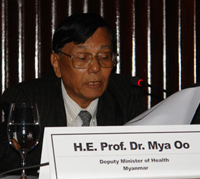
Заместитель министра здравоохранения
Мьянмы Его Превосходительство,
профессор, д-р Миа Оо
На сопутствующем совещании, организованном Тематической группой ООН по СПИДу в Мьянме, был представлен обзор текущей эпидемической ситуации; были вкратце рассмотрены последние достижения в противодействии СПИДу в Мьянме и перечислены потребности и возможности поддержки для дальнейшего расширения ответных мер.
Заместитель министра здравоохранения Мьянмы профессор Миа Оо рассказал о приверженности страны делу противодействия СПИДу и о уже принимаемых мерах, включая разработку многосекторального национального стратегического плана, в котором основное внимание уделяется охвату людей, подвергающихся наиболее высокому риску. Заместитель министра поблагодарил Фонд для борьбы с тремя болезнями за его вклад в предоставление услуг по уходу и профилактике в связи с ВИЧ в Мьянме и призвал увеличить финансирование для Мьянмы, которое позволило бы в полной мере расширить ответные меры и обеспечить их успех.
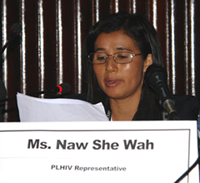
Г-жа Нав Ши Ва, представительница
людей, живущих с ВИЧ в Мьянме
Второй основной докладчик, представительница людей, живущих с ВИЧ, г-жа Нав Ши Ва, говорила о потребностях людей, живущих с ВИЧ, в доступе к лечению, о необходимости расширения поддержки группам самопомощи, включая их официальное признание со стороны органов власти, и призвала международные организации увеличить финансирование для расширения охвата ВИЧ-позитивных людей, нуждающихся в лечении, которое сегодня получают лишь 10% из них.
С техническими презентациями выступили менеджер Национальной программы по СПИДу д-р Мин Тхве, эпидемиолог из Центра «Восток-Запад» д-р Виват Пеерапатанапокин, который недавно участвовал в семинаре по вопросам распространенности ВИЧ в Мьянме, и страновой представитель организации «Врачи без границ – Голландия» (AZG) в Мьянме д-р Фрэнк Смитиус.
«На этом заседании был отмечен прогресс, достигнутый в последние годы в Мьянме и продемонстрировавший, что услуги нуждающимся могут быть предоставлены, однако было также подчеркнуто, что низкий охват требует повышенной финансовой поддержки со стороны международных и внутренних источников – только так можно выполнить цели обеспечения всеобщего доступа», - сказал Брайан Уильямс.
Ссылки:
Read presentation by Dr Min Thwe, Programme Manager National AIDS Programme Ministry of Health - 'Service coverage for HIV and AIDS Myanmar'
Read presentation by Dr Smithuis, Medicins sans Frontieres Country Representative - 'Prevention and treatment of HIV in Myanmar'
Read presentation by Dr Wiwat Peerapatanapokin, epidemiologist from the East-West Center - 'Progress of HIV Epidemic in Myanmar 2007'
Related
A rainbow of hope for LGBTQI+ people in rural Japan
17 мая 2023 года.
Thailand’s Mplus: HIV services delivered in style
13 декабря 2022 года.
 Preventing transmission and tackling stigma: The power of U=U
12 декабря 2022 года.