Documents
UNAIDS PCB Bureau meeting 11 May 2026
24 May 2026

Documents
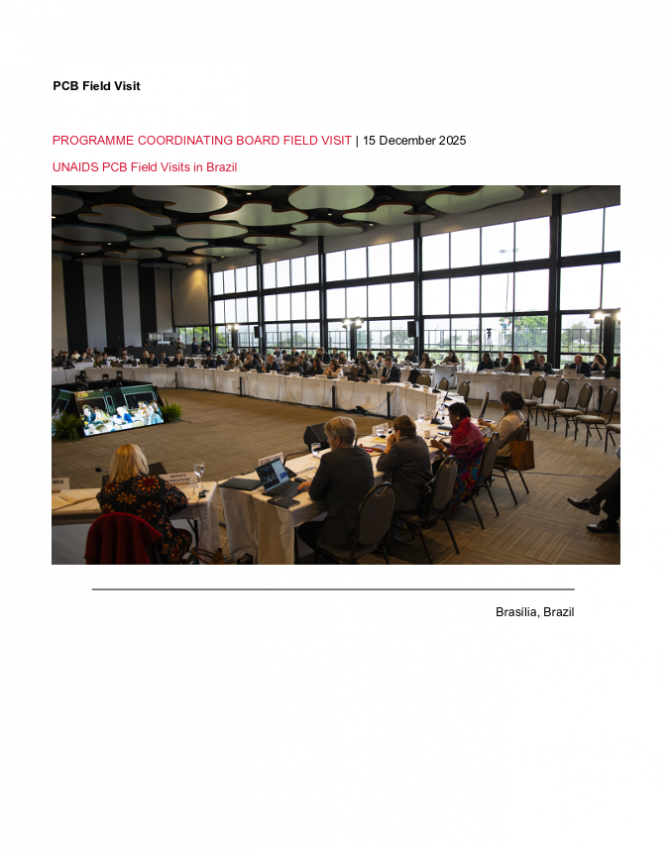
Brazil 2025
21 May 2026
Documents
Agenda item 3: Follow-up to the thematic segment from the 57th PCB meeting
30 June 2026
Documents
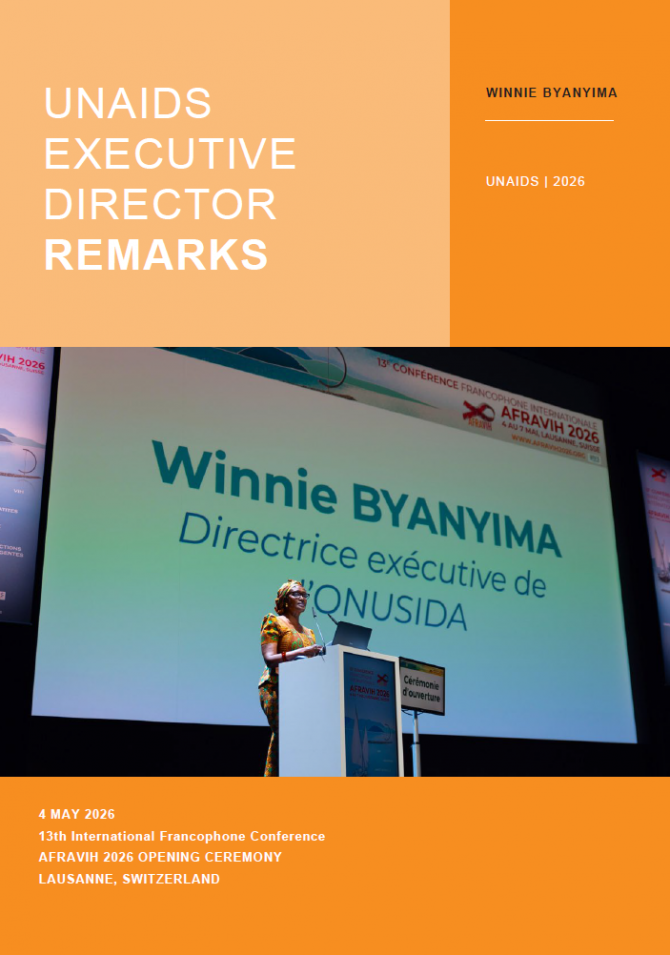
Keeping our promise to end inequalities and AIDS
14 May 2026
UNAIDS Executive Director's remarks at the 13th International Francophone Conference AFRAVIH 2026 opening ceremony.
Documents
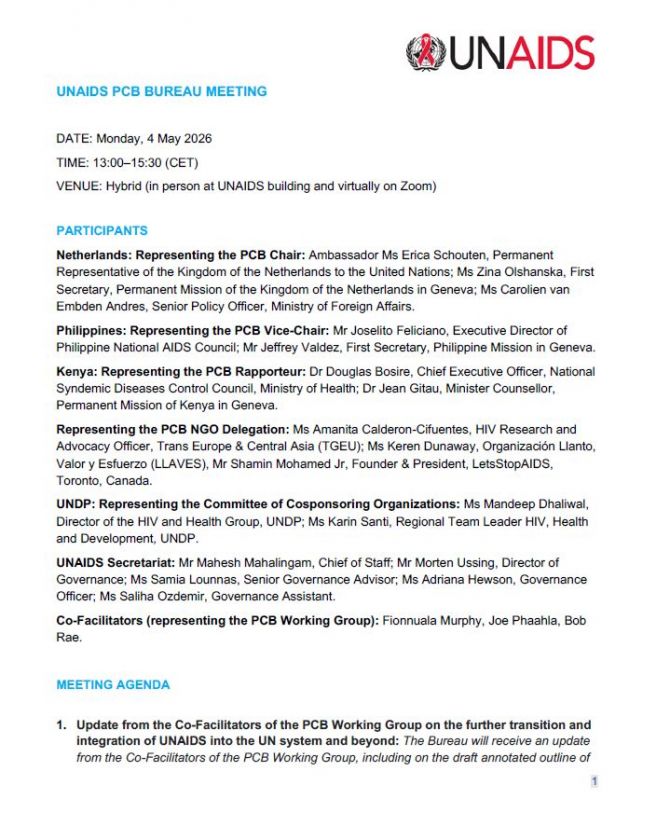
UNAIDS PCB Bureau meeting 4 May 2026
04 May 2026
Documents
Second meeting of the PCB Working Group on the Thematic Segment of the 58th PCB meeting
14 April 2026
Documents
Sustaining HIV Community-led Responses: Technical guidelines for costing and budgeting
06 May 2026
Community-led responses (CLRs) are a vital pillar of the HIV response and central to achieving national and global targets, including the 30-80-60 commitments outlined in the 2021 Political Declaration on HIV and AIDS. These guidelines provide practical, step-by-step methods for costing and budgeting community-led responses (CLRs), tailored to the unique features of CLRs. They are designed for use by community-led organizations (CLOs), their partners, national governments, policy-makers, donors, and researchers involved in planning, implementing, financing or evaluating CLRs that address HIV.
Documents
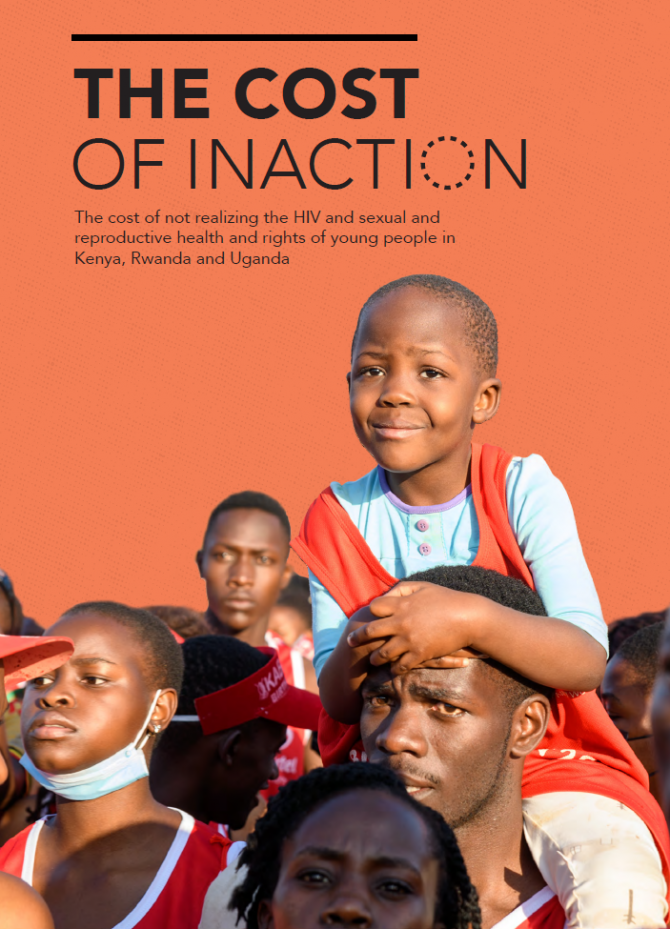
THE COST OF INACTION: The cost of not realizing the HIV and sexual and reproductive health and rights of young people in Kenya, Rwanda and Uganda
04 May 2026
UNAIDS uses ‘cost of inaction’ as an indicator of the negative impact on the lives of people and communities of not investing resources to end AIDS. This issue is particularly significant with regard to the provision of HIV and sexual and reproductive health and rights (SRHR) for young people in eastern and southern Africa.
The cost of inaction for young people is especially significant as the impact extends through most of their life. This report explores the costs of inaction in not realising the HIV and SRHR needs of young people in Kenya, Rwanda and Uganda, focusing on costs related to: 1) adolescent pregnancies, 2) HIV acquisition and 3) gender-based violation.
Using a cost of inaction approach, this report calculates the annual current cost of the inadequate provision of HIV and SRHR services to young people aged 15–24 years old in the three countries. This provides a foundation for alternative policies to be costed to address these gaps and a true cost–benefit analysis to be conducted.
Documents
The oligarchic order: How inequality broke multilateralism – and how to rebuild it
22 April 2026
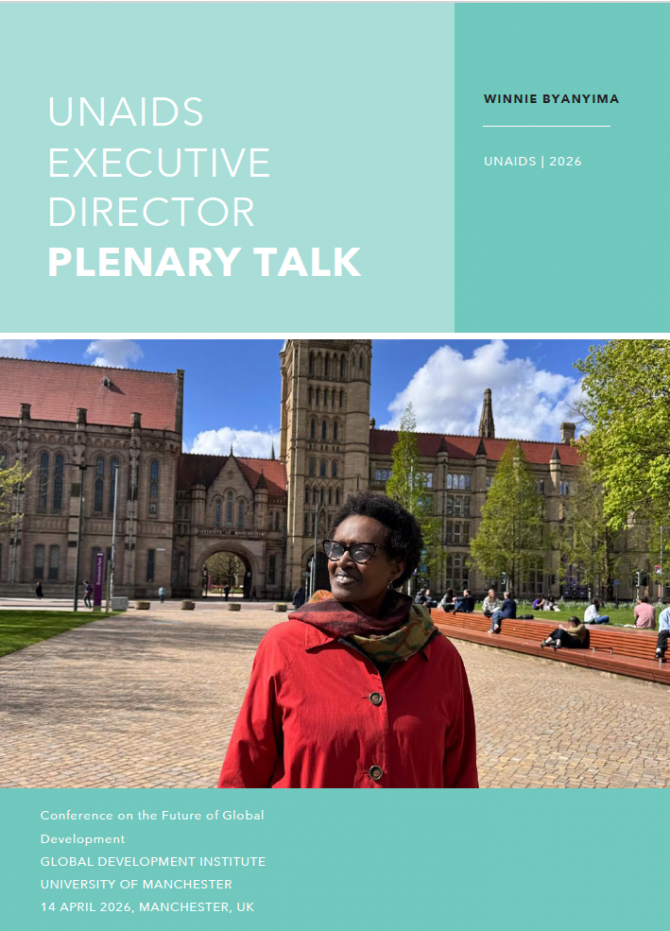
UNAIDS Executive Director plenary talk at the Conference on the Future of Global
Development organised by the Global Development Institute, University of Manchenster.
Documents
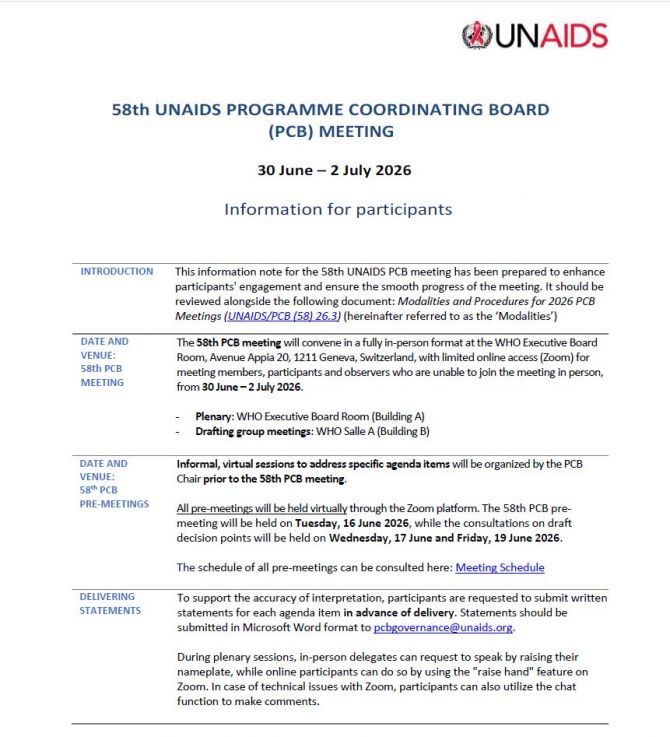
PCB58 Information for participants
30 June 2026