

Feature Story
Ukraine: Keeping people in care
23 February 2026
23 February 2026 23 February 2026Fifth year of war in Ukraine: deepening humanitarian needs and impact on the HIV response
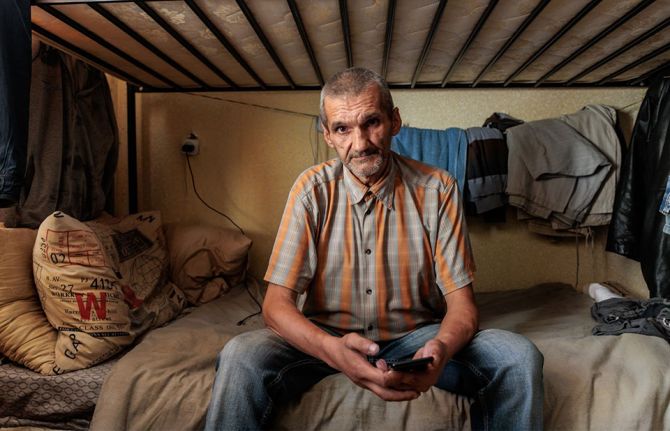
In Kryvyi Rih, war is measured not only in sirens and blackouts, but in whether people can continue getting the medicines that keep them alive. The city has become a lifeline for displaced people living with or affected by HIV arriving from frontline and temporarily occupied areas—often without documents, stable housing, or a clear route back into care.
“People come to us exhausted, carrying everything they have in one bag,” says Oleksandr Shveda, a social worker at a community-run shelter operated by the charitable organization Public Health. “Some haven’t taken antiretroviral therapy for days or weeks—not because they didn’t want to, but because they lost access, lost papers and didn’t know where to turn.”
This is what Ukraine’s fifth year of war looks like for the HIV response: care delivered through delays, danger and uncertainty, often to people who are least visible and most excluded.
People living with HIV and other groups vulnerable to HIV can be overlooked by mainstream humanitarian and social protection programmes. Many people from key populations remain marginalized and fall outside the “typical” categories reached by humanitarian assistance and social protection programmes, even though they face some of the highest health and protection risks. In wartime, when systems are overstretched and priorities narrow, these communities can fall even further out of reach.
“They often try to stay invisible,” explains social worker Olena Maligina. “But HIV doesn’t wait, and neither does Tuberculosis. Keeping someone in care is not just about medicine—it’s about safety and trust.”
Continuity of HIV care is not only a matter of individual survival; it is a public health necessity. Maintaining treatment, counselling and referral pathways helps prevent interruption, reduces severe illness, limits onward transmission, and supports reintegration upon release.
However, with limited staff capacity, reliance on volunteers, and close coordination with national partners, the team at the Public Health organization says it is becoming harder to reach the people most at risk—especially medically fragile people living with HIV, including palliative and bedridden patients. “We are doing everything we can,” Mr Shveda adds, “because for some people, this support is the only bridge to life and dignity.”
Across the country, the humanitarian crisis continues to deepen, with profound consequences for access to essential services, including health care. In frontline areas, intensified hostilities have left health facilities damaged or non-functional, created severe staff shortages, and made it unsafe for ambulances to reach remote or heavily affected areas. For HIV services, the energy crisis has become an ongoing barrier to continuity. Power outages disrupt clinic operations, laboratories, health information systems, telecommunications and transport—making it harder for health workers to deliver services and for people living with HIV to access care and remain on treatment.
The combined pressures of protracted conflict, displacement, poverty, and infrastructure damage are eroding coping capacities and increasing the risk of HIV treatment interruption. In this environment, community-led and community-based responses remain central to maintaining reach, trust and continuity, especially for people facing insecurity, displacement and social vulnerability. Yet these organizations are under growing strain: staff capacity is shrinking, burnout risks are rising, and operational constraints make every visit, delivery and follow-up more difficult.
The Government of Ukraine, through the Ministry of Health and the Ukraine Public Health Center, continues to lead the national response in close partnership with community organizations to sustain services under wartime conditions. Support from international partners and donors—especially the United States Government, the Global Fund to Fight AIDS, Tuberculosis and Malaria, Expertise France, the Government of the Netherlands, and other bilateral and multilateral partners—has been critical to maintaining essential HIV prevention, testing, treatment and care.
“Ukraine’s resilience is visible in the remarkable courage of its people—and in the determination of health-care workers and community organizations who keep services going when conditions make it feel impossible,” says Eamonn Murphy, UNAIDS Regional Director for Easter Europe and Central Asia and Asia and the Pacific. “They keep services open, reach people on the move, and ensure no one is left without care. Their work is built on trust, and in this war, that trust can be lifesaving. We must continue supporting community-led services so people can stay on treatment safely and with dignity.”
In 2026, the AIDS response will remain heavily dependent on external support, underscoring the need for strategic, predictable funding to sustain essential services while also beginning, where it is feasible, to plan a gradual transition towards nationally owned systems and community-led structures.
The message from Kryvyi Rih is clear: continuity of care is not automatic in a war—it is built, protected and must be sustained.
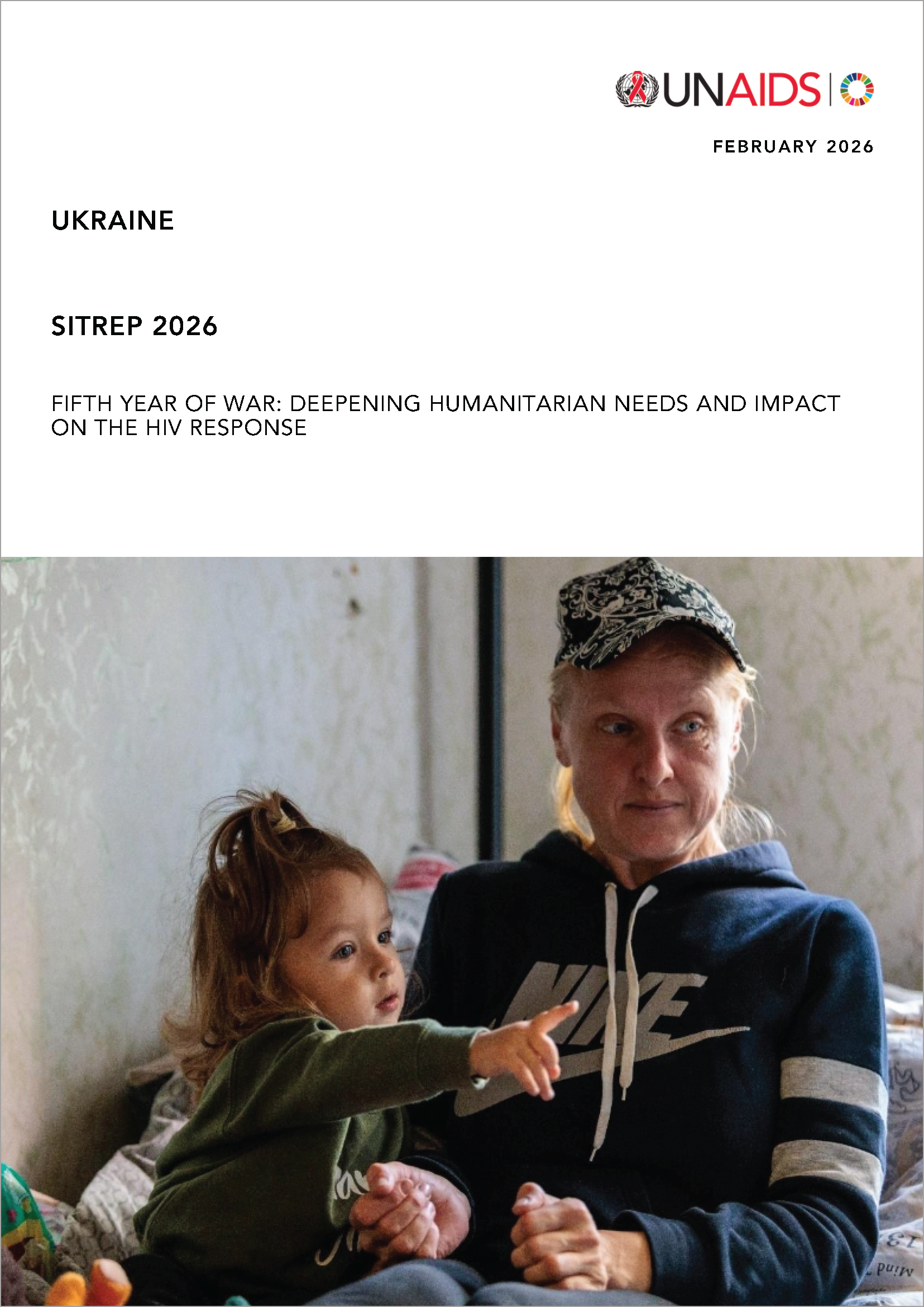
Sitrep 2026
Region/country
Related
 UNAIDS expands humanitarian support in Ukraine
16 September 2026
 Women, HIV, and war: a triple burden
12 September 2025
 Displacement and HIV: doubly vulnerable in Ukraine
11 August 2025