Feature Story
‘Olimbi - Mother Courage’ HIV documentary wins Geneva film festival Impact Award
16 March 2026
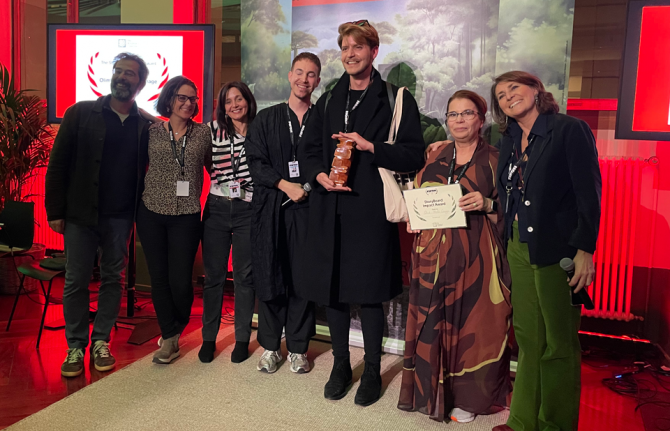
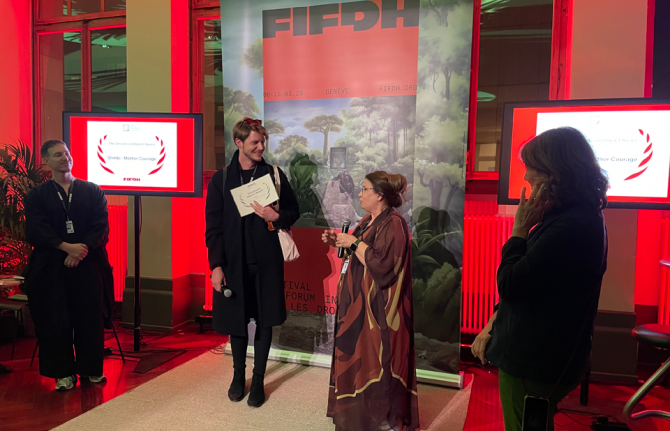
16 March 2026 16 March 2026At the back of the reception hall, Olimbi Hoxhaj and Karlo Mlinar are standing in disbelief. They have just won the Story Board Impact Award at the Geneva Film Festival and Forum on Human Rights (FIFDH.)
“After twenty years of leading the HIV fight in Albania, I have never won any awards in my country and here I win this big prize,” said Olimbi Hoxhaj, the protagonist of the documentary. “This is recognition for me and for all people living with HIV.”
The film focuses on Ms Hoxhaj’s plight for answers and reckoning. Her husband passed away in 2003, and no one would tell her the cause. “They kept telling me he had liver problems, but I heard a lot of whispering at the funeral and people distanced themselves,” she explained. After insisting repeatedly, she was finally told that that her husband had died of complications linked to AIDS. She herself found out she was also living with HIV as were three of her four children. Her fight thus began to obtain treatment - not available at that time in Albania - as well as get protection and raise awareness. “Without truth, there can be no dignity and with no dignity families like mine remain trapped in stigma and fear.”
“When I met Olimbi in 2019 on a flight to Tirana her story really moved me,” said filmmaker and impact producer Karlo Mlinar. At the time he was visiting his former partner who refused to start HIV treatment, being in denial about his diagnosis.
“For two years I tried to persuade him to begin treatment, relying on medical evidence, statistics and information. But it was only when he met Olimbi and heard her story that things changed,” Mr Mlinar said. Using archival footage, intimate testimony, and theatrical reconstruction, Mr Mlinar began work on his 82-minute film. He wanted to use Ms Hoxhaj’s story and her tireless work confronting stigma and institutional neglect to create a greater movement.
“’Olimbi - Mother Courage’ aims to humanize HIV via a mother’s story and educate people and get them to test, treat and prevent others from getting infected,” said Mr Mlinar.
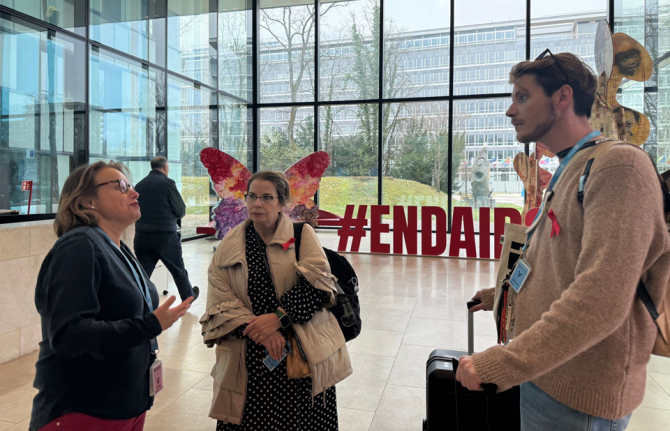
According to Ms Hoxhaj who founded the Albanian network of people living with HIV and who is now open about her status, treatment now exists but so does stigma. “People continue to contact our association in secret and ask where they can get an HIV test without being recognized,” she said during a visit to UNAIDS Geneva headquarters. “Education is uneven so people are still diagnosed late, not because treatment is unavailable, but because fear keeps them from testing. Ending HIV will definitely require courage and compassion.”
More than 1600 people live with HIV in Albania which has a low HIV prevalence rate but new infections are on the rise, especially among men who have sex with men. In 2025, four babies were born with HIV, which Ms Hoxhaj says exemplifies the disconnect regarding testing and treatment among pregnant women.
The Balkan region has been a forgotten part of Europe in the HIV response, according to Yannis Mameletzis, consultant on HIV prevention at the World Health Organization (WHO.) “This documentary is a reminder to the public and politicians that HIV still exists and that people still die despite leaps in medical science. We cannot become complacent,” he said. Albania also remains the only country in the Balkans where there is no access to pre-exposure prophylaxis (PrEP) for key populations.
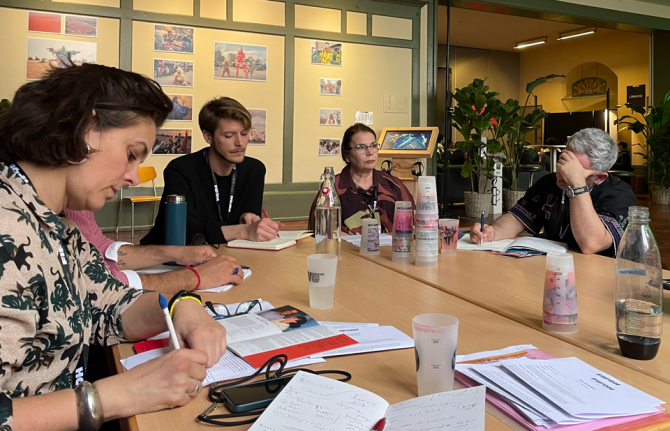
FIFDH’s Impact NGO Programme Manager Sophie Mulphin believes ‘Olimbi - Mother Courage’ can spur public health dialogue on a topic that has fallen off many people’s agenda.
“Olimbi Hoxhaj transformed personal loss into public action, helping to secure treatment for thousands. We feel Karlo’s campaign around her inspiring story has clear and achievable impact goals by reframing HIV beyond the persistent myth in the Global North of it being a disease of one community and calls for direct action - to test, treat and prevent,” she said.
Reflecting on the award, Mr Mlinar said that the (CHF 10 000) USD $12 000 cash prize was a great push for the project, which he hopes to finish in February 2027. “Information alone does not overcome fear. Stories can,” concluded Mr Milinar. Mr Mlinar and Ms Hoxhaj are still reeling from the win and their fairy tale visit to Geneva.