

Feature Story
From forerunner to future-maker: partners affirm the value of a transformed UNAIDS Joint Programme
24 September 2026
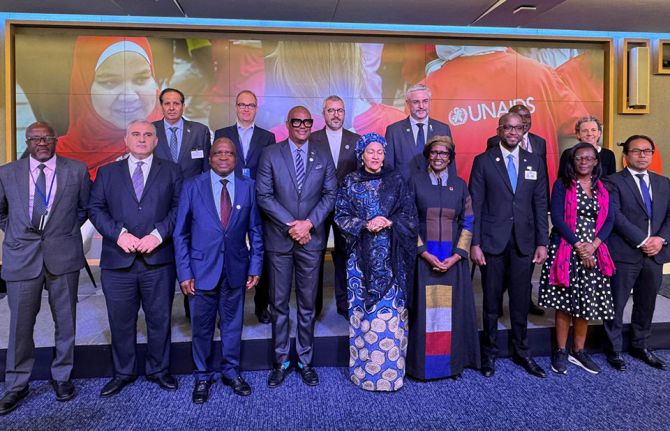
24 September 2026 24 September 2026At a high-level event at UNGA81 cohosted by the Governments of the Netherlands and Botswana, representatives of member states, communities, United Nations officials and global health partners affirmed the need for a transformed Joint United Nations Programme on HIV/AIDS (UNAIDS) that can sustain political leadership, accountability and community engagement in the global HIV response.
During this event, held during the United Nations General Assembly High-Level Week, participants reflected on what is needed to ensure that the Joint Programme remains fit for purpose amid changing financing, widening inequalities, threats to human rights and an increasingly complex global health landscape.
Across the discussion, speakers emphasized the importance of protecting the functions that have made UNAIDS distinctive: keeping HIV high on the political agenda; convening governments, communities, the United Nations and partners; strengthening data and accountability; supporting country leadership; and ensuring that communities are able to co-create and co-lead the response.
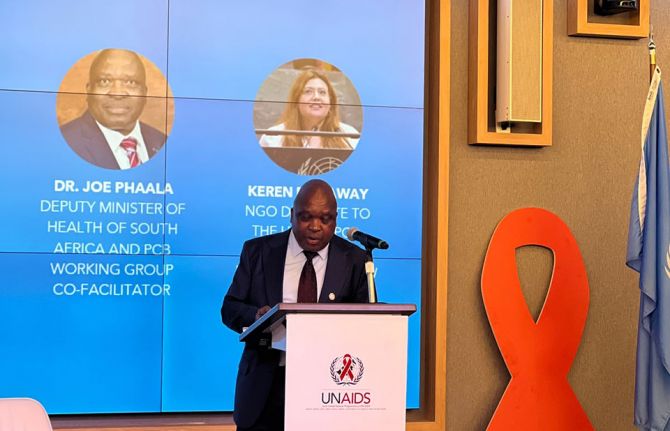
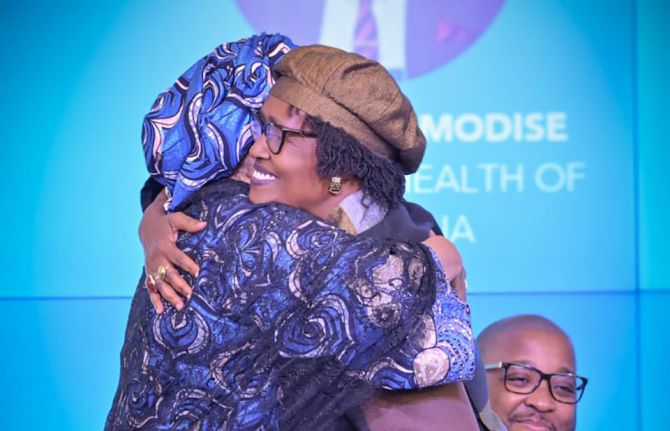
Opening the event, Stephen Modise, Minister of Health of Botswana and co-host, stressed the value of a Joint Programme that responds to countries’ needs and supports national leadership in the HIV response.
“Our journey has shown what is possible when political leadership, communities, science, and partnership come together with common purpose and coordinated support. We would not have reached this point without the UNAIDS Joint Programme,” said Stephen Modise.
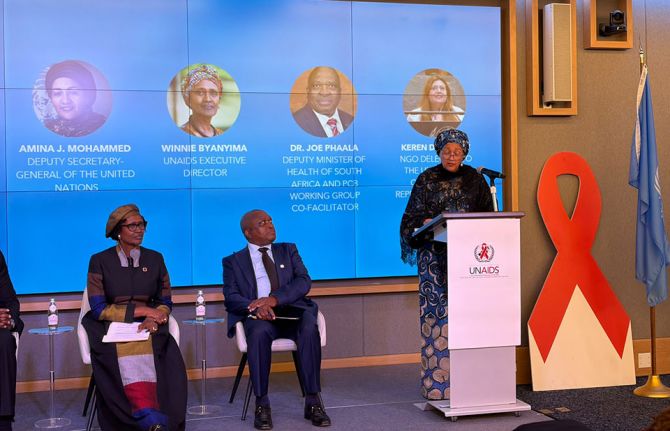
United Nations Deputy Secretary-General Amina Mohammed highlighted the importance of sustained multilateral action to deliver on the Sustainable Development Goals and end AIDS as a public health threat by 2030.
“The global HIV and AIDS response stands among the finest achievements of the UN, and among the clearest proof of what collective action, inclusive collective action, can deliver. For more than three decades, UNAIDS has helped lead the charge. Millions of lives have been saved, not only through prevention and treatment, but by standing with communities, amplifying their voices, defending their rights, keeping that space open for them,” said Amina Mohamed.
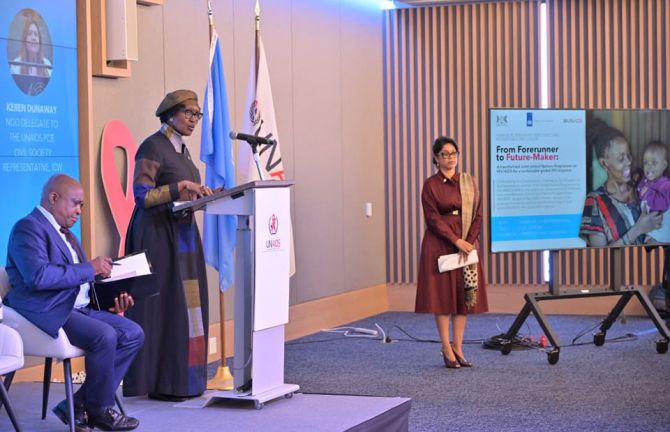
UNAIDS Executive Director Winnie Byanyima said that the next chapter of the Joint Programme must build on its unique ability to bring together governments, communities, the United Nations and partners behind a shared global HIV response.
“Ultimately, transformation is not only about integrating UNAIDS Joint Programme into the UN system, it’s about integrating the AIDS response into stronger national institutions,” said Winnie Byanyima.
The discussion was moderated by Angeli Achrekar, UNAIDS Deputy Executive Director, and brought together voices from governments, communities, civil society, global health partners and the United Nations.
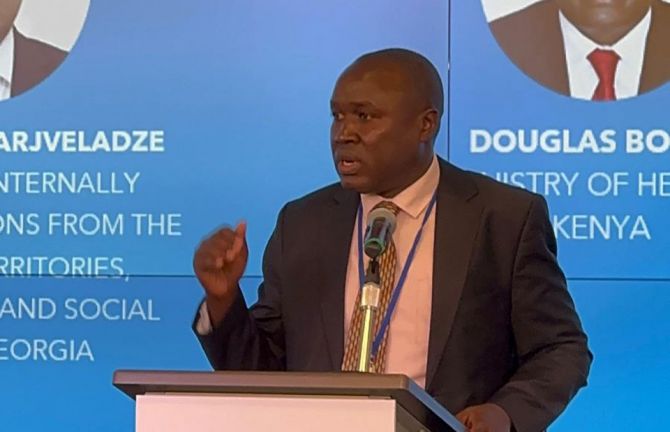
Douglas Bosire of Kenya’s Ministry of Health reflected on how countries can translate the commitments in the 2026 Political Declaration on HIV/AIDS and the Global AIDS Strategy into action, while ensuring that HIV responses are nationally owned and sustainable.
“Let us preserve the core functions of the Joint Programme in the hub and at the country level,” said Douglas Bosire.
Julia Martin, Head of Strategy at the Global Fund to Fight AIDS, Tuberculosis and Malaria, emphasized the importance of partnership, coordinated investment and shared accountability in supporting countries to sustain progress against HIV.
“The Global Fund depends on UNAIDS. And so I want to put that right up front that looking forward to how the Political Declaration and the objectives that were placed in that document can be achieved, it’s really a partnership,” said Julia Martin.
The meeting also considered how the HIV response can strengthen national ownership while retaining the political leadership, coordination and accountability needed to keep HIV visible and deliver results. Participants noted that a future Joint Programme must support countries according to their specific contexts and needs, while drawing more effectively on the capacities of the wider United Nations system and other partners.
Keren Dunaway, NGO Delegate to the UNAIDS Programme Coordinating Board and representative of the International Community of Women Living with HIV, underscored that communities must remain central to the future of the HIV response.
“We support a responsible transformation that preserves the Joint Programme’s leadership, coordination, and accountability, and keeps communities involved in shaping what comes next,” said Keren Dunaway.
Florence Anam, Co-Executive Director of GNP+, called for communities to be recognized and resourced as genuine co-creators and co-leaders of the HIV response, particularly at a time of shrinking civic space and pushback against human rights.
“I am happy that we are at this point where we understand that we need UNAIDS and we need UNAIDS leadership. It really excites me to sit in this meeting today and see the voice, the tone shift from what it was last year and early this year,” said Florence Anam.
“But I think as UNAIDS transforms and chooses to transform responsibly, that responsibility will require a clear definition of what community role will be, intentionally positioned at country level, where we must all go and sit with our governments and define,” she added.
Participants also reflected on the need for resilient HIV responses in the face of outbreaks, humanitarian emergencies and other crises. Mikheil Sarjveladze, Minister of Internally Displaced Persons from the Occupied Territories, Health, Labour and Social Affairs of Georgia, spoke to the importance of continuity of services and strong, coordinated public-health systems.
“Have we achieved the goals to end AIDS by 2030? The answer is no, we haven't yet achieved all results to end HIV. Is there still necessity of information to be shared? Is there any risk of new outbreaks? Of course, there is such a risk. Thus, I think it will be impossible to find or invent better solution to all above-mentioned challenges than to continue with UNAIDS,” said Mikheil Sarjveladze.
In closing, Pascalle Grotenhuis, Vice Minister for International Cooperation in the Dutch Ministry of Foreign Affairs, reaffirmed the importance of an effective, accountable and adequately resourced multilateral response to HIV.
“In the 30 plus years that UNAIDS has existed, a lot has been achieved. The numbers of HIV infections and AIDS-related deaths are at the lowest level ever, and this progress shows that a joint AIDS response works. The Netherlands was there at the start of the joint program, and we are as committed today to end AIDS as we were then,” said Pascalle Grotenhuis.
The event demonstrated a shared commitment to ensuring that the Joint Programme can continue to mobilize political will, protect human rights, elevate community leadership and support countries to deliver on the promise of ending AIDS as a public health threat by 2030.
Related videos
“The one organization that stood with people living with HIV, key populations, communities and governments to help them maintain HIV services, transform their services and integrate into the broader health system was UNAIDS.”
At #UNGA81, UNAIDS Chief of Staff Mahesh Mahalingam… pic.twitter.com/KnKCDlf2lr— UNAIDS Global (@UNAIDS) September 25, 2026