Feature Story
When survivors speak: How Esther's story is helping fight Ebola and protect HIV care in the DRC
25 September 2026
25 September 2026 25 September 2026When Esther Nyamungu talks about Ebola, she does not begin with the day she became ill. She starts with what came after.
A community worker at a Bunia community-based point of distribution of antiretrovirals, known in French by its acronym PODI, Esther contracted Ebola during this most recent outbreak that has swept through Ituri province in the eastern Democratic Republic of the Congo. She was taken to a treatment centre in Bunia, where patients arrive carrying both the symptoms of the disease and the fear that surrounds it.
Today, Esther calls herself a survivor. Living with HIV, she also survived Ebola. "I was taken to the Ebola treatment centre. I recovered, and now I have resumed my activities. I work as usual," she says. Her experience left her with a simple message for others. "I encourage people to go early to an Ebola treatment centre," she says.
Across Ituri, stories like Esther's have become an important source of information in communities where rumours and fear can discourage people from seeking care, especially among those living with HIV. Survivors are often among the most trusted voices, speaking from experience rather than theory. Yet Ebola is only one part of the challenge facing families in the province.
In the Democratic Republic of the Congo, UNAIDS is helping ensure the Ebola response does not come at the expense of other essential health services. Working alongside government authorities, community organizations, health partners and United Nations agencies, UNAIDS supports efforts to keep HIV services available, strengthen community engagement and connect emergency response measures with longer-term health system resilience.
The approach draws on decades of lessons from the HIV response, showing how trusted communities, coordinated partnerships and sustained political commitment can help countries respond to outbreaks while continuing to serve people's everyday health needs.
As global health challenges become increasingly interconnected, the experience in Ituri highlights the importance of maintaining strong community-led responses, protecting access to services and ensuring that no one is left behind during times of crisis.
“In affected areas, the Ebola outbreak and response have put pressure on routine health services, with fear, stigma and stretched health facilities contributing to reduced attendance and making it harder for some people living with HIV to collect medicines or remain engaged in care”, says Marie Margarete Molnar, UNAIDS Country Director for the DRC.
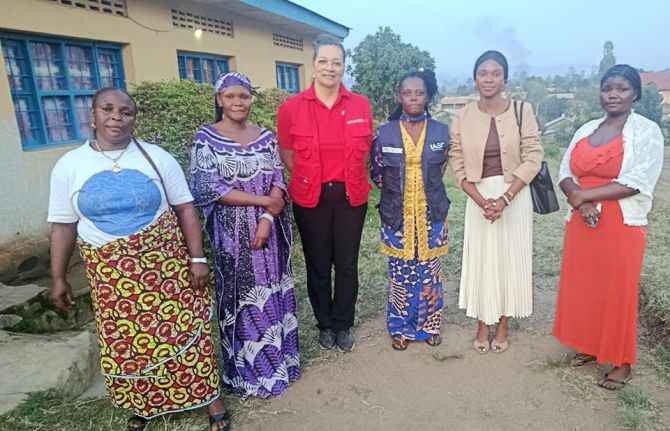
Those concerns were at the centre of discussions in Bunia in July when community representatives, health officials and local organizations met with UNAIDS, during a three-day mission to the province. Bunia is the epicentre of the country's current Ebola outbreak.
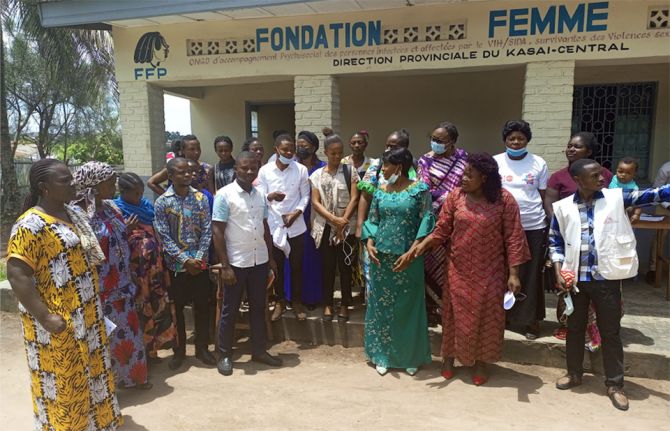
The meeting brought together people working closest to affected communities. Among them was Angèle Machozi, a community representative who described the strain the outbreak has placed on local organizations. She said, “community groups had continued supporting vulnerable people despite limited resources and growing needs.” New funding, she explained, would allow them to expand activities already underway and reach more communities affected by the outbreak.
Since the outbreak was declared in May 2026, Ebola has spread across multiple provinces. As of mid-September, WHO reported more than 7,200 confirmed cases and more than 3,475 deaths. Public health experts warn that the true scale may be larger because not all infections are detected and many transmission chains remain unknown.
In response, two community-based projects supported by UNAIDS have been launched in Ituri in partnership with local authorities, a national network of people living with HIV (UCOP+), and a national civil society consortium (ANORS). The project is designed to cover 11 of the health zones most affected by Ebola relying on PODI structures to connect people to 23 health facilities nearby.
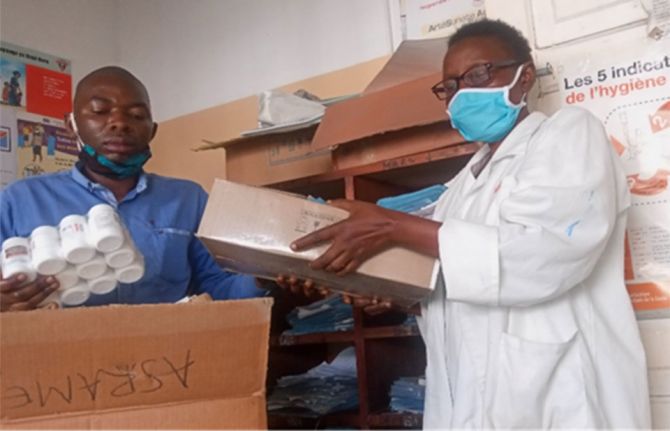
The activities focus on practical challenges communities face every day: distributing antiretroviral medicines, following up with people living with HIV, supporting prevention of mother-to-child transmission, improving infection prevention measures, and sharing information about Ebola through trusted local networks.
The approach reflects a reality often overlooked during health emergencies. Outbreaks are not fought only in treatment centres. They are also fought in neighborhoods, community halls, places of worship and local markets, where people decide whether to seek care, collect medicines or trust public health advice.
That is where Esther's voice matters. She is not a doctor or a health official. She is someone who became ill, received treatment and returned to her life. Now, when others ask about Ebola, she offers an answer grounded in her own experience.
She tells them she survived. And she tells them not to wait.