

Press Release
UNAIDS rallies African leaders to remain united to end AIDS
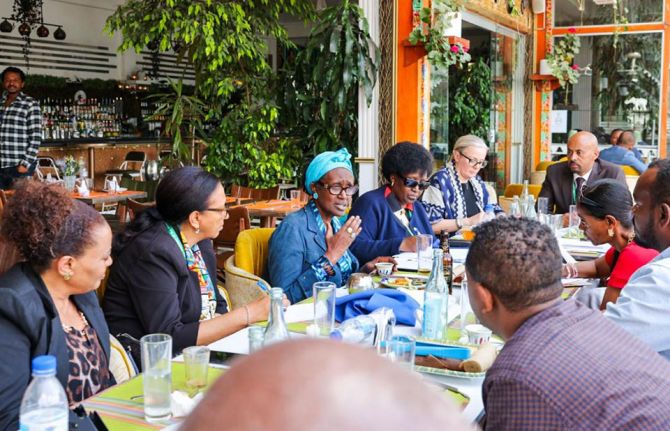
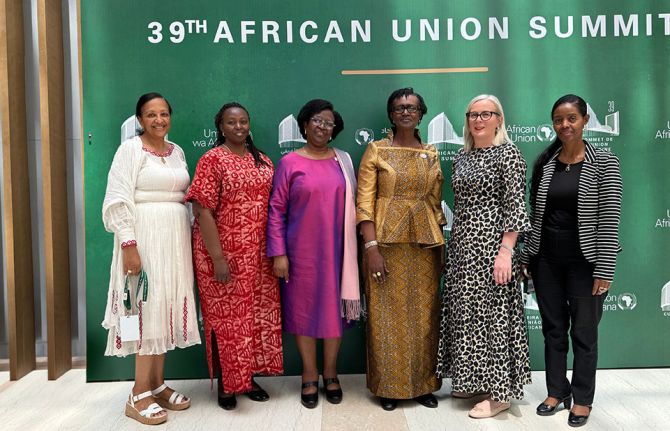
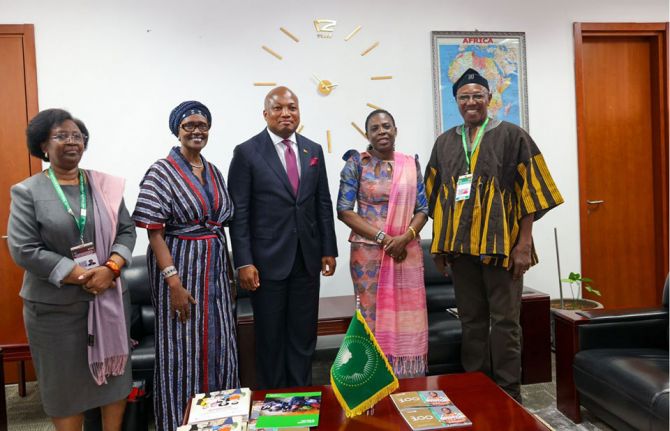
17 February 2026 17 February 2026GENEVA, 17 February 2026—At the 39th African Union summit, UNAIDS urged African leaders to stay united, keep HIV high on the political agenda and move towards sustainable financing for health and development.
“AIDS is not over in Africa and continued African leadership is essential,” said Winnie Byanyima, Executive Director of UNAIDS. “Now is the moment to raise ambition, safeguard our gains and ensure Africa drives the global agenda for a sustainable and sovereign health future.”
In 2024, 82% of people living with HIV in Africa were on lifesaving treatment compared with 45% just ten years earlier. New HIV infections were reduced by 71% since their peak in 1994 and AIDS-related deaths were reduced by 75% since the peak in 2004.
However, 26.5 million people were living with HIV in Africa in 2024, which represents 65% of global total—4.8 million of whom were still not accessing HIV treatment. There were 390 000 AIDS-related deaths in 2024, representing more than 60% of AIDS deaths globally.
The summit took place as Africa advances on health sovereignty and more equitable global cooperation through initiatives like the Accra Reset, the Lusaka agenda, and the African Union Roadmap to 2030. UNAIDS underscored the importance of anchoring HIV sustainability within this broader agenda to ensure resilient, community centred health systems across the continent.
African countries are facing serious financial pressure, with debt repayments often outstripping health spending, and revenue collection that has stalled below 16% of GDP for over a decade. Securing Africa’s health sovereignty will require action to relieve debt, fight tax dodging, increase revenue collection, and ensure access to affordable financing.
In 2024, 77% of funding for Africa’s HIV response came from external sources. Significant disruption to the financing landscape has left serious gaps, particularly for HIV prevention and community health systems, which are often the most reliant on external financing. This continues even as funding from Africa’s largest HIV donor, the United States, has partially returned.
UNAIDS’ approach to HIV sustainability places the focus on transforming the HIV response and accompanying countries on their transition journey—especially in convening partners, strengthening data and evidence, advancing integration processes and keeping communities at the table.
Twenty-two African countries, with support from UNAIDS and partners, are developing sustainability and transition plans to secure an increasingly self-reliant HIV response beyond 2030, planning for increased domestic investments and accelerated integration into national health systems. Eleven African countries have already reported increases in their national HIV budgets for 2026, demonstrating political commitment to long-term sustainability.
Multilateralism and global solidarity have been a cornerstone of progress in the response to HIV. The 2026 United Nations General Assembly High Level Meeting (HLM) on HIV/AIDS offers an opportunity to secure ambitious global commitments for the next five years. A strong Common African Position will be critical to influencing the global agenda and ensuring African priorities are reflected in the 2026 Political Declaration on AIDS.
The Political Declaration will build on the Global AIDS Strategy 2026–2031, adopted by the UNAIDS Programme Coordinating Board in December 2025, which was shaped with input from governments, communities, regional bodies and the private sector.
For more information see “Africa united to End AIDS”
UNAIDS
The Joint United Nations Programme on HIV/AIDS (UNAIDS) leads and inspires the world to achieve its shared vision of zero new HIV infections, zero discrimination and zero AIDS-related deaths. UNAIDS unites the efforts of 11 UN organizations—UNHCR, UNICEF, WFP, UNDP, UNFPA, UNODC, UN Women, ILO, UNESCO, WHO and the World Bank—and works closely with global and national partners towards ending the AIDS epidemic by 2030 as part of the Sustainable Development Goals. Learn more at unaids.org and connect with us on Facebook, Twitter, Instagram and YouTube.