

Press Statement
United Nations High-Level Meeting on HIV/AIDS opens as UNAIDS urges countries to firmly commit to ending AIDS by 2030
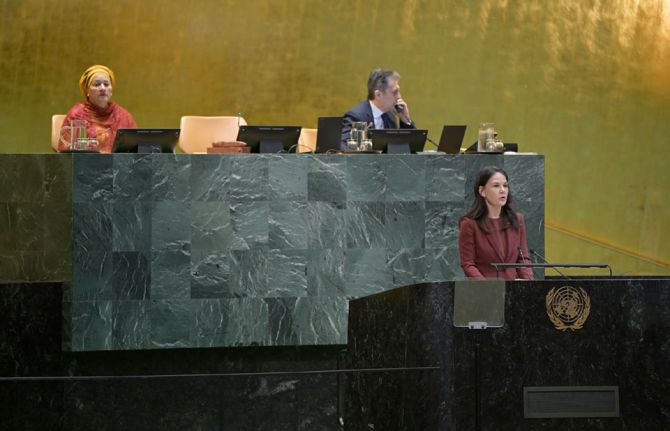
22 June 2026 22 June 2026GENEVA, 22 June 2026—The United Nations High-Level Meeting on HIV/AIDS opened today at a moment of incertitude for the global AIDS response. Decades of progress have delivered what once seemed impossible: millions of lives saved, new HIV infections reduced, and treatment expanded around the world.
However, as global leaders gather in New York to adopt a new UN Political Declaration on HIV/AIDS, the last Declaration before the goal of ending AIDS as a public health threat by 2030, that progress is increasingly threatened due to funding cuts and a push back on human rights. Global leaders face a defining question: will the world protect hard-won gains and accelerate towards ending AIDS?
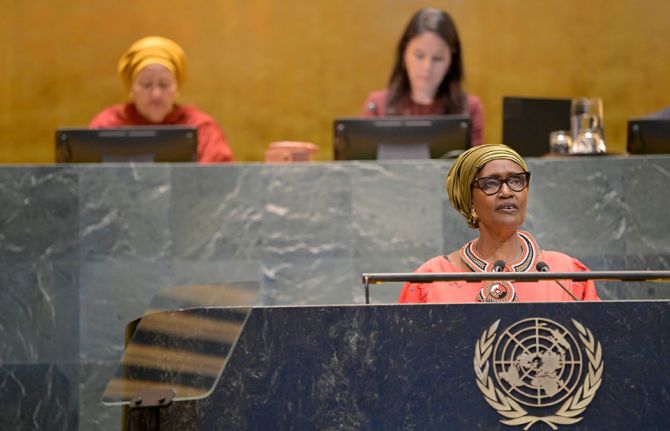
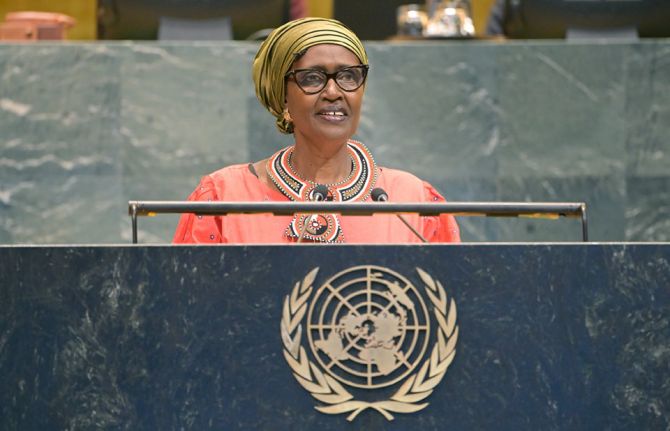
“This Political Declaration is our chance to build on 25 years of commitment and point the way to 2030 to show that multilateralism can deliver,” said Winnie Byanyima, Executive Director of UNAIDS. “We cannot fail, because we know what we must do: commit to multilateralism; sustain international financing as countries mobilize their own resources; protect the rights of people living with HIV; let communities lead for their people; and spur the science, so that innovations reach everyone in need as fast as possible, if we do these things, we can end AIDS.”
New data from 2025 released by UNAIDS ahead of the meeting show that sustained investment, scientific advances and community-led efforts have led to tremendous success against AIDS. Since 2010, AIDS-related deaths have fallen by 56%, new HIV infections decreased by 43%, and 32.1 million people (78% of the 40.9 million people living with HIV) are now accessing treatment.
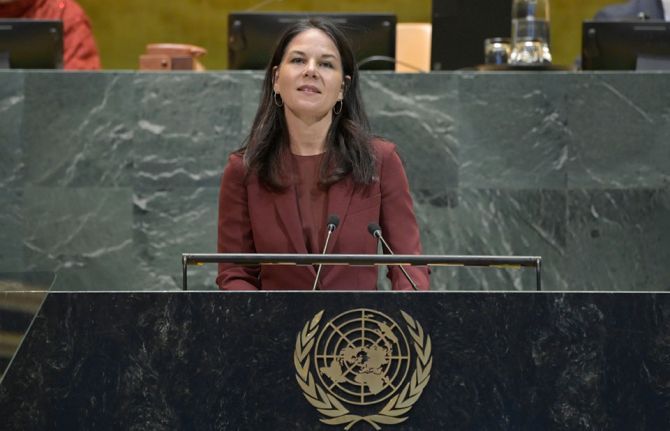
“The global multilateral response to HIV has become not only one of the United Nations’ greatest success stories, but one of the most remarkable achievements in the history of public global health,” said Annalena Baerbock, President of the United Nations General Assembly. “Providing a blueprint for confronting other global health emergencies, from Ebola to COVID-19.”
However, UNAIDS’ new data for 2025 also show that success is fragile. Nearly 9 million people living with HIV are not on treatment. In 2025, global development assistance fell by 23%—the sharpest drop on record. Unless funding is maintained, there is a serious risk of HIV treatment interruptions—which will lead to rising rates of new infections and deaths. Between 2024 and 2025 HIV testing programmes fell by 22% in high-burden settings and funding for condoms has been cut by more than 90% in some cases.
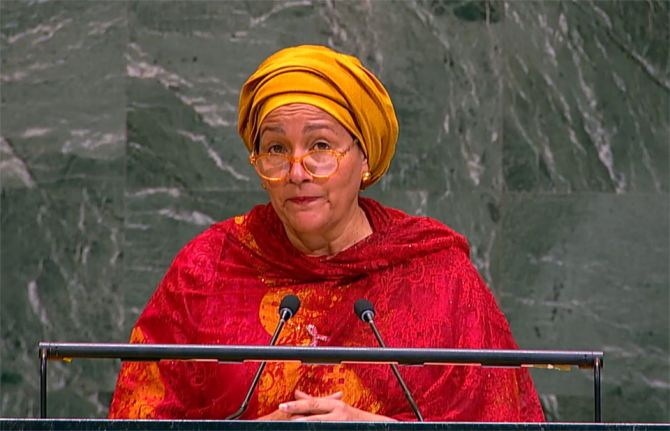
“This meeting is a chance to demonstrate that, even in difficult times, the international community can rally, once again, around science, around human dignity, solidarity and shared responsibility,” said Amina Mohammed, Deputy Secretary-General of the United Nations, delivering remarks on behalf of the UN Secretary-General. “The responsibility to end AIDS as a public threat by 2030 belongs to each and every one of us. Let us move forward together—with a sense of urgency, with solidarity and with ambition.”
Recent funding cuts from multiple donors have severely impacted HIV prevention and community-led services, and criminalization of key populations is increasing for the first time since UNAIDS began tracking these trends. As a result, many communities at highest risk for HIV—including young women and girls, men who have sex with men, sex workers and people who inject drugs—are facing major challenges in accessing lifesaving HIV services.
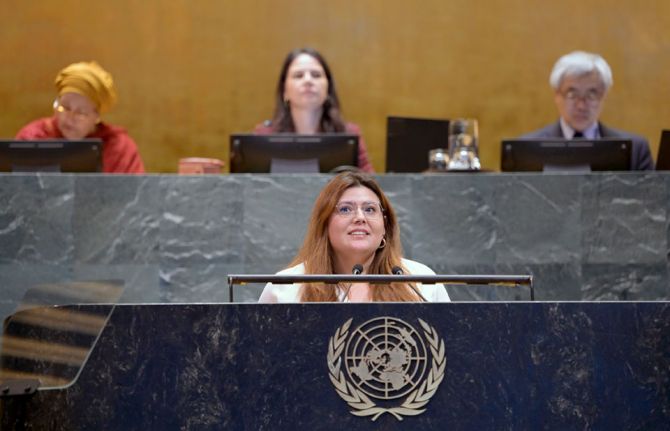
“Progress is real and it is fragile. Without renewed commitments and actions, we risk a resurgence of the epidemic. Community led services are disappearing and prevention programmes are being scaled back. Across many parts of the world commitments to gender equality, sexual and reproductive health and rights and inclusion of key populations are being weakened,” said Keren Dunaway, International Community of Women Living with HIV. “These gains were not handed to us. They were won through decades of advocacy. The future of the response will depend on the choices we make in this room.”
Importantly, there are windows of opportunity. Domestic financing for HIV rose from 28% in 2010 to 52% in 2024, however it cannot replace global solidarity. Regional initiatives like the Accra Reset or the African Union Roadmap to 2030 are examples of a new and progressive face to aid and development. Also, new innovations, particularly long-acting HIV prevention medicines, are becoming available and have the potential to significantly advance the end of AIDS—but only if implemented at scale and with regional production.
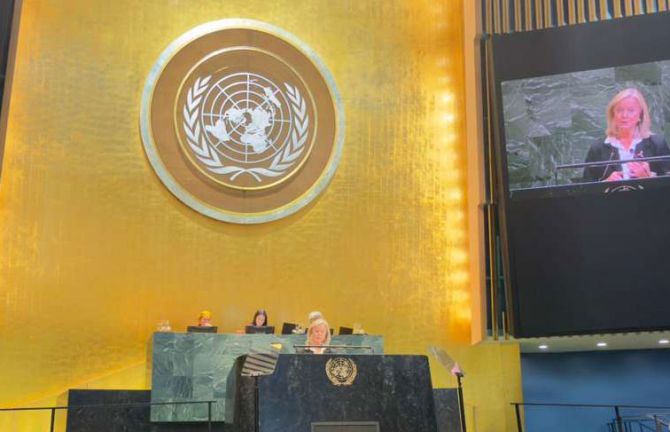
“Just as an earlier generation transformed crisis into action, we must transform today’s uncertainty into tomorrow’s progress. Future generations will judge us by whether or not, when the finish line was finally in sight, we dug deep and found the courage to cross it. The world has come too far. The stakes are too high. And the opportunity is too great. Now is not the time to quit. It is time to finish the job,” said Sandra Thurman, AIDS advocate.
The United Nations High-Level Meeting on HIV/AIDS is taking place from 22 to 23 June. At this meeting, UN Member States will consider a new Political Declaration on HIV and AIDS which will establish the direction of the global HIV response for the next five years. The 2026 Political Declaration on HIV and AIDS is mandated to feature new global targets for 2030, ideally, mirroring those in the Global AIDS Strategy 2026-2031and reflecting UN Member States’ renewed commitment to end AIDS as a public health threat by 2030.
UNAIDS
The Joint United Nations Programme on HIV/AIDS (UNAIDS) leads and inspires the world to achieve its shared vision of zero new HIV infections, zero discrimination and zero AIDS-related deaths. UNAIDS unites the efforts of 11 UN organizations—UNHCR, UNICEF, WFP, UNDP, UNFPA, UNODC, UN Women, ILO, UNESCO, WHO and the World Bank—and works closely with global and national partners towards ending the AIDS epidemic by 2030 as part of the Sustainable Development Goals. Learn more at unaids.org and connect with us on Facebook, Twitter, Instagram and YouTube.