

Press Release
Communities and partners provide solutions to the United Nations to sustain the gains in the HIV response
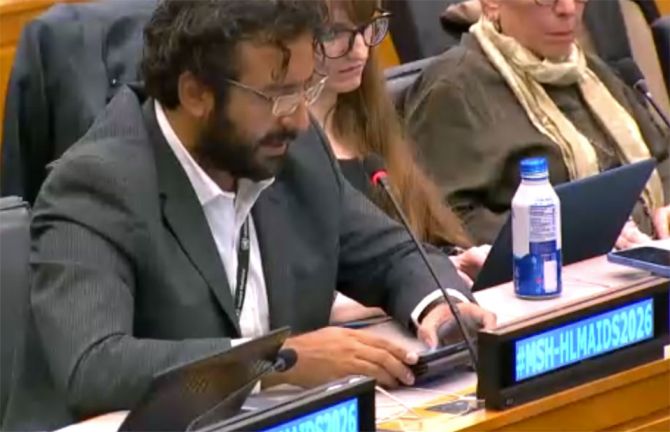
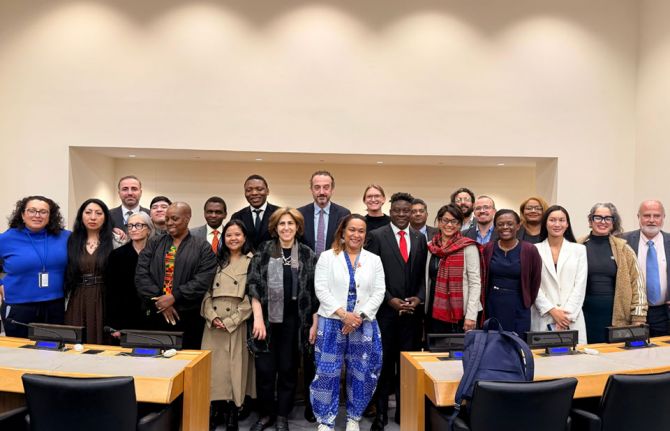
15 May 2026 15 May 2026NEW YORK/GENEVA, 15 May 2026—More than 200 civil society representatives, people living with HIV and partners gathered in person and online at the United Nations in New York to urge renewed political leadership, sustainable financing and stronger support for communities at a one-day Multi-Stakeholder Hearing on HIV. This hearing comes amid growing concern that funding cuts and attacks on human rights are beginning to derail years of progress in the global HIV response.
The hearing was held as part of preparations for the 2026 United Nations High-Level Meeting on HIV/AIDS (22-23 June 2026), where Member States will negotiate a new Political Declaration on HIV/AIDS to guide the global HIV response over the next five years.
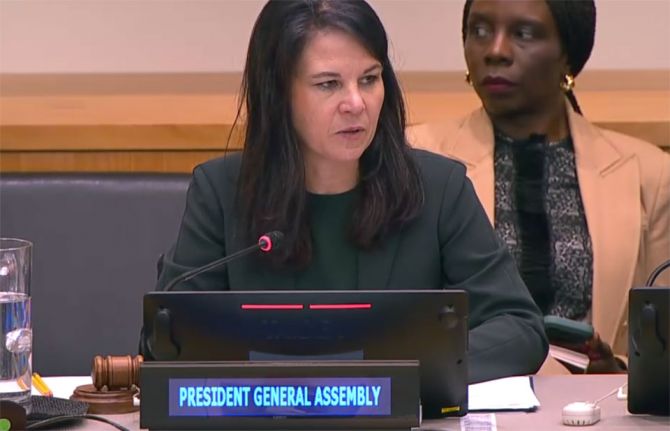
President of the General Assembly, Annalena Baerbock, who opened the hearing said, “As stakeholders, your efforts are needed now more than ever: to maintain pressure and to help ensure that the decisions taken here reach the communities you serve. In a world where innovations exist—and where resources remain abundant—there is no reason not to take this fight to the next level, together.”
The event gave an opportunity for UN Member States to hear from civil society representatives and people living with HIV about their lived experiences, urgent priorities and current and emerging gaps in the HIV response.
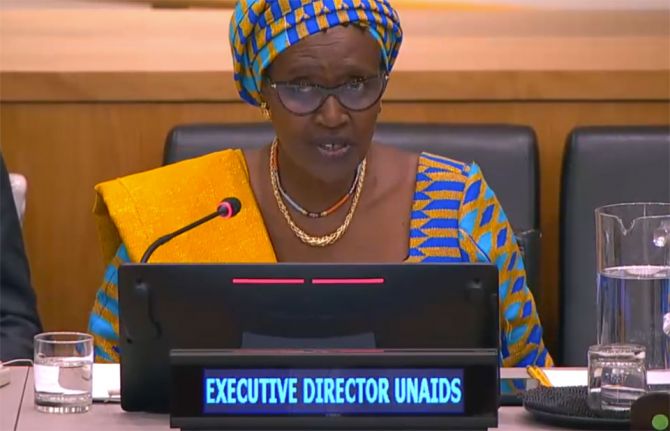
“The AIDS response has always been powered by courage. By resilience, by outrage, by refusal to accept the injustice that some lives matter more than others,” said Winnie Byanyima, Executive Director of UNAIDS in her opening remarks. “That same spirit is needed again now. This is the moment for the world to embrace the very real possibility of ending AIDS as a public health threat, once and for all people, everywhere, if we collectively choose to do what is necessary in the next five years.”
Civil society representatives highlighted the need for continuity and sustainability of the HIV response over the long term. Many of the issues and concerns raised at the hearing were centred around the impact of the ongoing declines in international funding, how to encourage countries to increase domestic commitment and resources and how to support the critical work of community-led services, particularly by and for key populations most affected by HIV.
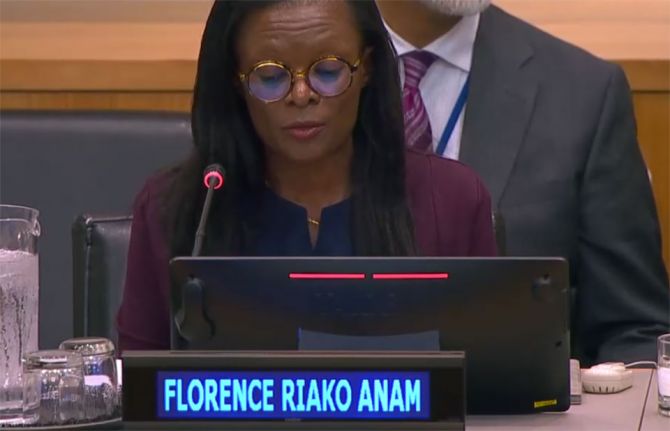
“Last year’s disruptions tested all of us. Yet, this period of reform and repositioning offers a genuine opportunity for fresh leadership,” said Florence Riako Anam, Co-Executive Director of the Global Network of People Living with HIV. “The leadership of today must shape this transition from emergency response to sustainable systems; a necessary and proud evolution that recognises that people living with HIV will still be here in 2031 and beyond, with needs that matter then as they do now. Let us carry forward the same admirable spirit, that has defined the multilateral HIV response.”
The Multi-Stakeholder Hearing also kicks off a period of intensified advocacy and education, including next week 13-19 May, during which communities and civil society will continue to shape their priorities for the negotiations on the High-Level Meeting Political Declaration.
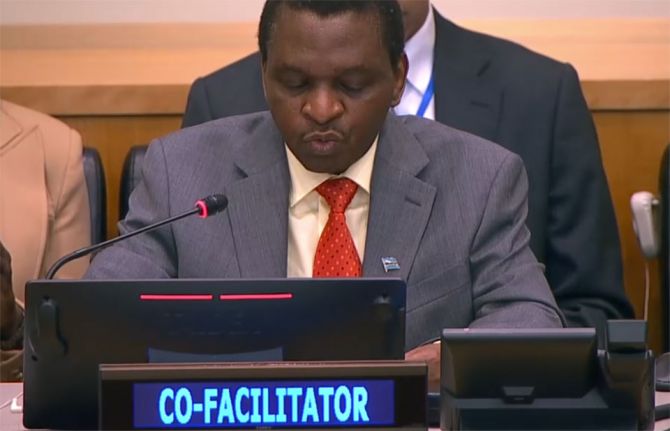
Ambassador Charles Masole, Permanent Representative of Botswana to the UN and Co-Facilitator of the High-Level Meeting on HIV/AIDS said, “Botswana’s HIV response, often recognized as a success story, was not the result of government action alone. It was driven—and continues to be driven—by activists and community leaders who refused to allow the government, or society at large, to look away from the human cost of AIDS. This partnership between government leadership and civil society advocacy has been, and remains, essential to sustaining progress not only in Botswana, but also around the world.”
Ambassador David Bakradze, , Permanent Representative of Georgia to the UN and Co-Facilitator of the High-Level Meeting on HIV/AIDS said, “The message is clear: we can end AIDS as a public health threat by 2030 but doing so will require the continued leadership and involvement of communities—and ensuring this work is supported and institutionalized. Communities are essential for success on a programmatic level; they are not a line item that can be cut out of budgets—they are critical infrastructure and essential to end AIDS.”
The President of the General Assembly’s report from the Multi-Stakeholder Hearing, which will be issued in coming days, will be instrumental in informing consultations by member states on the new Political Declaration on HIV/AIDS in the lead up to the High-Level Meeting on 22-23 June 2026. This report and Civil Society Statement for the High-Level Meeting will be made available on the UNAIDS web page United Nations General Assembly High-Level Meeting on HIV/AIDS.
UNAIDS
The Joint United Nations Programme on HIV/AIDS (UNAIDS) leads and inspires the world to achieve its shared vision of zero new HIV infections, zero discrimination and zero AIDS-related deaths. UNAIDS unites the efforts of 11 UN organizations—UNHCR, UNICEF, WFP, UNDP, UNFPA, UNODC, UN Women, ILO, UNESCO, WHO and the World Bank—and works closely with global and national partners towards ending the AIDS epidemic by 2030 as part of the Sustainable Development Goals. Learn more at unaids.org and connect with us on Facebook, Twitter, Instagram and YouTube.