Documents
Belt and Road High-level Meeting for Health Cooperation — Speech by Michel Sidibé, UNAIDS Executive Director
18 August 2017
Documents
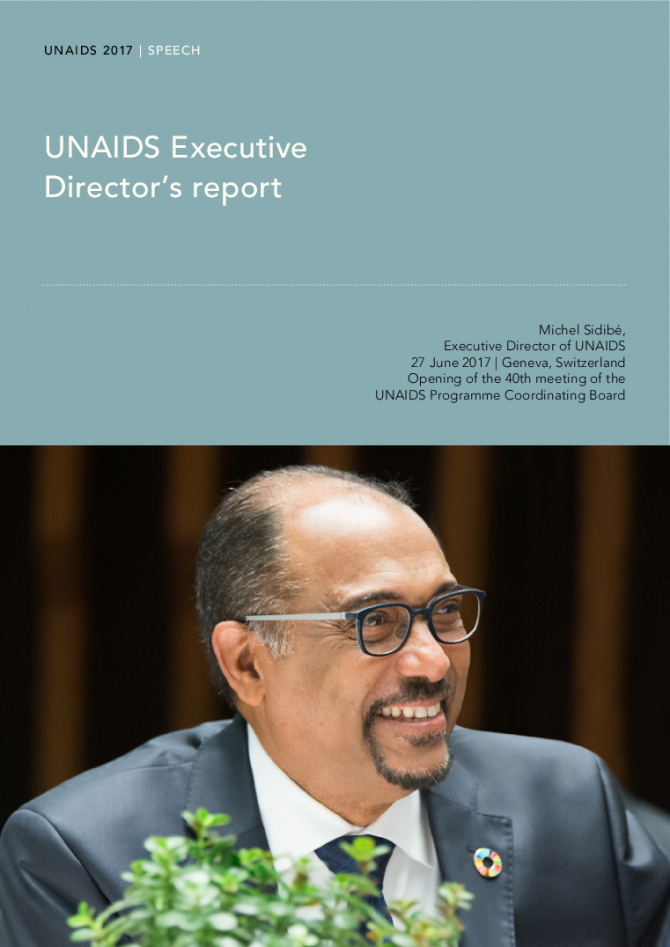
UNAIDS Executive Director's report to PCB-40
29 June 2017
Documents
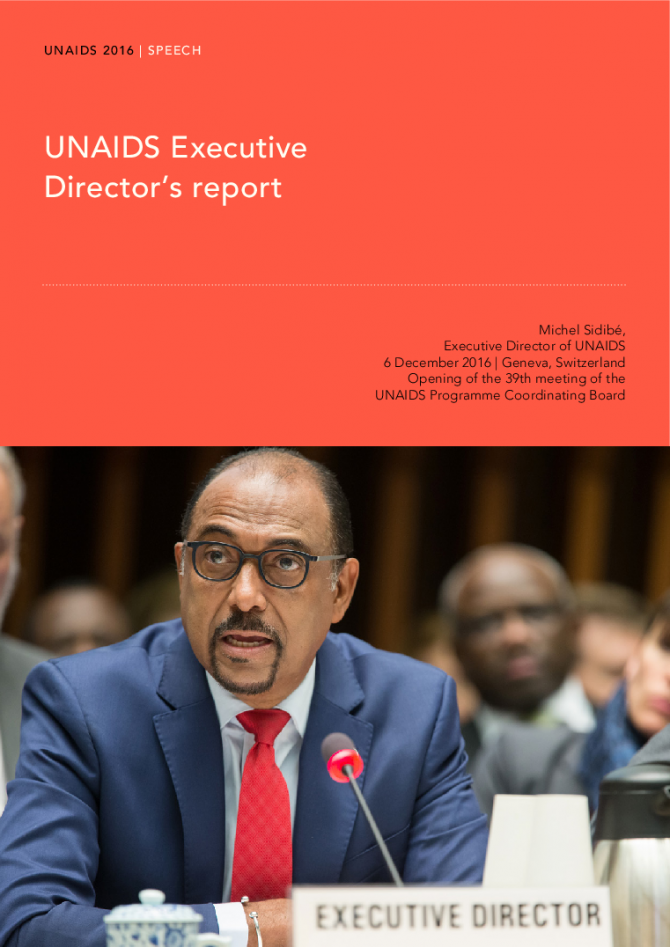
UNAIDS Executive Director’s report, 39th meeting of the UNAIDS Programme Coordinating Board
31 December 2016
Documents
UNAIDS Executive Director’s speech at the launch of Get on the Fast-Track: the life-cycle approach to HIV
21 November 2016
Documents
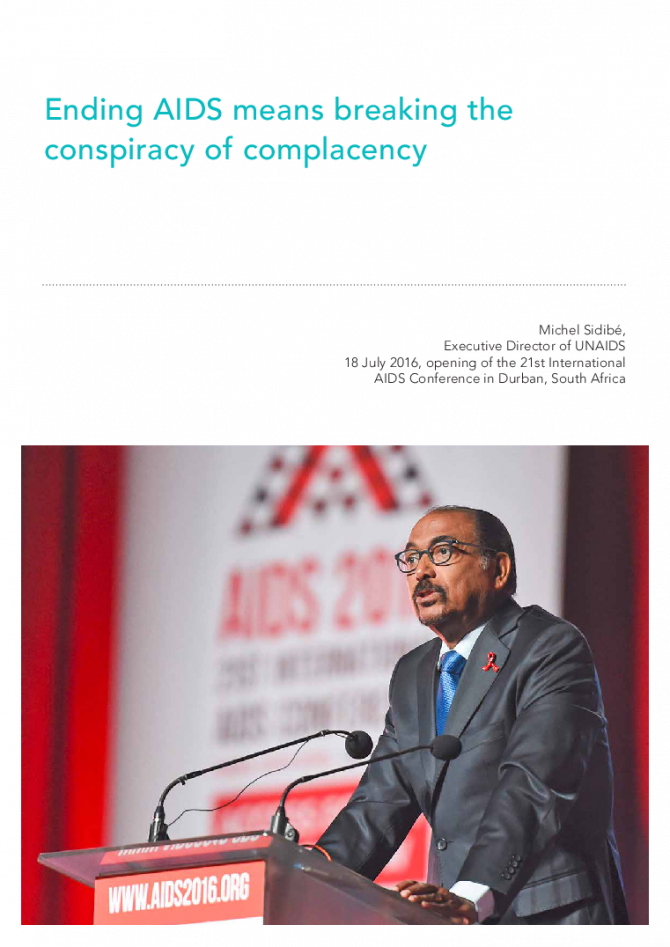
Opening of the 21st International AIDS Conference in Durban, South Africa
18 July 2016
Statement by Michel Sidibé, Executive Director of UNAIDS
Documents
We the peoples — Opening remarks by UNAIDS Executive Director at the High-Level Meeting on Ending AIDS
08 June 2016
Documents
UNAIDS Executive Director’s Report, Opening of the 38th Meeting of the UNAIDS Programme Coordinating Board
28 June 2016

Documents
Putting Eastern Europe and Central Asia on the Fast-Track to ending AIDS
23 March 2016
This conference is coming at a transformative moment. It is the first AIDS conference in EECA since the international community adopted the Sustainable Development Goals. In line with the 2030 Agenda for Sustainable Development and its focus on leaving no one behind, we should have the courage to explore all progressive policy options. I urge you to consider the following ten action points for urgent progress in the EECA region:
Documents
Universal Health Coverage—Leaving no one behind
28 January 2016
It is timely and topical that we are here in Bangkok, at the dawn of a new era in development, for these important discussions of priority setting. Thailand should be applauded for the transformations it has achieved for the health of its people. You have demonstrated that countries can reach universal access to HIV services, and that we can dream of the day when we will end AIDS as a public health threat. HIV treatment has been fully integrated into the country’s UHC system with spectacular results: In just seven years, the number of people accessing treatment has grown from 40,000 to more than a quarter of a million.