Documents
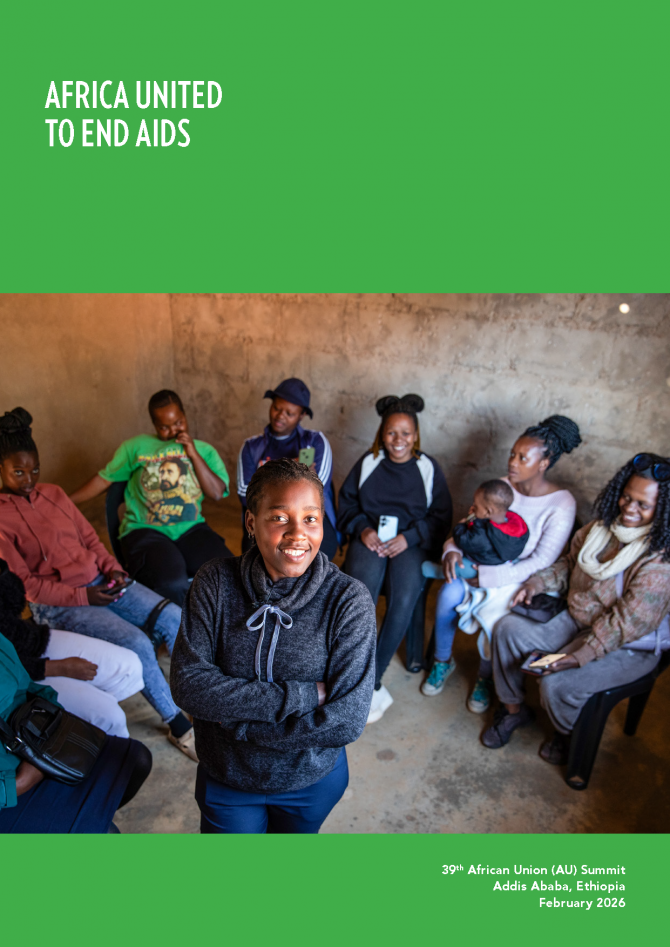
Africa united to end AIDS — 39th African Union (AU) Summit, Addis Ababa, Ethiopia, February 2026
10 February 2026
Documents
Action brief - Integration of HIV and sexual and reproductive health and rights in El Niño responses
05 February 2026
References and full report details as well as partner-specific recommendations are available in the main report.
Documents
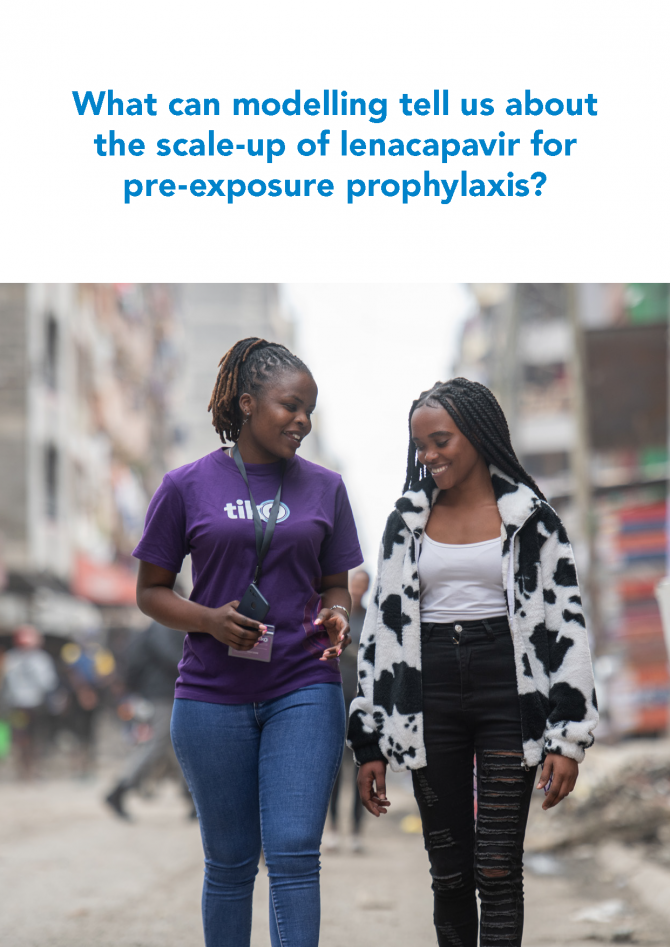
What can modelling tell us about the scale-up of lenacapavir for pre-exposure prophylaxis?
17 December 2025
Documents
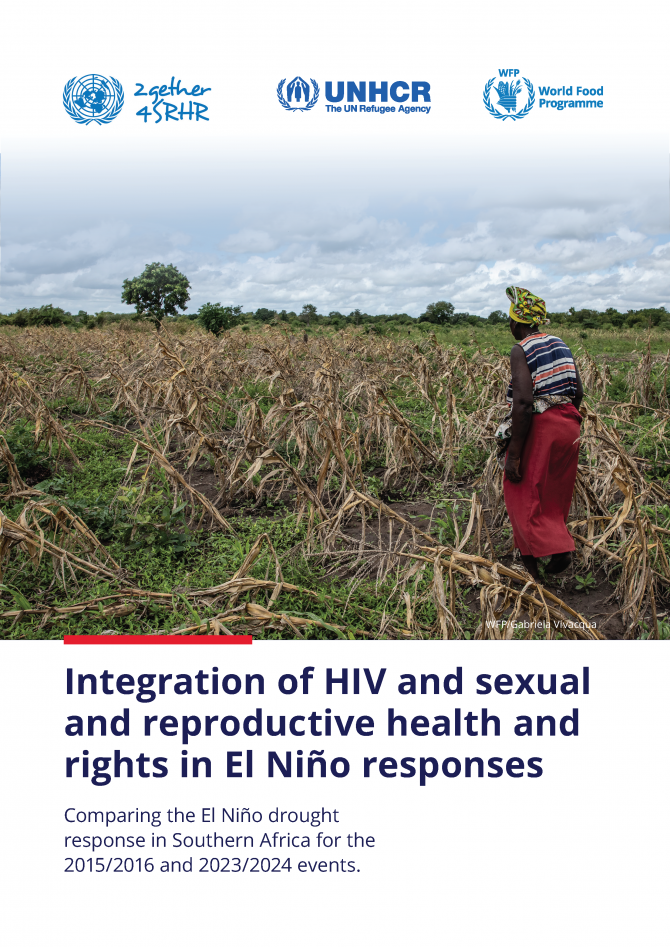
Integration of HIV and sexual and reproductive health and rights in El Niño responses — Comparing the El Niño drought response in Southern Africa for the 2015/2016 and 2023/2024 events
27 November 2025
This report compares the impact of El Niño-induced climate events in Southern Africa during the 2015/2016 and 2023/2024 cycles, with a focused lens on HIV, sexual and reproductive health and rights (SRHR) and related vulnerabilities including gender-based violence (GBV), food insecurity and displacement. The analysis highlights how climate shocks intensified existing HIV and SRHR challenges, despite specific improvements and applied learnings between the two time periods. An action brief is also available.
Documents
The cost of inaction on HIV for children — Their future is on the line
26 November 2025
Documents
Overcoming disruption, transforming the AIDS response — World AIDS Day 2025 report
25 November 2025
Documents
Guidelines for conducting a aational HIV spending assessment (NASA)
14 November 2025
The National AIDS Spending Assessment (NASA) is a comprehensive, systematic approach to tracking HIV expenditures and analysing financial resources dedicated to the HIV response within a country (or within a region or specific subnational area), or as a stand-alone deeper dive into the community-led response (CLR).
Documents
Breaking the inequality-pandemic cycle: Building true health security — Findings and recommendations of the Global Council
02 November 2025
Future disease outbreaks are inevitable. AIDS remains a pandemic. The impact of COVID-19 continues to reverberate. Humanity is in an era characterized by high and persistent inequality and accelerating risk of disease outbreaks and pandemics. Over the last two years, the Global Council on Inequality, AIDS and Pandemics undertook research, reviewed evidence and engaged in policy forums around the world. These efforts revealed that high inequality, both within and between countries, and global vulnerability to pandemics reinforce each other. This cycle helps explain why remarkable advances in science are failing to keep the world safer from pandemics.

Documents
Practical methods for projecting the costs of national strategic plans for HIV and beyond
19 September 2025
This guide responds to a growing demand for practical, adaptable methods to project the full resource needs of national strategic plans.
Documents
Consultation on the Projected Impact and Cost-Effectiveness of Long-Acting Injectable Lenacapavir as Pre-Exposure Prophylaxis
06 June 2025
UNAIDS and the Gates Foundation convened a meeting on 5-6 June, 2025 to consider mathematical modelling evidence on the anticipated epidemiologic impact and cost-efficiency of long-acting injectable lenacapavir (LEN) for HIV prevention in low- and middle-income countries.