Documents
Implications of the START study data — questions and answers
11 June 2015
UNAIDS welcomes additional evidence released in May 2015 that early initiation of antiretroviral therapy has a positive effect on the health and well-being of people living with HIV. The United States National Institutes of Health-funded international randomized clinical trial START (Strategic Timing of Antiretroviral Treatment) has found compelling evidence that the benefits of starting antiretroviral therapy as soon as someone is diagnosed outweigh the risks of delaying until their CD4 count has fallen to 350 cells/mm3.
Documents
“15 by 15” - a global target achieved
19 July 2015
Just as we have new opportunities that only a few years ago would have been inconceivable, we also now face new challenges. If the “15 by 15” success story has taught us anything, it is that we have in our hands the power to make the world healthier, more just and more equitable. We hope that this report not only reminds us of our power to change the world when we remain united, but also inspires us to take the actions needed to end the AIDS epidemic as a public health threat.

Documents
Oral pre-exposure prophylaxis–putting a new choice in context
12 July 2015
The World Health Organization (WHO) anticipates releasing updated guidance on oral pre-exposure prophylaxis (PrEP), containing tenofovir (TDF), as an additional HIV prevention choice. The new guidance is likely to be significantly broader than previously and creates real opportunities to move forward with implementing PrEP as part of comprehensive HIV programmes. This publication, produced collaboratively between UNAIDS, WHO and AVAC, is intended to complement WHO recommendations and support the optimal use of oral PrEP to protect individuals and contribute to ending the AIDS epidemic.
Documents
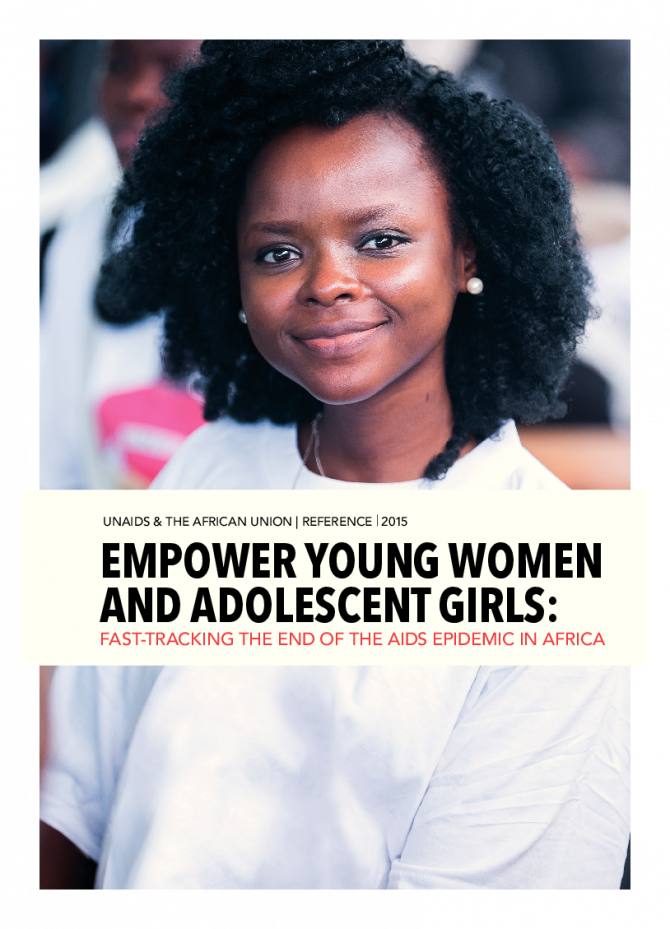
Empower young women and adolescent girls: Fast-Track the end of the AIDS epidemic in Africa
08 June 2015
Fast-tracking the end of the AIDS epidemic by 2030 requires strong political leadership and commitment to stop new infections and deaths among young women and adolescent girls and eliminate mother to child transmission of HIV. This requires building on, and extending Africa’s commitments on sexual and reproductive health and rights, expanding ministerial commitments on comprehensive sexuality education and stopping early marriage, adolescent pregnancy and expanding treatment service coverage.
Documents
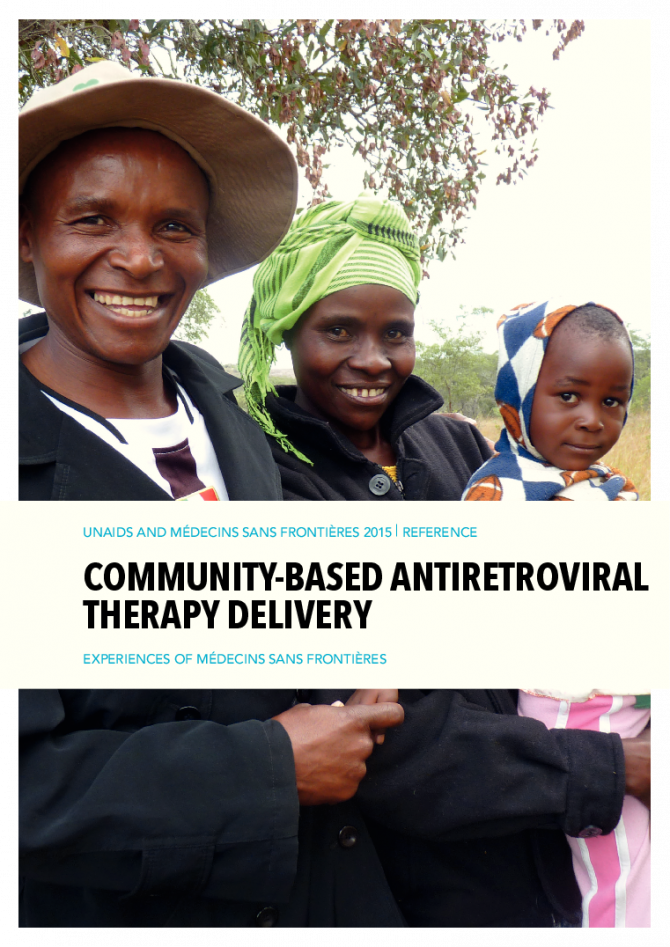
Community-based antiretroviral therapy delivery: experiences from MSF
20 April 2015
This document presents experiences of how community-based antiretroviral therapy (ART) delivery can improve both the level of access to treatment and the quality of health outcomes for people living with HIV. These experiences illustrate that community-based ART delivery is efficient, effective and high quality. This document draws from several Médecins sans Frontières (MSF) reports and articles regarding its experiences with community-supported ART delivery.
Documents
Diagnostics access initiative to achieve the 90-90-90 treatment target
22 April 2015
The world is uniting around an ambitious HIV treatment target to lay the groundwork to end the AIDS epidemic as a public health threat by 2030. Through national, regional and global-level consultations, diverse stakeholders are pledging to ensure that by 2020: 90% of people living with HIV know their HIV status; 90% of people who know their status receive treatment; 90% of people on HIV treatment have a suppressed viral load.

Documents
Biomedical AIDS research: recent and upcoming advances
13 April 2015
The report is divided into an overview section that articulates the views of the Chair of the Scientific Expert Panel on the top 10 biomedical research advances in 2014 and five important research findings anticipated in 2015. Thereafter, the report provides brief summaries written almost entirely by Scientific Expert Panel members. The topics are divided into three main categories, advances in the treatment of HIV and comorbidities; advances in HIV prevention; and advances in HIV pathogenesis, diagnostics and cure. Linked to each summary is a bibliography that provides a list of key articles for further reading.
Documents
Technical update on HIV incidence assays for surveillance and monitoring purposes
01 April 2015
This document is intended for epidemiologists, statisticians and laboratory technicians responsible for the use of HIV incidence assays for surveillance and epidemic monitoring purposes. People that are not technical experts in this field may prefer to first read the UNAIDS/WHO Working Group on Global HIV/AIDS and STI Surveillance published guidelines on When and How to Use Assays for Recent Infection to Estimate HIV Incidence at a Population Level for a basic introduction to this topic.
Documents
2014 progress report on the Global Plan
11 November 2014
This report reflects the results of data for the calendar year 2013. For the first time since the 1990s, the number of new HIV infections among children in the 21 Global Plan priority countries1 in sub-Saharan Africa dropped to under 200 000 [170 000–230 000]. This represents a 43% decline in the number of new HIV infections among children in these 21 countries since 2009, providing reasons for optimism as the Global Plan pushes towards its 2015 goals of 90% reduction. However, there are also reasons for concern. Between 2012 and 2013 the pace of progress in reducing new HIV infections among children across the priority countries slowed substantially. While a number of countries made impressive gains, others stagnated or lost ground.

Documents
Methodology— understanding the HIV estimates in the OUTLOOK: Cities report
27 November 2014
UNAIDS’ 2013 modelled estimates that the HIV prevalence in the urban areas of countries in sub-Saharan Africa is twice the national HIV prevalence elsewhere in the countries were multiplied by the population sizes of cities to identify a preliminary list of 300 cities in which the largest number of people living with HIV were likely to reside. For each of the 300 top-ranked cities, a comprehensive review of all available data sources was conducted to refine the modelled estimates and to produce a final estimate of the total number of people living with HIV in each city for the top-ranked 200 cities.