Feature Story
“I was in a cage. LEN gave me freedom”
20 October 2026
20 October 2026 20 October 2026After years of fear, a young trans woman in Gauteng found HIV protection that works for her: an injection she needs only twice a year.
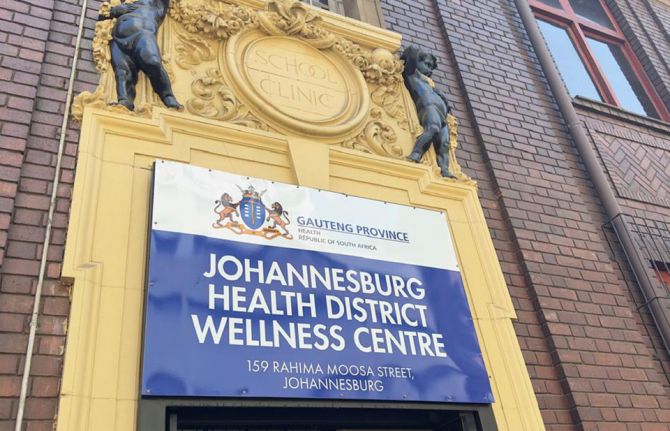
It was a quiet Wednesday morning when Yoweli walked into the clinic, the first person there. She was nervous, until she saw the LGBTQI+ flag on the wall. “I was like, okay, this is where we belong,” she says. “This is where we are accepted.”
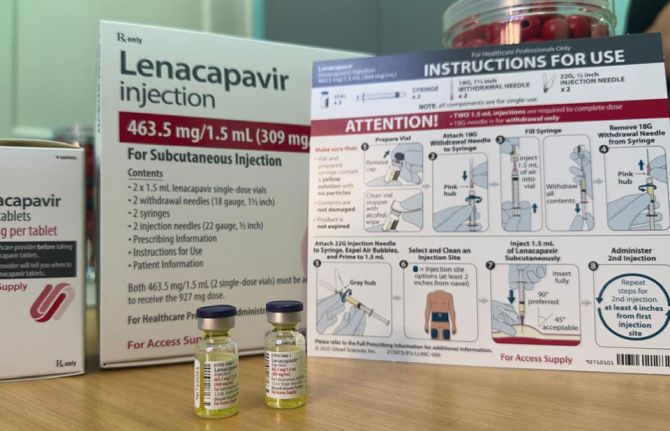
That morning, the 22-year-old got her first injection of lenacapavir (LEN), which protects people from HIV for six months at a time. On the way home, one thought stayed with her: “I’m protected. Finally, there’s something to protect me other than myself.”
Yoweli grew up in East London in the Eastern Cape, the youngest of six children, and knew she was a girl from about the age of nine. Last year she moved to Gauteng, where she lives with her older sister and is in her second year of a degree in psychology and information science.
She was 15 and just starting high school when she was raped. Afterwards, she decided the only way to stay safe from HIV was to stay away from sex completely.
At the age of 18, in 2022, she tried PrEP, the daily HIV prevention pill. She hid the pills in her bag so her family wouldn’t find them. She had also just started hormone therapy, and a second daily pill felt like too much. After two days, her doctor told her to stop because her liver couldn’t cope.
In 2024, a “friend” sexually assaulted her.
After that, whenever a relationship moved towards intimacy, fear took over: what if he has HIV and I don’t know? She made excuses, and relationships ended. “I was in a shell. I was in a cage,” she says.
Her biggest fear wasn’t getting HIV from a partner. It was being raped again, and this time being infected. “How am I gonna live with myself, knowing I got HIV from someone I don’t even know?” she says. “It wouldn’t be my fault. It wasn’t my consent.”
That fear is rooted in reality. In a 2018 community-led survey of 213 transgender women in Johannesburg, Cape Town and East London, 58% of them reported having experienced sexual violence. In a separate study of nearly 900 trans women, 63.3% were living with HIV in Johannesburg and 46.1% in Buffalo City, the metro that includes East London.
Yoweli now gets her hormone therapy at Charlotte Maxeke Academic Hospital in Johannesburg, where staff in the section serving key populations ask which name and pronouns she wants them to use. Elsewhere in the health system, she says, staff called her by her old name. When she objected, she was told it was a hospital, not a charity.
When a friend who works with an LGBTQI+ organisation told her about LEN, her reaction was instant. “I felt security,” she says.
The injection felt like a small pinch, and the spot was sore for three days. Her one word for life since: freedom. She goes out on weekends now, and she’s open to dating again. “I’m out there, being myself, as young as I am, and enjoying my youth.”
That moment was made possible partly by a fight fought far from Gauteng. When LEN was approved in the US, Gilead set a list price of $28,218 per person per year. UNAIDS pushed back publicly using credible cost estimation by experts which showed that the drug could cost no more than $40 per person a year to ensure equitable access. In September 2025, UNAIDS welcomed new deals with generic producers that would bring the price for HIV prevention down to just US$40 per person per year. While access to lenacapavir remains limited due to limited supply, the need for rollout expansion to turn the tide against new HIV infections in urgent. UNAIDS estimates that 1.3 million people were infected with HIV in 2024.
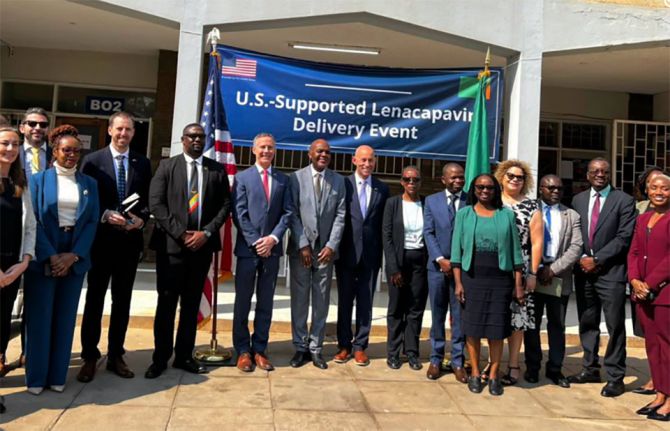
South Africa began rolling out LEN on 5 June 2026, with the first phase reaching about 360 public clinics and health facilities in high-burden districts across six provinces.
Yoweli wants it in more clinics, schools, churches and clinic queues. She has started counselling in her career journey and hopes to do a master’s in psychology so she can support other LGBTQI+ people, especially trans learners.
“We are also human,” she says. “As a trans woman, I deserve respect. I deserve to be seen.”
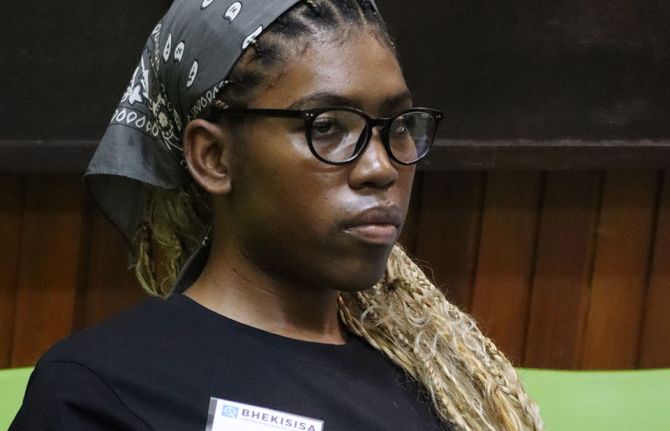
Speaking to Yoweli was made possible by the National Department of Health as part of journalist-training workshop on Len led by Bhekisisa Centre for Health Journalism.