

Press Statement
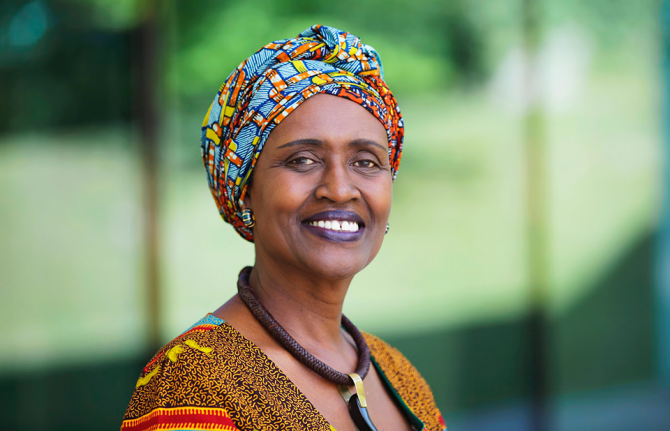
World AIDS Day 2025 — Message from Winnie Byanyima, Executive Director of UNAIDS
01 December 2025 01 December 2025This World AIDS Day, fragile progress is under threat.
Let me tell you about Noncedo Khumalo, a 24-year-old peer mentor in Eswatini. She supported women and girls in her community at risk of HIV, especially from older men who target them for transactional sex. But now, the programme funding her work has been terminated, and Noncedo has lost her job.
She is worried about the future. Many of the young women and girls she worked with are not well informed about HIV. Losing a peer mentor – a person like them, whom they can trust – puts them at risk of HIV infection.
Noncedo is not the only one.
Over 60% of all women-led HIV organizations have lost funding or been forced to suspend work. Other HIV prevention services have been hit hard too. The number of people using PrEP—HIV prevention medicines—has fallen by 64% in Burundi, 31% in Uganda and 21% in Viet Nam.
All this comes amid a regression in human rights. The number of countries criminalising same-sex relationships has increased this year with Burkina Faso, Niger, Mali and Trinidad and Tobago introducing criminalization. And this amidst a broader wave of new regressive legislation.
In the last 12 months alone, 316 million women were subjected to physical or sexual violence by an intimate partner. Laws protecting the bodily autonomy and sexual and reproductive rights of adolescent girls and women are under threat. Some countries have come close to repealing laws banning female genital mutilation.
In Sub-Saharan Africa, women who have experienced intimate partner violence in the past year are 3.2 times more likely to acquire HIV.
Make no mistake, there is a determined, organized, and well-funded campaign against human rights – particularly the rights of women and girls and LGBTIQ+ people. This campaign is pushing people further away from lifesaving HIV services
Yet in the hardest of circumstances, I am hopeful that we can overcome disruption and transform the AIDS response.
I take incredible inspiration from the communities, leaders, and civil society organisations who have rallied to support each other and the AIDS response.
Many governments have taken action to increase domestic funding for health and HIV funding. That has enabled some countries to maintain or even increase the number of people receiving HIV treatment.
The African Union Roadmap to 2030, adopted by Member States in 2025, focuses on sustaining the HIV response and strengthening health systems. The recently launched Accra Reset places health financing and sovereignty at the heart of a transformed development ecosystem.
UNAIDS is supporting countries to increase domestic financing for HIV. So far, 25 countries have developed their own HIV sustainability roadmaps towards a future HIV response, that is more self-reliant, better integrated into the broader health system, and that keeps communities at the centre.
However, with revenue collection in Africa at just 16% of GDP – far lower than the global average – there is only so much governments can do. Health taxes and other innovative measures can be helpful in the short term. But for serious domestic HIV financing, low and middle-income countries need continued economic growth, curbing of tax dodging, and progressive taxation of income, wealth, and corporate profits.
A major barrier is that the countries with the highest HIV burdens are also some of the world’s most indebted. Interest rates have spiked, with debt repayments now exceeding health budgets in many low and middle income countries.
This year’s Financing for Development Conference and G20 Summit highlighted the problem and urgent need for action. But in 2026, governments need to make debt restructuring a reality, allowing countries to increase their domestic HIV and health spending.
The good news is that some countries are advancing human rights. In Rwanda, for example, adolescents can now access sexual and reproductive services without parental consent from the age of 15 – empowering young people to protect their health and keep themselves safe.
The first doses of Lenacapavir, the new, twice-yearly PrEP injections have arrived in Africa. The rollout is not moving fast enough, too few manufacturers have been licensed to produce a generic version, and too many developing countries have been excluded from accessing a generic. This is fundamental issue of justice.
And in a tough financial landscape, donor governments are not walking away. The America First Global Health strategy is continuing significant investment in the HIV response. And the eighth replenishment of the Global Fund to Fight AIDS, Tuberculosis and Malaria has secured pledges of more than US$ 11.34 billion so far – with several more major pledges expected.
Developing countries are beginning the gradual transition towards more sustainable, inclusive, and nationally owned HIV responses. That is how we can overcome disruption and end AIDS as a public health threat.
There is no silver bullet. No one measure alone will get us there. But if governments, communities, and international organisations can come together to unlock domestic HIV financing, protect human rights and gender equality, and make new innovations affordable and accessible for all, we can seize this moment. The world can end AIDS.
UNAIDS
The Joint United Nations Programme on HIV/AIDS (UNAIDS) leads and inspires the world to achieve its shared vision of zero new HIV infections, zero discrimination and zero AIDS-related deaths. UNAIDS unites the efforts of 11 UN organizations—UNHCR, UNICEF, WFP, UNDP, UNFPA, UNODC, UN Women, ILO, UNESCO, WHO and the World Bank—and works closely with global and national partners towards ending the AIDS epidemic by 2030 as part of the Sustainable Development Goals. Learn more at unaids.org and connect with us on Facebook, Twitter, Instagram and YouTube.