

Press Release
Countries, communities and partners underscore UNAIDS’ vital role in advancing the HIV response and health sovereignty at UNGA81
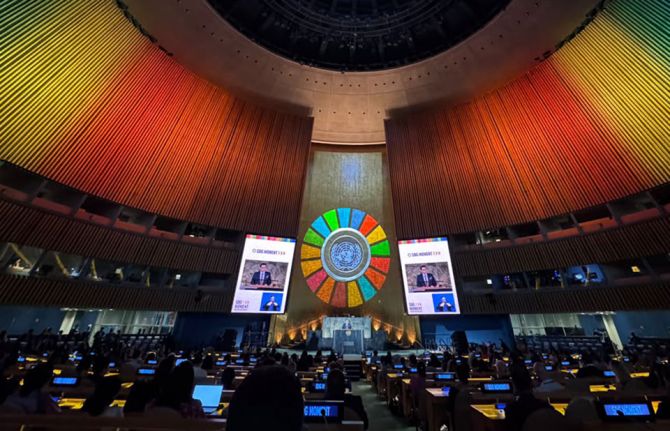
25 September 2026 25 September 2026NEW YORK/GENEVA, 25 September 2026—At the 81st session of the United Nations General Assembly (UNGA81) in New York, the global community made it clear: ending AIDS remains a shared responsibility. From countries and community leaders to international partners, a powerful united front stepped up to bolster UNAIDS’ critical mission to advance the end of AIDS as a public health threat by 2030.
This coalition was anchored by high-level dialogues on African health sovereignty, equitable access to medicines and the transformation of the Joint United Nations Programme on HIV/AIDS (UNAIDS), demonstrating that UNAIDS’ agenda is sustained by renewed by global solidarity.
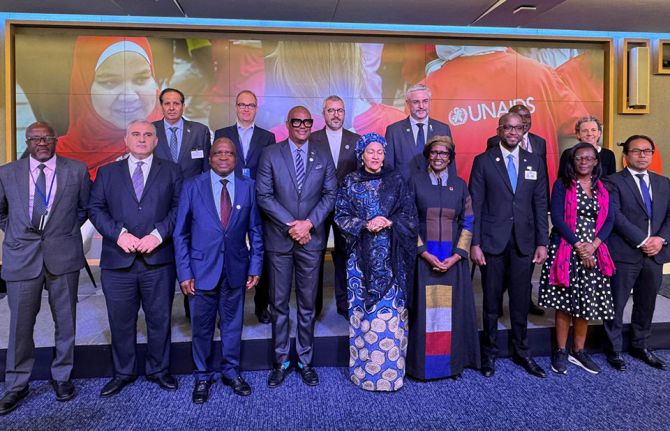
Joining one of UNAIDS’ high-level events, United Nations Deputy Secretary-General Amina Mohammed highlighted the Joint Programme’s contribution over more than three decades, saying the global HIV response is “among the finest achievements of the UN.”
Strong backing from countries
A recurring message throughout UNGA81 was the value countries and partners place on UNAIDS’ unique platform for driving action and supporting countries and communities to advance progress towards ending AIDS by 2030 while strengthening preparedness for future health threats.
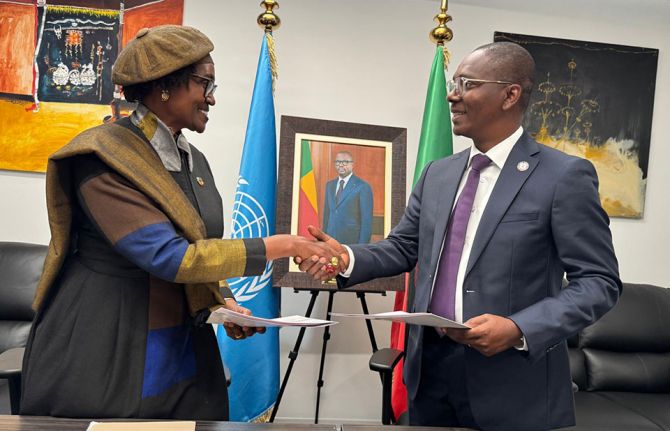
The Government of Benin stepped forward to sign a new agreement with UNAIDS, providing over €500,000 to support UNAIDS' work in Benin over 2026-2027.
President Duma Boko of Botswana reaffirmed his country's confidence in UNAIDS and the support it has provided throughout Botswana's HIV response. He also offered additional support for UNAIDS' presence in the country and sub-regionally and recognized UNAIDS in his plenary remarks to the UN General Assembly.
Benin and Botswana are among a growing number of programme countries making new or enhanced commitments to UNAIDS. Recent financial contributions and commitments from countries including Algeria, China, Côte d'Ivoire, Kazakhstan, the Lao People's Democratic Republic, the Philippines, South Africa and Thailand demonstrate broad recognition of the continuing value of the Joint United Nations Programme on HIV/AIDS.
"Countries are telling us: stay with us, we need you," said Ms Byanyima. "Their support speaks volumes about the impact UNAIDS has had over decades and about the value of maintaining our partnership and support during this time of transformation and change."
Mobilizing action on African health sovereignty
One of UNAIDS’ flagship event during UNGA81 brought together ministers, policymakers, local pharmaceutical manufacturers, civil society representatives, people living with HIV and regional and international institutions to accelerate African local production of medicines and health technologies.
Convened jointly with the African Union Development Agency (AU NEPAD), the event focused on advancing health sovereignty by expanding production of lifesaving HIV medicines and other critical health technologies across the continent.
Participants explored practical steps to accelerate local manufacturing of cutting-edge HIV prevention and treatment technologies, strengthen regulatory systems and create sustainable markets that can expand access to essential medicines. The high-level participants underscored a shared conviction that achieving health sovereignty requires Africa to become a producer, not simply a consumer, of critical health products.
Building confidence in the future of UNAIDS
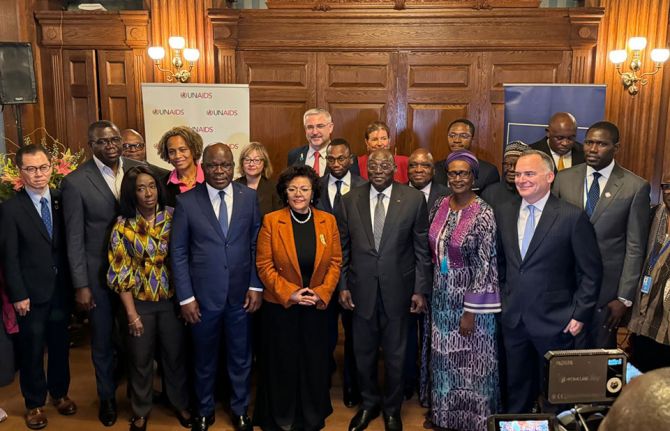
In partnership with the Governments of Botswana and the Netherlands, UNAIDS also convened a high-level discussion on the transformation of the Joint Programme and its future role in the global HIV response.
The event attracted strong interest and participation from over 16 ministers, with additional senior government representatives and representatives of civil society, highlighting that ending AIDS requires the UN to maintain a strong, coordinated global HIV response, led by the Joint Programme on HIV/AIDS.
Participants welcomed the progress UNAIDS has already made in its transformation process and underscored the importance for the UN to maintain its unique mandate to unite governments, communities, multilateral organizations and development partners through the Joint Programme on HIV/AIDS.
From commitment to action
At UNGA81, UNAIDS came with a clear mission to carry forward the momentum generated by the United Nations General Assembly 2026 Political Declaration on HIV/AIDS adopted in June this year, and the Global AIDS Strategy 2026-2031, engaging governments, communities and partners around the actions needed to end AIDS as a public health threat by 2030.
"What we heard throughout this week was a powerful affirmation from countries and partners that UNAIDS remains essential not only to ending AIDS, but also to advancing UN reform, health sovereignty, expanding access to medicines and addressing the inequalities that continue to drive disease,” said Ms Byanyima.
UNAIDS
The Joint United Nations Programme on HIV/AIDS (UNAIDS) leads and inspires the world to achieve its shared vision of zero new HIV infections, zero discrimination and zero AIDS-related deaths. UNAIDS unites the efforts of 11 UN organizations—UNHCR, UNICEF, WFP, UNDP, UNFPA, UNODC, UN Women, ILO, UNESCO, WHO and the World Bank—and works closely with global and national partners towards ending the AIDS epidemic by 2030 as part of the Sustainable Development Goals. Learn more at unaids.org and connect with us on Facebook, Twitter, Instagram and YouTube.