Feature Story
STI Online: Supplement on UNAIDS estimation methods and tools
25 July 2008
25 July 2008 25 July 2008
UNAIDS will publish the
2008 report on the global
AIDS epidemic on
Tuesday 29 July.
Ahead of the publication of the 2008 Global Report, Sexually Transmitted Infections, a peer review journal for health professionals and researchers in sexual health has published a supplement giving a description and underlying data for UNAIDS estimation methods and tools, as well as analyses on a range of epidemiological issues including quantifying HIV burden in emergencies, the quality of global serosurveillance and a method for estimating averted infections.
UNAIDS will publish the 2008 report on the global AIDS epidemic on Tuesday 29 July. This year’s report will feature updated global and regional epidemiologic estimates on HIV and new trends in the epidemic’s evolution and will provide data and analysis on the 25 UNGASS indicators reported on by countries.
Extract
“While the 2007 AIDS Epidemic Update report noted that the downward adjustments were the result of better data leading to changes in assumptions and thereby estimates, we recognize the need for the highest level of transparency and opportunity for scientific critique.
Since 2004 we have provided detailed descriptions of the tools and assumptions used in generating HIV and AIDS estimates, as well as the data and analyses underpinning these assumptions. This supplement assembles important new data relating to several assumptions used for the new HIV and AIDS estimates. By bringing together a new collection of methodological papers in this supplement, we aim to provide easy access to the scientific basis underlying the latest HIV and AIDS estimates for 2007.”
Read full supplement:
Improved data, methods and tools for the 2007 HIV and AIDS estimates and projections (STI Online. Copyright © 2008 by the BMJ Publishing Group Ltd.)
STI Online: Supplement on UNAIDS estimation metho
Publications:
Improved data, methods and tools for the 2007 HIV and AIDS estimates and projections (STI Online. Copyright © 2008 by the BMJ Publishing Group Ltd.)
Related

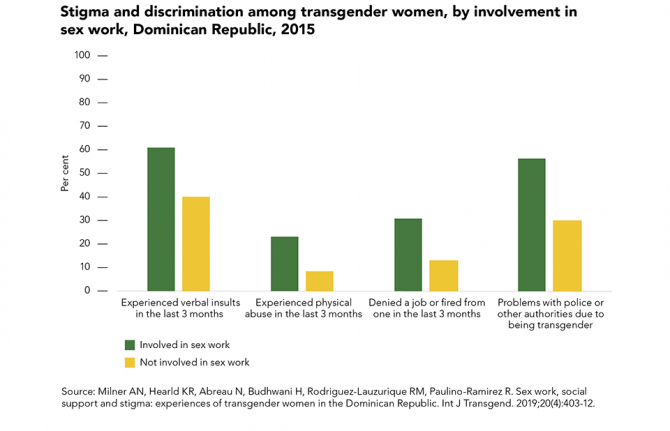 Transgender sex workers face frequent abuse
29 March 2022
Feature Story
The Life Initiative – Hotels addressing AIDS
23 July 2008
23 July 2008 23 July 2008 UNAIDS is involving the Mexican hotel industry in a prevention campaign around the International AIDS Conference in August 2008 and in the longer term through the development of sustainable long term HIV workplace policies & programmes Photo: UNAIDS/R.Castillo
The International AIDS conference (AIDS 2008) will bring to Mexico approximately 20,000 delegates and 2000 journalists from all over the world from 3-8 August 2008. AIDS 2008 presents a unique opportunity to engage the local hotel industry on issues related to HIV.
UNAIDS and the Mexican hotel industry are launching an HIV prevention campaign entitled “The Life Initiative – Hotels addressing AIDS”. Aimed at hotel guests and staff the initiative will raise awareness about HIV prevention and non-discrimination of people living with HIV. The initiative will also promote the development of sustainable long- term HIV workplace policies and programmes in the hotels. The hotel industry is a key player in the response to AIDS as it can reach a wide and diverse audience with HIV prevention information including its large workforce.
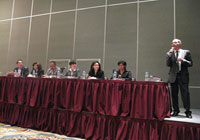 A first inaugural meeting of all the participating hotels took place at the Hotel Marquis in Mexico City on July 4th 2008. Photo: UNAIDS/R.Alion
The prevention campaign will include the display of AIDS related leaflets, posters and brochures, art exhibitions, distribution of free male and female condoms, and showing of AIDS related films in all participating hotels. Condoms will be distributed at all participating hotels via the “condom project” which has been financed with the support from the United Nations Population Fund (UNFPA).
Sustainable long term HIV workplace policies and programs in hotels
One of UNAIDS’ partners in this initiative, IMPULSO - a network of NGOs experts on the provision of technical assistance on HIV in the workplace – will provide capacity building trainings which include situational analysis, stigma and discrimination program and HIV policy and program development. IMPULSO’s specific workshops in hotels also include training in the use and implementation of a software called Workplace Policy Builder designed to assist companies in developing their own AIDS policies.
 Condoms will be distributed at all participating hotels via the “condom project” which has been financed with the generous support from UNFPA. Photo: UNAIDS/R.Castillo
More than 5,100 hotel employees have already been trained, covering 7,738 rooms in hotels in Mexico City. They received education information on HIV prevention, an overview of the epidemic in Mexico, and were sensitized on issues related to stigma and discrimination in the workplace.
“In Mexico, we note that nearly 200,000 people are living with HIV and around 5,000 people died in 2006 from diseases related to AIDS. The XVII International AIDS Conference presents a unique opportunity to involve the local hotel industry on issues related to HIV,” said UNAIDS Director of Regional Office for Latin America and the Caribbean, Cesar Nuñez.
All partners will announce the launch of the initiative around a press event on 06 August 2008 at 09:00- the International AIDS Society’s press center. For further information please contact UNAIDS Chief of Private Sector Partnerships, Regina Castillo (castillor@unaids.org)
|
Hotels participating in the “Life Initiative- Hotels addressing AIDS” For this initiative, the official AIDS 2008 international & national hotel chains have been targeted. The 5 national hotel chains are: Grupo Posadas, Hoteles Misión, Grupo Empresarial Ángeles, Grupo Del Ángel and Grupo Hoteles Emporio. The 8 international hotel chains are: Best Western International, InterContinental Hotels Group, Starwood Hotels & Resorts, Sol Melia Hotels & Resorts, Radisson Hotels & Resorts, Ramada International, Group ACCOR and Four Seasons Hotels. So far the following hotels have joined the initiative: NOVOTEL STA FE HOTEL GRAN MELIÁ HOTEL RADISSON FLAMINGOS HOTEL FIESTA AMERICANA REFORMA HOTEL HOLIDAY INN REFORMA HOTEL EMPORIO FIESTA INN CENTRO HISTORICO HOTEL GENEVE HOTEL MARQUIS HOTEL HOLIDAY INN ZONA ROSA HOTEL FIESTA AMERICANA GRAND HOTEL CASABLANCA HOTEL EMBASSY SUITE EUROSTAR SUITE GRAN HOTEL DE LA CIUDAD DE MEXICO HOTEL CENTURY ZONA ROSA NOVOTEL PERINORTE NOVOTEL MONTERREY HOTEL CAMINO REAL HOTEL SHERATON CENTRO HISTORICO MEXICO |
The Life Initiative – Hotels addressing AIDS
Cosponsors:
International Labour Organization (ILO)
Partners:
IMPULSO / Ave de Mexico
CONAES
International AIDS Society (IAS)
Constella Group
Secretary of Tourism in Mexico
CENSIDA
Press centre:
Report finds that Business Coalitions are helping one million companies tackle AIDS in the workplace (24 Jan 2008)
Feature stories:
ILO sees significant improvement in workplace attitudes to HIV (25 April 2008)
Multimedia:
Watch video on the Life Initiative project
Publications:
ILO Code of Practice on HIV in the workplace
Photgallery
(See Powerpoint presentation)
Related

Feature Story
International labour standard would strengthen the HIV response in the workplace
21 July 2008
21 July 2008 21 July 2008
A majority of the 33 million people living
with HIV worldwide are working and in
their most productive years.
Photo: UNAIDS/ILO/C.Serge
A majority of the 33 million people living with HIV worldwide are working and in their most productive years. They generate much-needed income to support their families, and their skills and experience make a big contribution to their workplace and country. However, despite major advances in attitudes and knowledge about HIV, many workers still face discrimination, stigma and fear of losing their job.
Yet the workplace can be one of the most effective settings for responding to AIDS as it is a community where people come together to discuss and learn from one another. Existing structures and facilities such as occupational health services can also be used for HIV prevention, care and support services.
New international labour standard
To expand and strengthen the role of the workplace in the global response to AIDS, the International Labour Organization (ILO), which is a cosponsor of UNAIDS, has launched a process to adopt a new international labour standard in the form of an autonomous Recommendation.
International labour standards are legal instruments drawn up by the ILO's constituents —governments, employers and workers—and which set out basic principles and rights at work.
Strengthening the Code of Practice
If adopted, the new standard would complement, reinforce and extend the impact of the existing ILO Code of Practice on HIV/AIDS and the world of work, which focuses on the protection and promotion of rights and it would also strengthen the workplace contribution to achieving universal access to HIV prevention, treatment, care and support services.

Despite major advances in
attitudes and knowledge
about HIV, many workers still
face discrimination, stigma
and fear of losing their job.
Photo:UNAIDS/ILO/J.Maillard
The current ILO Code of Practice has been integrated into laws and policies in many countries, but because it is a voluntary instrument its uptake is optional. There is also no provision for monitoring the quality or extent of its use, as there would be in the case of a standard.
Although the implementation of a new standard would not be mandatory for member States, it would have to be submitted, once adopted, to national authorities “for the enactment of legislation or other action”. This will provide the ILO and its constituents with an opportunity to review action taken.
The standard presents a good opportunity for enhancing HIV support services in the workplace according to the Director of the ILO’s Programme on HIV/AIDS and the World of Work, Dr Sophia Kisting: “This standard setting process provides us with a special opportunity to work closely with different departments in the ILO, with our constituents, UNAIDS and with networks of people living with HIV. We are encouraged by the positive responses and support we have had, and look forward to the scaling up of concrete responses at the workplace through a strengthened legal-policy environment."
“HIV/AIDS and the World of Work”
The discussion of a new international standard is on the agenda for the 2009 and 2010 International Labour Conferences. In preparation for these discussions, the ILO has prepared an overview report “HIV/AIDS and the World of Work” which includes the most comprehensive compilation to date of national laws and policies on HIV, covering 170 countries.
The report finds that more than 70 ILO member States have, or are in the process of adopting, a general law on HIV, while 30 countries have adopted, or are in the process of adopting, specific workplace rules. Other countries deal with HIV under either equal opportunities or public health legislation, and some have integrated HIV into labour legislation.

the workplace can be one of the most
effective settings for responding to AIDS
as it is a community where people come
together to discuss and learn from one
another. Photo: UNAIDS/J.Spaull
This report and its accompanying questionnaire have been sent to the ILO's member States. Governments are to reply to the questionnaire in consultation with employers and workers which asks for their views on the scope and content of the proposed standard. Labour ministries are also advised to consult with other national ministries and institutions dealing with HIV, and to include organizations of people living with HIV and others engaged in national programmes.
Based on the responses to the questionnaire, a second report will then be produced with draft conclusions for discussion at the 2009 International Labour Conference, which will prepare the path for the adoption of the new international labour standard by 2010.
The “ILO Code of Practice on HIV/AIDS and the world of work” was adopted in 2001 in wide consultation with tripartite constituents in all regions. It has been translated into 57 languages to date. A framework for action related to the workplace, it contains principles for policy development and practical guidelines for programmes at enterprise, community and national levels and it covers in the following main areas:
- Prevention of HIV
- Management and mitigation of the impact of AIDS on the world of work
- Care and support of workers infected and affected by HIV/AIDS
- Elimination of stigma and discrimination on the basis of real or perceived HIV status.
International labour standard would strengthen th
Cosponsors:
Feature stories:
ILO sees significant improvement in workplace attitudes to HIV (25 April 2008)
Publications:
HIV/AIDS and the world of work (pdf, 742 kb)
ILO Code of Practice on HIV/AIDS and the world of work
Implementing the ILO Code of Practice on HIV/AIDS and the world of work: an education and training manual
Saving lives, protecting jobs. ILO/SHARE Report April 2008 (3.7 Mb, pdf) ( fr )

Feature Story
Third meeting of the International Task Team on HIV-related Travel Restrictions
18 July 2008
18 July 2008 18 July 2008The International Task Team on HIV-related Travel Restrictions concluded its third meeting with draft recommendations towards the elimination of HIV-specific restrictions on entry, stay and residence. In the coming months, these will be finalized and presented to the boards of the Global Fund and UNAIDS this November and December.
Restricting entry, stay or residence in a country due to HIV positive status alone is discriminatory, and in today’s highly mobile world, such restrictions have even greater impact on people living with HIV. In 2008, some 67 countries continue to have such restrictions.
In early 2008, UNAIDS set up an international task team of governments, civil society groups and international organizations to bring the issue of HIV-related travel restrictions back onto the agenda and promote action towards their elimination. Co-chaired by UNAIDS and the Government of Norway, the Task Team met for the first time in Geneva in February 2008, followed by a second meeting at the Office of the UN High Commissioner for Human Rights in Geneva in April, and the third and final meeting in Madrid at the headquarters of the World Tourism Organization (UNWTO).
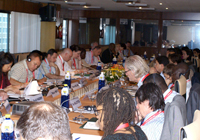
At the third meeting, the Task Team took
stock of all the advocacy and activities
conducted by Task Team members against
travel restrictions and noted that there
indeed is much greater momentum toward
their elimination. Credit: UNAIDS
The third meeting, which took place from 24-26 June, was opened by Francisco Elías de Tejada Lozano, former Spanish Ambassador to the Global Fund, Spanish Ministry of Foreign Affairs, and Francesco Frangialli, Secretary-General of UNWTO. Frangialli underlined that travel restrictions based on HIV status are discriminatory, and are a major concern to the entire tourism sector.
“HIV is not something that transmits through the air. If there are going to be restrictions, they have to be rational and reflect legitimate public health concerns. For HIV, what’s needed is prevention information and dialogue,” said Frangialli.
At the third meeting, the Task Team took stock of all the advocacy and activities conducted by Task Team members against travel restrictions and noted that there indeed is much greater momentum toward their elimination.
For example, civil society groups conducted significant advocacy leading up to the High-Level Meeting on AIDS at the UN General Assembly in June. At that meeting, both UN Secretary-General Ban Ki-Moon and UNAIDS Executive Director Peter Piot called for the end of HIV-related travel restrictions in their speeches at the opening session of the General Assembly. “Stigma and discrimination around AIDS remain as strong as ever: and in this context I join my voice with the Secretary General and I call on all countries to drop restrictions on entry to people simply because they are living with HIV,” said Dr Piot.
Task Team members also underlined during the third meeting that ongoing awareness-raising is needed, and that the Task Team’s work has to be followed by intense country-level action that leads to the elimination of travel restrictions.
“At this point in the epidemic, with over 25 years of experience, it’s hypocrisy if there’s no change and governments say that they’re committed to ending stigma and discrimination,” said Craig McClure, Executive Director of the International AIDS Society.
Susan Timberlake, Task Team Co-chair and Senior Human Rights and Law Adviser at UNAIDS, stated that more effort is needed to ensure that tourists, migrants and other mobile populations are addressed in national AIDS responses.
“Countries need to understand that any HIV vulnerability related to mobility is not just about tourists and migrants, it is also about nationals, entering, departing and re-entering. If governments really want to reduce HIV vulnerability related to mobility they should ensure that all mobile people benefit from appropriate HIV programmes and services. In the era of Universal Access and increasing globalization, no comprehensive AIDS response should leave out people on the move,” she said.
Restrictions on the entry, stay and residence of people living with HIV will be highlighted during a Special Session at the International AIDS Conference in Mexico this August, as well as the Global Forum on Migration and Development in the Philippines in October. The final recommendations of the Task Team will be presented in a report at the next meeting of UNAIDS Programme Coordinating Board in December 2008 and to the board of the Global Fund of Fight AIDS, TB and Malaria in November.
Third meeting of the International Task Team on H
Feature stories:
HIV-related travel restrictions (04 March 2008)
Second meeting of the International Task Team on HIV-Related Travel Restrictions (April 2008, OHCHR web site)
External links:
Global Database on HIV-related Travel Restrictions
Global Fund 16th Board Meeting – Acknowledgement of the UNAIDS Commitment to Create a Task Team on Travel Restrictions
IAS Policy Statement
World Tourism Organization (UNWTO)
Multimedia:
Listen to Shaun Mellors, Senior Technical Adviser, Human Rights, International HIV/AIDS Alliance
Listen to Gracia Violeta Ross Quiroga, National Chair, Bolivian Network of People with HIV/AIDS
Publications:
Entry Denied: Denying entry, stay and residence due to HIV status – Ten things you need to know (pdf, 2.90 Mb)
Update and information note to the UNAIDS Programme Coordinating Board (23 - 25 April 2008) and the Board of the Global Fund to Fight AIDS, Tuberculosis and Malaria (28-29 April 2008) (pdf, 133 Kb)
Related

Feature Story
Senate vote renews US government’s global AIDS programme PEPFAR
17 July 2008
17 July 2008 17 July 2008
Credit: President's Emergency Plan for
AIDS Relief
The US Senate has voted on legislation authorizing US$ 48 billion for AIDS, TB and malaria over the next five years. The legislation will replace and expand three-fold the current US$ 15 billion act passed by Congress in 2003 which expires at the end of September.
U.S. President George W. Bush announced the President's Emergency Plan for AIDS Relief (PEPFAR/Emergency Plan) in a State of the Union address in 2003. It was the largest commitment ever by a country for an international health initiative dedicated to a single disease.
There are 15 focus countries in sub-Saharan Africa, Asia and the Caribbean being assisted by the PEPFAR.
Senate vote renews US government’s global AIDS pr
Press centre:
UNAIDS welcomes United States Senate action to renew its global AIDS programme (16 July 2008)
Statement on PEPFAR reauthorization vote by full US House of Representatives (03 April 2008)
UNAIDS welcomes call for $30 billion to the AIDS response (30 May 2007)
External links:
Related
Feature Story
New UNAIDS policy on HIV and international labour migration
16 July 2008
16 July 2008 16 July 2008
Recent estimates indicate that 86 million
people across the world are international
labour migrants.
Photo: ILO/UNAIDS/H.J.Davis
Recent estimates indicate that 86 million people across the world are international labour migrants. Migrant workers bring huge benefits to their families and countries of origin through remittances – the sending of money home; and to their countries of destination by contributing to the workforce, economy and society in which they live. Yet at the same time, migrant workers face particular risks and vulnerabilities to HIV which must be addressed.
UNAIDS, in collaboration with the International Labour Organization (ILO) and International Organization for Migration (IOM) have developed a policy brief focusing on the HIV-related needs and rights of international labour migrants, irrespective of their legal status and whether their stay in the destination country is short or long term.
HIV risk
Migrant workers often experience isolation and stress as a result of being separated from their families and communities, or perhaps having to deal with harsh working and living conditions. These factors can lead them to engage in behaviours which increase their risk of HIV, such as unsafe commercial or casual sex. Wives and partners of migrant workers who stay in their home countries may also be put at risk of HIV, for example if their husband returns home HIV positive. Yet businesses which employ migrant workers can and are doing things to alleviate some of these risks.
“We have made good progress towards providing family-friendly accommodation or housing allowances, so that migrant workers can bring their families with them if they wish,” notes Brian Brink and Edward Bickham of AngloAmerican, a global mining company with employees in countries hard hit by HIV such as South Africa.
International labour migration and people living with HIV

Migrant workers, irrespective of their HIV
status, need to be able to access culturally
and linguistically appropriate HIV
programmes in origin, transit and destination
countries. Photo: ILO/UNAIDS/J.Maillard
International labour migrants who acquire HIV in transit or destination countries, or who are already living with HIV, often don’t have adequate access to HIV and health services. Migrant workers, irrespective of their HIV status, need to be able to access culturally and linguistically appropriate HIV programmes in origin, transit and destination countries.
Governments, civil society, businesses, employee organizations and international organizations all have a role to play in addressing HIV among migrant workers.
“Working abroad is full of challenges and threats – and one of the threats is HIV,” notes Nerissa Mercado of the Overseas Workers Welfare Agency in the Philippines. “We must help ensure our overseas Filipino workers come home with success stories and are HIV free; after all, their sacrifices help keep the economy afloat. We must likewise assist them if they do become HIV positive”.
Migration and human rights
More than 100 countries place restrictions on people living with HIV in entering or remaining in a country for any purpose, and international labour migrants may be refused entry or face deportation if they are found to be HIV positive. Where HIV testing occurs in the context of migration, internationally agreed standards on informed consent, confidentiality, counselling and referral to services are not routinely applied. Furthermore, international labour migrants receiving anti-retroviral treatment in the destination country may also have their treatment disrupted by deportation, if they do not have access to HIV and health services in their home countries.
International labour migrants, whether in regular or irregular status, should have the same human right to health as nationals. Respecting and promoting their health is essential for achieving national and international public health goals such as universal access to HIV prevention, treatment, care and support, as well as improving the productivity and economic independence of individuals and families.
New UNAIDS policy on HIV and international labour
Cosponsors:
International Labour Organization (ILO)
%Partners:
International Organization for Migration (IOM)
%Press centre:
Statement of the UNAIDS Secretariat to the Sixty-First World Health Assembly - Health of Migrants (21 May 2008)
Feature stories:
European meeting discusses migration, TB and HIV (15 October 2007)
Publications:
UNAIDS Policy brief - HIV and International Labour Migration (UNAIDS, ILO, IOM) (pdf, 206 kb)
Expanded version: UNAIDS Policy brief - HIV and International Labour Migration (UNAIDS, ILO, IOM) (pdf, 210 kb)
Related
 Know your HIV status: First European testing week takes off
27 November 2013
Feature Story
Ballack captains “Goal4Africa” team
14 July 2008
14 July 2008 14 July 2008
UNAIDS Special Representative Michael
Ballack participated in the “Goal4Africa”
all-star benefit football match Munich on
12 July to raise funds for education in Africa
Credit: Goal4Africa
UNAIDS Special Representative Michael Ballack participated in the Goal4Africa all-star benefit football match held at Allianz Arena in Munich, Germany on 12 July in honour of Nelson Mandela’s 90th birthday. The event was lead by Goal4Africa Ambassador and international football star Clarence Seedorf and broadcast live in many countries worldwide.
Speaking at a press conference before the match, Ballack highlighted how educating young people about HIV prevention is crucial in the AIDS response.

Spectators, fans and television viewers
made donations for each goal scored by
their favourite player via SMS text message
and online on the Goal4Africa web site.
Credit: Goal4Africa
Ballack was team captain of the winning side in an all-star international game which included some of the world’s best football players including Zé Roberto, Gennaro Gattuso and Andriy Shevchenko and Formula1 legend Michael Schumacher.
Spectators, fans and television viewers made donations for each goal scored by their favourite player via SMS text message and online on the Goal4Africa web site. Funds raised will go to education projects in Africa
Michael Ballack, as UNAIDS Special Representative, reaches out to young people by educating on HIV and urging young people to make smart prevention choices.
Ballack captains “Goal4Africa” team
External links:
Related


Feature Story
Strong HIV and Human Rights Activist appointed as new UN Special Rapporteur
11 July 2008
11 July 2008 11 July 2008
Anand Grover, head of the HIV/AIDS
Unit of Lawyer’s Collective (India)
and a member of the UNAIDS
Reference Group on HIV and
Human Rights
Anand Grover, head of the HIV/AIDS Unit of Lawyer’s Collective (India) and a member of the UNAIDS Reference Group on HIV and Human Rights, has been appointed the Special Rapporteur on the right of everyone to the enjoyment of the highest attainable standard of physical and mental health by the UN Human Rights Council.
A well-known long-time advocate and activist on HIV and human rights, Anand Grover is a practicing lawyer in the Bombay High Court and the Supreme Court of India. He has argued many cases relating to the rights of people living with HIV, including rights of sex workers and the first HIV case in India relating to employment law.
Mr. Grover has worked closely with UNAIDS on HIV-related rights and law issues for many years and has been a valuable resource for the Programme. In this regard, he has served on the UNAIDS Reference Group on HIV and Human Rights which advises UNAIDS on how it can strengthen the commitment and capacity of governments, civil society and the private sector to protect and promote human rights in relation to HIV. At the request of the Government of India, Anand Grover and the Lawyers Collective HIV/AIDS Unit drafted the HIV Bill which is likely to be introduced in Parliament this year.
Mr Grover takes over from Paul Hunt, who has been the Special Rapporteur since the mandate was created in 2002 and has completed his maximum term of six years. Paul Hunt is also a member of UNAIDS Reference Group on HIV and Human Rights. In his country visits and reports to the Human Rights Council, Mr Hunt has been a great champion of human rights issues related to HIV.
Susan Timberlake, UNAIDS Senior Human Rights and Law Adviser, believes that UNAIDS engagement with Special Rapporteurs is an important way to bring greater attention to HIV-related human rights issues globally and in countries.
“We are delighted at the appointment of Anand Grover to UN Special Rapporteur on the right of everyone to the enjoyment of the highest attainable standard of physical and mental health. A tireless HIV and human rights activist, he will no doubt continue the pioneering work of his predecessor Paul Hunt. We look forward to working closely with him to help ensure the full realization of the human rights and fundamental freedoms that are critical to a successful response to HIV.”
Special Rapporteurs
Special Rapporteurs are independent experts that serve in their personal capacity, supported by the Office of the UN High Commissioner for Human Rights (OHCHR). They undertake country missions at the invitation of a country or on the basis of a standing invitation. During such country missions, they assess the general human rights situation, as well as specific issues under their respective mandates. They meet with national and local authorities, including judges and parliamentarians; the national human rights institution; the UN and other inter-governmental agencies; the media and victims of human rights violations.
On the basis of their findings, they present conclusions and recommendations through public reports to the UN Human Rights Council, and to the concerned governments. Special Rapporteurs also have a mandate to take up individual cases of human rights violations which they address directly to the Minister of Foreign Affairs in a country.
More information about the mandate of the Special Rapporteur on the right of everyone to the enjoyment of the highest attainable standard of physical and mental health (including reports of country missions and summaries of communications to governments) can be found on the OHCHR web site
Strong HIV and Human Rights Activist appointed as

Feature Story
The UN Secretary General visits Red Ribbon Centre Beijing
09 July 2008
09 July 2008 09 July 2008
During his official visit to China, the UN
Secretary General and his wife Madame
Yoo Soon-taek paid a visit to Ditan hospital
in Beijing. Photo: UNAIDS
During his official visit to China, the UN Secretary General and his wife Madame Yoo Soon-taek paid a visit to Ditan hospital in Beijing on 2 July to discuss a range of issues with people living with HIV and meet the staff and volunteers who work at the hospital.
The Beijing Ditan hospital, established in 1946, specializes in infectious diseases and is one of China’s leading institutions providing treatment and care for people living with HIV. Affiliated with the hospital is the Red Ribbon Centre which compliments the hospital’s work by providing care and psychological support to people living with HIV.
The centre provides a number of services including information, HIV testing and counselling, as well as training for volunteers and a legal aid system to advise people living with HIV. It is a place where HIV positive people can network, and above all, be themselves without fear of stigma.
During his visit the Secretary General said that HIV remained at the top of his agenda and praised the work of the volunteers at the Red Ribbon Centre. In his conversations with those living with HIV he was keen to discuss how stigma and discrimination impacts their lives, an issue he covered in his recent remarks at General Assembly High-level Meeting on AIDS New York on 10 June 2008.
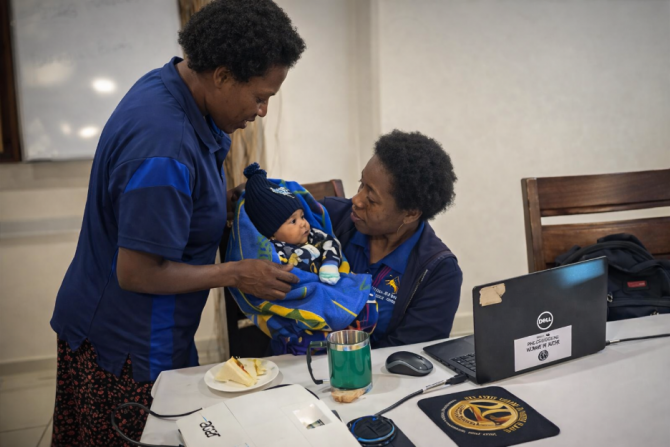
A mother, who gave birth three weeks ago and who is HIV positive was one of the people with whom the Secretary General met. They discussed how testing positive for HIV had influenced her life, her current health status and the treatment she and her baby receive in Ditan hospital.
The Secretary General and Madame Yoo Soon-taek were accompanied on the visit by officials representing the UN in China.
The UN Secretary General visits Red Ribbon Centre

Feature Story
Examining links between AIDS and climate change
07 July 2008
07 July 2008 07 July 2008 The AIDS epidemic and the climate change phenomenon are two of the most important “long wave” global issues of the recent past, present and future. They share similarities, interactions, and present possibilities for a more united response. Yet, these links have received little analysis so far.
For that reason, several UN agencies, research institutes from Switzerland, India, South Africa and Canada as well as the International Federation of Red Cross and Red Crescent Societies gathered to analyse the existing links between AIDS and climate change in a technical meeting held in Nyon, Switzerland, on 20 May 2008.
Furthermore, a joint position paper on AIDS and climate change was commissioned by UNEP and UNAIDS from the Australian National University in February 2008. This paper, whose findings where also discussed at the Nyon meeting, focuses on scientific issues, identifying major, minor, and speculative pathways by which HIV and climate change are likely to interact.
Read summary report of the technical meeting on AIDS and climate change (pdf file)
Examining links between AIDS and climate change
External links:
Publications:
Summary report of the technical meeting on AIDS and climate change (pdf)