Documents
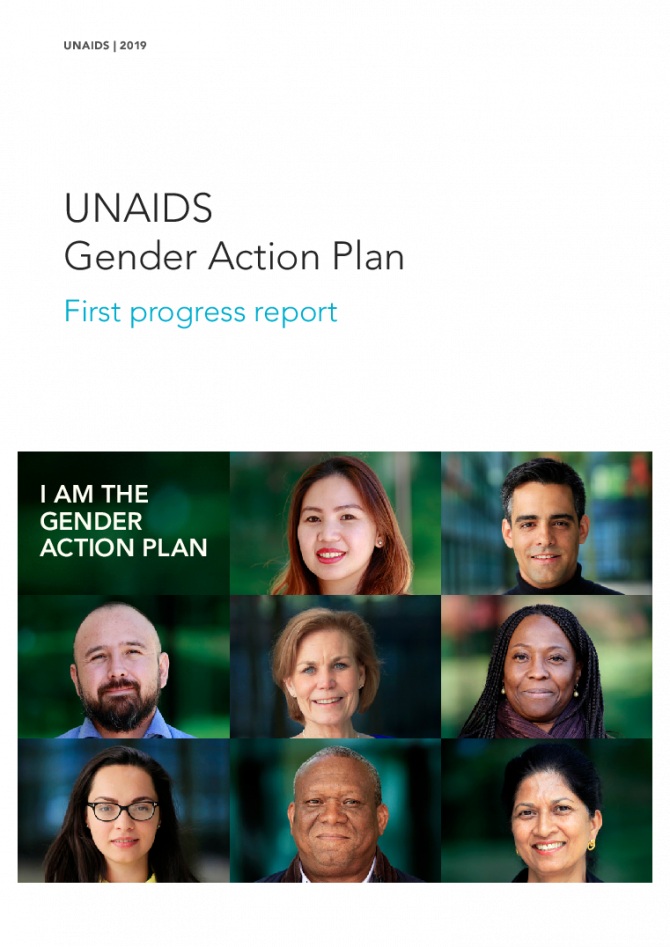
UNAIDS Gender Action Plan - First progress report
12 June 2019
Our Gender Action Plan is a tool for transformative change with its targets and commitments paving the way towards a gender-equal workplace. I am proud to share that within just one year, we have made remarkable progress. We have put in motion nine and successfully accomplished eleven of the 30 commitments.
Documents
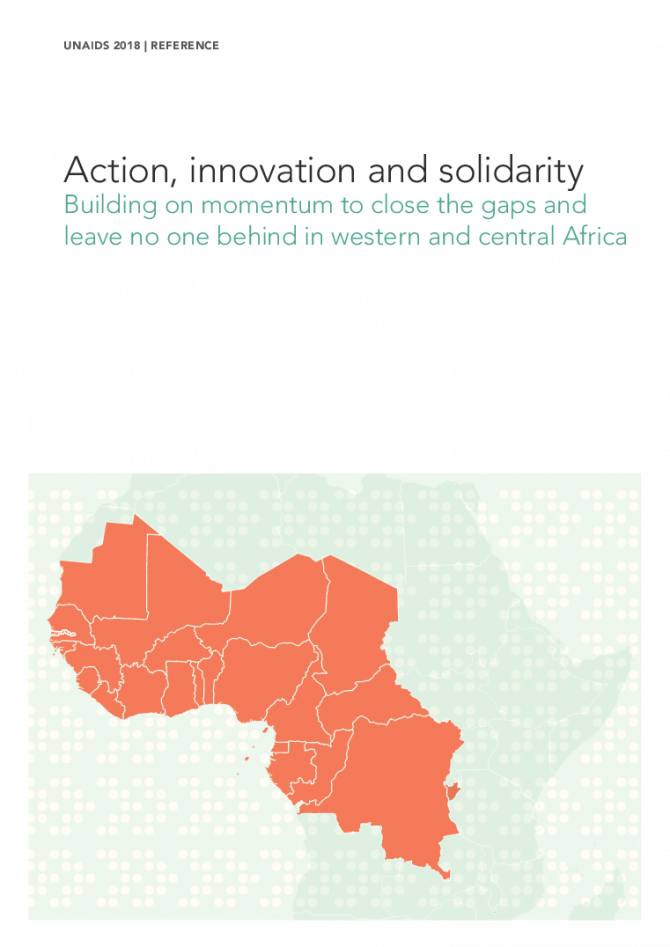
Action, innovation and solidarity - Building on momentum to close the gaps and leave no one behind in western and central Africa
24 July 2018
In accordance with the regional targets, national catch-up plans have been put in place in 18 countries in western and central Africa.
Documents
The youth bulge and HIV
20 July 2018
In many sub-Saharan African countries, declines in child mortality combined with a slow decline in fertility have resulted in children and young adults comprising a large part of the overall population. This is known as the youth bulge. The youth bulge is not new. Younger generations have almost always been larger than the previous generation. However, before the twentieth century, high child mortality meant that a large proportion of children did not survive to adulthood.
Documents
Youth and HIV — Mainstreaming a three-lens approach to youth participation
19 July 2018
This document provides an overview of the latest available UNAIDS data on youth and HIV, including new indicators reported for the first time on consent requirements to access services, access to CSE, and youth participation in the HIV response. It also provides an explanation of youth participation through the three-lens approach, engaging youth as beneficiaries, partners and leaders, adapted to the HIV response, as a recommendation for policy-makers, programmers, implementers and other stakeholders to strive for better and greater youth participation, fulfil the commitments in the 2016 Political Declaration, and end AIDS by 2030.
Documents
UNAIDS data 2018
26 July 2018
This edition of UNAIDS data highlights these challenges and successes. It contains the very latest data on the world’s response to HIV, consolidating a small part of the huge volume of data collected, analysed and refined by UNAIDS over the years. The full data set of information for 1990 to 2017 is available on aidsinfo.unaids.org.
Documents
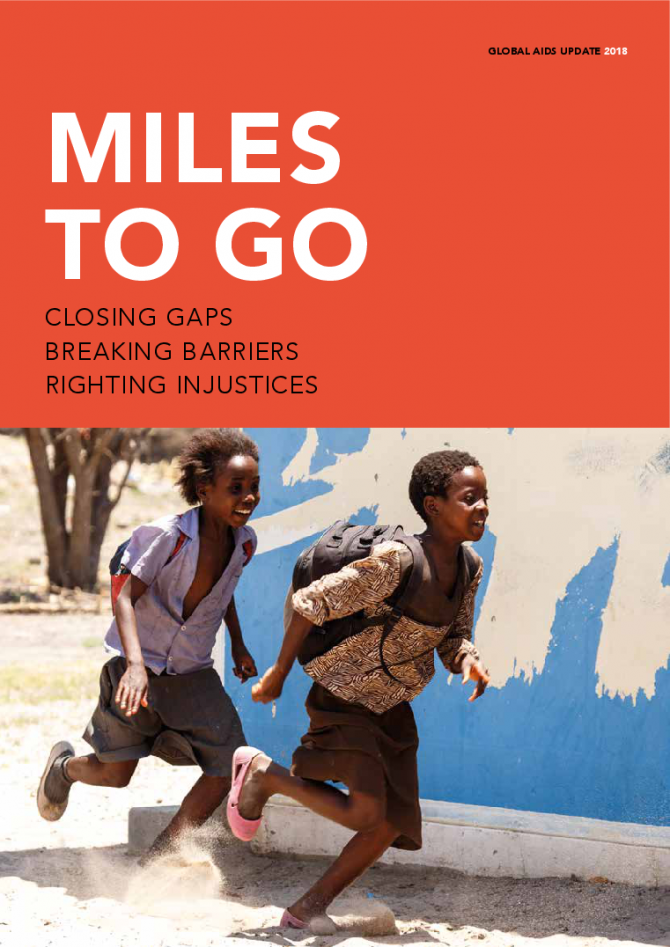
Miles to go—closing gaps, breaking barriers, righting injustices
13 August 2018
The global AIDS response is at a precarious point—partial success in saving lives and stopping new HIV infections is giving way to complacency. At the halfway point to the 2020 targets, the pace of progress is not matching the global ambition. This report is a wake-up call—action now can still put us back on course to reach the 2020 targets.
Documents
Implementation of the HIV Prevention 2020 Road Map - First progress report, March 2018
22 May 2018
This first progress report shows that members of the Global HIV Prevention Coalition have mobilized around strengthening HIV primary prevention. There are clear signs of renewed political commitment and strengthened institutional arrangements for planning and managing prevention programmes. Most member countries have moved fast to develop HIV prevention action plans, and there are many examples of excellent and innovative new initiatives. Furthermore, interest in the HIV prevention agenda and the Coalition is growing. A global accountability process has been set up, with score cards that track progress across a range of high-priority prevention programme areas.
Documents
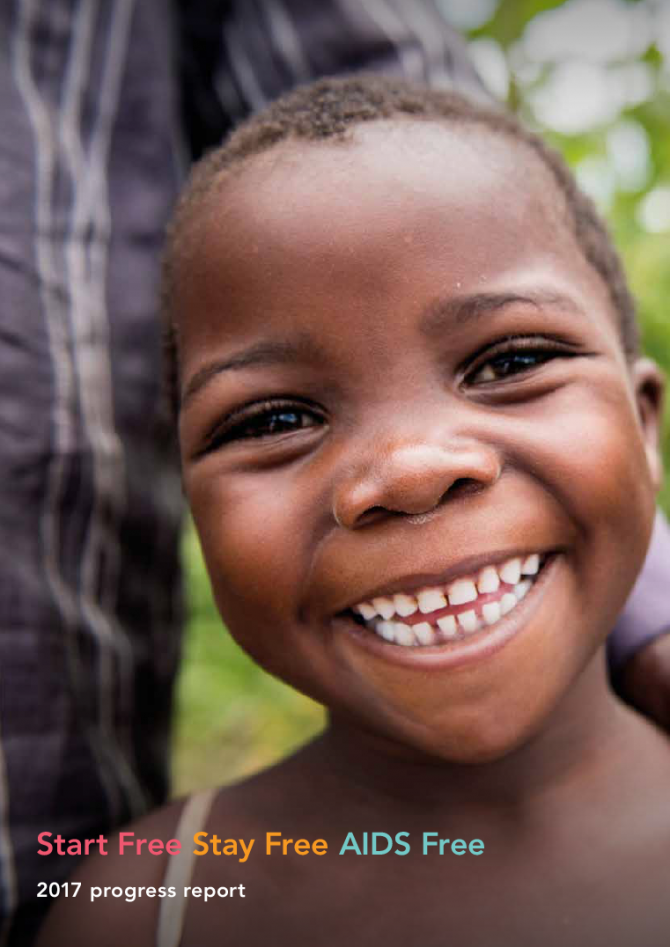
Start Free Stay Free AIDS Free — 2017 progress report
27 April 2018
This progress report reflects achievements made during the first year of implementation (through December 2016), as countries have taken actions in line with new or existing national strategies. The most recent data on country progress in 2016 are based on country-reported data and country-developed models using Spectrum software that were reported to UNAIDS in 2017.
Documents
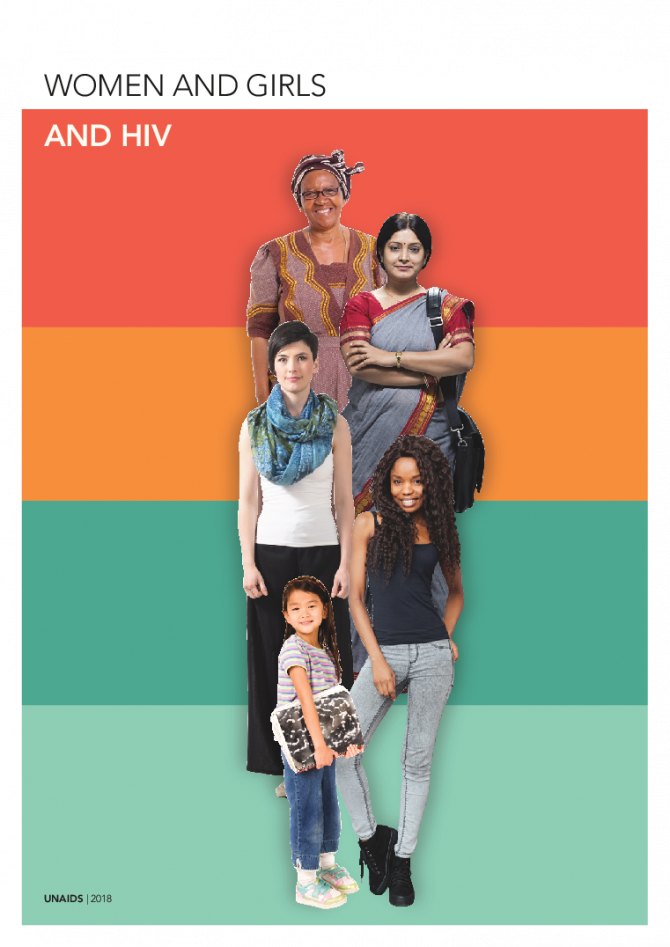
Women and girls and HIV
07 March 2018
We cannot stand by and allow the quality of life of women and girls to be held back and their hopes and dreams for the future to slip away. We must work collectively to close the gaps that continue to leave women and girls behind. Ending the AIDS epidemic by 2030 depends on advancing a social justice agenda that demands access to education, employment, health services, justice and political representation, free from discrimination and violence.
Documents
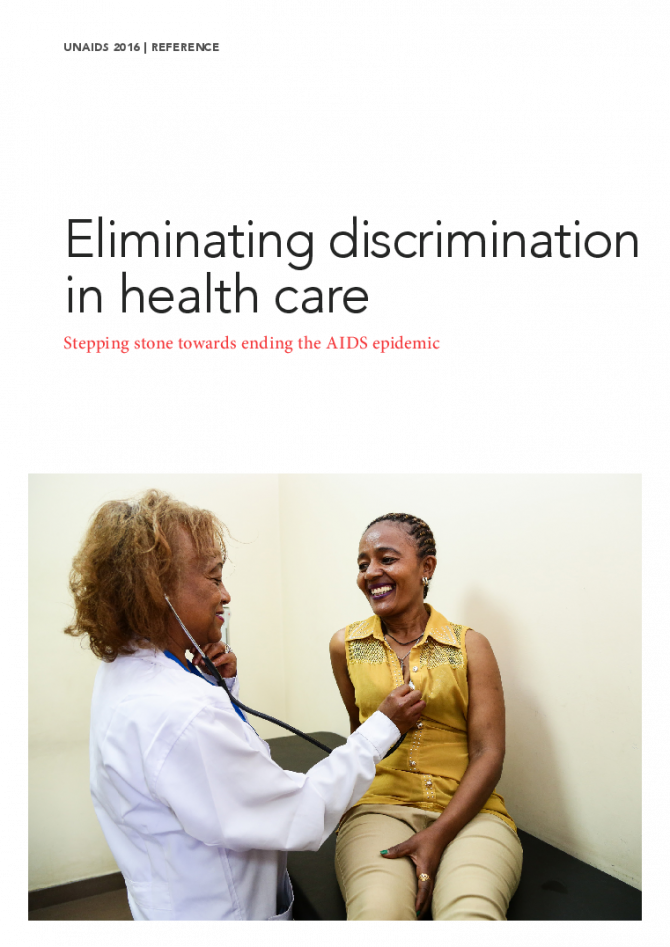
Eliminating discrimination in health care — Stepping stone towards ending the AIDS epidemic
10 December 2016
This report briefly describes and defines the challenges and impacts of discrimination in health-care settings. Such discrimination affects people seeking access to HIV prevention, testing, treatment, care and support measures, as well as health-care workers in their workplace. International human rights standards provide the rationale for catalysing global action to eliminate such discrimination. This report aims to serve as a reference for policy-makers and other key stakeholders engaged in shaping policies and programmes to regulate health care, and eliminate discrimination and other structural barriers to achieving healthy lives for all.