unaids.org
UNAIDS

Feature Story
Youth on HIV awareness tour travel 1000 kilometres to ICASA
07 December 2017
07 December 2017 07 December 2017The young people spilled out of the bus, happy to have reached Côte d’Ivoire. Not only could they st...
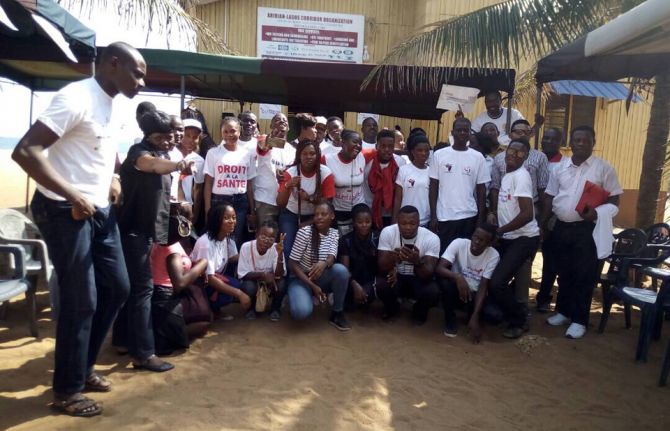
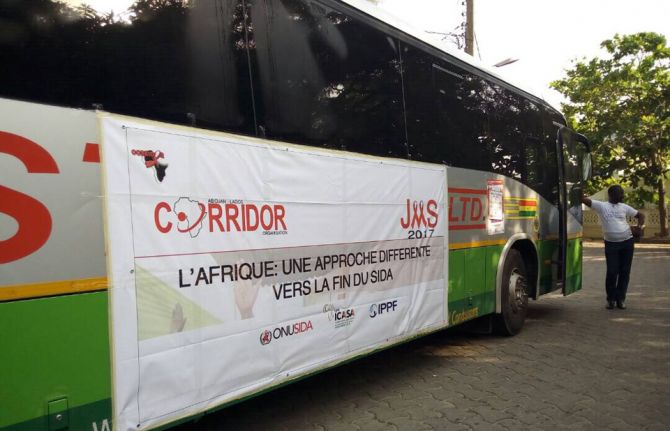
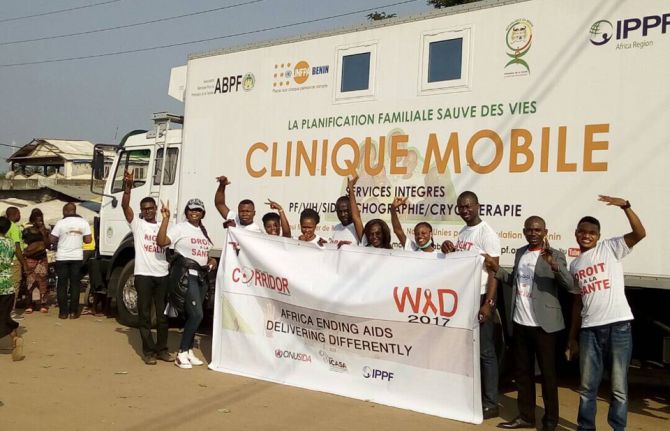
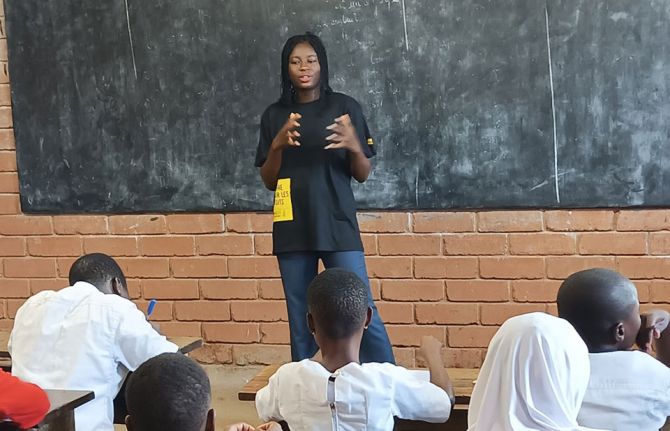
The young people spilled out of the bus, happy to have reached Côte d’Ivoire. Not only could they stretch their legs following the last leg of their journey, but they had arrived at their final destination, the International Conference on AIDS and STIs in Africa (ICASA). The Youth Caravan had started with 10 young people in Nigeria, followed by 10 more joining in Benin and a further two stops in Togo and Ghana.
Along the three-day, 1000 km, trip more than 40 young people shared their stories and experiences and talked about HIV, stigma and empowerment of young people in cities along their route.
One of the participants, Jefferson Kudolo from Ghana, couldn’t believe how fun the trip was, despite the distance, “The travelling brought us closer together and we forgot the kilometres,” he said. Another participant, Dayo Sunday from Nigeria, agreed. He loved connecting with people with similar tales from other countries.
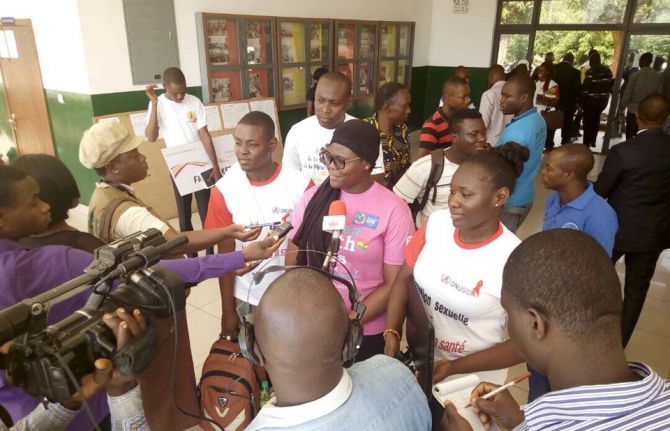
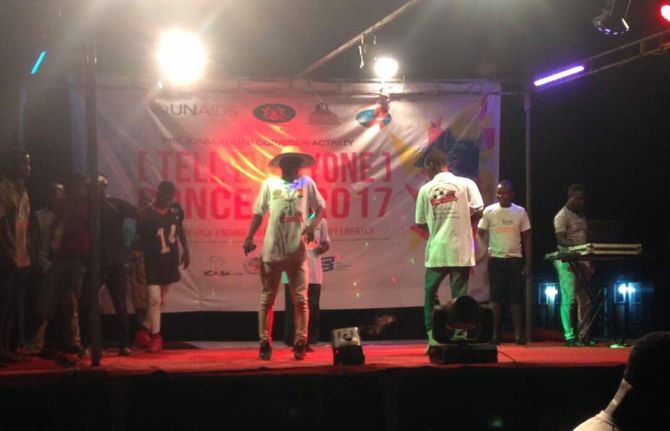
Each day, the Youth Caravan led or attended an event, which included screenings of HIV-related films, meeting the First Lady of Benin, debates and an international dance competition.
Mr Sunday said music and dancing not only got the group to unwind, it allowed them to interact with other young people along the way. A peer educator at the Nigerian Teens and Kids nongovernmental organization, he said, “Dancing is one of the best tools to attract people who may be too shy to come to HIV-related events.”
“I know what works, and music definitely works,” Mr Kudolo said, explaining how he and the other participants of the Youth Caravan would distribute condoms and lots of practical advice at the venues. UNAIDS and partners started recruiting participants for the Youth Caravan nearly a year ago.
Kodo Ngabane, UNAIDS Youth and Social Organization Officer for the western and central African region, beamed with pride as the bus pulled into Abidjan. “We constantly say that young people need to be involved, and here is a clear example of doing just that,” he said. “We listened to them and they were in the driver's seat.” Without missing a beat, he added, “Figuratively, not actually driving the bus.”
Eric Gunn, accompanying youth participants from an association of girls in Togo, Action de Soutien au Developpement et l’Education de la Jeune Fille, said he was touched to see such enthusiasm. “A real esprit de corps took hold regardless of country, language, gender, sexual orientation,” he said. “Even us elders joined in the fun and were bombarded with questions.”
The Youth Caravan was welcomed at the ICASA Community Village by the Côte d’Ivoire Minister of Health, Raymonde Goudou-Coffie, King Oyo from Uganda, UNAIDS Executive Director Michel Sidibé and others.
After a standing ovation and lengthy clapping for the participants, Mr Sidibé addressed the crowd. “We count on you! You are not the leaders of tomorrow, but the leaders of today,” he said. “We will not end AIDS without young people.”
Related information
Related

unaids.org
UNAIDS
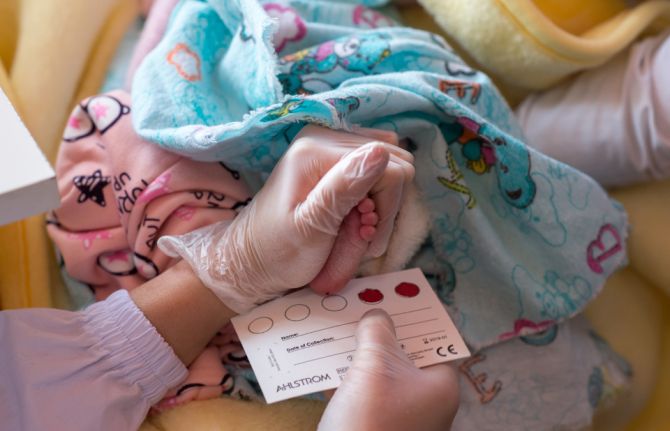
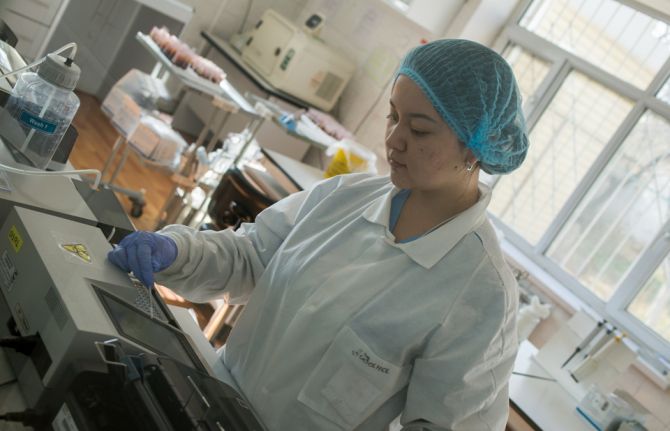
Collection of a one-week-old baby's blood drop for subsequent instant analysis on HIV.
Sterile laboratory of the AIDS Center in Osh city where the collected samples of blood are analyzed.
Elmira Narmatova, Director of Osh regional AIDS centre, is being interviewed by reporters about the equipment and general work flow at the center.
Feature Story
Early infant diagnosis of HIV: changing lives for mothers and infants
07 December 2017
07 December 2017 07 December 2017Mahabad Asanova’s first daughter was found to be living with HIV after being rushed to hospital with...
Mahabad Asanova’s first daughter was found to be living with HIV after being rushed to hospital with a high fever. For her second pregnancy, Ms Asanova had to wait 18 months before finding out that her son was HIV-negative.
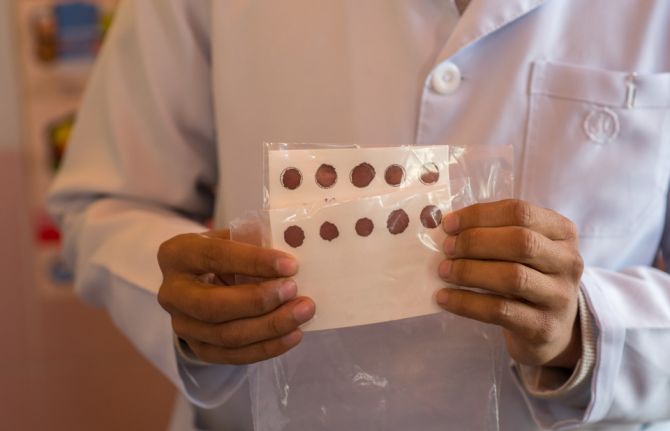
By the time of her third pregnancy, however, things had changed dramatically. Within a month of her birth, Ms Asanova had been told that her daughter was HIV-negative. A revolutionary method of HIV testing of infants, dried blood spot (DBS) testing, had by then been introduced, significantly cutting the time for diagnosis.
“Waiting 18 months to know about the HIV status of my child was terrible,” Ms Asanova said. “I’m so relieved—dried blood spot testing completely changed my life.” Before DBS, children had to wait a year or more to be tested.
DBS is simple: no sophisticated equipment or invasive testing methods are needed. After a prick on the newborn’s heel, a drop of blood is collected on filter paper and dried. The sample is sent to a laboratory for testing and the results are known before the infant is a month old, allowing infants living with HIV to be treated immediately with life-saving antiretroviral medicines.
“Before dried blood spot testing was widely introduced in 2013 in Kyrgyzstan, only around 15% of infants were diagnosed early,” said Edil Tilekov, HIV Programme Officer for the United Nations Children’s Fund (UNICEF). “In 2017, that figure grew to nearly 90%.”
Today, HIV science and diagnostics are becoming ever-more sophisticated. UNICEF is promoting point-of-care HIV diagnostic methods for infants that would yield an HIV diagnosis a mere two hours after collecting blood.
The introduction of DBS and improved training for doctors has helped to defuse some of the stigma against people living with HIV.
“Stigma among medical staff began to decrease as antiretroviral medicines were integrated into the primary health-care system,” Elmira Narmatova, Director of the Osh Oblast AIDS Centre, said. “It became more like a chronic disease, mortality declined.”
Children who are treated early fare better and the more the medicines work, the more confident parents become. Today, in part as a result of DBS, more than 95% of children living with HIV in Osh, Kyrgyzstan, access antiretroviral therapy.
Yet pockets of resistance remain. Despite early diagnosis, not all infants receive the medicines they need. “We are interviewing parents and medical staff to find out why some parents still don’t want to give their infants antiretroviral medicines,” said Mr Tilekov.
Informal conversations already provide clues: resistance may be due to religion, to scepticism about immunization or even to urban myths.
“Although much has been done to provide parents with information and train medical staff, there is still a lack of resources and trained personnel, so some parents will slip through the net and might not be briefed properly about side-effects,” said Mr Tilekov. “So, if their infants lose weight or don’t eat well after starting antiretroviral therapy, parents blame the medicines.”
When an infant or mother is tested for HIV in Osh, the laboratory sends the results to the Osh AIDS Centre, a pleasant house set among trees in a leafy suburb, its gates open in welcome. The hallways are decorated with images of the popular Vitaminka fairy tale, a comic strip that helps health workers and parents explain to children the importance of taking their antiretroviral medicines regularly.
By providing child-friendly spaces and psychosocial support in addition to medical treatment, the centre makes parents feel welcome and encourages them to visit, pick up prescribed medication and get tested regularly.
The centre, upgraded by the Ministry of Health together with UNICEF and UNAIDS with support from the Government of the Russian Federation, now treats more than 200 children and a psychologist provides psychosocial support to children living with HIV.
Away from social pressures and among friends, parents can exchange hopes for the future and find much needed support at the centre.
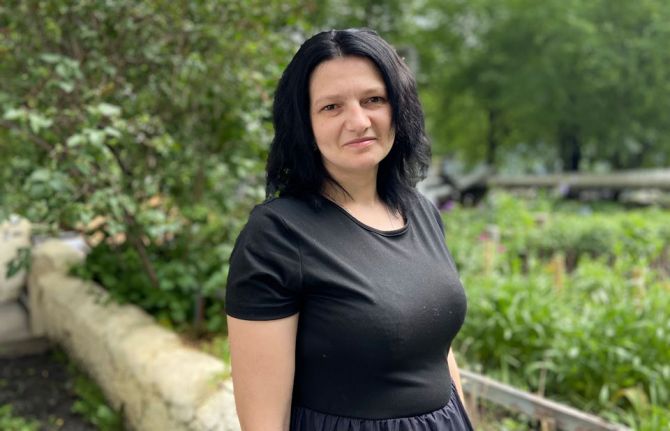
Ms Asanova looks relaxed as her fingertips touch across her lap, her olive-green dress contrasting with her cream-coloured hijab. Mahabad Asanova isn’t her real name, since she still worries about stigma and discrimination beyond the centre’s walls. But she isn’t afraid anymore, even though she is now expecting another child. Whatever happens, thanks to DBS, she will no longer face painful months of waiting for a diagnosis.
Region/country
Related
unaids.org
UNAIDS

Feature Story
In Mozambique, five adolescent and young girls receive a special award on World AIDS Day for winning the SMS BIZ/U-Report Girl-to-Girl competition
06 December 2017
06 December 2017 06 December 2017This story was originally published by UNICEF
In Mozambique there has been some progress in ...
This story was originally published by UNICEF
In Mozambique there has been some progress in the fight against AIDS, notably in preventing mother to child transmission of HIV. But progress in preventing new HIV infections among adolescents (10-19) and improving testing and treatment in adolescent populations are still unacceptably slow.
Around 120,000 adolescents live with HIV (UNAIDS 2017). The data also reveals a worrying gender disparity: according to IMASIDA 2015, HIV prevalence among adolescent girls 15-19 is four times higher than for boys (6.5% vs 1.5%). Prevalence is also higher in urban areas than in rural. Young women have higher odds of HIV infection due to various factors including gender norms, reduced access to information, and age-disparate sex. Additionally, not knowing one’s HIV status and engaging in high risk practices predisposes young people to the risk of contracting HIV. This highlights the need for adolescents and young people to have access to appropriate information as they explore their sexuality.
The AIDS epidemic must remain a global public health concern, according to UNICEF and UNAIDS. Innovative solutions must be adopted to speed up progress in preventing HIV infection of children and adolescents and ensuring those living with HIV get the treatment they need.
In 2015, in the context of the youth-focused Sexual and Reproductive Health (SRH) and HIV prevention Geração Biz (Busy Generation) programme, UNICEF Mozambique partnered with line ministries of Youth and Sports; Health; Education and Human Development; UNFPA and the youth association Coalizão (Youth Coalition) to adapt the SMS-based technology for development platform U-Report and roll out the programme known as SMS BIZ. This was aimed at improving adolescent and young people’s access to comprehensive and personalised SRH and HIV information through SMS (for more information visit http://mozambique.ureport.in/).
SMS BIZ partners set up a counselling hub managed by Coalizão with 24 trained peer counsellors, equipped with ICT facilities and a reference guide on SRH, HIV and Gender-based Violence (GBV) prevention to facilitate their capability to respond to adolescents queries. The counseling service is totally anonymous so neither the counsellors nor users can identify the other. Counsellors respond to about 1,000 questions daily. A total of 350,000 questions were responded to date. Communication and promotion materials were developed to promote the counselling service while advocacy sessions were held in selected provinces in order to create synergies with different stakeholders. Partnerships with the three Telecom Operators allowed SMS BIZ partners to count on free un-limited SMS for the period of 2017-2020.
In only two years, SMS BIZ/U-Report, has exceeded expectations with over 110,000 active adolescents and youth registered by September 2017, using the services for information on topics relevant to them.
Adolescents and young people registered have been engaged in discussions addressing misconceptions about SRH, HIV prevention and treatment, and increasing uptake and linkages to HIV and GBV services. Results from a poll show positive results, with 65% of adolescents and young people that responded to the poll were referred and adhered to health facilities during the counselling session for additional individual face-to-face counselling, consultation or treatment.
However, until recently, the challenge has been attracting as many girls as boys to the platform with a ratio of 60% boys - 40% girls. Raima Francisco Manjate, one of the SMS BIZ/U-Report stellar peer counsellors officially launched the Girl-to-Girl invite system on the International Day of the Girl Child on October 11th, with an intervention at the National Girls Conference organized in the context of the UN Joint programme Action for Girls, funded by the Swedish Government. The results have been outstanding: in 72 hours, more than 8,600 girls were successfully registered, the girls' user population grew from 4% to 44%, with five girls registering more than 50 friends and winning the competition.
Today, the total number of SMS BIZ/U-Report users reached 130,000.
The five adolescent and young girls, winners of the competition, have been awarded today at the World AIDS Day Celebrations, in Maputo and in the provincial capitals of Quelimane, Nampula and Beira in recognition of their efforts in mobilising friends to adhere to this important counselling service.
Neima Muianga, 20 years old and Cristina Djive, 18 years old, both from the capital Maputo, were the two girls awarded today at the WAD ceremony, by the following high-level dignitaries such as Mr. Carlos Agostinho do Rosario, Mozambique Prime Minister, Mr. Luiz Loures, UNAIDS Deputy Executive Director, Ms. Nazira Abdul, Health Minister and Ms. Clarisse Machanguana, UNICEF National Ambassador.
Neima was thrilled when she discovered she had won the competition: “I feel happy about it. I have sent various SMS to contact numbers on my list, my neighbours, church members and even girls or young women I would bump into in the streets. SMS BIZ is very important for us. I don’t feel comfortable speaking with my parents about sexuality as this is taboo in Mozambique”.
"It is an excellent example of how young people can empower each other through technologies and innovative projects. Girl-to-Girl (G2G) is the kind of innovation that has an essential role for gender equality and health as we work to leave no one behind in implementing the sustainable development goals," said Luiz Loures, UNAIDS Deputy Executive Director, Assistant Secretary-General of the United Nations.
Now that the SMS BIZ/U-Report initiative has been scaled up at national level, SMS BIZ partners expect to reach and engage approximately 400,000 adolescents and young people by 2020. According to Cristina “this initiative cannot stop. So far, it has been a great experience for us.”
Region/country
unaids.org
UNAIDS
Feature Story
Victoria Lopyreva appointed as a UNAIDS Special Ambassador for the 2018 FIFA World Cup
30 November 2017
30 November 2017 30 November 2017Victoria Lopyreva has been appointed as a UNAIDS Special Ambassador, tasked with highlighting HIV aw...
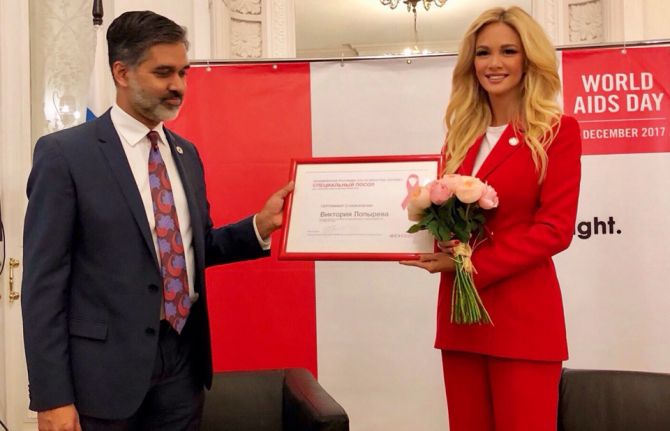
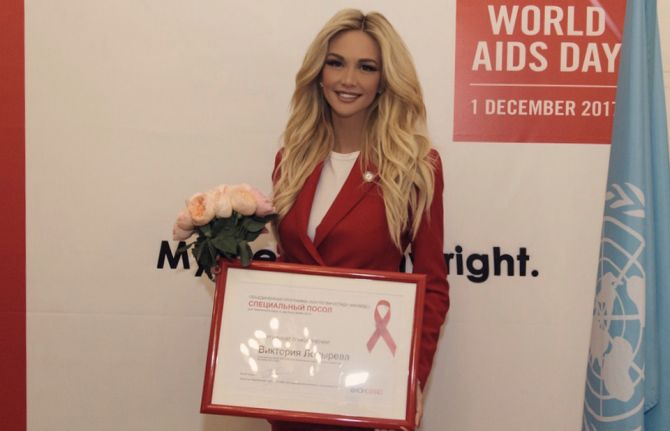
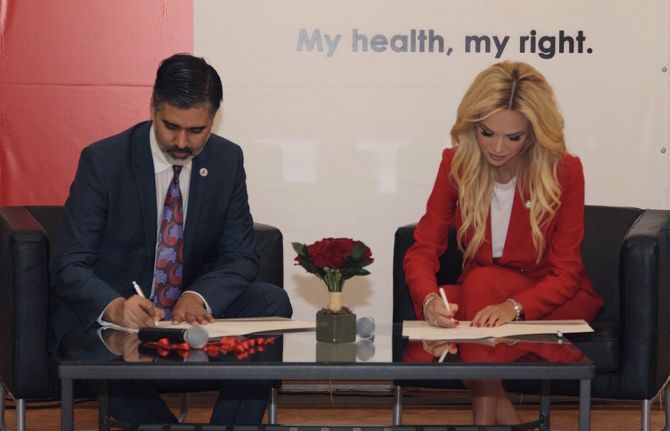
Victoria Lopyreva has been appointed as a UNAIDS Special Ambassador, tasked with highlighting HIV awareness and promoting zero discrimination during the 2018 FIFA World Cup, which will be held in the Russian Federation. The announcement was made by UNAIDS in Moscow, Russian Federation, on the eve of World AIDS Day and the final draw for the 2018 FIFA World Cup at the State Kremlin Palace.
“In her new capacity as a UNAIDS Special Ambassador, Victoria Lopyreva will highlight HIV awareness and prevention during the 2018 FIFA World Cup. She will encourage millions of people coming to the World Cup to protect themselves from HIV and champion zero discrimination on the basis of race, nationality or HIV status,” said Vinay P. Saldanha, Director for the UNAIDS Regional Support Team for Eastern Europe and Central Asia.
“It is my pleasure to accept the role as UNAIDS Special Ambassador for the 2018 FIFA World Cup,” said Ms Lopyreva. “Football is a unique global phenomenon, uniting players, teams and fans from different countries, nationalities and ages. The 2018 FIFA World Cup is a unique opportunity to promote another amazing goal—to unite a winning team to end the AIDS epidemic and reach zero discrimination.”
"I appreciate and value every day Victoria Lopyreva's commitment as FIFA World Cup 2018 Ambassador in Russia. Her passion, her dedication and her energy will definitely help raise awareness on HIV and AIDS in and outside Russia. Victoria's contribution to fighting all forms of discrimination in and off the pitch is something that FIFA can be proud of and I wish her full success in her additional role as UNAIDS Special Ambassador in Russia,” said Fatma Samoura, FIFA Secretary General.
Since the beginning of the AIDS epidemic, 78 million people have become infected with HIV and 35 million have died from AIDS-related illnesses. In 2016, around 1.8 million people were newly infected with HIV, a 39% decrease from the 3 million who became newly infected at the peak of the epidemic in the late 1990s. In eastern Europe and central Asia, new HIV infections have risen by 60% since 2010 and AIDS-related deaths by 27%. According to government data, more than 900 000 people are currently living with HIV in the Russian Federation.
Ms Lopyreva was crowned Miss Russia in 2003 and since October 2015 has been an official Ambassador of the 2018 FIFA World Cup. Ms Lopyreva also served as an Ambassador for the XIX World Festival of Youth and Students 2017, held in Sochi, Russian Federation, and works as a television presenter, event host, motivational speaker and model.
Region/country
- Eastern Europe and Central Asia
- Albania
- Armenia
- Azerbaijan
- Belarus
- Bosnia and Herzegovina
- Bulgaria
- Croatia
- Cyprus
- Czechia
- Estonia
- Georgia
- Hungary
- Kazakhstan
- Kyrgyzstan
- Latvia
- Lithuania
- Montenegro
- Poland
- Republic of Moldova
- Romania
- Russian Federation
- Serbia
- Slovakia
- Slovenia
- Tajikistan
- North Macedonia
- Türkiye
- Turkmenistan
- Ukraine
- Uzbekistan
Related
unaids.org
UNAIDS



Feature Story
Globo–UNAIDS original series on young serodiscordant couple is among nominees for the Emmy Kids 2017
07 November 2017
07 November 2017 07 November 2017When Camila fell in love with her high school classmate Henrique, she didn’t know he was born with H...
When Camila fell in love with her high school classmate Henrique, she didn’t know he was born with HIV. It was only after an incident at school that his HIV status was revealed to everyone. She then made an informed decision to take his side and live their love story together facing the challenges imposed by stigma and discrimination among friends and family.
Their love story was one of the main plots of the 2015–2016 season of the teen soap opera Malhação—Seu Lugar No Mundo (Malhação—Your Place in the World), from author Emanuel Jacobina. The serodiscordant couple interpreted by actors Thales Cavalcanti (Henrique) and Manuela Llerena (Camila) became some of the most loved characters of the season, which counted on the consultancy support of UNAIDS for the zero discrimination and HIV-related scenes.
Success among fans was such that the couple #Camique won a spin-off web series on Globo’s online entertainment platform Gshow called Eu Só Quero Amar (Young Hearts—I Just Want to Love). The five-episode web series soon became a bit hit—from April to June 2016, it was the third most watched original series on the platform, with almost 1 million views. On 16 October 2017, it was nominated for the Emmy Kids 2017 in the digital category.
The project is a result of an effort to get HIV back on the agenda for young people in Brazil. For that, UNAIDS teamed up with Globo’s social responsibility branch and worked with Mr Jacobina and writers Filipe Lisboa and Giovana Moraes to tailor HIV and zero discrimination messages to a young audience. In the spin-off production, the serodiscordant couple from fiction are invited to be part of a web documentary, alongside real serodiscordant couples, talking about their relationships, sexuality and the impact of HIV in their daily lives.
“The message and the narrative of today’s HIV epidemic have to be adapted to young people,” explains Georgiana Braga-Orillard, UNAIDS Country Director in Brazil. “The web series managed to capture the essence of this communication.”
"The idea of the web series came from all the discussions I had with UNAIDS about HIV in Brazil in the 21st century. We realized that everything that needed to be told would fit better and more clearly in a specific series on the subject,” says Mr Jacobina. “I think it is a very important work that has helped Brazil to resume the discussion about HIV, clarifying the issue of prevention. I feel honored and proud with the nomination.”
Malhação is Globo’s longest running soap opera—on air for over two decades—and reaches an estimated daily audience of 20 million people in Brazil.
Resources
Region/country
unaids.org
UNAIDS
Feature Story
Living with HIV but dying from tuberculosis
03 November 2017
03 November 2017 03 November 2017Global progress to End TB not fast enough to reach global TB and HIV targets
Tuberculosis (TB) re...
Global progress to End TB not fast enough to reach global TB and HIV targets
Tuberculosis (TB) retains its undesirable status as the leading infectious cause of death globally. According to the latest WHO Global Tuberculosis Report 2017 launched this week, global progress in reducing new tuberculosis (TB) cases and deaths is insufficient to meet the global targets for TB and HIV, despite most deaths being preventable with early diagnosis and appropriate treatment of tuberculosis and HIV.
As part of global efforts to advance the response to TB is now being pushed higher up the global development agenda with hundreds of global leaders attending the first WHO Global Ministerial Conference on Ending TB in Moscow from 14-17 November and a dedicated United Nations General Assembly High-Level Meeting on TB in 2018.
“We have an unprecedented opportunity to shine the political spotlight on the inequalities that drive the epidemics of TB and HIV,” said Michel Sidibé, UNAIDS Executive Director, “The return on investment in TB and HIV is more than just dollars, it's in voices heard, rights protected and lives saved.”
In 2016, the risk of developing TB disease among the 37 million people living with HIV was around 21 times higher than the risk in the rest of the world population. There were more than one million TB cases among people living with HIV—10% of all global TB cases in 2016. People living with HIV are much more likely to die from TB disease than HIV-negative people, and one in five (22%) TB deaths occurs among people living with HIV. In 2016, there were 374 000 TB deaths among people living with HIV, which represents almost 40% of all AIDS-related deaths.
TB disease and deaths can be avoided with TB preventive therapy but most people living with HIV who can benefit are not receiving it. In 2016, fewer than 1 million people newly enrolled in HIV care were started on TB preventive treatment. South Africa accounted for the largest share of the total (41%), followed by Mozambique, Zimbabwe and Malawi.
The global burden of drug-resistant tuberculosis continues to rise with an estimated 600,000 cases requiring treatment but only one in five were enrolled on treatment in 2016.
Global TB incidence is only falling at about 2% per year and 16% of TB cases die from the disease; by 2020, these figures need to improve to 4–5% per year and 10%, respectively, to reach the first (2020) milestones of the WHO End TB Strategy. Major gaps remain in global funding for TB prevention and treatment (US$2.3 billion) and TB research into new drugs, vaccines, and diagnostics (US$1.2 billion) for 2017.
unaids.org
UNAIDS
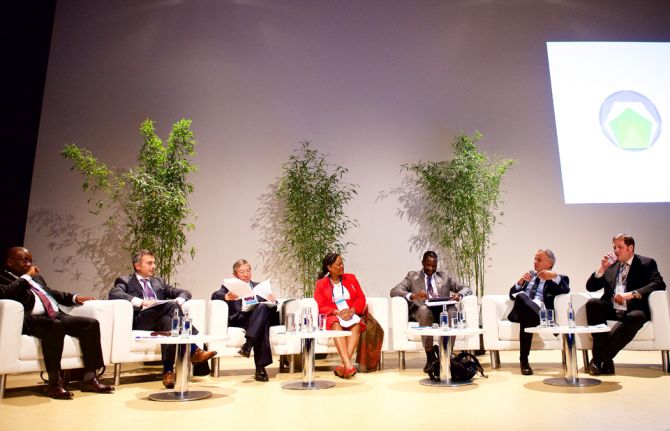


Photo: WHS
Photo: WHS
Photo: WHS
Feature Story
Germany strengthens its position as a global health leader
25 October 2017
25 October 2017 25 October 2017Germany has been increasingly stepping up its political and financial engagement in global health. H...
Germany has been increasingly stepping up its political and financial engagement in global health. Having made global health a priority during its presidency of the G7, Germany has continued this commitment throughout its presidency of the G20. In May 2017, Germany held the first ever meeting of the G20 ministers of health. The meeting was held in Berlin and provided an important platform for discussions and commitments around global health security, health systems strengthening and antimicrobial resistance.
Berlin itself is becoming widely recognised as a centre for global health debate, welcoming a number of important conferences and events around health, human rights and social protection. One of the most important annual events in Berlin’s global health calendar is the annual World Health Summit. This year’s Summit took place from 15-17 October and brought together 2000 participants from more than 100 countries.
UNAIDS has supported the Summit for a number of years and this year the Deputy Executive Director of UNAIDS Luiz Loures, participated in a range of sessions and panels from global health security to community health workers.
UNAIDS and German Healthcare Partnership co-organized a panel on the importance of strengthening innovation and health systems in Africa which brought together more than 100 participants from government, the private sector and regional and international organizations to explore opportunities to create firm partnerships and promote innovation.
Panellist Bernard Haufiku, Minister of Health of Namibia, said, “The concept of community health care workers is brilliant to me,” said “They are from the community, they live in the community, and they understand the community, its culture its problems.”
Other panellists included the Minister of Health of Ghana Kwaku Agyeman-Manu, Head of the Division of Health, Nutrition and Population at the African Union Commission Margaret Anyetei-Agama, Novartis Foundation Head of Global Health Portfolio Bakhuti Shengelia, and Deputy Director General of the International Atomic Energy Agency Dazhu Yang.
“We are putting a strong emphasis on boosting government commitments to strengthen health systems across the region, building the political will to address priority challenges and developing appropriate financing mechanisms to make services affordable,” said Dr Anyetei-Agama.
Also in Berlin another important symposium was taking place alongside the World Health Summit. “HIV in Eastern Europe – the unnoticed epidemic”, a symposium organized by Deutsche AIDS Hilfe, Action against AIDS Germany and Brot für die Welt brought together civil society from Eastern Europe and Germany to look at finding solutions to the challenges in the response to HIV in Eastern Europe where HIV infection rates are rising, treatment coverage is low and international funding is decreasing.
“People who use drugs, men who have sex with men and sex workers of all genders are not the problem, but part of the solution!” said Sylvia Urban, Chairwoman Action against AIDS Germany and Chairwoman Deutsche AIDS-Hilfe. “There is no alternative to including them and their actual needs in HIV-prevention and treatment strategies in Eastern Europe if those strategies are to be successful. Germanys very own HIV-prevention programs can be used as a blueprint: When the government works with communities and partners with civil society organizations, the results are great.”
Mr Loures joined the debate and voiced his concerns about Eastern Europe. “Despite all the scientific and economic progress, the HIV epidemic is continuing to grow in Eastern Europe,” said Mr Loures. “We have the tools, knowledge and medicines; however, there is a global epidemic of discrimination and without addressing this we will not be able to make the progress that is needed. Leadership and solidarity of civil society and communities from Germany and from Eastern Europe is essential.”
UNAIDS welcomes Germany’s commitment to health and encourages Germany to continue to develop its strong position as a leader in global health and will continue to work closely with Germany in our joint efforts towards ending the AIDS epidemic and achieving the Sustainable Development Goals.
Region/country
Related
 Government ensures continuity of treatment in Malawi
10 February 2025
unaids.org
UNAIDS
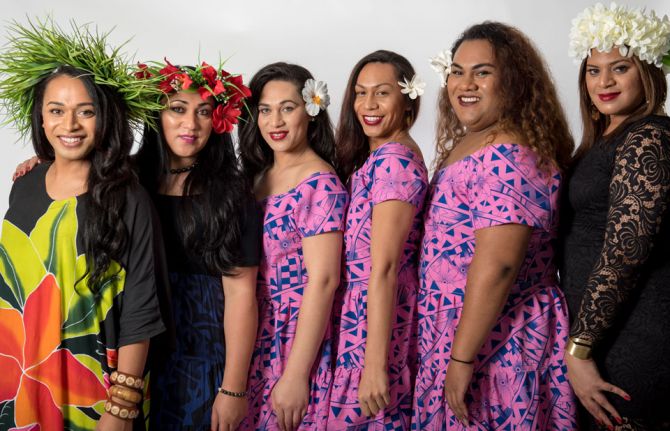
Phylesha Brown-Acton (second left), from the Asia–Pacific Transgender Network, is a champion for the rights of sexual minorities.
Feature Story
Championing human rights and health
25 September 2017
25 September 2017 25 September 2017Phylesha Brown-Acton, from the Asia–Pacific Transgender Network, is a champion for the rights of sex...
Phylesha Brown-Acton, from the Asia–Pacific Transgender Network, is a champion for the rights of sexual minorities. A volunteer for the Pacific Sexual Diversity Network, she also established F’INE (Family, Identity, Navigate & Equality), which supports Pacific lesbian, gay, bisexual, transgender and intersex people and their families.
“Experiencing discrimination on a daily basis, seeing it happen to my peers and some of my family members because they were related to me, made me think hard about if I wanted to continue living in a society that defines and restricts me or if I was actually going to do something about it. I decided on the latter, and that is why I became a lesbian, gay, bisexual, transgender and intersex rights activist,” Ms Brown-Acton said.
In her work, she has seen the impact that discrimination in health-care settings can have. “I assisted four transgender women in understanding their health needs. All of them told me that they had not been to a doctor for several years, because every time they went to see a health-care provider the experiences were bad. So instead of going to see a doctor when not feeling well, they were medicating themselves at home with over-the-counter medicines. All of those women were later diagnosed with type 2 diabetes. Their diagnosis was delayed because of discrimination. The same happens to many people living with HIV.”
Despite the persistent stigma and discrimination that transgender people experience, Ms Brown-Acton believes that discrimination in health-care settings can be overcome. “We need to remove bias in thinking and decision-making,” she said. “We need to work with health institutions and practitioners so that they can hear and understand the discriminatory experiences of transgender people.”
Ms Brown-Acton emphasized the importance of including zero discrimination training in medical school curriculums, pointing out that the Asia–Pacific Transgender Network has developed a Blueprint for Action, a comprehensive, accessible transgender health reference document.
Ms Brown-Acton is adamant that people who experience discrimination—including transgender people, people living with HIV, people with disabilities and indigenous communities—must be at the table when decisions are being made. “Transgender people have been shut out many times before. We have been strategic about getting into the meeting rooms, but there is still a lot of work to be done. We must be heard in those meeting rooms, not silenced or ignored.”
Ms Brown-Actor will be speaking at the Human Rights Council Social Forum, which is being held from 2 to 4 October, about the promotion and protection of human rights in the context of HIV and other communicable diseases. To hear more from her and other human rights activists, register to participate in the Human Rights Council Social Forum at https://reg.unog.ch/event/6958/.
unaids.org
UNAIDS
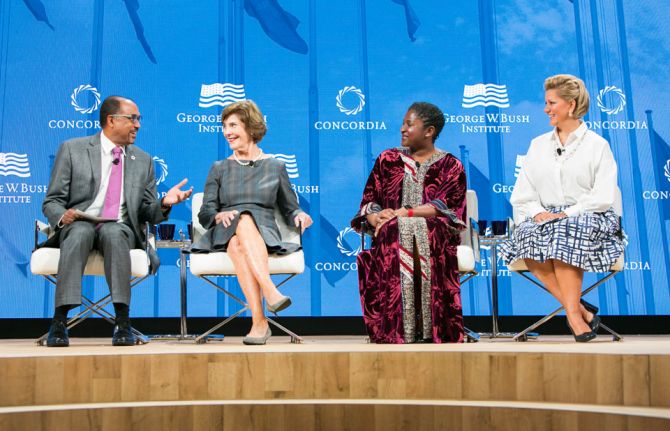
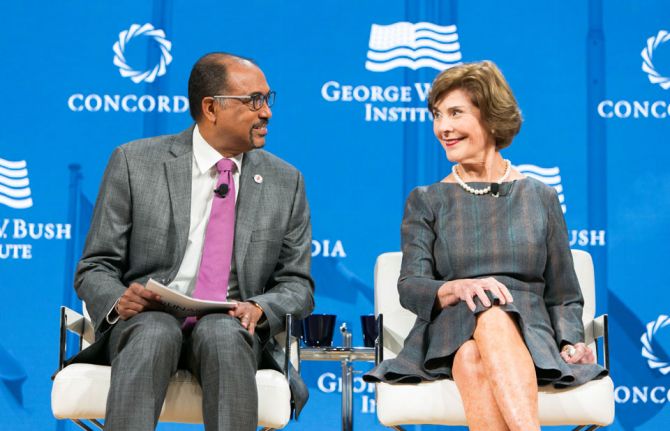
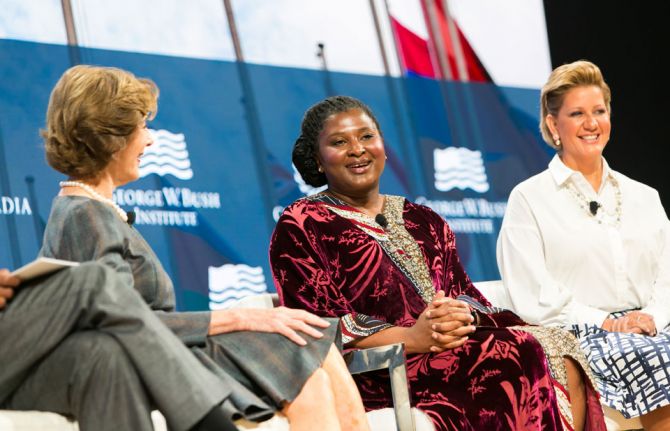
UNAIDS Executive Director Michel Sidibé joined the former First Lady of the United States of America, Laura Bush, the First Lady of Namibia, Monica Geingos, and the First Lady of Panama, Lorena Castillo de Varela, on 18 September to discuss how they have used their political platforms and voices to bring attention to some of the most pressing issues affecting the world.
UNAIDS Executive Director Michel Sidibé and the former First Lady of the United States of America, Laura Bush.
First Lady of Namibia, Monica Geingos speaking.
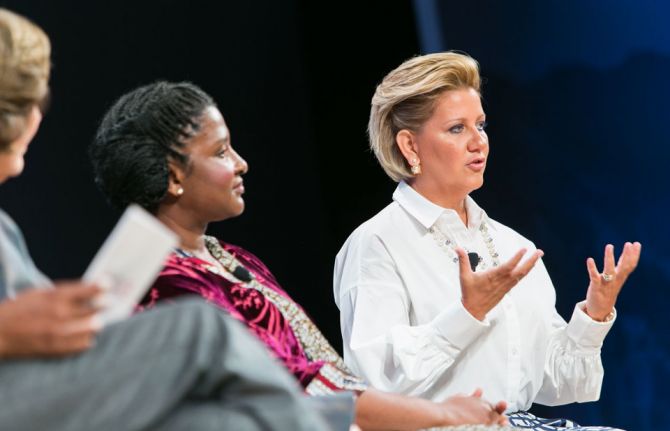
First Lady of Panama, Lorena Castillo de Varela speaking.
Feature Story
A role without a rulebook—First Ladies discuss development
19 September 2017
19 September 2017 19 September 2017UNAIDS Executive Director Michel Sidibé joined the former First Lady of the United States of America...
UNAIDS Executive Director Michel Sidibé joined the former First Lady of the United States of America, Laura Bush, the First Lady of Namibia, Monica Geingos, and the First Lady of Panama, Lorena Castillo de Varela, on 18 September to discuss how they have used their political platforms and voices to bring attention to some of the most pressing issues affecting the world.
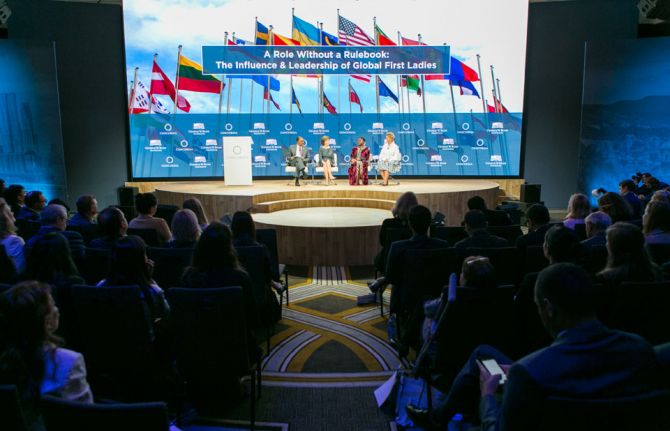
The event, A Role Without a Rulebook: the Influence and Leadership of Global First Ladies, was held at the Concordia Annual Summit in New York, United States, and explored the challenges of being a woman of influence without a job description. Unelected but official, the spouses of government leaders have a unique opportunity to build bridges between civil society and government institutions. The three first ladies each shared how they have navigated the role, crafting their own platforms and agendas for progress.
“I know the power of first ladies,” said Mr Sidibé, who moderated the discussion. “They have become our special champions for ending the transmission of HIV from mother to child. It is when I enlisted their support that we started to see real progress. Now we have some countries that have managed to almost eliminate new infections of HIV among infants.”
Ms Bush discussed her efforts to advance the human rights agenda for women in Afghanistan and her efforts in global health. She recalled her experiences in championing the health of women and girls, including ending the transmission of HIV from mothers to children. Ms Bush focused on her commitment to end AIDS through the United States President’s Emergency Plan for AIDS Relief and her desire to build on the positive progress of the AIDS response and eliminate cervical cancer.
“We found out that women were living with HIV, but they were dying from cervical cancer, which is also sexually transmitted through the human papillomavirus (HPV). We launched Pink Ribbon Red Ribbon to add testing and treatment for HPV and the vaccine to the AIDS platform that was already set up with the President’s Emergency Plan for AIDS Relief. So far, we have been very successful,” Ms Bush said.
Ms Geingos focused on her work with young people and empowerment, emphasizing the importance of young people with regard to issues of gender-based violence, education, health and cultivating entrepreneurship. Ms Geingos said that there is a great need to encourage confidence in young people and to include them in conversations about their health. She spoke candidly about the youth bulge in Africa, where 60% of the population is under the age of 25 years, with the population set to double by 2050.
“We let young people lead the conversation in the language they understand. We use the opportunity to give them important health information. Namibia has done great work with the help of global partners like UNAIDS and the Global Fund to Fight AIDS, Tuberculosis and Malaria in reducing new HIV infections. We have halved them in less than a decade, and we are about to eliminate mother-to-child transmission of HIV,” said Ms Geingos.
Ms Castillo highlighted her efforts to ensure inclusion and respect for all people. Mr Sidibé noted that Ms Castillo, the UNAIDS Special Ambassador for AIDS in Latin America, has been a powerful advocate for communities and people who are excluded. He highlighted her efforts to counter stigma and discrimination in all its forms in order to build an inclusive society.
“We should all work on leaving no one behind. By leaving no one behind, I mean truly no one,” said Ms Castillo.
From their platforms as global leaders, first ladies are able to take risks, challenge expectations and push against deeply ingrained biases to offer a more inclusive and equitable vision of society.
In closing, Anita McBride, former assistant to former President of the United States George W. Bush and former Chief of Staff to Ms Bush said, “Concordia is an action tank, not a think tank, and this session clearly shows how a first lady’s podium, when used effectively, is a catalyst for action, and for change, and that there is even greater value when they come together and work together.”