Press Release
Zero Discrimination Day to be celebrated 1 March 2014
27 February 2014 27 February 2014GENEVA, 27 February 2014—UNAIDS Executive Director Michel Sidibé launched the Zero Discrimination Day on 27 February with a major event in Beijing, China supported by the China Red Ribbon Foundation, Hanergy Holding Group, Chinese government, civil society and celebrities. Similar events are planned for the days leading up to 1 March 2014 in countries around the world. Zero Discrimination Day is a call to people everywhere to promote and celebrate everyone’s right to live a full life with dignity—no matter what they look like, where they come from or whom they love. The symbol for Zero Discrimination is the butterfly, widely recognized as a sign of transformation.
At the Zero Discrimination Day event in Beijing, Li Hejun, Chairman and CEO of Hanergy Holding Group; Gu Yanfen, General Secretary of the China Red Ribbon Foundation; and Mr Sidibé delivered opening remarks. James Chau, news anchor for the China Central Television and UNAIDS National Goodwill Ambassador, moderated a panel discussion on discrimination. The event ended with more than 30 business leaders signing a pledge to eliminate discrimination in the workplace.
“The AIDS response itself has taught the world tremendous lessons in tolerance and compassion,” Mr Sidibé said. “We know that both the right to health and the right to dignity belong to everyone. Working together, we can transform ourselves, our communities and our world to reach zero discrimination.”
Working with Nobel Peace Prize winner and UNAIDS Global Advocate for Zero Discrimination Daw Aung San Suu Kyi, UNAIDS launched the #zerodiscrimination campaign in December 2013 on World AIDS Day.
“People who discriminate narrow the world of others as well as their own,” said Daw Aung San Suu Kyi. “I believe in a world where everyone can flower and blossom.”
Many international celebrities have joined the call for zero discrimination, recording video messages and taking photographs with the butterfly sign. The personalities include UNAIDS Goodwill Ambassador Annie Lennox, international football star David Luiz, actress and activist Michelle Yeoh and HSH Princess Stephanie of Monaco.
“Hanergy recognizes the right of all employees to live a life of dignity, free from discrimination,” said Mr Li. “With the support of UNAIDS, Hanergy has worked to expand staff training on HIV and discrimination for all employees, and has integrated anti-discrimination content into company recruitment policies.”
The private sector is also playing an important part in commemorating Zero Discrimination Day in South Africa, where as part of a longstanding partnership with UNAIDS, the Standard Bank is conducting a social media drive around the day. The almost 3.5 million subscribers of Airtel, the largest mobile telephone service provider in Malawi will receive a message promoting zero discrimination on 1 March. In Myanmar, two major football teams in collaboration with the Myanmar National Football League and Federation will make a pledge supporting zero discrimination during a match at the national football stadium in Yangon. In Minsk, Belarus, an interactive dialogue on promoting zero discrimination in the region will take place with young people; participants will include pop singer Teo. A similar event organized by people living with HIV as well as lesbians, gays, bisexuals and transgender people will take place in a central park in the city of San Pedro Sula, Honduras.
More information is available at:
http://www.unaids.org/en/resources/campaigns/20131126zerodiscrimination/
https://www.facebook.com/zerodiscrimination
http://zerodiscrimination.tumblr.com/
#zerodiscrimination
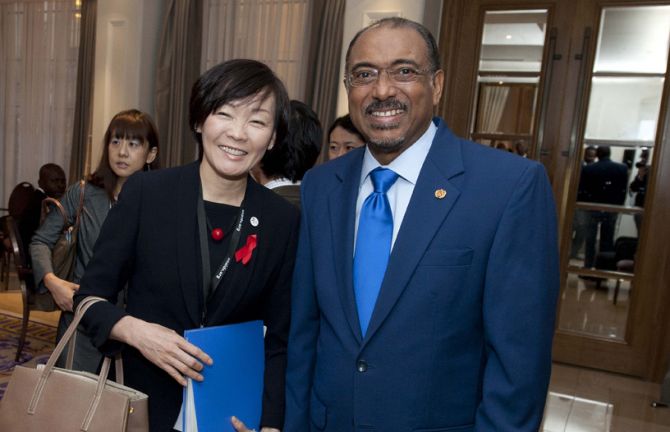
The First Lady of Japan Akie Abe attended the UNAIDS and Lancet Commission meeting in London on 13-14 February 2014.
Feature Story
First Lady of Japan to champion ending AIDS
18 February 2014
18 February 2014 18 February 2014The First Lady of Japan Akie Abe has made a personal commitment toward ending AIDS. In her first official solo visit as First Lady, the spouse of Prime Minister of Japan Shinzō Abe attended the UNAIDS and Lancet Commission meeting in London on the 13-14, February 2014.
At the meeting Mrs Abe delivered a moving speech about how she came to understand the toll of the AIDS epidemic through her travels and through her work in Japan.
She was especially struck by the discrimination and stigma that people living with HIV face—the difference between a hug and keeping people at arm’s length. “A mere one meter that is the gulf so deep that continues to trap us all with unjustifiable discrimination toward people living with HIV,” she said.
She concluded her intervention by promising to work the rest of her life on ending AIDS by “amplifying the voice of the voiceless”.
The UNAIDS and Lancet Commission: Defeating AIDS – Advancing global health, convened by Michel Sidibé, Executive Director of UNAIDS and Richard Horton, Editor-in-Chief of The Lancet, is co-chaired by Malawi President Joyce Banda, African Union Commission Chairperson Nkosazana Dlamini Zuma and London School of Hygiene and Tropical Medicine Director Peter Piot.
As part of the Commission’s efforts to provide a framework for informing how to address AIDS and health in the context of the post-2015 development agenda, dialogues have been held across regions, bringing together diverse perspectives to inform the discussions of the Commission’s London meeting. The final recommendations will be compiled in a comprehensive report which will be published in the medical journal The Lancet.
Press Release
UNAIDS and Lancet Commission to put forward recommendations on AIDS and global health for the post-2015 debate
13 February 2014 13 February 2014The UNAIDS and Lancet Commission: Defeating AIDS – Advancing global health, reconvenes in London for final meeting on the future of HIV and global health
LONDON/GENEVA, 13 February 2014—The UNAIDS and Lancet Commission: Defeating AIDS – Advancing global health is meeting in London on the future of AIDS and global health in the post-2015 era—the recommendations will be published in The Lancet later this year.
“The fight against AIDS is not over yet. We need to intensify efforts to achieve a historic victory against this disease,” said the President of the Republic of Ghana John Dramani Mahama. “Everyone has a key role to play in achieving this objective. We have to take action to ensure that we are doing the best possible for our countries, for our people and for humanity.”
“We have made remarkable progress in the fight against AIDS but the fight is not over and complacency is our worst enemy,” said the President of Benin, Yayi Boni through a video message. “Ending AIDS and extreme poverty is a shared responsibility that must be a priority for Africa and the world.”
The Commission, which was established in early 2013 brings together more than 40 Heads of State and political leaders, HIV and health experts, young people, activists, scientists and private sector representatives to ensure that lessons learned in the AIDS response can be applied to transform how countries and partners approach health and development.
“This Commission bears an historic role, based on accumulated knowledge and technologies, to find new approaches and to redouble its efforts in defeating HIV as regards the next generation,” pointed out the First Lady of Japan Akie Abe. “We must proceed while leaving no one behind. We must apply the achievements of the AIDS response to other areas for realizing better health.”
“Equal access to HIV services will halt and reverse the epidemic and contribute to economic growth and people's well-being,” said the First Lady of Gabon Sylvia Bongo Ondimba. “That is why HIV services must be integrated in all countries' development plans.”
“We have managed to provide treatment and care for people living with HIV but now many also face non-communicable diseases,” said the First Lady of Rwanda Jeannette Kagame. “The changing nature of the disease is an illustration of how difficult it is to find a cure or vaccine so we must be adaptive and responsive. Africa should be ready! The worst is behind us. Now we know how to prevent, how to treat and how to care. We should build from what we have started and do it yesterday.”
The Commission, convened by Michel Sidibé, Executive Director of UNAIDS and Richard Horton, Editor-in-Chief of The Lancet, is co-chaired by Malawi President Joyce Banda, African Union Commission Chairperson Nkosazana Dlamini Zuma and London School of Hygiene and Tropical Medicine Director Peter Piot.
As part of the Commissions’ efforts to provide a framework for informing how to address AIDS and health in the context of the post-2015 development agenda, dialogues have been held across regions, bringing together diverse perspectives to inform the discussions of the Commission’s London meeting. The final recommendations will be compiled in a comprehensive report which will be published in the medical journal The Lancet.
Contact
UNAIDS GenevaSophie Barton-Knott
tel. +41 22 791 1697
bartonknotts@unaids.org
The Lancet
Daisy Barton
tel. +44 207 424 4949
pressoffice@lancet.com
Multimedia
Multimedia
Press centre
Download the printable version (PDF)
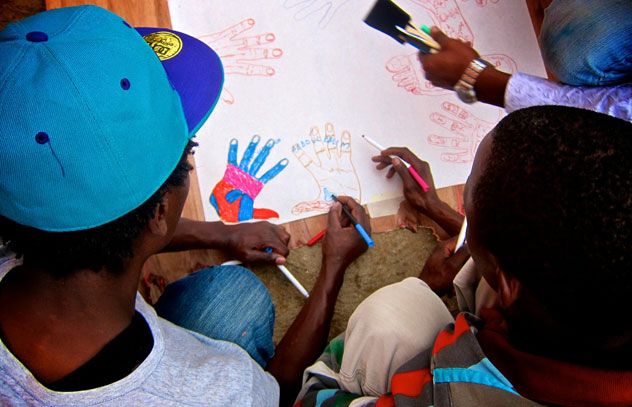
Twenty peer educators from the Kigali Hope Association participated in a series of creative workshops hosted by Ivuka artists, with the help of a team of dedicated psychosocial counsellors. Together, artists and participants explored different topics related to living with HIV as well as a variety of artistic methods to create a multimedia collection of powerful art pieces. Ranging from portraits to sculpture, large paintings to posters, the process of creating artwork together made for a very impactful experience for participants and artists alike.
Feature Story
New mural in Rwanda brings new hope to young people
10 February 2014
10 February 2014 10 February 2014A new 14-meter tall mural painted on a wall of the Rwanda Biomedical Center (RBC) building features artwork against HIV stigma and promotes “positive living” within the community.
Unveiled to the public on 1 December 2013 in the Rwanda’s capital of Kigali, the mural was painted by young people affected by HIV and contemporary Rwandese artists as part of the ‘Kurema, Kureba, Kwiga’ (‘To Create, To See, To Learn’) initiative.
The initiative, developed by RBC in partnership with Ivuka Arts Kigali (Rwanda’s first community arts centre) and the Kigali Hope Association (a civil society organization that works with young people living with and affected by HIV), aims to help young people living with HIV to express themselves through art.
“By developing a project that engages people affected by HIV in creatively expressing themselves and engaging the public in seeing new forms of artwork, we are enabling a community to share more stories, spread positive messages, build relationships, and change people’s perceptions for the better,” said Judith Kaine, the ‘Kurema, Kureba, Kwiga’ project founder and coordinator.
Twenty peer educators from the Kigali Hope Association participated in a series of creative workshops hosted by Ivuka artists, with the help of a team of dedicated psychosocial counsellors. Together, artists and participants explored different topics related to living with HIV as well as a variety of artistic methods to create a multimedia collection of powerful art pieces. Ranging from portraits to sculpture, large paintings to posters, the process of creating artwork together made for a very impactful experience for participants and artists alike.
“This project gave us an opportunity to reflect on how we see ourselves, how others see us and how the society perceives people living with HIV," said a 24-year-old participant. "In the art work I portrayed my life from a young age until now, how I was treated by my family and how I felt after knowing my HIV status. We are grateful to the artists from Ivuka for helping us to communicate a message through art.”
The 2013 Rwanda stigma index report highlights HIV-positive status as the main reason reported for stigma and discrimination, which impedes access to social services and rights, laws and policies. “Having an avenue for young people living with HIV to express their personal stories through art has been an enlightening opportunity for all,” said Sibongile Dludlu, the UNAIDS Country Coordinator in Rwanda.
The ‘Kurema, Kureba, Kwiga’ initiative will continue to launch a variety of public art exhibitions in Rwanda to create awareness about stigma faced by people living with HIV and push for social change.
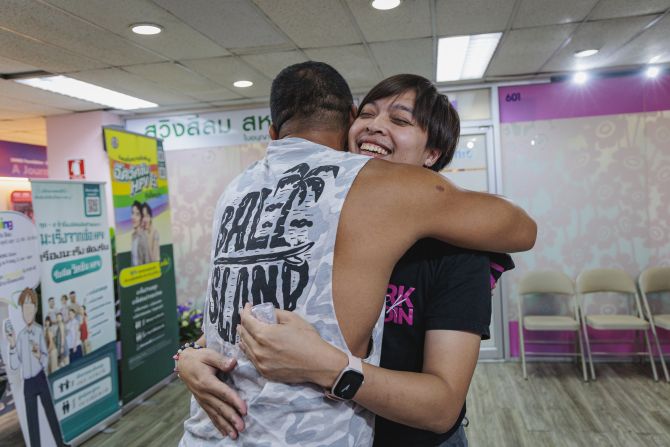
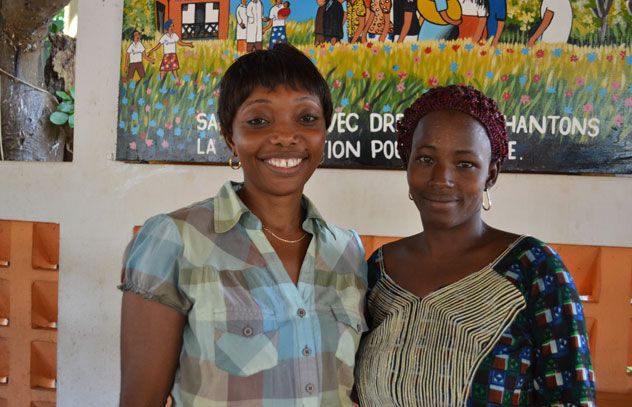
Djamilatou (right) and Fatoumata Sylla, coordinator of the WFP-supported Dream Centre clinic in Conakry. WFP food rations have been an important part of the support Djamilatou has received. (Credit: WFP/Katharina Dirr)
Feature Story
Guinea: WFP nutrition support helps a mother rise to the challenge of living with HIV
31 January 2014
31 January 2014 31 January 2014A version of this story first appeared at www.wfp.org
Djamilatou lives in the suburbs of Conakry, the capital of Guinea. Every week, the 34 year-old mother comes to the Dream Centre—a walk-in clinic that supports people living with HIV by offering HIV treatment, advice and, thanks to the World Food Programme, nutritious food.
It was during her first pregnancy that she discovered she was HIV-positive. "I went to the hospital, because I always felt sick," she says. After some tests, the doctor gave her the news. “At first, I really couldn’t believe it. It was a huge shock. I had never ever considered that HIV could affect me.”
A friend advised Djamilatou to go to the Dream Centre and she says this advice changed her life. "Before I came here, I had lost a lot of weight and strength. I would have never had the money to buy all the medicine for the treatment.”
But the most important thing for her was the support and advice she received to help her through a complicated pregnancy and the birth of her child by caesarian. “I am very thankful that both of my children are healthy. My son Alpha is 3 years old and my little daughter Mariama just turned 5 months. At the centre, I also receive nutrition education to make sure that she grows up healthy and strong.”
Now Djamilatou’s nutritional status is stable, as is her health and she is hoping to start working again soon. For her the centre is not only a place where she receives treatment and nutrition, it is a place that gives her hope.
As clinic coordinator Fatoumata Sylla maintains, “The social side of the weekly food rations is really important: for some patients they are one of main reasons for coming regularly… This gives us the chance to build a stable relationship with our patients.” In addition, the nutrition support provided by WFP has a special impact on the progress of their treatment.
“The nutritional needs of people living with HIV are higher because of their weakened immune system,” explains Ms Sylla. “We can improve the effectiveness of our treatment when we supply the patients not only with medication, but also with nutritious food.”
Like Djamilatou, more than 650 other people living with HIV receive treatment at the Dream Centre every month. WFP also provides with Supercereal + sugar (CSB+), a specialized micronutrient vitamin and mineral mix that helps to quickly improve the nutritional status of people living with HIV. The amount of the CSB+ ration depends on the body mass index (BMI) of each patient. In addition, the World Food Programme also supports family members of people living with HIV with rations of rice and oil fortified with vitamins A and D.

Press Release
The M∙A∙C AIDS Fund, Rihanna and UNAIDS team up to reach nearly 2 million young people in need of lifesaving HIV treatment
30 January 2014 30 January 2014Star studded effort to support the expansion of Treatment 2015 with US$ 2 million grant to UNAIDS to deliver HIV treatment and care for adolescents and young people worldwide
GENEVA/NEW YORK, 30 January 2014—The Joint United Nations Programme on HIV/AIDS (UNAIDS) announced today the expansion of its Treatment 2015 initiative with a US$ 2 million grant provided by the heart and soul of M∙A∙C Cosmetics, the M∙A∙C AIDS Fund. The Fund is fully supported from the sale of VIVA GLAM Lipstick and Lipglass with global superstar Rihanna lending her celebrity to spur purchase and awareness. Leveraging this new funding, UNAIDS will build on Treatment 2015 by advancing global, regional and country level policies and programs to expand HIV testing and treatment to young people worldwide.
"M∙A∙C Cosmetics has a long history of engaging the right star power to motivate our customers and make an impact on this important cause. With UNAIDS' resources and strategic thinking and Rihanna's passionate support, we’re helping save lives one lipstick at a time,” said John Demsey, Group President of The Estée Lauder Companies.
Globally, an estimated 5.4 million[1] adolescents and young people are living with HIV, and 1.8 million[1] are eligible for HIV treatment. Millions of young people living with HIV do not know they are infected, and every day, approximately 2,100 adolescents and young people[1] are newly infected, which accounts for 39% of all new adult HIV infections globally. While antiretroviral therapy has resulted in a decline in AIDS-related deaths, modelling suggests that adolescents from 10 to 19-years-old are the only age group in which AIDS-related deaths rose between 2001 and 2012. The trend in AIDS-related deaths can be attributed to poor prioritization of adolescents in strategic plans for scale-up of HIV treatment and the lack of testing and counselling.
“Young people will lead us to an AIDS-free generation. By ensuring adolescents and young people have access to HIV services, we are not only saving lives but also investing in a healthier future for generations to come,” said Michel Sidibé, Executive Director of UNAIDS. “We are truly honored to be working with the M∙A∙CAIDS Fund to help young people around the world access earlier HIV testing and treatment.”
The UNAIDS Treatment 2015 initiative aims to reach 15 million adults and young people with HIV treatment by 2015. The US$ 2 million grant from the M∙A∙C AIDS Fund will support expanded efforts to ensure adolescents and young people have access to HIV treatment and care internationally. New youth outreach efforts will include the evaluation of young people testing and treatment programmes and adaptation of adolescent and young people treatment guidelines.
“Ending the AIDS epidemic is within our power, but we cannot achieve it without expanding treatment access to ensure some of the most underserved, vulnerable communities, particularly young people, are not left behind,” said Nancy Mahon, Global Executive Director of the M∙A∙CAIDS Fund. “For this reason, the M∙A∙CAIDS Fund will continue to invest in strategic, impactful initiatives like UNAIDS’ Treatment 2015 that are working toward ending AIDS once and for all.”
The grant to UNAIDS was made possible exclusively through the sale of M∙A∙C’s VIVA GLAM Lipstick and Lipglass, which M∙A∙Cdonates 100% of the sale price to fight HIV. Rihanna, M∙A∙C’s new VIVA GLAM spokesperson, recently launched her new VIVA GLAM collection, which will benefit organizations like UNAIDS to support men, women and children affected by HIV globally.
"I'm honored to join forces with the M∙A∙C AIDS Fund and UNAIDS in the fight against AIDS," said Rihanna. "I want to help reach as many young people around the world as I can. While we need to begin with education, we also need to deliver HIV testing and treatment to the millions of young people who need our help, which is exactly what we plan to do."
UNAIDS Treatment 2015 has started to roll out globally. To learn more about UNAIDS’s plans to reach 15 million people by 2015, download the UNAIDS Treatment 2015 report.
[1] UNAIDS 2012 Estimates
Contact
UNAIDS GenevaSophie Barton-Knott
tel. +41 22 791 1697
bartonknotts@unaids.org
M.A.C. AIDS FUND
Beth Cleveland
tel. +1 415 283 73 33
MAF@praytellstrategy.com
Resources
Press centre
Download the printable version (PDF)
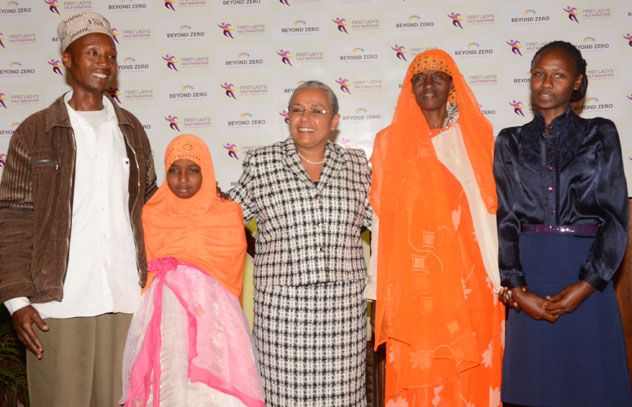
In order to improve maternal and child health outcomes in the country, the First Lady of Kenya, Margaret Kenyatta launched the ‘Beyond Zero Campaign’ on 24 January in Kenya’s capital Nairobi.
Feature Story
New “Beyond Zero Campaign” to improve maternal and child health outcomes in Kenya
30 January 2014
30 January 2014 30 January 2014Fifteen women die every day due to pregnancy related complications in Kenya and 20% of all deaths among mothers in the country are AIDS-related.
In order to improve maternal and child health outcomes in the country, the First Lady of Kenya, Margaret Kenyatta launched the ‘Beyond Zero Campaign’ on 24 January in Kenya’s capital Nairobi. The new initiative also aims to accelerate the implementation of the national plan towards the elimination of new HIV infections among children.
“I am deeply saddened by the fact that women and children in our country die from causes that can be avoided. It doesn’t have to be this way,” said Ms Kenyatta. “This is why I am launching the ‘Beyond Zero Campaign’ which will bring prenatal and postnatal medical treatment to women and children in our country.”
According to the Commission on Information and Accountability for Women and Children’s Health 2013 Update Report, in 2012 alone, more than 100 000 children died before their fifth birthday—largely due to preventable causes. In the same year, 13 000 new HIV infections occurred among children and 62% of children living with HIV did not access life-saving antiretroviral drugs.
“I wished that my mother had better access to maternal health care services that would have protected her from contracting HIV,” said Dorcas Kawira, a 21 year old HIV positive law student. She also stressed the challenges she experienced in accessing and using HIV treatment during her childhood. She highlighted that investing in the ‘Beyond Zero campaign’ would secure the necessary maternal and child health care to protect her and other young women living with HIV.
Donors and private sector organizations have already pledged funds to purchase mobile clinics that will provide integrated HIV, maternal and child health outreach services in the country. For example, James Mwangi, Chief Executive Officer of Equity Bank in Kenya, pledged US$ 580 000 during the launch event. The Ministry of Health will also invest in 2014 an estimate of US$ 400 million towards initiatives to reduce HIV transmission and maternal and child mortality, to increase the number of skilled health care providers and to equip the existing facilities with relevant supplies.
The ‘Beyond Zero campaign’ is part of the initiatives outlined in the Strategic Framework for the engagement of the First Lady in HIV control and promotion of maternal, newborn and child health in Kenya that was unveiled on World AIDS Day 2013. The framework aims to galvanise high-level leadership in ending new HIV infections among children and reducing HIV related deaths among women and children in Kenya.
The strategic framework focuses on five key areas: (i) Accelerating HIV programmes, (ii) Influencing investment in high impact activities to promote maternal and child health and HIV control, (iii) Mobilizing men as clients, partners and agents of change, (iv) Involving communities to address barriers to accessing HIV, maternal and child health services and (v) Providing leadership, accountability and recognition to accelerate the attainment of HIV, maternal and child health targets.
Related

Press Release
UNAIDS and the World Bank Group endorse action points to address extreme poverty and AIDS
15 January 2014 15 January 2014GENEVA/WASHINGTON, 15 January 2014—During a high-level meeting and discussions in Washington last week, UNAIDS and the World Bank Group endorsed four areas of action to accelerate efforts that address the interrelated challenges of AIDS, inequality and extreme poverty.
UNAIDS and the World Bank Group have committed to work closely with UNDP and other international partners, to address the social and structural drivers of the HIV epidemic that put people at greater risk of HIV and deny them access to services. These social and structural drivers include gender inequality, stigma and discrimination, lack of access to education and unstable livelihoods. UNAIDS and the World Bank Group will advocate for:
- Aligning health and development efforts around country-led time-bound goals towards ending extreme poverty and AIDS, with special attention to the inclusion of the poorest and most marginalized populations. Areas of focus will include: supporting countries to adopt progressive legal systems that remove discriminatory laws, especially among populations most vulnerable to HIV infection; increasing access to income, adequate housing and safe working conditions; and accelerating reforms towards universal health coverage and universal access to HIV services and commodities.
- Urging the post-2015 development agenda to include targets towards ending AIDS alongside the goal of universal health coverage, so that no one falls into poverty or is kept in poverty due to payment for AIDS treatment or health care.
- Promoting national and global monitoring and implementation research. Actions will include: working closely with global partners and countries to innovate and monitor service delivery, including for HIV, especially to the poorest and the most marginalized; and intensify implementation research to capture and codify innovative approaches to address the linkages between efforts towards ending extreme poverty and ending AIDS. As part of this effort, the World Bank Group will launch a major new trial to better understand how social protection systems reduce HIV infection, particularly among young women in the highest burden hyper-endemic countries.
- Convening two high-level meetings in 2014 with national policy leaders and experts on ending AIDS and extreme poverty. The first meeting will be convened in Southern Africa to share current research and discuss how it can be translated into practice. The second meeting will be held during the International AIDS Conference in July 2014 in Melbourne.
Despite unprecedented progress over the past decade in the global response to HIV, economic inequality, social marginalization and other structural factors have continued to fuel the HIV epidemic. The epidemic continues to undermine efforts to reduce poverty and marginalization. HIV deepens poverty, exacerbates social and economic inequalities, diminishes opportunities for economic and social advancement and causes profound human hardship.
“Ending the AIDS epidemic and extreme poverty is within our power,” said Michel Sidibé, Executive Director, UNAIDS. “Our combined efforts will contribute to a global movement working to ensure that every person can realize their right to quality healthcare and live free from poverty and discrimination.”
“Just as money alone is insufficient to end poverty, science is powerless to defeat AIDS unless we tackle the underlying social and structural factors,” said Jim Yong Kim, President of the World Bank Group. “To end both AIDS and poverty, we need sustained political will, social activism, and an unwavering commitment to equity and social justice.”
“Stigma, discrimination and marginalization stand in the way of fully realizing the promise of HIV prevention and treatment technologies,” said Helen Clark, UNDP Administrator. “We know that where laws and policies enable people affected by HIV to participate with dignity in daily life without fearing discrimination, they are more likely to seek prevention, care and support services.”
Improving health services and outcomes is critical to ending extreme poverty and boosting shared prosperity. The recent Lancet Commission on Investing in Health estimated that up to 24% of economic growth in low- and middle-income countries was due to better health outcomes. The payoffs are immense: the Commission concluded that investing in health yields a 9 to 20-fold return on investment.
Investing in health also means investing in equity. Essential elements of a human rights-based response to HIV include: enabling laws, policies and initiatives that protect and promote access to effective health and social services, including access to secure housing, adequate nutrition and other essential services. Such measures can help protect people affected by HIV from stigma, discrimination, violence and economic vulnerability. HIV-sensitive social protection is already a key component of the UNAIDS vision of zero new HIV infections, zero discrimination and zero AIDS-related deaths.
“Pills on a shelf do not save lives,” said Sveta Moroz of the Union of Women of Ukraine Affected by HIV. “To end the AIDS epidemic for everyone will require a people-centered approach driven by the community and based on social justice. It demands an approach that ensures basic human rights to safe housing, access to healthcare, food security and economic opportunity. These are rights that actively remove barriers to real people’s engagement in effective HIV prevention and care.”
UNAIDS and the World Bank Group will work to ensure that these efforts feature prominently in the post-2015 global development agenda, and are integral elements in ending AIDS, achieving universal health coverage, ending extreme poverty and inequality and building shared prosperity.
Contact
UNAIDS GenevaSophie Barton-Knott
tel. +41 22 791 1697
bartonknotts@unaids.org
World Bank Group
Melanie Mayhew
tel. +1 202 459 7115
mmayhew1@worldbank.org
Press centre
Download the printable version (PDF)
Press Release
UNAIDS and the Organization of American States join efforts to advance the response to HIV in the Americas
10 January 2014 10 January 2014GENEVA/WASHINGTON, 10 January 2014—UNAIDS and the Organization of American States (OAS) have signed a Memorandum of Understanding (MoU) in efforts to advance the response to HIV among the OAS Member States.
Through the MoU, UNAIDS and the OAS will increase HIV outreach activities such as information and education campaigns, policy roundtables, forums, lectures and scholarships programmes aimed at reducing new HIV infections, expanding access to antiretroviral treatment and supporting people living with HIV. UNAIDS and the OAS will also foster collaboration with regional networks of HIV positive youth to strengthen HIV awareness and prevention education, enhance social protection for young people, counter gender-based violence and challenge harmful gender norms among young people.
“HIV is more than a disease. It is an issue of security, social justice and distribution of opportunities,” said Michel Sidibé, Executive Director of UNAIDS. “We must leverage this partnership to ensure that no one is left behind in the response to HIV in the Americas and that people most affected by HIV have access to essential HIV prevention and treatment services.”
Key populations including men who have sex with men, sex workers, people who use drugs and transgender people remain most affected by HIV in Latin America and the Caribbean. Although new infections have stabilised, they are still not declining. The existence and enforcement of punitive laws as well as widespread stigma and discrimination against men who have sex with men, transgender people and sex workers continue to marginalize people most in need and block access to lifesaving HIV services.
“We have managed to break the curve of growth of infection,” said Miguel Jose Insulza, OAS Secretary General. “We now need to address structural, cross-cutting issues, including gender-based violence.”
In June 2013 the OAS General Assembly passed the Resolution on the Promotion and Protection of Human Rights of People Vulnerable to, Living with, of Affected by HIV/AIDS in the Americas. The Resolution urges Member States to continue their efforts in support to laws and public policies to protect the human rights and fundamental freedoms of people living with HIV, and to increase HIV prevention and treatment for pregnant women and mothers, including preventing mother-to-child transmission of HIV. The Resolution also promotes greater involvement of people living with HIV in decision-making and in the drafting of policies and programmes in response to the epidemic.
Press centre
Download the printable version (PDF)
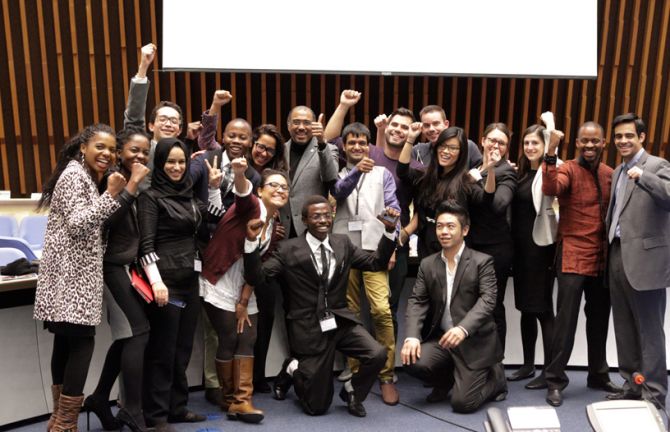
Young people explored ideas, experiences and solutions with the UNAIDS Board about the shape and scope of meaningful HIV programmes encompassing youths and adolescents at a time in their lives of great psychological, physical and social change.
Feature Story
Walk in my shoes — UNAIDS Board devotes key session to HIV, adolescents and youth
20 December 2013
20 December 2013 20 December 2013A major concern in the global response to HIV is how to ensure that young people take their rightful place as active participants with access to high quality HIV services and the right skills and knowledge to adopt strategies to stay safe, delivered in a supportive environment. Recognizing the critical need to urgently scale up effective HIV responses to adolescents and youth, the UNAIDS Programme Coordinating Board, meeting in Geneva this week, devoted a full-day thematic segment to HIV, adolescents and youth.
The situation is extremely serious. Although there has been a 32% reduction in the estimated number of new HIV infections among people aged 15-24, this key group is facing an emerging crisis. While the number of AIDS-related deaths overall fell by an estimated 30% between 2005 and 2012, estimates suggest that the number of deaths among young people increased by 50%. In addition, 15-24 year olds still accounted for 39% of all new adult infections in 2012.
“This is the time to re-imagine the HIV response among adolescents and youth. Young people are ‘the now and the future’, born in an era of HIV and antiretroviral treatment,” said Michel Sidibé, Executive Director of UNAIDS. “Without addressing their needs, there will be no AIDS-free generation and the gains made towards eliminating new HIV infections among children will be lost—their HIV risk merely deferred to the second decade of life.”
Lively and frank discussions
Under the theme of Walk in my shoes, the 19 December gathering brought together a host of young people from around the world who themselves led the main sessions on HIV prevention, testing and treatment. Young people explored ideas, experiences and solutions with the Board about the shape and scope of meaningful HIV programmes encompassing youths and adolescents at a time in their lives of great psychological, physical and social change. The discussions were lively, frank and open.
There was much emphasis on how to foster greater inclusion and ensure that young people are not simply passive recipients of programmes but play an integral role in their design, implementation and evaluation. It was found that currently their use of HIV prevention, treatment and care services is often lower than their older counterparts and that there remained a critical need for a scale-up of youth-friendly services and programmes which are fully resourced and tailored to their specific needs. Opportunities to link HIV with other sexual and reproductive health services as well as education, gender equality and social protection were also explored.
In a session on what successful HIV prevention looks like for young people, their unique prevention needs were highlighted, including those for key populations such as men who have sex with men, injecting drug users and sex workers. Young leaders shared good practices at country level. Renata Bayazitova from the Public Foundation "Ganesha" in Kyrgyzstan said that the critical elements of success for harm reduction services for young women who inject drugs, is to greater access to safe spaces, free of judgment, where young people can come at any time without the fear of being misunderstood, where they can get information and support on a range of issues.
Across all programmes a common element of success was the involvement of young people in the design of the services. The participants highlighted that only by working with young people will services be developed which are right for them, delivered in the right way, by the right providers and in the right places. Jerson See from the community organization Cebu Plus in the Philippines said, “You need to work with us, be case we know the market…we are the market.”
Creating an enabling social and legal environment in which young people feel motivated to go for HIV testing was also examined through a session which asked the question—‘Do all tests have to be hard? It was noted that current levels of HIV testing among adolescents and youth are still very low and that with treatment available it was now imperative to ensure young people living with HIV are diagnosed and linked to care and treatment.
One of the critical barriers raised repeatedly by participations was laws pertaining to the age of consent in accessing HIV testing services. “In Mexico, you are allowed to take an HIV testing when you are under 18, but according to the law a parent or guardian has to come with you to receive the test result,” said Corina Martinez Fundación Mexicana para la Planeación Familiar, A.C. “Fortunately in Mexico that rule is already under review, but it is important to take this example and monitor to ensure that in all our countries, these measures should be strengthened to ensure universal access to HIV testing.”
Participants also heard Zambia’s innovative mobile technology project, U-report, which has been able to scale up demand for HIV testing among young people, as well as Dr Nono Simelela, Special Adviser to The Deputy President, Chair of the South African National AIDS Commission, outlining the process in South Africa which led to the lowering of the age of consent in access to HIV testing to 12.
There was also an animated dialogue on challenges and solutions in relation to access to treatment and how this access can be integrated into youth-friendly services which also offer sexual and reproductive health interventions and support with adherence to drug regimens and disclosure.
After a full day of discussion and debate, youth delegates and Board members were galvanized into redoubling their efforts to ensure that young people have the tools and the space to put themselves front and centre of the AIDS response and play an active role in achieving in getting to the end of the AIDS epidemic.
“As a youth movement, we’ve never been more organized than now,” said Pablo Aguilera, Director of the HIV Young Leaders Fund. “We’re ready to work to ensure HIV remains a priory in the post-2015 development framework”.