Feature Story
UNAIDS urges Francophone parliamentarians to focus on equal access to life-saving services
13 July 2013
13 July 2013 13 July 2013
UNAIDS Executive Director Michel Sidibé addressing the 39th meeting of the Francophone Parliamentary Assembly, Abidjan, Côte d’Ivoire, 11 July 2013. Credit: UNAIDS
During the 39th meeting of the Francophone Parliamentary Assembly (APF), parliamentarians from across the Francophone world met from 9 to 12 July in Abidjan, Côte d’Ivoire to discuss the meeting’s theme of “Parliaments at the heart of nation building”.
High on the agenda for parliamentarians, were issues on inclusion and equal protection as fundamental building blocks to stable societies and sustainable development.
Bringing lessons learned from the AIDS response, UNAIDS Executive Director Michel Sidibé stressed the importance of ensuring social inclusion, “We must address the human dimension of the HIV epidemic, end discrimination and ensure access to services for women and girls, prisoners, migrants, sex workers, people who inject drugs and men who have sex with men.”
We must address the human dimension of the HIV epidemic, end discrimination and ensure access to services for women and girls, prisoners, migrants, sex workers, people who inject drugs and men who have sex with men.
UNAIDS Executive Director Michel Sidibé
His thoughts were echoed by the Secretary General of the APF, Jacques Legendre, “Unequal access to medicines for people living with HIV around the globe is intolerable.”
Adding to the inclusion message the Francophone Youth Parliament, noted the need to strengthen education on HIV prevention and place human rights at the centre of efforts to end the epidemic.
In spite of recent progress, the HIV response in low- and middle-income countries that are members of International Organisation of La Francophonie (IOF) has not shown the same results as that of other countries. In 2011, HIV treatment coverage in IOF countries in sub-Saharan Africa was 43% compared to 59% in non-IOF countries in the region.
Related
Press Release
UNAIDS urges countries to rapidly scale up access to antiretroviral medicines to maximize HIV treatment and prevention gains
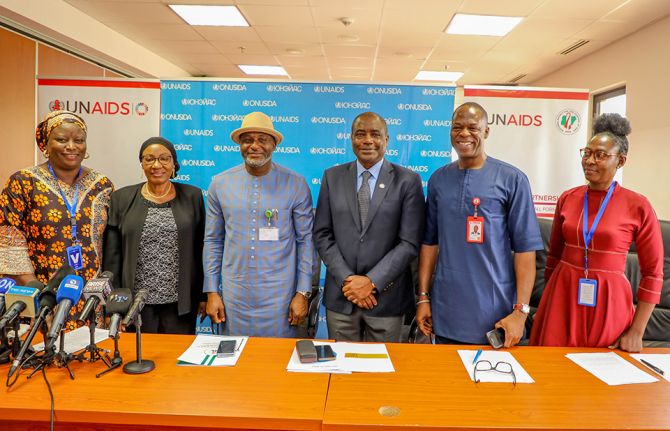
13 July 2013 13 July 2013ABUJA, Nigeria /GENEVA, 13 July 2013—The Joint United Nations Programme on HIV/AIDS (UNAIDS) has launched a new framework to accelerate action in reaching 15 million people with antiretroviral treatment by 2015––the goal set by United Nations Member States in 2011.
The framework, entitled Treatment 2015, offers countries and partners both practical and innovative ways to increase the number of people accessing antiretroviral medicines. These medicines will not only enable people living with HIV to live longer and healthier lives, they will also help prevent new HIV infections.
“Reaching the 2015 target will be a critical milestone,” said Michel Sidibé, Executive Director of UNAIDS. “Countries and partners need to urgently and strategically invest resources and efforts to ensure that everyone has access to HIV prevention and treatment services.”
Developed in consultation with a range of stakeholders, Treatment 2015 takes into account the new Consolidated guidelines on the use of antiretroviral drugs for treating and preventing HIV infection released last month by the World Health Organization (WHO). The guidelines recommend that people living with HIV start antiretroviral therapy (ART) much earlier.
"The scale up of ART is an unprecedented global success story for public health. Maintaining this momentum will require earlier treatment and innovative ways for enabling more people to take the medicine such as the one-pill daily regimen recommended by the new WHO guidelines," said Dr Margaret Chan, Director-General of WHO. "Substantial further scale-up of access to these medicines provides us with a unique opportunity to push this epidemic into irreversible decline."
“Scaling up access to antiretroviral treatment is critical to achieving an AIDS-free generation,” said Ambassador Eric Goosby, U.S. Global AIDS Coordinator. “PEPFAR is firmly committed to continue working with partner countries and other stakeholders to help make this vision a reality, but we all must share in the responsibility to get there.”
Treatment 2015 emphasizes the importance of HIV testing and counselling as a gateway to expanding access to antiretroviral therapy and that further efforts are required to normalize HIV testing. It highlights that community testing campaigns have proven to be particularly effective in Kenya, Malawi, South Africa, Uganda, the United Republic of Tanzania and Zambia.
“We have to work hard to defeat HIV and end it as a public health threat, and it will require concerted effort from all partners to get there,” said Mark Dybul, Executive Director of the Global Fund to Fight AIDS, Tuberculosis and Malaria.
Treatment 2015 outlines three fundamental pillars essential to reaching the 2015 target; Demand––increasing demand for HIV testing and treatment services; Invest––mobilizing resources and improving the efficiency and effectiveness of spending; and Deliver––ensuring more people have access to antiretroviral therapy.
The report notes that just 30 countries* account for 9 out of 10 people who are eligible for antiretroviral therapy but who do not have access. Treatment 2015 stresses that intensive focus on scaling up HIV services in the 30 countries would have a significant impact on the trajectory of the global AIDS epidemic. The framework also calls for all countries to use the best available data to identify key geographical settings and populations with high HIV prevalence and disproportionate unmet need for antiretroviral therapy.
Treatment 2015 encourages countries to enhance public health programmes and leverage services provided by civil society and community based groups. It outlines that community health workers have the capacity to provide almost 40% of HIV service-related tasks and that HIV testing and treatment services need to be decentralized to promote easier access. The framework also underscores the need to ensure that underserved key populations have equitable access to HIV testing and treatment services.
*Angola, Brazil, China, Cameroon, Central African Republic, Chad, Colombia, Côte d’Ivoire, Democratic Republic of the Congo, Ethiopia, Ghana, India, Indonesia, Kenya, Lesotho, Malawi, Mozambique, Myanmar, Nigeria, Russian Federation, South Africa, South Sudan, Thailand, Togo, Uganda, Ukraine, United Republic of Tanzania, Viet Nam, Zambia and Zimbabwe.
Contact
UNAIDS AbujaJeanne Seck
tel. +221 77 56 50 235
seckj@unaids.org
UNAIDS Geneva
Sophie Barton-Knott
tel. +41 22 791 1697
bartonknotts@unaids.org
Publications
Press centre
Download the printable version (PDF)
Feature Story
Greater integration of HIV into broader health and development agenda in Myanmar: challenges and opportunities
12 July 2013
12 July 2013 12 July 2013
UNAIDS Deputy Executive Director, Management and Governance, Jan Beagle visiting Mingalardon Specialist Hospital, one of the largest public providers of antiretroviral therapy in the country.
In an official visit to Myanmar, UNAIDS Deputy Executive Director, Management and Governance, Jan Beagle called for greater integration of HIV into the broader health and development agenda. During her interactions with government officials, parliamentarians, women leaders and civil society representatives, Ms Beagle also stressed the importance of a ‘people-centered’ AIDS response—making sure that systems and services are set up based on people’s needs and realities.
After 50 years of military rule, Myanmar is experiencing greater political freedom and economic change, including an influx of foreign aid and private capital into the country. This presents opportunities for reforms that can have a direct impact on the lives of people living with and affected by HIV.
This is a great era of opportunity for the people of Myanmar and for the AIDS response. Aligning and coordinating HIV efforts within an integrated approach to health and development will save lives, reduce costs and get the most out of the money invested.
UNAIDS Deputy Executive Director, Management and Governance, Jan Beagle
To further strengthen accountability and governance, Myanmar has established a new Health Sector Coordinating Committee. The committee serves as the main convenor for health partners and stakeholders across the country. Officials hope that with better coordination Myanmar can increase access to essential health services and information.
In May 2013, Myanmar became the first country from Asia and the Pacific to successfully apply to the Global Fund’s new funding model for HIV, TB and malaria. The Global Fund allocated more than US$161.2 million for HIV for 2013-2016.
“This is a great era of opportunity for the people of Myanmar and for the AIDS response,” said Ms Beagle. “Aligning and coordinating HIV efforts within an integrated approach to health and development will save lives, reduce costs and get the most out of the money invested,” she said. For example, noted Ms Beagle, integrating services for the prevention of new HIV infections among children into maternal, newborn and child health programmes will produce greater results than if they are considered as stand-alone initiatives and systems.
There are an estimated 200 000 people living with HIV in Myanmar and the country has the third highest HIV prevalence in the Asia-Pacific region at 0.47%. HIV prevalence among key affected populations is even higher. According to national estimates, in 2012, the HIV prevalence among people who use drugs was 18%; HIV prevalence among men who have sex with men and among female sex workers was 8.9% and 7.1% respectively. Coverage of antiretroviral treatment has grown from 12% in 2008 to 43% in 2013. While this represents an impressive scale-up, additional concerted efforts and resources are required to ensure increased and sustainable access to treatment.
At Mingalardon Specialist Hospital, one of the largest public providers of antiretroviral therapy in the country, Ms Beagle reiterated the need for a people-centred approach to ensure greatest access to HIV services. Dr Htin Aung Soe, HIV treatment specialist, highlighted how the AIDS response has had a positive impact in strengthening the health system as a whole.

UNAIDS Deputy Executive Director, Management and Governance, Jan Beagle (left) with UNAIDS Global Advocate for Zero Discrimination Daw Aung San Suu Kyi.
Addressing stigma and discrimination
Community groups raised concerns that punitive laws, policies and practices have led to heightened stigma and discrimination against people living with HIV. In particular, they cited work place and health care settings. During the meeting stakeholders asked for a holistic approach to HIV, one that would not only increase accesses to services but also create an enabling environment.
UNAIDS Global Advocate for Zero Discrimination Daw Aung San Suu Kyi discussed with Ms Beagle a range of issues in relation to stigma and discrimination, inequities and the empowerment of women. She emphasized the need to raise HIV-awareness and to have open discussions on HIV prevention. Daw Aung San Suu Kyi also reiterated her call for compassion for all people living with HIV.
Feature Story
African civil society organizations call on governments to intensify efforts to end the AIDS epidemic
11 July 2013
11 July 2013 11 July 2013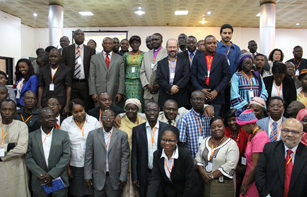
Participants at the meeting held in Abuja, Nigeria, 4-5 July 2013.
Representatives of more than 100 civil society organizations (CSO) from 42 countries urged African leaders to intensify efforts to end the AIDS epidemic by 2030. The call was made during a technical meeting held in Abuja, Nigeria from 4-5 July as part of the events leading up to the Abuja +12 Special Summit of the Africa Union on HIV/AIDS, TB and Malaria that will take place in the Nigerian capital from 15-16 July 2013.
The meeting aimed to assess progress made in the implementation of the 2001 Abuja Declaration. It also provided an opportunity to discuss key issues in the post-2015 debate.
CSO representatives requested governments to make HIV prevention the cornerstone of AIDS responses in order to meet the targets set during the 2011 United Nations General Assembly High Level Meeting on AIDS. CSO representatives, in a call action, also asked governments to “pay special attention to the impact of HIV issues affecting children, adolescents and women and girls.” Additional recommendations included accelerating integration of HIV, tuberculosis and malaria services; achieving full funding of health budgets; and adding per capita health expenditure tracking to the 15% Abuja financial commitments.
The recommendations from the civil society meeting were reviewed at an experts meeting held from 8-9 July, and will be put forward for consideration by the Heads of States during the Special Summit.


Feature Story
President Obama says South Africa is leading the way to an AIDS-free generation
08 July 2013
08 July 2013 08 July 2013
President of the United States of America, Barack Obama speaking with Archbishop Desmond Tutu during his visit to the Archbishop Desmond Tutu HIV Foundation (DTHF). Credit: DTHF
The President of the United States of America, Barack Obama stressed the feasibility to achieve an AIDS-free generation during his visit to the Archbishop Desmond Tutu HIV Foundation (DTHF) Youth Centre based in Cape Town, South Africa. President Obama toured the Foundation on 30 June as part of an official three-country visit to Africa—Senegal, Tanzania and South Africa.
“We have a possibility of achieving an AIDS-free generation and making sure that everyone in our human family is able to enjoy their lives, raise families, succeed and maintain their health here in Africa and round the world,” said President Obama.
Founded in early 1990s the DTHF provides HIV and Tuberculosis prevention, treatment, research and training as well as management services to communities of the Western Cape, particularly residents of townships who are at high risk of infection.
Its youth centre—opened in 2011 with help from several private sector and international partners including the United States President’s Emergency Plan for AIDS Relief (PEPFAR)—offers health services, life skills, and educational support to more than 2 000 registered young people.
“Thank you to the American people for the contribution that PEPFAR has made in our struggle against TB, HIV and malaria, not just here but in other parts of Africa,” said Archbishop Tutu. “Here in Africa we speak of ‘Ubuntu’—we say a person is a person through another person.”
In recent years, South Africa, which has the world’s largest HIV epidemic, made remarkable progress in its response to AIDS. In 2011, South Africa recorded a 41% reduction in new HIV infections since 2001. The scale-up of HIV treatment programmes in the country enabled more than 2 million people living with HIV to access life-saving treatment and care services in 2012. And between 2009-2012, new HIV infections among children declined by 63% in the country.
“South Africa has faced a heavy burden from HIV but the great news is that the country is now leading the way in caring for its citizens—paving the way for a brighter future for South African people,” said President Obama.
Multimedia
Feature Story
Gabon President commits to review progress made on the implementation of the UN Security Council Resolution on HIV and Security
09 July 2013
09 July 2013 09 July 2013
President Ali Bongo Ondimba of Gabon speaking at the event to commemorate the 100 years of the Albert Schweitzer hospital.
President Ali Bongo Ondimba of Gabon committed to hosting a meeting in 2013 to review progress made on the implementation of United Nations Security Council Resolution 1983 focused on HIV and security.
The announcement came during a meeting with UNAIDS Executive Director, Michel Sidibé, who was visiting the country to mark the 100th anniversary of the hospital Albert Schweitzer in Gabon.
In 2011, Gabon, President of the Security Council at the time tabled the landmark Security Council Resolution 1983 which called for increased efforts by UN Member States to address HIV in peacekeeping missions. It also called for HIV prevention efforts among uniformed services to be aligned with efforts to end sexual violence in conflict and post-conflict settings.
Mr Sidibé welcomed the announcement, “Gabon has been a showcase for Africa.”

L to R: Declan Okpalaeke, Chair, Steering Committee, African Health Journalists Association, Nigeria; Irina Bokova, Director-General, UNESCO; Michel Sidibé, Executive Director, UNAIDS.
More than 350 eminent people including Nobel Prize laureates, experts in science and medicine, representatives of the private sector and civil society, as well as descendants of Albert Schweitzer attended the centennial celebration which took place between 6-7 July 2013 in Lambaréné, Gabon where the hospital is located and Libreville, the country’s capital.
Dr Schweitzer arrived in 1913 in Lambaréné, and is considered one of the greatest humanitarian physicians of the 20th century. The hospital he founded is still operating and is now one of the leading regional centers.
Participants also took part in an international scientific symposium on HIV, malaria and tuberculosis. President Bongo emphasized the need for increased use of technologies to enhance efficiency in patient care and he reaffirmed his commitment to make Gabon a regional hub, dedicated to maternal and child healthcare.

Feature Story
Science, spirituality and health in the AIDS response
09 July 2013
09 July 2013 09 July 2013
L to R: UNAIDS Deputy Executive Director, Management and Governance, Jan Beagle; His Holiness Sri Sri Ravi Shankar; and UNAIDS Deputy Executive Director, Programme, Luiz Loures. Credit: UNAIDS
The Indian spiritual leader and peace ambassador, His Holiness Sri Sri Ravi Shankar made an official visit to UNAIDS Headquarters in Geneva on 2nd July 2013 to engage with staff and guests on issues around science, spirituality and health in responding to HIV.
HH Sri Sri’s remarks centred on a number of key issues including HIV prevention, sexual and gender based violence, community mobilization, and stigma and discrimination. He said, “The noble cause is to stop HIV in our generation. It was discovered in our generation and it must end with our generation––we must not see it go on to the next. We must learn from the past, live in the present and influence the future.”
He stressed that collective action was required to mould and sustain optimal governance structures, enhance social justice and address prejudice. He also urged society to be guided by the identity of being human and a global sense of belonging.
HH Sri Sri Ravi Shankar is a longstanding AIDS advocate who has been instrumental in engaging diverse faith-based leaders in the AIDS response. In 2008 and again in 2010, he convened high level Inter-faith Religious Leaders’ Summits on HIV. He also co-chaired the High Level Religious Leaders’ Summit on HIV in the Hague in 2010. His non-governmental organisation, the Art of Living Foundation has been instrumental in India in mobilizing public opinion for change, standing up to violence and changing laws.
Dr Luiz Loures, UNAIDS Deputy Executive Director, Programme thanked His Holiness for his remarks and reaffirmed that a people centred approach, including young people was essential. He concluded that the engagement of leaders like His Holiness was paramount in ensuring that “no-one is left behind” in the response to HIV.
Related
Feature Story
UNAIDS pledges support to networks of women living with HIV to advance cervical cancer programmes
03 July 2013
03 July 2013 03 July 2013
UNAIDS Executive Director Michel Sidibé speaking at the African First Ladies Summit Investing in Women: Strengthening Africa. Dar-es-Salaam, Tanzania, 3 July 2013. Credit: UNAIDS/S.Lewis
As part of its on-going commitment to the Pink Ribbon Red Ribbon (PRRR) initiative, UNAIDS Executive Director Michel Sidibé pledged to support PRRR’s catalytic work, including through a commitment of US$100,000 over three years to help promote the engagement of women living with HIV in the design and implementation of programmes in PRRR countries.
“In a people-centred approach we can ensure that women have access to essential health services in a holistic way,” said Mr Sidibé. “UNAIDS is proud to play this catalytic role in supporting networks of women living with HIV to bring attention and action to this issue.”
Working with local partners, UNAIDS will support community-based engagement in PRRR countries both to ensure that HIV and cervical cancer services are a part of a comprehensive approach to women's health and to help decrease the stigma and discrimination that has often proven to be a barrier to women accessing the care and support that they require.
In a people-centred approach we can ensure that women have access to essential health services in a holistic way. UNAIDS is proud to play this catalytic role in supporting networks of women living with HIV to bring attention and action to this issue.
UNAIDS Executive Director Michel Sidibé
Mr Sidibé’s remarks were made at the George W. Bush Institute sponsored African First Ladies Summit, Investing in Women: Strengthening Africa. The Summit highlights the critical role First Ladies play as advocates for women and girls, spotlights success stories and best practices, and discusses public-private partnerships that lead to sustainable results.
Speaking at the Summit, President Bush stressed that, "There is no greater priority than saving human lives.” He added, “We cannot protect women from HIV and let them die from cervical cancer.”
The Pink Ribbon Red Ribbon initiative is an innovative partnership leveraging public and private investment in global health for cervical and breast cancer—two of the leading causes of cancer death in women—in Sub-Saharan Africa and Latin America. The Pink Ribbon Red Ribbon works to expand the availability of vital cervical cancer screening, treatment and breast care education—especially for women living with HIV. Founding partners include the George W. Bush Institute, the U.S. President’s Emergency Plan for AIDS Relief (PEPFAR), Susan G. Komen for the Cure, and UNAIDS.

The Deputy President of Kenya William Ruto (center) met with UNAIDS Executive Director Michel Sidibé (left) and the Executive Director of the Global Fund to Fight AIDS, Tuberculosis and Malaria Dr Mark Dybul.
Feature Story
New Government in Kenya commits greater domestic investments for results in the response to HIV and Health
02 July 2013
02 July 2013 02 July 2013The Deputy President of Kenya, William Ruto met with UNAIDS Executive Director, Michel Sidibé and the Executive Director of the Global Fund to Fight AIDS, Tuberculosis and Malaria (GFTAM), Dr Mark Dybul as part of their joint visit to the country.
At the meeting, Deputy President Ruto pledged to strengthen the country’s response to AIDS, health and development. He committed to implement the Roadmap for shared responsibility and global solidarity, adopted by African Heads of State at the 19th Summit of the African Union. The Roadmap offers a set of practical and African-owned solutions to enhance sustainable responses to AIDS, TB and malaria.
Deputy President Ruto outlined his vision to increase domestic financing for health through an innovative public-private trust fund for HIV and non-communicable diseases. The Deputy President also committed to exploring ways to manufacture medicines locally to reduce dependency on external financing and to ensure sustainability of the AIDS response.
During the joint visit to the country, the two leaders also met with representatives of the National Empowerment Network of PLHIV in Kenya (NEPHAK), who praised UNAIDS and the Global Fund’s role in addressing the sensitive issue of providing services to key populations at higher risk.
Quotes
Although Kenya has diverse religious and cultural positions, the Government has an obligation to provide inclusive and effective services to all including sex workers, people who use drugs, men who have sex with men and people in prisons.
Kenya has been a leader in using concrete evidence to direct the national AIDS response. The country is also leading on human rights issues in Africa thanks to effective HIV programmes focusing on the needs of key populations at higher risk.
Investing for results demands that we put the financial resources in the geographic areas and among the population groups where can make an impact on peoples’ lives and get the greatest return on our investment
Pushing the human rights agenda in the AIDS response is difficult and we thank UNAIDS and the Global Fund partnership to fight for access to HIV prevention, treatment and care services by key populations
Feature Story
Investing in Women: Strengthening Africa
02 July 2013
02 July 2013 02 July 2013
Opening of the African First Ladies Summit Investing in Women: Strengthening Africa, convened by the George W. Bush Institute, in partnership with ExxonMobil, Tanzania, 2 July 2013.
Mrs Laura Bush and Mrs Michelle Obama today joined First Ladies of Africa in Tanzania to advocate for improved health and welfare for women across Africa. The current and former United States First Ladies, along with former President George Bush and President and Mrs Kikwete of Tanzania officially opened the African First Ladies Summit Investing in Women: Strengthening Africa, which was convened by the George W. Bush Institute, in partnership with ExxonMobil.
The summit, which is taking place 2-3 July, will highlight the critical role First Ladies can play as advocates for women and girls, spotlight success stories and best practices and encourage public-private partnerships that lead to sustainable results for women in Africa.
Participants will discuss how the inclusion and active participation of women in all areas of society increases the stability and prosperity of countries. They will also focus on how a girl’s education impacts the age at which she marries, the number of children she has, the education of her children, the health of her family and her ability to find gainful employment.
Sessions will be held on women’s health, specifically women’s cancers, education for women and girls and economic opportunity for women through entrepreneurship, technology and agricultural innovation.
On the second day of the Summit, Michel Sidibé, Executive Director of UNAIDS, will join a panel discussion with the First Lady of Zambia Dr Christine Kaseba and Ambassador Nancy Brinker, founder and Chair of Global Strategy of Susan G. Komen for the Cure on the need for a comprehensive package of health services for women.
The panelists will discuss the evolution of Pink Ribbon Red Ribbon, an innovative partnership which works to expand the availability of vital cervical cancer screening, treatment and breast care education—especially for women living with HIV, as an innovative approach to bringing public and private partners together to support countries’ efforts to scale up services.
Progress of the initiative since the announcement of Pink Ribbon Red Ribbon in September 2011 will be highlighted and reports from Zambia will show how existing health platforms, have been leveraged to expand services and accelerate progress against HIV and cervical and breast cancer. The panel will provide an opportunity to emphasize the role of national leadership, including that of First Ladies, and the way governments, non-profits, and private corporations must work effectively together to save lives.
UNAIDS is a founding member of the Pink Ribbon Red Ribbon partnership together with the George W. Bush Institute, the President’s Emergency Plan for AIDS Relief (PEPFAR) and Susan G. Komen for the Cure.