

Feature Story
Massive progress made in achieving Millennium Development Goals but stronger push needed says UN report
02 July 2013
02 July 2013 02 July 2013The world has made massive strides towards reaching the Millennium Development Goals (MDGs) and a number have already been attained. Countries now need to work harder to ensure that all the goals are met by the 2015 deadline, says a new United Nations report out on 1 July 2013.
Launched by the United Nations Secretary-General Ban Ki-Moon, the report highlights the role of the eight MDGs in making a real difference to the lives of millions around the world since they were adopted in 2000. Providing an overarching framework for global development, they have brought together the efforts of governments, the international community, civil society and the private sector to set priorities, raise awareness and fuel action on the ground.
According to Mr Ban, “The Millennium Development Goals have been the most successful global anti-poverty push in history.” He added, “In more than a decade of experience in working towards the MDGs, we have learned that focused global development efforts can make a difference.”
The target to halve the number of people living in extreme poverty has already been reached, as have the goals for improving access to drinking water and making conditions better for the world’s 200 million people who live in slums. There have also been marked improvements in primary education and health. Progress in the response to malaria, tuberculosis and HIV has had a dramatic impact, according to the report.
The Millennium Development Goals have been the most successful global anti-poverty push in history. In more than a decade of experience in working towards the MDGs, we have learned that focused global development efforts can make a difference.
United Nations Secretary-General Ban Ki-Moon
Taking HIV as an example, the level of new infections in sub-Saharan Africa fell by 25% between 2001 and 2011. The Caribbean saw an even sharper decline of more than 40% in the same period. A record 10 million people living with HIV now have access to antiretroviral treatment and there has been a significant acceleration in roll out and uptake in the last year.
However, despite such notable advances 2.5 million people still became infected with HIV in 2011, the AIDS epidemics in Eastern Europe and Central Asia are growing and young people do not yet possess adequate knowledge about how to protect themselves from the virus.
The report highlights other areas where progress has been uneven among and within countries, such as maternal health, expanding access to sanitation and achieving gender parity. People living in poverty or in rural areas remain at a disadvantage: more than 80% of people without access to improved drinking water live in rural communities. Poorer children are still more likely to miss out on an education than their richer counterparts.
The UN Secretary-General in the foreword to the publication exhorts countries to redouble their efforts to rise to such challenges in order to “achieve the MDGs and generate momentum for an ambitious and inspiring post-2015 development framework. Now is the time to step up our efforts to build a more just, secure and sustainable future for all.”
Publications
Publications
Related
Press Release
Kenya and the Global Fund and UNAIDS signal partnership
01 July 2013 01 July 2013NAIROBI, Kenya, 1 July 2013—In a joint visit to Kenya, the leaders of the Joint United Nations Programme on HIV/AIDS (UNAIDS) and the Global Fund to Fight AIDS, Tuberculosis and Malaria signaled strong partnership to defeat infectious diseases including HIV and tuberculosis (TB).
Michel Sidibe, Executive Director of UNAIDS and Mark Dybul, Executive Director of the Global Fund, met with leaders in Kenya’s new government, as well as civil society organizations and other partners.
At a signing ceremony in Nairobi, two new grant agreements demonstrated a commitment to work together with partners. The grants, worth US$ 27 million, will support programmes implemented jointly by the Ministry of Finance of Kenya and the African Medical and Research Foundation (AMREF) which that has been working with African communities for more than 50 years.
“In Kenya, and in other countries, the most effective prevention often comes by reaching those most vulnerable to infection,” said Dr. Dybul. “We can be most effective when all partners are moving in the same direction.”
The new grants will support programmes that improve the quality of diagnosis and treatment of TB, reduce diagnostic delays in vulnerable populations and provide nutritional support to TB patients. The grants will also cover TB/HIV co-infected patients and particularly vulnerable populations including prisoners, people living in informal settlements and mobile populations.
“Kenya can have a profound effect on the AIDS response if it continues to lead in a people-centred approach to health,” said Mr. Sidibe. “If all people in Kenya can access essential health services with dignity and without fear—then surely this country can tip the balance of the epidemic in Africa.”
The UNAIDS Country office has spent US$ 420 000 on Global Fund-related work since 2010 with a focus on supporting the governance and oversight of the Kenya Coordinating Mechanism, as well as through technical support to develop future grants and unblock barriers in the flow of funds. UNAIDS’ support helped to ensure the successful agreement between the Government of Kenya and the Global Fund for the implementation of its Round 10 grants of US$ 483 million.
UNAIDS, the Global Fund and the President's Emergency Plan For AIDS Relief (PEPFAR) are working closely to support the Government of Kenya to eliminate new HIV infections among children and keep their mothers alive. Since 2009, Kenya has reduced new HIV infections among children by 44% but still reported 13 000 new infections among children in 2012.
Kenya is ranked 13th among the 22 high-burden TB countries in the world. Since 1990, the absolute number of reported TB cases increased ten-fold in Kenya––from below 50 per 100 000 people in 1990 to 329 per 100 000 people in 2008. The HIV epidemic is the most significant driver of the increase in the TB burden in Kenya. In 2008, HIV testing among TB patients increased to 83%, with 45% being dually infected.
Contact
The Global FundSeth Faison
tel. +41 79 788 1162
seth.faison@theglobalfund.org
UNAIDS Geneva
Sophie Barton-Knott
tel. +41 22 791 1697
bartonknotts@unaids.org
Press centre
Download the printable version (PDF)
Press Release
UNAIDS and Lancet Commission address strategic challenges for the future of AIDS and global health
01 July 2013 01 July 2013Commissioners conclude that defeating the AIDS epidemic and delivering good health and rights are non-negotiable pillars in the post-2015 development agenda
Lilongwe/Geneva, 1 July 2013—Strategic challenges for the future of the AIDS response and global health were discussed at the first meeting of The UNAIDS and Lancet Commission: Defeating AIDS – Advancing Global Health, which was held in Lilongwe, Malawi from 28 – 29 June 2013.
Three main issues were debated during the two days: the need to harness shifting global and domestic resource flows for health; trade, innovation and commodity security; and the democratization of global health.
President Joyce Banda of Malawi and Co-chair of the Commission said, “I call upon my fellow leaders in Africa, and indeed the world, to unite and work together to realize our goal of moving from AIDS to sustainable health.”
The meeting brought together prominent leaders, thinkers, and activists to identify lessons learned from the AIDS response to advance the future of global health and development, while ensuring that AIDS remains a top priority in the post-2015 agenda.
"I see two major opportunities: first galvanizing political and moral commitments, particularly from rich countries, to overcome the global commercial barriers for generic production and second, to link the AIDS movement with efforts to end hunger and poverty,” said the former President of Brazil Luiz Inacio Lula da Silva. “I want the Commission to draw on the lessons we have learned in Brazil in seizing these opportunities."
The AIDS response has been a leading force in expanding access to affordable, quality-assured medicines. The commissioners recognized the importance of price reductions of AIDS medicines and the production of cheaper generic versions as critical to health advances in low- and middle-income countries. They also underscored the need to stimulate innovation in production and delivery of medicines.
The First Lady of Gabon, Sylvia Bongo Ondimba, said, “We must reflect and act with bold determination so that health is a right for everyone.”
“We must be remembered as the generation that gave its all so that everyone that comes after us will be spared the stigma and anguish of AIDS,” said the First Lady of Rwanda, Jeanette Kagame.
Solidarity, participation, equality and sustained support have transformed the AIDS response into a global movement for universal access to HIV treatment. The AIDS response has also drawn attention to social and legal issues, including sexuality, gender inequality, violence against women, drug use and the use and misuse of criminal law.
"Sustaining and expanding the progress made in the AIDS response will require new implementation and political strategies, countering complacency, and continuous investment in research and innovation," said Professor Peter Piot, Director of the London School of Hygiene and Tropical Medicine and Commission Co-chair.
Helen Clark, UNDP Administrator said, “The UNAIDS and Lancet Commission will play a key role in feeding into the debate on the shape of development goals beyond 2015.”
Commissioners stressed that the current global health architecture must adapt to a changing world. They outlined the need for an informed and empowered constituency as well as a grass-root led demand for services. They also acknowledged need to address social and legal barriers to health and discrimination and the need to ensure inclusive systems for priority-setting and accountability.
“Over the next six months, the UNAIDS and Lancet Commission can play a key role in complimenting high level strategy with concrete recommendations,” said Sir Andrew Witty, CEO of GlaxoSmithKline. “It’s ultimately about helping the on-the-ground healthcare workers, people in communities, people at risk, to really get into a better position so that we can truly take another step forwards in stopping HIV.”
Commissioners also looked at the need for redistribution of opportunity through human rights, gender equality and focusing on youth.
“Today's HIV-positive youth need to have an active role formulating and implementing policy that will lead the world toward a dynamic, sustainable and AIDS-free tomorrow," said Cristina Jade Peña, Ambassador for the Elizabeth Glaser Pediatric AIDS Foundation.
Commissioners agreed that the opportunity must be seized to protect and accelerate progress towards ending the AIDS epidemic, and that a new era of social justice, health and sustainable development must be ushered in.
“The bold, out-of-the-box ideas debated by these exceptional global leaders give the world hope we will defeat the AIDS epidemic and deliver on global health,” Michel Sidibé, UNAIDS Executive Director. “The Commissioners have planned concrete steps to ensure that AIDS and global health are at the core of post-2015 agenda.”
The next meeting of The UNAIDS and Lancet Commission: Defeating AIDS – Advancing global health will be held in London on 13-14 February 2014.
Contact
The LancetDaisy Barton
tel. +44 207 424 4949
pressoffice@lancet.com
UNAIDS Geneva
Sophie Barton-Knott
tel. +41 22 791 1697
bartonknotts@unaids.org
Publications
Press centre
Download the printable version (PDF)
Press Release
Around 10 million people living with HIV now have access to antiretroviral treatment
30 June 2013 30 June 2013Biggest year on year increase as numbers of people accessing antiretroviral therapy increase by 1.6 million from 2011 to 2012
GENEVA, 30 June 2013—A new report from the Joint United Nations Programme on HIV/AIDS (UNAIDS), the World Health Organization (WHO) and UNICEF, Global update on HIV treatment 2013: results, impact and opportunities, shows a huge acceleration in the roll out and uptake of antiretroviral therapy since 2011. A record 9.7 million people living with HIV were accessing treatment in 2012 compared to just over 8.1 million in 2011––an increase of 1.6 million in one year alone.
New guidelines from WHO, issued together with the report, give clear recommendations that people living with HIV should start antiretroviral therapy much earlier, and immediately in some instances. Under this new guidance some 26 million (25.9 million) people will now be eligible for antiretroviral therapy, an additional 9.2 million from the previous 2010 guidance.
“It is our moral and scientific obligation to reach as many people as we can with antiretroviral therapy” said Michel Sidibé, Executive Director of UNAIDS. “This is what we will continue to strive for and we believe that we can significantly scale up access to treatment even within the current financial envelope.”
By making strategic efficiencies in HIV programming, UNAIDS estimates that expansion of treatment can be accelerated within the existing resource needs of between US$ 22-24 billion for 2015. “With smart planning, we estimate that cost savings of around 20% could be made by 2015 which, if invested smartly, would allow us to reach yet more people with lifesaving antiretroviral therapy.”
UNAIDS estimates that cost savings could be achieved through three main areas; a reduction in costs of medicines and medical supplies, particularly as volumes increase; simplifying delivery systems; and increasing efficiencies within the overall AIDS response.
Significant successes in reducing costs have been achieved in recent years. For example the price of medicines to prevent mother to child transmission of HIV was reduced from US$ 800 in 2011 to below US$ 100 in 2013. Through a more competitive bidding process, South Africa has reduced the cost of procurement of antiretrovirals to the lowest price anywhere in the world at US$ 113 per person per year for the fixed dose combination recommended in the new guidelines. This has resulted in a 53% reduction in expenditure on antiretroviral treatment for South Africa.
The report also highlights that the United States President’s Emergency Fund for AIDS Relief (PEPFAR) estimates that by leveraging existing opportunities for cost efficiencies it has more than halved the average cost per person receiving treatment in PEPFAR supported programmes––from more than US$ 1000 per person per year in 2004 to less than US$ 400 per person per year in 2011.
Additional savings are expected as methods of testing for HIV become simpler and easier to administer (a fingerpick HIV test for example can now give results in 30 minutes). Other efficiencies are being made as more and more HIV services are being integrated into existing structures such as antenatal clinics and TB facilities.
The challenge set by the new guidelines will encourage countries, donors and partners in the AIDS response to strive for even greater results. If the recommendations in the new guidelines are implemented they would avert an estimated 13.5 million deaths and 19 million new HIV infections by 2025.
Press Release
Continued investment in HIV prevention research can speed development of new options to help end the AIDS epidemic
30 June 2013 30 June 2013New global report released at IAS 2013 highlights funding trends, opportunities and challenges for HIV prevention R&D
KUALA LUMPUR, 30 June 2013—Recent breakthroughs in HIV prevention research have confirmed the promise of new options to help end the AIDS epidemic and highlight the urgent need for ongoing research to develop additional prevention options and support rapid rollout of proven ones. However, continued progress requires a broader base of funders committed to sustained support according to the new report From Research to Reality: Investing in HIV Prevention Research in a Challenging Environment released today at 7th IAS Conference on HIV Pathogenesis, Treatment and Prevention (IAS 2013) in Kuala Lumpur.
Steady progress in research and development for HIV vaccines, pre-exposure prophylaxis using antiretroviral drugs (PrEP), and treatment as prevention have confirmed the critical role science has to play in providing solutions to end the AIDS epidemic, yet the ninth annual report from the HIV Vaccines and Microbicides Resource Tracking Working Group shows that funding has essentially plateaued.
In 2012, funders invested a total of US $1.31 billion across R&D for six key prevention areas: preventive HIV vaccines, microbicides, PrEP (pre-exposure prophylaxis) using antiretroviral drugs, treatment as prevention, operations research related to voluntary medical male circumcision and prevention of vertical transmission. This is a six percent increase over funding in 2011. However, a significant portion of this increase is likely due to improved reporting by several donors.
“Science has a critical role to play in ending the AIDS epidemic,” said Luiz Loures, Deputy Executive Director, Programme, UNAIDS. “The potential returns on investments are hugely important and I strongly urge donors to make funding for research and development a top priority.”
This report comes as new guidelines are being released from the World Health Organization (WHO) on when to start taking antiretroviral therapy (ART) for HIV. These new guidelines recognize recent advances made in HIV prevention R&D and will help countries maximize the impact of antiretroviral therapy on keeping people alive and well ad helping prevent new infections. It is too early to tell what additional resources will be needed to support countries and programs in adopting the new WHO guidelines and effectively rolling out these proven prevention options, which represents an investment opportunity for countries heavily impacted by HIV, particularly emerging economies.
According to the report, the United States remained the largest public sector funder of HIV prevention research, spending a total of US$925 million in 2012—70 percent of the total investment in HIV prevention R&D—and underscoring the importance of fostering broader commitments by additional global partners.
“As the report highlights, the HIV vaccine field has been a leader in catalyzing innovative partnerships across the public, private, philanthropic and academic sectors. Such partnerships can help integrate new funders and help enhance the information exchange and collaboration that is required as we tackle remaining critical questions in immunology as we move forward to develop even more effective prevention options,” said Margaret McGlynn, President and CEO of the International AIDS Vaccine Initiative, IAVI.
For the first time this year, the report includes the critical investment made by HIV prevention research trial participants. In 2012, there were 99,931 participants in HIV prevention research trials, primarily based in sites with high HIV burden in South Africa, Uganda and the United States. As more efficacy trials are planned, tens of thousands more women and men in the communities hardest hit by HIV will take time from their daily lives to participate in clinical trials and to help end the epidemic, representing a significant, ongoing investment in prevention R&D.
Following the scientific breakthroughs of 2011, during which preventive HIV vaccines, PrEP, and treatment as prevention all advanced faster and further along the scientific path, 2012 was largely a year of follow-up research seeking to confirm results of past studies, move forward with new clinical research and roll out proven new prevention modalities. Even though 2012 brought steady progress, it also brought results that have both challenged the resiliency of the HIV prevention research field and raised new questions that the field is compelled to answer.
- Additional data from the RV144 vaccine trial in Thailand has provided new clues about why and how the vaccine worked and has helped to pave the way for trials set to begin in Thailand and South Africa in 2016. At the same time, researchers are developing other vaccine candidates and also learning more about broadly neutralizing antibodies, which may form the basis of future clinical trials.
- 2012 saw intensified focus on faster rollout of adult male circumcision for maximum prevention impact. Funding for R&D and operations research increased, with an emphasis on research that would better inform delivery and demand and enhance understanding of current constraints.
- Planning for demonstration projects of daily oral PrEP among a range of populations moved forward in 2012, following the US Federal Drug Administration (FDA) approval of Gilead Science Inc.’s daily oral TDF/FTC as PrEP and World Health Organization (WHO) guidance for PrEP demonstration research trials.
- Large-scale trials of treatment as prevention are now taking place in more than 40 countries around the world, demonstrating a global commitment to explore the potential of this intervention. At the same time, implementers and normative agencies continued their efforts to add treatment as prevention to HIV prevention agendas and the national strategies.
- Following flat results from the VOICE (MTN 003), which was testing daily oral tenofovir, daily oral TDF/FTC and daily 1% tenofovir gel, data from the trial are being examined, and preliminary results suggest that too few women in the trial adhered to prescribed use of the trial products to allow for evaluation of their effectiveness. The ongoing FACTS trial of 1% tenofovir gel as well as microbicide ring trials are working to incorporate lessons learned from the VOICE trial around understanding and supporting participant adherence.
There is a growing consensus that we can begin to end the AIDS epidemic if we develop and deploy the right tools,” said Mitchell Warren, executive director of AVAC. “But we won’t be able to make a sustained impact on the cycle of new infections without aggressive roll out of new prevention options – voluntary medical male circumcision, PrEP, treatment as prevention, microbicides and eventually vaccines. We need sustained and flexible funding to ensure that we efficiently deliver what we know works, demonstrate how proven options can be rolled out, and develop new options.”
The report is available online at: www.hivresourcetracking.org.
Financial support for this project was provided by AVAC: Global Advocacy for HIV Prevention (AVAC), the International AIDS Vaccine Initiative (IAVI), and the Joint United National Programme on HIV/AIDS (UNAIDS). In prior years, support was also provided by the Alliance for Microbicide Development (AMD) and the International Partnership for Microbicides (IPM).
Contact
AVACKay Marshall
tel. +1-‐347-‐249-‐6375
kay@avac.org
AVAC Kuala Lumpur
Mitchell Warren
tel. +1 914 661 1536
Mitchell@avac.org
IAVI
Arne Naeveke
tel. +31 63 882 4367
anaeveke@iavi.org
UNAIDS Geneva
Sophie Barton-Knott
tel. +41 22 791 1697
bartonknotts@unaids.org
Publications
Press centre
Download the printable version (PDF)
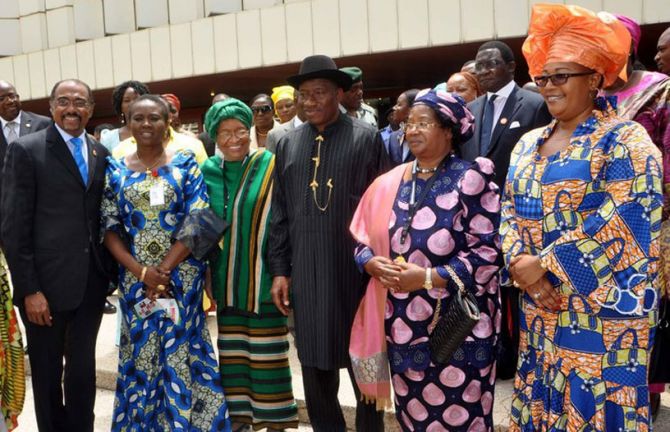
L to R: UNAIDS Executive Director, Michel Sidibé; incoming president of the GlobalPOWER Women Network Africa and Minister of foreign affairs, Prof Viola Onwuliri; President Ellen Johnson-Sirleaf of Liberia; President Goodluck Jonathan of Nigeria; President Joyce Banda of Malawi; and Deputy Prime Minister of Zimbabwe, Thokazani Khupe. 2nd High-level meeting of the GlobalPOWER Women Network Africa, 27-28 June in Abuja, Nigeria. Credit: News Agency of Nigeria
Feature Story
Advancing gender equality and women’s empowerment in Africa
28 June 2013
28 June 2013 28 June 2013On 27 July, under the leadership of the Nigerian president Jonathan Goodluck, several head of states and experts advocated in Abuja, Nigeria, to end gender based violence and inequality during the 2nd high level meeting of the Global Power Women Network Africa.
UNAIDS Executive Director, Michel Sidibé joined the high-level delegation along with the Malawi President, Joyce Banda, the Liberian head of state Ellen Johnson Sirleaf, the Chair of the African Union Commission, H.E. Nkosazana Dlamini-Zuma, and H.E. Dame Patience Goodluck Jonathan
Participants shared strategies, policies and effective practices for accelerating the implementation of global and regional commitments for women and girls, gender equality and HIV in Africa. They also discussed priorities for inclusion in the post-2015 sustainable development framework.
The GlobalPower Africa is a network of African women seeking to advance gender equality and women’s empowerment focusing on the vulnerability of girls and young women. The GlobalPOWER Africa promotes discussion for accelerated action towards the empowerment of women and gender equality in the area of HIV and Sexual and Reproductive Health and Rights in Africa.
Quotes
We need to use the GPWNA as a platform not only for exchange but as a platform for social transformation.
In my role as co-Chair of the Commission, I commit to ensure that the needs of women and girls are highlighted in the recommendations of the UNAIDS/Lancet Commission: From AIDS to sustainable health.
For us in Africa, to fight AIDS, we must also fight poverty, African leaders must ensure that we create wealth for the citizens
Feature Story
Commissioners begin mapping the route from AIDS to sustainable health
28 June 2013
28 June 2013 28 June 2013
Commissioners participating in the first meeting of the UNAIDS and Lancet Commission: From AIDS to Sustainable Health. 28-29 June 2013, Lilongwe, Malawi. Credit: UNAIDS
Some of the world’s most prominent leaders, thinkers, and activists in the AIDS response are convening this weekend in Lilongwe, Malawi for two days of dialogue focused on defining the role of the AIDS response in the post-2015 agenda. The Commissioners, participating in the first meeting of the UNAIDS and Lancet Commission: From AIDS to Sustainable Health will also identify lessons learned from the AIDS response for the future of global health and development.
“Today we have the tools we need to confront and overcome AIDS and confine it to the history books where it belongs,” said President Joyce Banda of Malawi and Commission co-Chair. “We are at a crucial point and must seize the opportunity before us. We must take action now.”
The UNAIDS and Lancet Commission was launched in May 2013 in anticipation of the world’s 2015 deadline for achieving the Millennium Development Goals. As new goals for the next era are developed, the Commission will work to ensure that momentum generated by the AIDS response over the past decade is sustained and extended. Commission members represent a wide range of experiences and viewpoints, and include heads of state, policy makers, people living with HIV, development experts, scientists, young people, AIDS advocates, and private sector leaders.
Today we have the tools we need to confront and overcome AIDS and confine it to the history books where it belongs. We are at a crucial point and must seize the opportunity before us. We must take action now.
President Joyce Banda of Malawi
“The shared commitment and innovative approaches piloted in the HIV arena must continue to define the global agenda around and beyond AIDS for years to come,” said Michel Sidibé, Executive Director of UNAIDS. “I am thrilled to join our diverse and accomplished group of Commissioners in Lilongwe––their insight will be invaluable in shaping the future of the response to HIV and the broader global health and development agendas.”
The Lilongwe meeting will feature a series of three roundtable discussions, each focused around a set of strategic health and development challenges and opportunities in the post-2015 era. Commissioners will debate how the lessons of the AIDS response should inform efforts to:
- Promote both global and domestic investments in health as driver of human well-being, productivity, and national wealth
- Ensure innovation and more equitable and secure access to medicines and other health commodities
- Generate demand for and equitable access to health services
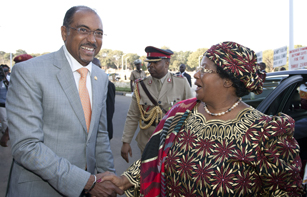
UNAIDS Executive Director Michel Sidibé greeting President Joyce Banda of Malawi. 28 June 2013, Lilongwe, Malawi. Credit: UNAIDS
These discussions will form the basis of a Commission Report, which will establish specific goals and milestones to be achieved over the coming months.
“This is an important conversation taking place at a pivotal time,” said Cristina Jade Peña, Ambassador for the Elizabeth Glaser Pediatric AIDS Foundation and member of the Commission. “As the global community establishes its post-2015 agenda, we cannot afford to be distracted or lose focus on the AIDS response. Today’s HIV positive youth need to have an active role formulating and implementing policy that will lead the world towards a dynamic, sustainable AIDS-free tomorrow.”
Related
 “Who will protect our young people?”
02 June 2025
 Impact of US funding cuts on HIV programmes in Malawi
15 April 2025
Feature Story
New funding approach sees the Global Fund approve multimillion dollar first grants
27 June 2013
27 June 2013 27 June 2013
Female sex workers receiving HIV prevention information in Myanmar. Credit: UNAIDS/Seng Mai
The response to HIV, tuberculosis and malaria in three pilot countries has been dramatically enhanced with multimillion dollar grants from the Global Fund to Fight AIDS, Tuberculosis and Malaria. El Salvador, Myanmar and Zimbabwe will receive US$ 622 million from the recently created Global Fund’s new funding model.
The new model maximizes available resources and ensures that investments are strategically focused on programmes which have been proven to achieve the greatest possible impact.
Representing a shift in the Global Fund’s business model, it features new central elements such as a multi-partner country dialogue; followed by a focused concept note that summarizes the national context. The request for funding—an iterative application process— now includes increased engagement of technical partners such as UNAIDS.
Following the most recent Global Fund Board meeting in Sri Lanka (18-19 June) which approved the grants for the three early applicant nations, the Board’s chair Simon Bland said, “Countries have been able to act quickly to get this new funding model started, and that’s great news.” Mr Bland stressed that, “These first grants show how, by working with partners, we can reach more people facing these diseases.”
Technical guidance, partnerships and inclusion
Myanmar will receive more than US$ 315 million over the next four years, US$ 160 million of which is for the country’s AIDS response. A particular focus will be meeting an urgent need for antiretroviral treatment coverage with the goal of achieving universal access to HIV treatment by 2016, up from 43% in 2012. HIV services will also be expanded to reach more areas of the country and HIV prevention activities including harm reduction and methadone programming are to be increased.
UNAIDS and its Cosponsors collaborated in the Myanmar’s successful application through technical guidance and assistance. UNAIDS supported the Myanmar Technical Strategy Group on AIDS chaired by the government to facilitate a consultative process which identified programme priorities, with input from technical partners, key populations and programme implementers.
“As members of the Technical Strategy Group and the concept note drafting team, UNAIDS supported us through a transparent and inclusive consultation process,” said Soe Moe Kyaw, member of the Myanmar Positive Group. “Network members representing key populations of people who inject drugs, sex workers and men who have sex with men participated in meetings at which priorities and programmatic gaps were identified. They were also consulted directly to ensure that their priority needs were fully understood and incorporated in order to reflect and complete the country concept note,” added Mr Kyaw.
Countries have been able to act quickly to get this new funding model started, and that’s great news. These first grants show how, by working with partners, we can reach more people facing these diseases.
Chair of the Global Fund Board, Simon Bland
The grant to El Salvador, worth US$ 26.9 million, will improve access to HIV-related services and deliver treatment among key populations such as men who have sex with men, transgender people and sex workers. By 2016, it aims to reach more than 90% service coverage for these groups. UNAIDS helped national partners with the collection of evidence and epidemiological data and worked with civil society to support the country dialogue, which included key populations.
“The new funding approach allowed the country to identify gaps in the HIV response and to strengthen efforts to reach key populations, which have been engaged since the beginning of the process and will be key partners in the implementation of the grant,” said Dr Ana Isabel Nieto, Director of the National AIDS Programme. “We recognize the invaluable help which UNAIDS provided, especially in terms of collecting, analyzing and documenting strategic information to support the funding proposal.”
Zimbabwe will use its US$ 311 grant to further strengthen impressive gains in challenging HIV. The funding is intended to increase the total number of people on antiretroviral therapy from 565 000 to just over 893 000 by 2016. UNAIDS and partners played a key role in the application process.
"UNAIDS co-led a highly participatory country dialogue involving communities and key populations and provided critical support in the development of the concept note,” said Dr Henry Madzorera, Minister of Health and Child Welfare.
Each of the early applicant grants include investments in improving data systems so that countries can really know their epidemic and in better monitoring and evaluation of programmes designed to reach most affected populations. The new funding model will be fully implemented in 2014 and six other countries are currently going through the application process.
Related links
Related links
Partners
Related
Feature Story
How to create sustainable HIV responses in the Caribbean
26 June 2013
26 June 2013 26 June 2013
Participants in the UNAIDS/PEPFAR Caribbean Meeting on Strategic HIV Investment and Sustainable Financing held in Kingston, Jamaica from May 29th - 30th 2013
For almost ten years Ainsley Reid has had access to life-saving antiretroviral treatment in his native Jamaica. The payoff comes not just in his individual health, but in his work raising awareness about HIV prevention and positive living as a local programme coordinator at Jamaica’s HIV/STI Programme. “Like me, many of my colleagues who have been on HIV treatment are ready and able to work, to take care of their families, to contribute to society,” he said.
Mr Reid is one of many who are working to ensure HIV responses in the Caribbean are more than pills or abstract HIV programmes.
“It’s about people! It is about keeping people living with HIV well so that they can be productive and creating societies that allow them to thrive,” said the Director of the UNAIDS Caribbean Regional Support Team, Ernest Massiah, at a meeting to help countries in the region build financially sustainable HIV programmes.
The review, which took place in Kingston, Jamaica from 29-30 May, reviewed countries’ HIV epidemics and responses and explored how HIV programmes could be built to succeed in the long run. “We have to look carefully at where we can make efficiencies, where we are spending more than we should to get certain results and where we must stop doing the things we are accustomed doing because they are not having the impact we would like,” Mr Massiah said.
The dialogue which was jointly supported by UNAIDS Caribbean and the United States President's Emergency Plan For AIDS Relief (PEPFAR) included international development partners, civil society organizations and representatives from eight Caribbean ministries of health, finance and planning.
Since 2000, the region’s investments in reducing stigma and discrimination as well as scaling up access to HIV treatment have shown results. New HIV infections dropped 42% between 2001 and 2011; 67% of people living with HIV who need treatment now have access to it; and AIDS-related deaths continue to decline with a 48% drop recorded between 2005 and 2011. The number new HIV infections among children has gone down by 32% from 2009 to 2011.
It’s about people! It is about keeping people living with HIV well so that they can be productive and creating societies that allow them to thrive.
Director of the UNAIDS Caribbean Regional Support Team, Ernest Massiah
However, currently two-thirds of the financing for HIV programmes in the Caribbean as a whole comes from international partners. With several donor agencies soon to reduce or withdraw support due to changes in eligibility criteria for upper- and middle-income countries, and with Caribbean economies feeling the crunch of the global economic slowdown, the gains of many national HIV programmes are at risk.
The Director of the United States Agency for International Development (USAID) Mission in Jamaica, Denise Herbol, noted that the partnerships of international agencies are meant to help countries reach a point where their HIV programmes are “led, implemented and eventually paid for” by their own governments, communities, civil society and private sectors.
What does that mean for the Caribbean? Experts agree that the regional tendency to direct most HIV prevention resources to the general population must end. Instead, more work is needed to understand who is most at risk and why. And then, concerted work will be required to provide HIV prevention programmes to the populations most affected by HIV.
Participants highlighted the need to lower administration costs related to HIV programming and stressed that the region must intensify its joint efforts to secure lower prices for drugs. But much of the work involved in making choices about where to invest, involves confronting deep-seated social prejudices and inequities.
Karl Theodore, a health economist from the University of the West Indies in Trinidad, urged participants to position HIV as an issue that places the very survival of Caribbean societies at stake.
“There is a sense in the region that things are getting better and maybe the epidemic is now under control so we don’t have to put as much resources in it. That is a mistake. The epidemic is undermining something that is crucial to us—our human resource. If we don’t keep up the investments we are going to pay a very heavy price,” Mr Theodore emphasised.
“These discussions on the financial sustainability of the HIV response ignite a spark of hope in my heart,” Mr Reid said. “We have a lot more work to do, a lot more systems to strengthen and more people to reach so we can end the HIV crisis and save lives,” he added.
For more information on the meeting and its outcomes go to www.unaidscaribbean.org
Feature Story
The 32nd UNAIDS Board meeting opens
25 June 2013
25 June 2013 25 June 2013
UNAIDS Executive Director, Michel Sidibé addressing the Board. 25 June 2013, Geneva, Switzerland. Credit: UNAIDS
UNAIDS governing body, the Programme Coordinating Board (PCB) is holding its 32nd Board meeting from 25-27 June in Geneva.
In the opening session, UNAIDS Executive Director Michel Sidibé will address the Board giving an overview of the progress made in the AIDS response as well as the challenges ahead, including the position of UNAIDS in the post-2015 development agenda.
At the invitation from Mr Sidibé, Amina J. Mohammed, the United Nations Secretary-General’s Special Adviser on post-2015 Development Planning, will share her views on the AIDS response in the post-2015 Framework and its contribution to global health and development.
The Board will also receive a report on the progress made to date and the stakeholders’ roles in moving forward to ensure that AIDS features prominently in in the post-2015 development agenda.