Feature Story
UNAIDS welcomes the Republic of the Congo and Senegal as its first African donors
24 June 2013
24 June 2013 24 June 2013
L to R: Mr Lov Verma, Secretary and Director General, National AIDS Control Organization, India and Chair of the 32nd UNAIDS Programme Coordinating Board, Marie-Francke Puruehnce, Executive Secretary, National Council for AIDS response, Republic of Congo and UNAIDS Executive Director Michel Sidibé. Credit: UNAIDS
The Republic of the Congo and the Republic of Senegal have become the first African countries to financially contribute to UNAIDS. These historic decisions are in line with the leadership demonstrated by Member States of the African Union in taking forward the Roadmap on Shared Responsibility and Global Solidarity.
It is also an illustration of the firm commitment by the Governments of the Congo and Senegal to play an active role in policy discussions on the UNAIDS Programme Coordinating Board.
“As Africa assumes its rightful place on the global stage, I believe that the decision by Congo and Senegal to contribute to UNAIDS demonstrates Africa’s leadership in the international AIDS response,” said UNAIDS Executive Director, Michel Sidibé. “We hope that African countries will continue to contribute and to play an increasingly prominent policy role in the UNAIDS Board,” he added.
As Africa assumes its rightful place on the global stage, I believe that the decision by Congo and Senegal to contribute to UNAIDS demonstrates Africa’s leadership in the international AIDS response.
UNAIDS Executive Director Michel Sidibé
The Roadmap, which was adopted in July 2012 during the 19th Summit of the African Union in Addis Ababa, Ethiopia, offers a set of African-owned solutions to enhance sustainable responses to AIDS, TB and malaria. Structured around three strategic pillars—health governance, diversified financing and access to medicines—the Roadmap defines goals, expected results, roles and responsibilities to hold stakeholders accountable over a three-year time frame, through 2015.
The Roadmap also calls on African Governments and international partners to jointly finance the funding gap by investing their “fair share”, taking into account their capacities and prior commitments.
Feature Story
Champions Trophy final shines light on THINK WISE HIV awareness campaign
24 June 2013
24 June 2013 24 June 2013
UNAIDS Deputy Executive Director, Management and Governance, Jan Beagle (3rd left) participating in the THINK WISE events organized for the 2013 Champions Trophy final at the Edgbaston stadium. Credit: Getty images
The final match of the 2013 ICC Champions Trophy tournament held on Sunday 23 June in Birmingham, UK was dedicated to the THINK WISE HIV awareness campaign—a partnership between the International Cricket Council (ICC), UNAIDS and UNICEF that uses the power of cricket and cricket players to reach out to large numbers of people—particularly young people—on AIDS issues.
The final also marked the ten year partnership between ICC and UNAIDS, whose joint work commenced in 2003. UNICEF joined the partnership in 2006 and in 2009 the three partners initiated the THINK WISE awareness campaign.
As England and India battled out the 2013 Champions Trophy final at the Edgbaston stadium, THINK WISE was promoted throughout the stadium via public service broadcasts, boundary banners, promotional leaflets and through the special Final commemorative match programme, also dedicated to the 10-year AIDS partnership.
Noting the success of the 2013 Champions Trophy THINK WISE activities, ICC President Alan Isaac said, “It brings me great pleasure that the ICC’s partnership with UNAIDS and UNICEF is flourishing. Through the THINK WISE initiative, we are sending a message to the world about the importance of getting the facts about HIV and stopping stigma towards people living with HIV.”
It brings me great pleasure that the ICC’s partnership with UNAIDS and UNICEF is flourishing. Through the THINK WISE initiative, we are sending a message to the world about the importance of getting the facts about HIV and stopping stigma towards people living with HIV.
ICC President Alan Isaac
The THINK WISE campaign, which emphasizes the key messages ‘Get the facts about HIV; Protect yourself; Stop stigma’ has been profiled throughout the 2013 Champions Trophy with dedicated matches, site visits and coaching clinics with the players and other promotional activities. During the final game both teams as well as match officials and ICC and staff from the English Cricket Board wore red ribbons to raise awareness about the stigma surrounding people living with HIV.
UNAIDS Deputy Executive Director, Management and Governance, Jan Beagle, attended the final. She walked out on the pitch with the teams for the National Anthems, together with the ICC President, the Chairman of the England and Wales Cricket Board and two representatives of people living with HIV, to show solidarity with people around the globe living with HIV.
Commending the ICC on its commitment to AIDS awareness Ms Beagle said, “I am moved to see the dedication of the ICC and cricket players to promoting HIV prevention and reaching zero discrimination for people living with HIV. UNAIDS firmly believes in the ability of the THINK WISE partnership to be a powerful force for change, for more equitable and inclusive societies—within the ICC family, in communities and across countries.”
As at previous ICC international cricket tournaments, throughout the Champions Trophy international players from a selection of teams took time out to take part in THINK WISE coaching clinics and site visits. For example, the West Indies and New Zealand teams welcomed school children from London and Cardiff to special coaching sessions where they learned valuable cricketing tips and exchanged information on HIV prevention and stigma. Members of the England and South African international teams visited the Terrence Higgins Trust where they met with people living with HIV and some team members opted to take rapid HIV tests.
Multimedia
Multimedia
Related
Feature Story
US Supreme Court strikes down policy requiring AIDS groups to oppose prostitution in order to receive US Government funds
21 June 2013
21 June 2013 21 June 2013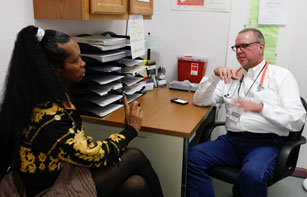
Clinical Director Chuck Cloniger (R) seeing his patient, Tanesh Watson for medical counseling at St. James Infirmary in San Francisco, a medical and social service organization for current and former sex workers of all genders, on 14 June 2012 in California. Credit: UNAIDS/K.Hoshino
On 20 June 2013, the United States (US) Supreme Court struck down section 7631(f) of the United States Leadership Against HIV/AIDS, Tuberculosis, and Malaria Act of 2003 (The Leadership Act). This provision which the Court called the “policy requirement” mandates that no funds made available under the Leadership Act may “provide assistance to any group or organization that does not have a policy explicitly opposing prostitution and sex trafficking.”
The US Supreme Court ruled in response to a challenge filed on 23 September 2005 by 5 civil society organizations against the provision and its negative impact on their efforts to address HIV. The organizations include: Alliance for Open Society International; the Open Society Institute; Pathfinder International; the Global Health Council; and InterAction.
The US Supreme Court held that the policy requirement violates the First Amendment of the US Constitution which protects free speech. In particular, the Court held that the “policy requirement compels as a condition of federal funding the affirmation of a belief that by its nature cannot be confined with the scope of the Government program.” The Court noted that “the First Amendment prohibits the government from telling people what they must say.”
Commenting on the decision of the Court, Purnima Mane of Pathfinder International said, “It has been a long and uphill battle, but we are very happy that the Court has spoken out in defense of our ability to engage with sex workers so we can better put in place programs that protect them and their clients from HIV.”
Respondents had claimed, among other things, that adopting a policy explicitly opposing prostitution may diminish the effectiveness of some of their HIV programs by making it more difficult to work with sex workers—a population at higher risk of HIV infection.
In its 2012 report, the Global Commission on HIV and the Law already noted that, “The pledge puts grantees in an impossible bind. If they don’t sign, they are denied the funds they need to control and combat HIV. If they sign, recipient organisations are barred from supporting sex workers in taking control of their own lives.”
Female sex workers are 13.5 times more likely to be living with HIV than other women of reproductive age in low-income and middle-income countries. In sub-Saharan Africa, the region with the highest HIV prevalence, the pooled HIV prevalence among sex workers is 36.9%.
The involvement and empowerment of sex workers with regard to HIV prevention, treatment and care services has shown to have great impact in reducing HIV infections among both female sex workers and the overall adult population. “The end of this requirement is a significant victory for sex workers and their advocates globally. Our contributions to effective HIV responses have now been recognised,” said Ruth Morgan-Thomas of the Global Network of Sex Work Project.
This shows civil society at its best - advocating for global health for all. No group, including sex workers, should be left behind in our efforts to bring the AIDS epidemic to an end.
UNAIDS Executive Director Michel Sidibé
Given the importance of the case for the global AIDS response, the UNAIDS Secretariat participated as an amicus curiae (friend of the court). In that role, UNAIDS provided public health evidence and human rights arguments to support greater access to funding and resources for organisations engaged in HIV prevention, treatment, care and support services with and for sex workers. UNAIDS main points to the Supreme Court included: 1) Sex workers are among the populations most affected by HIV; 2) engagement with sex workers is essential to an effective response to HIV; and 3) any effective response requires adequate funding for programmes designed to ensure HIV prevention, treatment, care and support for sex workers.
UNAIDS Executive Director, Michel Sidibé praised the groups that were courageous enough to challenge the provision. “This shows civil society at its best - advocating for global health for all. No group, including sex workers, should be left behind in our efforts to bring the AIDS epidemic to an end.”
US funding critical to HIV response
US leadership and generosity has been instrumental in the progress made in the global AIDS response over the last decade. Since the adoption of the Leadership Act, some 45.7 billion dollars have been made available to address HIV worldwide. The President’s Emergency Plan for AIDS Relief (PEPFAR), authorized by the Leadership Act, has been the largest health initiative ever undertaken by one country to address a global health epidemic. Thanks to US funding, access to HIV treatment has been expanded in low- and middle-income countries, and millions of lives are being saved. The decision of the US Supreme Court to strike down the policy requirement will greatly contribute to expand and improve the global AIDS response even further.
Related


Feature Story
Community-led programmes critical to progress on AIDS in Sri Lanka
18 June 2013
18 June 2013 18 June 2013
UNAIDS Deputy Executive Director, Programme, Luiz Loures met and dialogued with civil society and community members during his country visit to Sri Lanka. Credit: UNAIDS/Jayalal
Communities at higher risk of HIV infections should be placed at the centre of the AIDS programme design and implementation in Sri Lanka. This was the central message highlighted through discussions between representatives of civil society and the UNAIDS Deputy Executive Director, Programme, Luiz Loures, during an official visit to the country from 16-18 June.
While in Sri Lanka, Mr Loures visited several community-led programmes and met with representatives of key populations such as men who have sex with men, sex workers and women living with HIV. Through in-depth conversations, he listened to examples of focused programming in the country which have helped facilitate greater access to a number of HIV services for key populations, as well as significant network building.
National HIV prevalence remains relatively low in Sri Lanka, estimated at 0.1%, but the country is one of four in the Asia Pacific region that has shown up to a 25% increase in new HIV infections in the period 2001-2011. Higher levels of HIV are often concentrated around certain geographical sites and within communities at higher risk of HIV infection. According to national studies, in the city of Kandy for example, HIV prevalence among men who have sex with men is estimated to be at 4%—more than 40 times the general population average.
In Sri Lanka—as more broadly in Asia Pacific and across the globe—we see that where communities are front and centre of the AIDS response, the greatest impact is achieved
UNAIDS Deputy Executive Director, Programme, Luiz Loures
“In Sri Lanka—as more broadly in Asia Pacific and across the globe—we see that where communities are front and centre of the AIDS response, the greatest impact is achieved,” said Dr Loures, commending the programmes showcased during his visit. He highlighted how successful programmes have been initiated with key populations in Sri Lanka despite challenging legal and policy environments which criminalize sex work and same sex relations.
Speaking about the urgency needed to further scale such programmes across the country to stem rising HIV infection rates Dr Loures noted that, “Even in countries with low prevalence, we must maintain a sense of urgency to ensure responses and financing are focused to where they are most needed and that they are developed for communities by communities.”
Across countries that reported on AIDS progress in 2012, only 19% of HIV prevention spending was estimated to be for key affected populations. Despite that 25% of all new HIV infections in the region are estimated to be occurring among men who have sex with men, only around 1% of investments are directed towards programming among this community.
In Sri Lanka, community representatives are urging for much greater attention and resources to be given to ensure coverage and services are increased for people most in need.
“We have built a very successful network and we know what needs to be done, but we need the commitment and the resources to be able to increase programmes in size and scale so we can really make sure people are not being left behind,” said Lalith Dharmawardena, Executive Director of the Heart to Heart Organization, a network visited by Dr Loures set up to promote the sexual health and other human rights of Sri Lankan men who have sex with men.

UNAIDS Executive Director Luiz Loures met and dialogued with community members during his country visit to Sri Lanka.
Credit: UNAIDS/P.Wijayananda
Punitive legal and policy environments and subsequent high levels of stigma and discrimination towards people living with HIV and key communities were also highlighted as presenting a major barrier to Sri Lanka’s AIDS response. Both sex work and sexual relations between men are prohibited by national laws, codes and/or policies. National surveys suggest that many people at higher risk of infection delay testing for HIV and coming forward for treatment because they are concerned by the implications of their identification and testing HIV-positive, and the confidentiality of their HIV status.
Princey Mangalika, President of the Sri Lankan Positive Women’s Network, underlined how normalization of HIV and key communities can have a positive impact on reducing stigma and discrimination. She also urged government and authority officials present at the community interactions to ensure greater participation of people living with HIV and from key communities in decision-making bodies and the national response. Ms Mangalika also thanked the government and the Global Fund for making antiretroviral treatment freely available to those who need it in Sri Lanka.
“We are seeing some really positive signs in Sri Lanka and we now need permanent spaces for women living with HIV and other communities,” said Ms Mangalika, whose efforts—both personal and those of her organization—won a Red Ribbon Award in 2012 for outstanding community based care and support programmes. “We need the authorities to listen more closely to particular community needs—women, men, transgender—and let us help lead. We know how to best reach people,” she said.
The visit of the UNAIDS Deputy Executive Director, Programme to Sri Lanka coincides with his attendance at the Twenty-Ninth Board Meeting Board meeting of the Global Fund to Fight AIDS, Tuberculosis and Malaria which takes place in Colombo on 18-19 June 2013.


Feature Story
Russia strengthens commitment to reversing the AIDS epidemic in the region
14 June 2013
14 June 2013 14 June 2013
Gennadiy Onishchenko, Head of the Federal Service on Customers' Rights Protection and Human Well-being Surveillance (Rospoterbnadzor) speaking to the press during the G20 Civil Summit. Credit: Aleksey Neshin
The Russian Federation and UNAIDS have launched a new Regional Cooperation Programme for Technical Assistance for HIV and other Infectious Diseases in the Commonwealth of Independent States (CIS). The US$ 16 million Programme, funded by the Russian Government, was launched during the G20 Civil Summit which was held in Moscow from 11-13 June.
The Programme, which will run from 2013-2015, will be implemented by the Federal Service on Customers' Rights Protection and Human Well-being Surveillance (Rospotrebnadzor), UNAIDS, regional civil society organizations and counterparts in four partner countries—Armenia, Kyrgyzstan, Tajikistan and Uzbekistan.
Gennadiy Onishchenko, Head of Rospoterbnadzor emphasised that the programme “will strengthen health systems, ensure better epidemiological surveillance of HIV, and promote the scale up HIV prevention programmes for key populations at higher risk of HIV, especially migrants”.
The programme will strengthen health systems, ensure better epidemiological surveillance of HIV, and promote the scale up HIV prevention programmes for key populations at higher risk of HIV, especially migrants.
Gennadiy Onishchenko, Head of Rospoterbnadzor
In recent years the international donor community has scaled back its commitments in CIS countries, leaving many struggling to maintain their responses to HIV. This new Programme will support partner countries to explore new sources of funding to sustain and scale up their responses. Moving towards a sustainable funding model will be a key to future success in meeting the Millennium Development Goals by 2015.
Since 2006, the Russian Government has allocated more than US$ 500 million to support international programmes to reduce the spread of infectious diseases, including HIV. A significant portion of Russia’s support is focused on technical assistance to CIS countries in the form of laboratory equipment and supplies, test systems and training. Russian expertise is also used to strengthen national capacities to control infectious diseases through knowledge transfer and knowledge exchange.
Infectious diseases, including HIV, will be on the agenda of the G8 as a priority of the Russian Government as it assumes its role of G8 President in 2014.


Feature Story
Engagement of civil society critical to shaping the G20 agenda
14 June 2013
14 June 2013 14 June 2013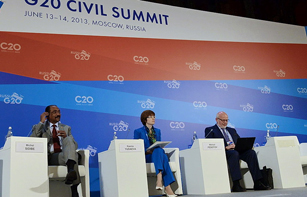
UNAIDS Executive Director, Michel Sidibé, Chief of Presidential Experts Directorate, Ksenia Yudaeva, and Chairman of the Presidential Council of the Russian Federation for Civil Society Institutions and Human Rights, Mikhail Fedotov.
Credit: Alexander Blotnitsky
As part of its role as President of the G20—the group of the 20 major economies—Russia has this week hosted the G20 Civil Summit. The two-day event featured a bold dialogue among global civil society and decision-makers and culminated in the development of a ‘Civil Communique’––recommendations which will be presented to the G20 to be put onto the agenda of the G20 Leaders' Summit which is being held in St. Petersburg in September 2013.
“This unprecedented Summit was preceded by intensive preparatory work, engaging experts representing NGOs and research institutes from different G20 countries,” said Ksenia Yudaeva, Russian G20 Sherpa, and Chief of Presidential Experts Directorate who officially opened the Summit.
Ksenia Yudaeva also read the address of Vladimir Putin, President of the Russian Federation, to participants where he stressed that “civil society organizations' practical experience will help leaders of the "Group of Twenty" to find the most optimal balance in the global development strategy and to take a consolidated decision on the complex challenges faced by the world.”
This is a historic event in the context of the G20. Never before has civil society been officially invited and empowered to prepare recommendations for the G20.
UNAIDS Executive Director Michel Sidibé
“This is a historic event in the context of the G20. Never before has civil society been officially invited and empowered to prepare recommendations for the G20,” said UNAIDS Executive Director, Michel Sidibé at the opening. “You have earned this role and this space. If you protect this space for the future, your role and influence as a full partner in the G20 will continue to have a pivotal positive impact on global governance.”
Highlighting the historical role of civil society in the global HIV response, he stressed that it was the civil movement which broke the conspiracy of silence about AIDS and continue to campaign for issues of human rights, trade and access to health, stigma and discrimination.
The Summit attracted more than 350 representatives of civil society, international organizations, private sector and government to Moscow to engage in discussions on issues they would like to see addressed by the leaders of the G20. Russia is the first country to hold the Civil 20 Summit in this important format.
speeches
Speeches:
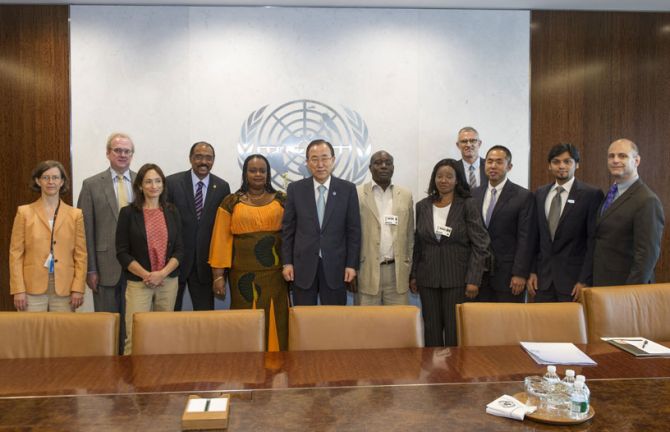
UN Plus members with UNAIDS Executive Director Michel Sidibé and United Nations Secretary-General Ban Ki-moon. UN Headquarters, New York. 11 June 2013. Credit: UN
Feature Story
UN Plus meets with UN Secretary-General to discuss issues affecting staff members living with HIV
13 June 2013
13 June 2013 13 June 2013UN Plus—the United Nations advocacy group of employees living with HIV—met with the United Nations Secretary-General Ban Ki-moon to discuss issues affecting staff members living with HIV including access to HIV treatment and travel restrictions. They also delivered messages from their key partners, namely people living with HIV and networks of key population such as sex workers, men who have sex with men, people who use drugs and transgender people regarding their criminalization in some countries.
Mr Ban stressed his personal commitment to working for and with the most vulnerable and marginalized people in society—including people living with HIV. He noted the critical work of the UN plus members in transforming the UN from within around critical issues such as the elimination of stigma and discrimination in the workplace and pushing for affordable health coverage for all staff.
The meeting, held on the side-lines of the 67th United Nations General Assembly taking place in New York from 10-11 June 2013, was also an opportunity for UN Plus to give an update on their work as a UN system-wide advocacy group as well as to provide their views on the post-2015 development agenda.
Quotes
I am very proud of you, the work you are doing and to have you as a part of the organization. I am personally committed and very actively working for people who are marginalized and excluded—including people living with HIV and the LGBT community.
We stand together with the Secretary-General not only to improve our UN workplace for all UN staff regardless of HIV status, but also to achieve an enabling environment for all people living with HIV around the globe.
Related
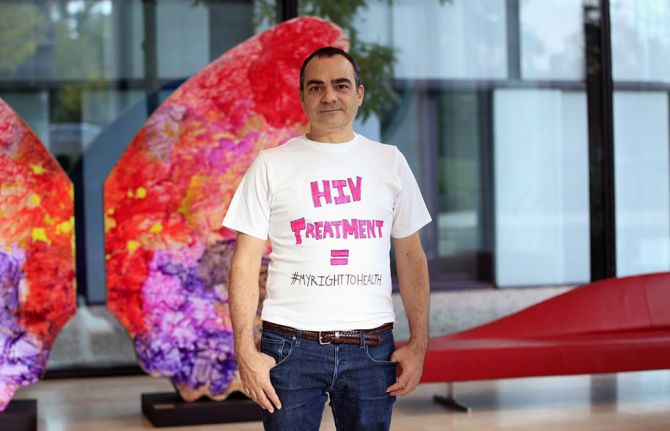
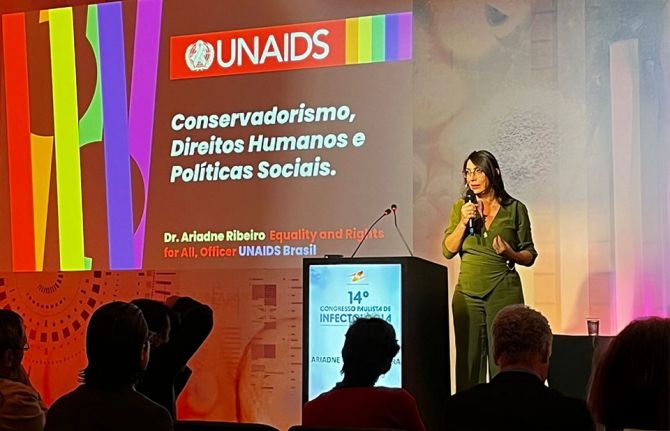 Upholding dignity for everyone: Ariadne Ribeiro Ferreira
21 November 2024
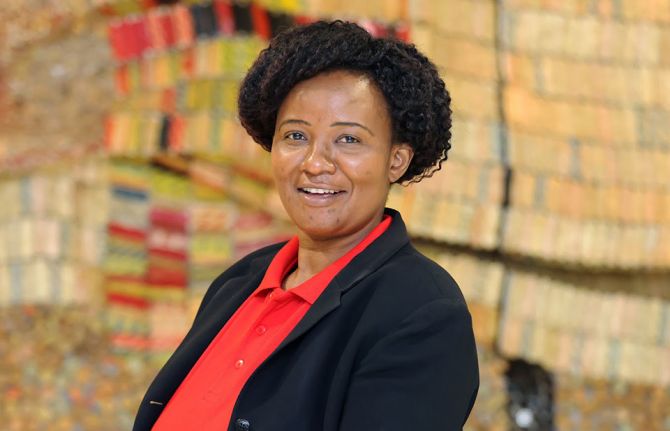 Evelyn Siula: A journey of strength and solidarity
18 November 2024
Feature Story
China’s Guangdong province to lift HIV restrictions on teacher recruitment
13 June 2013
13 June 2013 13 June 2013
Credit: UNAIDS
In Guangdong, China’s most populous province, some bold HIV-related policy decisions are about to come into play. In the wake of concerted advocacy efforts—including by UNAIDS, UNESCO and ILO—the province has announced it will abolish restrictions which prevent people living with HIV from working as teachers.
The policy changes, which will come into force in September, represent a shift from previous regulations, which excluded people living with HIV, as well as people who had been diagnosed with a sexually transmitted infection (STI), from serving as teachers in the province.
There are an estimated 50 000 to 80 000 persons living with HIV in the Guangdong Province. At the beginning of 2013, UNAIDS, UNESCO and ILO advocated jointly with the Guangdong education authorities for the removal of teaching restrictions for people living with HIV, after this regulation was being considered in a policy revision process. Subsequently, the Guangdong authorities responded that, following consideration of the feedback received on the issue, the regulatory Article which excluded people living with HIV and other STIs would be deleted.
Acting UNAIDS China Country Coordinator, Nana Kuo, underlined the significance of the changes. “This move by the Guangdong education authorities sets a positive example for the rest of China, and for the region as a whole,” said Ms Kuo. “China has made tremendous progress in its AIDS response in recent years, and it is highly encouraging to see signs of concrete action to address stigma and discrimination, especially in the workplace.”
China has made tremendous progress in its AIDS response in recent years, and it is highly encouraging to see signs of concrete action to address stigma and discrimination, especially in the workplace.
Acting UNAIDS China Country Coordinator, Nana Kuo
According to national data, more than half the estimated 780 000 people living with HIV in China remain undiagnosed. Fear of discrimination is considered to be a major obstacle to access HIV testing, treatment and care services, particularly amongst marginalized populations. Across China, people living with HIV are excluded from employment in many sectors, including the country’s civil service. An ILO study conducted in China in 2011 found that 65% of business owners felt that people living with HIV should not enjoy equal employment opportunities.
“We commend Guangdong's decision to remove employment restrictions that had excluded people with HIV from serving as teachers. We hope that this marks a step towards the removal of all remaining employment restrictions, whether in the public or the private sector, so that people with HIV are able to live full and productive lives, without fear of stigma and discrimination,” said Ann Herbert, ILO Country Director for China.
In recent years, China has seen several high profile court cases filed by people denied of employment as teachers on the grounds of HIV status, but to date none of the cases has resulted in a clear legal victory. In many cases, this is linked to the fact that provincial education authorities have generally based teacher recruitment guidelines on national civil service recruitment guidelines, which exclude people living with HIV. In this context, the policy shift in Guangdong has particular significance. As one of the country’s most prosperous and urbanized provinces, with a population of more than 100 million people, Guangdong is often considered to be at the vanguard of progressive policy making in China.
Meng Lin, the Coordinator of the China Alliance of People Living with HIV, underlined the significance of the developments in the Guangdong education recruitment policy. “When people know that a positive diagnosis may result in them being unable to find employment, or losing their job, they often prefer to just avoid getting tested. The move by the Guangdong Department of Education sends out the message that people living with HIV have the right to equal employment opportunities and that makes us hopeful for the future.”
Related
Feature Story
International consultation focuses on access to HIV medicines for middle-income countries
13 June 2013
13 June 2013 13 June 2013
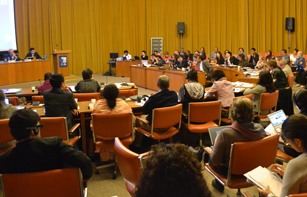
Participants at the consultation held in Brasilia, Brazil this week. Credit: UNAIDS
The critical issues that middle-income countries face in ensuring they have access to affordable and high-quality HIV medicines were explored during a consultation held in Brazil’s capital Brasilia this week.
Responding to a situation where global debates around access to medicines tend to focus on lower-income countries, delegates from Brazil, China, Ecuador, India, Indonesia, South Africa and more than 20 middle-income nations from all continents, together with representatives from civil society and international organizations discussed their specific needs, perspectives and concerns. It was recognized that this is especially crucial given that by 2020 the vast majority of people with HIV will be living in such countries.
Many middle-income nations are now paying a high price for AIDS medicines, particularly those used for second- and third-line treatment. In fact, even the WHO-recommended first- line treatment, the one pill a day 3-drug fixed dose combination, is out of the reach of some countries, including Brazil, China and the Russian Federation.
This meeting is an essential step to strengthen the cooperation mechanism between middle-income countries and will help us reach universal and sustainable access to treatment.
Jarbas Barbosa da Silva Junior, Vice–Minister and Secretary for Health Surveillance of Brazil
This has profound implications for treatment optimization and long-term affordability and sustainability—identified as the central challenges at the meeting. Middle-income countries, often seen as lucrative markets, may not benefit from international initiatives on access to drugs. Most foot the bill themselves either through government funding or out of pocket expenditure and there is uncertainty as to whether the growing numbers of people on treatment will continue to get the life-saving medicines they need for as long as they need them.
“We must look at specific policy options and mechanisms available to middle-income countries to tackle barriers and ensure universal access to treatment,” said Ed Vela from UNITAID, which co-hosted the June 10 to12 event with UNAIDS, WHO/Pan American Health Organization and the Brazilian government.
There was much analysis and information sharing about the markets and prices of HIV medicines and their regulatory status in different middle-income nations. Individual country experiences and approaches were presented, taking into account the often wide disparities between those at different stages of economic growth.
Jarbas Barbosa da Silva Junior, Vice–Minister and Secretary for Health Surveillance of Brazil noted that his country was taking bold steps to rise to the challenge of inequalities present in a large middle-income country such as Brazil. “This meeting is an essential step to strengthen the cooperation mechanism between middle-income countries (MIC) and will help us reach universal and sustainable access to treatment”.
The meeting was hosted by UNITAID, UNAIDS, WHO/Pan American Health Organization and the Brazilian government. Credit: UNAIDS
The key question of public health-focussed management of intellectual property rights was scrutinised in some detail. Supported by UNITAID, the Medicines Patent Pool—where holders voluntarily share their patents on HIV medication—allows generic drugs to be made at a reduced cost. However, the meeting heard that this facility is largely extended to sub-Saharan Africa and that most middle-income countries outside this region are excluded. Participants looked at ways in which policy levers and incentive mechanisms could be implemented to enable more countries to benefit from such voluntary mechanisms.
After three days of discussion, sharing information, ideas and strategies, delegates were keen to ensure that the consultation was not an end in itself but the start of a process. The need to continue to improve implementation of the policy options put forward for increased access to medicines for MICs was agreed. The outcome document from the meeting outlines key next steps in the areas of pricing, intellectual property, research and development, and regulation, by fostering information sharing and south to south collaboration on these areas
According to Mariangela Simao, UNAIDS Director of Gender, Human Rights and Community Mobilization, “The meeting was a valuable step forward bringing together middle-income countries from around the world with different challenges in achieving long term access and sustainability of antiretroviral therapy.”

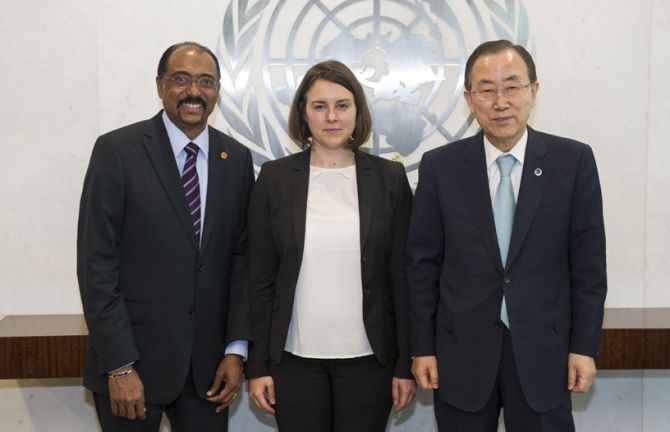
L to R: UNAIDS Executive Director Michel Sidibé, UNAIDS Youth Programmes Coordinator Mikaela Hildebrand and United Nations Secretary-General Ban Ki-moon. Credit: UN
Feature Story
UNAIDS plans to further expand its focus on youth and HIV
12 June 2013
12 June 2013 12 June 2013The United Nations Secretary-General Ban Ki-moon met with UNAIDS Executive Director Michel Sidibé to discuss UNAIDS’ plans to further expand its focus on youth and HIV. The meeting was held on the side-lines of the 67th United Nations General Assembly taking place in New York from 10-11 June 2013.
The UN Secretary-General, through his five-year action agenda presented in January 2012, tasked the UN system to address the needs of the largest generation of young people the world has ever known. In support, UNAIDS developed its youth programme, which aims to increase youth leadership, ownership, and mobilization in the AIDS response at the country, regional, and global level by 2015 and beyond.
The programme was developed using social media and crowdsourcing technology, and enabled some 5 000 young people to participate in the processes. Based on this model, UNAIDS is now supporting a community dialogue for social change to inspire a new wave of social action in the AIDS response as well as mobilize the youth constituency in the lead up to the post-2015 negotiations. The dialogue will start in November leading up to World AIDS Day.
At the meeting, UNAIDS also shared the outcomes of the recent strategy meeting where youth organizations formed a pact for collaboration for social transformation in the AIDS response. Young participants identified five key priorities for the movement including ensuring HIV remains a priority in the post-2015 development framework.
Quotes
I see great potential in transforming the UN’s accessibility and opportunities for collaboration through new technology. The UN system must now harmonize its approach on youth and work closely with young people over the next year to ensure they are fully engaged as the negotiations on the new development agenda take shape.
We are developing a social transformation agenda that relies on new media and technology to ensure full collaboration with the youth organizations working on AIDS. Young people must be fully and meaningfully engaged in the future development framework.