

Feature Story
Pakistan: bringing services closer to communities affected by the HIV outbreak
03 July 2019
03 July 2019 03 July 2019A newly refurbished paediatric centre is to open in Ratodero, Pakistan, to serve families affected by the recent HIV outbreak in the district of Larkana. It is expected that the centre will be operational by mid-July.
Alia (not her real name), the mother of a two-year old girl, lives in the village of Mirpur Bhutto, in Ratodero Taluka in Larkana district. Alia’s world has been turned upside down since her family was caught up in the HIV outbreak in the area.
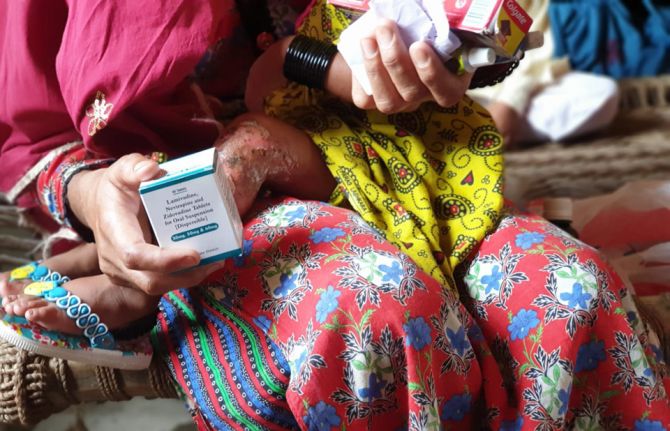
“My daughter was diagnosed with HIV just a few days ago, but she became so weak so quickly. She couldn’t eat anything we gave to her,” says Alia. After Sameera’s (not her real name) diagnosis, she was referred to Sheikh Zayed Children Hospital in Larkana to start antiretroviral therapy. The hospital is more than 50 kilometres away from the family home.
“I got these dispersible tablets for Sameera and some fever medicine, and since she started her treatment, I have seen some improvements in my daughter’s health. Her fever has gone and before there was diarrhoea from which she also recovered,” explains Sameera’s mother.
Alia’s husband is a farmer and earns less than two dollars a day. “We can hardly support our family of ten members,” she explains.
Poor road conditions and economic constraints make it difficult for Alia and her daughter to travel from their village to the district capital Larkana, currently the nearest health facility where her daughter can receive the treatment she needs.
Since the HIV outbreak was first reported in Larkana at the end of April, UNAIDS, UNICEF, the World Health Organization, the Sindh AIDS Control Programme and other partners have been calling for a new paediatric treatment centre in Ratodero to bring HIV services closer to the affected communities. As a result of these efforts and in the framework of the “Sindh HIV Outbreak Response Plan, May 2019-Apr 2020,” UNICEF is refurbishing the paediatric HIV treatment centre at Taluka Headquarters hospital in Rotadero, ensuring that treatment will be available in the area where Alia and her daughter live. When the new centre opens, HIV treatment services for Sameera will be less than 10 kilometres away.
“I know my Sameera will be fine and that she will get married and have children. This is what the doctor told me. For this to happen she must continue her treatment forever. I will follow the doctor’s instructions because this is what will save my daughter’s life,” says Alia.
By the end of June, 877 people had been newly diagnosed with HIV in the Larkana district. More than 80% of the new cases are among children aged under 15 years old. A total of 721 people had already been registered in care programmes and 482 people (365 of them children under the age of 15) were on treatment.
“UNAIDS is working closely with the government, civil society organizations, the association of people living with HIV, UN agencies and all other partners to ensure that both the immediate response to the HIV outbreak and longer-term programmatic measures will be implemented and sustained,” said Maria Elena Borromeo, UNAIDS Country Director for Pakistan and Afghanistan.
Region/country

Feature Story
No end to AIDS without respecting human rights
28 June 2019
28 June 2019 28 June 2019“Sex workers are 13 times more at risk of becoming HIV positive than the general population globally. But, in Australia, where sex work is decriminalised, we have the same rate of infection as the general population. This is evidence of the importance of the legal environment” says Jules Kim, head of the Scarlet Alliance, the Australian Sex Workers Association.
The Human Rights Council first examined the question of HIV and human rights 29 years ago, in 1990. Since then, it has been steadfast in its assertion that progress in the response to the AIDS epidemic is indissociable from progress on human rights issues. Today, as it discusses new recommendations on human rights and HIV, its work is more important than ever.
A total of 48 countries and territories still maintain travel restrictions on people living with HIV. One in five people living with HIV report having been refused health care because of their HIV status, and in many parts of the world, people who use drugs and sex workers live in fear of arrest for being in possession of clean syringes or condoms.
Adolescent girls and young women are among those worst affected because of a lack of respect for their rights. In 2017, 79% of new infections among 10-19 year-old young people in eastern and southern Africa were among females. Inequalities and institutional barriers increase vulernabilities and decrease access to services. Young people in 45 countries are unable to access sexual and reproductive health services or HIV testing services without parental permission.
At a meeting held on the sidelines of the 41st session of the Human Rights Council, co-convened by Brazil, Colombia, Mozambique, Portugal and Thailand, UNAIDS Deputy Executive Director, Shannon Hader, called on countries to dismantle barriers that prevent people accessing essential services. “It has been four years since the world committed to ending the AIDS epidemic by 2030 and three years since the United Nations General Assembly adopted the High-Level Political Declaration on Ending AIDS, which included a commitment to remove human rights barriers by 2020. We have less than two years to deliver on that promise”.
The event marks the presentation of a report and recommendations on HIV and human rights being presented by Michelle Bachelet to the Human Rights Council on July 1. The report, resulting from consultations with civil society, experts, governments and UN mandate holders in February, includes best practise examples, including on the training of health workers on ending stigma and discrimination, on decriminalizing drug use and same-sex sexual activity, model laws on HIV, the training of judges and lawyers, civil society advocacy, and international funding opportunities specifically for human rights programming.
“We cannot address the human rights dimensions of HIV without civil society, who plays a critical role” stated Rui Macieira, Ambassador of Portugal to the United Nations in Geneva.
“The 2030 Agenda for Sustainable Development is an important agenda for people, planet, prosperity, peace and partnership. In order not to leave anyone behind. States should increase their efforts to reach the most marginalized,” said Peggy Hicks, director of the Thematic Engagement, Special Procedures and Right to Development Division of the Office of the High Commissioner for Human Rights.
Member states will examine the recommendations that highlight how reforming criminal laws is critical to advancing progress towards the elimination of HIV, including laws criminalizing gender expression or adult consensual sex, including sex work and same sex relations, as well as drug use. The recommendations include a call for strengthening cooperation at regional, sub-regional and global levels to support and invest in programmes and services that promote the right to health and rights of people living with HIV. This is important in the context of shrinking donor funding for HIV and health programmes, including in newly transitioned middle-income countries.
“I live with HIV, I come from a very small community, a slum area of a Kenyan city. If the recommendations of this report are implemented in a facility that I walk to everyday – a health facility, a police station, then it will work and provide us with the services we need and deserve as a basic human right.” concludes Lucy Wanjiku, a young woman living with HIV.
Related

Feature Story
“The staff at the clinic are very friendly. I am an old client so they all know me very well”
02 July 2019
02 July 2019 02 July 2019This story was first published by UNFPA
Windhoek, NAMIBIA - Sometimes it is best to go where everyone does not know your name, but where you feel welcome just the same. It is that way for many sex workers and men who have sex with men (MSM) in Namibia, who bear the brunt of criticism, repulsion and stigmatism in almost all aspects of their daily lives.
As a result, these men and women shy away from accessing essential health services, such as HIV testing/treatment, prophylaxis (PrEP), condoms, lubricants and contraceptives.
According to the first ever integrated bio-behavioral surveillance study (IBBSS) 2014, among MSM in Namibia, HIV prevalence among MSM was estimated to be 10.2 per cent in Keetmanshoop, 7.1 per cent in Oshakati, 10.1 per cent in Swakopmund/Walvis Bay, and 20.9 per cent in Windhoek the capital city.
The estimated HIV prevalence estimated among MSM in Oshakati and Swakopmund/Walvis Bay approximated that of the general population of adult males in the surrounding Oshana and Erongo regions, as measured by the Namibia Demographic and Health Survey, 2013.
HIV prevalence among MSM in Keetmanshoop was slightly lower than that of the general population of adult males in Karas Region, while HIV prevalence among MSM in Windhoek was nearly twice as high as HIV prevalence among adult males of the general population in Khomas Region.
Non-judgemental care
In 2018, the Namibia Planned Parenthood Association (NAPPA) with support from United Nations Population Fund (UNFPA) Namibia convened several advocacy meetings with key partners aimed at establishing a drop in centre at the Out Right Namibia offices.
Out Right Namibia is a Namibian organisation working with the lesbian, gay, bisexual, transgender and intersex (LGBTI) community aimed at advancing the rights, interests and expectations of the LGBTI community in Namibia.
Both the drop in centre and NAPPA Okuryangava clinic had flexible working hours to allow key population to access sexual and reproductive health (SRH) and HIV services at their convenient times, it also involved opening the clinic on Saturdays to allow key population to access services without fear of stigma and discrimination.
All service providers and staff at the drop in centre and clinic were trained and sensitised on the importance of quality, non-judgemental service provision to key population. The staff at Outright Namibia were also mobilised to build awareness and information about the services being provided at the drop in centre and clinic.
Pleasant experience
“I have had a very pleasant experience visiting NAPPA. As a sex worker, it is important that I feel comfortable and go to clinics where I’m free of judgement. NAPPA has opened their doors for me and I feel at home. There are no complications here as the services are free and I prefer this clinic over local hospitals,” said sex worker, Martha Keto (not her real name).
Keto, 30, has been a sex worker for almost 12 years and has been receiving PrEP treatment at the clinic since October 2017. ”I come regularly for my tests and for PrEP treatment which keeps me protected from contracting HIV. The testing I receive here not only keeps me updated on my HIV or STI status, but it keeps up with my overall health. I am informed about a lot of health information including my liver and the nurses are even able to tell if my alcohol consumption is too high,” she said.
“The staff at the clinic are very friendly. I am an old client so they all know me very well. I would recommend NAPPA services to my colleagues who are also workers. Their doors are always open for us, even during weekends we are able to come in if needed. There is a large number of sex workers in Namibia and I hope the services provided by NAPPA could be exposed so that more sex workers will be informed of the free services that are offered here,” she said.
Keto’s sentiments are shared by Cinton Nati and Gideon Markus, (not their real names) who are both homosexual males receiving services at the NAPPA clinic.
“If it had not been for the friendly staff at the NAPPA clinic and their constant support and encouragement, I would have not visited the clinic as recommended by the nurse,” said Nati. He said this made it easy for him to develop a personal relationship with the clinic’s staff because they were very encouraging and as a result, he was able to see major improvements not only in his health but also his confidence.
Prior to visiting NAPPA, Nati experienced emotional and mental difficulties associated with being newly diagnosed with HIV. As a result, he would often miss his appointments as he found it difficult to accept the reality of being newly diagnosed with HIV.
“Since the very first time my partner and I went to the NAPPA clinics, both at Out Right Namibia and at Okuryangava, we have been treated very well and the staff have gone out of their way to make us feel safe. I have had counselling sessions to make sure that I am doing alright and also checkups to make sure the medication is not having any side effects on my body and that I remain healthy. The staff at the clinics have also regularly checked that we understand how to look after ourselves and that we practice sound sexual health guidelines,” said Markus.
“Each time we visited the clinic at Okuryangava, Sister Fungai Bhera (Senior Registered Nurse) would first make time to chat to us about how we have been. This might sound like a small thing to others, but to me, it means the world as I know she cares about us and that I am taken care of and in safe hands,” said Van Den Berg.
He alluded: “LGBTI community in Namibia has never had proper support from our country’s leaders and as a result, there is still a lot of LGBTI people that get discriminated against and live in fear of their communities as we do not enjoy the same legal rights. Hence we live very secretive lives, sometimes even double lives. I think it is these secret lives that make it easy for LGBTI people in Namibia to land in situations where they are highly vulnerable to getting infected with HIV and other sexually transmitted infections.”
More KPs accessing services
In 2018, a total of 523 KPs were reached with sexual and reproductive health services at the two sites. This included 233 sex workers, 188 men who have sex with men 70 truck drivers and 32 women who have sex with women. A total of ten outreach events were held targeting KPs at various hotspots in Windhoek.
The comprehensive service package provided at the two sites included: HIV testing and counselling, those who tested positive were immediately enrolled for treatment; PrEP services, those who tested negative were also counselled and informed about PrEP services and those who agreed were enrolled on PrEP; family planning services including condoms; sexually transmitted infections (STIs) screening and treatment; and information education related to SRH, HIV and gender-based violence.
Region/country
Related

Feature Story
New modelling research shows partial progress in South Africa’s response to HIV
28 June 2019
28 June 2019 28 June 2019South Africa is making strong progress in scaling up HIV testing and increasing viral suppression in patients receiving antiretroviral therapy (ART), but is not yet reaching its targets for treatment coverage and HIV prevention, according to an updated Thembisa model released at the 9th South Africa AIDS Conference in June.
The results of the annual updated Thembisa model (version 4.2) was released by researchers at the Centre for Infectious Diseases Epidemiology and Research, University of Cape Town. Work on the Tembisa HIV estimates is funded by UNAIDS through a grant from the United States Centres for Disease Control (CDC), and used data from multiple sources including recent surveys by the Human Sciences Research Council and the Medical Research Council of South Africa.
South Africa is committed to reaching the UNAIDS 90–90–90 Fast-Track targets by 2020. The aim of this strategy is to ensure that 90% of people living with HIV are tested and know their status, that 90% of people living with HIV are receiving treatment, and 90% of people on treatment have a suppressed viral load. The latest Thembisa estimates indicate that South Africa reached 90–68–88 by mid-2018. This means that total viral load suppression among all people living with HIV was 55%, which is 18 percentage points below the target of 73%.
The Thembisa model also estimates that men had a lower uptake of HIV testing and treatment compared to women. As a result, in 2018, 47% of HIV-positive men were virally suppressed compared to 58% of HIV-positive women. This was also reflected in annual AIDS-related deaths which halved from 2010 to 2018, but with men increasingly over-represented.
Women accounted for 62% of new HIV infections in adults from 2017 to 2018. The lead developer of the Thembisa model, Leigh Johnson, said two factors were hampering progress on reducing HIV incidence: low ART coverage and the need to improve linkage and retention in care, and evidence of reduced condom use. He noted that adolescent girls and young women (15–24 years) account for 31% of all sexually-acquired HIV and require special attention.
The Thembisa results highlighted concern about slow progress in reducing HIV incidence. The model estimates that in the last year there were more than 240 000 new HIV infections in South Africa, which was a reduction of less than 40% from 2010. The UNAIDS target is to reduce annual new infections by 75% between 2010 and 2020. To achieve this, South Africa would need to reduce new infections to fewer than 100 000 by mid-2020, which poses a significant challenge.
The Thembisa results show that that KwaZulu-Natal, the province with the most severe HIV epidemic, succeeded in reducing its annual new HIV infections by 49% from 2010 to 2018. Thembisa also estimates that annual new infections among children declined 55% from 29 000 in 2010 to 13 000 in 2018.
More detailed results and model details are available on the Thembisa website: https://thembisa.org/downloads
Region/country
Feature Story
Positive movement: safety, trust and services for people who inject drugs
28 June 2019
28 June 2019 28 June 2019Most people in the capital city of Belarus become infected with HIV from injecting drugs. As a result, a nongovernmental organization in Minsk and the government have responded with HIV mobile testing clinics, drop-in centres and peer counselling to establish trust with people who often shy away from official health services.
Last year, more than 10 000 people visited the three mobile clinics positioned around the city of Minsk offering HIV testing, care and support services. Of 4000 people tested who inject drugs, more than 500 tested positive for HIV.
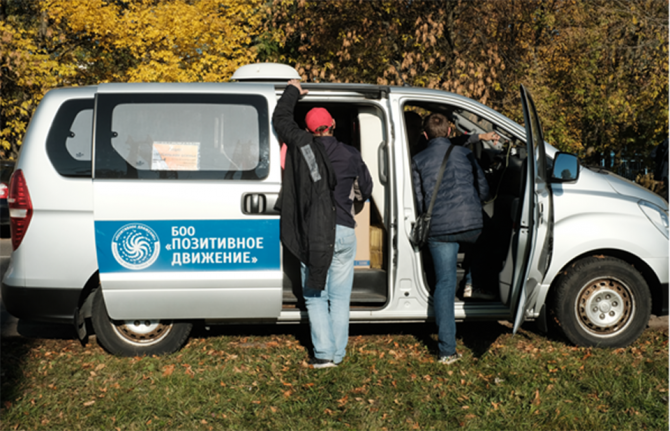
Word-of-mouth lets people know the mobile clinics are parked up. Positive Movement, the Minsk-based nongovernmental organization that operates the clinics, also lists their locations on its website. In the van-sized clinics you can get an HIV test, talk to a doctor or simply drink tea and chat with peer counsellors.
Positive Movement staff members have first-hand knowledge of issues affecting their clients. Of the 200 employees working there, more than three quarters have been affected by drug use and/or HIV.
“At first, employees were clients, now they are board members,” says Irina Statkevich, the head of Positive Movement’s board. “We believe that harm reduction works and that we can defeat HIV infection,” she says. "If we decide that this service is needed by our customers, we will do everything to get it!”
Above, Positive Movement’s office
Eight years ago, when she started working at the organization, she explains that it was impossible to utter the words needle and syringe exchange programme. “We had to do things incognito.”
Now they have drop-in centres open all day that not only provide clean needles and syringes but also food, HIV testing and a place to wash as well as legal and medical counselling. Peer-to-peer consultant Julia Stoke likens the centres to safe-havens.
Above, Julia Stoke, peer consultant in Drop-in centre
“This is an island of security,” she says. “A person who uses drugs has a need for safety first, then trust, and then a range of services."
Vyacheslav Samarin agrees. As a social worker at one of the drop-in centres, he explains that people who use drugs often face difficult situations like a loss of housing, a lack of documents, poor health and sometimes nothing to eat and nowhere to sleep. “In many cases,” Mr. Samarin says, “One problem often leads to another.”
Above, Vyacheslav Samarin, a social worker at a drop-in centre in Minsk
“Many are in denial about their health,” he continues. Many clients fear stigma and have different priorities. He says it’s key to support people and not let them feel defeated and abandoned.
“At the very beginning, people do not want to believe their diagnosis, so we are careful to talk to them about starting treatment,” says the red-haired social worker.
Over the years he has noticed changes. "Today there are more treatment methods and the staff listen much more to people living with HIV.” He says that relationships between patients and doctors are much improved.
Also, the government of Belarus has been much more supportive of the work.
Tatiana Migal from the ministry of health confirms this. “By working on HIV prevention among people who use drugs and supporting people living with HIV for nine years, Positive Movement has not only gained considerable experience in this field but has also contributed significantly to reducing HIV infection among people who inject drugs.”
Ms Migal stresses the importance of peer counselling, social support centres and syringe exchange programmes as well as methadone substitution therapy.
“According to estimates by the World Health Organization and UNAIDS harm reduction programmes will help overcome the HIV epidemic in Belarus,” she says.
Related
Feature Story
Pushing for harm reduction success in Burundi
25 June 2019
25 June 2019 25 June 2019This story was first published by WHO
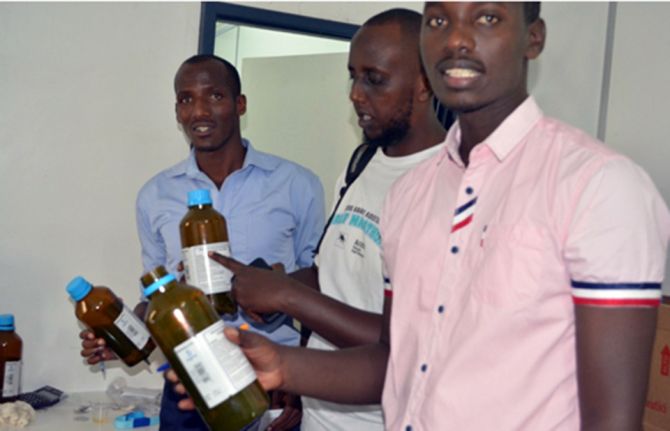
Getting life-saving harm reduction services to people who use drugs in Burundi was the aim of a recent learning trip to Kenya supported by the World Health Organization (WHO). This saw a team of Burundian physicians and health advocates travel to Mombasa County, Kenya, to learn about good practice from one of the pioneers of harm reduction on the African continent.
Led by Burundian non-profit, Jeunesse au Clair Medical (JCM), the team will push for a comprehensive package of harm reduction interventions in Burundi. Like many other countries in Africa, injecting drug use is not often acknowledged, and a public health response therefore not implemented.
Drug use is widely criminalised and stigmatised and its complexities misunderstood. WHO defines harm reduction as an evidence-based public health response that includes the provision of needle and syringe programmes (NSP), opioid substitution therapy (OST) and access to testing and treatment of HIV, tuberculosis (TB) and viral hepatitis B and C.
Keen to gain insight into the Kenyan experience and inform the development of a programme in Burundi, the Burundian team of doctors, a counsellor and a national coordinator of a network of people who used drugs, visited the Reach Out Center Trust in Mombasa. They observed the delivery of OST programmes and learnt about advocacy with local influencers – in an excellent example of south-to-south learning.
Kenya’s response to minimising the adverse effects of drug use, although not without its own challenges, has succeeded largely through grassroots advocacy and on-boarding key influencers – making it easier for harm reduction to be accepted. This multi-level approach includes collaboration between government and civil society, involving both law enforcement and networks of people who use drugs.
At a visit to the Mombasa Inspectorate in charge of drug-related offences, the team learnt first-hand from the Chief Inspector the importance of police engagement, highlighting the negative impact drug use can have on young lives and the need for strategies that work. Today, some 100 police officers in Mombasa are trained on harm reduction with their work focusing on supporting, not punishing.
In addition to police buy-in, identifying other key influencers such as spiritual and village leaders, other government officials, and people who use drugs themselves, can ensure that harm reduction programmes are effective and sustainable.
Advocacy wasn’t the only thing on the agenda, the team from Burundi also saw in practice how the Kenyan clinics functioned, how methadone is dispensed, they spoke with peer educators and outreach officers, and were trained on data collection for programme monitoring. An important learning if they want to show evidence to get government and donors on their side.
While Kenya is several years ahead in its harm reduction journey, with local input, their learnings can be adapted to other contexts.
“The burden caused by drugs requires interventions at grassroots and education must be provided by trained people to avoid misinformation,” said Dr Egide Haragirimana, clinical officer at JCM.
JCM are putting into action their learnings and will next be involving networks of people who use drugs to better understand what their needs are, to inform future harm reduction initiatives.
Region/country
Feature Story
Deported, denied access, discriminated against because of their HIV status
27 June 2019
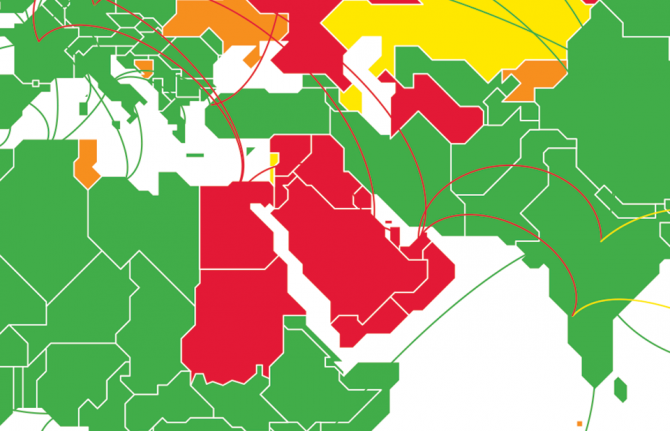
27 June 2019 27 June 2019In 2019, 48 countries and territories impose some form of HIV-related restrictions and mandatory HIV testing that prevent people living with HIV from legally entering, transiting through or studying, working or residing in a country, solely based on their HIV status.
Mehdi Beji (not his real name) couldn’t wait to start his new job in a North Africa Middle East country. He had packed his belongings and said his goodbyes in Tunisia and filed all the paperwork requested by his new employer. Before his contract was approved, he had submitted the results of the blood tests he had been asked to take, but after he started work he was requested to get his blood tested again.
“After a month, I was contacted for an appointment to get my credit card, and when I arrived at the mall, I was arrested by the police,” Mr Beji said. At the police station he was informed he was HIV-positive and that the country’s laws deny residency to people living with HIV.
"They deported me back to Tunisia without money and I was not able to recover my two months salary,” Mr Beji said. “When I contacted the bank, they informed me that the only way to access my account was through the bank card that they refused to grant me.”
Treated like a criminal
For 12 years Karim Haddad (not his real name) lived and worked in a North Africa Middle East country. As part of his medical check-up for his residency permit, his blood was tested for HIV without his consent. On the day he went to collect the test results, he said, police officers handcuffed him and locked him in a room.
Four days later, the authorities informed him that his deportation was imminent because of his HIV status. “I didn’t know anything about the virus, so I asked what HIV is and got no answer,” Mr Haddad said. He recalled feeling paralysed with fear.
When he asked about his wife and children, he was told that they would all board the same flight and would meet him at the airport. As for his financial rights or his belongings, he said they just kept repeating, “You have no rights.”
“I left the country as if I were a criminal,” Mr Haddad said, still in disbelief.
Nightmare
The above tales are experiences that Amina Zidane (not her real name) knows all too well. She left Algeria at the age of 19 for work. After a few years, her annual medical check-up did not go as usual.
“I could hear the nurses whispering to each other, “This is the one.”” She suspected something was wrong, so she asked her sister, who had accompanied her to the clinic, to get her results. “My sister told me that the police were downstairs saying that they had come “to arrest a woman with AIDS,”” she said.
She recalled being taken to jail and prayed that there had been a mistake or that it was just a bad dream. “They did not open the door, they just sent me food through a small window," Ms Zidane said.
A week later, the authorities deported her. “I was left at the border with my passport and my son,” she said. Her husband escaped because he didn’t want to be deported. “Fourteen years of my life disappeared just like that and I had done nothing wrong.”
Lost son
Sabrina Abdallah (not her real name) lived in a North Africa Middle East country most of her childhood. After passing a computer science degree, she married a fellow Sudanese. They rejoiced when they had a baby boy.
At barely three months old, their son’s cold would not clear up. Despite being in a hospital, his condition didn’t improve. “It's really hard to see one’s child suffering and feeling so helpless,” she said. At first, her doctor thought that her son might have cancer, but he was eventually tested and found to be living with HIV. “While I was in the midst of my anxiety and fear, news spread at the hospital about my son, and they placed him alone in a room, with no one looking after him,” she said.
Ms Abdallah tested for HIV and found out that she was also living with HIV. “They asked me to take my son and go home,” she said. “They wouldn’t let us leave him at the hospital and even assigned a police officer to escort us and make sure we would not leave the baby behind.”
Child in hand, she tried to get some answers. That’s when her husband told her he had known his HIV-positive status all along. She couldn’t understand why he would hide something like that from her. The police took her husband to jail and 10 days later they were all deported to the Sudan. She started treatment but unfortunately it was too late for her son.
She eventually divorced her husband because, she said, she could never forgive him for the death of their son.
Student uprooted
For two years, Miriam Pepple (not her real name) studied at a university in central Europe. She paid her tuition fees and adapted to student life far from home. When she started having abdominal pains, she went to the student clinic. They advised her to have surgery. She had blood tests done, but thought nothing of it, since she had submitted her clinical tests to get a student permit while in her home country, Nigeria.
She said that the university asked her to take more blood tests and to bring her passport. After being told to visit various offices at the Ministry of Health, she was told to report to a police station. A day later, the authorities handed her an airline ticket to Abuja, Nigeria, along with a letter from the immigration office that claimed that she was an inadmissible immigrant.
What shocked her even more, she said, is the letter she received from her university. “They said that I had terminated my studies on my own accord,” Ms Pepple recalls.
“I lost my self-esteem, dignity and respect,” she said. Her hope is that no one should ever go through such treatment because of the huge social and psychological affect it had on her.
Life crushed
Pradeep Agarwal (not his real name) was a successful businessman, working throughout the Middle East. He worked in three Gulf countries for more than 10 years until his life came crashing down around him.
“In a matter of hours, I lost my job, my dignity and my home,” Mr Agarwal said. “I was informed I was HIV-positive and had to leave the country.” He recounts being escorted by the police to a quarantine room. “After being treated for years with respect and dignity, I found myself with other people from all nationalities, among them doctors and engineers, treated in the same inhuman way,” he said.
“I was not even given a medical report that could enlighten me and I was spoken to in Arabic, which I do not understand,” he said. “I suddenly had become a criminal in their eyes.”
After his return to India, he became depressed and has been unable to find another job. He believes that deporting people who are living with HIV gives governments a false assurance that their societies are safe. “In fact, these travel restrictions and expulsions drive people underground, so it makes the situation worse,” Mr Agarwal said. “I want people to be more aware of these violations,” he added. “I want them to stop, so others do not suffer the same horrible fate I suffered.”
UNAIDS believes that these laws discriminate, impact on human rights and have no public health justification.
“For many of the millions of people living with HIV around the world, travel restrictions are a daily reminder that discrimination continues to be entrenched in harmful policies,” said Luisa Cabal, UNAIDS Director, a.i., of the Community Support, Social Justice and Inclusion Department. “They deny people’s freedom and, even worse, force people to abandon their workplace, school and home.”
Related


Feature Story
South Africa: pace really matters
27 June 2019
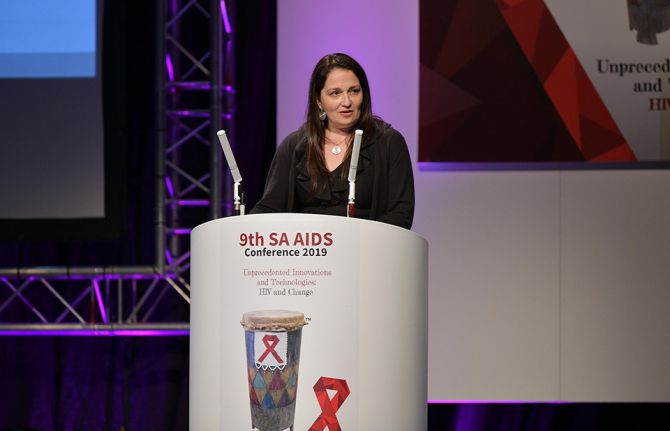
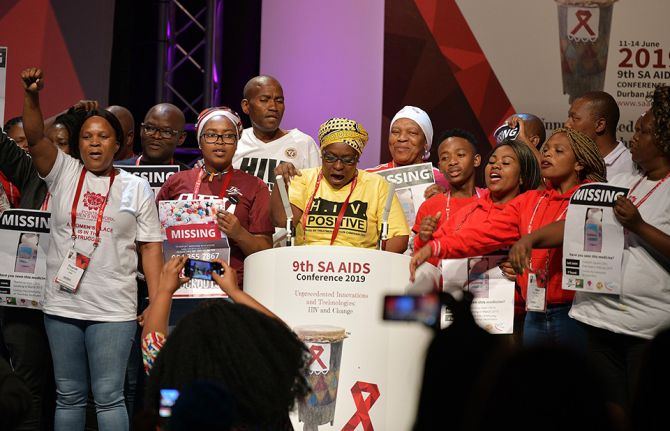
27 June 2019 27 June 2019South Africa has reaffirmed its commitment to accelerate the pace of its response to HIV in order to reach the 2020 Fast-Track targets and end the AIDS epidemic as a public health threat by 2030.
During the opening plenary of the 9th South Africa AIDS conference in Durban, UNAIDS Deputy Executive Director, Shannon Hader, reminded participants that 1in 5 people living with HIV globally lives in South Africa. The country has the largest treatment programme in the world with 4.5 million people on treatment by June 2018. However, around 3 million people living with HIV are yet to access treatment. Ms Hader also reminded the audience that the country is not on track to reach its prevention targets.
“Pace really matters. The world will only succeed in ending AIDS when South Africa succeeds,” she said. Ms. Hader noted that ending the AIDS epidemic was a strategic priority for South Africa and an essential element of the Sustainable Development Goals. “Success in HIV is success in health, and we won’t have health for all if we don’t address HIV.”
Ms Hader reiterated that UNAIDS and the UN system remain committed to support South Africa’s response to HIV and TB. “We are with you,” she said.
Delivering the opening address to the conference, South Africa’s Minister of Health, Zweli Mkhize said the success of the AIDS response to date was a tribute to the work of researchers and the courage of activists who dedicated their lives to finding solutions. “This event reminds us to harness the huge potential of people living with HIV to guide the delivery of services,” he said.
When closing the conference, South Africa’s Deputy President, David Mabuza, thanked UNAIDS and the UN system for their continued support and noted that South Africa is determined to expand HIV treatment to at least 6.1 million people by 2020. He cited Thembisa modelling by the University of Cape Town and funded by UNAIDS that suggests 12.9% of the South African population is living with HIV.
While South Africa’s HIV response is being hailed as a success, it is “clear that we are not doing well in preventing new infections,” said Mr Mabuza. “It is estimated that there are around 250 000 new infections annually, and our target is to get below 100 000 new infections by December 2020. This gap is big and it must be closed.” Mr Mabuza noted that stigma and discrimination remained a challenge to ending AIDS and he expressed determination to overcome them. “We must be compassionate and ensure that available services are provided with respect and dignity to all,“ he said.
At a pre-conference event, the UN Resident Coordinator Nardos Bekele-Thomas joined the Minister of Health, the Premier of KwaZulu-Natal, the Deputy Ministers of Justice and Social development, and several political, community and civil society leaders, to launch a new human rights and gender plan to address barriers to access HIV and TB services. The plan was handed over to Mr Mabuza, who is also Chair of the South Africa National AIDS Council during the closing session of the South African AIDS conference. Mr Mabuza welcomed the launch of the plan and said the Government was committed to ensuring every public servant provides care with compassion and at the highest possible level of quality. “This is not only a right thing to do, but a fundamental human right,” he said.
Ms Bekele-Thomas noted that South Africa has ratified several international human rights instruments and has a progressive Constitution with a bill of rights, but she said these alone were insufficient to promote and protect the rights of vulnerable and key populations. “Human rights must be respected, protected and fulfilled through the adoption of relevant strategies and implementation plans, by refraining from limiting the enjoyment of human rights, by preventing others from interfering in the enjoyment of human rights, and by promoting human rights awareness,” she said. She also commended the Global Fund for supporting the development of the plan.
The theme of the AIDS conference was “Unprecedented Innovations and Technologies” and it engaged community members, scholars and policy experts in detailed discussion of implementation science and game changing approaches, ranging from PrEP and U=U (Undetectable equals Un-transmittable) to new data on contraception and sub-national data on prevalence and progress on the 90-90-90 targets.
Region/country
Feature Story
A powerful voice for the AIDS response
25 June 2019
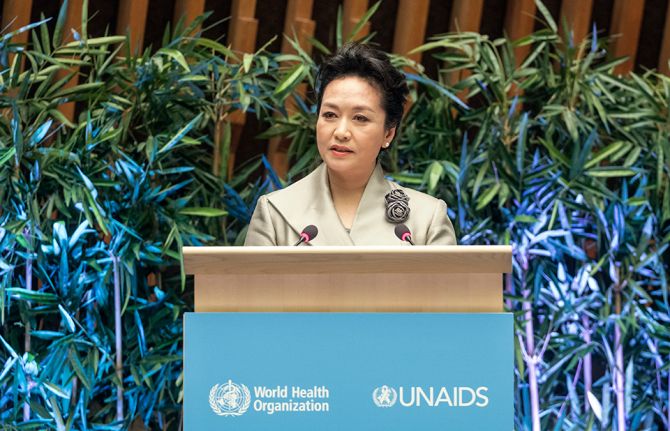
25 June 2019 25 June 2019In September 2018, on the sidelines of the Forum on China-Africa Cooperation (FOCAC) summit in Beijing, China’s First Lady, Professor Peng Liyuan, and her fellow First Ladies from Africa lit up a Reb Ribbon at the centre of the meeting hall, officially launching the Joint Initiative of the China-Africa Thematic Meeting on HIV/AIDS Prevention and Control.
The 2018 FOCAC summit gathered together over 20 African Heads of State and First Ladies to discuss closer partnership between China and African countries, including on health-related matters. During the thematic meeting, Professor Peng announced a three-year HIV prevention campaign among adolescents to begin in 2019 as well as a community health promotion programme involving China, several African countries and international organizations, including UNAIDS.
For more than 10 years, Professsor Peng has had a particular interest in reducing the impact of HIV among children and adolescents, especially among children orphaned by AIDS. In 2016, she hosted the China-Africa Children Summer Camp that brought together children living with or affected by HIV from China, Ghana, South Africa and Zimbabwe. During the camp, the First Lady helped launch the Chinese version of the Bravest Boy I Know, a book which helps children understand the issues surrounding HIV and reduce the stigma and discrimination faced by children affected by the virus.
In 2015, Professor Peng attended a meeting of the Organization of African First Ladies against HIV/AIDS (OAFLA) in Johannesburg, South Africa, where she underlined the importance of four key issues critical to ending AIDS by 2030: universal access to HIV treatment; public information and education; educational opportunities for adolescents and economic development to eliminate poverty.
Together with national Red Ribbon Ambassadors, Professor Peng has for many years visited communities across China, including schools and universities, to raise awareness about HIV prevention and to reduce the stigma and discrimination associated with the virus.
An acclaimed soprano singer, Professor Peng has proven to be a powerful voice for those living with or affected by HIV.
She has been a World Health Organization Goodwill Ambassador for Tuberculosis and HIV/AIDS since 2011. In 2017, she was awarded a UNAIDS Award for Outstanding Achievement in recognition of her contribution to the response.
“A caring heart is our best weapon against AIDS,” she said in accepting the award. “We can save lives if we take action. We must succeed and we will succeed.”

Feature Story
Virtual communities power HIV services in China
21 June 2019
21 June 2019 21 June 2019According to national estimates, an estimated 1.25 million people are living with HIV in China, with almost 400 000 unaware of their status. China’s epidemic is concentrated among key populations at higher risk of HIV, including men who have sex with men. That’s why it’s crucial to meet these communities where they socialize, including in virtual spaces such as gay dating applications.
Danlan Public Welfare is a nongovernmental organization that advocates for lesbian, gay, bisexual and transgender rights. It is also behind the largest gay dating application in China, Blued, which today has more than 28 million users. It has incorporated community-driven HIV prevention messaging into the application and includes basic facts about the virus, as well as information on prevention, testing and treatment options and how and where to contact related services. Interactive quizzes test users’ knowledge about HIV.
As well as this powerful virtual tool, Danlan also operates free HIV rapid testing outreach projects in partnership with the Municipal Centres for Disease Control and Prevention. People can take a free HIV test and get their results in just 10 to 15 minutes.
As the Blued dating application becomes popular around the world, Danlan is extending its HIV prevention programme to Belt and Road Countries. Since March 2019, users in Indonesia have been able to access the “Blued Help Center". The service is provided in cooperation with a local civil society organization called "VictoryPlus”, which allows users to post their concerns regarding HIV-related issues and receive an immediate answer. Blued’s “We Care” programme also offers virtual information on HIV services close by.
In Thailand, Danlan worked together with a civil organization called "Impulse" to advocate for HIV prevention programmes and provided free rapid HIV testing services. Danlan has also cooperated with Mahidol University on HIV-related risk behaviour research.
In April 2019, the chief executive officer of Danlan, Geng Le, received an award for “Outstanding Innovative Model” by the Confederation of Trade Unions of Chaoyang, Beijing. It is estimated that community-based organizations like Danlan are responsible for finding 30% of all new HIV cases in the city.
“We are doing our best to use science and technology to improve the lives of lesbian, gay, bisexual and transgender communities, including their health,” says Geng Le. “Our vision is that all young people should be able to live with dignity, be free of stigma and discrimination and love who they want to no matter where they come from, what their sexual orientation is and what their HIV status is.”
Blued is more than just a dating application now. It is also a virtual healthcare resource centre that provides support to the wellbeing of the LGBT community.