Feature Story
UNAIDS revises its policy on adoption, paternity and surrogacy leave
15 October 2018
15 October 2018 15 October 2018UNAIDS has revised its internal adoption and paternity leave policy and introduced new rules on surrogacy leave, marking an important step in ensuring a more inclusive working environment.
The revised policy includes the extension of adoption leave from eight to 16–18 weeks, depending on the number of children being adopted, the extension of paternity leave from four to 16 weeks and the introduction of 16 weeks of leave for a single birth by surrogacy and 18 weeks for multiple births by surrogacy.
The new policy is the result of concerted advocacy efforts by the UNAIDS Secretariat Staff Association (USSA), in collaboration with UNAIDS management, and is one of the commitments made in the recently launched UNAIDS Gender Action Plan 2018–2023.
“The revised policy will allow fathers to spend more time with their families at a critical stage in life,” said a staff member who will soon become a father. “Men can and have to play an important role in childcare and actively challenge gender norms that pass most responsibility for childcare onto women,” he said.
Adopting a more equitable policy framework that supports caregiving by both men and women can help in overturning perceptions that women of childbearing age are potentially too expensive or an absentee risk when compared with similarly qualified men.
“The UNAIDS Secretariat Staff Association welcomes this important milestone in our internal policy framework, which will not only bring direct benefits to staff who will become parents, but to all staff, as it challenges pervasive gender norms,” said Pauliina Nykanen-Rettaroli, USSA Chair.
The introduction of specific leave for births by surrogacy reflects UNAIDS’ commitment to diversity. “It doesn´t make a difference if you become a parent by natural birth, adoption or surrogacy; you still become a parent and should be entitled to the same benefits,” said a staff member. “This policy reflects the organization’s commitment to be as inclusive as possible and walk the talk of what it advocates for, which is dignity and respect for all,” she added.
“In our new Gender Action Plan, we committed to adopting a single parental leave policy and I am proud that UNAIDS has now delivered on this. All parents should be supported to spend time with their children. By supporting this, UNAIDS is contributing to shifting the burden of care and advancing gender equality,” said Gunilla Carlsson, UNAIDS Deputy Executive Director, Management and Governance.

Press Statement
UNAIDS welcomes establishment of an Independent Expert Panel on addressing and preventing harassment, including sexual harassment, bullying and abuse of power
20 July 2018 20 July 2018GENEVA, 20 July 2018—Following the call by the Executive Director of UNAIDS, Michel Sidibé, for an external high-level independent panel to provide recommendations to UNAIDS to further strengthen implementation of its zero tolerance policy on sexual harassment, the UNAIDS Programme Coordinating Board agreed to create an Independent Expert Panel. The panel will:
- Review the current situation in the UNAIDS Secretariat with regard to harassment, including sexual harassment, bullying and abuse of power and retaliation, including by looking back over the past seven years, to assess the organizational culture at headquarters and the regional and country offices.
- Evaluate the effectiveness of existing policies and procedures to prevent and address harassment, including sexual harassment, bullying, retaliation and abuse of power, in the UNAIDS Secretariat workplace.
- Recommend a comprehensive set of prioritized measures on organizational culture, policies and fair and due process procedures with respect to harassment, including sexual harassment, bullying, retaliation and abuse of power in the workplace.
The UNAIDS Programme Coordinating Board Bureau has now announced that the panel will be comprised of:
- Professor Gillian Triggs (Australia)—Chair
- Sir Robert Francis (United Kingdom of Great Britain and Northern Ireland)
- Ms Vrinda Grover (India)
- Dr Fulata Moyo (Malawi)
- Ms Charlotte Petri Gornitzka (Sweden)
The Chair of the panel, Professor Gillian Triggs, has issued a statement inviting confidential written submissions on matters related to the work of the panel to be sent to IEPChair@qedconsulting.com.
The UNAIDS Programme Coordinating Board Bureau has also selected QED Consulting to perform the function of secretariat to the Independent Expert Panel. The selection was made through a competitive tendering process. The appointment of QED Consulting as the secretariat will support the independent functioning of the Independent Expert Panel.
More details about the Independent Expert Panel and its functioning can be found at http://www.unaids.org/en/whoweare/pcb/iep.
UNAIDS
The Joint United Nations Programme on HIV/AIDS (UNAIDS) leads and inspires the world to achieve its shared vision of zero new HIV infections, zero discrimination and zero AIDS-related deaths. UNAIDS unites the efforts of 11 UN organizations—UNHCR, UNICEF, WFP, UNDP, UNFPA, UNODC, UN Women, ILO, UNESCO, WHO and the World Bank—and works closely with global and national partners towards ending the AIDS epidemic by 2030 as part of the Sustainable Development Goals. Learn more at unaids.org and connect with us on Facebook, Twitter, Instagram and YouTube.
Update
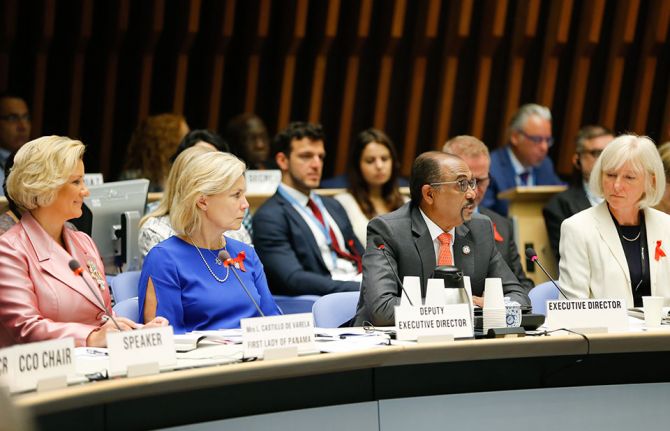
UNAIDS Programme Coordinating Board opens
26 June 2018
26 June 2018 26 June 2018The 42nd meeting of the UNAIDS Programme Coordinating Board (PCB) is taking place in Geneva, Switzerland, from 26 to 28 June.
At the opening, the UNAIDS Executive Director, Michel Sidibé, gave an update on the progress made in the AIDS response and outlined the challenges and opportunities that lie ahead. He stressed that the progress made in the AIDS response is uneven and fragile and called for renewed focus and shared commitment to ending the AIDS epidemic by 2030.
Mr Sidibé also emphasized the need for a transformative approach to the epidemic that will include reforming laws and policies to end discrimination, expand community-led, people-centred approaches to HIV service delivery, the use of timely location–population data to inform decision-making, close the funding gap to achieve the Fast-Track Targets and reinforce the linkages between ending AIDS and achieving universal health coverage.
PCB members were also informed about the proactive actions taken to stamp out sexual harassment, unethical workplace behaviour and all forms of abuse at UNAIDS. These actions include establishing an internal five-point plan to ensure that actions are taken rapidly and effectively against inappropriate behaviour and abuse of authority, but also engaging with external stakeholders, including civil society, to gather valuable inputs on how to strengthen UNAIDS’ work in this area.
Later in the day, the PCB received an update on the process of the establishment of the Independent Expert Panel on prevention of and response to harassment, including sexual harassment, bullying and abuse of power at the UNAIDS Secretariat.
The thematic segment of the meeting will take place on the last day and will focus on ending tuberculosis (TB) and AIDS. The participants will consider the challenges to addressing TB, HIV-associated TB and drug-resistant TB in the context of universal health coverage and the Sustainable Development Goals. The participants will also discuss examples of good practice that demonstrate effective collaboration within national TB and HIV programmes and with communities to achieve integrated TB/HIV care and strengthen health systems.
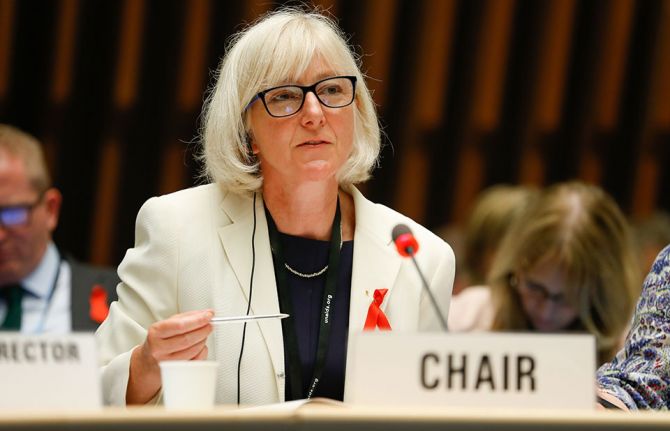
The 42nd meeting of the PCB is being chaired by the United Kingdom of Great Britain and Northern Ireland, with China acting as Vice-Chair and Algeria as Rapporteur.
Related links
Feature Story
New UNAIDS web portal reinforces its commitment to accountability and transparency
27 June 2018
27 June 2018 27 June 2018UNAIDS has launched a revamped transparency portal, open.unaids.org, which presents current data on how UNAIDS is working to end AIDS as a public health threat by 2030.
The portal features joint results, country-level information, financial reporting, donor contributions, indicator trends and detailed information on the achievements of the UNAIDS Cosponsors.
“This portal is part of our collective efforts to ensure that we strengthen our transparency, accountability and communications around how we work and what we achieve. It provides Member States, donors, partners and staff alike with an excellent and highly accessible resource,” says Gunilla Carlsson, UNAIDS Deputy Executive Director.
The UNAIDS transparency portal for the first time presents how UNAIDS is working with the International Aid Transparency Initiative (IATI). UNAIDS became an IATI publisher in late 2016 and since then has regularly been publishing the details of financial and programme information in a standardized format in the IATI registry.
UNAIDS’ commitment to being open and accountable has been demonstrated by efforts to share programmatic and financial data with the public since 2014, when the initial transparency portal was launched at UNAIDS’ first financing dialogue. Since then, the portal has presented all information on performance and financial reporting shared with the Programme Coordinating Board annually. Adoption of the IATI standard—a format and framework for publishing data—has been another important step in ensuring that data are accessible and available to all.
The portal can be accessed at https://open.unaids.org/.
UNAIDS transparency portal
For more information
Feature Story
First Lady of Kenya champions a generation born free from HIV
06 June 2018
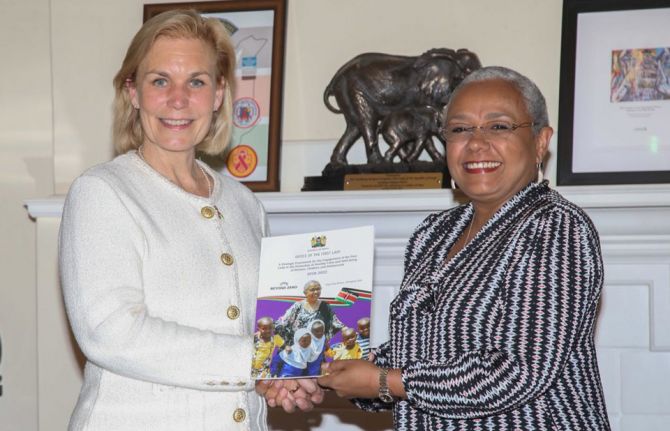
06 June 2018 06 June 2018Margaret Kenyatta, the First Lady of Kenya, reinforced her commitment to champion the elimination of mother-to-child transmission of HIV in a meeting with UNAIDS Deputy Executive Director Gunilla Carlsson in Nairobi, Kenya, on 29 May.
The First Lady and Ms Carlsson discussed the Beyond Zero platform, a groundbreaking initiative spearheaded by the First Lady. Through Beyond Zero, the First Lady has mobilized resources from the private sector to respond to the health and well-being of women and children, with a focus on HIV and sexual and reproductive health.
“There is so much momentum and support from Kenyans themselves for the Beyond Zero initiative. They feel that it is theirs and that they own it,” said Ms Kenyatta.
Beyond Zero has delivered 52 mobile clinics to every county in Kenya. The operationalization of the clinics has resulted in substantial community mobilization and demand creation for HIV services. Initiatives such as Beyond Zero have contributed to significant progress in the AIDS response in Kenya, with new HIV infections among children aged 0 to 14 years reducing from about 14 000 in 2013 to 6100 in 2016, while in the same period the percentage of mothers delivering without a skilled health provider decreased from 56% to 34%.
Building on those gains, the First Lady launched a new framework earlier this year to advance the Beyond Zero initiative. The framework adopts a life-cycle approach, addressing challenges, including HIV, at different stages of life. Ms Kenyatta’s championship for Kenya to reach validation by the World Health Organization for the pre-elimination of mother-to-child transmission of HIV is a core commitment of the framework.
“Beyond Zero is a powerful initiative. An advocacy platform that has fostered public–private partnership for the health agenda and the elimination of mother-to-child transmission of HIV in particular,” said Ms Carlsson.
Related resources
Region/country
Related

Feature Story
Using social media for a gender-transformative response to HIV
21 March 2018
21 March 2018 21 March 2018During an event held on the sidelines of the 62nd Session of the Commission on the Status of Women, political leaders and activists from the women’s movement and HIV advocacy groups discussed new strategies to engage women and girls in the AIDS response.
Highlighting how technology and media, in particular social media, could be used to enhance the leadership of young women, the participants also discussed how to achieve gender equality in the AIDS response.
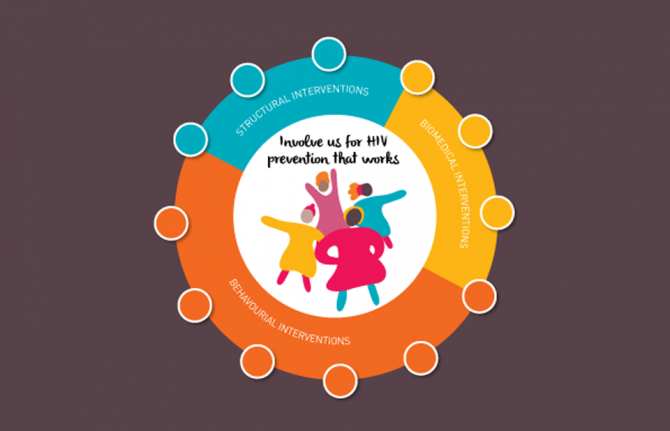
The meeting showcased the #WhatWomenWant campaign and how it used social media to mobilize for the United Nations General Assembly High-Level Meeting on Ending AIDS in 2016. As part of the campaign, a feminist blog series, a platform for young female leaders to share their expertise and priorities, was developed. Using WhatsApp groups and Twitter chats, young women were engaged and accessed information on the UNAIDS global guidance on comprehensive HIV prevention. The consultation and sharing using social media resulted in #WhatWomenWant: HIV prevention that works for adolescent girls and young women.
“We have a new generation of young women leaders who use social media to amplify and integrate a feminist leadership to ensure sustainable and transformative results in the AIDS response,” said Catherine Nyambura, from FEMNET, a regional organization of African feminists based in Kenya.
Also during the event, entitled Accountability in Action: Putting Women and Girls in all their Diversity at the Center Through New Social Media, a new report by the ATHENA Network—a global network of 70 partners in more than 35 countries dedicated to advancing gender equality, realizing human rights and building community leadership in the HIV response—was launched. #WhatWomenWant: a toolkit for putting accountability into action gives examples of how to effectively inform and engage young women through digital tools such as WhatsApp, Twitter and Facebook. It also aims to bring a gender-inclusive perspective into developing and implementing policies and programmes and to ensure that young women, including young women living with HIV, can access and contribute to these processes.
“We are looking to digital tools and technologies to evolve the monitoring and accountability agenda in the AIDS response. Our experience can now be shared globally and in real time, unlocking a new world of how we might learn together and deliver,” said Tyler Crone, from the ATHENA Network.
“UNAIDS welcomes the strengthened focus on accountability that has been generated through the #WhatWomenWant campaign. Together, we are committed to working hand in hand to enhance the meaningful participation of women, with a focus on making human rights and gender equality a reality at all levels of the AIDS response,” said Gunilla Carlsson, Deputy Executive Director of UNAIDS.
The meeting, held on 19 March at the United Nations Headquarters in New York, United States of America, was organized by UNAIDS in partnership with the ATHENA Network and #WhatWomenWant partners.