Press Release
UNAIDS Executive Director outlines her vision to the UNAIDS Board
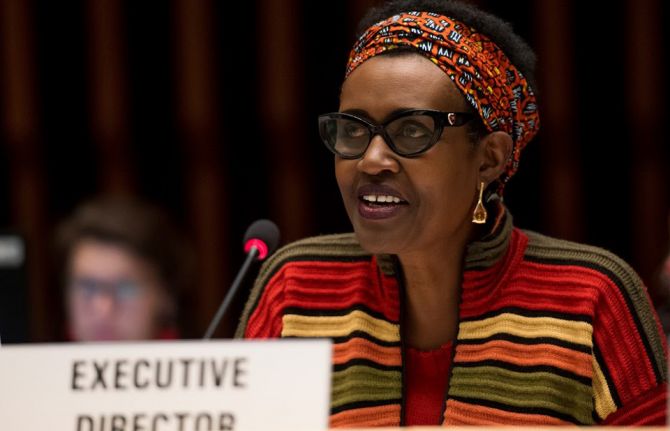
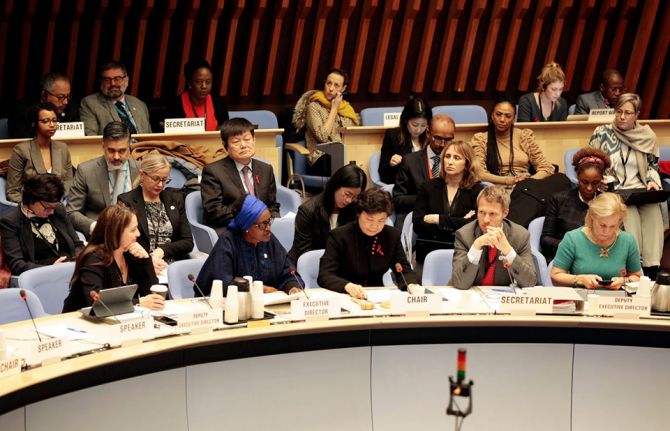
13 December 2019 13 December 2019GENEVA, 13 December 2019—Winnie Byanyima, speaking at the first meeting of the UNAIDS Programme Coordinating Board (PCB) since her appointment as the UNAIDS Executive Director, has outlined her priorities for 2020. Noting that, “The global response to HIV and the Joint Programme provide one of the strongest examples of the value of multilateralism and global solidarity,” she added that, “The year 2020 provides us with an opportunity to reflect upon how the Joint Programme can work even better.”
The Executive Director of UNAIDS said that UNAIDS would step up its work in four areas: women and girls in Africa; defending the human rights of everyone; putting science, innovation and technology in the hands of people; and financing the global AIDS response.
Ms Byanyima noted the enormous progress that has been made in the AIDS response, but told the meeting that, despite major progress by some countries and some regions, the world will overall not reach the target of a 75% reduction in new HIV infections by the end of 2020. The 45th meeting of the PCB, which concluded yesterday, underlined the importance of countries increasing investment in HIV prevention, with no less than one quarter of HIV spending to be invested in prevention programmes.
During the meeting, the PCB also requested a review of the UNAIDS 2016–2021 Strategy, its implementation and the results obtained. The results of the review will be considered in a wide-ranging consultation and will be presented at the next meeting of the PCB, in June 2020, as part of the development of the next UNAIDS strategy.
“The process for the development of the next strategy will be deeply data-driven and consultative, involving UNAIDS staff, our Cosponsors, civil society, people living with and affected by HIV, young people, faith institutions, ministers of health, finance and gender and parliamentarians, scientists, donors and the private sector,” said Ms Byanyima.
In her opening address to the PCB, Ms Byanyima spoke about the challenges and opportunities that lie ahead in the less than 13 months until the end of 2020―when a set of HIV prevention, treatment and other targets should be reached―and the less than 11 years until 2030, the date by which the world has committed to end AIDS.
Ms Byanyima said that her priority would be UNAIDS’ greatest asset―its staff. “Much has been done, but there is still a long way to go. Work must continue to restore trust among staff and with external partners, and to change the culture so that UNAIDS never tolerates any kind of abuse of power, such as harassment, sexual misconduct or bullying, and UNAIDS encourages staff to feel safe and to speak up.”
The PCB, noting the recent Joint Inspection Unit review of the management and administration of UNAIDS, welcomed Ms Byanyima’s commitment to establish an annual PCB agenda item to cover internal and external audits, ethics and other topics on accountability.
In paying tribute to Gunilla Carlsson, the UNAIDS Deputy Executive Director, Management and Governance, who will be leaving UNAIDS in early 2020, Ms Byanyima thanked her for guiding UNAIDS through the recent reputational crisis and facilitating the leadership transition. Wishing Ms Carlsson well in her future endeavours, she praised Ms Carlsson for driving forward critical reforms in management and governance, ensuring protection and support for staff members who have suffered from harassment and abuse of authority and leading the implementation of the UNAIDS Gender Action Plan and the Management Action Plan.
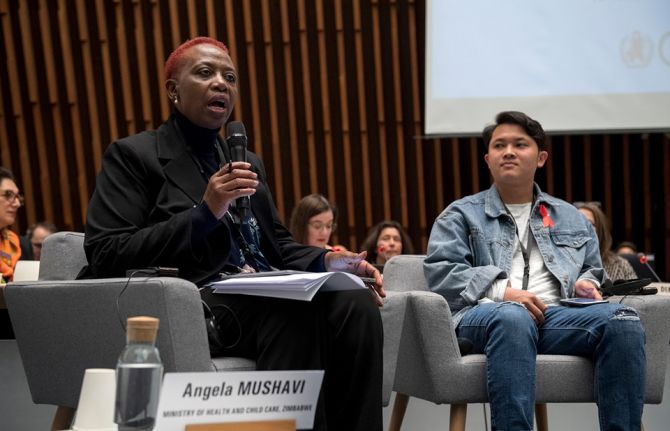
The PCB’s nongovernmental organization delegation put forward a report on universal health coverage, highlighting the role of communities as critical partners and stakeholders in the design and implementation of universal health coverage, and a request was made by the PCB for UNAIDS to continue to support countries to ensure that comprehensive HIV services remain or become available and accessible under a universal health coverage programme.
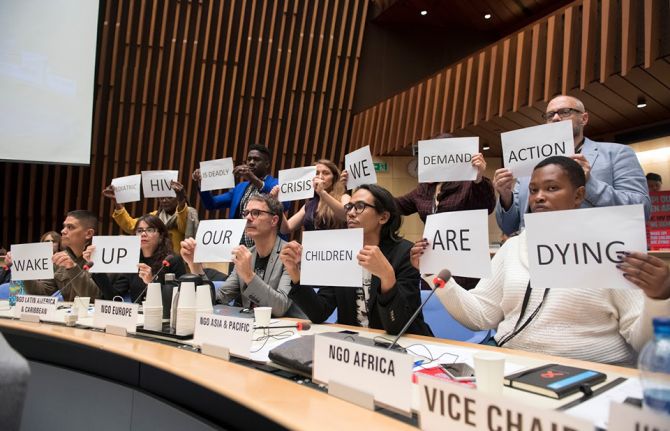
The last day of the meeting was a full-day thematic session on reducing the impact of AIDS on children and youth, which raised alarm that progress in eliminating new HIV infections among infants and getting children from 0–14 years old living with HIV on effective HIV treatment and thriving has slowed worryingly. The PCB engaged with panels on the importance of youth leadership in shaping the HIV response towards holistic approaches.
Representatives of United Nations Member States, international organizations, civil society and nongovernmental organizations attended the three-day meeting, which was chaired by China, with the United States of America serving as Vice-Chair and Belarus as Rapporteur.
The PCB’s decisions can be found at https://www.unaids.org/en/whoweare/pcb/45.
UNAIDS
The Joint United Nations Programme on HIV/AIDS (UNAIDS) leads and inspires the world to achieve its shared vision of zero new HIV infections, zero discrimination and zero AIDS-related deaths. UNAIDS unites the efforts of 11 UN organizations—UNHCR, UNICEF, WFP, UNDP, UNFPA, UNODC, UN Women, ILO, UNESCO, WHO and the World Bank—and works closely with global and national partners towards ending the AIDS epidemic by 2030 as part of the Sustainable Development Goals. Learn more at unaids.org and connect with us on Facebook, Twitter, Instagram and YouTube.
Feature Story
Commemorating World AIDS Day in Belgium
05 December 2019
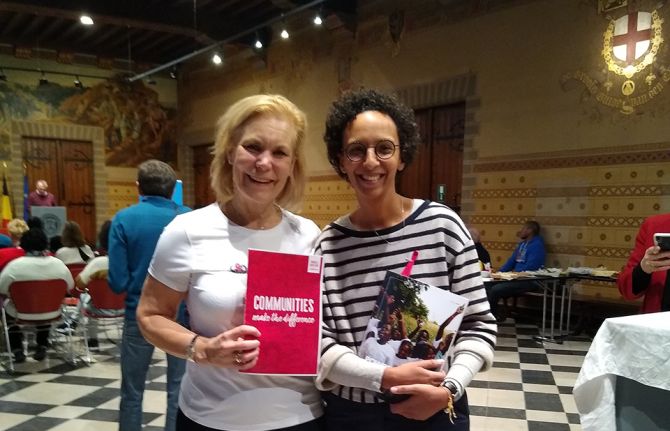
05 December 2019 05 December 2019Gunilla Carlsson, the UNAIDS Deputy Executive Director, Management and Governance, commemorated World AIDS Day in Brussels, Belgium, celebrating the power of communities with civil society and Barbara Trachte, the Secretary of State of the Brussels-Capital Region.
Ms Carlsson presented some of the key messages from Power to the people, UNAIDS’ new report, which shows that when people have the power to choose, to know, to thrive, to demand and to work together, lives are saved, injustices are prevented and dignity is restored.
“The AIDS response shows that when communities are empowered and have agency, change happens. Now more than ever we need a fully funded community-led response,” said Ms Carlsson.
She thanked the Regional Government of Brussels and the Federal Government of Belgium for its support for people living with HIV and the organizations working on HIV and related sexual and reproductive health and rights. For many years, Belgium has invested energy and resources to meet the needs of the most vulnerable and communities affected by HIV around the world, with a strong focus on human rights, gender equality, key populations, strengthening health systems and sexual and reproductive health and rights.
"Today, on 1 December, it is important to reinforce that undetectable = untransmittable in order to change society’s view of people living with HIV,” said Thierry Martin, Director of Plateforme Prévention Sida.
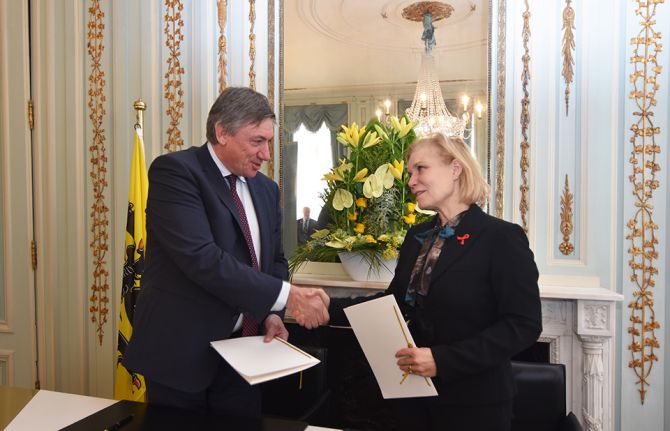
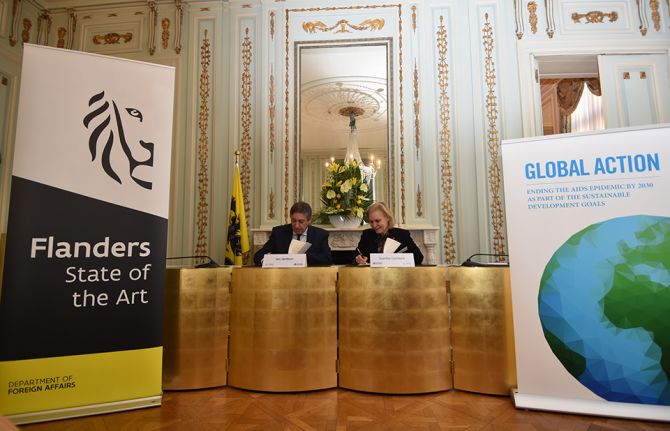
During her visit to Belgium, Ms Carlsson also met with the Minister-President of Flanders, Jan Jambon, and signed a new two-year partnership agreement with UNAIDS. Flanders has been a valued and prominent partner since the founding of UNAIDS and has invested energy and resources to meet the needs of communities affected by HIV, with a focus on vulnerable populations and girls in southern Africa.
Mr Jambon expressed confidence in renewing the long-term partnership agreement with UNAIDS. “Since its inception, UNAIDS has been working towards a multisectoral, rights-based and people-centred approach that addresses the determinants of health and well-being for the AIDS response, especially the most vulnerable populations, including the LGBTQI+ communities, and this is now more relevant than ever,” he said.
Mr Jambon also welcomed the reforms within UNAIDS to reinforce a positive workplace culture. “I am confident that with the new policies in place and the new leadership, this will enable staff to deliver at their best and maximize their collective results,” he said.
Ms Carlsson also attended a panel discussion with members of the parliament and representatives of civil society and the United Nations, where she provided an update on the status of the HIV epidemic and response, highlighting key actions for support by the European Parliament and European Union. She emphasized the important role that parliamentarians play in the global response to HIV.
Region/country


Documents
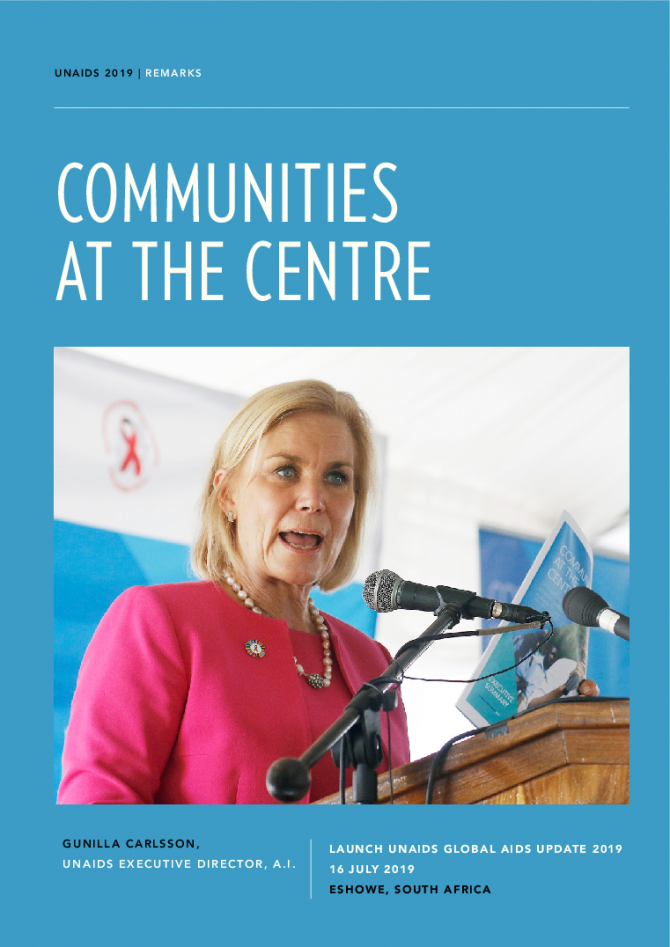
Communities at the centre - Global AIDS update 2019
23 July 2019
Press Release
UNAIDS and the Global Fund sign new strategic framework to strengthen joint support to countries in ending AIDS
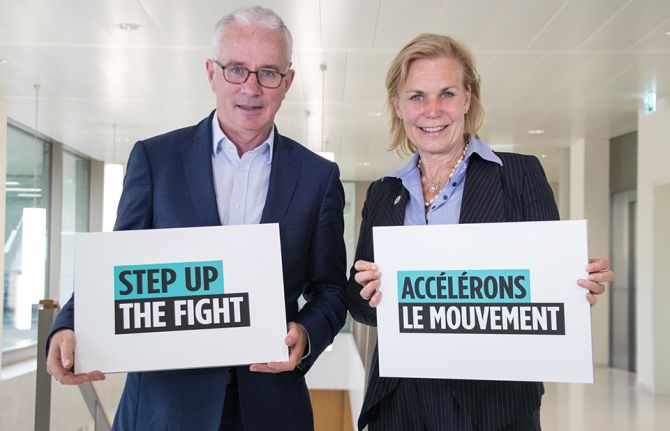
27 June 2019 27 June 2019GENEVA, 27 June 2019—UNAIDS and the Global Fund to Fight AIDS, Tuberculosis and Malaria (Global Fund) have signed a strategic framework for cooperation and collaboration to strengthen and accelerate support to countries’ efforts to end AIDS. The framework outlines the existing, wide-ranging scope of collaboration between the two organizations, and highlights specific areas for enhanced cooperation to help focus efforts and resources where they are needed most.
“The long-standing partnership between UNAIDS and the Global Fund has been instrumental in helping countries to halt and reverse their HIV epidemics,” said Gunilla Carlsson, UNAIDS Executive Director, a.i. “The new framework builds on this successful partnership and will deliver maximum impact for people on the ground, enhance country ownership and sustainability, and Fast-Track progress towards ending AIDS.”
Under the new framework, UNAIDS and the Global Fund will advocate for a more robust response to HIV, support each other’s activities and processes, and continue to provide strategic information, technical support and capacity building to countries. The two organizations will advocate for increased global and domestic funding, work to improve data collection and systems and ensure data is used strategically for decision making and implementation.
“Partnership is in the Global Fund’s DNA, and we will continue to work closely with UNAIDS to step up the fight against HIV and save millions of lives,” said Peter Sands, Executive Director of the Global Fund.
The framework highlights critical areas for enhanced collaboration which include HIV prevention and treatment access, community-led service delivery, gender, rights and community engagement and a special focus on accelerating progress in West and Central Africa. To measure progress towards the enhanced areas for collaboration a results matrix will be established.
UNAIDS will continue to analyse gaps in the response to HIV, support the development of national strategic plans and investment cases and address human rights and gender-related barriers to equitable access to health services. UNAIDS will also ensure that civil society are fully engaged in the response to HIV, particularly communities and key populations most affected by HIV.
The Global Fund will continue to attract, leverage and invest additional resources to end HIV. The Global Fund currently raises and invests nearly US$ 4 billion a year for the responses to HIV, tuberculosis and malaria, to support programmes run by local experts and leaders in countries and communities most in need.
UNAIDS urges donors to fully fund the Global Fund to Fight AIDS, Tuberculosis and Malaria at its sixth replenishment conference taking place in France in October 2019. This will enable countries, civil society and partners to implement an evidence-informed, people-centred and human-rights based response to HIV.
UNAIDS
The Joint United Nations Programme on HIV/AIDS (UNAIDS) leads and inspires the world to achieve its shared vision of zero new HIV infections, zero discrimination and zero AIDS-related deaths. UNAIDS unites the efforts of 11 UN organizations—UNHCR, UNICEF, WFP, UNDP, UNFPA, UNODC, UN Women, ILO, UNESCO, WHO and the World Bank—and works closely with global and national partners towards ending the AIDS epidemic by 2030 as part of the Sustainable Development Goals. Learn more at unaids.org and connect with us on Facebook, Twitter, Instagram and YouTube.
Contact
UNAIDS GenevaSophie Barton-Knott
tel. +41 22 791 1697
bartonknotts@unaids.org
UNAIDS Media
tel. +41 22 791 4237
communications@unaids.org
Press centre
Download the printable version (PDF)
Documents
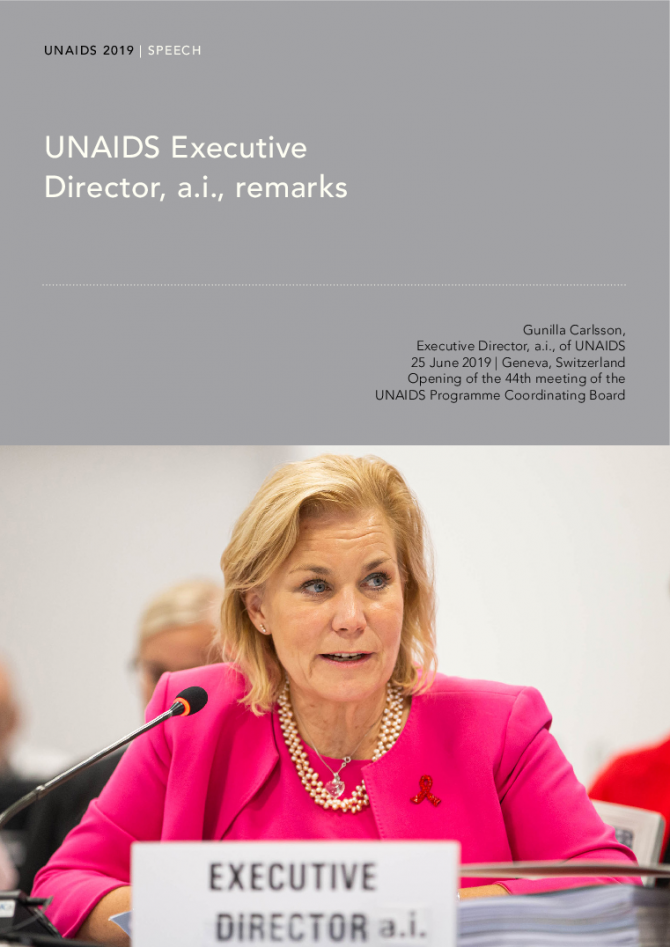
UNAIDS Executive Director, a.i., remarks — Opening of the 44th meeting of the UNAIDS Programme Coordinating Board
25 June 2019
Press Release
Galvanizing global ambition to end the AIDS epidemic after a decade of progress
03 June 2019 03 June 2019NEW YORK/GENEVA, 3 June 2019—A new report from the United Nations Secretary-General, Galvanizing global ambition to end the AIDS epidemic after a decade of progress, has been presented to United Nations Member States during the 73rd session of the United Nations General Assembly. The Member States gathered at the United Nations in New York, United States of America, to review progress and share their own progress and challenges.
“A world without AIDS was almost unimaginable when the General Assembly held its first special session on the epidemic 18 years ago,” said United Nations Secretary-General António Guterres in the report. “Since then, the global determination to defeat one of history’s greatest health crises has produced remarkable progress … and … inspired a commitment within the 2030 Agenda for Sustainable Development to end the AIDS epidemic by 2030.”
The Secretary-General’s report shows that results once derided as impossible in low-income settings have now been achieved following a decade of progress in the response to HIV. Between 2008 and 2017, there was a 43% reduction in AIDS-related deaths, a 45% reduction in new HIV infections among children and a 19% reduction in new HIV infections among adults globally. The number of people living with HIV on treatment also increased, by 5.5 times, reaching 21.7 million of the 36.9 million people living with HIV in 2017.
“The enormous achievements in the response to HIV in recent decades, under the strong leadership of UNAIDS, is one of the best examples of multilateralism in action,” said María Fernanda Espinosa, President of the United Nations General Assembly. “It is most definitely an indication of what we can achieve when we work together around a common cause."
The report shows that progress has been most marked in eastern and southern Africa, where AIDS-related deaths fell by 53% and new HIV infections among adults and children fell by 36%. An epidemic that once killed more than a million people in the region per year now claims fewer than 400 000 lives per year.
In other regions of the world, including Latin America, the Caribbean, Asia and the Pacific, western and central Europe and North America, increases in the coverage of HIV testing and treatment services have achieved significant reductions in AIDS-related deaths over the past decade. Most of those regions have also experienced declines in new HIV infections.
Notable exceptions are eastern Europe and central Asia, where the annual number of new HIV infections has risen by 30% since 2010, with an estimated 960 000 people newly infected over this time, and in the Middle East and North Africa, where deaths from AIDS-related illnesses increased by 11%, an estimated 140 000 people newly infected, over the same period.
The report notes that services focused on key populations within those regions are few and far between, and harsh punishments for same-sex sexual relationships, drug use and sex work in those regions and elsewhere are proving to be formidable barriers to the few services that are available.
In western and central Africa, insufficient domestic funding, weak health systems, formal and informal user fees for health care, humanitarian situations and high levels of stigma and discrimination continue to undermine efforts to scale up HIV testing and treatment.
Many challenges remain, including stigma and discrimination faced by people living with HIV and harmful gender norms. Laws and policies in many countries prevent young people, women, key populations―gay men and other men who have sex with men, sex workers, transgender people, people who inject drugs and prisoners and other incarcerated people―indigenous people, migrants and refugees from accessing health and HIV services.
Funding for HIV responses in low- and middle-income countries globally has also remained flat for most of the past five years. In 2017, donor and domestic investments in low- and middle-income countries were US$ 20.6 billion, about 80% of the 2020 target.
“As the Secretary-General’s report makes abundantly clear, to protect the gains we have made and to tackle the challenges that stand in the way of our promise to end AIDS by 2030, we need to firm up our resolve, strengthen our partnerships and say no to complacency,” said Gunilla Carlsson, UNAIDS Executive Director, a.i. “Let’s start with a successful replenishment that results in a fully funded Global Fund to Fight AIDS, Tuberculosis and Malaria that will enable it, along with its range of partners, including UNAIDS, to continue to deliver evidence-informed, people-centred and human-rights based support to the people and communities who need it the most.”
The report outlines that there is an important opportunity to seize the growing momentum to achieve universal health coverage, a core principle of which is leaving no one behind. Collaboration between health systems and community groups has been shown to reduce stigma and discrimination and to help to deliver services to the people in greatest need―a key recommendation of the report is the strengthening of the vital role that community groups play in the AIDS response.
In the report, the United Nations Secretary-General urges Member States to adopt the following recommendations to galvanize political will, accelerate action and build the momentum necessary to reach the 2020 targets agreed to by the United Nations General Assembly in the 2016 United Nations Political Declaration on Ending AIDS: (a) reinvigorate primary HIV prevention; (b) diversify HIV testing and differentiate the delivery of health care to reach the 90–90–90 targets; (c) establish enabling legal and policy environments in order to reach marginalized and vulnerable populations; (d) mobilize additional resources and allocate them where they are most needed; (e) support communities to enable them to play their critical roles; and (f) incorporate a comprehensive HIV response into universal health coverage.
UNAIDS
The Joint United Nations Programme on HIV/AIDS (UNAIDS) leads and inspires the world to achieve its shared vision of zero new HIV infections, zero discrimination and zero AIDS-related deaths. UNAIDS unites the efforts of 11 UN organizations—UNHCR, UNICEF, WFP, UNDP, UNFPA, UNODC, UN Women, ILO, UNESCO, WHO and the World Bank—and works closely with global and national partners towards ending the AIDS epidemic by 2030 as part of the Sustainable Development Goals. Learn more at unaids.org and connect with us on Facebook, Twitter, Instagram and YouTube.
Contact
UNAIDS GenevaSophie Barton-Knott
tel. +41 22 791 1697
bartonknotts@unaids.org
UNAIDS Media
tel. +41 22 791 4237
communications@unaids.org
Press centre
Download the printable version (PDF)
Press Statement
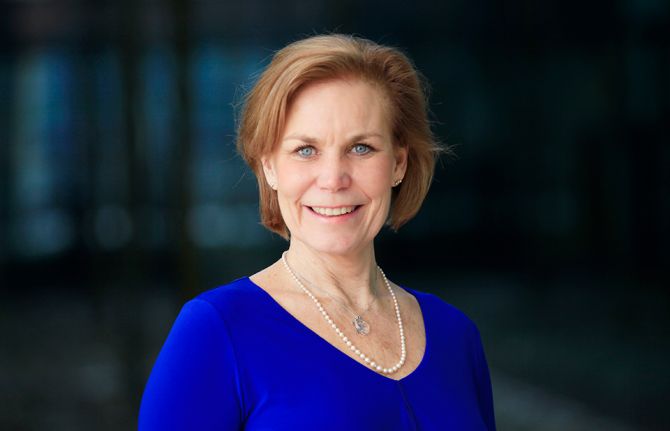
United Nations Secretary-General appoints Gunilla Carlsson as Executive Director, a.i., of UNAIDS
18 May 2019 18 May 2019GENEVA, 18 May 2019—UNAIDS warmly welcomes the appointment by the United Nations Secretary-General of Gunilla Carlsson as Executive Director, a.i., of UNAIDS. Ms Carlsson joined UNAIDS in February 2018 as the Deputy Executive Director for Management and Governance and Assistant Secretary-General of the United Nations.
Ms Carlsson provides strategic direction to management functions and is leading UNAIDS’ work in promoting effective governance of the Joint Programme and ensuring that UNAIDS continues to serve as a pathfinder for United Nations reform.
“It is a great honour for me to serve UNAIDS as acting Executive Director at such a pivotal time for the Joint Programme, the United Nations and global health. The AIDS response cannot afford to be at a standstill,” said Ms Carlsson. “Human rights, gender equality and diversity must be at the centre of all we do. I look forward to continuing to work hand in hand with communities, staff and partners around the globe to achieve the 2020 targets and ultimately end AIDS.”
Prior to joining UNAIDS, Ms Carlsson served as an elected member of the Swedish Parliament and as the Minister for International Development Cooperation. She also served as an elected member of the European Parliament. Ms Carlsson was the Chair of the Swedish-initiated Commission on Climate Change and Development. She was appointed by United Nations Secretary-General Ban Ki-moon to a high-level panel for global sustainability ahead of the United Nations Conference on Sustainable Development and served on the United Nations High-Level Panel on the Post-2015 Development Agenda. Ms Carlsson is an affiliated member of the board of Gavi, the Vaccine Alliance, and has served as its Vice-Chair since June 2017.
A strong leader in global health and development, Ms Carlsson has expertise in policy development on foreign policy, human rights, employment, research, security and defence. She also has extensive experience in the development and implementation of policy reforms and efficiency and accountability in complex organizations, including the private sector.
The process for the nomination of the next UNAIDS Executive Director is ongoing. The Executive Director will be appointed by the United Nations Secretary-General based on recommendations made by the Committee of Cosponsoring Organizations. A search committee established by the UNAIDS Programme Coordinating Board (PCB) and chaired by Yury Ambrazevich, Ambassador Extraordinary and Plenipotentiary Permanent Representative, Permanent Mission of Belarus to the United Nations Office and other International Organizations in Geneva, is preparing a shortlist of candidates for discussion by the PCB.
UNAIDS
The Joint United Nations Programme on HIV/AIDS (UNAIDS) leads and inspires the world to achieve its shared vision of zero new HIV infections, zero discrimination and zero AIDS-related deaths. UNAIDS unites the efforts of 11 UN organizations—UNHCR, UNICEF, WFP, UNDP, UNFPA, UNODC, UN Women, ILO, UNESCO, WHO and the World Bank—and works closely with global and national partners towards ending the AIDS epidemic by 2030 as part of the Sustainable Development Goals. Learn more at unaids.org and connect with us on Facebook, Twitter, Instagram and YouTube.
Contact
UNAIDSSophie Barton-Knott
tel. +41 22 791 1697 / +41 79 514 6896
bartonknotts@unaids.org
UNAIDS Media
tel. +41 22 791 42 37
communications@unaids.org
Biography
Press centre
Download the printable version (PDF)

Press Release
UNAIDS and the LGBT Foundation launch groundbreaking study on happiness, sex and quality of life for LGBTI people
14 May 2019 14 May 2019New global survey aims to fill the data gap on the mental well-being of lesbian, gay, bisexual, transgender and intersex (LGBTI) people to create better conditions and improve health
GENEVA, 14 May 2019—UNAIDS and the LGBT Foundation have launched an online survey to evaluate happiness, sex and quality of life for LGBTI people. The survey, the first of its kind, is part of a campaign to gain more information and insight into the challenges faced by LGBTI people. The data gathered will help to voice the concerns and advocate for improving the conditions and treatment of LGBTI people, including ensuring access to inclusive health and social services.
“Many lesbian, gay, bisexual, transgender and intersex (LGBTI) people face stigma and discrimination daily in education, work, health and social settings. We want to understand how this affects wellness, including mental well-being, and also their responses and resiliencies,” said Gunilla Carlsson, UNAIDS Executive Director, a.i. “By examining in depth how economic, socioecological, homophobic and other variables impact the lives of LGBTI people, we will be able to advocate more strongly for meaningful change to improve their lives.”
LGBTI people have to contend with stigma and discrimination and are often faced with a lack of economic opportunities and a lack of access to health and social care. They are also at much higher risk of HIV infection. Estimates show that the risk of acquiring HIV is 27 times higher among gay men and other men who have sex with men and 13 times higher among transgender people, yet studies show that many gay men and other men who have sex with men and transgender people avoid seeking health services for fear of stigma and discrimination.
Although there are studies that evaluate the well-being of LGBTI people through measuring levels of violence, legal status and health―often HIV risk and status―few look at the mental well-being of LGBTI people, which is essential to ensuring their overall health and access to economic opportunities.
Data are also lacking on LGBTI people in Africa, Asia and Latin America, which the survey hopes to address. Available in more than 17 languages, the survey has been distributed through social media to more than 25 million people around the world and will run until the end of July 2019.
“We want progress in lesbian, gay, bisexual, transgender and intersex (LGBTI) health and well-being. We want it now and this survey will help in this direction. It is a great initiative, where LGBTI people can confidentially speak up and build the knowledge to empower, raise public awareness and advocate, with an ultimate goal of eliminating stigma and discrimination against LGBTI people. It will be extremely helpful to the community,” said Sean Howell, Chief Executive Officer of the LGBT Foundation.
The survey was developed in collaboration with Aix-Marseille University and the University of Minnesota and was designed in collaboration with representatives of the LGBTI community, including people living with HIV. To ensure the highest standards with respect to privacy and the protection of personal data, the survey complies with the General Data Protection Regulation.
To secure and safeguard anonymity, access is provided via a secured weblink, which establishes an encrypted link between a web server and a browser. The research protocol for the survey has been approved by the Research Board of Ethics of Aix-Marseille University and by the Research Ethics Review Committee of the World Health Organization.
The survey is open for participation until 31 July 2019 and takes about 12 minutes to complete.
To participate in this groundbreaking survey, click on the following link: https://www.research.net/r/LGBTHappinessResearch.
UNAIDS
The Joint United Nations Programme on HIV/AIDS (UNAIDS) leads and inspires the world to achieve its shared vision of zero new HIV infections, zero discrimination and zero AIDS-related deaths. UNAIDS unites the efforts of 11 UN organizations—UNHCR, UNICEF, WFP, UNDP, UNFPA, UNODC, UN Women, ILO, UNESCO, WHO and the World Bank—and works closely with global and national partners towards ending the AIDS epidemic by 2030 as part of the Sustainable Development Goals. Learn more at unaids.org and connect with us on Facebook, Twitter, Instagram and YouTube.
Contact
UNAIDS GenevaSophie Barton-Knott
tel. +41 22 791 1697
bartonknotts@unaids.org
UNAIDS Media
tel. +41 22 791 4237
communications@unaids.org
Participate
Press centre
Download the printable version (PDF)

Feature Story
UNAIDS is awarded the Science and Medicine Award at the 25th Annual Steve Chase Awards
12 February 2019
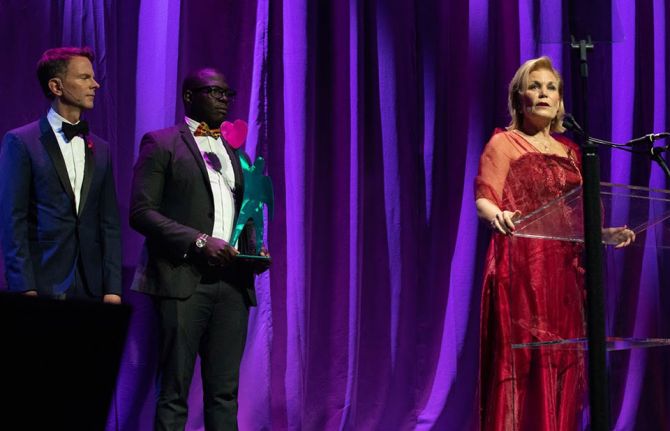
12 February 2019 12 February 2019The Desert AIDS Project has awarded its prestigious Science and Medicine Award to UNAIDS. The award was presented to the Deputy Executive Director, Management and Governance, of UNAIDS, Gunilla Carlsson, at the 25th Annual Steve Chase Humanitarian Awards in Palm Springs, United States of America, on 9 February.
“UNAIDS is deeply humbled to receive the Science and Medicine Award from an organization like Desert AIDS Project, which has made, and continues to make, such an incredible contribution to the AIDS response. We accept this award on behalf of all people working to ensure that no one is left behind or excluded from life-saving HIV services,” said Ms Carlsson.
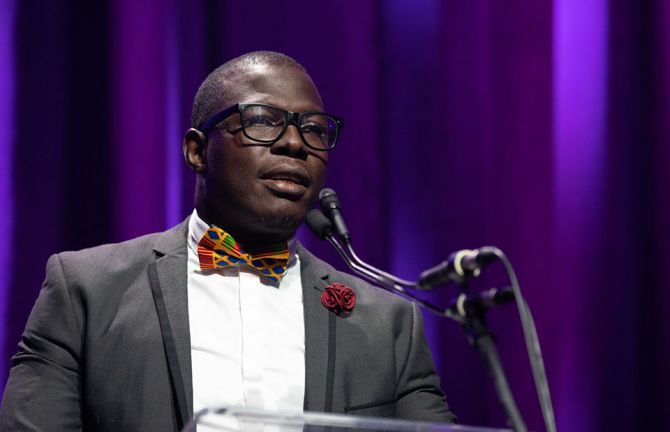
Ms Carlsson was joined on stage by Musah Lumumba El-nasoor, the Team Leader of the East and Southern Africa Youth Alliance on Sexual and Reproductive Health and HIV.
“UNAIDS is mobilizing political support, setting the pace and the global agenda, to ensure that science is matched with the necessary resources and tools to deliver results for all people, including those at the margins of society,” Mr El-nasoor said.
Named after one of the Desert AIDS Project’s earliest financial supporters, the designer Steve Chase, the Steve Chase Humanitarian Awards ceremony is the biggest fundraising event of the year for the Desert AIDS Project and an important event on the Palm Springs social calendar.
Steve Chase died of an AIDS-related illness in 1994 at the age of 52 and left an incredible mark on the Desert AIDS Project through his philanthropic work and his ability to bring people together. The first Steve Chase Awards ceremony was held in his honour in 1995.
The Desert AIDS Project provides HIV prevention, treatment and care services to people living with and affected by HIV across the Palm Springs area. Established by a group of volunteers in 1984, the project is today raising funds to expand its Palm Springs campus. With the support of volunteers and donors, it is hoped that the newly raised funds will help meet the health-care needs of 10 000 people, many who are living with HIV.
The event was attended by around 2000 people and made more than US$ 1 million, which will be put towards the US$ 20 million needed for the Desert AIDS Project’s expansion plans. To date, the Desert AIDS Project has raised US$ 13 million towards its goal.
“With leadership provided by the United Nations, and specifically UNAIDS, all of us, including the Desert AIDS Project, working together will achieve what was previously thought of as impossible: the end of AIDS,” said David Brinkman, the Chief Executive Officer of the Desert AIDS Project.
Past award winners of the Science and Medicine Award include Michael Gottlieb, Desmond Tutu and Anthony Fauci.


Feature Story
UNAIDS Programme Coordinating Board sees South Africa’s AIDS response first-hand
07 November 2018
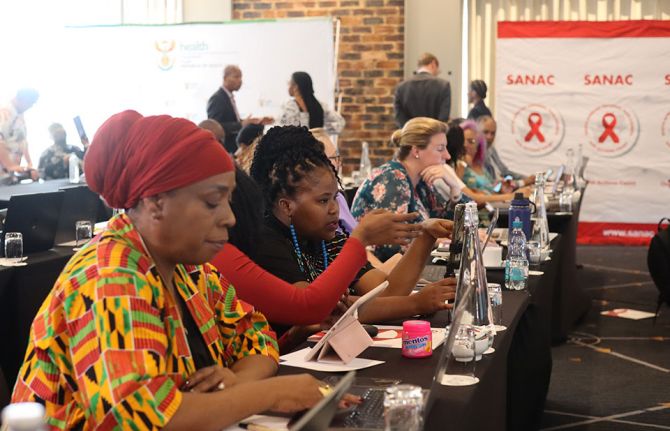
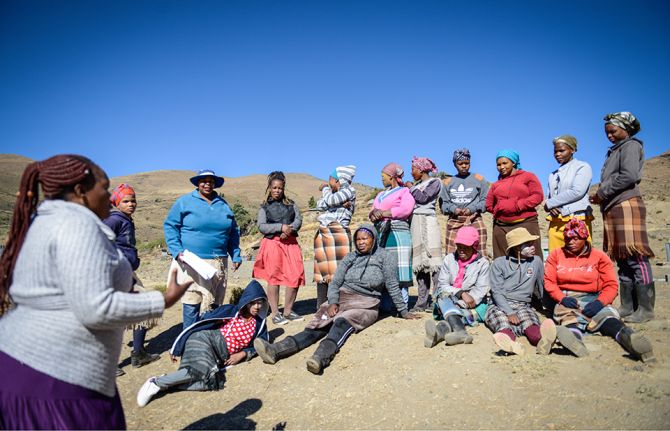
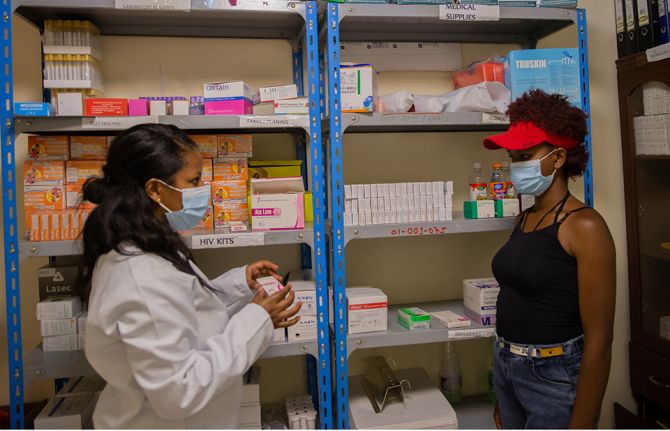
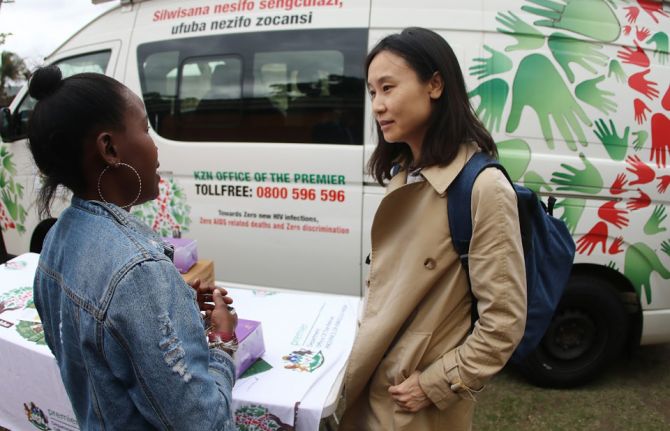
07 November 2018 07 November 2018Ahead of its 43rd meeting in December, the UNAIDS Programme Coordinating Board (PCB) conducted a four-day visit to South Africa between 15 and 18 October. During the visit, the delegates met with a wide range of national and development partners working on the AIDS response and conducted a number of site visits in order to experience the support of the Joint Programme to the national AIDS response in a high-burden country.
South Africa has the largest HIV epidemic in the world, with 7.2 million people living with HIV. In the past 10 years, it has made significant progress in its AIDS response, with 4.4 million people living with HIV on treatment. The country also invests heavily, with approximately 75% of the response funded by the government—just over US$ 2 billion in 2017. However, new HIV infections are high, at 270 000 in 2017.
The PCB delegation, led by the UNAIDS Deputy Executive Director, Gunilla Carlsson, and Danny Graymore, from the United Kingdom of Great Britain and Northern Ireland, the Chair of the PCB, comprised seven representatives of Member States, one civil society representative and a number of participants from the Joint Programme.
“The strength of the UNAIDS Programme Coordinating Board is its unique multistakeholder representation, which includes civil society and United Nations cosponsoring organizations, in addition to Member States,” said Mr Graymore. “The United Kingdom has put a particular focus on prevention for 2019. Coming to South Africa, we wanted to see how to get better results on HIV prevention in the context of a conducive environment and a significant investment in the national response.”
During a meeting with the South African National AIDS Council’s (SANAC) civil society forum, Valeria Rachinska, a PCB delegate from civil society, encouraged members of civil society in South Africa to use their voice in the UNAIDS PCB through the two African region representatives.
“The UNAIDS Programme Coordinating Board is unique in that civil society are members and our voice is heard. We can influence the global agenda in this way. I encourage you to get in touch with your African representatives and make your voices heard,” she said in response to concerns about the financing and sustainability of civil society organizations in South Africa.
During the visit, PCB delegates met with other representatives of SANAC, national and local government, civil society and the private sector and visited community-based initiatives in the KwaZulu-Natal and Gauteng Provinces.
“I am delighted to visit South Africa with such a broad and knowledgeable Programme Coordinating Board delegation. It is clear that the support of the Joint Programme is appreciated and important. We need to focus more on HIV prevention and ensure that we reach people being left behind by the AIDS response and find ways to deliver effective prevention services for young women and adolescent girls,” said Ms Carlsson.