

Feature Story
Impact of US funding cuts on HIV programmes in Uganda
19 March 2025
19 March 2025 19 March 2025Immediate Risks and Disruptions
- Distribution Disruptions:
- According to the policy brief to Parliament prepared by the Uganda AIDS Commission with support from UNAIDS, stocks of ARV supplies, HIV, viral load and other lab test kits are available. However, distribution from district hubs to lower health facilities is disrupted due to reliance on US-funded implementing partners. Facilities have adequate stocks for three months, but the impact will be felt from the second quarter of 2025 if not mitigated.
- Condom stockouts are anticipated within the next 3-6 months due to challenges with last mile distribution.
- Service Capacity:
- All ART-providing facilities are operating at reduced capacity. Some community-led, peer-led, NGO-run, and private facilities have stopped services.
- Reduced adherence to prevention of vertical transmission and early infant diagnosis services due to decreased numbers of expert clients and mentor mothers.
- HIV prevention services for key populations at drop-in centres, including PrEP access, HIV testing, and antiretroviral treatment adherence counselling for sex workers, men who have sex with men, transgender persons, people who use drugs, and prisoners, have been disrupted.
- Human Resources:
- It is unclear whether US-funded health workers will be integrated into the government payroll.
- Data clerks at facilities covered by USAID are not yet back at work, impacting data collection and quality control.
Politically Relevant Updates
- Government Actions:
- The Ugandan President directed the release of UGX 6 billion for the rollout of electronic medical records (EMR) in government health facilities to improve service delivery.
- The Ministry of Health issued guidance on improving service delivery, including integrating HIV, TB, and other chronic disease services, training health workers in integrated service delivery, prioritizing recruitment of critical staff, utilization of primary health care funds for disease prevention outreach activities and strengthening accountability for medicines and laboratory supplies.
- Mitigation Measures:
- The government is reallocating domestic resources to priority HIV programs and integrating HIV services into other health services.
- Civil society partners have conducted rapid assessments to understand the impact of the US Government funding cuts on service delivery.
- Human Rights and Key Populations:
- US funding for stigma, discrimination, and enabling legal environments has stopped, and no alternative funding has been found.
- Communities are not collecting data on human rights issues, including increased stigma and discrimination.
- Key populations groups have conducted a rapid assessment on the impact of the US funding cuts. There is also ongoing work to conduct an assessment with people living with HIV and key populations-related services at drop-in centres.
Related resources
Region/country
Feature Story
From violence to funding cuts, Asia Pacific women living with HIV face old and new challenges
18 March 2025
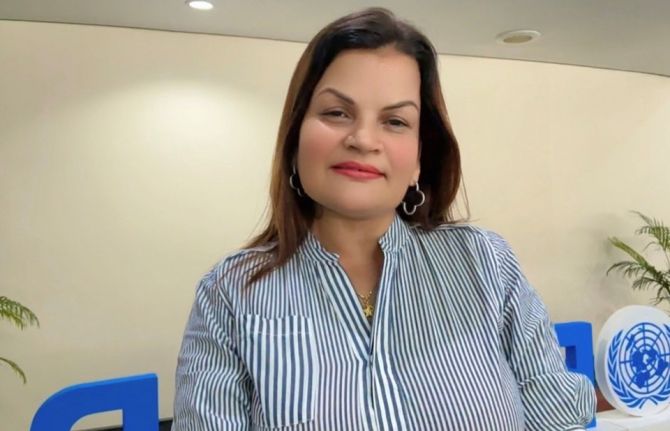
18 March 2025 18 March 2025“In our country we are not the priority,” Daisy Cruz says plainly.
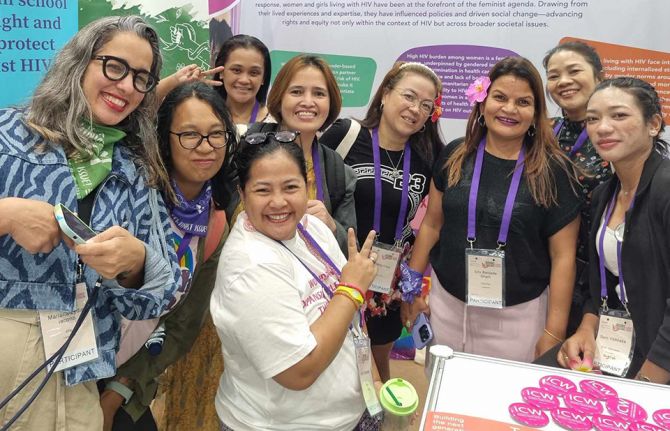
She is surrounded by other women living with HIV who agree. They share stories that are not often told about the epidemic in Asia and the Pacific. In a region where men living with the virus outnumber women roughly two to one, the issues of women and girls are often overlooked. They are all members of the International Community of Women Living with HIV Asia Pacific (ICWAP).
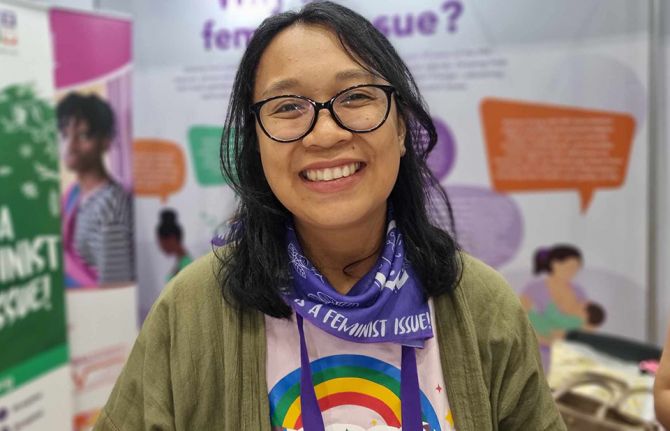
Eva Dewa was diagnosed in Yogyakarta, Indonesia in 2017.
“I came home seeking a safe space to share my sadness. At that time, I believed that my partner would support me. Instead, he blamed me,” she says.
Ms Dewa has survived intimate partner abuse. She knows she isn’t alone: “A lot of women either experience violence and get infected with HIV, or contract HIV and experience violence.”
She gave birth to twins two years before her diagnosis. During her pregnancy she was never screened. Unaware, she went on to breastfeed for a couple years. When she learned her status, it was she rather than healthcare staff who suggested the children be tested. One child was HIV negative. The other wasn’t.
UNAIDS estimates that under two-thirds (64%) of women living with HIV in Asia Pacific receive treatment to prevent transmission to their babies. This is far lower than the global average of 84%. Ms Dewa reflects that while HIV services for pregnant women are expanding, smaller cities and rural areas benefit more slowly.
Cathy Ketepa understands the challenge of reaching remote districts. Every day in her native Papua New Guinea, five infants are born with HIV. The epidemic there has doubled since 2010 with new infections among women increasing by a staggering 67%.
“Only around half of mothers living with HIV receive antiretroviral therapy,” says Ms Katepa . “We must bridge this gap to protect the health and future of our children.”
But while the women advocate for expanded services to reduce vertical transmission, they are adamant that their dignity, privacy and agency must be respected. The International Community of Women living with HIV (ICW) has conducted a global analysis of the reproductive coercion, mistreatment and abuse experienced by women living with HIV. The study found that across regions, during pregnancy and infant feeding women were most subjected to force.
“There is an issue with coercive practices,” said Sophie Bryon, ICW’s Director of Global Programmes. “We are talking about women being told not to have children, not to have another child, to terminate and being pressured to undergo sterilization. There is still denial of contraception and pressure to use certain kinds of contraception. There are issues ranging from verbal abuse to physical violence.”
There is also stigma. When Ms Cruz went to the hospital in Manila to give birth in 2001, a nurse on the ward loudly asked why she wasn’t breastfeeding.
“All the patients looked at me like there is something different,” she said.
There is a sense from these women that they’ve been ambushed by a threat they didn’t know existed. But having been hit, they will speak up for themselves, and for others.
Christina Montoya didn’t think it was possible for a woman like her to be infected. She was married and only had sex with her husband.
“We must be informed!” she declared. “And all our friends must be informed!”
11 years of ICWAP
ICWAP builds the capacity of women and girls living with HIV and women-led organizations in 18 Asia Pacific countries. It provides coaching and mentoring, ensuring women participate in Global Fund processes and are meaningfully engaged in community-led monitoring.
The organization was formed in 2014 to tackle the human rights violations and violence women living with HIV in the region experience, while removing barriers to treatment and care. Sita Shahi, its Regional Coordinator explains that the challenges can’t be tackled from a health angle alone.
“Women face a lot of stigma and discrimination. They also have an economic burden and are responsible for rearing children. There are so many intersecting issues,” she explained.
Now there are new challenges. ICWAP conducted an eleven-country survey on the impact of the United States development aid stop work order. It found that some country networks have either collapsed or scaled back, leaving women without crucial resources, including information about their rights and how to address gender-based violence or discrimination. There is also reduced access for many women who depended on community-based services for HIV or sexual and reproductive healthcare. While treatment is provided by government in most countries, many of the shuttered peer-led services were more accessible and friendly.
Some women who worked for US-supported programmes have lost their jobs, resulting in financial stress. ICWAP itself has been hard hit.
“We lost all funding. The core support we were receiving for managing staff and country interventions is gone. It is a devastating situation for us. There is now no funding to support our sisterhood at country level,” Ms Shahi explained.
UNAIDS has called for countries in Asia Pacific to support community-led HIV work including stigma and discrimination, adherence counselling, social support, monitoring and advocacy.

Feature Story
Impact of US funding cuts on HIV programmes in Rwanda
18 March 2025
18 March 2025 18 March 2025General Overview
- Funding: Rwanda's HIV program is predominantly donor-funded. In fiscal year 2023-2024, PEPFAR contributed 37.7% of the total HIV expenditure and the Global Fund contributed 50.8%. There is minimal involvement of domestic private contributors in the HIV response.
- Continuity of Services: The Ministry of Health is the principal recipient of PEPFAR funding. During early days of the Stop Work Order by the US Government, the Government of Rwanda through the Ministry of Health ensured the continuity of essential services and effective implementation of the waivers. Furthermore, the Ministry of Health has committed to mobilizing domestic resources to ensure the continuity of HIV services. All facilities/service points providing antiretroviral therapy (ART) are operating at full capacity. Peadiatric HIV treatment services and data collection activities continue without disruption.
- Supplies and Distribution: Stocks of antiretroviral (ARV) supplies, viral load (VL) test kits, and other lab test kits are available with minimal distribution disruptions. No stockouts are expected in the next 3-6 months. The country has a sufficient stock of condoms for the next 12 months.
Immediate Risks or Disruptions
- Community-Led Services: Some community-led or peer-led facilities and services have been suspended. For example, a local NGO has closed its clinic which provided free and friendly key population services, including sexually transmitted infections testing and treatment.
Though some previously USAID supported DREAMS projects targeting adolescent girls and young women and orphan and vulnerable children (3 out of 5) have received notification to resume work, activities have not fully started due to operational challenges.
- Community-Led Monitoring (CLM): Rwanda received PEPFAR funding for a CLM project to assess the 4As for quality delivery of services including availability, accessibility, acceptability and affordability of services by people living with HIV and key population. That work has now stopped, and communities have suspended data collection on these issues, including stigma and discrimination at service delivery points.
Politically Relevant Updates
- Government and Partners’ Actions: The government, in collaboration with partners, is conducting a rapid assessment of the impact of shifts in US Government funding, with technical support from UNAIDS. Civil society organizations (CSOs) are encouraged to document facility level as well as community supported services delivery gaps and coverage for use in advocacy and resource mobilization.
- Press Conference: During a press conference, the Ministry of Health reaffirmed its commitment to mobilize domestic resources to ensure service continuity.
- Civil Society Organizations (CLOs): CLOs involved in service delivery at community level, particularly prevention and support for ensuring continuity have faced significant challenges, including increased demand with fewer resources, anxiety about continuity and future support, loss of staff, and funding cuts.
- Resilience and Response: Despite these challenges, CLOs continue to play a crucial role in the HIV response. Their resilience and adaptability in the face of funding cuts and service disruptions highlight the importance of community-led initiatives in maintaining essential health services.
UN response
- UNAIDS is supporting the government to assess the overall cost, priority and impact of the stopped interventions to inform actions. UNAIDS is reaching out separately to community networks and NGOs to collect more information about the impact of the US Government cuts.
Related resources
Region/country
Related
Feature Story
Impact of US funding cuts on HIV programmes in Lesotho
17 March 2025
17 March 2025 17 March 2025Current Status
- USAID Projects: Two projects funded by the US Government have received full activation notices; one focused on orphans and vulnerable children (in all 10 districts) and DREAMS (in 4 districts) and another focused-on treatment and care in 2 districts.
- CDC Projects: All CDC projects have received full activation notices.
- Other USAID Implementing Partners: Projects focused on key populations (KPs), voluntary medical male circumcision (VMMC), pre-exposure prophylaxis (PrEP), and a large project on treatment and care and health systems strengthening (HSS) are still terminated.
- Overall: Approximately 28% of PEPFAR support has resumed, 32% is still paused and 40% is terminated.
- Of the 1,508 human resources for health supported through PEPFAR funding, 804 (53.3%) are currently terminated
Immediate Risks and Disruptions
- Frequent Changes in Project Status: The frequent changes in the status of US Government-funded projects have caused delays in the activation process.
- Termination Notices: Some USAID implementing partners have received termination notices, causing disruptions in services.
Government Actions
- Task Team: Led by the Ministry of Health and operational since January 27, the task team is mapping out affected US-funded projects and identifying mitigation measures, including government payment of salaries for essential staff, task shifting, recalling staff on leave, and integration of health workers' roles. The immediate priorities of the Ministry of Health and National AIDS Commission are to ensure commodity security, to lead and coordinate through convening task team meetings and expediting development of Part B of the HIV and TB Sustainability Roadmap
- Funding Decisions: Ministry of Health submitted a contingency budget to the Ministry of Finance and Development Planning to cover salaries at government salary scale for critical staff for three months. For the medium term, government and partners are waiting until the end of the US Government review period (April 20) to make significant funding allocation decisions.
Civil Society Response
- Joint Press Statement: Civil society partners, supported by UNAIDS, issued a statement calling for government support and acceleration of social contracting.
- Impact on Civil Society: Some CSOs are receiving activation notices, while others, like LENEPHWA (network of people living with HIV), remain under termination.
UN Response
- UNAIDS is collaborating with the Government to plan mitigation measures for service continuity, supporting civil society advocacy, and maintaining communication with PEPFAR, USAID, CDC, and USAID prime partners.
- UNAIDS is working with the National AIDS Commission and Ministry of Health to expediate development of HIV and TB Sustainability Roadmap Part B, with preparatory and analytical work while awaiting the global guidance.
- Regular Updates: UNAIDS has kept the Resident Coordinator (RC) and UN Country Team (UNCT) regularly updated, with the RC advocating for the establishment of an inter-ministerial task team to monitor the US Government funding situation.
Region/country
Related
Feature Story
Impact of US funding cuts on HIV programmes in Zimbabwe
17 March 2025
17 March 2025 17 March 2025Current Situation:
- Some USAID and CDC-supported organizations have resumed work, while others are still on pause.
- Public health facilities continue to provide key services despite disruptions, with support from the Global Fund in 21 out of 64 districts.
- Human resources disruptions are affecting HIV treatment services, including medicine distribution, patient management, and monitoring.
- DHIS2 (District Health Information Software 2) is impacted due to the pause in human resources funding.
Immediate Risks and Disruptions:
- Stocks of ARV supplies, HIV, viral load and other lab test kits, as well as condoms are available at facilities/service points, district, regional, and national warehouses with minimum disruption of distribution.
- Condom supply and distribution are impacted, affecting availability, logistics, storage, procurement, packaging, branding, promotion, and demand generation activities.
- HIV prevention services for key populations (sex workers, men who have sex with men, gay men, people who use drugs, transgender persons, prisoners) are disrupted, including access to PrEP, HIV testing, counseling, ART services, opioid agonist therapy, and harm reduction services.
- Stigma and discrimination programmes funded by PEPFAR have stopped, affecting key populations.
Government Actions:
- The government is exploring various sources of funding, including the current airtime tax to sustain healthcare financing.
- Engagements with China and the Gates Foundation are ongoing to expand support for health programmes.
Civil Society Impact:
- Civil society organizations are affected by the US Government shift and are seeking alternative funding.
- Recommendations have been made to engage the government to allocate resources for medicines procurement and stocking with private sector support.
Impact on Key Populations:
- Beneficiaries of key population programmes are facing challenges in accessing PrEP doses due to provider closures.
- Anecdotal reports indicate that some key population representatives are engaging in high-risk sex to raise money for PrEP.
Resilience and Response:
- Despite disruptions, public health facilities and the Global Fund continue to provide essential services.
UN Response:
- Resource mobilization efforts include meetings with the Gates Foundation and the Embassy of Egypt to discuss priority funding areas and south-to-south resource mobilization and learning.
Region/country
Related
Feature Story
Impact of US funding cuts on HIV programmes in Ethiopia
14 March 2025
14 March 2025 14 March 2025The recent US cuts to foreign assistance pose a direct threat to the lives and well-being of thousands of people living with HIV in Ethiopia. Critical services are grinding to a halt, leaving people who rely on them facing an uncertain future. Ethiopia is heavily reliant on external funding for its AIDS response; the US Government provides 53% of HIV funding in the country.
Prior to the US cuts, Ethiopia was on track to reaching the “95-95-95" targets, with 90% of all people living with HIV knowing their status, 94% of those aware of their status accessing treatment and 96 % of those on treatment being virally suppressed. However, there are fears that the funding crisis will reverse the gains made by Ethiopia and that the country will see a resurgence in the annual number of new HIV infections.
Impact on Services:
- ART Services: All facilities and service points providing antiretroviral therapy (ART) are operating at a reduced capacity. However, there are no changes in the capacity for providing prevention of vertical transmission and early infant diagnosis (EID) services.
- Data Collection: Data collection continues at some facilities, but data quality control and collation are affected.
- Supply Chain: Stocks of antiretroviral (ARV) supplies, HIV viral load (VL) and other lab test kits are available, but distribution is disrupted. There is sufficient stock of condoms for the next 12 months, although many aspects of condom supply and distribution have been impacted.
Primary HIV Prevention Services:
- Disruptions: Distribution of condoms and other prevention commodities is disrupted. Availability of pre-exposure prophylaxis (PrEP) services is reduced. HIV prevention education and awareness campaigns are suspended or reduced. Access to HIV testing and counselling services for key populations is decreased. Voluntary medical male circumcision services are limited or suspended. Access to safe and effective HIV prevention services for adolescent girls and young women (AGYW) is disrupted.
Services for Key Populations:
- Sex Workers, PWID, and Prisoners: HIV prevention services for sex workers, people who inject drugs (PWID), and prisoners are impacted. Access to PrEP services is reduced. HIV testing services are discontinued. Availability of HIV counselling and testing is reduced. Access to ART services is disrupted. Opioid agonist therapy and other harm reduction services for PWID are unavailable. HIV prevention services in prisons are decreased.
- Human rights, key and vulnerable populations Ethiopia received PEPFAR funding for work on stigma, discrimination and enabling legal environments. As a result of the USG stop-work order, all programmes on stigma and discrimination have stopped, affecting key populations, AGYW, PLHIV and young people.
- Communities are not collecting data on human rights issues, including increased stigma and discrimination.
Politically Relevant Updates
Government Actions:
- Staff Replacement: The state minister for health sent out a circular to regional health bureaus informing them that government staff would take over from the US-funded staff affected by the US Government stop-work order. This affects more than 5,000 contracts of staff working on HIV.
- International Discussions: Health Ministers of African member states discussed the issue at the WHO Executive Board Meeting.
Civil society impact, resilience and response Community-led or peer-led facilities and services (including drop-in centers), as well as services provided by international NGOs have been affected as a result of the US Government funding cuts. As a result, CLOs have reduced or suspended their services, shifted service priorities, lost staff or faced funding cuts. CLOs have now reduced ability to collect and report data. While CLOs may have some alternative funding sources, they are struggling.
Region/country
Feature Story
Impact of US funding cuts on HIV programmes in Guatemala
14 March 2025
14 March 2025 14 March 2025Immediate Risks and Disruptions
- Funding Cuts: The impact of US Government funding cuts was felt immediately, leading to a shortage of staff in many clinics, which affected patient care.
- Service Delivery: While activities funded through the Global Fund have not been suspended, service delivery has been impacted as clinics absorb clients who can no longer receive care in affected clinics.
- HIV Prevention Programs: There are serious concerns about gaps in HIV prevention programs for key populations, with an increased risk of loss to follow-up, especially in harder-to-reach communities. The National Program and partners have emphasized the critical role of community outreach workers in facilitating and maintaining access to services for key populations.
Politically Relevant Updates
- Government Response: Advocacy efforts led by UNAIDS, in coordination with the Global Fund and local organizations, resulted in the Guatemalan government assuming some financial responsibility for personnel previously funded by USAID. The Ministry of Health has absorbed a considerable proportion of the staff positions left vacant in the UAIs (clinics providing care for people living with HIV).
- Sustainability Strategy: Progress towards developing a sustainable HIV response is underway; there is a draft National Sustainability Strategy 2024-28. However, the transition to a fully sustainable model will require continued leadership and technical support from UNAIDS, especially as the Global Fund phases out.
Communication Story Highlighting Impact
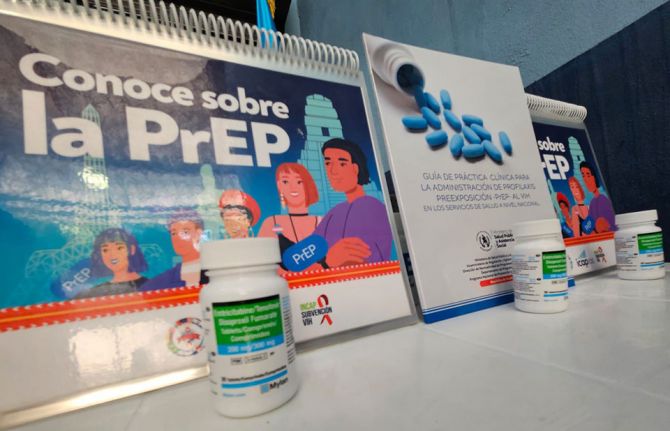
- Community Resilience: Despite the US funding cuts, some community service delivery models have continued providing services. For example, a community-run clinic has absorbed a significant number of patients for PrEP services. With support from UNAIDS, they diversified their funding sources and adopted a voluntary financial contribution model, enhancing sustainability.
- Advocacy and Support: UNAIDS in collaboration with the Global Fund is spearheading efforts to strengthen civil society organizations' capacity to advocate for domestic resources. They are also laying the groundwork for social contracting for HIV in Guatemala.
Region/country
Related
Feature Story
Impact of US funding cuts on HIV programmes in Namibia
14 March 2025
14 March 2025 14 March 2025Funding and Implementation
The CDC Cooperative Agreement (CoAG) implementing partners, including the Ministry of Health and Social Services (MoHSS), have received approval and funds to implement the Co-Ag from April to September 2025, pending final review from the US Government.
Impact on Services
- ART Services: Facilities providing antiretroviral therapy (ART) are operating at full capacity, but there are challenges with paediatric HIV treatment services, due to disruptions in referrals and linkages.
- Community Health Workers: Funding cessation has affected community health workers responsible for adherence support and retention.
- Data Collection: Data collection continues at all facilities, but data quality control and collation are impacted.
- Stock Availability: ARV supplies, HIV, viral load and other lab test kits are available with minimal disruption. However, there are intermittent condom stock-outs, which may worsen in the next 3-6 months if procurement and supply chain issues, including condom distribution are not urgently addressed.
- Service Disruptions: Reduced capacity in community-based paediatric HIV services, HIV prevention and community health worker programs.
Primary HIV Prevention Services
- Disruptions: There are disruptions in the distribution of condoms and other prevention commodities, reduced availability of pre-exposure prophylaxis (PrEP) services, suspension or reduction of HIV prevention education and awareness campaigns, decreased access to HIV testing and counselling services, delays or disruptions in community-based HIV prevention outreach programs, limited or suspended implementation of voluntary medical male circumcision (VMMC) services, and reduction in funding for HIV prevention, research and innovation.
Impact on Key Populations
- Adolescent Girls and Young Women (AGYW): Disruption in access to PrEP services, reduced capacity of service delivery points, discontinuation of some outreach programs, reduced availability of HIV testing services, reduced availability of education and awareness campaigns, and reduction in counselling and social support services.
- Sex Workers, MSM, and Transgender Persons: Disruption in access to PrEP services, reduced capacity for HIV prevention services, , reduced availability of HIV counselling and testing, and disruption in access to antiretroviral therapy services as well as adherence and retention support.
- Human rights, key and vulnerable populations Namibia received PEPFAR funding for work on stigma, discrimination and enabling legal environments. These included USAID-led LIFT UP Equity Incentive initiative, which was supporting efforts to strengthen human rights and equity for Key Populations, AGYW and children (priority populations) to new and groundbreaking levels. Most programs have now resumed with some work ongoing with reduced capacity. This funding has not been redirected to other programs. Some communities have not been collecting data on human rights issues, including increased levels of stigma and discrimination and health service delivery monitoring, due to not receiving the funds, while others have received some funding. One major assignment affected by the cuts is the Key Population Integrated Biobehavioral Survey (KP IBBS) 3, which focused on gay men and other men who have sex with men (MSM), female sex workers (FSW), and transgender women. The survey had just started, but had to be halted due to the funding cuts,
Civil society impact, resilience and response: The impact of the US Government cuts on community-led organizations service delivery includes reduction or suspension of services (at community-led or peer-led facilities and services, and international NGO-run services), increased demand with fewer resources, loss of staff and funding cuts. CLOs also face reduced participation in policy discussions and limited ability to advocate for key issues, as well as reduced ability to collect and report data.
Politically Relevant Updates
- Government Actions: The Minister of Health has briefed the Cabinet, and the National Planning Commission has been tasked to coordinate stakeholder engagement. The Sustainability Planning Steering Committee is planning for the implementation of the Sustainability Roadmap, and will among others, conduct a gap analysis using the UNAIDS RAFT tool to highlight the critical funding gaps to be presented to the leadership.
- Taskforce Formation: The National Planning Commission has been tasked to form a taskforce to coordinate stakeholders’ engagement to respond to the US Government shift impact, although the timeline is unclear.
Region/country
Related
Feature Story
Impact of US funding freeze on HIV programmes in Haiti
13 March 2025
13 March 2025 13 March 2025Immediate Risks and Disruptions
- PrEP Services Halted: The halt to pre-exposure prophylaxis (PrEP) services remains a significant public health risk. PEPFAR-supported sites cover 80% of PrEP patients nationwide, with most new cases concentrated in the West and Artibonite Departments. Due to the US funding freeze, PrEP services (except for pregnant and lactating women) have been completely halted, along with communication and community engagement strategies. The National HIV Program (NAC) foresees a monthly rise of 30 to 50% in new HIV infections in the absence of communication and prevention activities.
- ART Access: As of December 2024, 85% of people living with HIV (PLHIV) had access to antiretroviral therapy (ART). However, beyond the initial halt of ART distribution across all PEPFAR sites, stock shortages and budget cuts threaten the continuity of this coverage. A humanitarian flight from Washington D.C. delivered supplies in February 2025, ensuring ARV availability for the next six months, but sustainability remains uncertain due to unpaid staff salaries and lack of operational support. In addition, 35,000 patients will likely be impacted as access is provided to them through USAID-financed sites.
- Supply Chain Challenges: Logistical issues have caused shortages of essential HIV medications and other critical medical supplies. The continuity of the USAID-led Global Health Supply Chain Program is uncertain, which could further disrupt service delivery, as well as causing potential loss of stock
Politically Relevant Updates
- Government and NAC Efforts: The Ministry of Health and the National AIDS Council (NAC) have conducted rapid assessments to identify service disruptions caused by funding cuts, staff shortages, and supply chain challenges. They are prioritizing vital services and exploring alternative funding sources and service delivery models, including on in the short term for guaranteeing access to treatment to 35,000 patients.
- Stakeholder Coordination: Efforts are being made to ensure continuity of HIV, viral hepatitis, and STI services. Coordination with PAHO/WHO and UNAIDS is ongoing to keep health sector partners informed and aligned.
- Civil Society Impact: Civil society organizations (CSOs) have been significantly impacted, particularly those providing services for key, priority, and vulnerable populations. The loss of key population-focused interventions has increased vulnerability to stigma and discrimination and weakened responses to sexual and gender-based violence (GBV). Furthermore, access to healthcare, education, nutrition, shelter, psychosocial support, economic empowerment programs for caregivers, and comprehensive sexual and reproductive health and GBV education has been directly affected, including via the DREAMS program.
Community Impact
- Community Resilience and Response: Despite the challenges, community-led initiatives have mobilized to support the government in maintaining critical services. Peer education and sensitization campaigns, community health agents delivering treatment and medication, and psychosocial support services for HIV patients are ongoing.
- Mental Health Support Initiative: With UNAIDS' support, a stress counselor network has been established to assist community health workers and clients in need.
- Housing Works Haiti Workshop: On February 19, Housing Works, as part of the Forum of CSOs and Community Led Monitoring (CLM), organized a workshop with key stakeholders under the theme "Together for the Future: Advocating for HIV Services in Haiti." This event highlighted the importance of continued advocacy and support for HIV services.
HIV programs in Haiti are facing significant challenges due to funding cuts, supply chain disruptions, and halted services. However, coordinated efforts by the government, international organizations, and civil society are ongoing to mitigate these risks and ensure the continuity of essential services. Community resilience and innovative responses are crucial in maintaining support for those affected by HIV in Haiti.
Related resources
Region/country
Feature Story
Impact of US funding freeze on HIV programmes in Kenya
13 March 2025
13 March 2025 13 March 2025Immediate Risks and Disruptions
- Human Resources Impact:
- Affected Personnel: Doctors, clinical officers, nurses, laboratory technologists, pharmacists, community health workers and staff funded by the US Government have been impacted.
- Service Disruptions: Some facilities providing Antiretroviral Therapy (ART) were closed without clear referral pathways. However, some have since reopened except for PEPFAR supported DICEs. Community-led and peer-led services have stopped, including community-led monitoring and community-based HIV prevention outreach programs.
- Commodity Shortages:
- Health products and technologies: The Country has adequate stocks for most HIV products and technologies except Nevirapine, Viral Load, HIV test kits, and Early Infant Diagnosis (EID) that are running low, with stock-outs foreseen in the coming days if PEPFAR supported commodities are not distributed.
- Service Reductions:
- Pediatric HIV Treatment: Facilities are working at reduced capacity, particularly for sample networking for Early Infant Diagnosis and Viral Load.
- Prevention Services: Disrupted for Adolescent Girls and Young Women (AGYW) and key populations, including PrEP and HIV counseling and testing. The DREAMS programme has been impacted, and outreach prevention activities for AGYW have been stopped. Additionally, community-led responses and community based out reaches have been disrupted.
- Supply Chain Challenges:
- The USAID funded procurement agency is unable to distribute products due to the stop-work order, affecting the supply chain for HIV commodities.
Politically Relevant Updates
- Government Actions:
- Supplementary Budget: The government is analyzing the cost of covering US Government-funded human resources as well as other affected services to be presented to the Cabinet through a cabinet memo.
- Resource Reallocation: Advocacy for reallocation of domestic resources to priority HIV programs.
- Integration of Services: The Government has advised the integration of HIV services into other health services for continuity and sustainability. Plans are underway to conduct rapid assessment of integration of HIV services to inform documentation of case studies and development of the integration blueprint.
- Social Health Authority (SHA) and Social Health Insurance Fund (SHIF): Ongoing advocacy to include HIV in the SHA benefit package.
- Civil Society and communities Impact:
- CSO Challenges: Civil society, including community-led and community-based organizations face funding cuts and loss of staff, leading to reduced or suspended services.
- Increased Demand: Remaining organizations face increased demand with fewer resources.
- Communities have reported abrupt integration without preparation, anxiety and panic leading to hoarding of ARV, unintended disclosure by health care workers leading to increased incidences of stigma and discrimination.
- UN Response:
- Impact Assessment: UNAIDS Kenya Country office supported communities to assess the impact of US Government stop work order. The UN country team continues to guide assessment of the impact on the UNSDCF programs across Agencies.