Feature Story
UNAIDS Executive Director meets Prime Minister of Democratic Republic of the Congo
12 October 2012
12 October 2012 12 October 2012
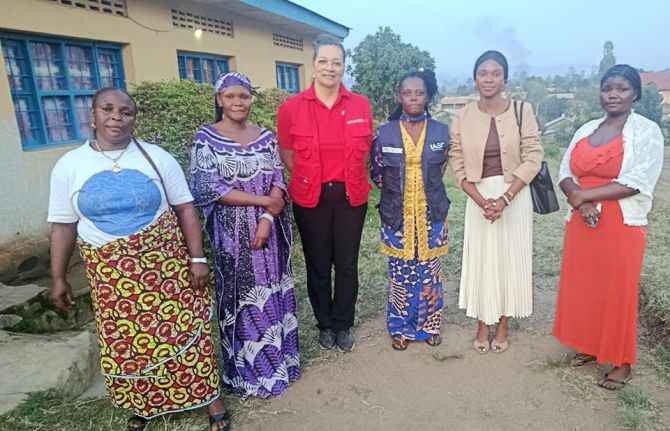
In a meeting on 12 October with the Prime Minister of Democratic Republic of the Congo (DRC), Matata Ponyo Mapon, UNAIDS Executive Director praised DRC’s leadership for organizing the 14th Summit of La Francophonie, which will be held in Kinshasa from 13-14 October.
Mr Sidibé congratulated the Prime Minister for supporting an increase in the national budget for the HIV response and encouraged his government to step up country-wide efforts to prevent new HIV infections among children. Prime Minister Mapon pledged, together with the Ministry of Health, to create a favorable national environment to eliminate new HIV infections among children.
According to government figures, nearly 1 million people are living with HIV in the DRC. Despite progress in the national HIV response, only 12% of people eligible for antiretroviral therapy are receiving it. Coverage of services that prevent new HIV infections among children is especially weak, at about 5%.
Feature Story
UNAIDS Executive Director calls for shared responsibility to address AIDS-related gaps in Congo
12 October 2012
12 October 2012 12 October 2012
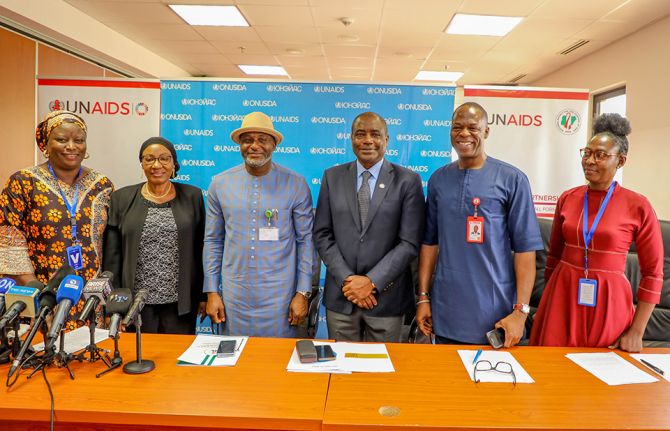
In a meeting on 11 October at the Presidential Palace in Brazzaville, UNAIDS Executive Director Michel Sidibé praised Congolese President Denis Sassou-Nguesso for gains in the national AIDS response and called for shared responsibility to close remaining gaps.
“You were a pioneer in bringing the universal access debate high on the global agenda by launching the Brazzaville Declaration, taking it to the United Nations General Assembly in 2006, and then translating it into the 2011 Political Declaration on AIDS,” said Mr Sidibé, in his meeting with the President. “Now, I encourage you to be among the key global leaders to push the concept of shared responsibility.”
In recent years, Congo has significantly increased national expenditures on AIDS. By 2011, about 50% of national HIV investments were funded through domestic sources. Mr Sidibé called on Congo’s leadership to continue reducing the country’s dependency on foreign aid while noting that international donors must also honor their funding commitments.
Now, I encourage you to be among the key global leaders to push the concept of shared responsibility
UNAIDS Executive Director Michel Sidibé
President Sassou-Nguesso noted that addressing gaps in Africa’s HIV response would require greater political will across the continent. He added that joint action is also critical: “We need to coordinate our efforts if we want to succeed.”
Progress
During his meeting with the President, Mr Sidibé noted the 22% national decline in the number of new HIV infections between 2003 and 2009. He commended the leadership of Congo for expanding access to HIV treatment: By 2011, more than 16 000 people in Congo were receiving HIV treatment (44% coverage).
Challenges
According to government estimates, only 14% of Congolese children eligible for HIV treatment are receiving it. Coverage of services that prevent new HIV infections among children is low, at 32%. Mr Sidibé urged the President to boost national efforts to eliminate of mother-to-child transmission of HIV, and to ensure HIV treatment access for all.
Feature Story
Senegal: a success story of AIDS investments and impact
11 October 2012
11 October 2012 11 October 2012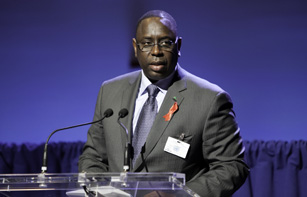
President of Senegal Macky Sall at Shared Responsibility & Global Solidarity event at UN Headquarters, NYC, on September 26, 2012.
Credit: UNAIDS/B.Hamilton
With new leadership and bold commitments, the Senegal has continued the success of its national AIDS response, keeping HIV prevalence low and earning the recognition of global partners for its progress and achievements.
“This is the time for Africa to intensify its efforts and create a new international compact against AIDS,” said President Macky Sall of Senegal at the recent high-level side event on Sourcing Sustainable Solutions for the AIDS response in Africa at the UN General-Assembly. “With the new vision of Shared Responsibility and Global Solidarity, the African’s Union’s Road Map has enabled Senegal to prioritize HIV prevention and plan to end HIV transmission from mother to child.” President Sall was one of the key African heads of state to join the Chairperson of the African Union, President Boni Yayi and US Secretary of State Hilary Clinton to address this side event that highlighted the AU’s Roadmap on Shared Responsibility and Global Solidarity for the AIDS, TB and malaria response in Africa.
At a recent meeting in Geneva, UNAIDS Executive Director Michel Sidibé also commended the work of Senegal’s National AIDS Council at a recent meeting with its Executive Secretary, Ibrahim N’Doye. During discussions on Senegal’s AIDS response, Dr N’Doye highlighted how political commitment contributed to the scale-up of HIV services in his country.
Under the leadership of President Macky Sall, the contribution of the Government of Senegal continues to increase steadily. The country has also called for greater transparency and initiated a resource tracking exercise with the assistance of UNAIDS aimed at maximizing AIDS investments and impact.
These efforts were recently backed by an audit by the Office of the Inspector General (OIG) of The Global Fund to Fight AIDS, TB and Malaria. Successful with its application for Phase 2 of an on-going HIV grant, Senegal will receive an additional US$ 33 million for the next three years. The renewed grant, approved by The Global Fund board on 24 September 2012, will contribute to financing the implementation of Senegal’s HIV National Strategic Plan.
HIV prevalence among the general population remains stable at 0.7%, while HIV prevalence among sex workers has decreased from 19.8% in 2006 to 18.5% in 2011 and new HIV infections among youth has decreased
UNAIDS
According to the Global Fund, Senegal has been a model for the HIV response in the West and Central Africa region with a portfolio of well-performing grants, mobilized in-country partners, and a vibrant civil society. The recent report from the OIG highlighted that overall, results in Senegal were encouragingly positive. The OIG was able to confirm that appropriate oversight arrangements had ensured that all grant funds were properly utilized and produced very good results.
The report from the OIG also provided concrete recommendations to both country partners (Country Coordinating Mechanism and Principal Recipients) as well as the Global Fund Secretariat in order to enhance accountability through a more holistic and integrated approach. These recommendations included the need to strengthen financial management capacity of sub-recipients and the need to improve drug management, distribution and storage.
The country has made major efforts in the past five years to scale-up access to HIV prevention, treatment, care and support for its population, with a focus on key populations at higher risk. It is one of the few countries in the West and Central Africa region, which has collected robust data on hard to reach populations such as sex workers, men who have sex with men and people who use drugs.
Scaling up HIV services

Dr Ibrahim N’Doye Executive Secretary, National AIDS Council of Senegal and UNAIDS Executive Director Michel Sidibé
The country has scaled up access to antiretroviral treatment (ART) substantially and treatment is now widely available in many parts of Senegal. The number of people receiving ART increased from 5500 in 2006 to 18 352 in 2011. Between 2006 and 2010, the number of sites offering voluntary counselling and testing also increased from 109 to 687 and reach the number of 1023 in 2011. The services to prevent transmission of HIV from mother to child were scaled-up from 404 in 2009 to 648 in 2010 and 976 in 2011.
Such combination of efforts is having positive results. According to UNAIDS, HIV prevalence among the general population remains stable at 0.7%, while HIV prevalence among sex workers has decreased from 19.8% in 2006 to 18.5% in 2011 and new HIV infections among youth has decreased.
Feature Story
The hopes and dreams of young women growing up with HIV
11 October 2012
11 October 2012 11 October 2012A group of nine inspirational young women born with HIV recently came together at UNAIDS headquarters in Geneva to share their experiences and to build a foundation for work in the future. The gathering was part of a broader agenda to promote and protect the human rights, especially the sexual and reproduction health and rights, of all women living with HIV. This is their message to the world which they would like to share on the first ever International Day of the Girl Child.

Our Dreams
We are the first generation of babies born and to grow up living with HIV. Today, we are young women with dreams for our communities which we come from and the world we want to create. Telling our story is difficult but we use our personal experiences to change, impact and shape the world we live in.
As unique as we are, we are growing up to be wives, lovers, mothers, caregivers, mentors, professionals, and world leaders. We want to be alive, not just to live, but have a right to whole-full lives as girls and women filled with desires, aspirations, sexualities and emotions. To achieve our dreams we need a fair, protective and supportive world; we refuse to live in isolation.
Whether the world likes it, we are sexual beings and have a right to have babies. We are willing to take on the responsibility to go through a tough process to become pregnant, carry our babies for nine months and deliver them safely and healthy. We are determined to do what it takes to keep our children healthy and free of HIV for the rest of their lives. To achieve this we need accessible, on-going quality health care and services that cater to our choices and decisions. We want HIV to stop with us.
We are determined to do what it takes to keep our children healthy and free of HIV for the rest of their lives. To achieve this we need accessible, on-going quality health care and services that cater to our choices and decisions. We want HIV to stop with us.
Cristina, Grissel, Kristofina, Juliana, Lweendo, Maryliza, Matilda, Maureen and Yana
We live in communities filled with discrimination and prejudices that comes in all forms. First and foremost, our health care setting is filled with doctors and nurses who are still misinformed and uninformed, and they carry their own prejudices and judgments against us. We demand that our families be supportive and invest in our lives. The final decision to disclose our HIV status belongs to us and only us, not to our families, partners, friends, health care providers or educators. As much as we are HIV positive, we are still sisters, aunts, mothers, and grandmothers of nations. The world is blind and ignorant that we are growing up with HIV and becoming adults, and our communities, including the HIV community, have not yet accepted us as young women born with HIV.
We deserve to love and to be loved. Love free of abuse, emotional torture, unfair treatment; rather love which is compromising, dignified, compassionate, kind and empowering. Together as partners we can share the responsibility to keep each other safe; we don’t pass HIV to our partners and they don’t pass any sexually transmitted infections to us and together we don’t infect each other. Communication is vital for healthy partner relationships, respect and trust.
We have solutions and we are the future. Together, we stand tall and fight as one.
Cristina, USA / Grissel, USA / Kristofina, Namibia / Juliana, Kenya / Lweendo, Zambia / Maryliza, South Sudan / Matilda, UK / Maureen, UK / Yana, Ukraine
Related
Feature Story
Increased country ownership to ensure long term sustainability of HIV services in Ukraine
10 October 2012
10 October 2012 10 October 2012
UNAIDS PCB delegation visiting a drop-in centre for people who use drugs and other key populations being implemented by the NGO Convictus in Kiev. 5 October 2012.
Credit: UNAIDS
Representatives from the UNAIDS Programme Coordinating Board (PCB) visited Ukraine from 4-5 October to learn about its National AIDS Programme and to experience first-hand the progress made and the challenges remaining in the country’s AIDS response. This was the first visit of the UNAIDS governing body to the Eastern Europe and Central Asia region.
The PCB delegation met with the Vice-Prime Minister and Minister of Health of Ukraine, Dr Raisa Bogatyryova, as well as with other government officials, development partners, civil society and community representatives—including members of national and regional networks of people living with HIV—and with the UN Country Team and the Joint Team on AIDS.
The meeting with Dr Bogatyryova offered an opportunity to discuss the concept of shared responsibility and to explore ways in which domestic financing could be strengthened.
The Ukrainian Government has increased the domestic investments for HIV by 10-fold (between 2005 and 2010), and has succeeded in increasing external financing especially for HIV prevention, care and support programmes for key populations. Yet, 50% of the country’s AIDS response remains dependent on donor financing.
“The current situation in Ukraine is confirming the importance of the country’s decision for the state leadership and accountability in our joint fight against HIV,” said the Vice-Prime Minister Bogatyryova. “We are committed to further scale up HIV treatment and prevention in Ukraine with a new national AIDS strategy for the next five years,” she added.
The Delegation and the Vice-Prime Minister talked about the need to scale up HIV prevention and treatment services as the current HIV treatment programme in the country is meeting the needs of only 25% of people eligible. They also highlighted the importance of creating an enabling environment to facilitate access to HIV services to key populations at higher risk of infection such as sex workers, people who use drugs and men who have sex with men.
The current situation in Ukraine is confirming the importance of the country ownership and state leadership in our joint AIDS response
Vice-Prime Minister and Minister of Health of Ukraine, Dr Raisa Bogatyryova
Ukraine is experiencing the most severe HIV epidemic in Eastern Europe with an estimated 230 000 people living with HIV. Injecting drug use remains the leading cause of HIV infection in the country, with an HIV prevalence of 21.5 % among people who inject drugs.
The members of the Delegation had the opportunity to visit several health facilities to see the work being done on the ground. In the Kiev city AIDS clinic, for example, the government and civil society partners are providing services for people living with HIV and people who use drugs—including HIV and TB treatment, substitution maintenance therapy (SMT) and psychological support. Also in Kiev, the Lavra Clinic, is a specialised medical facility that provides clinical care to HIV-positive patients, and has a drop-in community centre which offers HIV testing, prevention and care for people who use drugs, sex workers and transgender people.
The delegation also interacted with women at the maternity clinic of the Kiev City Center of Reproductive Health and Perinatology, which provides services to stop new HIV infections among children as well as substitution maintenance therapy to pregnant women who also use drugs. They also talked to the service providers (medical professionals, psychologists, outreach and social workers, and volunteers) to learn more about their activities and challenges they face.
Efforts to stop new HIV infections among children and keeping their mothers alive have yielded positive results in Ukraine where 96% of pregnant women living with HIV received antiretroviral prophylaxis in 2011. Mother-to-child transmission of HIV was reduced from 28% in 2001 to 4.7% in 2009.
Throughout the visit, the delegation highlighted the key role played by civil society organizations in advocating for, and providing HIV services for key populations, care and support to people living with HIV, and in reducing stigma and discrimination towards affected communities.

PCB delegates with the UN Country Team and Joint Team on AIDS in Ukraine at the UN House in Kiev. 5 October 2012.
Credit: UNAIDS
“I have seen civil society in action in this region and I must say that it is particularly strong in Ukraine. The partnership between civil society organizations and national and local governments is essential in order to further scale up and sustain HIV services for the most vulnerable populations in Ukraine,” said Matt Southwell, the PCB NGO representative for Europe.
“The PCB field visit to Ukraine was an excellent opportunity to expose the delegation to the particular challenges of one of UNAIDS high impact countries and the most severe epidemic in Europe,” said Jan Beagle, UNAIDS Deputy Executive Director, Management and Governance. “The members of the delegation were also able to witness the critical role of UNAIDS in leading the Joint UN Team with the support of the Resident Coordinator and UN Country Team.”
The PCB delegation was composed of the Deputy Minister of Health of Poland and PCB Chair, the PCB Vice Chair from India, delegates from the United States of America, United Kingdom, Togo, the Islamic Republic of Iran and El Salvador, the European NGO constituency, three UNAIDS cosponsoring agencies (WHO, UNODC, UNFPA), and the UNAIDS Deputy Executive Director, Management and Governance.
Resources

Feature Story
FIGO 2012 discusses role of professional organisations in upholding patients’ rights
09 October 2012
09 October 2012 09 October 2012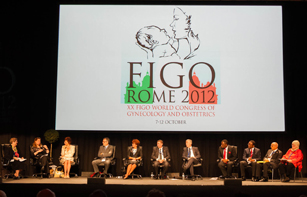
Panellists participating in the FIGO session titled “The Role of Professional Organisations in Accelerating Progress on Health-Related Millennium Development Goals”. 08 October 2012. Rome, Italy.
Credit: FIGO
The 2012 World Congress of the International Federation of Gynaecology and Obstetrics (FIGO) brought to Rome, Italy, thousands of participants to discuss ways to improve women's health, reduce infant and maternal mortality and promote the right to sexual health. Held every three years since the FIGO was founded in 1954, the Congress is a platform for analysing and discussing new medical discoveries to raise the standards of practice in obstetrics and gynaecology as well as to promote the wellbeing of women.
Speaking at a session on 8 October titled “The Role of Professional Organisations in Accelerating Progress on Health-Related Millennium Development Goals”, UNAIDS Deputy Executive Director, Programme, Dr Paul De Lay highlighted that professional organisations such as FIGO are uniquely placed to take the lead against the mistreatment of patients, especially marginalized women and women living with HIV.
“Professional health organisations have enormous political power, especially where it matters, at the community level,” said Dr De Lay. “What the healthcare worker says is accepted and trusted by communities, and professional organisations are uniquely placed to harness that power,” he added.
What the healthcare worker says is accepted and trusted by communities, and professional organisations are uniquely placed to harness that power
UNAIDS Deputy Executive Director, Programme, Dr Paul De Lay
According to participants at the session, patient rights and, particularly in the case of MDG6, the rights of women living with HIV are often ignored. Women living with HIV face enormous challenges in accessing health services. The example of forced sterilisations was mentioned as perhaps the most serious breach of fundamental human rights of women and a cause of major concern among all panellists. Since 2008, cases of forced sterilisation of women living with HIV have been reported, in Chile, the Dominican Republic, Kenya, Mexico, South Africa, Venezuela and Zambia, amongst others.
Participants agreed that, failure to address these challenges will result in less women coming forward to access HIV services, less women staying within services and retained on antiretroviral therapy and less women accessing services to prevent HIV transmission to their children.
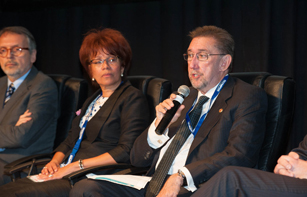
UNAIDS Deputy Executive Director, Programme, Dr Paul De Lay during the session titled “The Role of Professional Organisations in Accelerating Progress on Health-Related Millennium Development Goals”. 08 October 2012. Rome, Italy.
Credit: FIGO
Professional organisations can take the lead in disseminating up-to-date information to their members on sexual and reproductive health and rights of women living with HIV, according to the panel. They need to implement strong standards of ethics and conduct for their members. Organizations must ensure that health workers receive training on non-discrimination, informed consent, confidentiality and universal precautions. These organisations also need to ensure that healthcare workers living with HIV are not discriminated against and that they benefit from workplace and treatment programmes.
Professional organisations can serve as a collective workforce towards achieving the health MDGs and also provide a forum to expand knowledge, exchange information and legitimise and amplify the contribution of the members. “Because of their integrity and power, professional associations can be a voice for the voiceless against injustices,” concluded Dr De Lay.
The XX FIGO World Congress 2012 (07 – 12 October) will see experts from all over the world share the most current scientific knowledge and technologies related to all aspects of women's health and the unborn child.
External links
External links
Multimedia
Multimedia
Related


Feature Story
Alternative action on compulsory detention: Innovative responses in Asia
05 October 2012
05 October 2012 05 October 2012
People who use drugs in a 05 centre in Tien Lang district, Hai Phong City, Viet Nam.
Credit: UNAIDS
The life of a female sex worker in Viet Nam is filled with fear—fear of HIV, fear of violence, fear of stigma, and most of all, fear of the law enforcement services. A study conducted by the government of Viet Nam in 2012 on sex work and migration found that 50% of female sex workers report being afraid of the police. Up until a few months ago, arrest could lead to years of confinement in an administrative detention centre known as the ‘05’.
However, very recently, the National Assembly of Viet Nam passed a new Law on the Handling of Administrative Sanctions which effectively ends the practice of detaining sex workers in ‘05’ centres. The Law also allows drug users who are subject to compulsory treatment in drug detoxification centres to have court hearings on their cases and legal representation at the court.
“I found it like a dream coming true when I heard the news,” said Khanh, a leader of the Peaceful Place self-help group for female sex workers in Ha Noi, Viet Nam. “I used to use drugs and sell sex. I spent six terms in detention centres. I know how hard it is to stay in there and I know [detention] centres do not help you to stay away from drugs or stop selling sex.”
Khanh was one of the community representatives who were able to share their life experiences and their needs with members of the drafting committee of the new law in early 2011 during a community consultation workshop organized with support from UNAIDS.
During the development of the law, government officials and National Assembly members also sought concerted policy advocacy and technical assistance by United Nations agencies—including UNAIDS, UNDP, UNICEF, UNODC, WHO and UNFPA under the framework of the One UN Initiative in Viet Nam.
I used to use drugs and sell sex. I spent six terms in detention centres. I know how hard it is to stay in there and I know [detention] centres do not help you to stay away from drugs or stop selling sex
Khanh, leader of the Peaceful Place self-help group for female sex workers in Ha Noi, Viet Nam
“I highly appreciate the United Nations’ concerted support to the Ministry of Justice for the development of the Law on the Handling of Administrative Sanctions,” said Vice Minister of Justice Nguyen The Lien, Vice Chairperson of the Law’s drafting committee. “The United Nations has strong comparative advantage in providing legal support to Viet Nam because the United Nations always respects the country’s ownership and leadership in legislation development,” he added.
Following the law’s passage, UNAIDS and other UN agencies are providing support to the development of enabling regulations and the alignment of existing policies that are required for the Administrative Sanctions Law to be put into practice.
The Ministry of Labour, Invalids and Social Affairs (MOLISA), which is responsible for prevention and control of drug use and sex work, is organizing a national policy dialogue that aims to ensure coherent implementation of the law’s new provisions on sex work. The Ministry is also working on a ‘renovation plan’ to introduce alternatives to drug detoxification in detention centres. These include open, user-friendly and voluntary drug treatment centres operating under a ‘community-based’ treatment approach—a treatment model offering social and occupational services, including psychological support and aftercare along with drug treatment services such as detoxification, opioid substitution therapy and relapse prevention.
“By closing administrative detention centres for sex workers and changing compulsory closed drug detoxification centres into open, community-based drug treatment services can greatly help scale-up HIV prevention services for people who are at higher risk of HIV in Viet Nam. This will increase the efficiency of the national response to HIV,” said Tony Lisle, UNAIDS country coordinator for Viet Nam.
According to 2011 HIV sentinel surveillance, HIV prevalence among men who inject drugs and female sex workers was 13.4% and 3% respectively. Another in-depth study estimated that HIV prevalence was 48% among men who inject drugs in Ho Chi Minh City, and 20% among sex workers in Hanoi, the capital of Viet Nam.
“I highly commend the Government and National Assembly for this very important [action]. It will bring tangible benefits to the lives of many Vietnamese,” said Ms Pratibha Mehta, United Nations Resident Coordinator in Viet Nam. “The United Nations hopes that the National Assembly will also review the administrative detention centres for drug users from a similar perspective,” she added.
I highly appreciate the United Nations’ concerted support to the Ministry of Justice for the development of the Law on the Handling of Administrative Sanctions
Vice Minister of Justice Nguyen The Lien
The Vietnamese law was explored in depth, together with other best practices in the region, during the second regional consultation on compulsory centres for drug users in Asia and the Pacific held from 1-3 October in Kuala Lumpur, Malaysia.
Organized by UNODC, UN Economic Social Commission for Asia and the Pacific and UNAIDS and hosted by the National Anti-Drugs Agency of the Government of Malaysia, the consultation brought together senior officials from Viet Nam, Malaysia and seven other countries from east and south-east Asia. Participants shared practical expertise on how countries may look at moving forwards within their legal frameworks towards expansion of voluntary, community-based treatment programmes as an alternative to the compulsory detention model.
At the closing of the consultation, the nine attending countries agreed to further decrease the numbers of operating compulsory detention centres and decrease the number of people being detained in such centres, at a rate to be determined by the country. “We are delighted at the strong demonstration of interest by the countries of the region to move—albeit at different speeds—towards the goal of voluntary, community-based treatment,” said Gary Lewis, UNODC Regional Representative for East Asia and the Pacific said. “This represents a major step forward,” he added.
In March 2012, 12 United Nations agencies and entities issued a landmark joint statement calling upon its Member States to close compulsory drug detention and rehabilitation centres, highlighting concerns associated with the centres, including increased vulnerability to HIV and tuberculosis infection as well as insufficient legal safeguards and judicial review.
Related information
Feature Story
UNAIDS Goodwill Ambassador Naomi Watts advocates for an HIV-free generation
05 October 2012
05 October 2012 05 October 2012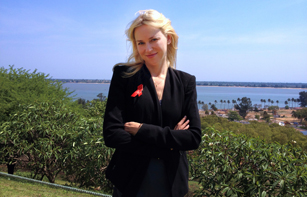
Actress and UNAIDS Goodwill Ambassador Naomi Watts talked about her work in support of UNAIDS’ efforts towards an AIDS free generation while in Mozambique.
Mozambique is one of the settings of a new film about the life of Diana, Princess of Wales. It’s also where UNAIDS.org caught up with actress and UNAIDS Goodwill Ambassador Naomi Watts. She talked about her work in support of UNAIDS efforts towards an AIDS free generation—ensuring no new HIV infections among children by 2015 and keeping their mothers alive.
“In the United States and Europe there are virtually no new HIV infections in children and many African countries are moving steadily in that direction,” said Ms Watts. “We at UNAIDS call that ‘getting to zero’—zero babies born with HIV and zero mothers dying of AIDS-related causes. And for us, getting to zero is not a dream or a slogan but a doable reality,” she added.
The country she is filming in has one of the highest rates of HIV in sub-Saharan Africa—11.5% of the adult population is living with the virus. But is also one of the 22 countries that is making a concerted effort to stop new HIV infections among children as part of a Global Plan championed by UNAIDS and partners.
In 2011, 98 000 pregnant women living with HIV were in need of antiretroviral medicine to prevent transmission of HIV to their children in Mozambique—the third highest number after South Africa (241 000 women) and Nigeria (229 000 women).
Women need access to quality, life-saving HIV prevention and treatment services for themselves and their children and I know that together we can make this a reality
Actress and UNAIDS Goodwill Ambassador, Naomi Watts
The nationwide programme to stop new HIV infections among children and keep their mothers alive has grown rapidly since its inception in 2002. The number of sites offering HIV services to prevent new HIV infections in children has increased across the country from 356 in 2009 to more than a thousand in 2010. As a result, the number of pregnant women receiving HIV counselling and testing also increased from 12% in 2005 to 87% in 2010—one of the highest rates in the region. And since 2009, the percentage of pregnant women living with HIV in Mozambique receiving antiretroviral treatment to prevent transmission of HIV to their children rose from 38% to 51%.
However, much more needs to be done when nearly half the pregnant women living with HIV in Mozambique do not yet receive the medicines to prevent transmission to their children.
“I wish I could spend more time here in this beautiful country of Mozambique. I would encourage all the partners in the AIDS response to redouble their efforts here and in the other 21 highly affected countries,” said Ms Watts. “Women need access to quality, life-saving HIV prevention and treatment services for themselves and their children and I know that together we can make this a reality.”
In her role as a UNAIDS Goodwill Ambassador, Ms Watts joined former President Bill Clinton and United Nations Secretary-General Ban Ki-Moon to launch the Global Plan in June 2011 at the United Nations in New York. She has visited AIDS and maternal and child health programmes from Lusaka, Zambia to Dehli, India advocating tirelessly to ensure all countries put in place the necessary efforts to achieve a generation born free of HIV. Last week in New York, Ms Watts urged the Women Leaders Forum, which included prominent CEOs and a number of African Firs Ladies, to combine their efforts to get to zero.
Publications
Related

Feature Story
New handbook to improve design of HIV programmes focusing on men who have sex with men in the Middle East and North Africa region
03 October 2012
03 October 2012 03 October 2012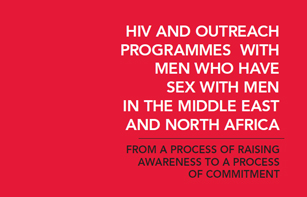
A new handbook to help design and implement HIV programmes focusing on men who have sex with men (MSM) in the Middle East and North Africa (MENA) was released on 27 September by UNAIDS in Cairo, Egypt. The handbook was presented at a workshop organized by the World Health Organization entitled "HIV Among Key Populations at Increased Risk of Sexual Transmission".
Entitled “HIV and Outreach Programmes with Men who Have Sex with Men in the Middle East and North Africa: From a Process of Raising Awareness to a Process of Commitment”, it aims to provide countries that are currently implementing MSM programmes with additional tools to improve them. It also provides other countries willing to initiate MSM programmes with sufficient elements to do so.
The new publication describes in four modules the whole cycle of a national HIV outreach programme aimed at engaging MSM. These four modules include: Situation analysis; outreach programme conceptualization, outreach approach, and monitoring. Each module contains scientific data and practical steps.
Prevailing taboos hamper the AIDS response
Sexuality and sexually transmitted infections (STIs) are sensitive issues that are rarely discussed in the MENA region and homosexuality and transexuality remain taboo subjects, according to the new report.
This handbook will give a strong theoretical and technical background and support to outreach workers; be it health care providers or peer educators
Elie Aaraj, President of the Regional/Arab Network Against AIDS (RANAA) and Executive Director of MENAHRA
"Most countries in the region criminalise same sex relations making it virtually impossible for this key population to seek or receive the necessary HIV prevention, treatment and care services," said Ali Feizzadeh, Senior Strategic Information Advisor at UNAIDS.
An increasing number of bio-behavioural surveys in the region show that the AIDS epidemic is concentrated within key populations at higher risk—notably MSM. The same surveys reveal that MSM regularly change sexual partners, and may be drug users or sex workers while their knowledge of STIs remains limited.
The new UNAIDS publication stresses that, while the current regional AIDS response is characterized by low coverage of HIV prevention programmes for key populations at higher risk, there is a growing awareness of the need to work with populations such as MSM on HIV prevention in the region. Currently, these efforts are mainly undertaken by non-governmental associations.
"All the countries in the region approved the Human Rights Declaration, however, some sensitive areas of work cannot be undertaken by the present governmental bodies. The role of the Civil Society is to bridge the gap between national support and the actual need,” said Elie Aaraj, President of the Regional/Arab Network Against AIDS (RANAA) and Executive Director of MENAHRA. “This handbook will give a strong theoretical and technical background and support to outreach workers; be it health care providers or peer educators," he added.
The UNAIDS handbook provides useful information, tips and tools to effectively reach MSM communities, establish trust and build relationships through continuous dialogue. The handbook emphasizes the importance of engaging the MSM population in the effective design of HIV outreach programmes.
The handbook is the result of the analysis of existing programmes and fieldwork conducted by partner civil society organizations in nine countries across the region. It complements the recently published WHO Guidelines that focus on good practice recommendations in the area of prevention and treatment of HIV and other STIs among MSM and transgender people.
Related
Feature Story
Ecuadorian government implements social protection policy for children living with HIV
03 October 2012
03 October 2012 03 October 2012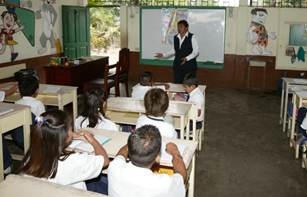
Ecuadorian children attending school
The government of Ecuador, under the leadership of President Rafael Correa, recently approved a new public policy aimed at the protection of children living with HIV. The new policy will also complement efforts to eliminate new HIV infections among children in the country.
The policy states a monthly distribution of a cash transfer, using public health structures, to the caregivers of children under the age of 14 living with HIV. The government estimates that in the first year, caregivers of 500 children will fulfill the criteria to receive the cash transfer.
Vice-President Lenin Moreno, who initiated the proposal of the new policy said: “With this programme we are setting a milestone for social protection in Latin America. The cash transfers give children living with HIV continued access to treatment, which will improve their health and ensure that they are able to move forward with their lives.”
The value of the grant is a monthly allocation of US$ 240 and it has to be used by caregivers in order to improve living conditions of the children, reversing malnutrition and expanding their access to education, health and HIV related services. The transfer is conditional to the children’s attendance to school and regular health check‐ups.
With this programme we are setting a milestone for social protection in Latin America. The cash transfers give children living with HIV continued access to treatment, which will improve their health and ensure that they are able to move forward with their lives
Vice-President of Ecuador, Lenin Moreno
“UNAIDS salutes this important initiative, which is a benchmark for other countries in the social protection of children and families affected by HIV," said César A. Núñez, UNAIDS Regional Director for Latin America.
The Ministry of Health and local hospitals together with community based organizations and civil society networks will identify eligible children, ensure proper coverage of HIV treatment and monitor the children’s regular attendance to health facilities. The Ministry of Social and Economic Inclusion (MIES) will oversee the implementation of the policy, together with the Council for Children and Adolescents—a government body specialized in children’s related affairs. Finally, the Vice-President’s Department of Social Services will supervise the children’s school attendance and, through home visits, will help guarantee the improvement of the children’s living conditions, both in their homes with their families and in a wider social context.
Information sessions are being organized by the Ministry of Health, jointly with the Vice-presidency to explain how the policy works for the children’s caregivers. Staff in health facilities is also being trained on how to implement the programme effectively. Guayaquil, one of the regions where the policy was introduced, recently hosted a meeting to provide information and training for health service coordinators and staff. “For the first time in Ecuador, health and the HIV response are linked to a social protection policy. It is a comprehensive approach for social care of children living with HIV, which includes health, nutrition, education and protection,” stresses Juan Vasconez, UNAIDS Country Coordinator for Ecuador.
Steady progress in access to HIV services
Ecuador is one of the Latin American countries which is showing steady progress in the scale up of antiretroviral treatment for people living with HIV as well as the provision of services to stop new HIV infections among children. In 2011, 67% of people living with HIV in need of HIV treatment were accessing it, compared to 39% in 2009. Furthermore, 85% of the resources needed to provide HIV treatment originates from national sources.

L to R: UNAIDS Country Coordinator for Ecuador, Juan Vasconez, UNAIDS Regional Director for Latin America, César A. Núñez, and Vice-President of Ecuador, Lenin Moreno.
In 2001, a health service policy was introduced to ensure that pregnant women living with HIV have access to pre- and post-natal check-ups and are able to give birth in a healthcare setting. Campaigns to encourage pregnant women to take an HIV test are carried out on a regular basis and have proven successful in recent years. In 2011, 279 064 pregnant women were tested (78% of all pregnant women). 684 of them were diagnosed as HIV positive. Of this group, 95% of pregnant women living with HIV received HIV treatment to prevent HIV infection to their children. In 2011, a registered 30 children were born with HIV in Ecuador.
“Such high political support at the presidential level for the elimination of new HIV infections among children in Ecuador is leading the country towards achieving the UNAIDS goal of zero new HIV infections among children by 2015,” highlighted Mr Vasconez.