

Feature Story
Indonesia’s Minister of Health promises to transform the national response to AIDS
23 October 2012
23 October 2012 23 October 2012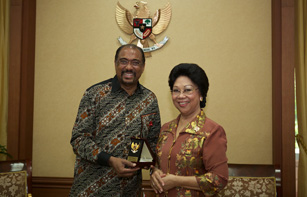
UNAIDS Executive Director, Michel Sidibé met with Indonesia’s Minister of Health, Nafsiah Mboi as part of his two-day trip to Indonesia.
Credit: UNAIDS/E.Wray
Indonesia’s Minister of Health, Nafsiah Mboi, pledged to scale up HIV testing and treatment programmes, leading to zero new HIV infections and zero AIDS-related deaths. Minister Mboi met with UNAIDS Executive Director, Michel Sidibé on Tuesday, on the first day of his two-day trip to Indonesia.
Indonesia is one of several countries in Asia where new HIV infections are growing. The Ministry of Health estimates that more than 600 000 people are living with HIV and that there are more than 76 000 new HIV infections each year. Currently HIV treatment coverage is at less than 20%.
But, Minister Mboi promised a new approach to the country’s AIDS response. She said she will ensure that everyone will know their HIV status and have access to HIV treatment. Health authorities will focus on 141 districts where key affected populations are the highest. Indonesia’s epidemic is concentrated on key populations at higher risk such as drug users, sex workers and their clients and men who have sex with men.
Universal health coverage is a game changer for Indonesia. I am delighted to know that HIV treatment will be included in this national programme. This sets the stage for sustainable funding of HIV programmes.
UNAIDS Executive Director, Michel Sidibé
Indonesia is taking an active role in the AIDS response in Asia. As chair of the last year’s ASEAN (Association of South East Asian Nations) summit the country pushed for the adoption of the ASEAN Declaration of Commitment in Getting to Zero New HIV Infections, Zero Discrimination and Zero AIDS-related deaths.
Indonesia also plans to become one of several countries in the region to offer universal health care by 2014. The Ministry of Health says that HIV treatment will be included in the health coverage.
“Indonesia is a key partner in the drive to end the AIDS epidemic,” said Mr Sidibé. “Universal health coverage is a game changer for Indonesia. I am delighted to know that HIV treatment will be included in this national programme. This sets the stage for sustainable funding of HIV programmes.”
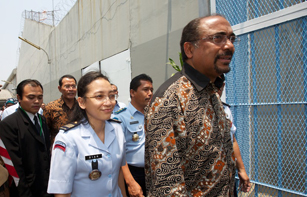
UNAIDS Executive Director, Michel Sidibé toured the Narcotics Prison Cipinang in East Jakarta where he met with prison authorities and visited the clinic where antiretroviral treatment and methadone services are provided.
Credit: UNAIDS/E.Wray
Domestic investments in the HIV response have been increasing significantly in Indonesia since 2010, but there still is a large funding gap and in 2015 Indonesia will no longer be eligible for funding from the Global Fund to Fight AIDS, Malaria and Tuberculosis.
“Indonesia is trying to ensure the sustainability of HIV care for people living with HIV once donor countries stop giving funds,” said Minister Mboi. “The Ministry of Health is preparing an exit strategy. We plan to cover 100% of the HIV treatment by the national government budget,” she added.
Health authorities are increasing efforts to focus HIV programmes on communities that need the most attention. The sharing of needles among people who use drugs has been one of the drivers of the HIV epidemic in Indonesia. Since 2009, the Directorate General of Corrections says it has scaled up its HIV programmes at 149 corrections facilities in 25 provinces.
Mr Sidibé toured the Narcotics Prison Cipinang in East Jakarta, which is one of eleven model prisons implementing a comprehensive AIDS programme. He met with prison authorities and then went on a tour of the prison, visiting the clinic where antiretroviral treatment and methadone services are provided. He also toured the occupational training centre where inmates learn new skills including baking, sewing and handicrafts.
“My visit today shows that even in prisons we can restore the dignity of people,” said Mr Sidibé. “Prison can be a transformative experience. The Indonesian government is showing great innovation and courage with its remarkable harm reduction and HIV programme in prisons. I hope the programme inspires other countries to show the same entrepreneurship,” he added.

The Ministry of Health hosted a dialogue between Mr Sidibé and faith based organizations, including Islamic, Christian, Hindu, Buddhist and Confucian religious groups.
Credit: UNAIDS/E.Wray
On Tuesday, the Ministry of Health hosted a dialogue between Mr Sidibé and faith based organizations, including Islamic, Christian, Hindu, Buddhist and Confucian religious groups. Religious leaders are important community members and their cooperation is key to ensuring support for HIV prevention, treatment and care. The leaders agreed that faith based organizations need more education and training in HIV issues, so that they can help their communities.
Anggia Ermarini, Health Unit Secretary of Indonesia’s Ulama Council, the country’s Muslim clerical body said, “Many religious leaders do not understand about AIDS. We want the United Nationsto to tell us about the situation in our country.”
Franz Magnis Suseno, a Jesuit priest from the Institute of Philosophy Driyakara said that he thought that religious organizations needed to start to educate people about sexuality. He said there was a high resistance to sex education but that it was necessary.
Mr Sidibé is in Indonesia at the start of a three country trip to Asia, where he will also visit Myanmar and Thailand.
Multimedia
Feature Story
Scaling up and integrating palliative care for people living with HIV in Kenya
19 October 2012
19 October 2012 19 October 2012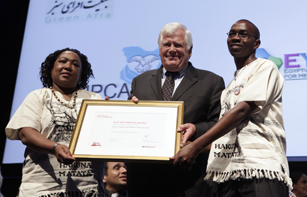
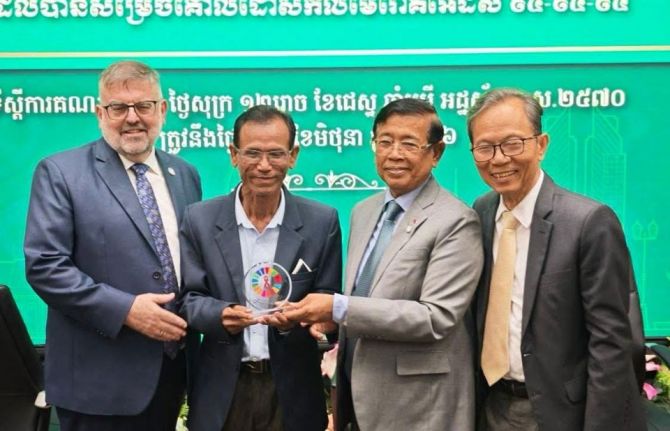
US congressman Jim McDermott presents the Red Ribbon Award to the representatives of the Kenya Hospice and Palliative Care Association during the International AIDS conference in Washington, 25 July 2012.
Credit: UNAIDS/Y.Gripas
Palliative care is the provision of care and treatment services for patients suffering from life-threatening or terminal illness, including AIDS. These services are improving the quality of life of many Kenyans and their families but it hasn’t always been like this.
In 1990, Kenya’s capital Nairobi opened its first hospice to provide pain management services to patients but even then, many of them were merely sent home with little options or hope for improvement in their health condition.
Twelve years later, health care workers around the country recognized the need to significantly increase the access to palliative care services and, in August 2002, created a national association representing all of the hospices and palliative care units in the country. They established the Kenya Hospice and Palliative Care Association (KEHPCA) which was registered in November 2005 and became fully operational in February 2007.
Since their establishment, KEHPCA saw the number of hospices in Kenya grow from seven in 2007 to 23 in 2010, and the palliative care units increased from four in 2007 to 21 in 2011. KEHPCA’s dedicated staff and volunteers, through its member hospices and palliative care units, managed to increase the number of patients reached by hospices and palliative care units from 7 000 per year in 2007 to an estimated 30 000 patients in 2011.
“When the palliative care first came to see me, I had been discharged from the hospital to ‘go home and die’,” recalled Fred, a 42 year old labourer from Kibera and living with HIV. “I was hopeless, in pain, my lower limbs were covered in wounds, my family was miserable and at a loss on what to do, and I had given up hope.”
According to Fred, the palliative care team treated him with compassion, managed his pain and treated his wounds, and as a result his health begun to improve. “Now I am able to live a normal life. The team has made it possible for me to see my children grow and be there for them,” added Fred.
Integrating of palliative care in the health care system
In a country where up to 27% of hospice patients depend on palliative care, KEHPCA continued to advocate for the integration of palliative care as one of the care options in the Kenyan health care system.
KEHPCA’s partnership with the Ministry of Medical Services and the Ministry of Public Health and Sanitation allowed for palliative care to be effectively integrated into 11 provincial hospitals. The partnership also seeks to integrate the services in additional 30 level four (district) hospitals over the next two years.
Our vision is quality palliative care for all. But this cannot be achieved without us working together as a nation to fully integrate palliative care services into our health system
Dr Zipporah Ali, Executive Director of KEHPCA
“Palliative care is an important aspect of care for people living with life threatening illnesses and should be integrated into our health care services, so that all who need it can have access to it, even at the grassroots level,” said Dr. Izaq Odongo, Senior Deputy Director of Medical Services in the Ministry of Medical Services. “We are working in partnership with KEHPCA to ensure that this will one day be accomplished.”
Palliative care providers do not solely concentrate on addressing the physical needs, such as relief of pain, but rather weight is given to a holistic care in ensuring the psychological and emotional well-being of the patient. “We have seen many documented benefits of good palliative care which include improved quality of life of the patients and their families, reduced stay in hospital beds—hence reduced hospital expenditure, prolonged life and a dignified pain-free death when the time comes,” said Dr Zipporah Ali, Executive Director of KEHPCA. “Our vision is quality palliative care for all. But this cannot be achieved without us working together as a nation to fully integrate palliative care services into our health system,” she added.
Training health professionals on palliative care
In 2007 KEHPCA extended its services to training of health care professionals on the fundamental principles of palliative care to expand services and reach more people in need. To date, the association has successfully trained more than 1 500 health care professionals.
“The hospital health care workers that were trained by KEHPCA are able to provide palliative care services, they have started a palliative care unit in the hospitals and are adding value to the hospitals’ work,” said Dr Muli, Medical Superintendent of Embu Provincial Hospital. “This has made a big difference to our patients.”
KEHPCA has also worked to increase the availability of training on palliative care in the country’s medical training schools. Over the past two years, it has worked with 17 major training institutions in Kenya to include palliative care into their curricula. The Nursing Council has added 35 units of palliative care to the core curriculum for the Bachelor of Science in Nursing and Kenya Medical and Training College (KMTC) has added 12 hours of palliative care to the diploma in nursing course. Through support from the Diana Princess of Wales Memorial Fund, KEHPCA is currently working with KMTC to start a higher Diploma course in palliative care in 2013.
“There is a need to train critical mass due to the high number of patients needing palliative care services,” said Dr Zipporah Ali. “Kenya faces the high burden of both infections diseased and non-communicable diseases. We need to be ready to deal with this and the diploma course at KMTC will help make a difference.”
Red Ribbon Award
Since its establishment, KEHPCA has been working to scale up palliative care to reach every terminally-ill patient in the country in need of care with high quality and accessible services.
At the XIX International AIDS Conference that took place in Washington D.C. in July 2012, the organization received the Red Ribbon Award for their outstanding community work in the response to AIDS.
“With the help of all our partners, we will continue to ensure that palliative care services are accessible to patients all over the country,” said Dr Zipporah Ali. “I wish to thank the Red Ribbon Award for recognising the work we do, and look forward to a good working relationship to ensure that our vision is achieved.”

Feature Story
Young people living with HIV in Latin America make their voices heard
18 October 2012
18 October 2012 18 October 2012
The Network of Positive Youth for Latin America and the Caribbean has launched a regional consultation for young people living with HIV. The aim of the consultation is to obtain information on the realities that young people living with HIV face in their everyday lives in order to develop new and more effective HIV strategies focused on their specific needs.
The consultation tool, developed with support from UNAIDS, UNICEF and UNFPA, consists of an online and confidential survey of roughly 40 questions that focuses on young people aged 18 to 29 years old and living with HIV from 17 Latin American and two Spanish-speaking Caribbean countries. The online platform is designed to run on any computer and has a special program to facilitate access from mobile devices.
The tool will collect information related to the socio-demographic aspects of young people living with HIV, their access to health services, experiences with stigma and discrimination, and their leadership and community participation. Young people living with HIV will be able to participated in the survey until 30 November 2012 at the following website: http://consulta.jovenespositivos.org
“Usually, positive youth remain invisible to research and data collection exercises. This consultation is an opportunity to make our voices heard,” explained Mariana Iacono, a founding member of the Network of Positive Youth. “To be able to develop HIV strategies and programs that meet our needs we must know our situation, needs and realities in our communities.”
A team of young people from the Network of Positive Youth will analyze the results of the online consultation and will design a short and long term action plans for the region. The results will also serve as advocacy tools to demand the development of national strategies that focus on the needs of young people living with HIV. “We know that sometimes it is difficult to share feelings and memories, but we believe it is from our own experiences that we can bring new ideas and solutions to address HIV in a more inclusive and cost effective way,” said Pablo Aguilera, member of the Network.
To be able to develop HIV strategies and programs that meet our needs we must know our situation, needs and realities in our communities
Mariana Iacono, a founding member of the Network of Positive Youth
In Latin America, an estimated 68 000 adolescents (10-19 years) are living with HIV. Of these, 34 680 are women. In 2011, 34 440 new HIV infections occurred among young people between 15 to 24 years, accounting for 41% of all adult HIV infections. “A generation of young people born with HIV is growing up with its specific needs being largely neglected,” noted Mark Connolly, UNICEF Senior Adviser for Latin America and the Caribbean. In 2011, an estimated 2 000 children were born with HIV in the region.
As young people living with HIV transition from childhood through adolescence to young adulthood, they face a range of specific needs, including accessing treatment, tackling stigma and discrimination, and accessing youth-friendly integrated HIV and sexual and reproductive health services. “Young people living with HIV are a heterogeneous group, with diverse populations that needs urgent attention in many areas, especially those who are more affected by stigma and discrimination, such as transgender, gays and drug users,” said Cesar A. Núñez, UNAIDS Regional Director for Latin America.
The UNFPA Regional Director for Latin America and the Caribbean, Marcela Suazo emphasized that the epidemic on positive young people is worsened because of social exclusion, as well as gender inequality, stigma and discrimination related to HIV. “It is necessary to ensure a human rights platform that extends strongest non-discriminatory access of young people to education, counseling and adequate sexual and reproductive health," she said.
In Latin America, a new wave of youth-led community mobilization is emerging, advocating for human rights and demanding access to HIV services. The Regional Network of Positive Youth is organizing youth to participate in decision-making and consultation spaces beyond national spheres. In December 2012, the Network is organizing the first regional meeting of young people to define coordinated actions across the region, enhance leadership and mobilization towards meeting the global targets for 2015.
External links
Related

Feature Story
Zambia learns from Kenya’s experience in developing HIV programmes for key populations at higher risk
17 October 2012
17 October 2012 17 October 2012
Zambian delegation with staff from the Kenya Medical Research Institute, A drop-in Centre at Mtwapa, Mombasa.
South to South learning—or the cooperation between low- and middle-income countries—can help countries understand how to respond to HIV, particularly in politically and culturally sensitive areas such as developing programmes for key populations at higher risk of HIV infection.
From 24- 28 September 2012, members of the National AIDS Council of Zambia, with support from the country’s United Nations Joint Team on AIDS, visited to Kenya to learn about their HIV programmes to reach key populations including sex workers, people who inject drugs, men who have sex with men and transgender people.
Despite both countries having restrictive legal environments which criminalise sex work, same sex sexual relations and drug use, Kenya has long recognized its complex HIV epidemic among key populations—which accounts for 33% of new HIV infections. The country put in place a technical working group within the ministry of health to develop programmes that meet the needs of most at risk populations.
“The Modes of Transmission Study done in 2009 clearly showed that we needed interventions for key populations if we were to have a significant impact on the epidemic,” said Dr Orago, Director of the National AIDS Control Council in Kenya.
Zambia’s National AIDS Strategic Framework has recognized the need to gather more information on the epidemic among key populations. Two studies are currently planned to collect the required information. However, HIV programmers recognize that having this information is just one step towards getting key populations the services they require. It will take much longer to address the stigma and discrimination towards these key populations entrenched in Zambia’s society.
Kenya’s political leadership was seen as a key element that has contributed to focus the AIDS response on key populations despite the existence of a non-supportive social environment. In October 2010, for example, the Minister of special programs Esther Murugi opened the national symposium on “Most at Risk Populations” in the country where she recommended more tolerance and acceptance towards men who have sex with men. Also, prominent parliamentarians have long supported the implementation of programmes focusing on people who use drugs in the coast province. “It is clear from what we have seen in Kenya that we need to organize stakeholders and to establish a mechanism that will help us mobilize political support at the highest levels,” said Harold Witola of the Zambian National AIDS Council.
The cornerstone of the response in Kenya is a partnership framework between Government, NGOs and organized key population groups. Kenya has reached a stage in the response where the Government and its partners are implementing evidence-based HIV programmes that focus on the needs of key populations at higher risk. These include purchasing and distributing condoms and water-based lubricants for men who have sex with men and sex workers; developing HIV prevention information materials specifically for key populations; and designing a programme to make disposable syringes available for people who use drugs.
The Modes of Transmission Study done in 2009 clearly showed that we needed interventions for key populations if we were to have a significant impact on the epidemic
Dr Orago, Director of the National AIDS Control Council in Kenya
The Zambian delegation, which included HIV programmers and decision-makers from different Government departments as well as civil society and UN partners, visited a range of programmes to understand how Kenyan service providers work within the national policy and legal framework to provide an effective package of HIV-related activities for key populations.
They visited two peer support programs for people who use drugs, a government clinic in Nairobi that focus on sex workers and men who have sex with men, an NGO clinic for male and female sex workers, and a peer support group for men who have sex with men. They also met with members of the media to identify ways to leverage its advocacy capacity and support.
The team also held community level discussions with groups of men who have sex with men, sex workers (female and male), people who inject drugs and truck drivers. “What strikes me is the excitement and commitment of everyone that we have met, including Government officials, civil society members and the beneficiaries of these services to respond to the public health needs of these important groups in the response to AIDS,” said Dr Mwango as Team Leader for the Zambia Team.
Focusing on the health needs of key populations is an essential human right, fundamental to protecting the public health and critical to reaching the goal of universal access to HIV prevention, treatment, care and support. The Zambia Team left Kenya with a resolve to make a difference for the lives of Zambians who are at the most risk of becoming infected with HIV. “It is not going to be easy, but we have seen in Kenya that it can be done” said Helen Frary, UNAIDS Country Coordinator for Zambia.
Feature Story
Senegal commits to reducing AIDS dependency
16 October 2012
16 October 2012 16 October 2012
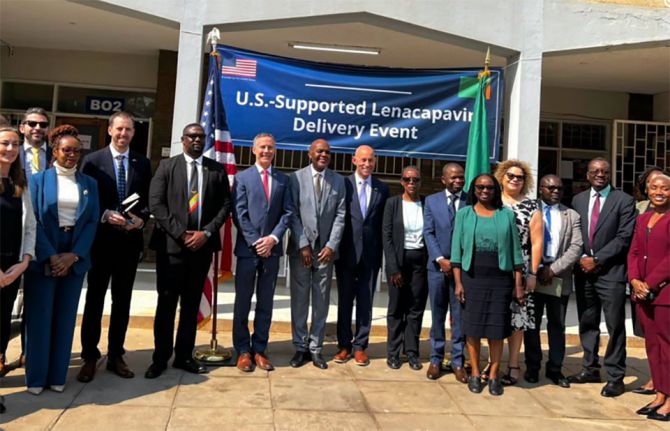
UNAIDS Executive Director Michel Sidibé (left) met with the Prime Minister of Senegal, Mr Abdoul Mbaye, on 15 October.
Meeting on 15 October with the Prime Minister of Senegal, Mr Abdoul Mbaye, UNAIDS Executive Director Michel Sidibé commended the leadership of Senegal for its success in keeping national HIV prevalence low, at approximately 0.7%.
“Senegal is a model for this sub-region,” said Mr Sidibé. “It has shown that stabilizing the HIV epidemic and reducing the number of new HIV infections is possible. The priority now is to sustain the gains made so far,” he said.
Progress and challenges
In recent years, Senegal has considerably expanded access to antiretroviral therapy (ART), reaching 74% of people eligible in 2011. Between 2006 and 2011, the number of sites offering HIV counselling and testing increased from approximately 100 to more than 1000. In his meeting with the Prime Minister, Mr Sidibé encouraged Senegal’s leaders to move progressively towards routine HIV testing through the use of new technologies.
Senegal is a model for this sub-region. It has shown that stabilizing the HIV epidemic and reducing the number of new HIV infections is possible. The priority now is to sustain the gains made so far.
UNAIDS Executive Director Michel Sidibé
In 2011, 976 health facilities in Senegal offered services that prevent mother-to-child transmission (PMTCT) of HIV—up from 648 in 2010. Despite progress, national PMTCT coverage remains low, at about 40%. Mr Sidibé commended the progress realized to date while underscoring that extra effort is needed to ensure an HIV-free generation.
Prime Minister Mbaye said that his country was committed to eliminating new HIV infections among children by 2015. “This will allow us to make the link to HIV testing and reduce maternal mortality,” he added.
Funding the national HIV response
The Prime Minister noted that though Senegal had recently received an HIV grant from the Global Fund to Fight AIDS, Malaria and Tuberculosis, the country would need to seek innovative sources of domestic financing to ensure that its HIV-positive population had access to ART over the long term. In doing so, Senegal could reduce its dependency on external aid for the national HIV response, which currently stands at about 80%, he said.
Mr Sidibé spoke of the need for the local production of antiretroviral therapy—a suggestion well received by the Prime Minister: “It is a very good idea that we will help carry forward. But to achieve a threshold of profitability, we must find sponsors and attract investors. The state is not the solution!” he said.
During his two-day mission in Dakar, the Executive Director attended a UNAIDS regional management meeting and met with the President of the National Assembly of Senegal, Mr Moustapha Niasse.
Feature Story
Spotlight on the role of the EU in achieving universal health coverage in Africa
16 October 2012
16 October 2012 16 October 2012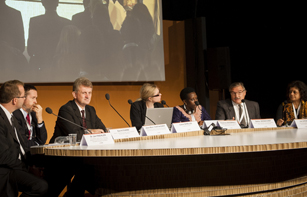
L to R: Dr Jan Paehler, Policy Officer, Health Sector, Directorate General for Development and Cooperation – EuropeAid, European Commission, David Evans, Director of the Department of Health Systems Financing at the World Health Organisation, Jean-Marc Chataigner, Deputy Director General, Global Affairs, Development and Partnerships, French Ministry of Foreign Affairs, Laura Shields, journalist and moderator at the Media Coach, Rosemary Museminali, UNAIDS representative for the African Union, UNAIDS, Stefan Seebacher, Head of the Health Department, International Federation of the Red Cross, and Indu Capoor, Director, Centre for Health Education, Training and Nutrition awareness. Credit : EDD
Global health experts came together to discuss the European Union’s role in supporting low- and middle-income countries to reach universal health coverage at the European Development Days (EDDs) conference. The topic for the two-day conference taking place in Brussels from 16-17 October is “Inclusive and Sustainable Growth for Human Development”.
A high-level panel, entitled "Building a Social Contract for Health", discussed what African countries could do to achieve universal health coverage, and how the EU and other developmental partners could support them.
The EU recognises that health is a right for all and an essential objective within the Millennium Development Goals. However, gaps still remain to actually achieving the goal of universal health coverage. The panel agreed on the need for better coordination, and both technical and financial support to ensure the Right to Health for all.
UNAIDS Representative to the African Union, Rosemary Museminali, stressed during her presentation that, "The new roadmap on shared responsibility and global responsibility endorsed by the Heads of States at the African Union Summit represents a milestone, demonstrating their commitment to source African solutions for the response to HIV, TB and malaria.”
"But Africa still needs international assistance,” she added. “European development partners must reinforce global solidarity and support countries in taking the next steps together."
This debate came during a critical period for Europe, when the EU is considering its role in global health, and many member states are taking decisions on international health aid that could have dire consequences for people in the world’s poorest countries.
The new roadmap on shared responsibility and global responsibility endorsed by the Heads of States at the African Union Summit represents a milestone, demonstrating their commitment to source African solutions for the response to HIV, TB and malaria
UNAIDS Representative to the African Union, Rosemary Museminali
Panellists discussed how the EU, working together with its development partners, could ensure inclusive and equitable growth in low- and middle-income countries through promoting a shared responsibility for universal health coverage in the context of its social protection and global health strategies.
“We need to take into account the country needs and the capacity of the country to deliver services but also the commitment of each country to implement the proposed actions,” said Jan Paehler, Policy Officer, Health Sector, Directorate General for Development and Cooperation – EuropeAid, European Commission. “Our support to countries need to be tailored to the needs of each country.”
Participants also explore the role of civil society organizations (CSO) in ensuring the right to health for all. It was seen critical for these organizations to evolve from its traditional role of holding governments accountable into organizations capable of delivering universal health coverage and social protection. For that, partners such as the EU should “invest more in community capacity development to deliver services to their communities, specially the key populations that are hardest to reach by traditional health systems,” said Stefan Seebacher, Head of the Health Department, International Federation of the Red Cross.
The panel was jointly organised by Action for Global Health, Countdown 2015 Europe, IPPF, Marie Stopes International, Oxfam International, The Red Cross, Stop Aids Alliance and UNAIDS. The panel brought together senior representatives from the European Commission, the French Ministry of Foreign Affairs, the World Health Organization, the International Federation of Red Cross and Red Crescent Societies and the India-based Centre for Health Education, Training and Nutrition Awareness.
Organised by the European Commission, the European Development Days (EDD) is Europe’s premier forum on international affairs and development cooperation. This year, it has brought more than 6 000 people and 1 500 organisations from the development community together under the theme of ‘Supporting inclusive and sustainable growth for human development’.
External links
External links
Multimedia
Feature Story
First Lady of the Democratic Republic of the Congo calls for the elimination of new HIV infections among children
16 October 2012
16 October 2012 16 October 2012
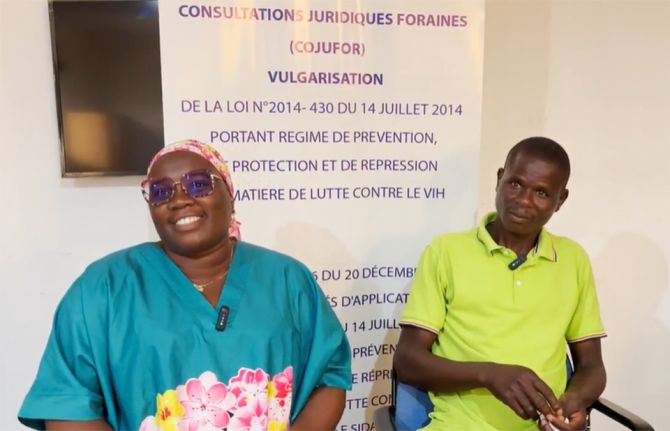
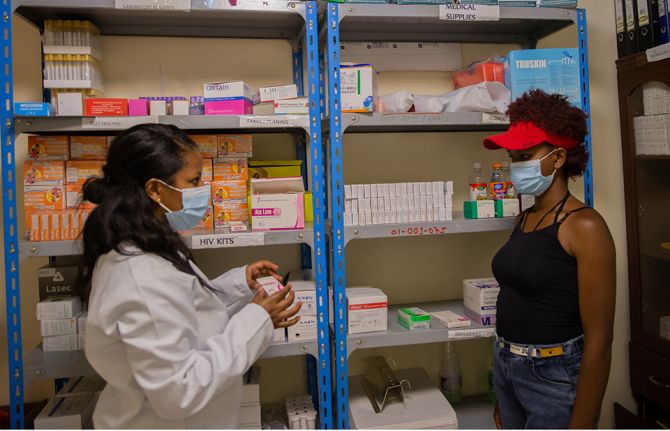
On 14 October, the First Lady of DRC (pictured here) toured the Ngaliema Clinic in Kinshasa, together with medical personnel.
On the sidelines of the 14th Summit of the Francophonie, the First Lady of the Democratic Republic of the Congo (DRC), Marie Olive Lembé Kabila, launched the initiative “Rolling back malaria and eliminating mother-to-child transmission of HIV.”
Speaking at the campaign launch, the First Lady called for improved reproductive health in DRC, including the integration of HIV into family planning services. She highlighted the importance of male partner involvement in programmes to prevent new HIV infections among children and of youth mobilization in HIV prevention activities. While stressing that abstinence and fidelity are a means of HIV prevention, the First Lady reminded her audience of another effective tool at their disposal: the condom.
The First Lady emphasized the importance of increasing domestic resources for the national HIV response: "Before relying on others, we must first rely on ourselves,” she said, echoing the UNAIDS concept of shared responsibility.
The Minister of Health, Félix Kabange Numbi—who spoke alongside the First Lady at the launch event—underscored that 89% of maternity hospitals in DRC do not offer services to prevent mother-to-child transmission (PMTCT) of HIV. “Even though national HIV programmes have officially been in place for 10 years, the situation is not stellar,” he said. The Minister outlined the national plan to eliminate new HIV infections among children which aims, by 2017, to:
- Reduce new HIV infections among children under the age of 15 by 90%
- Reduce AIDS-related maternal deaths and infant mortality by 50%
- Provide access to antiretroviral therapy for more than 87 000 HIV-positive women and more than 87 000 children born with HIV.
Affirming the commitment of DRC President Joseph Kabila towards the goal of eliminating HIV transmission from mother to child, Minister Numbi noted the need for: an increase in the number of maternity hospitals offering PMTCT services, the provision of a regular supply of drugs and tests, and community involvement.
Before relying on others, we must first rely on ourselves
First Lady of the Democratic Republic of the Congo, Marie Olive Lembé Kabila
Dr Leodegal Bazira, World Health Organization representative in DRC, reaffirmed that international organizations remain committed to supporting the country in its efforts to eliminate mother-to-child transmission of HIV by 2015 and keep mothers alive. Country partners congratulated the First Lady on the campaign and said that they hoped it would serve as a springboard for action in the national AIDS response.
Following the launch event, the First Lady toured the Ngaliema Clinic, together with Dr Pascal Tshamala, its Medical Director. During the tour, she visited the antenatal clinic, biology laboratory, delivery rooms and paediatric ward. The First Lady used the opportunity of her visit to make a donation of mosquito nets and diagnostic tests for malaria and HIV to the clinic.
Feature Story
AIDS response remains a priority for La Francophonie
15 October 2012
15 October 2012 15 October 2012
At the end of the XIV Summit of La Francophonie, held from 12-14 October 2012 in Kinshasa, Heads of State and Government issued the Declaration of Kinshasa, a compilation of decisions taken by the International Organization of La Francophonie (IOF) that will serve as a roadmap in the coming years.
UNAIDS congratulates La Francophonie for including in the Declaration an article dedicated to the HIV response. Heads of State and Government of La Francophonie committed, in Article 30, to “redouble their efforts towards the elimination of mother-to-child transmission of HIV and reduce the number of deaths among mothers due to this pandemic.” They also affirmed their “will to promote more effective and equitable governance, develop models of sustainable funding and facilitate better access to medicines and care.”
By including these statements in the Declaration, IOF member states subscribed to key elements of the UNAIDS report: Decision Point La Francophonie: No New HIV Infections, No One Denied Treatment, launched in Kinshasa on 12 October by UNAIDS Executive Director Michel Sidibé. They committed to promote access to treatment, eliminate HIV transmission from mother to child, and adhere to the principle of shared responsibility, while supporting the development of innovative funding and good governance.
External links
External links
Feature Story
14th Francophonie Summit: Shared Responsibility and Global Solidarity on the Agenda of UNAIDS and Heads of State
13 October 2012
13 October 2012 13 October 2012
François Hollande at the opening ceremony (Joseph Moura/OIF)
At the opening of the XIV Francophonie Summit, held from 12 to 14 October 2012 in Kinshasa, the Democratic Republic of Congo, French President François Hollande confirmed the commitment of France to continue the development of innovative financing through taxes, like the tax on airline tickets, and those on financial transactions which are already in place. The President of France aims to increase the financial potential of these tools, and encouraged European countries to join these mechanisms, whose revenues are "directly allocated to the fight against AIDS," he said. This strong commitment to finance the AIDS response by President Hollande reflects the policy of "shared responsibility" advocated by UNAIDS, which calls on international donors, including members of the Francophonie, to honour their commitments.
The opening of the Summit also featured the establishment of a "Forum of Francophone Women", uniting more than 500 women in 2013. With this initiative, France emphasizes its commitment to the fight for violence against women, who are "the first victims of violence and war," according to President Hollande, and echoed the position of UNAIDS that ending violence against women is essential to reduce HIV transmission. Underscoring the unchangeable status of the Congolese borders and the need for peace in North and South Kivu, President Hollande stressed that any conflict is an obstacle to development and the advancement of health.
This view was also emphasized by Macky Sall, the President of Senegal, who highlighted the importance of peace and democracy in achieving the Millennium Development Goals 4, 5 and 6. Abdou Diouf, Secretary General of the International Organization of the Francophonie, also made a call to respect the choices made by citizens.

The speeches delivered by Heads of States at the opening echoed the key messages delivered on the eve of the Summit by Michel Sidibé, Executive Director of UNAIDS, when he launched the report "Decision Point La Francophonie: No New HIV Infections, No One Denied Treatment." Sidibé highlighted that Francophonie member states have made progress towards the goals of the UN 2011 Political Declaration on HIV/AIDS, but that "the access to HIV treatment in the Francophonie countries of sub-Saharan Africa (43%) is lower than among non-Francophonie countries in the same region (59%). "Innovation in the most advanced countries of the Francophonie should benefit the poor," he said, stressing that "Francophonie countries in sub-Saharan Africa should also increase the proportion of their investments in AIDS as a proportion of their economic growth and the burden of disease."
The concept of shared responsibility advanced in this report was reflected by President Hollande's commitment to innovative financing and by other initiatives highlighted by Michel Sidibé. Equatorial Guinea is now providing 100% of the funding to cover the cost of HIV treatment, Congo has committed to increase its domestic funding by 50%, and Burkina Faso has committed to double its investments in AIDS. During Michel Sidibé's meeting with Prime Minister Matata Poyo and Health Minister Felix Kabange Numbi of the Democratic Republic of Congo, they confirmed the commitment of President Kabila to reach an AIDS-free generation, and increase the government’s share of the national AIDS response from 3% to 6% in 2013.

UNAIDS Executive Director Michel Sidibé with Mr. Abdou Diouf, Secretary General of the Francophonie
Minister Yamina Benguigui, France's Minister for la Francophonie, who also participated in the launch of the report, noted that France's contribution to international AIDS response will not diminish. Minister Benguigui also highlighted the importance of collaboration with UNAIDS to develop programmes that will preserve the rights and dignity of women in the Global Forum of Francophone Women.
At the summit, UNAIDS opened its booth in the Francophonie Village, which featured information and documentation for Summit participants. The booth was visited by Abdou Diouf, Secretary General of the OIF, and Youssou N'Dour, Senegal's Minister of Culture, both accompanied by Michel Sidibé.
As host of the Summit, the city of Kinshasa launched a public campaign reflecting the theme "The Francophonie and an AIDS-free generation", which featured three messages: "One million people waiting for access to HIV treatment," "Elimination of HIV transmission from mother to child is possible," and "Shared Responsibility and Global Solidarity. " These key UNAIDS messages were on display during the opening ceremony of the Francophone Summit.
Press Statement
Equatorial Guinea increases domestic investments for AIDS
12 October 2012 12 October 2012UNAIDS urges rapid scale up of HIV programmes to meet 2015 global AIDS targets
GENEVA, 12 October 2012––The Joint United Nations Programme on HIV/AIDS (UNAIDS) recognizes Equatorial Guinea’s efforts in financing its entire national AIDS response from domestic resources. President Teodoro Obiang Nguema Mbasogo stated that “Equatorial Guinea is financing its national programmes on school HIV/AIDS prevention, condom distribution and the financing of antiretrovirals for infected populations.” He made the statement at a special side event organized by the African Union at the United Nations General Assembly meeting in New York last month.
“Equatorial Guinea is an example of how country ownership and shared responsibility for the AIDS response can reduce AIDS dependency,” said Michel Sidibé, UNAIDS Executive Director. “As a high-income country in Africa, it has taken responsibility for investing in the AIDS response from domestic sources. Now a concerted effort is needed to expand HIV programmes in the country to stop new HIV infections and ensure that everyone who is eligible for treatment has access.”
HIV prevalence is high in Equatorial Guinea. At the end of 2009, around 5% of the adult population were living with the virus, an estimated 20 000 people. According to its 2012 country progress report, more than 4500 people have access to antiretroviral therapy in Equatorial Guinea—48% of people eligible for treatment in 2011. The report also states that less than 19% of pregnant women living with HIV received antiretroviral therapy to stop HIV transmission to their children, compared to 57% who have access globally.
The United Nations Development Programme, at the request of the government, is supporting the procurement of antiretroviral medicines and HIV testing kits. The United Nations Country Team is providing technical support. UNAIDS will continue to support Equatorial Guinea in further accelerating its AIDS response and achieving the 2015 global AIDS targets.
Press centre
Download the printable version (PDF)