

Feature Story
First meeting of the UNAIDS Executive Director with top officials in France’s new government
09 July 2012
09 July 2012 09 July 2012
Mr Pascal Canfin, France’s Minister of Development (left) met with UNAIDS Executive Director Michel Sidibé in Paris on 5 July.
Credit: France MFA/Frédéric de La Mure
Meeting for the first time with high-level authorities in President Francois Hollande’s new government, UNAIDS Executive Director Michel Sidibé said that he looked forward to a continued and fruitful partnership between the Joint United Nations Programme on HIV/AIDS (UNAIDS) and France. He congratulated French leaders—past and present—for the country’s longstanding commitment to the global HIV response and its support to key areas such as access to treatment, human rights and addressing social inequalities.
“I am encouraged by President Hollande’s vision for the global HIV response based on social justice and shared responsibility,” said Mr Sidibé, in meetings with officials in Paris from 5-6 July.
In consultations with three top French officials—the Minister of Social Affairs and Health, Ms Marisol Touraine, the Minister of Development, Mr Pascal Canfin, and a diplomatic advisor to the President of the Republic, Mr Paul Jean-Ortiz—Mr Sidibé praised French leadership for the country’s important and ongoing contributions to innovative financing mechanisms in support of global health.
In 2006, the French government played an instrumental role in creating UNITAID, a multi-lateral organization that seeks to expand access to HIV, tuberculosis (TB) and malaria medicines in low- and middle-income countries. Through a levy on airline tickets, UNITAID has funded HIV treatment for hundreds of thousands of people living with HIV, largely in Africa. France finances nearly 60% of the organization’s annual budget.
France also played a key role in the establishment of the Global Fund to Fight AIDS, Malaria and Tuberculosis, a leading funding body for HIV, TB and malaria programmes. Since its creation in 2002, programs supported by the Global Fund have provided AIDS treatment for 3.3 million people. France is the second largest donor to the Global Fund.
Financial transaction tax
During his meetings, Mr Sidibé praised France’s leadership for the recent decision to introduce a financial transaction tax. “Now we must convince world leaders to adopt a similar measure, and to earmark a portion of the funds raised for global health and development,” said Mr Sidibé. “UNAIDS counts on French leaders to help us move forward this important agenda,” he added.
Mr Sidibé noted that a financial transaction tax—if implemented widely—could go a long way toward closing Africa’s HIV funding gap, estimated at US $3-4 billion annually. A modest tax of just 0.01% on financial transactions could generate billions of dollars in revenue among G20 countries without increasing the financial burden on their economies, he said.
Critical role of civil society
While in France, Mr Sidibé met with Jean-Luc Romero, President of the non-profit AIDS organization CRIPS and head of an association of Local Elected Officials against AIDS. He noted, in the meeting, that the AIDS response has benefited significantly from the vision and activism of civil society. “Without the engagement of civil society, progress would not have been possible,” said Mr Sidibé.
Press Release
HIV treatment now reaching more than 6 million people in sub-Saharan Africa
06 July 2012 06 July 2012More than 100-fold increase in access to HIV treatment in less than a decade. African Union to review roadmap to increase access to medicines and ensure sustainable financing.
GENEVA, 6 July 2012—For the second year in a row, an additional 1.1 million people in sub-Saharan Africa received antiretroviral therapy, reaching a total of 6.2 million people across the region in 2011. In less than a decade, access to HIV treatment in sub-Saharan Africa has increased more than 100-fold.
“I am impressed with the progress that Africa has achieved on AIDS, but much remains to be done,” said Dr Thomas Yayi Boni, Chairperson of African Union and President of Benin. “As chairperson of the African Union, I am working closely with African leaders and partners to deliver more sustainable and African owned responses.”
By the end of 2011, an estimated 56% of people eligible for treatment in sub-Saharan Africa were accessing it. There was a 19% increase in treatment coverage across the region between 2010 and 2011 alone.
“Ten years ago, we could never have imagined reaching so many people in Africa with antiretroviral therapy," said UNAIDS Executive Director Michel Sidibé. “Even in uncertain economic times, African leaders have shown leadership by increasing domestic HIV investments and expanding treatment access for people living with HIV.”
According to preliminary estimates from country reports, the most dramatic progress has been seen in South Africa, Zimbabwe and Kenya. In 2011, at least 300 000 people in South Africa were newly enrolled in treatment; 100 000 in Kenya; and 150 000 in Zimbabwe. Many other countries, including Botswana, Namibia and Swaziland have already achieved high levels of treatment coverage.
Expanded treatment access in sub-Saharan Africa is due, in part, to a major drop in the cost of HIV treatment regimens. In 2000, the cost of a year’s supply of first-line HIV treatment was about US $10 000 per person; today, it is less than $100 per person.
Treatment on the agenda at AU Summit
Access to medicines will be among the key themes addressed at the 19th African Union (AU) Summit on 15-16 July. Heads of State and Government attending the Summit will discuss a new roadmap to accelerate AIDS, tuberculosis and malaria responses by 2015.
The roadmap addresses, among other issues, the continent’s dependency on external sources for life-saving medicines. Currently, more than 80% of HIV drugs dispensed in Africa are imported. A vast majority of HIV medicines keeping Africans alive are paid for through external financial aid.
“Africa’s dependency on external aid is destabilizing the HIV response,” said the UNAIDS Executive Director. “Leaders across the African continent are poised to transcend the outdated donor-recipient paradigm and embrace a new compact for shared responsibility and global solidarity.”
Feature Story
Value for money in health programming a key theme at African ministerial conference in Tunisia
05 July 2012
05 July 2012 05 July 2012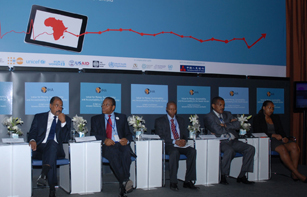
Panellists at a conference session on 4 July focused on African innovation. (Left to right): UNAIDS Executive Director Michel Sidibé; Hon. Tim Thahane, Minister of Minerals, Energy and Water Affairs, Lesotho; Mr. Claude Sekabaraga, Senior Health Systems Strengthening and Results Based Financing Specialist, World Bank; Hon. Kebede Worku, State Minister of Health, Ethiopia; Ms Kampeta Sayinzoga, Permanent Secretary, Ministry of Finance, Rwanda.
Addressing 60 Ministers of Finance and Health at a conference in Tunis on 4 July, UNAIDS Executive Director Michel Sidibé praised African leaders for their increased engagement and partnership in HIV responses across the region.
“AIDS investments have fuelled progress across the health and development spectrum,” said Mr Sidibé, who participated in a conference session focused on African innovation.
Strategic HIV investments in Africa have yielded multiple returns. In 22 countries of sub-Saharan Africa, the rate of new HIV infections dropped by more than 25% between 2001 and 2009. More than 5 million Africans are now receiving antiretroviral treatment—up from just 50 000 a decade ago.
However, these gains are fragile. Every day, 3500 Africans die of AIDS. An estimated 5 million Africans who need HIV treatment are still not accessing it. About 300 000 children in Africa continue to be born with HIV every year.
AIDS investments have fuelled progress across the health and development spectrum.
UNAIDS Executive Director Michel Sidibé
In the current economic downturn, scarce resources must be used with greater efficiency, transparency and accountability, said the UNAIDS Executive Director, in a presentation entitled African solutions to achieve greater value for money. He highlighted cost-effective policies and programmes that have delivered sustainable results on the ground.
In South Africa, for example, unit costs of HIV drugs have been significantly reduced as more people access treatment—from US $500 to $200 per person. Other countries have reduced programme costs by eliminating parallel structures and stand-alone health services.
Investing in innovation
African leaders can accelerate progress by investing in innovation, said Mr Sidibé. Through partnerships with emerging and industrialized economies, they should facilitate the transfer of technologies for medicines and commodities. By focusing resources on HIV research and development, they could build Africa’s knowledge-based economy, he added.
Mr Sidibé encouraged ministers attending the conference to reduce Africa’s dependency on imported HIV medicines through the local production of antiretroviral drugs. He said that a single drug regulatory authority in Africa could ensure the faster roll out of quality-assured medicines.
A new paradigm
Africa is poised to transcend the outdated donor-recipient paradigm, said the UNAIDS Executive Director. Leaders are beginning to embrace a new global compact for shared responsibility and national ownership, he said.
Organized by Harmonization for Health in Africa and hosted by the African Development Bank, the two-day conference in Tunis brought together ministers, parliamentarians and high-level representatives from international organizations, civil society and the private sector.

Feature Story
An HIV test in the privacy of your own home
04 July 2012
04 July 2012 04 July 2012
A sign reading "Know your HIV status", promoting HIV testing in Livingstone, Zambia
Credit: Avert/Jon Rawlinson
The fact that fewer than half of people living with HIV do not know that they are infected with the virus is a huge barrier to treatment scale up and realizing the benefits of treatment for prevention. The situation in some of the worst affected areas is even more serious––a recent national study in Kenya showed only 16% of people living with HIV knew that they were infected.
Despite the advances in technology, testing is still approached with fear, accessing clinics is inconvenient and the experience of HIV testing is often stigmatizing. Stigma or anticipated stigma has been found to be a powerful barrier to testing uptake.
One option to radically shift test access is self-testing at home. The option for self-testing at a time and place of a person’s own choosing creates the potential to overcome some of the barriers of stigma, lack of confidentiality and difficulty in access that often apply to testing in test centres or clinics.
A strong advocate for home testing is Edwin Cameron, Justice of the Constitutional Court in South Africa, he said that knowing your HIV status “simply ought to be a part of life” and that “people have a right to access accurate tests and use them in the privacy of their own home; that won’t solve every problem of accessing treatment and care or negotiating safe sex, but is a simple and affordable way to take the first step.”
A variety of tests, from finger pricks to mouth swabs, can produce results in 1–20 minutes. The cost of these tests is now measured in pennies––yet most are still not yet available for use at home.
Offering more HIV testing options is a significant move forward for the US’s response to HIV and provides a unique opportunity to further expand access to HIV prevention and treatment services
UNAIDS Executive Director Michel Sidibé
The availability of home self-testing would allow a significant number of people who would not otherwise know their HIV status to find out. The key consideration will be to facilitate the linkage into care of people who find themselves HIV positive on self-testing.
If accompanied by a comprehensive and fail-safe referral system so that people who test positive are immediately able to go for a confirmatory test and be linked into care, home testing could be an extremely effective way of allowing people to know their HIV status and access antiretroviral treatment.
The United States Food and Drug Administration approved on 3 July a rapid test kit for HIV for over-the-counter sale in the United States, welcome news which will support the United States’ efforts to avert new HIV infections.
“The cycle of stigma and discrimination which prevents people from knowing their HIV status can now be broken,” said UNAIDS Executive Director Michel Sidibé. “Offering more HIV testing options is a significant move forward for the US’s response to HIV and provides a unique opportunity to further expand access to HIV prevention and treatment services.”
The UK also has support for legalizing HIV home-testing kits, particularly among gay men. In September 2011, the United Kingdom’s House of Lords select committee on AIDS recommended repealing laws that prohibit home HIV testing.
In March 2012, the Southern African HIV Clinicians Society, the Treatment Action Campaign and SECTION 27 hosted a meeting of health workers, counselling organisations, activists and the National Department of Health to consider how to improve HIV testing and counselling. As well as recognizing the historic effort of the South African government to support a mass testing campaign that has reached more than 10 million people since 2010, the meeting concluded HIV self-testing should be added to the mix of ways people can know their HIV status. Importantly, the gathering agreed it “is vital to have systems and public information that guards against abuse and misuse of self-testing in a home environment, particularly of women and children.”
As more and more attention shifts to people-centred AIDS responses, self-testing for HIV at home promises to be an important tool to enable people to take control of their HIV prevention options.
Related

Feature Story
UNAIDS Executive Director meets with the new leadership of Tunisia
04 July 2012
04 July 2012 04 July 2012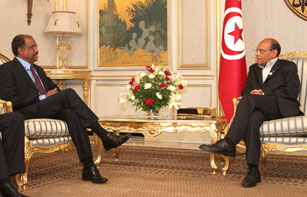
UNAIDS Executive Director Michel Sidibé met on 3 July with the President of Tunisia, Moncef Marzouki (right) and other high-level government officials.
Meeting on 2-3 July with top officials of Tunisia’s new tripartite coalition government, UNAIDS Executive Director Michel Sidibé praised the country’s leadership for its strong commitment to reducing stigma and discrimination—a key barrier to progress in HIV responses across the region.
While Tunisia has a relatively low HIV prevalence, at about 0.06% of the national population, evidence has shown pockets of high HIV prevalence among key populations, including injecting drug users, sex workers and men having sex with men. These populations often face stigma and discrimination which can hamper access to health services and nurture the HIV epidemic.
In his discussions with the President of the Republic, Moncef Marzouki, Head of Government, Hammadi Jebali, and Vice-President of the National Constituent Assembly, Meherzia Laabidi—three leaders who recently came to power in the country’s first democratic elections—Mr Sidibé noted that youth were the engine of the revolution that brought political change to Tunisia.
“Investing in young people and responding to their aspirations for a more just and equitable society will be critical to the future advancement of this country,” said Mr Sidibé. “Youth can play an important role in accelerating Tunisia’s response to HIV and other health challenges,” he added.
Increasing local production of HIV medicines
We need to recognize the existence of high-risk behaviours in our societies, such as injecting drug use, sex between men and commercial sex
Meherzia Laabidi, Vice-President of the National Constituent Assembly
Speaking with Mr Sidibé at the Presidential Palace on 3 July, President Marzouki expressed his strong commitment to strengthening the national HIV response. He said that Tunisia would strive to achieve the vision of “three zeroes”—zero new HIV infections, zero discrimination, zero AIDS-related deaths—and highlighted three priority areas for action: improving public health, ensuring human rights and addressing the socio-economic drivers of HIV.
The President noted that Tunisia could help reduce Africa’s dependency on external aid by producing antiretroviral medicines. He pledged to advocate for greater local production of medicines at the next meeting of the New Partnership for Africa’s Development (NEPAD) in Addis Ababa. Currently, a majority of drugs dispensed in Tunisia—and across the African continent—are imported.
Reducing dependency on external aid
In a meeting with Mr Sidibé later that day in La Kasbah Palace, Tunisia’s Head of Government echoed the President’s remarks on local drug production. “I support the idea of Tunisia producing antiretroviral medicines to reduce its dependency on external aid,” said Mr Jebali. “The production of antiretrovirals presents not just an economic opportunity, but also a humanitarian opportunity,” he added.
There was mutual agreement between Mr Jebali and Mr Sidibé that Tunisia should assume greater ownership of HIV prevention programmes that support key affected populations; currently, such programmes are funded exclusively through international sources.
Acknowledging high-risk behaviours
It is time for Tunisia to face the facts on HIV, said the country’s Vice-President, Meherzia Laabidi, in a separate meeting with Mr Sidibé at the Palace of the Assembly. “We must move beyond official political denial. Just closing our eyes won’t stop the fire,” she added.

UNAIDS Executive Director Michel Sidibé (left) with the Tunisian Head of Government, Hammadi Jebali.
In her discussions with Mr Sidibé, the Vice-President recognized that ensuring a socially inclusive society is the responsibility of political leaders. She said that neglecting key populations at high risk of HIV infection puts everyone in danger. “We need to recognize the existence of high-risk behaviours in our societies, such as injecting drug use, sex between men and commercial sex,” she said.
Noting that access to basic health services is a human right, Ms Laabidi underscored the importance of including the “right to health” in the new Tunisian constitution, currently under development.
During his two-day mission in Tunisia, the UNAIDS Executive Director met with several other government officials, including the Minister of Health, Dr Abdellatif El Mekki, and the Minister of Human Rights and Transitional Justice, Samir Dilou. He also engaged with people living with HIV, representatives from key affected communities and the United Nations country team.

Feature Story
Dr Nafis Sadik: A decade as UN Special Envoy for AIDS in Asia and the Pacific
04 July 2012
04 July 2012 04 July 2012
Dr Nafis Sadik (second from the left, back row) with people living with HIV during an official visit to Viet Nam.
Dr Nafis Sadik, a national of Pakistan, was appointed Special Envoy of the Secretary-General for AIDS in Asia and the Pacific in 2002. In ten years as Special Envoy, she has travelled extensively across the region to promote key issues and advocate for an expanded, multisectoral response to HIV in Asia and the Pacific at the highest levels.
In the last decade, Dr Sadik has consistently called attention to the importance of addressing the needs of women and key affected populations in national AIDS responses and the need to involve key populations directly in making and carrying out development policy.
As her Special Envoy tenure came to an end on 30 June 2012, Dr Sadik shares her reflections on her decade of work as UN Secretary General’s Special Envoy for AIDS in Asia and the Pacific and why she feels speaking out about HIV is the only way to advance progress.
UNAIDS: When you were first appointed as Special Envoy for AIDS in Asia and the Pacific, what were the key HIV-related issues and challenges at that time in the region?
Dr Sadik: The main challenge was that countries were not recognising that they had a problem with HIV. In 2002 we already had the Millennium Development Goals (MDGs), with halving HIV infections by 2015 as one of the goals, but many countries in the region were not paying attention to that MDG at all. For the United Nations this was a concern. We needed to do something ‘now’ and we knew that if countries took action they could avert big epidemics.
UNAIDS: In beginning, what kind of missions were you undertaking as Special Envoy?
Dr Sadik: I had been the Executive Director [of UNFPA] and knew many Heads of State, so the idea was to do strong advocacy with them on the need to have a policy and an action programme on HIV. My first visit was to Nepal, to be a keynote speaker at a regional conference. I was rather bold. I used the opportunity to talk about issues that people weren’t talking about—men who have sex with men, sex workers, drug use etc. The speech was quite dramatic and I think people got a bit shocked. I even went so far as to say that I thought these behaviours should be legalized immediately! Of course, I gradually saw that things don’t change that dramatically, that instantly, but bit by bit change can be encouraged.
UNAIDS: The Asia-Pacific region has seen significant progress in the last 10 years. HIV infection rates are down more than 20% and nearly one million people are now receiving antiretroviral treatment. In the last decade, what has shifted in the region?
Countries have realised AIDS is a reality for all their societies. All the countries in the region now have policies and programmes on HIV and that wasn’t the case when I started
Dr Nafis Sadik, former Special Envoy of the Secretary-General for AIDS in Asia and the Pacific
Dr Sadik: Countries have realised AIDS is a reality for all their societies. All the countries in the region now have policies and programmes on HIV and that wasn’t the case when I started. Some countries are turning back their epidemics; the number of people on HIV treatment is tremendous; more people are getting access to services; and there’s been a big push on understanding issues of gender and about key affected populations.
I have been impressed by the attention that lawmakers are giving to HIV. And a great deal has been accomplished to bring high risk and vulnerable groups into the mainstream. Laws have changed in several countries, for example, Nepal and Pakistan now give transgender people an official ‘identity’. This makes a huge difference, with human rights in general being recognized.
UNAIDS: What are some of the on-going challenges you see in the region?
Dr Sadik: People are still not speaking out consistently about AIDS at all levels. Leadership makes a difference but this should not be leadership just for one day a year on World AIDS Day. Advocacy needs to be done often and at all levels. If there is more consistent advocacy from the top, leaders speaking out more frequently on HIV and related issues, this will address stigma and discrimination a lot.
UNAIDS: As the HIV response in Asia and the Pacific moves forward, what do you think is most important for the region to ‘get to zero’?
Dr Sadik: Changing male behaviour is very important. The Asia Commission report was very clear that male behaviour is key to addressing the epidemic in the region. If we can help change this into safe behaviour, this can make a difference. Having more male champions is very important.
The breakthrough on ‘treatment as prevention’ is very important but we also need to remember that access to affordable HIV treatment is under threat. Many people receiving treatment in the region are getting it thanks to funds provided by external donors—which may now be phased out or reduced. A number of countries gaining middle-income status won’t be eligible for certain external funding anymore. This is a matter of some concern and we have to work more effectively with the countries and development partners to have phase-out plans that ensure on-going treatment.
In July 2012, Mr Prasada Rao—India’s former Secretary for Health and Family Welfare and former Director of the UNAIDS Regional Support Team in Asia-Pacific—was appointed as the new UN Secretary General’s Special Envoy on AIDS in Asia and the Pacific.



Feature Story
Youth to play a key role in the AIDS response in Eastern Europe and Central Asia as EURO 2012 ends
03 July 2012
03 July 2012 03 July 2012
Anti-AIDS charitable concert in Kiev, Ukraine, ahead of the 2012 European Football Championship final.
“In football and in life you need to look ahead,” said UNAIDS Goodwill Ambassador Michael Ballack to the TV viewers of the anti-AIDS charitable concert given by Elton John and Queen in Kiev, Ukraine, ahead of the 2012 European Football Championship final. “Every day 3 000 young people become infected with HIV. We can stop that. Protect yourself and your partner!” stated Ballack.
Entitled Your Life is Not a Game. Let's Stop AIDS Together!, the concert was organized by the Elena Pinchuk ANTIAIDS Foundation in collaboration with the Union of European Football Associations (UEFA). It was broadcasted live in Ukraine and Poland as part of the events related to the Euro 2012 tournament hosted by Poland and Ukraine between 8 June and 1 July 2012.
EURO 2012 provided an excellent opportunity to highlight the AIDS epidemic among a large audience across Europe as millions of fans, communities and nations watched the games, listened to football players and engaged in social activism.
UNAIDS Goodwill Ambassador HRH Crown Princess of Norway Mette-Marit also delivered a message to the Ukrainian and regional youth: “I strongly believe in young people,” said Mette-Marit. “Youth leadership and empowerment can make miracles. If you unite your forces and raise your voices, you will be heard by decision makers. And one day you will be the decision makers,” she added.
There is a need for new voices, new energy and new ideas to address the vulnerability of youth, to promote HIV prevention and to advocate for tolerance towards people affected by AIDS in the region
UNAIDS Director, Regional Support Team for Eastern Europe and Central Asia, Jean-Elie Malkin
Youth opinion leaders can play an important role in social change, including the transformation of prejudice and stigma associated with HIV, as they are known and admired by their peers—young people look up to them as role models. Their voices can help drive important messages on HIV prevention as well as overcome widespread stigma and discrimination.
Regional Youth Team
During the Euro 2012, a new Regional Youth Team comprised of young leaders in sport, music and youth culture in the Eastern Europe and Central Asia region was introduced in Kiev with support from UNAIDS. The Team will focus on galvanizing the commitment of young people in effective HIV prevention and promoting youth activism as a key pillar to change society’s attitude towards people affected by AIDS. Stigma and discrimination continue to be important barriers in effectively responding to HIV in the region.
“Young people remain at risk in all parts of the region,” said Jean-Elie Malkin, UNAIDS Director, Regional Support Team for Eastern Europe and Central Asia. “There is a need for new voices, new energy and new ideas to address the vulnerability of youth, to promote HIV prevention and to advocate for tolerance towards people affected by AIDS in the region,” he added.
During a three-day programme in Kiev, the Team gave a concert at the main stage of the Euro 2012 Fan-Zone, visited a clinic providing HIV services and talked to HIV-positive patients, played friendly football matches with people affected by the epidemic. The members of the Team also gave TV and radio interviews where they called upon millions of young football fans to avoid actions that put them at risk for HIV and to respect rights of people living with HIV and break down barriers created by stigma and discrimination.

The members of the Regional Youth Team
“Young people are often not aware of the danger of AIDS,” said Farhod Tarifi 2010 Taekwondo Junior World Champion from Tajikistan and member of the Youth Team. “For them, it is just a word, something that can never happen to them. But unfortunately it can happen to anyone. Everybody should be prepared!” he added.
The Youth Team will promote solidarity with people living with HIV in their respective countries through the use of social media networks, fan-clubs, addressing their audiences at concerts and media interviews, participating in World AIDS Day events and other HIV-related activities. The Team will also participate in regional and international music and sport events such as the world university games Universiade 2013 which will take place in Kazan, Russia.
The members of the Regional Youth Team include DJ Vakcina (Disk Jockey, Armenia), Azad Shabanov (composer and singer, Azerbaijan), Ura Vashuk (composer and singer, Belarus), Kanykei (singer, Kyrgyzstan), Dara (composer and singer, Moldova), Julia Lasker (composer and singer, Russia), Farhod Sharifi (2010 Taekwondo Junior World Champion, Tajikistan), Vlad Darwin (composer and singer, Ukraine), Jassur Mirsagatov (composer and singer, Uzbekistan).
The HIV epidemic in Eastern Europe and Central Asia is still on the rise. An estimated 1.4 million [1.3 million – 1.6 million] people were living with HIV in the region in 2009, almost triple the number reported in 2000.
External links
External links


Feature Story
Panama to sort out challenges in delivering antiretroviral medicines
29 June 2012
29 June 2012 29 June 2012
The First Lady of Panama and Chair of the CONAVIH, Ms Marta Linares De Martinelli and UNAIDS Deputy Executive Director, Programmes, Dr Paul De Lay. Panama City, Panama. 28 June 2012.
Credit: UNAIDS
The National AIDS Authority of Panama (CONAVIH) held its quarterly session on 26 June 2012. The meeting reviewed the stock out of antiretroviral (ARV) medicines that has been affecting the country in the past months.
The First Lady of Panama and Chair of the CONAVIH, Ms Marta Linares De Martinelli highlighted the need for all partners involved in the national AIDS response to undertake the necessary actions to provide ARV medications regularly and permanently. “It is a matter of life or death,” Ms Linares stressed.
The meeting brought together high level government representatives from the Ministry of Health, the Ministry of Finance and the Ministry of Education as well as civil society leaders and people living with HIV. UNAIDS Deputy Executive Director, Programmes, Dr Paul De Lay participated in the session at the special invitation from the First Lady.
Dr De Lay commended the authorities on the progress made in scaling up access to antiretroviral treatment but also stressed the need to identify new mechanisms for the distribution of ARVs to avoid stock outs in the future. “Timely and uninterrupted provision of medications to people living with HIV is a matter of commitment to human rights” affirmed Dr De Lay.
The ARV stock outs that occurred in the country were attributed to delays in the ARV purchase due to complex institutional regulations. Participants at the meeting agreed to establish a coordinating committee to identify existing barriers to purchase and provide ARVs. This committee will include representatives from civil society, pharmacists and physicians from health service institutions.
The need for a more precise calculation of annual ARV requirements was also seen as key to avoid stock outs together with a faster process for import, legalization and distribution of medications to the 15 local health facilities where people living with HIV are attended. Currently there are around 11 000 people living with HIV in Panama of which 6 000 are receiving ARV treatment.
Eliminating new HIV infections among children
Dr De Lay congratulated the First Lady´s leadership in the implementation of the national strategy to eliminate new HIV infections among children and keeping their mothers alive. "This country may be one of the first countries in Latin America to achieve the goal of zero new HIV infections among children by 2015," expressed Dr De Lay. “Panama has everything that’s needed to reach this goal even ahead of 2015. However, it is still necessary to expand the current 76% coverage of HIV testing to all pregnant women, especially in rural areas" he added.
The First Lady stressed her commitment as the Chairperson of the National AIDS Commission to scale up the coverage of prevention of mother-to-child transmission services to all women in need throughout the country. “We will increase our efforts in order to achieve the target of zero new HIV infections among children.” concluded the First Lady.
Feature Story
Award-winning youth drama Shuga: Love, Sex, Money to reach new audiences in radio format
28 June 2012
28 June 2012 28 June 2012A version of this story was first published at www.unicef.org

Young audiences in six African countries will be able to share the experiences of a vivid cast of characters in a dramatic new radio show: Shuga: Love, Sex, Money. The programme hit the airwaves on 27 June in Cameroon, Democratic Republic of Congo, Kenya, Lesotho, South Africa and Tanzania across 65 stations.
During 12 eight-minute episodes, the show provides a view in the lives of a group of four fictional characters aged 15 to 24. The series tells the story of their dreams, friendships, challenges and triumphs in a world with HIV.
Shuga Radio has been developed from the award-winning original TV version and is supported by UNICEF, MTV Staying Alive Foundation and the PEPFAR Partnership for an HIV Free Generation. They are working in collaboration with young people and representatives from government and partners in participating countries to reach an estimated listenership of 45 million in the region.
The radio show’s storyline examines a similar range of themes to those in the TV drama including; HIV counselling and testing, condom use in stable relationships, positive prevention, gender inequality and sexual violence, transactional sex, alcohol abuse and the role of multiple concurrent partnerships in the HIV epidemic.
Exploring such issues is crucial, given the vulnerability of young people to HIV in sub-Saharan Africa, which has one of the highest rates of infection in the world. In addition, most youths living with the virus do not know their status.
“Every day there are more than 2 500 new HIV infections in young people across the world, four out of 10 are in sub-Saharan Africa and the vast majority of these are young women and adolescent girls,” said Geeta Rao Gupta, UNICEF Deputy Executive Director. “Shuga, an initiative that combines media with a partnership for service delivery, is an example of how to work with partners and young people to reach key audiences and maximize the return on investments for HIV prevention.”
Shuga is an example of how to work with partners and young people to reach key audiences and maximize the return on investments for HIV prevention
Geeta Rao Gupta, UNICEF Deputy Executive Director
The 12 episodes will be followed by two 25-minute pre-recorded magazine shows which further examine the topics covered with young people, experts from the focused countries and global and national cooperating partners.
Content and storyline for Shuga Radio were written and created by 30 young people from the six countries in a special workshop hosted by Question Media Group with support from MTV and UNICEF.
Among the characters whose moving stories will be told in the show are Sofia,19; her sweetheart Fally, 20; her cousin Amina,17; smooth-talking risk-taker Karis, 20, and a successful business woman and ‘sugar mummy’ Riziki.
“We are delighted to expand the scope and impact of the Shuga TV series by moving the concept into the radio medium where it will reach millions of listeners on youth, student and community stations who may not have had access to the TV series,” said Georgia Arnold, Executive Director, MTV Staying Alive Foundation.
Available in English, French and Swahili, Shuga Radio will air three times a week for 12 weeks.
The partners behind the project hope that it will emulate the success of the first two series of Shuga broadcast on television in 2009 and 2012. The first reached viewers in more than 48 sub-Saharan African countries and in over 70 nations worldwide.
Research conducted by Johns Hopkins University/Centre for Communications Programmes in Kenya following the airing of Shuga (series I) reported a number of positive outcomes. These included increased intention to go for HIV testing and decreased intention to have multiple sex partners, improved attitudes towards people living with HIV and increased usage of accessible health and social services among youth who had watched the series.
External links
External links
Feature Story
HIV in Libya: New evidence and evolving response
28 June 2012
28 June 2012 28 June 2012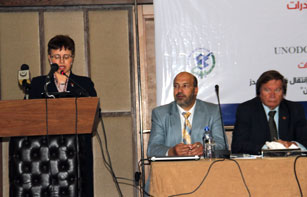 L to R: H.E Dr Fatima Elhamrosh, Libyan Minister of Health, Dr Badereddin Annajar, Director General of the National Center for Disease Control and Olavi Elo, Special Envoy for the UNAIDS Executive Director to Libya.
Credit: UNAIDS
The HIV prevalence among people who inject drugs in the Libyan capital Tripoli is at an alarming 87% according to the results from bio-behavioral surveys conducted by the Liverpool School of Tropical Medicine with the support of the European Union. Reaching out to 328 injecting drug users, 227 men who have sex with men (MSM) and 69 female sex workers, the study was designed to indicate the progression of HIV prevalence among key populations at higher risk.
The results of the study were presented during the first National HIV Symposium in post-conflict Libya that took place 26 June in the Libyan capital Tripoli under the auspices of the Libyan Minister of Health in collaboration with the Joint United Nations Programme on HIV/AIDS (UNAIDS), the World Health Organization (WHO) and the United Nations Office on Drugs and Crime (UNODC).
In light of the new evidence, the Libyan Minister of Health, H.E. Dr Fatima Elhamrosh called for urgent action from all concerned sectors in Libya. “We will need to develop and implement comprehensive programs to respond to the growing AIDS epidemic among key populations in Libya,” said Minister Elhamrosh.
Before the revolution that took place in the spring of 2011, it was difficult for UNAIDS and international development partners to work systematically in Libya. AIDS was not openly discussed nor considered a priority. The new data confirms that the HIV situation in Libya is worse than what was officially reported in the past.
“We very much welcome the remarkable political commitment of the government of Libya towards responding to the AIDS epidemic,” said Hind Khatib, Director of UNAIDS Regional Support Team for Middle East and North Africa. “The commitment of Her Excellency, the Minister of Health to expand drug treatment services providing a range of evidence-based responses and the establishment of eight Voluntary Counselling and Testing centers focusing on key populations are clear examples of the growing governmental commitment,” added Ms Khatib.
We will need to develop and implement comprehensive programs to respond to the growing AIDS epidemic among key populations in Libya
Libyan Minister of Health, H.E. Dr Fatima Elhamrosh
UNAIDS recommendations in relation to HIV prevention responses among injecting drug users stress the need to develop a comprehensive set of measures consisting of the full range of treatment options—notably drug substitution treatment—and the implementation of harm reduction measures—through, among others, peer outreach to injecting drug users, and sterile needle and syringe programmes. Also, voluntary confidential HIV counseling and testing, prevention of sexual transmission of HIV among drug users (including condoms and prevention and treatment for sexually transmitted infections), access to primary healthcare and access to antiretroviral therapy. Such an approach must be based on promoting, protecting and respecting the human rights of drug users.
Following the change of government, UNAIDS has provided technical support to the Ministry of Health and UN Country Team in Libya to address the emerging HIV priorities. This has resulted in better identification of priorities, improved understanding of the HIV situation and response, the establishment of the Joint UN team on AIDS and improved commitment from the government, UN and civil society organizations.
At the end of the symposium, participants endorsed a statement of commitment to scale up the national AIDS response in Libya with focus on HIV prevention programs among key populations, rights of people living with HIV and expanded role of civil society in the national response.
UNODC also re-launched the second phase of their HIV project in Libya that focuses on HIV prevention among people who injecting drug and in prison settings. The project, funded by the Libyan government, was suspended in 2011 due to the security problems and is now being resumed.
"UNODC warmly welcomes the expressions of political will and commitment by the Libyan government to respond to the HIV and drug use crisis as a matter of national priority,” stated Masood Karimipour, Regional Representative of United Nations Office on Drugs and Crime. “UNODC is proud to be in partnership with Libya to help provide a comprehensive response to prevent drug use and the spread of HIV as well as to treat people in need in coordination with all national stakeholders, UNAIDS and the international community,” Added Mr Karimipour.