Feature Story
TB and HIV integration discussed at AIDS 2012
22 July 2012
22 July 2012 22 July 2012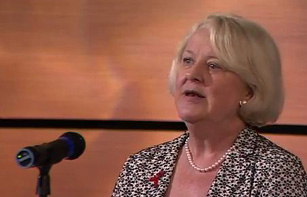
Ms Jan Beagle, UNAIDS Deputy Executive Director, Management and External Relations, spoke during the show and reiterated UNAIDS’s commitment to working with partners in support of the global target to halve TB deaths in people living with HIV by 2015.
Credit: UNAIDS
Tuberculosis (TB) remains one of the leading causes of death among people living with HIV globally, yet TB is mostly preventable and curable. Reducing TB deaths in people living with HIV by 50% by 2015 is one of the 2015 global AIDS targets.
To give voice to TB and HIV affected communities around the world by sharing their experience and views on the way forward in the fight against the two diseases, a live web casted talk show took place during the International AIDS Conference entitled “Tuberculosis + HIV: Protecting the Vulnerable”.
The talk show was hosted by Jeanne Meserve, former CNN and ABC reporter, and Gerry Elsdon, the International Federation of Red Cross and Red Crescent Societies (IFRC) TB Goodwill Ambassador and a South African TV personality who suffered from tuberculosis in the past. The show brought together a dynamic group of women and young people who have suffered from tuberculosis and HIV, as well as the representatives of multilateral organizations such as the Stop TB Partnership, WHO, IFRC, the Global Fund to fight HIV/AIDS, TB and Malaria, and UNAIDS.
The talk show also featured video addresses by Archbishop Tutu, who himself is a former TB patient and Jorge Sampai, UN Secretary-General Special Envoy for Tuberculosis.
Panelists took the opportunity to highlight the need for a closer collaboration between HIV and TB programmes, and about the urgent need for better investment in TB research. They also emphasized the need to invest more in integrating TB screening, treatment and care into antenatal care and maternal and child health services in general. Children most frequently get TB infection from a close relative, usually their mother, thus preventing, diagnosing and treating TB in women will reduce the risk of TB infection and disease in children.
Ms Jan Beagle, UNAIDS Deputy Executive Director, Management and External Relations, spoke during the show and reiterated UNAIDS’s commitment to working with partners in support of the global target to halve TB deaths in people living with HIV by 2015. She underscored that “UNAIDS advocates for TB service providers to reach many who are the most vulnerable and at risk, but who have the greatest problems in accessing services – migrants, indigenous people, prisoners, sex workers and women and children affected by poverty, violence, stigma and discrimination.“
The talk show was organized by the Stop TB Partnership and the International Federation of Red Cross and Red Crescent Societies.
Multimedia
Multimedia
External links
External links
Related
Feature Story
More effective AIDS coordination at country level discussed at AIDS 2012
22 July 2012
22 July 2012 22 July 2012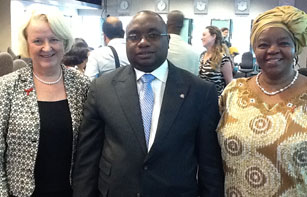
L to R: UNAIDS Deputy Executive Director, Management and Governance, Ms Jan Beagle, Minister of Public Health, Democratic Republic of Congo, HE Felix Kabange, and the UNAIDS Director, Regional Support Team for Eastern and Southern Africa, Sheila Tlou.
Evidence indicates that coordination and governance of the HIV response have posed significant challenges for many countries. To review lessons learned and establish key principles for more effective coordination of the AIDS response, a meeting took place during the International AIDS Conference entitled Fit for purpose: striving for more effective AIDS coordination at country level.
The meeting brought together representatives of National AIDS Commissions, civil society organizations, regional bodies and development partner organizations to reflect and re-direct energies to explore what a truly country owned and accountable public sector governance body for HIV should look like.
Participants at the meeting took the opportunity to debate about the future of coordination of the AIDS response and to agree on key principles for a framework of effective response coordination, through shared responsibility and global solidarity.
The principles presented focused on, amongst other things, the need for governments to take the lead of the AIDS response in the context of shared responsibility and global solidarity, inclusion of multiple stakeholders in the AIDS response, cross learning between other areas of health, development and HIV programming, and development of AIDS programmes based on country priorities and local experience of what works to achieve maximum accountability.
Ms Jan Beagle, UNAIDS Deputy Executive Director, closed the meeting by urging the participants to celebrate the successes they have achieved so far in tackling AIDS, while also looking to what more can be done in order to ‘get to zero’ new infections, AIDS related deaths and AIDS related stigma and discrimination, using actions and mechanisms that will be sustained and owned by national stakeholders. She emphasized that the positive lessons from the last decade of AIDS coordination need to be brought into the discussion, especially how coordination structures and processes have boosted greater transparency, inclusion of non-governmental stakeholder and emphasized equity and human rights.
The meeting was organized by UNAIDS, together with the World Bank, the United Nations Development Program, the World Health Organization, the German Agency for International Cooperation and the Global Fund to Fight AIDS, TB and Malaria.
Feature Story
The importance of remembering: The AIDS Memorial Quilt unveils at AIDS 2012
21 July 2012
21 July 2012 21 July 2012
L to R: UNAIDS Executive Director Michel Sidibé, UNAIDS Goodwill Ambassador Annie Lennox, Trina Scott from Advocates for Youth, Patrick Holzfaster from Levi Strauss & Co. and Julie Rhoad, Executive Director of the NAMES Project. Washington DC, 21 July 2012. Credit: UNAIDS/C.Kleponis
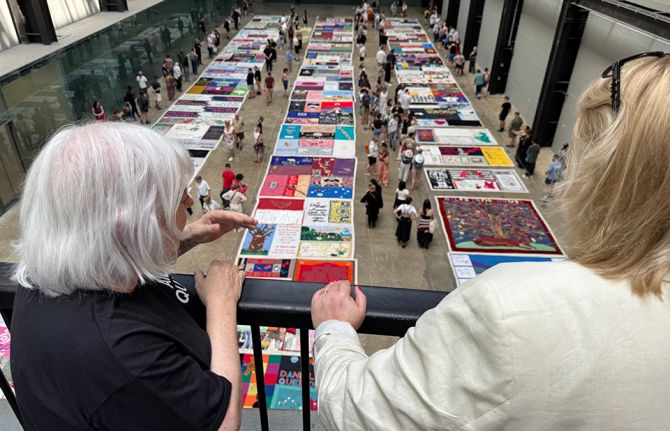
As thousands of delegates from around the world gather for the XIX International AIDS Conference in Washington, the NAMES Project AIDS Memorial Quilt, one of the most prominent symbols of the global response, was unveiled across the metropolitan DC area.
UNAIDS Executive Director Michel Sidibé and UNAIDS Goodwill Ambassador Annie Lennox joined the NAMES Project Foundation, several high-level personalities and around 300 members of the YouthForce activist alliance at the unveiling ceremony at the Mall. After a section of the Quilt was unfolded, those gathered took turns to read the long list of names.
Part of the Quilt, which is now well over 30 years old, will be displayed in 50 venues from 21-25 July, including at the National Mall. The entire Quilt, the largest community art project in the world, carries the names of 94 000 people who have lost their lives to AIDS on more than 48 000 individual panels. During the ceremony, a single panel from 1988 that has yet to be sewn into the quilt was displayed publicly for the first time. The design of the panel simply says “The last one”.
The memorial, which is now 50 miles long, affords an opportunity to look back at the previous decades of the AIDS epidemic and to reflect on what needs to be done in future to ensure that no further names are added, that each new name should be the last one.
“It is possible to imagine a day when we will sew the last panel in the AIDS Quilt,” said Mr Sidibé. “Until that day comes, we must do everything we can to work towards an AIDS-free generation. We have a clear goal, so let us make it happen.”
Throughout its history, which began in 1987 when activists in San Francisco found a resonant way to remember friends and loved ones lost, the Quilt has been used to challenge prejudice and raise both awareness and funding. So far it has led to US$ 4 million in donations for services for people living with HIV. It is also been used as a means to join hands across the global community in the AIDS response and as an effective tool in HIV education and prevention. Based in the United States, the Quilt now has an international profile with panels from nearly 30 other countries.
According to Annie Lennox, the human toll of the epidemic and the real cost of inaction are starkly and powerfully presented in an arresting visual way.
“For thirty years, global AIDS activists and campaigners have been working to create the effective and lasting changes we need to see before we reach the stage of zero new HIV infections,” said Ms Lennox. “We are now at a crucial point in history when could actually see the dream become a reality in our lifetime. It is therefore, absolutely imperative that we see this thing through. We can, and we must,” she added.
It is possible to image a day when we will sew the last panel in the AIDS Quilt. Until that day comes, we must do everything we can to work towards an AIDS-free generation. We have a clear goal, so let us make it happen
UNAIDS Executive Director Michel Sidibé
There was an emphasis on youth at the ceremony; given the critical role young people have to play in the AIDS response now and in the future. They bear a heavy burden, with 2 400 new HIV infections among 15-24 year olds occurring every day: they account for 40% of all adults who are newly diagnosed as HIV-positive. The gathering heard how young people need to lead the challenge to the epidemic and that they hold the power to turn the tide in their hands.
The ceremony, though sombre, was also full of hope that in remembering those who have been lost, the AIDS community is further galvanized and reinvigorated in its effort to bring about the vision of zero new HIV infections; zero discrimination and zero AIDS-related deaths.
External links
External links


Feature Story
Young people to put themselves at the heart of AIDS 2012
18 July 2012
18 July 2012 18 July 2012
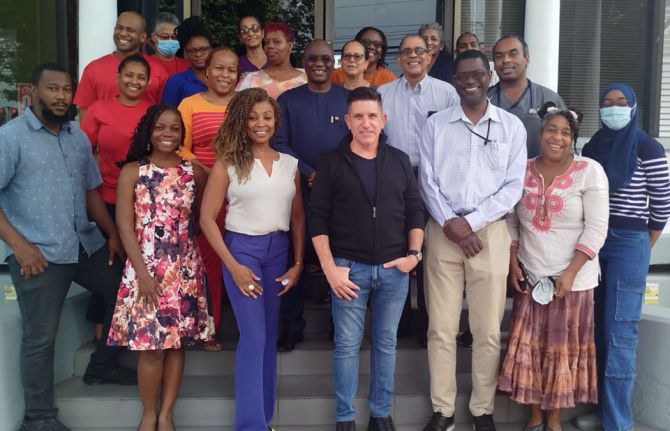
UNAIDS Executive Director Michel Sidibé with the young delegates participating at the youth pre-conference event. Washington, DC. 18 July 2012.
Every day 2 400 young people aged 15 to 24 are infected with HIV around the globe, which represents 40% of all new infections among adults. With this age group bearing a significant burden of the epidemic, they must be central to the AIDS response. An event on the eve of AIDS 2012 is bringing together around 200 young people to ensure that youth participation in the major international AIDS gathering of the year is meaningful and effective.
Taking place 18-20 July, the ‘pre-conference’ is an opportunity for young delegates to connect with their peers, plan strategy and maximize their ability to navigate AIDS 2012 successfully. The event offers the possibility to share high quality information on the latest trends in the epidemic along with an examination of youth-specific issues, challenges and needs. Skills-based training on HIV is also provided to the young participants. Organized by YouthForce--a coalition of youth organizations from around the world—the pre-conference youth event has provided an essential platform for young people since the Barcelona International AIDS Conference in 2000.
“Young people bring a fresh perspective to the HIV response, fueled by passion and creativity,” said Mimi Melles, pre-conference co-chair and Officer at Advocates for Youth. “We are innovators and change-makers, and without our meaningful involvement, we will never be able to achieve our targets of zero new infections, zero discrimination and zero AIDS-related deaths,” she added.
In the last few years, there has been a particular emphasis on addressing the needs of young people living with HIV and those from key affected populations such as men who have sex with men, injecting drug users and sex workers. In January of this year, the United Nations Secretary-General presented his five-year action agenda where he outlined working for women and young people as one of his five priorities. Similarly, in October 2011, UNAIDS launched CrowdOutAIDS — a youth-led policy project that used social media tools and crowdsourcing technology to enable young people from around the world to develop a set of recommendations for the UNAIDS Secretariat to work more effectively with young people in the AIDS response. The recommendations feed into the Secretariat’s New Generation Leadership Strategy aimed at increasing youth leadership, ownership and mobilization by 2015.
“We need a youth movement that takes ownership of the response and that holds governments accountable to scale up equitable access to HIV services,” said UNAIDS Executive Director Michel Sidibé speaking at the opening ceremony. “Through CrowdOutAIDS we enabled young people shape UNAIDS’ strategy for youth engagement, and I remain committed to implement it,” he added.
At the pre-conference event, UNAIDS together with the YouthForce will launch the collaboration project A Declaration for Change: How young people will achieve an AIDS-free generation - which will run for the duration of the pre-conference. It will allow all young people taking part in the event, as well as young people around the world, to outline a list of priorities that will lay the foundation for how youth organizations, networks and activists will collaborate and mobilize to reach the 2015 goals of the 2011 Political Declaration on AIDS.
Ways of effecting broad social mobilization among youth, especially young people in key populations, will be explored in detail during the youth event. High-risk populations often face significant challenges in accessing HIV treatment and other health care services because of stigma and discrimination.
Young people bring a fresh perspective to the HIV response, fueled by passion and creativity
Mimi Melles, pre-conference co-chair and Officer at Advocates for Youth
The meeting will also provide an opportunity to identify ways to remove existing social and legal barriers that block young people’s access to HIV services. For example, in nearly 70 countries there are laws or regulations that present obstacles to accessing HIV prevention services for young people. Only a fraction of nations in the most affected regions allow minors to access HIV testing without parental consent.
Not only is it seen as critically important for young people to act as leaders in the response, but concrete ways for youth to get involved in the design, implementation and monitoring and evaluation of HIV programmes will be debated. According to Aram Barra, YouthForce chairperson, his peers are more than ready for the challenge. “Organizations, networks and governments must build a long term strategy together, beyond AIDS2012, inclusive of newcomer activists and young people living with HIV,” said Mr Barra. “Only by doing this will we strengthen the global AIDS response,” he added.
During the three-day conference there will be a broad range of lively sessions including; HIV criminalization: Are you at risk?; Gay, lesbian, bisexual, transgender (GLBT) rights in the HIV movement; What is a successful youth-adult partnership?; Building youth AIDS competency for community action; Empowerment of young people in the sex trade; and How to tell a powerful story through photography.
Greater and better focused involvement of youth in the AIDS response will reap positive dividends as a significant portion of the general decline in new HIV infections is attributed to behavior change in the young. Between 2001 and 2010, HIV prevalence declined among people aged 15 to 24 in at least 21 of 24 countries with national prevalence of 1% or higher. The young delegates at AIDS 2012 are intent on using the conference to get their voices heard and help consolidate these gains when they return to their home countries.
External links
External links
Related


Feature Story
UNAIDS to launch new report –Together we will end AIDS
17 July 2012
17 July 2012 17 July 2012The new 2012 UNAIDS report Together we will end AIDS will be launched ahead of the XIX International AIDS Conference in Washington, DC, which is taking place from 22-27 July.
The report contains the latest data on numbers of new HIV infections, numbers of people receiving antiretroviral treatment, AIDS-related deaths and HIV among children. It also highlights new scientific opportunities and social progress, and gives an overview of international and domestic HIV investments.
The report will be launched during a high-level interactive panel discussion held at the Newseum in Washington DC. The event will bring together some of today’s influential thought-leaders on HIV, global health and development to share insights into the future of the AIDS response.
Watch the live webcast of the launch of Together we will end AIDS here
Related
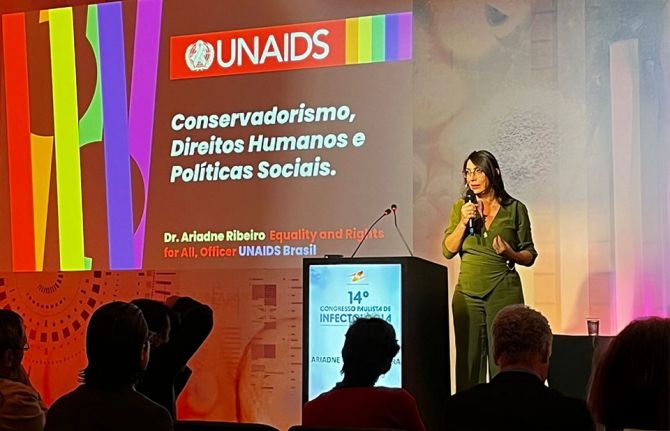 Upholding dignity for everyone: Ariadne Ribeiro Ferreira
21 November 2024
Feature Story
UNAIDS commends leadership of AIDS Watch Africa ahead of African Union Summit
14 July 2012
14 July 2012 14 July 2012
UNAIDS Executive Director Michel Sidibé (standing) consults with Mr Jean Ping, Chair of the African Union Commission (left), and President Boni Yayi of Bénin, AU Chair and Chair of AIDS Watch Africa, at a breakfast meeting on 14 July in Addis Ababa. Photo: UNAIDS/J.Ose
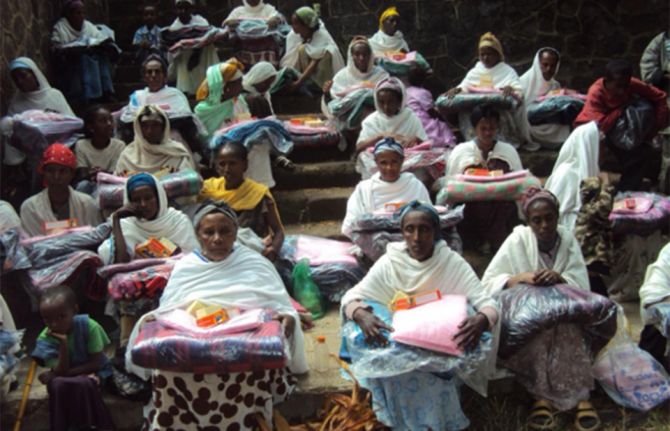
Addressing more than 20 African high-level officials at a meeting today in Addis Ababa, UNAIDS Executive Director Michel Sidibé praised AIDS Watch Africa (AWA) as a leader in HIV responses across the African continent. The meeting, hosted by AWA’s action committee, was held on the eve of the 19th African Union (AU) Summit.
"Africa needs AWA now more than ever,” said Mr Sidibé. “We need AWA to cultivate a common voice in Africa—one that embraces AIDS, tuberculosis (TB), malaria and other health challenges. We need AWA to provide oversight of health investments and to leverage those investments for broader development.”
Established by eight Heads of State and Government in 2001, AWA was originally designed as a platform for advocacy and accountability in Africa’s AIDS response. To date, its committee has played an important role in keeping AIDS high on the development agenda and in mobilizing domestic and international resources for HIV and health. In January 2012, AWA’s mandate was expanded to include TB and malaria, and its representation was broadened continent-wide.
Speaking alongside Mr Sidibé, Dr Boni Yayi, Chair of AWA and President of the Republic of Bénin, said that reversing the spread of HIV, TB and malaria in Africa would demand political will, leadership and shared responsibility. “We must redouble our efforts to prevent new infections and deaths linked to these diseases. The time has come to transform policy into action,” said Dr Yayi, who also serves as Chair of the African Union.
A new Roadmap on Shared Responsibility and Global Solidarity provides clear parameters for such action. Developed by the African Union Commission (AUC) and the New Partnership for Africa’s Development (NEPAD), with support from UNAIDS, the Roadmap offers practical solutions to enhance sustainable responses to AIDS, TB and malaria in Africa.
Structured around three strategic pillars—diversified financing, health governance and access to medicines—the Roadmap was reviewed and endorsed at today’s meeting by AWA committee members. It will be presented for adoption at the upcoming AU Summit.
"Effective fund mobilization and disbursement and access to treatment are critical for our response, which requires political leadership," said Mr Idriss Déby Itno, President of the Republic of Chad. "We must therefore stay committed to ensure that Africa does not suffer any longer."
Partnering with African legislators
Following the breakfast meeting, Mr Sidibé signed, on behalf of UNAIDS, a joint memo of understanding (MoU) with the Pan African Parliament calling for strategic partnership to advance sustainable responses to HIV. The MoU provides a platform for the two parties to join forces and advance a shared goal of “getting to zero.”
“As people’s representatives, legislators have a duty to remove obstacles that hamper universal access to HIV prevention, treatment, care and support. By partnering with legislators, we can close inequity gaps and get to zero new HIV infections, zero discrimination and zero AIDS-related deaths,” said the UNAIDS Executive Director.
We need AIDS Watch Africa to cultivate a common voice in Africa—one that embraces AIDS, tuberculosis, malaria and other health challenges.
UNAIDS Executive Director Michel Sidibé
Through this partnership, UNAIDS will work with legislators from across Africa, empowering them with up-to-date knowledge and information on HIV. Legislators, in turn, will become high-level advocates for the HIV response; they will work to ensure accountability, push through non-discrimination laws and encourage governments to commit the necessary resources. Preventing new HIV infections among children will be a key area of focus for the two agencies.
“PAP can be a great ally in supporting accountability, appropriate resource allocation, challenging stigma and discrimination, and realizing access to affordable and high quality HIV medicines on the continent,” said Hon Bethel Nnaemeka Amadi, the President of Pan African Parliament, following the MoU signing with Mr Sidibé.
NEPAD meeting
Later in the day, the UNAIDS Executive Director addressed the 27th Summit of the NEPAD Heads of State and Government Orientation Committee. He presented the new Roadmap and congratulated the AUC and NEPAD for taking the lead in developing it. “Through this Roadmap, African leaders are charting a new course towards shared responsibility and global solidarity,” said the UNAIDS Executive Director.
During the meeting, Ibrahim Assane Mayaki, Chief Executive Officer of NEPAD, presented a progress report on the work of NEPAD. Emphasizing NEPAD's critical partnership with UNAIDS, he said the two agencies would continue to collaborate closely on the planning and implementation of AIDS responses across the continent.
Multimedia
Multimedia
Feature Story
Women speak out about HIV in the Middle East and North Africa
13 July 2012
13 July 2012 13 July 2012
Hind Khatib-Othman, Director of UNAIDS Regional Support Team for Middle East and North Africa introducing the report with Hamidreza Setayesh, UNAIDS Regional Program Advisor, Noha El-Mikawy, Representative, The Ford Foundation, MENA and Rita Wahab, Regional Coordinator of Menarosa.
In “Standing Up, Speaking Out”, a new UNAIDS report launched on 12 July in Cairo, Egypt, 140 women living with HIV from 10 countries in the Middle East and North Africa (MENA) express the realities that shape the hopes and grievances of their lives. The voices in the report belong to members of MENA-Rosa, the first regional group dedicated to women affected by HIV.
Through face-to-face meetings, and long-distance networking, MENA-Rosa offers women living with HIV an opportunity to talk about their many trials, and occasional triumphs, in dealing with HIV, from medical matters to family affairs. But for change to take root in their personal lives, the members of MENA-Rosa are looking to fix the big picture, raising awareness among key decision makers of their many needs, and mobilizing money to reach their goals.
“There is a lot to do for women living with HIV in MENA. They face particular circumstances and have particular needs,” said Hind Khatib-Othman, Director of UNAIDS Regional Support Team for Middle East and North Africa. “The solutions are available, but we have to confront the stigma and create awareness. All efforts protecting women’s rights should include the rights of those living with HIV.”
Of the estimated 470 000 people living with HIV in MENA, approximately 40% are women. In a region that remains one of the only two where HIV infections and AIDS-related deaths continue to rise, the new report sheds light on a complex set of social, cultural and economic factors that leave women most vulnerable to infection.
One testimonial after another reveal in the report that information about living with HIV is weak at best, if not altogether missing, deeply affecting the lives of women who often face stigma and discrimination as a result of their HIV status. “At first, when they knew that I was infected, my family told me not to sleep or sit by the side of my daughter. They took her away from me. Afterwards, they started to understand that it was ok,” reveals one woman living with HIV from Yemen.
I hope, in future, people become more open so that the person living with HIV does not become isolated from society. We did not run towards this disease, nor choose to have it
Woman living with HIV from Algeria
The new report stresses that women engaging in risk-related behaviour, including sex work and injecting drug use, without adequate protection are wide open to HIV infection. Some women are infected through their husbands and others through harmful traditional practices such as early marriage. Economic dependency, which reduces women’s power to negotiate safe sex or to leave violent relationships, is also associated with heightened risk of HIV infection. Gender related violence runs deep in MENA as indicated by a number of national surveys.
Sexual and reproductive health is a pressing concern in the region, the report notes. Around 20 000 pregnant women across the region are estimated to be in need of services to prevent new HIV infection among children, while only an estimated 5% are receiving the care they need.
“Women have been at the heart of change in a region where people have taken to the streets demanding a life of dignity, equality, justice and human rights,” said Amr Waked, actor, activist and UNAIDS regional goodwill ambassador. “These are the same demands of women living with HIV and they deserve no less.”
Education, HIV prevention and access to quality HIV treatment are core to the solution according to the report. Efforts to engage governments, religious and community leaders to change policies, promote gender equality and confront stigma should not be spared.

Rita Wahab, Regional Coordinator of Menarosa speaking at the launch of the “Standing Up, Speaking Out” report with Hamidreza Setayesh, UNAIDS Regional Program Advisor.
The new report compiles the changes and recommendations put forward by women living with HIV in the MENA region. Some of these changes include improved access to quality education and employment for girls and women; guaranteed access to the best available care for HIV, including sustained anti-retroviral therapy; special training of doctors, nurses to reduce stigma and discrimination towards people living with HIV; and better access to sexual and reproductive health information and services, including HIV prevention and testing, for both married and single women.
“I hope, in future, people become more open so that the person living with HIV does not become isolated from society. We did not run towards this disease, nor choose to have it,” said a woman living with HIV from Algeria.
While the task is vast, the MENA region is still at an early stage of a major epidemic and has an opportunity of stopping HIV in its tracks. Groups like MENA-Rosa are raising their voices and advocating for a reform. The shifting political order in the Middle East and North Africa presents new challenges to, and new opportunities for, a better life for all citizens. For women living with HIV, the changes they want to see cannot come soon enough.
Publications
Feature Story
Summit on Family Planning stresses on linkages with HIV services
13 July 2012
13 July 2012 13 July 2012
Family planning can be a key contributor to reducing the number of unplanned pregnancies among women living with HIV.
Credit: UNAIDS/A.Gutman
Putting the spotlight back on family planning, the UK Government along with the Bill & Melinda Gates Foundation organised a summit in London to support the right of women and girls to decide, freely and for themselves, whether, when and how many children they have.
In partnership with the United Nations Population Fund (UNFPA), national governments, donors, civil society, the private sector, the research and development community, and others from across the world, the London Summit on Family Planning called for global political commitments and resources that will enable 120 million more women and girls to use contraceptives by 2020. Reaching this goal could result in over 200 000 fewer women and girls dying in pregnancy and childbirth and nearly 3 million fewer infants dying in their first year of life.
The event explored the linkages between family planning and sexual and reproductive health and rights, including HIV, violence against women, and abortion-related mortality. It also invited delegates to raise the bar for women and girls by linking family planning with HIV programs. HIV is the leading cause of death among women of reproductive age.
Speaking at a special HIV-focussed session at the conference, Ms Anna Zakowicz from GNP+ talked about how accessing family planning was the number one barrier for women living with HIV. The South African Minister of Health, Mr Aaron Motsoaledi, discussed opportunities to strengthen integration with programmes that prevent HIV transmission from mother to child.
UNAIDS Deputy Executive Director, Programme, Dr Paul De Lay, emphasised the opportunities that lie ahead for transformative change, and how integrating family planning, sexual and reproductive health and rights, and HIV can contribute to achieving women’s sexual and reproductive health and rights.
Whether at national or global levels, the AIDS movement’s prime commitment is saving lives and promoting the dignity and rights of all people
UNAIDS Deputy Executive Director, Programme, Dr Paul De Lay
"UNAIDS is committed to integrated, evidence-informed programming with a focus on results,” said Dr De Lay. “Whether at national or global levels, the AIDS movement’s prime commitment is saving lives and promoting the dignity and rights of all people,” he added.
The Global Plan towards the elimination of new HIV infections among children by 2015 and keeping their mothers alive convened by UNAIDS and PEPFAR aims to ensure, among other things that HIV, maternal health, newborn and child health, and family planning programmes work together, deliver quality results and lead to improved health outcomes.
The Global Plan contributes directly towards achieving the fifth Millennium Development Goal of improving maternal health by preventing HIV among women and providing family planning for women living with HIV of childbearing age. Family planning can be a key contributor to reducing the number of unplanned pregnancies among women living with HIV. Linkages with HIV services should therefore be a priority.
External links
External links
Feature Story
People who use drugs talk about HIV in Eastern Europe and Central Asia
13 July 2012
13 July 2012 13 July 2012
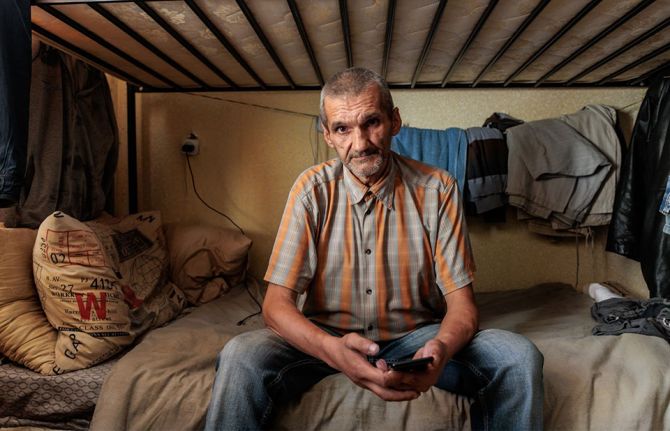
An estimated 3.7 million people currently inject drugs and roughly one in four of them are believed to be living with HIV in Eastern Europe and Central Asia.
Credit: UNAIDS/J.Spaull
The community of people who use drugs called for an urgent shift from prohibitive policies to public health and humane approaches towards people who use drugs in Eastern Europe and Central Asia at the International AIDS Forum held on 9-10 July, 2012 in Kyiv, Ukraine.
Addressing participants through a video message, UNAIDS Executive Director Michel Sidibé stated, “UNAIDS stands firmly with you to call for the lifting of restrictions on harm reduction and for evidence informed, life-saving interventions to be introduced on an urgent basis.”
Entitled ‘Ensuring That Our Voice Is Heard’, the forum brought together representatives from communities of people who use drugs, civil society, academia and the United Nations to discuss the existing challenges in addressing issues related to drug use and HIV. They also agreed upon and formulated the messages that will be conveyed to their national governments as well as the international community at the forthcoming XIX International AIDS Conference to be held on 22–27 July 2012 in Washington D.C., USA.
The estimated number of adults and children living with HIV in Eastern Europe and Central Asia has tripled since 2001 reaching 1.5 million in 2009. Injecting drug use remains the primary cause of HIV transmission in the region. An estimated 3.7 million people currently inject drugs and roughly one in four of them are believed to be living with HIV in the region.
The main issues of concern expressed by participants included the growing police harassment and abuse suffered by people who use drugs, the existing punitive laws and the low scale of harm reduction services—including opioid substitution therapy and needle-syringe programmes. The high level of stigma and discrimination from health care providers towards people who use drugs continue to prevent them from getting life saving medical care and social support.
“Punitive drug policies and stigmatization deter people who use drugs from accessing HIV prevention and treatment services. If governments and international communities continue to wink at the violations of drug users’ rights in their countries, they won’t be able to take control over the growing HIV epidemic in Eastern Europe and Central Asia,” said Dasha Ocheret, Deputy Director for Policy and Advocacy of the Eurasian Harm Reduction Network, one of the organizers of the Forum.
During a special session devoted to the rights and health of women who use drugs in the region organized by the UNAIDS, participants discussed the particular risks and vulnerabilities faced by women who use drugs. According to Natalia, a participant from Tomsk, Russian Federation, women who use drugs frequently face a double or even triple stigma and discrimination based on their gender, as drug users and due to their HIV status. Many of them are also victims of sexual violence and stigmatized because of their engagement in sex work.
UNAIDS stands firmly with you to call for the lifting of restrictions on harm reduction and for evidence informed, life-saving interventions to be introduced on an urgent basis
UNAIDS Executive Director Michel Sidibé
“The role of UNAIDS and other international organizations is to promote the rights of people who use drugs at the highest political level both nationally and globally and to develop evidence-based policies to ensure adequate funding for harm reduction and HIV services,” said Jean-Elie Malkin, UNAIDS Regional Director for Eastern Europe and Central Asia.
Opioid substitution therapy is available in all countries of the region, with the exception of the Russian Federation, Uzbekistan, and Turkmenistan. However, participants stressed that the majority of countries have not scaled up opioid substitution therapy beyond pilot projects despite their proven effectiveness.
According to Michel Kazatchkine, member of the Global Commission on Drug Policy, “only by breaking the taboo and opening up the debate on harm reduction both globally and nationally we can move the line on this issue. The world is already talking about drugs and drug policies more than ever before, so we should not be discouraged but rather push decision-makers even harder.”
The lack of funding for HIV prevention services for people who use drugs was also highlighted especially since most countries in the region are no longer eligible for the Global Fund grants. The community called for the inclusion of HIV prevention among people who use drugs into the political agenda as an emergency issue that needs significant investments. Otherwise the region will not succeed in its response to the epidemic.
The International Forum consisted of plenary sessions, capacity-building sessions on communication and advocacy, and video documentary sessions where participants recorded short video messages for the delegates of the International AIDS Conference.
The International AIDS Conference is the premier gathering for policy makers, activists, people living with HIV and other individuals committed to ending the AIDS epidemic. The AIDS 2012 program will present new scientific knowledge and offer many opportunities for structured dialogue on the major issues facing the global response to HIV. It is expected to convene more than 20 000 delegates from nearly 200 countries, including 2 000 journalists.
Related
 UNAIDS expands humanitarian support in Ukraine
16 September 2026
 Ukraine: Keeping people in care
23 February 2026
 Women, HIV, and war: a triple burden
12 September 2025
Feature Story
Global Commission on Law urges countries to make the law work for HIV, not against it
11 July 2012
11 July 2012 11 July 2012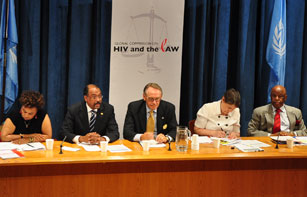
L to R: United States Congresswoman and member of the Global Commission on HIV and the Law, Barbare Lee; UNAIDS Executive Director Michel Sidibé; Deputy Secretary-General of the United Nations Jan Eliason; UNDP Administrator Helen Clark; and His Excellency Festus Mogae, former President of Botswana and member of the Global Commission on HIV and the Law.
Credit: D.Lowthian
The Global Commission on HIV and the Law launched its landmark report on 9 July 2012 at UN Headquarters in New York. The new report denounces the detrimental impact that punitive laws have on human rights and the HIV response and makes bold recommendations for addressing them.
“Never before has there been such an examination of the role of law in HIV,” said Festus Mogae, Former President of Botswana and member of the Commission. “What we have found is an epidemic of bad laws that is costing lives. We must end the epidemic of bad laws and enact laws based on evidence, common sense and human rights,” added Mr Mogae.
Stigma, discrimination and punitive legal approaches have long been recognized as barriers to the HIV response. They heighten vulnerability to HIV especially among key populations at higher risk of infection and make it difficult for individuals and communities to access HIV prevention, treatment, care and support services. UNAIDS has long called for the removal of punitive laws and their replacement with protective ones. Yet, countries across the world still maintain laws, policies and practices that infringe upon human rights, fuel discrimination and prevent global and national efforts to address HIV.
Speaking at the launch of the report, UNAIDS Executive Director Michel Sidibé noted that “the strength of this report is that it goes beyond a superficial description of stigma and discrimination to question the legal and structural fabrics that sustains inequality, injustice and human rights violations in the context of HIV”.
The report titled “HIV and the Law: Risks, Rights and Health” is a result of a two-year consultative process during which the Commission received more than 1 000 submissions from people affected by laws, law enforcement and access to justice issues in the context of HIV. The report took into account recommendations from 7 regional dialogues involving governments and civil society, and the input from a Technical Advisory Group of experts on HIV and the law.
Punitive laws increase risk of HIV infection
The Commission—an independent group of political and social leaders from around the world—pointed out that women in many parts of the world are governed by plural legal systems where traditional and customary law perpetuates their social and economic inequality. This situation makes women vulnerable to relationships and/or sexual violence which put them at risk of HIV infection. The Commission described the realities of many pregnant women living with HIV who face discrimination in health care including forced sterilization, even though simple and inexpensive medicine can prevent mother-to-child HIV transmission and keep mothers alive.
In the report, Commissioners called on governments to use the law to protect women from inequality and violence. They also urged governments to end legal barriers that prevent young people from accessing HIV information and services, as well as sexuality education—all necessary to avoid HIV infection.
The Commission also called for the removal of laws that criminalize people on the basis of their sexual orientation and gender identity, possession of drugs for personal use, and engagement in adult consensual sex work. It cited extensive evidence of how such criminal laws exacerbate risk of HIV infection among men who have sex with men, transgender people, people who use drugs and adults who sell and buy sex. According to the report, such laws drive people underground and into the margins of society away from health and HIV services. Furthermore, if convicted and sent to prison, the risks of contracting HIV, TB and Hepatitis C are very high because, in many countries, laws prohibit the provision of health and HIV prevention services and commodities in prisons.
We must end the epidemic of bad laws and enact laws based on evidence, common sense and human rights
Festus Mogae, Former President of Botswana and member of the Global Commission on HIV and the Law
Nick Rhoades from the Center of HIV Law and Policy spoke against the criminalization of HIV exposure and transmission, having himself been convicted in the United States of America, even though he had used condoms, had an undetectable viral load and did not transmit HIV. Citing the many HIV specific criminal laws, he said: “People have hands and can hit each other with their fists, but you don’t see a law specifically criminalizing a hand as a ‘deadly weapon’ like HIV is.” The Commission has called for the criminal law to be strictly limited to the malicious and intentional acts of actual transmission of HIV.
Participants at the launch highlighted how punitive legal approaches are undermining the investment in HIV prevention and treatment that is finally beginning to show the real possibility of halting and reversing the epidemic. They underlined that the persistence of punitive laws and practices is a serious concern at a time when the world has stabilized new HIV infections, increased its knowledge on effective HIV prevention and is preparing to harness the full potential of expanded HIV treatment. “It is outrageous that in 2012, when we have everything we need to beat this epidemic, we still must fight prejudice, discrimination, exclusion and bad laws,” said Mr Sidibé.
Law as an instrument to protect individuals
Commissioners at the launch underlined that there are many positive examples of countries that have used the law as an instrument to protect individuals, to create an environment that addresses stigma and violence thus encouraging access to HIV services. Other countries have used the law to challenge overly broad and stringent intellectual property regimes to reduce the cost of essential HIV medicines and to ensure their availability including through the production of generics.
“Law reform is complex, but countries can do much more,” said UNDP Administrator Helen Clark. “The task before us is to ensure better laws are adopted and enacted,” she added.
The Commission and its work have started dialogues across the world on issues that are difficult, controversial and complex. They are also issues that are central to human dignity, health and social justice. These dialogues are part of what Governments committed to do in the 2011 Political Declaration on AIDS where they pledged to review laws and policies that “adversely affect the successful, effective and equitable delivery of HIV services and consider their review”.
“We now have a powerful tool for advocacy and engagement to ask governments to uphold human rights for all people vulnerable to HIV,” said Ebony Johnson of the Athena Network. “This report should not be shelved.”
The Global Commission on HIV and the Law is an independent body, convened by the United Nations Development Programme (UNDP) on behalf of the Joint United Nations Programme on HIV/AIDS (UNAIDS). The Commission was supported by a Technical Advisory Group, which reviewed and analyzed existing public health and legal evidence and also commissioned original analysis. Additional information on the Commission, its processes and work is available at www.hivlawcommission.org.