Feature Story
UNAIDS Executive Director commends Chinese government for its bold leadership on AIDS
26 June 2012
26 June 2012 26 June 2012
UNAIDS Executive Director Michel Sidibé (left) and Chinese Vice-Premier Li Keqiang. Beijing, China. 26 June 2012.
Credit: UNAIDS
UNAIDS Executive Director Michel Sidibé met with Chinese Vice-Premier Li Keqiang in Beijing as part of a two-day official visit to the country. Mr Sidibé acknowledged the significant progress achieved by the Chinese government since his last visit in December 2011 and highlighted the importance of sustained commitment to the AIDS response during, and following China’s upcoming leadership transition.
During his visit, Mr Sidibé also met with Chinese Minister of Health, Dr Chen Zhu, and presented a UNAIDS “Leaders and Innovators Award” to the President of Xinhua News Agency, Mr Li Congjun, at a ceremony in China’s Great Hall of the People.
Speaking to Vice-Premier Li, Mr Sidibé commended the Chinese government for its bold leadership over the past decade, which has led to major investments in China’s AIDS response and a dramatic scale-up of HIV prevention, treatment and care programmes in China. As Chair of China’s State Council AIDS Working Committee, Vice-Premier Li has been instrumental in providing strong leadership in China’s AIDS response in recent years.
According to Mr Sidibé, sustaining political commitment will be critical as China prepares to undergo a leadership transition in late 2012. “There is a sea-change in the AIDS response in China. This is being driven by personal leadership,” said Mr Sidibé.
China has also launched a new Five Year Action Plan on AIDS Prevention and Control, setting out ambitious targets, and has committed to fully funding its AIDS response following the withdrawal of major international donors. Uptake of voluntary HIV testing and counselling has increased rapidly. Last year, more than 80 million people received an HIV test in China, and more than 130 000 are now receiving lifesaving antiretroviral treatment, free of charge.
I am calling on Africa and China to explore a new paradigm for sustaining the AIDS response through increased shared responsibility and by looking at transfer of technology and knowledge and building capacity for life-saving medicine
UNAIDS Executive Director Michel Sidibé
Mr Sidibé stressed the importance of improving coverage of services amongst key affected populations such as men who have sex with men, sex workers and people who inject drugs. He congratulated China on its progress made scaling up access to antiretroviral medicines, and encouraged further efforts in this area. “China is leading the way on Treatment as Prevention,” said Mr Sidibé. “Continuing to explore effective approaches and models in this area will be essential for success.”
Vice-Premier Li reiterated China’s continued commitment to HIV prevention and said China stands ready for closer cooperation with UNAIDS. He said that China will deliver on its 2015 AIDS promises and that it will do whatever it can to provide medical support and medicines for AIDS.
Following China’s successful hosting of the 3rd China-Africa Roundtable on Health earlier this month, Mr Sidibé encouraged China to continue to expand its role in facilitating south-south cooperation, particularly inAfrica. “I am calling on Africa and China to explore a new paradigm for sustaining the AIDS response through increased shared responsibility and by looking at transfer of technology and knowledge and building capacity for life-saving medicine,” said Mr Sidibé. He reiterated UNAIDS’ continuing support for China’s efforts to expand its role in international cooperation and emphasised the role China can play in supporting production of ARV drugs in Africa, reducing the continent’s reliance on imports.
Multimedia
Multimedia
Feature Story
Thailand launches new AIDS strategy to ‘Get to Zero’
22 June 2012
22 June 2012 22 June 2012
Thailand’s Deputy Prime Minister and chair of the National AIDS Committee, H.E. General Yuttasak Sasiprapha giving an address at the launch of Thailand’s new national AIDS plan.
Credit: UNICEF Thailand / P.Kitatnaruyuth
Thailand has become the latest country in the Asia and the Pacific region to align its national AIDS strategy with the UNAIDS vision of getting to zero new HIV infections, zero discrimination and zero AIDS-related deaths.
Launching the country’s new national strategy on HIV/AIDS 2012-2016—entitled ‘AIDS Zero’—the chair of the National AIDS Committee, H.E. the Deputy Prime Minister General Yuttasak Sasiprapha noted that, “Thailand has a long tradition of close cooperation between government, non-government organizations, civil society, communities and private sector, and this working together will lead Thailand to ‘AIDS Zero’.”
Over the past 25 years, Thailand has become known as a model for its rapid and multi-sectoral HIV response. Early investments in the HIV epidemic have shown concrete results including in the elimination of new infections among children—nearly 97% of women living with HIV in Thailand are now accessing services for the prevention of mother-to-child transmission. There has also been a dramatic increase in providing access to HIV treatment which is now a reality for nearly 80% of all in need.
However, despite significant progress, the country is still experiencing concerning trends among key populations at highest risk including people who inject drugs, men who have sex with men and sex workers, particularly in urban centres. National spending data shows that investments in HIV prevention are under-resourced, particularly for programmes focused on populations most at risk of HIV.
The new national AIDS strategy addresses two critical questions: What is Thailand doing well that should continue, and what needs to change to get to zero new HIV infections, zero AIDS-related deaths, and zero discrimination? Accordingly, the plan has two main strategic directions: ‘Innovation and Change’ and ‘Optimization and Consolidation’.
The ‘Innovation and Change’ prong focuses on promoting strategies to better prevent new HIV infections—particularly among key affected populations; to better localize responses and ownership at the sub-national level; and to better address the socio-environmental factors which hinder access to HIV prevention and care services, and fuel stigma and discrimination.
Under the ‘Optimization and Consolidation’ section, strategies aim at continuation, optimization and sustainability of proven programmes already carried out in the country. Examples of strategies falling under this area are on the elimination of new infections among children and HIV prevention among young people, where Thailand has already seen significant progress.
Among the strategic goals emphasized in the new plan is the aim to reduce new HIV infections by two thirds by 2015—over and above the global goal agreed through the 2011 Political Declaration on AIDS of reducing new infections by 50%. The strategy also aims for total elimination of new HIV infections among children.
Thailand has a long tradition of close cooperation between government, non-government organizations, civil society, communities and private sector, and this working together will lead Thailand to ‘AIDS Zero’.
H.E. the Deputy Prime Minister General Yuttasak Sasiprapha, Chair of the National AIDS Committee
“The new approach recognizes that while impressive progress has been made in a number of areas in Thailand, there is still room to push forward on certain priorities that may have already been defined in the past but have thus far not been implemented,” said UNAIDS Country Coordinator for Thailand, Michael Hahn. “By operationalizing these new strategies—and ensuring dedicated resourcing through domestic and international sources—Thailand is taking critical steps towards making ‘getting to zero’ a reality in the country.”
Representatives from government, civil society and the international community agreed that the most important thing now is turning the strategy into action as soon as possible. It was also highlighted the need for stakeholders to mobilize adequate resources, national leadership, and effective management to ensure that the Thai national AIDS strategy moves from principle to reality.
In Asia and the Pacific, a number of countries and regional bodies have realigned their national strategies and goals around the ‘Getting to Zero’ vision. At their 2011 Summit, the ASEAN Heads of State adopted a Declaration to ‘Get to Zero’ on HIV and reaffirmed their commitment in working towards realizing an ASEAN community with Zero HIV Infections, Zero Discrimination and Zero AIDS-related Deaths.

Feature Story
Global AIDS community explores vital need for the next generation of National Strategic Plans for AIDS
21 June 2012
21 June 2012 21 June 2012
The process of developing realistic and adaptable NSPs needs to keep pace with an evolving epidemic and a changing environment.
Credit: UNAIDS
A high quality, rigorous and robust National AIDS Strategic Plan (NSP) that focuses attention on achieving results—including stopping HIV transmission and extending the quality of life of people with HIV—is critical to the success of every national HIV response. The process of developing realistic and adaptable NSPs needs to keep pace with an evolving epidemic and a changing environment.
In Nairobi this week, the World Bank in collaboration with UNAIDS, WHO, UNDP and the Global Fund brought together representatives of National authorities, civil society organisations including people living with HIV and development partners to build consensus on the role and nature of the next generation of National Strategic Plans (so called NSP-3G).
Opening the meeting, the Kenyan Minister of State for Special Programmes, Honourable Esther Murugui, stressed the importance of reviewing National Strategic Plans as a critical means for refining the AIDS response. “As a Government, we recognize the need to develop and adopt systems and structures that match the complexities of the HIV epidemic,” said Minister Murugui. “We have reached a point where we have to change the way we have always done things to a way that focuses on results,” she added.
With a new landscape requiring innovative thinking and approaches, participants explored how new guidance, based on experiences in strategic planning thus far, can support countries in producing simpler, sharper, more effective NSPs that focus on results.
The Representative of the Office of the U.S. Global AIDS Coordinator for PEPFAR, Dr Mamadi Yilla said that “PEPFAR’s hope is that science and evidence drives the approach we take to strategic planning. That the Global AIDS community, that has witnessed constraints to HIV financing commitments, now ensures smarter investments are made.”
We have reached a point where we have to change the way we have always done things to a way that focuses on results
Kenyan Minister of State for Special Programmes, Esther Murugui
Speaking on behalf of the UNAIDS Executive Director, Dr Mbulawa Mugabe pointed out that the Strategic Plans should provide clarity on how to achieve results in line with the 2011 Political Declaration on AIDS goals and commitments. “In the coming years we need to be able to say that progress by 2015 and beyond was underpinned by the NSP-3G,” said Dr Mugabe. “The NSP-3G is the engine that will help countries focus, scale up and reach the 2011 Political Declaration on AIDS targets as well as the commitments made towards the elimination of new HIV infections among children,” he added.
Several key components of NSP-3G emerged during the meeting. This included a move towards a more flexible, adaptive approach to plans that could see HIV programmes integrated into wider health and development strategies. Such a move links closely with the way forward charted at the Fourth High Level Forum on Aid Effectiveness in Busan, Korea in 2011. “We recognise the importance of aligning NSPs more closely to national development planning process; NSPs need to consider decentralisation issues and they should not sit outside of national mechanisms,” explained Mr Daniel Marguari, Director of the Spirita Foundation—an organisation working to improve the quality of life of people living with HIV and their families in Indonesia. “At the same time, we do not want to loose the uniqueness, inclusiveness, partnership and multisectorality of the HIV response, especially when it comes to addressing the needs of key affected populations and communities.”
Participants discussed in detail how real and sustainable country ownership of an effective, multi-sectoral response, with nationally driven strategic plans, can be better achieved. Many national responses in low-and middle-income countries need strengthening. They are often influenced by external development agendas and are still largely funded by international donors. For example in sub-Saharan Africa two-thirds of AIDS expenditures come from external sources.
In order to sustain the HIV response, countries need to make better use of evidence to guide where to invest precious financial and human resources to achieve the HIV targets. Participants explored how countries could mobilize additional funding to meet the financing gap, while increasing efficiencies in the face of declining resources. The UNAIDS Investment Framework was described as a radical and innovative way of looking at resource allocation and closing the funding gap. It sets out to match need with investment, streamlines current strategies to avoid duplication and promotes cost-effectiveness. It supports countries to focus on investment choices that produce results for people.
“Now that our understanding of the HIV epidemic is more scientific and evidence-based, we find ourselves at a stage where we could determine what the exact sets of interventions need to be in a given response to control the epidemic,” Mr Aeneas Chuma, the UN Resident and Humanitarian Coordinator for Kenya said. “This means we need to ask if our investment is directed to the right interventions to achieve the right results.’’
The main outcome of the meeting was the development of ten consensus points on NSP-3G. A support and review group has been established to develop, finalize and disseminate new guidance to countries by October 2012. ‘‘I take note that the current national strategic plan for Kenya comes to an end next year,” said Minister Murugui. “Kenya hereby pledges to lead the world by being the first country to develop a third generation National Strategic Plan that will be based on the guidance that will come out of this important meeting.”

Feature Story
World Refugee Day: ‘What would you do?’
20 June 2012
20 June 2012 20 June 2012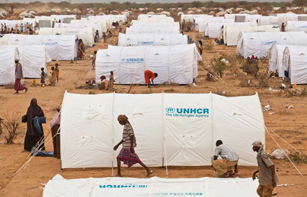
An estimated 4.3 million people were forcibly displaced in 2011, seeking shelter either within their homeland or across a border in another country.
Credit: UNHCR/B.Bannon
How does it feel to become a refugee? How do people fleeing their homes cope with the life and death choices confronting them? To mark World Refugee Day, observed on June 20 every year, stark questions like these are posed by the UN High Commissioner for Refugees (UNHCR) in a new campaign.
The campaign, Dilemmas, seeks to promote understanding of refugees, asylum-seekers, the stateless and internally displaced people by vividly humanizing their experience and reinforcing the fact that they are ordinary individuals faced with extreme and extraordinary situations. A key element of the initiative, along with high profile TV spots by UNHCR Special Envoy Angelina Jolie and other celebrities, is a role playing game called My Life as a Refugee. The game can be played on smartphones and it is being promoted on various digital platforms around the world.
Players choose one of three characters and then have to make a series of difficult decisions to help them reach safety and rebuild their lives. For example, if you opt to be 27 year old Merita, a pregnant mother of two, you will encounter a series of life changing events: ‘Conflict encircles your village, you run for your lives but realize your mother is no longer with you. Do you go back and face death in a war zone or try to escape?’
More people becoming refugees
Such dilemmas are affecting an increasing number of individuals and families. A new publication by the UNHCR, 2011 Global trends: A year of crises, states that 2011 saw more people becoming refugees than at any time this century. 4.3 million people were newly displaced, with around 800,000 of these fleeing their countries and seeking refuge abroad. Cumulatively, by the end of 2011 there were a total of 42.5 million people around the globe forced to move: 15.2 million as refugees, 26.4 million as internally displaced and 895,000 were asylum seekers.
The publication highlights a number of major humanitarian crises in countries such as Cote, d’Ivoire, Libya, Somalia, and Sudan which has led to these mass movements.
According to António Guterres, UN High Commissioner for Refugees, “2011 saw suffering on an epic scale. For so many lives to have been thrown into turmoil over so short a space of time means enormous personal cost for all who were affected….. These are testing times.”
AIDS, Security and Humanitarian Response
Those made to leave their homes and communities in the harshest of circumstances can become more vulnerable to HIV. They often lose their source of income and may have to resort to high-risk behavior to meet their basic needs. Health and education services frequently lapse and information on HIV prevention and treatment provision may be disrupted. Women and girls can be especially vulnerable as rape is often used as a weapon during conflicts. In some cases refugees and internally displaced people also face stigma and discrimination as they are accused of spreading the virus.
“2011 saw suffering on an epic scale. For so many lives to have been thrown into turmoil over so short a space of time means enormous personal cost for all who were affected….. These are testing times.”
António Guterres, UN High Commissioner for Refugees
UNHCR, as one of UNAIDS Cosponsors, promotes and supports the development of comprehensive HIV programmes to make sure refugees have access to HIV prevention, treatment, care and support.
A report on AIDS, Security and Humanitarian Response presented at the 30th UNAIDS Programme Coordinating Board highlights the many and varied ways in which the UNAIDS family and its partners are supporting the HIV response in humanitarian emergencies. A major objective has been mainstreaming AIDS into the overall humanitarian intervention, integrating it as a cross-cutting issue. The report raises a number of concerns that governments and organizations need to take into account, such as providing refugees with continued access to antiretroviral therapy (ART) and HIV prevention services, as well as strategies which deal with broader issues like gender-based violence.
Concrete steps have been taken in a number of areas. For example, several countries have revised their National AIDS Strategic Plans to encompass a range of provisions for the needs of populations of humanitarian concern. In addition, access to ART for refugees has increased markedly. Almost 95% of those in Africa, Latin America and the Middle East and North Africa regions can now get ART at a level similar to the surrounding population. In Africa three quarters of pregnant refugee women have access to programmes to eliminate new HIV infections among children.
A number of other successes are pinpointed. The over half a million Somali refugees in the Dadaab camps in Kenya now benefit from comprehensive reproductive health and HIV services. These include ART, condoms, emergency obstetric interventions and programmes to eliminate new HIV infections among children. This is part of a multi-partner strategy covering refugees and mobile populations across the Horn of Africa. On the Thai-Myanmar border by 2011 tens of thousands of refugees had begun to receive HIV prevention services and post-exposure prophylaxis (PEP) for survivors of sexual violence.
In working with refugees and the displaced to help them get their lives back on track, UNHCR and its partners promote the need for tolerance, empathy and compassion. By presenting real life dilemmas and asking individuals; ‘What would you do?’ the UNHCR’s World Refugee Day campaign provides a powerful spur to understanding the hardships refugees endure and why staying at home may not be an option.
External links
External links
Publications


Feature Story
Rio+20: The United Nations Conference on Sustainable Development
20 June 2012
20 June 2012 20 June 2012
The United Nations Conference on Sustainable Development, also known as Rio+20 will take place in Rio de Janeiro, Brazil from 20-22 June. The high-level meeting brings together more than 100 Heads of State and government, along with UN officials and representatives of the private sector and civil society to shape new policies to promote prosperity, reduce poverty and advance social equity and environmental protection.
This year’s event marks the 20th anniversary of the historic 1992 United Nations Conference on Environment and Development (UNCED) that was held in the same city and the 10th anniversary of the 2002 World Summit on Sustainable Development (WSSD) in Johannesburg. The conference is organized by the United Nations Department of Economic and Social Affairs.
“Rio+20 is about building a future we want, it’s about shared aspirations,” said United Nations Secretary-General Ban Ki-Moon speaking ahead of the conference. Rio+20 is a “once-in-a-generation opportunity to make real progress,” he added.
Rio+20 is about building a future we want, it’s about shared aspirations
United Nations Secretary-General Ban Ki-Moon
The Conference will focus on two themes: a green economy in the context of sustainable development and poverty eradication; and the institutional framework for sustainable development. It will also focus on seven priority areas: decent jobs, energy, sustainable cities, food security and sustainable agriculture, water, oceans and disaster readiness.
Ahead of the conference, Member States announced that they have reached an agreement on the outcome document of the Conference. “We now have a text which will be adopted at the Conference,” said Rio+20’s Secretary-General, Sha Zukang . “We think the text contains a lot of action, and if this action is implemented, and if follow-up measures are taken, it will indeed make a tremendous difference in generating positive global change.”
Sustainable Development and AIDS
The Rio+20 outcome document states Member States’ commitment to redoubling efforts to achieve universal access to HIV prevention, treatment, care and support, and to eliminate mother-to-child transmission of HIV.
“The global AIDS response has served as a pathfinder and an entry point for inclusive growth, social justice and the restoration of human dignity,” said UNAIDS Executive Director Michel Sidibé. “The AIDS movement demonstrates that through strategic partnerships, even complex and enduring barriers to development can be effectively surmounted,” he added.
According to UNAIDS, there can be no sustainable development without health, human rights and gender equality.
External links
External links

Feature Story
Football World Cup for lesbian, gay, transgender and bisexual people gives AIDS the Red Card
19 June 2012
19 June 2012 19 June 2012
Team captains participating in the Mexican World Cup signing the pledge to support the UNAIDS campaign “Give AIDS the Red Card”. Credit: UNAIDS
The game of football has once again scored a goal against HIV at the 2012 International Gay and Lesbian Football Association (IGLFA) World Championship Cup, held in Mexico from 1st to 9th June 2012.
At the tournament, footballers from 8 teams representing the Americas, Europe and Oceania joined the UNAIDS’ campaign “Give AIDS the Red Card” to promote HIV prevention and take a stand against stigma and discrimination.
“We are proud to stand together with UNAIDS and its partners to give AIDS the red card,” said Andoni Bello Lanestosa, captain of the Mexican team. “We can make change happen. We can help reduce HIV transmission by 50% and end violence and discrimination,” he added.
The Latin America region shows an unfortunate record in terms of human rights violations against lesbian, gay, transgender and bisexual (LGTB) people due to their sexual orientation or gender identity. LGTB people face a serious problem of stigma and discrimination that limit their access to health services, education and judicial systems and job opportunities and increases their vulnerability to HIV.
“Experience shows that when people are stigmatized for their sexual orientation or gender identity, they are less likely to access health services and information on HIV prevention,” stressed César A. Núñez, UNAIDS Regional Director for Latin America. “Studies in Latin America show HIV prevalence rates around 10% among men who have sex with men. Among transgender population, HIV prevalence is even higher, between 20 and 28%,” he added.
Football players who join the campaign can inspire people to learn the facts about AIDS, to protect themselves and to fight stigma and discrimination against people living with HIV and LGBT persons
Rubén Mayorga, UNAIDS Country Coordinator for Argentina, Uruguay, Paraguay and Chile
Two years ago at the FIFA 2010 World Cup held in South Africa, UNAIDS launched the “Give AIDS the Red Card” campaign using the power and outreach of football to unite the world around stopping new HIV infections in children. In this occasion, the campaign, which is based on “Give AIDS the Red Card”, uses the tournament to raise awareness on the HIV prevention needs of the LGTB community.
All team captains participating in the Mexican World Cup signed the pledge to support the UNAIDS campaign. By signing the pledge, the delegations agree to spread the message of the campaign upon return to their respective countries. Along with the team captains, representatives of the International Association of Gay Referees and IGLFA Latin America also endorsed the initiative and signed the pledge.
Football players from the Argentinean and Mexican teams collaborated with the campaign from the beginning. They appeared on posters and advertisement billboards used before and during the ILGFA World Cup. “Sports stars can play an important role in the AIDS response by talking openly about HIV,” said Rubén Mayorga, UNAIDS Country Coordinator for Argentina, Uruguay, Paraguay and Chile. “Football players who join the campaign can inspire people to learn the facts about AIDS, to protect themselves and to fight stigma and discrimination against people living with HIV and LGBT persons.”
The International Gay and Lesbian Football Association (IGLFA) was founded in 1992 and after 20 years, over 80 teams from more than 20 countries from all over the world have become part of this organization.
External links
External links
Feature Story
President of the International AIDS Society speaks on the strategic importance of the upcoming International AIDS Conference
18 June 2012
18 June 2012 18 June 2012
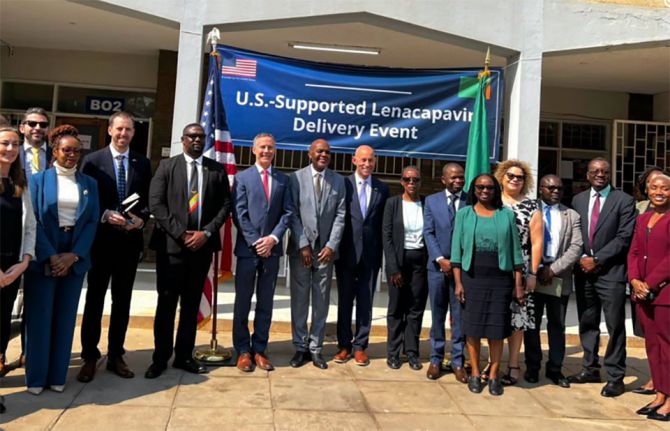
Professor Elly Katabira, President of the International AIDS Society speaking on the strategic importance of the upcoming International AIDS Conference for the global AIDS response. UNAIDS Geneva. 15 June 2012. Credit: UNAIDS
Professor Elly Katabira, President of the International AIDS Society (IAS), visited UNAIDS on June 15 to speak on the strategic importance of the upcoming International AIDS Conference for the global AIDS response. The XIX International AIDS Conference will take place in Washington DC from July 22-27. Professor Katabira serves as the International Co-chair of the conference.
Unaids.org took the opportunity to talk to Professor Katabira about the significance of, and his expectations from the International AIDS Conference. He recounted the progress that has been made in the HIV response and stated that there is still the need to do more.
What is the importance and significance of the XIX International AIDS Conference?
The significance of this conference first of all is that it gives us the opportunity to go back to the United States after 22 years. Following the principles of IAS, we refused to go to the United States all these years mainly because of the existing restriction of entry into the country for people living with HIV. Once that restriction was lifted in 2009, it became important for us to go back.
In addition, it is important to recognise and appreciate the commitment to the AIDS response that the United States has shown over the years. The American people have not only contributed through PEPFAR but also in many other ways. Many of our people around the world have been trained in the American manner either within the United States or outside; a lot of the research which has made a big difference, including the current enjoyment of the drugs we have, has been done with the help of American funding.
Why Washington, D.C.?
One of our principles at IAS is that we choose a venue in order to influence the impact of the AIDS response within that venue. We know very well that the HIV epidemic in Washington DC is similar to epidemics existing in some resource limited settings. We want the conference to stimulate a better AIDS response to mitigate the impact of the epidemic within the city.
What are the specific outcomes that you are hoping will come out of this conference?
First of all, the conference is addressing three issues: science, community involvement and leadership and accountability.
The significance of this conference first of all is that it gives us the opportunity to go back to the United States after 22 years
Professor Elly Katabira, President of the International AIDS Society
We want to have quality science presented at the conference because the science presented here will shape the HIV response practices that we will have for the next few years. Therefore, we hope to have quality science which will help us to deliver better services for the people.
Community involvement is key to ensure science serves the needs of the communities. But also to ensure the community voices are heard and taken into account by scientists and leaders.
And of course the leadership and accountability; Leaders need to be aware of what they are doing as far as their countries are concerned and how their decisions impact on the HIV response. They need to be able to account for their successes as well as their failures. So it is important that both scientists and community representatives use this platform to deliver their messages widely.
Over the last three decades of the epidemic what progress and changes have you observed?
In the first decade, the best we could do was identify those infected and do the written records. Despite being a clinician, all I could do was pat them on their backs and eventually bury them. But over the years things have changed. Ten years ago drugs became available.
At the 1996 conference held in Vancouver, it became clear that with the right kind of HIV treatment, HIV-positive people could live longer. Unfortunately, we also became aware that this opportunity was not available to everyone or to the very countries which had the biggest burden.

Professor Elly Katabira, President of the International AIDS Society (right) with Luiz Loures UNAIDS Director, Political and Public Affairs Branch. UNAIDS Geneva. 15 June 2012.
Credit: UNAIDS
In 2000, during the Durban conference, a message was sent stressing the possibility to make HIV drugs available to the people who needed them no matter how poor they were and that made another difference. In fact, now it is back to us, the healthcare workers, to ensure that we do things right so that people living with HIV can lead a normal life and contribute to society as before. So those are some of the biggest breakthroughs.
Of course we still don’t have a vaccine, which we very much need since human beings are unlikely to continue taking medication for life. But there is hope as people are working to find a cure as well as on improving HIV treatment to ensure that transmission is reduced to zero.
Dr. Elly Tebasoboke Katabira is a Professor of Medicine and former Deputy Dean for Research, Faculty of Medicine at Makerere University, Kampala, Uganda. He is the author of more than 200 published scientific articles and abstracts. Professor Katabira took office as IAS President in July 2010. He has worked extensively in the field of care and support for people living with HIV for nearly 3 decades.
External links
External links

Feature Story
“No Time to Lose” an exceptional journey through global health
14 June 2012
14 June 2012 14 June 2012
The new book No Time to Lose by Peter Piot, the Director of the London School of Hygiene & Tropical Medicine, is garnering praise as a candid and passionate account of a lifetime pursuing and outsmarting deadly viruses.
Author Dr Piot, the former Executive Director of UNAIDS was a co-discoverer of the Ebola virus and a pioneer of the AIDS response.
“In a world where true discovery is rare, Peter’s experiences are beyond remarkable,” said Michel Sidibé, Executive Director of UNAIDS. “And it is from this special vantage point that he takes us on a personal journey—that is equal part adventure thriller and political primer.”
Early in Dr Piot’s career, many tried to dissuade him from entering the field of infectious diseases. The people who did mentor him were often quirky and highly independent—and they set a tone of nurturing curiosity, questioning and not settling—that would serve the young doctor well.
Not yet 30, he vividly recalls a game-changing event in his life, “The unravelling of the first known epidemic of Ebola haemorrhagic fever in Africa was my initiation into scientific discovery, even life-threatening adventure, and into the world of what is now called global health. The AIDS epidemic forced me to confront the extreme complexity of health and disease and to learn the hard way the realities of big and small politics.”
His first international assignment took him to Zaire (now Democratic Republic of Congo) to investigate the deadly outbreak. Dr Piot became known for combining community wisdom, local knowledge and behavioural aspects with bio-medical science to find health solutions—an unheard of combination at that time.
“Ebola showed dramatically that, in contrast to prevailing medical opinion in the 1960’s and ‘70s, the world would experience a seemingly never-ending series of new infectious disease epidemics,” writes Dr Piot—a premonition that would lead him to take on one of the greatest issues of our time—the AIDS epidemic.
Peter has been successful because he has always put people first. This was true when there were precious few resources and true when the millions of dollars for the AIDS response turned to billions
Michel Sidibé, Executive Director of UNAIDS
As the first Executive Director of UNAIDS he criss-crossed the world convincing global leaders to take on the AIDS epidemic while also working to bring the United Nations system together to support countries. Dr Piot has often said that while he was firmly established as a public health expert, he had to quickly grow into the role of politician. The book recounts how politics were played in the high stakes arena of development and global health.
The scientific nature that allowed him to make discoveries like Ebola also made him a tenacious and effective leader. He was fearless and pushed donors and national leaders to “do the right thing”.
“Peter has been successful because he has always put people first. This was true when there were precious few resources and true when the millions of dollars for the AIDS response turned to billions,” said Mr Sidibé. “He has been both mentor and friend and through his achievements, all of us have learned and benefited.”
His accomplishments have not come without regrets. Dr Piot writes in the epilogue about his last day at UNAIDS, that he was still “haunted by the question of what I could have done earlier and faster.”
Throughout his career Dr Piot has kept his sense of humour and appreciation for life intact. Whether it’s musing about mojitos with Fidel Castro in Cuba or paying his respects to Diago—a sake bar in Tokyo—his love of good food and wine and is apparent and will surely deliver a second book.
No Time to Lose will be launched in New York City at the Council on Foreign Relations on Monday, 18 June 2012.


Feature Story
Achieving 2015 Targets through Strategic AIDS Financing
12 June 2012
12 June 2012 12 June 2012
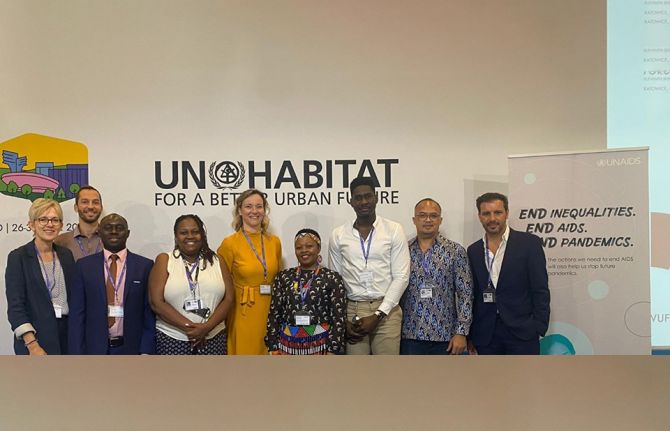
L to R: UNAIDS Executive Director Michel Sidibé, Ambassador Sylvie Lucas of Luxembourg, First Secretary of the Republic of Malawi Janet Zeenat Karim, International Treatment Preparedness Coalition (ITPC) co-founder David Barr. United Nations, NYC, on June 11, 2012.
Credit: UNAIDS/B.Hamilton
Coinciding with the 2012 General Assembly AIDS review, the Permanent Missions of Malawi and Luxembourg to the United Nations and UNAIDS organized a panel discussion to further understand the strategic investments needed for the AIDS response. The discussion brought together representatives of member states, UN organizations and civil society.
Participating in the discussion, UNAIDS Executive Director Michel Sidibé stressed the need to focus investments where they can have greater impact. “Proven, effective and context-specific HIV prevention and treatment interventions must be prioritized and scaled up,” said Mr Sidibé. “Approaches that are not tailored to reach people most in need, are at inappropriate scale and intensity, or whose benefits are undercut by persistent inefficiencies, should be discouraged,” he added.
Panellists agreed that incremental yet bold steps must be taken to close the financing gap by 2015, including greater allocations from domestic and international resources. Ambassador Sylvie Lucas of Luxemburg highlighted that in order to achieve the targets, “international donors, emerging economies, affected countries and additional stakeholders must all actively contribute, in accordance with their respective capacities.”
Mrs Janet Karim, speaking on behalf of the Permanent Representative of Malawi, stressed that despite efforts and political will, some countries cannot meet the financial needs required from their domestic sources and called for innovative partnerships to be sought to support governments’ efforts.
“It is indeed necessary to actively explore new sources of sustainable financing at all levels, including enhanced support from the private sector, the use of regional development banks, and the introduction of a tax on financial transactions,” said Mrs Karim. “At the same time, let us follow up on the commitment that we made to strengthen existing financial mechanisms, including the Global Fund and relevant United Nations organizations, through the provision of funds in a sustained and predictable manner,” she added.
Proven, effective and context-specific HIV prevention and treatment interventions must be prioritized and scaled up
UNAIDS Executive Director Michel Sidibé
The UNAIDS Investment Framework was presented as an opportunity for development partners and national governments toward developing a ‘shared responsibility’ agenda and maximizing value for money.
Stressing the need for affected communities to continue to be at the centre of the response, David Barr from the International Treatment Preparedness Coalition (ITPC) emphasized that human rights, equity, inclusion and participation should be seen as high-yield investments rather than avoidable costs. “It is essential that HIV care be centered around the protection of human rights, gender equity and the reduction of stigma,” said Mr Barr. “Without creating a safe environment for those of us at risk, we cannot engage in care and, therefore, all our public health efforts will be wasted.”
Participants agreed that, of the targets set in the 2011 Political Declaration on HIV/AIDS, among the most challenging and crucial was the one focused on “Close the global AIDS resource gap by 2015 and reach annual global investment of US$22-24 billion in low- and middle-income countries”. The AIDS financing target was considered not just a target in itself, but a critical enabler for the achievement of all of the Declaration’s targets.
Related
Feature Story
UN Secretary-General presents progress report on AIDS response
11 June 2012
11 June 2012 11 June 2012
Credit: UNAIDS
At the 66th session of the General Assembly held on 11 June in New York, United Nations Secretary-General Ban Ki-Moon introduced the 2012 report on the progress made in the implementation of the Declaration of Commitment on HIV/AIDS and the Political Declarations on HIV/AIDS.
Mr Ban highlighted the bold targets included in the 2011 Political Declaration adopted by countries during the last high level meeting on AIDS as well as the intensified efforts made by all partners in the AIDS response over the past year.
Through the 2011 Political Declaration, UN Member States pledged to deliver antiretroviral therapy to 15 million people by 2015, eliminate new HIV infections in children, achieve a 50% reduction in new HIV infections among adults, reduce transmission of HIV among people who inject drugs by 50% and reduce TB deaths in people living with HIV also by half.
The progress report outlines a number of recommendations that need to be implemented to reach the 2015 targets. For instance, to meet the target of reducing sexual transmission by 50%, the report outlines that the number of new sexually transmitted HIV infections will need to decline by at least 1 million by 2015. To achieve this, HIV prevention programmes need to enhance efforts to reinforce, sustain and extend behaviour change by promoting gender equality and mutual respect, as well as better focus on where the new infections are occurring. “We can only reach that goal if we reach out to people at risk: sex workers, men who have sex with men, people who inject drugs, women and youth,” said Mr Ban.
The Ambassador of Angola, Mr Ismael A. Gaspar Martins, speaking on behalf of Southern African Development Community (SADC), noted the major progress made on scaling up antiretroviral therapy and reducing new HIV infections since the High-Level Meeting took place. "But with less than 4 years remaining, the current response may not result in the HLM targets to be reached," he warned.
We must strengthen existing financial mechanisms, including the Global Fund, even as we search for new sources of sustainable financing
United Nations Secretary-General Ban Ki-Moon
The Secretary-General put special emphasis on the needs of women and girls. “Women need sexual and reproductive health services,” said Mr Ban “HIV-positive mothers must have antiretroviral drugs so their babies will be born HIV-free,” he added.
According to the Secretary-General, countries should support the Global Plan to Eliminate New HIV Infections among Children by 2015 and Keep Their Mothers Alive. This Plan can quickly deliver the results needed for the Every Woman, Every Child initiative. Both are generating real commitments from governments, health experts, activists, business executives and other partners.
Addressing the needs of women and girls, ending stigma and discrimination and reaching the 2015 targets require funding. Mr Ban called for all countries to do their part. “We must strengthen existing financial mechanisms, including the Global Fund, even as we search for new sources of sustainable financing.”
In his report, the Secretary-General underscores that achieving the 2015 goals will require a redoubling of efforts from all stakeholders and that if smarter and more efficient ways of working are not applied to the AIDS response, the goals will not be met.
“The fact is that without immediate change in the way we work, there is the risk that we will not reach these targets,” said Ambassador Gary Quinlan of Australia. “I am alarmed that very few countries have incorporated the HLM targets into their national plans. My own country needs to do much better. UNAIDS should take additional efforts to achieve this by mid-2013,” he added.