Feature Story
UNAIDS promotes “play safe” message during Euro 2012
08 June 2012
08 June 2012 08 June 2012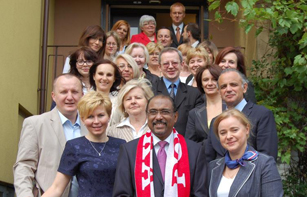
UNAIDS Executive Director Michel Sidibé and Anna Marzec-Boguslawska, Director of the National AIDS Centre of Poland, with senior staff from the National AIDS Centre and UNAIDS. Credit: National AIDS Centre, Poland.
UNAIDS Executive Director Michel Sidibé arrived in Warsaw, Poland, on 8 June for a day-long mission to meet with national stakeholders in the AIDS response and participate in the inauguration of UEFA Euro 2012, the European football championship.
The visit kicked off with a lively exchange at the National AIDS Centre between the UNAIDS Executive Director, civil society advocates, people living with HIV and government representatives. During the discussions, Mr Sidibé commended the government of Poland for providing free antiretroviral treatment to all who are eligible and for its success in keeping national HIV prevalence low.
He expressed concern, however, over the growing regional epidemic. An estimated 1.4 million people were living with HIV in Eastern Europe and Central Asia in 2009, almost triple the number reported in 2000. In most countries across the region, the epidemic is concentrated among key populations, particularly people who inject drugs, sex workers and men who have sex with men.
Emphasizing that vulnerable populations benefit from only a fraction of HIV prevention resources, civil society representatives called on Mr Sidibé to advocate in his meetings with government officials for strategically targeted prevention investments. They underscored the need for better coordination among stakeholders in the national AIDS response—specifically among government ministries.
UNAIDS is urging all players and fans to play safe and be safe—both on and off the pitch.
UNAIDS Executive Director Michel Sidibé
Mr Sidibé noted that Euro 2012 provides an excellent opportunity to highlight the HIV epidemic among a large audience. “Across Europe, football plays an important role in the lives of millions of individual fans, communities, and nations. UNAIDS is urging all players and fans to play safe and be safe—both on and off the pitch,” said Mr Sidibé.
The UNAIDS Executive Director praised Poland’s National AIDS Centre for launching “Fair Play”—an advocacy campaign, timed with Euro 2012, that focuses on HIV prevention. Through the campaign, football fans are encouraged to enjoy the games and protect themselves from HIV.
Poland is the current chair of UNAIDS’ Programme Coordinating Board, the organization’s governing body.

Feature Story
UNAIDS Programme Coordinating Board discusses the need for a renewed focus on combination HIV prevention
06 June 2012
06 June 2012 06 June 2012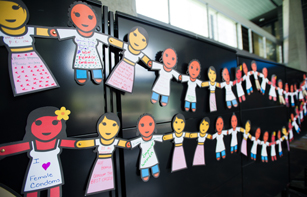
The PCB thematic session on combination HIV prevention engaged participants in a series of interactive activities to identify prevention priorities, including the ‘Paper Doll’ female condom campaign, pictured here.
Credit:UNAIDS/C.Rousset
If the vision of zero new HIV infections is to be achieved, a reinvigoration of HIV prevention is urgently needed. This will be most effective if a combination prevention approach is adopted, where multi-faceted and tailored programmes are implemented. An in-depth exploration of how such an approach can be implemented took place during the thematic session of the 30th UNAIDS Programme Coordinating Board (PCB) meeting in Geneva on 6 June.
The PCB heard that, despite its importance, HIV prevention is still not getting enough attention. In 2008, for example, only 20% of AIDS spending was allocated to HIV prevention.
Dr Paul De Lay, UNAIDS Deputy Executive Director, Programmes, told the assembled representatives of governments, UNAIDS Cosponsors, and NGOs, “We have proven strategies for preventing all modes of HIV transmission, but even after 30 years of effort, these effective programmatic and policy strategies still are not being provided to and used by the right populations, in the right ways and on the scale needed to curtail the epidemic.”
“Today’s subject is timelier than when it was proposed a year ago during the 28th PCB due to the recent surge in biomedical research findings,” said Dr De Lay. “But just as the range of new HIV prevention technologies is expanding, so is the need to also focus on the behavioural and structural aspects of the epidemic.”
Encompassing biomedical, behavioural and structural interventions, combination prevention strategies need to be multi-layered, context-dependent, adaptable and harmonized to have maximum impact.
Dr Marie Laga from the Institute of Tropical Medicine (ITM) in Antwerp, Belgium noted that addressing the behavioral and structural components of an epidemic is not simple and that there has been a tendency to focus on the more straightforward biomedical interventions. However, she cautioned that “…the behavioral components of HIV prevention are essential to make biomedical tools work.” She stressed the efficacy of condoms in reducing new HIV infections, an older technology but still important.
The traditional commodity approach, which considered programme elements in isolation, was also said to be too limited. A successful AIDS response must tackle both short and long term impacts, as well as immediate risks and underlying causes of risk. This will entail engaging affected communities and promoting human rights and gender equality while investing in decentralized and community responses.
We have proven strategies for preventing all modes of HIV transmission, but even after 30 years of effort, these effective programmatic and policy strategies still are not being provided to and used by the right populations, in the right ways and on the scale needed to curtail the epidemic
Dr Paul De Lay, UNAIDS Deputy Executive Director, Programmes
Meena Seshu from SANGRAM stressed the structural barriers that sex workers face in India to access HIV prevention services as well as the high stigma and discrimination associated with the disease. Highlighting the key role played by affected communities in preventing HIV infections, Ms Seshu stressed that “sex workers are agents of change, capable of averting the epidemic with the right support. Stop moral criminalization. We are part of the solution.”
All participants emphasized that combination prevention strategies must respond to the local epidemiological and demographic requirements of different groups in a general population. The need to ‘Know your epidemic, know your response’ and know where the next 1000 infections might occur is the fundamental starting point.
“Effective HIV prevention programmes must be based on where and why HIV infections are occurring, what the current response is, and what the additional needs to prevent them are,” said Michael Bartos, Chief, a.i., of UNAIDS’ Science for Action Division. “Prevention responses will fail unless they consider the social and cultural context in which they are intending to make change.”
After the opening, four breakout sessions were organized which concentrated on specific aspects of a coherent combined prevention approach. Topics covered included young people and HIV prevention; the role of civil society and the private sector in HIV prevention; HIV and co-infection among people who inject drugs; and political commitment to HIV prevention.
The session on young people was led and organized by young people themselves and focused on HIV prevention among young people at higher risk. Issues discussed included the existing barriers to access HIV services, the need for enabling legal environments and how to increase youth participation in leading the AIDS response.
Another session paid special attention to the relationship between HIV and the viral hepatitis B and C co-infections, particularly in relation to injecting drug use. This was seen as a major public health concern in several countries in Eastern Europe and Central Asia, recognizing that co-infections cause further complications that accelerate hepatitis progression and make HIV treatment more difficult.
Multimedia
Multimedia
Feature Story
UNAIDS Executive Director calls on African leaders to reduce the ‘triple dependency’ on external aid
06 June 2012
06 June 2012 06 June 2012
Mr Sidibé addressed a group of eight West African Heads of State and other high-level participants at the opening session of the UEMOA conference today in LoMÉ, Togo.
Delivering a speech at today’s opening session of the 16th Conference of the West African Economic and Monetary Union (UEMOA), UNAIDS Executive Director Michel Sidibé congratulated leaders across the region for their personal commitment to the HIV response, specifically with regard to upholding human rights and protecting human capital. Addressing eight Heads of State and other high-level participants in LoMÉ, Togo, he called on African leaders to reduce their “triple dependency” on external sources for HIV drugs, commodities, and technologies.
Mr Sidibé noted that an estimated 630 000 people living with HIV in West Africa currently receive antiretroviral medicines, representing about 30% coverage. A vast majority of HIV drugs dispensed in Africa are imported, he added.
In the future, regional and global power and national stability will be determined not by who controls arms, but by who controls access to medicines
UNAIDS Executive Director Michel Sidibé
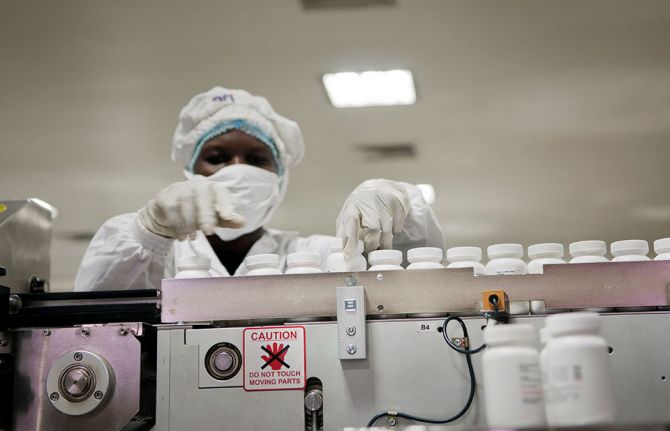
To ensure the health and security of their populations, African leaders should focus greater attention and resources on the local production of medicines, said the UNAIDS Executive Director. “In the future, regional and global power and national stability will be determined not by who controls arms, but by who controls access to medicines,” he said.
The development and production of medicines is expected to be a major growth industry in the 21st century. According to IMS Institute for Healthcare Informatics, the global pharmaceutical market is set to reach more than US $1 trillion in sales by 2015. African countries represent 25% of the global health burden but control just $10 billion—or 1%—of the global medicines market.
“This is a sector poised for growth, and can serve to generate African innovation, strengthen systems, save lives and advance security,” said Mr Sidibé.

UNAIDS Executive Director Michel Sidibé with President of Senegal Macky Sall
During his address, the UNAIDS Executive Director outlined four proposals to boost West Africa’s market share of HIV drugs and other medicines: establish and enable local pharmaceutical production to reduce dependency on imported medicines; remove trade barriers to allow for the emergence of pharmaceutical production hubs that can serve the regional market; strengthen national drug regulatory authority and increasingly harmonize regulatory policies across the region; and advance research and development to build Africa’s knowledge-based economy.
Noting that no single country, ministry or leader could advance these proposals alone, Mr Sidibé called for increased national and regional partnership across a variety of sectors, including trade, industrial development and health.
Later in the day, the UNAIDS Executive Director participated in a separate meeting with African Heads of State attending the conference. Echoing Mr Sidibé’s earlier comments, the Heads of State reemphasized the need for innovative financing mechanisms to address Africa’s HIV response.
Related
Feature Story
UNAIDS Programme Coordinating Board meeting opens
05 June 2012
05 June 2012 05 June 2012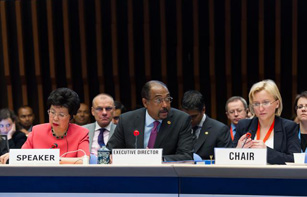
L to R: Director-General of WHO Dr Margaret Chan, UNAIDS Executive Director Michel Sidibé and Ms Agnieszka Pachciarz Under-Secretary of State, Ministry of Health, Warsaw.
Credit:UNAIDS/C.Rousset
UNAIDS governing body, the Programme Coordinating Board (PCB) is holding its 30th Board meeting from 5-7 June in Geneva.
In the opening session, UNAIDS Executive Director Michel Sidibé addressed the Board giving an overview of progress made in the last six months by UNAIDS. In his report, Mr Sidibé also outlined the organizational changes that the Joint Programme undertook in order to increase efficiency in helping countries achieve the goals set for 2015.
This year’s thematic segment will take place on the second day of the meeting and will focus on combination prevention or the urgent need to reinvigorate HIV prevention responses globally by scaling up and achieving synergies to halt and begin to reverse the spread of the AIDS epidemic.
Related
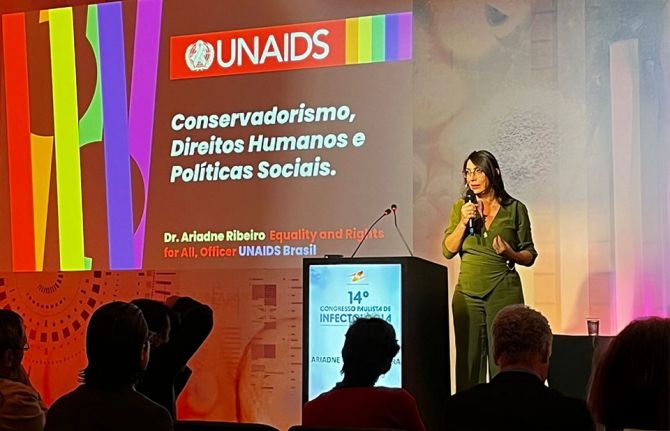 Upholding dignity for everyone: Ariadne Ribeiro Ferreira
21 November 2024
Feature Story
Getting to zero AIDS-related deaths: TRIPS and the potential impact of free trade agreements
01 June 2012
01 June 2012 01 June 2012
At the UN General Assembly High Level Meeting on AIDS in New York in June 2011, governments from around the world made a bold pledge to get all people eligible on treatment by 2015.
Credit: UNAIDS/D.Walker
For long-time HIV activist and Coordinator of the Asia Pacific Network of People Living with HIV (APN+) Shiba Phurailatpam, the importance of sustained access to affordable AIDS medicines is more than a trade, legal or logistical issue: “It is literally a matter of life and death for people living with HIV,” Phurailatpam says. “More than 60% of people in need of HIV treatment in Asia-Pacific still don’t have it. Across the world, millions of people need access to HIV treatment, today, to keep them alive.
Antiretroviral drugs have changed the way in which HIV is viewed—from a death sentence to a chronic illness. That achievement was propelled by a surge in donor funding and by the drastic reduction of the cost of first-line antiretroviral regimens from around US$ 10 000 to under US$ 100 per person per year over the past decade, due in part to the increased availability of low-cost generic medicines.
Over the past decade, more than 6.6 million people have received antiretroviral therapy in developing countries across the world. At the UN General Assembly High Level Meeting on AIDS in New York in June 2011, governments from around the world made a bold pledge to get all people eligible—an additional nine million people living with HIV—on treatment by 2015.
But at this time of opportunity, the sustainable future of HIV treatment programmes remains of serious concern. Countries are facing mounting challenges to produce or procure affordable HIV treatment, including cutbacks in AIDS funding and a proliferation of increasingly restrictive intellectual property measures in free trade agreements.
Making antiretroviral affordable: TRIPS flexibilities
Intellectual property and trade flexibilities within the intellectual property rights system were set out in the World Trade Organization Agreement on Trade-Related Aspects of Intellectual Property Rights (TRIPS). Later on, the Doha Declaration on the TRIPS agreement and public health reaffirmed those flexibilities by providing opportunities for low-and middle-income countries to expand access to low-cost, assured quality pharmaceutical products.
Evidence from countries across the world including Brazil, Ecuador, India, Indonesia, Malaysia, and Thailand shows that the use of TRIPS flexibilities can help substantially lower the costs of HIV treatment. India, for example, has emerged as the ‘pharmacy of the developing world’, producing more than 85% of all first generation antiretroviral drugs used to treat people living with HIV in low- and middle-income countries.
Nevertheless most countries have yet to use, to the fullest extent possible, the flexibilities available in the TRIPS Agreement to sustain affordable treatment. And the potential impact of a number of current or planned free trade agreement negotiations taking place across the world—particularly affecting countries in the Asia and the Pacific region can hinder countries rights to implement such flexibilities.
Mounting challenges: potential impact of free trade agreements
“In recent years, we see increasing pressure for developing countries to adopt clauses on intellectual property aimed at limiting the use of TRIPS flexibilities that have so far allowed countries to restrict patenting of life-saving medicines and produce or import them in generic forms,” says Sarah Zaidi of the International Treatment Preparedness Coalition (ITPC).
Known as ‘TRIPS-plus provisions’, these measures require countries to adapt their laws to provide intellectual property protection and enforcement far in excess of what they agreed to under the TRIPS agreement.
In recent years, we see increasing pressure for developing countries to adopt clauses on intellectual property aimed at limiting the use of TRIPS flexibilities that have so far allowed countries to restrict patenting of life-saving medicines and produce or import them in generic forms
Sarah Zaidi of the International Treatment Preparedness Coalition
The primary vehicles for adopting these TRIPS-plus measures are free trade agreements. The European Union – India agreement, under negotiation since 2007, is among the most keenly monitored of these deals, given the large share of generic medicines being produced in India. Other countries in Asia and the Pacific are also undergoing negotiations for, or planning to negotiate, agreements with the EU, the European Free Trade Association (EFTA) or the United States of America (through the Trans-Pacific Partnership Agreement). For all such agreements, it is hoped they would contain pro-development provisions that would enable, not impede, access to treatment. Otherwise, activists warn, drug prices could escalate dramatically, making it impossible for low- and middle-income countries to sustain their treatment supplies.
A new UNAIDS/UNDP joint issues brief highlights the potential impacts of free trade agreements on public health. The brief concludes that “to retain the benefits of TRIPS flexibilities, countries at a minimum should avoid entering into free trade agreements that contain obligations that can impact on pharmaceutical price or availability.” It further recommends that where such commitments may have already been agreed, efforts should be made to mitigate the negative impact on access to treatment by using remaining public health-related flexibilities available.
In July 2011 at a meeting with UNAIDS Executive Director Michel Sidibé, India’s Commerce Minister Anand Sharma reaffirmed the Government of India’s commitment to ensure that quality generic medicines are seamlessly available, and to make them available to all countries. “India will also use the flexibilities allowed under TRIPS, including the use of compulsory licensing, to ensure that people living with HIV have access to all life-saving medicines,” he said.
Asia: countries chart new courses on to increase access to AIDS treatment
From 29-31 May, UNAIDS and UNDP Asia Pacific regional offices and APN+ brought to Bangkok representatives from government agencies, the UN, civil society and academia from nine countries in the region (Cambodia, China, India, Indonesia, Malaysia, Myanmar, the Philippines, Thailand and Viet Nam) to discuss the impact that intellectual property and free trade agreements can have on access to antiretroviral therapy.
We now have a unique chance to reduce both new HIV cases and AIDS deaths by offering timely ART for all in need. We can’t let barriers to affordable drugs come in the way of this!
Shiba Phurailatpam from the Asia Pacific Network of People Living with HIV
Participants at the consultation also took concrete steps towards accelerating action within their countries. Each country delegation identified key areas for joint action, collaboration and support and developed a focused plan to speed up joint national action and ensure greatest impact.
In the Asia-Pacific region, 1.5 million people need access to HIV treatment. Underlining the importance of renewed drive and momentum towards reaching the ambitious regional and global goals, UNAIDS Regional Director Steven Kraus said “Countries need to use all the means at their disposal, including the TRIPS flexibilities, to increase treatment levels and to reach people most in need. There are very positive movements in the region towards expanding access to treatment and by working together, across sectors, the greatest results are possible.”
“Countries in this region should approach the TRIPS Agreement from a pro-development perspective,” said Clifton Cortez, Regional Practice Leader on HIV, Health and Development, UNDP Asia-Pacific Regional Centre. “This meeting recognizes the importance of connecting key national and regional players together to pursue common goals,” he added.
Shiba Phurailatpam from the Asia Pacific Network of People Living with HIV agrees: “We now have a unique chance to reduce both new HIV cases and AIDS deaths by offering timely ART for all in need. We can’t let barriers to affordable drugs come in the way of this!”
Feature Story
UNAIDS Executive Director highlights progress in Chad’s AIDS response
31 May 2012
31 May 2012 31 May 2012
UNAIDS Executive Director Michel Sidibé receives a national honour from the President of Chad, Idriss Deby Itno. L to R: Fritz Lherisson, Acting Director, Regional Support Team for West and Central Africa, Mr Sidibé and President Deby Itno. 30 May 2012. Ndjamena, Chad.
Credit: UNAIDS
UNAIDS Executive Director Michel Sidibé concluded his official visit to Chad on 31 May after meeting with President Idriss Deby Itno, First Lady Hinda Deby Itno, senior government officials and civil society to highlight the country’s progress in the AIDS response.
Mr Sidibé met with President Deby Itno to discuss opportunities and challenges in Chad’s AIDS response. One area of the national AIDS response that has seen progress is access to antiretroviral treatment. Since 2007, the provision of HIV treatment has been offered by the state free of charge. According to the Progress report 2011: Global HIV/AIDS response, issued jointly by UNAIDS, WHO and UNICEF, an estimated 32 000 people were receiving antiretroviral treatment at the end of 2010, covering 39% of people who are eligible for treatment.
President Deby Itno highlighted that Chad finances more than half (53%) of the resources required for treatment. He stressed that the AIDS response has enabled Chad to place people at the centre of the country’s development agenda.
Chad has a national adult HIV prevalence of 3.4%. The rate of HIV infection is particularly high among sex workers, estimated at 25.5% in the capital city of Ndjamena.
Mr Sidibé shared with the President his concern over the high levels of stigma and discrimination in the country, especially among people living in rural areas. He emphasized that stigma and discrimination drive people living with HIV underground, away from much-needed HIV services, and if left unaddressed could undermine the effectiveness of the country’s recent gains.
Promoting national ownership
In view of the upcoming African Union Summit in Malawi, Mr. Sidibé encouraged President Deby Itno to support and promote the agenda for country ownership and shared responsibility among the other African Heads of State. He underscored that Chad has an unprecedented opportunity to contribute greater domestic resources to complement HIV investments from international partners. Currently, Chad relies on external sources to finance more than 85% of its national AIDS programmes.
“Chad has demonstrated remarkable progress in expanding treatment access, in fighting stigma and discrimination and in ensuring the rights of people living with HIV are protected. The AIDS response presents an important opportunity to change the development paradigm,” said Mr Sidibé.
Eliminating new HIV infections among children
In their discussions, President Deby Itno and Mr Sidibé agreed that greater momentum is needed to increase services to prevent mother to child transmission of HIV (PMTCT). Although the number of PMTCT sites across the country has increased from 93 in 2009 to 140 in 2011, coverage remains low, at 10%. One of the main bottlenecks is the lack of coordination and integration between PMTCT and maternal and reproductive health programmes.
Chad has demonstrated remarkable progress in expanding treatment access, in fighting stigma and discrimination and in ensuring the rights of people living with HIV are protected. The AIDS response presents an important opportunity to change the development paradigm
UNAIDS Executive Director Michel Sidibé
Mr Sidibé joined President Deby Into at an event on 31 May to launch the national plan to eliminate new HIV infections among children. Chad is one of 22 countries included in the Global Plan towards the elimination of new HIV infections among children and keeping their mothers alive by 2015.
As part of his visit, Mr Sidibé held bilateral meetings with Chad’s Prime Minister, Emmanuel Nadingar, the Minister of Public Health, Mamouth Nahor Ngawara, and the Minister of Finance, Christian Georges Dinguimbaye.
Before concluding his two-day trip, Mr Sidibé met with the First Lady of Chad, Hinda Deby Itno, to discuss her work with the Campaign for Accelerated Reduction of Maternal Mortality in Africa (CARMMA). He also took the opportunity to interact with the national network of people living with HIV (RNTAP+) and participate in a forum on human rights and HIV, hosted by the Ministry of Foreign Affairs.
During the visit, President Deby Itno awarded Mr Sidibé one of the country’s highest decorations—the Grand Chancelier de l'ordre National du Tchad—in recognition of his commitment and contribution to the global AIDS response.

Feature Story
Sex workers learn business skills in new community-based ILO project
30 May 2012
30 May 2012 30 May 2012
Sex workers share their ideas for new business ventures that will bring greater economic independence.
Credit: ILO
When San, a sex worker in Bangkok, was given the opportunity to participate in a pilot business skills training scheme, she jumped at the chance. She wanted to put her idea of setting up a bakery into practice.
“I’ve always enjoyed baking and so I was interested in starting a part-time baking business to add to my income from sex work,” she said.
Sitting in the red-light district office of Empower Foundation, a sex worker advocacy group, San chats with Au and Wii, fellow graduates of the International Labour Organisation (ILO) Community-based Enterprise Development (C-BED) training. Au is working on a business plan in partnership with another C-BED graduate to start a food delivery service supplying spicy Thai salad to apartment buildings around Bangkok. And Wii intends to open a small store specialising in traditional clothing.
C-BED is a new tool which builds the capacity of current or aspiring entrepreneurs through self-facilitated business skills modules which rely on activity-based, participant-run, social learning principles.
Sex workers face a range of challenges in their daily lives such as long working hours, employment-related violence and a lack of access to health care and social security benefits. They also have an increased vulnerability to HIV: nearly 3% of brothel-based sex workers were living with HIV in 2009 and one 2007 study showed their HIV prevalence as high as 20% in Bangkok and Chiang Rai.
Empower Foundation and other similar groups in Thailand have been calling on the government and development agencies to address the economic vulnerability of sex workers and to create access to additional forms of income generation. The C-BED training addresses this gap through a low cost, innovative methodology emphasising the value of recognising and sharing community knowledge.
Economic empowerment can support sex worker efforts to negotiate for better, safer working conditions free of violence and harassment with improved access to health services, including HIV prevention, care and treatment.
Richard Howard, ILO Senior Specialist for HIV/AIDS in Asia Pacific
“C-BED empowers vulnerable groups, including sex workers and HIV-positive people, to improve their means of income generation,” says Richard Howard, ILO Senior Specialist for HIV/AIDS in Asia Pacific. “Economic empowerment can support sex worker efforts to negotiate for better, safer working conditions free of violence and harassment with improved access to health services, including HIV prevention, treatment and care.”
The recent initial C-BED training took place over three days in Empower’s office, facilitated by a team of staff and volunteers involved with the sex worker community. The 26 female sex worker participants, aged 18-72, had varying levels of literacy so business theory was explained and demonstrated through a series of activities including drama, drawing and discussions. Key entrepreneurial topics included marketing, bookkeeping, productivity, personnel management, costing and quality control, with participants creating action plans.
“I liked that everyone had a chance to introduce their business idea without fear - it was fun and not stressful so everyone was able to learn more,” said one participant. She added, “I now think I can have my own business.”
C-BED is designed for untrained, but literate, participants from the community to facilitate group sessions, so they can share their increased knowledge and expertise. As the facilitator does not require training or expensive materials, C-BED can be implemented at minimal cost in vulnerable or hard-to-reach communities which would traditionally be inaccessible due to social or geographical isolation.
UNAIDS Country Coordinator, Michael Hahn, welcomes the project. “This is a really good example of an activity designed and implemented with the full participation of sex workers. The business skills they gain will help widen their choices about how they best want to shape their lives and their futures.”
ILO plans to roll out C-BED in partnership with sex worker organisations in Thailand, Cambodia, Vietnam and Sri Lanka over the next two years, aiming to reach more than 2 000 sex workers by the end of 2013.
Since completing the training, San has started a bakery in Samut Sakhorn and hopes one day she can employ staff to help her expand. “C-BED gave me the confidence to start out on my own,” she says.
External links
External links

Feature Story
UNAIDS highlights Zimbabwe’s progress in responding to AIDS
28 May 2012
28 May 2012 28 May 2012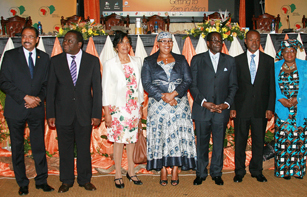
Group picture at the launch of the GlobalPOWER Women Network Africa meeting in Harareon 24 May. From left to right: Mr Michel Sidibé, UNAIDS Executive Director; HE Morgan Tsvangirai, Prime Minister of Zimbabwe; Dr Navanethem Pillay, United Nations High Commissioner for Human Rights; Hon Thokozani Khupe, Deputy Prime Minister of Zimbabwe; HE Robert Mugabe, President of Zimbabwe; Hon Erastus Mwencha, Deputy Chairperson of the African Union Commission; and Dr Ngozi Okonjo-Iweala, Minister of Finance, Nigeria.
Credit: UNAIDS/D.Kwande
UNAIDS Executive Director Michel Sidibé concluded his first official visit to Zimbabwe on 25 May after meeting with President Robert Mugabe and Prime Minister Morgan R. Tsvangirai to highlight the country’s progress in the AIDS response.
President Mugabe and Mr Sidibé met on the sidelines of the inaugural meeting of the GlobalPOWER Women Network Africa, which was launched in Harare on 24 May. In their meeting, they reviewed Zimbabwe’s success in mitigating the impact of HIV as well as the opportunities to further the country’s response.
Mr Sidibé commended the collective efforts made by the Government of Zimbabwe for having maintained community engagement and service provision to expand access to HIV prevention and treatment services during a difficult period. “The Government of Zimbabwe’s support for the national AIDS response bridges parties and portfolios,” said Mr Sidibé. “This has resulted in a significant reduction of adult HIV prevalence and a steady decline in the number of new HIV infections.”
Zimbabwe has achieved one of the sharpest declines in HIV prevalence in Southern Africa, from 27% in 1997 to just over 14% in 2010. With 10 times fewer resources for AIDS per capita than other countries in sub-Saharan Africa, Zimbabwe has expanded coverage of antiretroviral treatment among adults, from 15% in 2007 to 80% in 2010. At the end of 2011, nearly half a million people in the country were receiving lifesaving HIV treatment and care.
President Mugabe and Mr Sidibé discussed country ownership and shared responsibility, highlighting the importance of African countries to contribute greater domestic resources to complement the investments from international partners. President Mugabe agreed to support the agenda for country ownership and shared responsibility with other African Heads of State at the upcoming Africa Union Summit in Lilongwe, Malawi.
Boosting domestic AIDS investments
In a separate meeting with Zimbabwe’s Prime Minister, Morgan R. Tsvangirai, Mr Sidibé lauded the success of Zimbabwe’s ‘AIDS Levy’, a tax on income to increase domestic resources for the national HIV programme. This innovative approach has enabled Zimbabwe to diversify its domestic funding for its AIDS response, raising an estimated US$ 26 million in 2011. This year the levy is expected to raise US$ 30 million.
The Zimbabwe AIDS Levy is an excellent example that demonstrates to other African countries how to generate domestic resources to maintain and own their national AIDS responses. I encourage the Government of Zimbabwe to explore how this initiative could be expanded to tap into the informal sector to boost the resources of the trust fund
UNAIDS Executive Director Michel Sidibé
“The Zimbabwe AIDS Levy is an excellent example that demonstrates to other African countries how to generate domestic resources to maintain and own their national AIDS responses,” said Mr. Sidibé. “I encourage the Government of Zimbabwe to explore how this initiative could be expanded to tap into the informal sector to boost the resources of the trust fund.”
An important focus of the national AIDS response in Zimbabwe is the elimination of new HIV infections among children and keeping their mothers alive. The number of sites providing services to prevent mother-to-child transmission of HIV (PMTCT) in the country has nearly doubled in recent years, from 920 in 2008 to 1 560 in 2010. According to the Progress report 2011: Global HIV/AIDS response, an estimated 86% of HIV-positive pregnant Zimbabwean women received antiretroviral prophylaxis in 2010, compared to only 17% in 2008.
Commenting on Zimbabwe’s progress in this key area, Prime Minister Tsvangirai highlighted that more work remains ahead in the national AIDS response. “There is improvement in Zimbabwe when it comes to AIDS, but we still have many challenges and need to closely collaborate with the international community,” stressed the Prime Minister. “Zimbabwe needs to recognize and build on the encouraging progress we made so far.”
While applauding the Government’s commitment to eliminate new HIV infections among children and keeping their mothers alive by 2015, the UNAIDS Executive Director encouraged the Prime Minister to take additional measures to protect the health and rights of women and girls.

The UNAIDS Executive Director with Zimbabwean Deputy Prime Minister, Honourable Thokozani Khupe in Harare, 23 May 2012.
Credit: UNAIDS/D.Kwande
“Zimbabwe’s constitution-making process presents unprecedented opportunities to revisit laws to better protect women and girls,” said Mr Sidibe. “The government should considering amending the legal age of marriage for girls from 16 to 18, which is the age of majority in Zimbabwe.”
Mr Sidibe further emphasized the importance of an inclusive AIDS response that ensures the provision of live-saving services to all people, including sex workers, people who use drugs, mobile populations and men who have sex with men.
Shortly after his arrival in Harare on 23 May, the UNAIDS Executive Director visited the Epworth Polyclinic in Harare to see Zimbabwe’s efforts in bringing integrated health and social services to eliminate new HIV infections among children. At the clinic, he met many mothers with their children who—thanks to effective PMTCT services—were born HIV free.
The Epworth Polyclinic is one of the 1 560 facilities in the country that provide integrated maternal and child health services, including antenatal care, HIV counselling and testing, PMTCT interventions, early infant diagnosis, immunization, reproductive health counselling and nutritional support. The clinic also promotes male involvement through its partnership with Padare, a social practice that brings together traditional and local leaders, grandfathers, fathers, uncles and brothers to discuss issues related to gender equality and HIV prevention, including among children.
There is improvement in Zimbabwe when it comes to AIDS, but we still have many challenges and need to closely collaborate with the international community. Zimbabwe needs to recognize and build on the encouraging progress we made so far
Zimbabwe Prime Minister, Right Honourable Morgan R. Tsvangirai
During the visit to the Epworth Polyclinic, Mr Sidibé said, “It is evident that Zimbabwe is facing major challenges, but what I am seeing today is a bold example of how you have united to establish community-centred services that integrate health, nutrition and social aspects. This kind of partnership which is not limited only to the international community at the top but also with communities at the household level can bring about radical change.”
On 24 May, Mr Sidibé addressed the inaugural GlobalPOWER Africa Women Network meeting in Harare. In his remarks, the Executive Director applauded Zimbabwe’s Deputy Prime Minister, Honourable Thokozani Khupe, for her key role as President of the GlobalPOWER Women Network Africa. The two-day high-level meeting brought together hundreds of women leaders from across Africa and beyond to generate greater action for women’s empowerment and the advancement of sexual and reproductive health and rights of women and girls.
External links
External links
Multimedia
Multimedia
Publications
Publications

Feature Story
Launch of African women’s leadership network aims to advance gender equality and AIDS response
24 May 2012
24 May 2012 24 May 2012
Zimbabwean President HE Robert Mugabe addresses participants at the opening of the GlobalPOWER Woman Network Africa meeting in Harare. Joining the President were UNAIDS Executive Director Michel Sidibé, Prime Minister Morgan Tsvangirai, and the United Nations High Commissioner for Human Rights, Navi Pillay. 24 May 2012.
Credit: UNAIDS/D.Kwande
Leading African women from national ministries and parliaments, the business community, networks of women living with HIV, and civil society and development organizations are in Zimbabwe’s capital to attend the inaugural meeting of the GlobalPOWER Women Network Africa. This women-led initiative will provide a strategic political platform to accelerate HIV prevention and sexual and reproductive health and rights responses for women and girls in sub-Saharan Africa.
Across the African continent, women and girls carry a disproportionate burden of the HIV epidemic, constituting 59% of all people living with HIV. In some countries, young women aged 15-24 years are as much as eight times more likely to be HIV-positive than young men. Prevailing gender inequalities, including gender-based violence, socio-economic disparities, and disempowering laws and policies increase women’s and girls’ risk of HIV infection.
Held in collaboration with the African Union and UNAIDS, the meeting was officially opened by HE President of Zimbabwe, Robert Mugabe. “One of the objectives of this conference is to call upon governments and partners to mobilize national high-level leadership and country ownership in the mitigation of HIV and sexual and reproductive health,” said President Mugabe. He used his speech to draw attention to the role of men in fully supporting women in accessing health services and helping change the inequalities faced by women and girls.
In his remarks, HE Prime Minister Morgan Tsvangirai called for greater gender equality. “Fifty-nine percent of people living with HIV in Africa are women—it is imperative we address and mitigate this striking fact. In Zimbabwe, this is mainly linked with gender inequality,” said Mr Tsvangirai. “Zimbabwe and Africa as a whole will benefit greatly from addressing gender inequality, which, coupled with lack of education and economic empowerment, hinders women’s active participation in the development agenda."
This inaugural meeting of the GlobalPower Women Network Africa comes at a critical time. It is perfectly positioned as a strategic political platform to advance innovative approaches that positively impact the lives of women and girls in Africa
UNAIDS Executive Director Michel Sidibé
Addressing participants, UNAIDS Executive Director Michel Sidibé highlighted the important role of the women’s network in accelerating the AIDS response. “This inaugural meeting of the GlobalPower Women Network Africa comes at a critical time,” said Mr Sidibé. “It is perfectly positioned as a strategic political platform to advance innovative approaches that positively impact the lives of women and girls in Africa. And not just in relation to HIV but also to promote sexual and reproductive health and rights and zero tolerance for gender-based violence.”
Over the next two days, more than 300 participants will engage in a series of plenary discussions and panels surrounding key issues impacting the lives of women and girls across the continent. These include HIV prevention, maternal and child health, gender-based violence, gender equality, leadership accountability, and national ownership of the UNAIDS Action Agenda for Women and Girls. Examples of successful approaches will also be shared to foster greater innovation in the delivery of services.
Speaking at the opening ceremony, the United Nations High Commissioner for Human Rights, Navi Pillay, emphasized the intrinsic link between maternal and child health and human rights. “When women’s rights are violated, it stops them from leading a healthy and prosperous life—it takes away their freedom of choice to have or start a family,” she said. Ms Pillay also stressed that gender-based violence and stigma and discrimination impedes women’s access to maternal health services.

Nigerian Minister of finance Dr Ngozi Okonjo-Lweala addressing the delegates at the official opening of the Global Power Woman Network Africa in Harare at Harare International Conference Center on 24 May 2012.
Credit: UNAIDS/D.Kwande
Zimbabwe’s Deputy Prime Minister, Hon Thokozani Khupe, also acting as the President of the GlobalPOWER Women Network Africa, drew attention to the central role of women and girls in the AIDS response across the continent. “To achieve the vision of zero new HIV infections, zero discrimination and zero AIDS-related deaths, it is critical to recognize women and girls as key agents in making this vision a reality. Society has to invest in the health of women and girls,” said Ms Khupe.
Representing the African Union Commission at the meeting, Deputy Chairperson, HE Erastus Mwencha, stated, “The burden of HIV cannot be successfully undertaken without paying due attention to issues of reproductive health and rights. Individuals, families and communities must have a say in the implementation of programmes."
Dr Ngozi Okonjo-Iweala, Nigeria’s Minister of Finance, was the Guest of Honour at the opening and delivered the keynote address. In her remarks, she told participants that a country’s progress is linked to the health of its female population.
"Any country that neglects investing in women and girls should not expect real growth. It is smart economics to invest in girls’ education, health and social well-being as no woman should die of [AIDS] and child birth,” she said, "We can make a difference in Africa, and change is already happening—but we women have to push harder for greater change because no one can do it for us. This is why the GlobalPOWER Africa is so important. We need our women leaders to call for investment in women and girls and monitor how money is spent.”
We can make a difference in Africa, and change is already happening—but we women have to push harder for greater change because no one can do it for us
Dr Ngozi Okonjo-Iweala, Nigeria’s Minister of Finance
The meeting will result in the “Harare Call for Action”, a unified action plan for women’s health with a specific focus on sexual and reproductive health and rights in the context of HIV. The Call for Action will serve as an important political and advocacy tool, strongly promoting regional ownership and shared responsibility to advance the AIDS response and the wider gender equality agenda.
The idea to create an Africa-specific GlobalPOWER Women Network stemmed from a September 2010 meeting in Washington, DC. At that meeting prominent African female decision-makers came together alongside their American peers to discuss how to accelerate the implementation of the UNAIDS Agenda for Women and Girls. The GlobalPOWER initiative was founded in 2006 by the Center for Women Policy Studies, a US-based women’s organization.
Several other high-level representatives attended the launch of the women’s network including the United States Ambassador to Zimbabwe, Charles A. Ray, the Vice-President of Zimbabwe, Hon Joyce Mujuru, and the Deputy Prime Minister of Zimbabwe, Hon Professor Arthur Mutambara. A message of support was received from the Executive Director of UN Women, Michelle Bachelet.
External links
External links
Publications
Feature Story
UNAIDS and PEPFAR bring together Health Ministers and partners to advance progress in ending new HIV infections in children
23 May 2012
23 May 2012 23 May 2012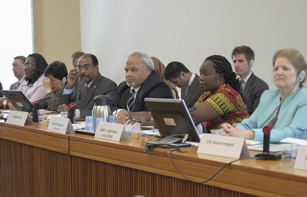
UNAIDS and PEPFAR bring together Health Ministers and partners from countries with the highest numbers of new HIV infections in children to scale up progress.
Credit: UNAIDS/A.Obeid
Ministers of Health and representatives from the 22* countries with the most new HIV infections in children have come together to report on progress towards achieving zero new HIV infections in children by 2015 and find ways of stepping up action.
In 2010, an estimated 390 000 children were born with HIV. However, with access to comprehensive HIV services the risk of transmission can be reduced to below 5%. In response to this, the Joint United Nations Programme on HIV/AIDS (UNAIDS) and the U.S. President's Emergency Plan for AIDS Relief (PEPFAR) convened partners to develop a global plan to stop new HIV infections among children by 2015 and keep their mothers alive. The plan focuses on the 22 countries in which 90% of new HIV infections in children occur, 21 of which are in sub-Saharan Africa.
“By uniting our forces across boundaries, institutions and communities, we will leverage this historic opportunity to welcome the first generation born free of HIV by 2015,” said UNAIDS Executive Director, Michel Sidibé. “By building bridges between the movements of AIDS, maternal and child health and women’s movements, we will quicken the pace of this race towards zero.”
Since the launch of the Global Plan at the 2011 High Level Meeting on AIDS, great strides have been made in reducing HIV infections among women of reproductive age and expanding access to antiretroviral therapy for pregnant women living with HIV. However, progress is not being scaled up as quickly on meeting the family planning needs of women living with HIV, preventing maternal mortality and ensuring that all children living with HIV have access to antiretroviral therapy. All of which are key elements in the global plan to achieve zero new HIV infections in children.
“We have the knowledge and the tools to ensure that all children are born HIV-free and that their mothers are healthy,” said United States Global AIDS Coordinator Ambassador Eric Goosby. “Countries are at the forefront of efforts to achieve this vision, and as partners, we are firmly committed to their success.”
By uniting our forces across boundaries, institutions and communities, we will leverage this historic opportunity to welcome the first generation born free of HIV by 2015
UNAIDS Executive Director Michel Sidibé
During her welcoming remarks, the Director General of the World Health Organization, Margaret Chan emphasized the full commitment of her organization towards the success of the Global Plan. “This is an ambitious, noble and achievable cause,” said Dr Chan. “It is also a great opportunity to make progress towards the integration of health services in countries.”
The President of the 65th World Health Assembly emphasized the need to raise awareness among communities to ensure that both men and women have access to HIV services for their own health and to prevent HIV infections in children. “Women still face stigma and discrimination when found HIV positive,” said the Health Minister from Côte d’Ivoire, Thérèse N’Dri-Yoman. “Women will not disclose their status and therefore won’t access HIV services unless communities provide them with the support they need.”
Ministers shared their ideas and experiences on four focus areas related to the implementation of the Global Plan: Financing and political ownership; quality of care; community engagement; and human resources.
Speaking about innovative methods of funding, Zimbabwe’s ‘AIDS Levy’ was praised as an example of a sustainable national initiative to mobilize resources for the AIDS response. “Even though no one likes to pay taxes, people are recognizing the utility of the AIDS Levy given the results achieved in the AIDS response,” said Zimbabwean Minister of Health and Child Welfare, Henry Madzorera.
Namibia’s Minister of Health and Social Services, Richard Kamwi, also explained how his country is rapidly increasing its domestic contribution to the overall resources allocated to the AIDS response.
The integration of services to provide better quality of care for women was also stressed as a key element by several countries. In Tanzania, for example, the Minister of Health and Social Welfare, Hussein Mwinyi, reported that currently all family planning services integrate HIV services and vice versa. Similarly, the Government of Ghana has issued a policy to provide free family planning to all. Botswana, one of the most advanced countries in preventing mother-to-child transmission of HIV, has integrated HIV services in all health settings providing antenatal care to pregnant women. “We are doing everything possible to bring health to people,” said Botswana’s Minister of Health John Seakgosing.
Countries like Burundi, Chad and the Democratic Republic of Congo reported efforts to increase the capacity of health care providers with initiatives such as nurse-driven antiretroviral treatment programmes, expanding service delivery outlets and promoting decentralization.
We have the knowledge and the tools to ensure that all children are born HIV-free and that their mothers are healthy
United States Global AIDS Coordinator Ambassador Eric Goosby
The importance of community engagement in implementing the Global Plan in countries was stressed by Lucy Ghati from the National Empowerment Network of People Living with HIV/AIDS in Kenya (NEPHAK). “Communities are critical if prevention of mother-to-child services are to be scaled up,” said Ms Ghati. “Women living with HIV must be represented on local and national committees to determine what their needs are as well as to ensure ownership of the response.” Similarly, France’s AIDS Ambassador Mireille Guigaz said, “Every time we look at the problems of women and children we have to get as close as possible to communities. If we don’t give them the opportunity to express how they feel and take their experiences into account, we won’t be able to provide a successful response to AIDS.”
The Deputy General Manager of the Global Fund to Fight AIDS, Tuberculosis and Malaria, Debrework Zewdie, noted that 15% of the funding for HIV prevention goes to the elimination of new HIV infections among children. However, she highlighted that the Global Fund is demand-driven and that countries must request the funds.
Sweden’s AIDS Ambassador Anders Nordström emphasized his country’s commitment to preventing new HIV infections among children and said that Sweden would be allocating US$ 15 million to support Global Plan efforts.
Business Leadership Council for a Generation Born HIV-Free CEO John Megrue reinforced the commitment of the private sector to eliminate new HIV infections among children and keep their mothers alive. He highlighted that the organization will focus its efforts on mobilizing resources among the private sector, advocating for other companies to join the council and to helping countries to accelerate implementation of the Global Plan.
The meeting was the first annual face-to-face gathering of representatives from the 22 focus countries since the launch of the Global Plan towards the Elimination of New HIV Infections among Children by 2015 and Keeping Their Mothers Alive in 2011.
*The 22 priority countries are: Angola, Botswana, Burundi, Cameroon, Chad, Côte d’Ivoire, Democratic Republic of the Congo, Ethiopia, Ghana, India, Kenya, Lesotho, Malawi, Mozambique, Namibia, Nigeria, South Africa, Swaziland, Uganda, United Republic of Tanzania, Zambia and Zimbabwe.