Feature Story
UNAIDS and Luxembourg foster joint action on AIDS
22 May 2012
22 May 2012 22 May 2012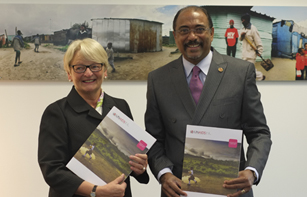
Minister for Development Cooperation and Humanitarian Affairs of Luxemburg, Marie-Josée Jacobs and UNAIDS Executive Director Michel Sidibé. 22 May 2012. Geneva.
Credit: UNAIDS/A. Obeid
The Government of the Grand Duchy of Luxembourg has been a long-standing champion of the AIDS response both in its domestic approach to the epidemic and through its support to countries most affected by HIV. It has also been committed to supporting UNAIDS in terms of sustained funding as well as political support.
Luxembourg has particularly intensified efforts to advance the AIDS response for women and girls. In 2010-2011, Luxembourg contributed Euros 2 million to UNAIDS to reduce violence against women, increase progress on preventing new HIV infections in children and roll out the UNAIDS Agenda for accelerated country action for women and girls which focuses on addressing the specific needs of women and girls and protect their human rights.
As part of its continuing commitment to ending AIDS, Luxembourg has signed a multi-year funding agreement with UNAIDS to foster joint action and bolster the global response to HIV.
The Executive Director of UNAIDS Michel Sidibé expressed his appreciation to Luxembourg for keeping AIDS high on the political agenda. “The signing of this funding agreement between the Government of Luxembourg and UNAIDS marks a new phase in our partnership,” said Mr Sidibé. “It demonstrates the Government of Luxembourg’s commitment to our work and I am confident that this sustained collaboration on key priorities will produce tangible results.”
Luxembourg believes in maximizing the impact of its international development cooperation by working with strategic partners such as UNAIDS
Minister for Development Cooperation and Humanitarian Affairs of Luxemburg, Marie-Josée Jacobs
The agreement was signed by the Minister for Development Cooperation and Humanitarian Affairs, Marie-Josée Jacobs and the UNAIDS Executive Director Michel Sidibé. Emphasising the importance of shared goals and objectives Minister Jacobs said, “The agreement is a token of Luxembourg’s trust in UNAIDS and its important work towards achieving MDG 6. Furthermore, Luxembourg believes in maximizing the impact of its international development cooperation by working with strategic partners such as UNAIDS.”
Under the new agreement and pending parliamentary approval Luxembourg will provide annual contributions to UNAIDS up to and including 2015. In addition Luxembourg will provide thematic contributions for work on specific issues. In 2012 the thematic contributions will be for gender equality and AIDS as well as for support to national strategic planning at country level. Luxembourg's support to the AIDS response will be essential in strengthening on-going work towards achieving universal access to HIV prevention, treatment, care and support by 2015 and the targets set out in the 2011 UN Political Declaration on AIDS.
Prior to the meeting and the signing of the agreement, technical experts from Luxembourg and UNAIDS came together to discuss thematic priorities. These include Luxembourg’s strong focus on improving the protection of human rights in the context of HIV, addressing the needs and rights of women and girls including zero-based tolerance for gender-based violence, as well as supporting national strategic planning to advance AIDS programmes in countries.
Publications
Related
Feature Story
Cross-political support for accelerated HIV response in Myanmar
21 May 2012
21 May 2012 21 May 2012
UNSG Special Envoy on AIDS in Asia, Dr Nafis Sadik with Vice President H.E. Dr Sai Mauk Kham.
Credit: UNAIDS
A high-level United Nations delegation led by Secretary-General’s Special Envoy on AIDS in Asia, Dr Nafis Sadik visited Myanmar to take stock of the progress made and challenges remaining in the AIDS response.
During the visit, representatives from across the political spectrum in Myanmar underlined their commitment to speed up and enhance the country’s response to HIV to ensure that HIV services reach the communities most affected by the epidemic.
Vice President H.E. Dr Sai Mauk Kham, in conversations with Dr Sadik and her delegation, emphasized the need for an inclusive response to AIDS. “To deal with this epidemic, one of the top health challenges in Myanmar, the government, UN, non-governmental organizations and civil society need to work together,” said Vice President Kham.
Representatives from the networks of people living with HIV stressed their willingness to work in close collaboration with government and other partners to ensure effective results. They also highlighted the need to involve people living with HIV during the planning, design and implementation of AIDS programmes. “People living with and affected by HIV know better than anyone else what works and how to get the best impact,” said Myo Thant Aung, Chair of the national network for people living with HIV, Myanmar Positive Group.
To deal with this epidemic, one of the top health challenges in Myanmar, the government, UN, non-governmental organizations and civil society need to work together
Vice President H.E. Dr Sai Mauk Kham
The reduced funding available for HIV treatment and prevention was of major concern for Nobel laureate and General Secretary of the National League for Democracy, Aung San Suu Kyi. During a meeting with Dr Sadik, Ms Suu Kyi stressed the importance of a sustained, well-managed response to AIDS in the country. “All the work needs to be closely monitored to assure accountability” said Ms Suu Kyi. She also highlighted the “importance of openness and compassion in government and the community” in the provision of HIV prevention and care programmes.
Dr Sadik called for a rapid increase in resources to ensure the sustainability of AIDS programmes in Myanmar. “Investment on AIDS in Myanmar from international and domestic sources needs to increase dramatically to assist people living with HIV and to prevent more people from becoming infected,” said Dr Sadik.
“In addition, laws, policies and practices that block access to HIV services for people living with and most affected by HIV need to be revised and removed. Only this will enable the provision of effective and sustainable HIV prevention and treatment services,” she added. The official visit to Myanmar was Dr Sadik’s last country missions as Special Envoy before the end of her tenure in July 2012.
In 2011, there were an estimated 216 000 people living with HIV in Myanmar and more than 40 000 adults and children received antiretroviral treatment of an estimated 120 000 people in need. According to the 2011 HIV Sentinel Surveillance data, HIV prevalence was 9.4%, among female sex workers, 21.9%, among people who inject drugs, 7.8% among men who have sex with men and 0.9% among pregnant women attending antenatal care services.
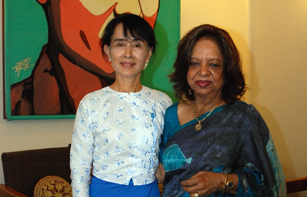
UNSG Special Envoy on AIDS in Asia, Dr Nafis Sadik with Nobel laureate and leader of the National League for Democracy, Aung San Suu Kyi.
Credit: T.M. Aung
The United Nations delegation noted the significant progress made in the national AIDS response where despite limited resources, HIV prevalence among key populations at higher risk has begun to decline and the number of people receiving antiretroviral treatment has grown substantially. However, the delegation also highlighted that two thirds of people living with HIV do not yet have access to life saving treatment and that available financial resources for AIDS in the country are expected this year to fall below levels of 2011.
“Additional resources are needed to build upon the progress made to date,” said the member of the delegation and UNAIDS Director of the Asia Pacific Regional Support Team Steven Kraus. “The necessary scale-up of HIV services will not be possible without this accelerated response.”
During the seven-day country visit, Dr Sadik and the delegation also met with the Union Minister of Health, Union Minister for Labour and for Social Welfare, Attorney-General and chairpersons of parliamentary committees.
Feature Story
UNAIDS joins 20th Anniversary Life Ball in Vienna
21 May 2012
21 May 2012 21 May 2012
UNAIDS Deputy Executive Director, Management and External Relations Jan Beagle giving her opening remarks at the AIDS Solidarity Gala.
Credit: Gettyimages
Europe’s biggest AIDS charity event was held on 19 May in the Austrian city of Vienna. Organized by AIDS LIFE, the Life Ball 2012 brought together celebrities and influential leaders in the global AIDS response to celebrate the 20th anniversary of what has become one of the largest AIDS fundraising events worldwide since it was first held in 1993.
This year’s Life Ball was held under the theme “Fight the Flames of Ignorance”. The theme provides the conclusion to the four-year cycle of elements that began in 2009 with water and was aimed at contributing to the removal of the taboos surrounding AIDS in society.
The AIDS Solidarity Gala, a high-level dinner preceding the Life Ball opening ceremony, was organized under the patronage of the President of the Republic of Austria Heinz Fischer and co-hosted by UNAIDS for the second consecutive year. Former United States President Bill Clinton, UNAIDS Deputy Executive Director, Management and External Relations Jan Beagle, amfAR spokesperson Milla Jovovich, actor Sean Penn and art collector Francesca Habsburg also participated in the event.
Proceeds from the gala will be used, in part, to support the work of UNAIDS in the Russian Federation. Donations will be dedicated to improve the lives of children orphaned by AIDS and families affected by HIV as well as to strengthen HIV prevention among women of childbearing age.
The epidemic is still a magnifier for social injustice. Stigma and discrimination, criminalization of HIV, gender inequity and numerous forms of human rights violations continue to fuel new HIV infections and block people from accessing lifesaving treatment
UNAIDS Deputy Executive Director, Management and External Relations Jan Beagle
In her opening remarks Ms Beagle noted that, despite progress made in the global AIDS response, the AIDS epidemic is not over. “The epidemic is still a magnifier for social injustice. Stigma and discrimination, criminalization of HIV, gender inequity and numerous forms of human rights violations continue to fuel new HIV infections and block people from accessing lifesaving treatment,” said Ms Beagle.
This is relevant to the epidemic in Eastern Europe and Central Asianoted Ms Beagle since unlike most other regions, AIDS-related deaths continue to rise. “I am grateful to AIDS LIFE for being such a strong, committed supporter of UNAIDS work in this region. With your help, we will break the trajectory of HIV in Eastern Europe and Central Asia and achieve the same success we are seeing in Africa and the rest of the world” added Ms Beagle.
President Clinton noted in his statement that "The UN has a goal of making sure children are born free of HIV in the first place. Resources raised at the Gala for the Clinton Foundation will be used in Zambia and Uganda to prevent mothers to pass HIV to their children."
Every year, the Life Ball recognizes the work and dedication of pioneers in the AIDS response through the “Crystal of Hope” award. Supermodel Naomi Campbell and Hollywood actor Antonio Banderas presented this year’s award of EUR 100 000 to Jackie Branfield, founder of “Operation Bobbi Bear”—a project dedicated to respond to child abuse and sexual crimes in South Africa.
Nearly 40 000 people and famous celebrities have come out in support of the AIDS response at this year’s Life Ball. The charity event, organized by AIDS LIFE, raised over US$ 2,3 million last year for AIDS programmes worldwide through partnerships with amfAR, the William J. Clinton Foundation, MTV Staying Alive Foundation, and UNAIDS.
External links
External links
Feature Story
The quest for an HIV vaccine
18 May 2012
18 May 2012 18 May 2012
Credit: UNAIDS
There is broad scientific consensus that getting to zero new HIV infections will require an HIV vaccine. Modelling shows that even a partially effective HIV vaccine can save many lives and dollars over time.
Although a vaccine to prevent HIV could be the tool to quicken the pace to reach the end of AIDS, the quest for an effective vaccine has until now proved elusive. The very nature and variety of the human immunodeficiency virus has meant that it has resisted most attempts to quell its spread and scientists and vaccinologists the world over are focusing efforts on finding solutions.
Exciting recent developments in HIV vaccine research are instilling hope around finding an effective vaccine. In 2009, results from a trial in Thailand—RV144—showed a 31.2% vaccine efficacy in preventing HIV infections. Although only modestly protective, the results instilled new hope that an HIV vaccine could be found and made available for populations around the world most in need of a vaccine.
The results represented a significant scientific advance, and were the first demonstration that a vaccine can prevent HIV infection in a general adult population. It was a discovery of great importance and has been followed by more encouraging data in the last couple of years.
Data presented in the past year has been presented on the protective immune responses that were stimulated by the Thai vaccine trial. Trials are now planned to see if an RV144-like regimen will protect against a strain of HIV infection found in South Africa and against HIV acquisition by people at higher risk of exposure, specifically men who have sex with men.
UNAIDS and the US Centers for Disease Control worked closely with modelling teams to estimate the impact of the RV144 regimen in different countries and with different populations and found that 10% of infections could be prevented if the same 31% efficacy was found in people who receive the vaccine. This shows that a modestly effective HIV vaccine could add to the prevention toolbox of partially effective methods, hastening the decline of the HIV epidemic.
These and other advances in HIV vaccine development—including the design of new tools and technologies for vaccine delivery—have boosted optimism in the field about the prospects for the development of a safe and effective AIDS vaccine.
However, early data from the HIV Vaccines and Microbicides Resource Tracking Working Group is showing that a downturn in HIV vaccine funding that began in 2008 continued through 2011. The quest for effective HIV vaccines is a long-term investment in both the product (vaccines) and in the people who will develop, produce, market and support them. Investments in research and trials are essential and can bring benefits far beyond the AIDS field.
The need for a vaccine to prevent HIV is clear. Today, as we commemorate World AIDS Vaccine Day, there are in excess of 34 million people living with HIV, and every day more than 7000 people are becoming newly infected with the virus. Although a vaccine may not provide the magic bullet to end the AIDS epidemic, it would provide an additional tool to add to the robust package of HIV prevention options which are now available.
UNAIDS will continue to work with multiple partners––scientific communities, national and international AIDS research agencies, the pharmaceutical industry, private foundations, member states, and affected communities––to push the HIV vaccine agenda forward and ensure that the quest for a safe and effective HIV vaccine continues.

Feature Story
HIV programmes for MSM and transgendered people gradually being scaled up in India
17 May 2012
17 May 2012 17 May 2012
In India, the HIV epidemic is seriously affecting men who have sex with men (MSM) and transgendered people.
Credit: UNAIDS
Rupali always felt she was different. Born as a boy in India, she liked wearing girls’ clothes and finally at the age of 20, decided to disclose to her family her gender orientation. She declared she wanted to live as a woman.
“When I first decided to tell people about my sexual orientation and gender identity, I was scared,” said the 22-year-old. “But eventually I told everyone—my family, relatives, neighbours and friends.”
Rupali did several jobs, but found it too difficult to live openly as a man who has sex with men and work in a mainstream office. So, for the past two years she has been a sex worker in New Delhi. With the money she earns from her clients she supports her mother and younger brother. Her mother has had a heart problem for several years and Rupali needs to pay for her costly medicines every month.
But her job threatens her health as Rupali has a high risk of HIV infection.
In India, the HIV epidemic is seriously affecting men who have sex with men (MSM) and transgendered people. Among this population, 427 000 (in 2010) are considered at higher risk because they have multiple sex partners and many receive money in exchange for sex.
“When a customer is drunk, it is often difficult to convince him to use condoms,” said Rupali.
While sex work pays her bills, Rupali has been attacked several times. Like many transgendered people, Rupali finds it challenging to be fully accepted by her family and community. “The local thugs keep us in a constant state of terror. We fear them striking our faces with blades or brutally beating us up. But we fear the police even more,” said Rupali.
In India, the prevalence of HIV among MSM reached 7.3%, which is 20 times higher than among the general population. Recent data shows that HIV prevalence among transgender people in major cities like Mumbai and Delhi has soared even higher to nearly 25%. HIV programmes for MSM and transgendered people are gradually being scaled up.
The Pahal Foundation in Faridabad gets funding from the Haryana state government to provide HIV testing, treatment for sexually transmitted diseases, counselling and condoms to 750 MSM and transgender people, but hundreds more use their facilities every month.
Many of us MSM try our best to appear straight, but eventually we get ‘outed’. I know several people who lost their jobs because they were severely discriminated against by their co-workers
Manoj Kumar Verma, Outreach Worker at Pahal Foundation
“Everyone needs a support system. Without the support of their families and society, men who have sex with men and transgendered people often take their own lives or run away from home,” said Maksoom Ali, Project Manager at Pahal.
The Foundation has found that only a handful of the people they support are open about their HIV status with their families.
“Employment is a real problem for MSMs and transgender people,” said Manoj Kumar Verma, Outreach Worker at Pahal. “Many of us MSM try our best to appear straight, but eventually we get ‘outed’. I know several people who lost their jobs because they were severely discriminated against by their co-workers.”
There has been some progress in India for men who have sex with men and transgendered people. In the next phase of India’s National AIDS Control Programme (NACP4), there are plans to develop and implement programmes focused on the specific needs of transgender people. Three years ago, the Delhi High court decriminalized sex between adult men in a historic judgement.
Rupali is involved with an organization for MSM in West Delhi and she said she wants to contribute to her community. “Everyone has dreams but not all of them come true,” said Rupali. “That’s true for me too but I want to do something for my community and I want to be a better person.”
Feature Story
“Making Rights a Reality”: The experiences of organizations of transgender people in the AIDS response
17 May 2012
17 May 2012 17 May 2012
Transgender people in Argentina advocating for the passing of the gender identity law.
In Latin America, transgender people face stigma and discrimination based on their gender identity every day. Such situations limit their access to the education system, job opportunities and health services which, in turn, increase their vulnerability to HIV.
However, the commitment and mobilization power of the transgender community have achieved important political and social changes leading to a more pluralistic and democratic society based on the respect for diversity. Some of these achievements have been compiled in "Making Rights a Reality. The experiences of organizations of transgender people" launched on 17 May on the occasion of the International Day Against Homophobia and Transphobia.
Produced by the International HIV/AIDS Alliance, the Latin American and Caribbean Transgender Network (REDLACTRANS) and UNAIDS, the report is a compilation of six case studies. It focuses on the efforts made by transgender organizations in Latin America to achieve an inclusive society based on respect for human rights.
“This work reflects the needs of transgender people in the Latin American context, while highlighting their leadership and how it led to significant political and institutional changes,” said Cesar Nuñez, UNAIDS Regional Director for Latin America. “Only through participation and leadership of transgender people in identifying strategies to protect and guarantee their human rights we can reach a world with zero discrimination,” he added.
Progress has been made in Argentina and Uruguay regarding the legal recognition of human rights of transgender people, the report highlights. In the first case, the passing of a gender identity law confirmed transgender people as full citizens in the eyes of the law. In Uruguay, through a government decree, sex work has been formalized and legalized. Now sex workers are entitled to health insurance, retirement and other benefits.
In Argentina, the transgender organization ATTTA played a key advocacy role in the recent passing of the law on gender identity. “With this law we are claiming our right to identity. We will no more be forgotten by democracy. With this law we are here to make history,” said Marcela Romero, President of ATTTA and Coordinator of REDLACTRANS.
Only through participation and leadership of transgender people in identifying strategies to protect and guarantee their human rights we can reach a world with zero discrimination
Cesar Nuñez, UNAIDS Regional Director for Latin America
In Honduras and Bolivia, the publication stresses the achievement of transgender people’s participation in decision-making spaces within key structures of the AIDS response such as the Country Coordination Mechanism for Global Fund grants. In addition, El Salvador and Ecuador led initiatives in the field of comprehensive health which, resulted in the development of national programmes that now meet the specific needs of transgender people.
All of these achievements have one thing in common: the leadership of transgender people to demand and defend their rights.
"This compilation is in itself a valuable tool for advocacy and will increase the knowledge about transgender issues in the region and in the world, allowing decision-makers to improve existing programmes and approaches,” said Javier Hourcade Bellocq, the Latin American and the Caribbean Regional Representative of the International HIV/AIDS Alliance.
Mr Bellocq stressed that the leadership and participation of transgender people are essential to achieving social justice and strengthening the rule of law. “We cannot scale up universal access to HIV services if we do not have a strong regulation in place that recognizes gender identity. We need governments to ensure 'zero tolerance' to violence, abuse and crime," said Mr Bellocq.
Related

Feature Story
Influential leaders champion the role of the private sector in challenging HIV and global health threats
15 May 2012
15 May 2012 15 May 2012
L to R: United States Global AIDS Coordinator Ambassador Eric Goosby, Anglo American's chief medical officer Brian Brink, UNAIDS Executive Director Michel Sidibé and President of GBCHealth John Tedstrom.
Credit: GBCHealth
Taking stock of the successes, challenges and future of the global AIDS response after three decades was at the core of the Global Business Coalition annual conference on Health (GBCHealth) held from 14-15 May in New York.
Under the theme of “Defining forward: Business, health and the road ahead” the conference brought together corporate executives, government leaders, policy makers, multilateral organizations, civil society and the media to discuss the most serious global health issues of today.
Headline speakers included Michelle Bachelet of UN Women, Barbara Bush of Global Health Corps, Deepak Chopra, Muhtar Kent of The Coca-Cola Company, Madam Bongi Ngema-Zuma, South Africa’s First Lady and UNAIDS Executive Director Michel Sidibé.
Considerable progress made
AIDS@30 was the first, tone-setting session in the GBCHealth conference, where the UNAIDS Executive Director Michel Sidibé shared a platform with Anglo American's chief medical officer Brian Brink, the United States Global AIDS Coordinator Ambassador Eric Goosby and President of GBCHealth John Tedstrom. Mr Sidibé highlighted the considerable progress that has been made in the international AIDS response. He emphasized the fact that almost 60 countries—34 in sub-Saharan Africa—have stabilized or reduced the number of new HIV infections. This was attributed in part to extensive collaboration between a range of partners.
“Local governments are taking greater responsibility for their epidemics. But HIV is a shared responsibility that involves governments, donors, civil society and the private sector."
Mr Brink agreed that the private sector has a key role to play in ensuring the success in the response to AIDS and described Anglo American’s efforts to implement workplace policies to keep its workforce and their families healthy.
“Anglo American has demonstrated that investing in HIV prevention, treatment and care has measurable and positive impact on the bottom line,” said Mr Brink. “By investing in your employees, you reduce absenteeism, increase productivity and contribute to the wellbeing of the company."
The debate was wide-ranging and touched on a number of issues, including how the epidemic has evolved; the necessary and sufficient conditions for a truly sustainable response and the prospects for AIDS funding in an uncertain economic climate.
HIV should not be seen as a disease but an opportunity and entry point to address critical issues in society including human rights and gender equality
Michel Sidibé, UNAIDS Executive Director
"30 years ago, access to HIV treatment in the countries hardest hit by the epidemic was not deemed possible. Today's increased access to treatment is a tangible prove of what can be achieved when all sectors join forces to address the AIDS epidemic," said Ambassador Goosby.
It was also stressed that one of the major achievements of the AIDS response is the fact that it has been an entry point to larger social issues, giving vulnerable people a voice and the power to use it. As Michel Sidibé contended, "HIV should not be seen as a disease but an opportunity and entry point to address critical issues in society including human rights and gender equality."
Participants concluded that businesses, from the largest global corporations to micro enterprises, private sector associations and coalitions need to lend their resources and expertise in order to effectively respond to AIDS. Businesses should move beyond ensuring the well-being of their employees and actively contribute to the response by disseminating vital AIDS information through print, broadcast and billboard advertising space; lobbying for effective AIDS policies and providing financial resources to life-saving programmes.
Donations have double benefit
Donating to UNAIDS in the United States of America has become easier. ‘UNAIDS USA’, a 501c3—a tax-exempt nonprofit organization in the United States of America —has been set up to facilitate the engagement of alternative sources of financing. This will make it easier for individuals, foundations and the private sector to contribute to the work of UNAIDS and its 10 cosponsors.
“I believe we can make real advances in the AIDS response in the next five years, but to do so we need to join forces not just with governments but with private individuals, activists, corporations and foundations,” said UNAIDS Executive Director Michel Sidibé. “Every small contribution helps to reach UNAIDS vision of zero new HIV infections, zero discrimination and zero AIDS related deaths.”
External links
External links
Related
Press Statement
International Day Against Homophobia and Transphobia
17 May 2012 17 May 2012Message from UNAIDS Executive Director Michel Sidibé
GENEVA, 14 May 2012—In the last year, we have seen greater acceptance of diversity. A new dialogue of openness and tolerance has emerged.
Yet in 79 countries, territories and areas, we still have laws that criminalize same-sex relations between consenting adults. These laws are serious barriers to an effective AIDS response and are driving lesbians, gays, bisexuals and transgender people underground where they cannot access life-saving services.
A society’s value should not be based on money or power. It must be measured by the way it values people, regardless of their sexual orientation or social status. A prosperous society is one that ensures inclusiveness and respects all people.
To our gay, lesbian, bisexual and transgender friends, UNAIDS stands with you.
Your engagement is essential to achieving our vision of Zero new HIV infections, Zero discrimination and Zero AIDS-related deaths.
Feature Story
UNITAID: Five years of health innovation brings new approach and new medicines to developing country markets
08 May 2012
08 May 2012 08 May 2012
In Five years of innovation for better health, UNITAID highlights a series of successes that have led to cheaper, better medicines in developing countries
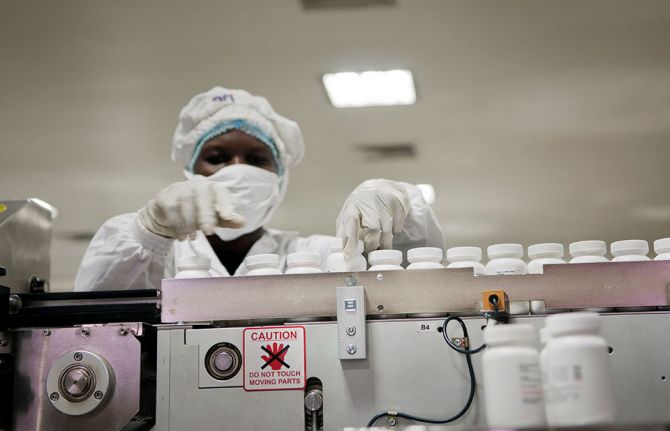
Through spearheading innovative initiatives and providing financing for global health over the past five years, UNITAID has had a dramatic impact on millions of lives, using creative market approaches to increase access to treatment and diagnostics for HIV, malaria and tuberculosis.
In its latest progress report, Five years of innovation for better health, UNITAID, which was established in 2006, highlights a series of successes that have led to more focused and effective interventions. This is seen as especially critical in the current economic climate where health funding shortfalls have become increasingly apparent.
According to Denis Broun, UNITAID Executive Director, the organisation, “has become a key player in the Global Health architecture and a driver of the global agenda on access to medicines for the poor.”
Children living with HIV have benefited greatly from UNITAID’s approach, which has created a new market for child-friendly HIV medicines, including single pill formulations. In 2006 the organization began investing in paediatric HIV drugs and diagnostic tests in Africa, Asia and the Caribbean.
In the past, the few existing antiretrovirals for children had been expensive, hard to store and required up to 18 unpleasant-tasting doses a day. Along with the Clinton Health Access Initiative, UNITAID used ‘pooled procurement’ across 40 countries to generate sufficient demand to help bring down costs. Price reductions of up to 80% have been achieved and some 400,000 children living with HIV are now being treated under this scheme—three quarters of the world’s total.
Dr Mwiya Mwiya, from Zambia’s University Teaching Hospital Paediatric Centre of Excellence, has noticed a marked difference, “In 2005 we felt hopeless as physicians because many kids died. In 2011, it was clear how far we advanced, with proper formulations and tests for children. Now we know we can make a difference.”
Many adults living with HIV have also seen their lives improve. UNITAID has secured price reductions of up to 60% for key second-line antiretrovirals so that more than 100,000 people a year for whom the first-line drugs have failed can shift to more powerful HIV treatment. Before 2006 such drugs were too expensive in low-income countries.
In the first five years of its existence, UNITAID has become a key player in the Global Health architecture and a driver of the global agenda on access to medicines for the poor
Denis Broun, Executive Director, UNITAID
Access to life-saving drugs has also been made easier by UNITAID’s creation of the Medicines Patent Pool in 2010. By encouraging patent holders to licence their intellectual property, generic manufacturers can produce low cost, high quality versions of drugs. It acts as a ‘one-stop shop’ for both the licenses needed and product development partnerships to make the medicines. In July 2011 the Patent Pool signed a landmark agreement with Gilead Sciences, a biopharmaceutical company, for five HIV drugs covering more than 100 countries.
Additionally, UNITAID’s interventions have led to more than eight million pregnant women being tested for HIV and 800,000 of those found to be HIV-positive being treated to stop the transmission of HIV infection to their children. UNITAID has funded advanced laboratory facilities to detect multi-drug-resistant TB in eight high burden countries. It is also the largest funder of the Affordable Medicines Facility – malaria (AMFm), which aims to put the most effective malaria treatments available today into the hands of the people who need them the most.
One of the key sources for funding, which accounts for around 65% of UNITAID’s revenue, has been the introduction of a small levy on air tickets. This can range from US$1 to US$40 and is added to an existing airport tax with some or all of the funds going to UNITAID. So far, US$1.3 billion has been raised through this initiative which has been implemented by nine countries: Cameroon, Chile, Congo, France, Madagascar, Mali, Mauritius, Niger and the Republic of Korea.
UNITAID is also exploring new ways of raising resources. One possibility for the future is a Financial Transaction Tax on stocks, bonds and derivatives which the organisation says could raise billions of dollars a year.
According to the report, the ripple effect of UNITAID’s core achievements, such as price reductions and the introduction of new medicines, is being felt throughout the developing world as markets are transformed to make them work for the poor.
External links
External links
Publications
Publications
Feature Story
Sweden and UNAIDS stress the importance of youth engagement in shaping global health agenda
08 May 2012
08 May 2012 08 May 2012
Swedish Minister of International Cooperation Gunilla Carlsson and UNAIDS Executive Director Michel Sidibé at the UNAIDS Headquarters in Geneva. 09 May 2012.
Credit: UNAIDS
An official delegation from Sweden led by the Minister of International Cooperation, Gunilla Carlsson met with UNAIDS Executive Director Michel Sidibé at the UNAIDS Headquarters in Geneva. Young people features high on the agenda.
“We need to engage a new generation of young people in shaping the future agenda of our international institutions, so that they address the shared challenges of their world,” said Minister Carlsson. “We want future generations to believe in the virtues of international cooperation and to influence and change the international institutions to fit the times,” she added.
Michel Sidibé emphasized his personal commitment to bringing more young people into the ranks of the organization and stressed the importance of the innovative youth-led policy project initiated by UNAIDS called CrowdOutAIDS. The initiative saw the participation of more than 5 000 young activists from 79 countries to develop the first-ever “crowdsourced” AIDS-related document in UN history which will inform the UNAIDS Secretariat’s New Generation Leadership Strategy.
We need to engage a new generation of young people in shaping the future agenda of our international institutions, so that they address the shared challenges of their world
Minister of International Cooperation of Sweden, Gunilla Carlsson
“Nurturing young leadership is essential for the AIDS response to remain relevant to the needs of communities, families, and new generations of young people in a more sophisticated and interconnected world,” said Mr Sidibé. “UNAIDS is committed to engage young people in collectively shaping a vision for global health, social development, and the values of our shared world—a new global citizenship,” he added.
The UNAIDS Executive Director also commended Sweden’s commitment and support to the global efforts to eliminate new HIV infections among children and keep mothers alive and emphasized the opportunity to create an AIDS-free generation by 2015.
The government of Sweden and UNAIDS agreed to join forces to promote innovation and new approaches to development partnerships as well as to look for opportunities to strengthen collaboration across UN agencies.
Accompanying the Minister were Member of Parliament Christian Holm, Ambassador Jan Knutsson, Sweden’s Global Health Ambassador, Anders Nordstrom, and other colleagues from Ministry for Foreign Affairs and the Swedish Mission in Geneva.