

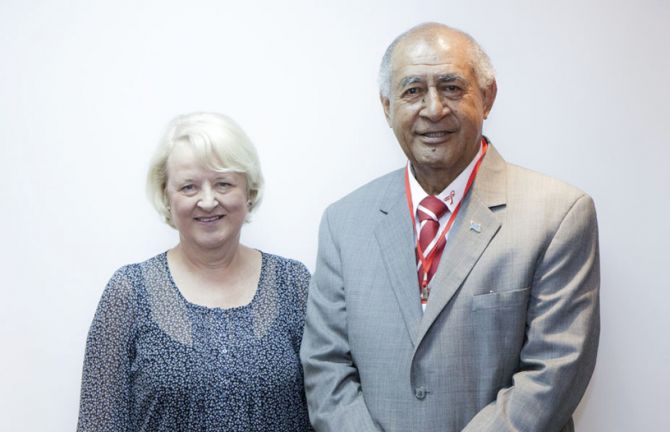
Jan Beagle, UNAIDS Deputy Executive Director, Management and Governance with President Ratu Epeli Nailatikau of Fiji.
Feature Story
President of Fiji encourages accelerated leadership on HIV in Asia and the Pacific
20 November 2013
20 November 2013 20 November 2013Speaking at a forum on AIDS leadership held in Bangkok on 18 November, the President Ratu Epeli Nailatikau of Fiji, emphasized the importance of continued leadership to accelerate progress in Asia and the Pacific. He highlighted work towards the ‘Getting to zero’ vision of zero new HIV infections, zero discrimination and zero AIDS-related deaths. President Nailatikau stressed that while progress has been made, there is a need to continuously review and renew efforts and commitments to ensure sustained progress.
The leadership forum took place on the eve of the 11th International Conference on AIDS in Asia and the Pacific (18-22 November). The regional conference and was attended by more than 100 representatives from governments, international organizations and civil society groups.
UNAIDS Deputy Executive Director, Management and Governance, Jan Beagle highlighted the need for greater focus in the region’s response to HIV. She noted that by ensuring key populations (such as men who have sex with men, sex workers and people who inject drugs) have access to HIV services—will have a major impact in terms of HIV infections prevented and lives saved.
Quotes
"We need to continuously review and renew our efforts and our commitments as leaders and partners on our response to HIV—especially to our commitments in achieving and sustaining access to antiretroviral treatment—the gains in our response to HIV are still fragile."
"Political commitment from the top and community engagement is what makes the difference in the response to HIV."
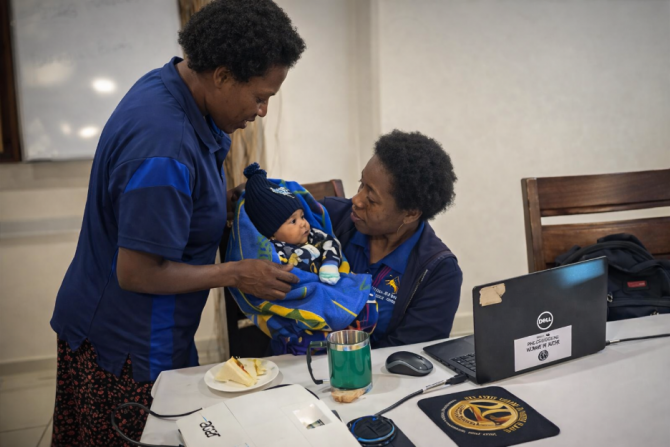
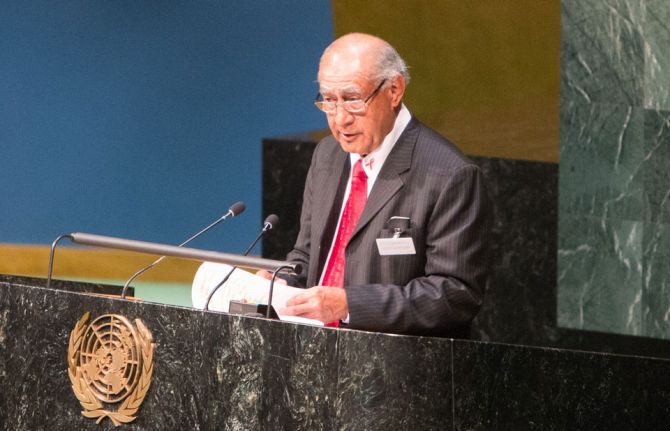
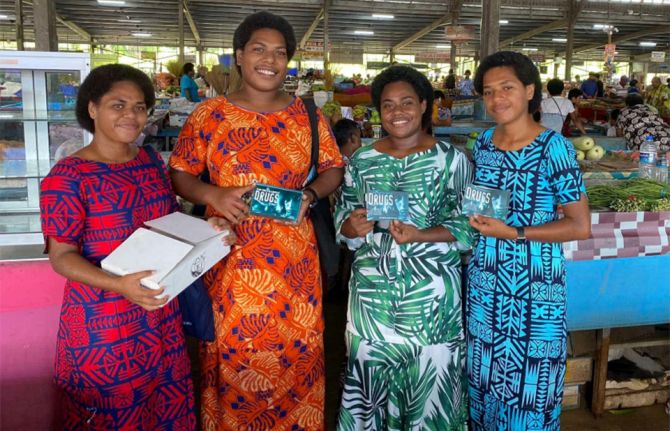
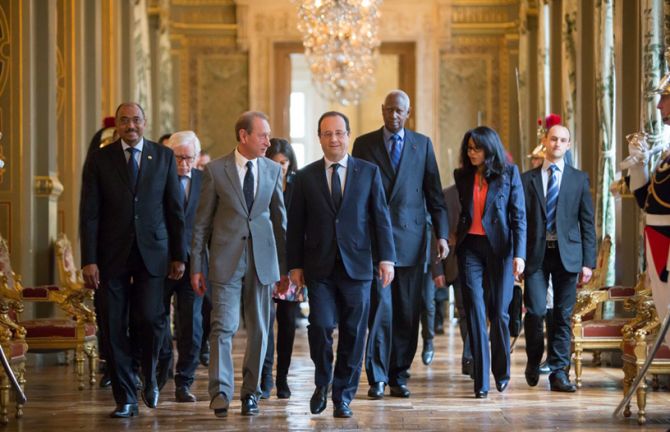
L to R: Michel Sidibé, Executive Director of UNAIDS, Bertrand Delanoe, Mayor of Paris, François Hollande, President of France, and Abdou Diouf, Secretary-General of La Francophonie. Credit: Présidence de la République.
Feature Story
AIDS response is focus of Francophone cities in Paris
18 November 2013
18 November 2013 18 November 2013The Executive Director of UNAIDS delivered a key note address at the Congrès de l'Association Internationale des Maires Francophones (AIMF) at the Hôtel de Ville de Paris on “Shared Responsibility and the AIDS response”. The high-level session was attended by French President François Hollande and President Abdou Diouf, Secretary-General of La Francophonie. The event was hosted by Bertrand Delanoe, Mayor of Paris and President of AIMF and included more than 120 mayors of major cities from La Francophonie.
In his remarks, UNAIDS Executive Director highlighted President Hollande’s leadership on AIDS as an example of his commitment to social justice and cited France’s €1B commitment to the Global Fund to Fight AIDS, Tuberculosis and Malaria’s upcoming replenishment meeting as an example of France’s leadership on AIDS.
President Hollande cited UNAIDS as the example of global mobilization, and reiterated France's commitment.
Mayor Delanoë reiterated the common values of La Francophonie—diversity and the promotion of human rights –demanding that francophone mayors advocate for the right to equal freedom of movement, regardless of one’s HIV status. The meeting concluded with a call to adopt a new resolution for a ‘Francophone world with zero HIV-related stigma and discrimination’.
During his participation at the Congress, the Executive Director of UNAIDS also met with French civil society organizations engaged in the HIV response with the City of Paris. In the majority of Francophone countries, large urban cities account for 20% to 60% of national epidemics.
Since 2001, the City of Paris has devoted €20.5 million to support the HIV response in local communities in Francophone cities, mainly in sub-Saharan Africa. With this funding, Parisian AIDS NGOs work in partnership with the City of Paris to support African civil society programmes for HIV testing, prevention, treatment and social support.
In an interactive dialogue, the community of French NGOs called on UNAIDS to continue to focus on HIV in the cities in La Francophonie, many of which are still lagging behind despite commendable progress in the global AIDS response. They called UNAIDS to lead a new global mobilization in La Francophonie for scaling up of HIV treatment and preventing new HIV infections among children.
Video
Excerpt from the speech of François Hollande, President of France addressing Congrès de l'Association Internationale des Maires Francophones (AIMF) at the Hôtel de Ville de Paris on "Shared Responsibility and the AIDS response".
Quotes
France will maintain its commitment to the AIDS response until the epidemic is over.
I commend the City of Paris for demonstrating its solidarity for the AIDS response. 50 000 people living with HIV have access to treatment every year thanks to your programmes and more than 500 000 people benefit from HIV prevention programmes.
This general assembly of the AIMF should adopt a declaration calling for the freedom of movement of people living with HIV.
For the first time in human history, urban populations now outnumber rural populations. AIMF has taken an innovative approach to address the challenges facing cities today, including water, urban development and finance, education and HIV.
Discours
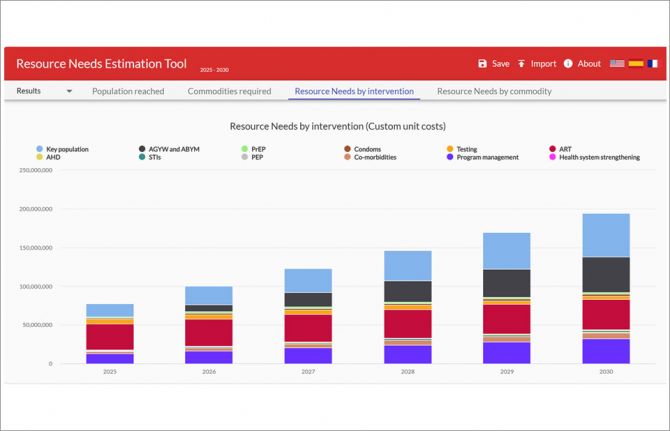
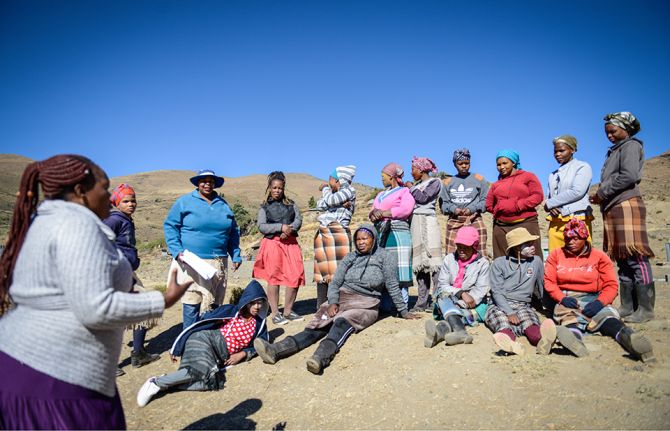
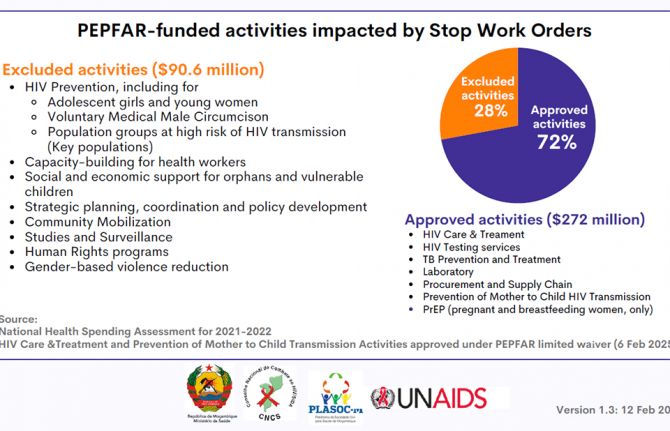
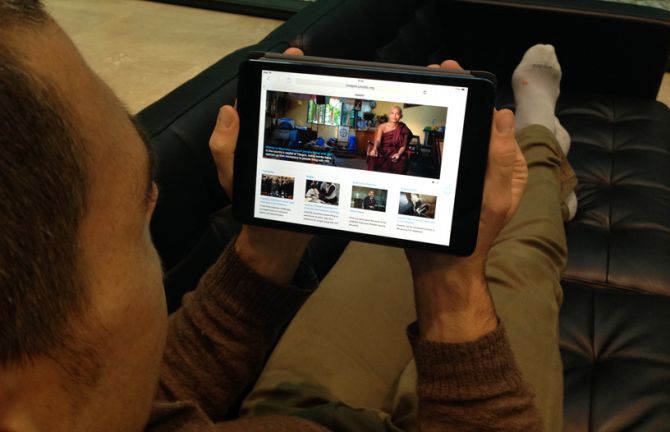
Ahead of World AIDS Day, UNAIDS has released a newly designed website for a more visual and streamlined user experience. The new design features all the latest information about UNAIDS––available through a range of multi-media options.
Feature Story
UNAIDS launches new website design ahead of World AIDS Day
17 November 2013
17 November 2013 17 November 2013More innovation, story-telling and new products for UNAIDS website.
Ahead of World AIDS Day, UNAIDS has released a newly designed website for a more visual and streamlined user experience. The new design features all the latest information about UNAIDS––available through a range of multi-media options.
“We have seen phenomenal progress in the AIDS response,” said Annemarie Hou, Director of Communications and Global Advocacy. “Now we can better share stories about the people, the data and the evidence behind the successes.”
The platform’s clean, uncluttered design focuses on providing the user with faster ways to find and share information. New ways of presenting UNAIDS core work through images, story and photo galleries are now available––all which have been optimized for smart phones and tablets.
“We know more people get their inspiration on the go—so we’ve tried to make the website a visual experience for every visitor,” added Ms Hou.
The site also highlights progress towards the goals and targets set by the United Nations Member States, as well as advances towards achieving the UNAIDS vision of zero new HIV infections, zero discrimination and zero AIDS-related deaths.
Feature Story
Zambia entering a critical phase in its response to HIV
12 November 2013
12 November 2013 12 November 2013
PCB delegates attends a lesson on comprehensive sexuality education at a primary school in Lusaka.
An international delegation of the UNAIDS Programme Coordinating Board (PCB), made a recent visit to Zambia from 4-6 November to learn more about the successes and challenges in a country where almost 13% of the adult population is living with HIV.
“The AIDS response in Zambia is at a tipping point and now is not the time to become complacent about HIV but to build on the significant gains achieved.” said UNAIDS Deputy Executive Director Jan Beagle who was leading the visit.
There has been significant progress in reducing overall HIV prevalence and scaling up access to treatment, as well as in stopping new HIV infections among children. Yet there is an increasing number of new infections among young people, relatively low rates of testing, and lack of access to services for key populations.
The response is at a tipping point and now is not the time to become complacent about HIV but to build on the significant gains achieved.
UNAIDS Deputy Executive Director Jan Beagle
The delegation included members from Australia, Brazil, Congo, India, Norway, Poland and Zimbabwe, as well as representatives of PCB NGOs and UNAIDS Cosponsors who met with a range of stakeholders in Zambia’s multi-layered, multisectoral response to HIV. The delegation met the Vice President, the First Lady, the Minister of Health, the Minister of Chiefs and Traditional Affairs, government officials, development partners, and civil society and youth representatives, including people living with HIV.
The meetings provided an opportunity for the delegation to express support and to discuss the importance of shared responsibility and global solidarity in the AIDS response. Ms Beagle welcomed the development of a national investment case which explores what is needed for an effective and targeted response to HIV which is focused on results.

PCB Delegation in Lusaka. From left to right: Ms Ebony Johnson (NGO Delegation), Dr Tapuwa Magure (Zimbabwe), Ms Sheila Tlou (UNAIDS), Mr Joel Nana (NGO Delegation), Ms Joanna Glazewska (Poland), Ms Helen Frary (UNAIDS), Ms Cristina Raposo (Brazil), Mr Morten Ussing (UNAIDS), Ms Fenande Mvila (Congo), Mr Alastair Mckenzie (Australia), Ms Jan Beagle (UNAIDS).
At a UNAIDS reception the First Lady, Dr Christine Kaseba stressed the need to address HIV as a public health imperative with great attention to rights and highlighted the specific vulnerabilities and needs of women and girls and men who have sex with men.
During the visit the delegation also participated in the third National HIV Prevention Convention, opened by the Vice President, who spoke about the vital role of traditional leaders and chiefs in behaviour change.
In addition the PCB saw the on-the-ground realities of the epidemic and met people most affected by HIV with visits to a prison, clinic and school. The delegation attended a class on comprehensive sexuality education and met with young people living with HIV who demonstrated their willingness to discuss sexuality, take responsibility for protecting their own health, and help guarantee a healthy future for Zambia's next generation.
“The visit to Zambia was an excellent opportunity for a PCB delegation to see the particular challenges of a severe epidemic in Africa and to see the positive impact of UNAIDS’ work in bringing together all stakeholders in support of an effective response that delivers real impact," Ms Beagle concluded.
External links
External links
Publications
Publications
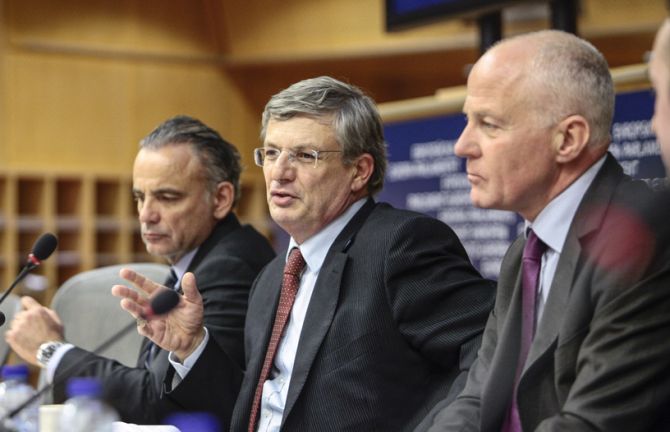
Left to right: Luiz Loures, UNAIDS Deputy Executive Director for Programme; Toni Borg, European Health Commissioner; and Michael Cashman, Member of European Parliament.

Tom Hayes, ukpositivelad blogger; and Laurette Onckelinx, Minister for Public Health, Belgium.
Feature Story
Right to health for LGBTI communities reaffirmed as a priority for the European Union
08 November 2013
08 November 2013 08 November 2013Men who have sex with men have been particularly affected by the AIDS epidemic. Across the European Union a multi-country survey found that in 2010 around 8% of men who have sex with men were reported to be living with HIV. In 2012, France reported the highest HIV prevalence among men who have sex with men at around 18%, followed by Spain, Greece, Germany, Switzerland, Belgium and Portugal, all with rates well above 10%. The dual stigma and discrimination which continues to surround HIV and homosexuality is one of the barriers preventing people from accessing lifesaving HIV services.
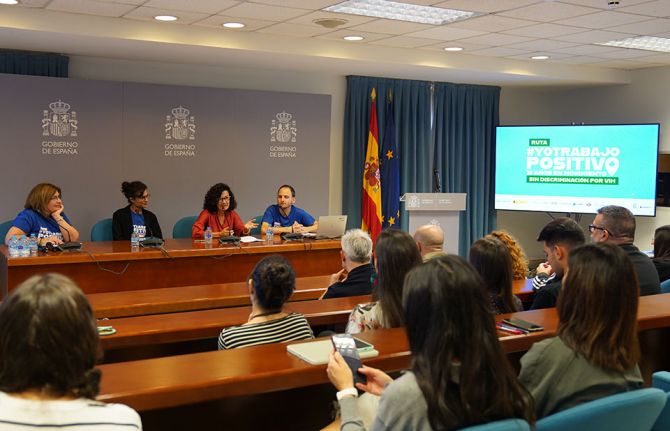
On 6 November leading European policy makers, experts, lesbian, gay, bisexual, transgender and intersex (LGBTI) human rights activists and HIV organizations came together in Brussels to highlight the severe impact of HIV for LGBTI communities in Europe. At the European Parliament hearing “Achieving the right to health of LGBTI people – How can we reverse the crisis of HIV, health and human rights affecting LGBTI people in Europe” the participants discussed ways forward to strengthen rights of people affected by HIV in compliance with the EU Charter on Fundamental Rights.
Quotes
We need to work together to shape, implement and monitor action to fight not just the virus, but also to fight the stigma and discrimination around it. I am committed to doing everything in my power to help fight HIV/AIDS and abolish all forms of stigma and discrimination.
My HIV status was posted without my consent on Twitter and Facebook, and it spiralled out of control – it can never be erased. But I also found peers and support through the internet.
The significant progress of the global AIDS response is the legacy of the AIDS solidarity movement emerging from the gay communities, saving millions of deaths. We have to pay back that legacy. We can go to the end of the AIDS epidemic, but we cannot leave people behind.
AIDS is no longer a fatal disease, but people living with HIV still have to confront the social death.
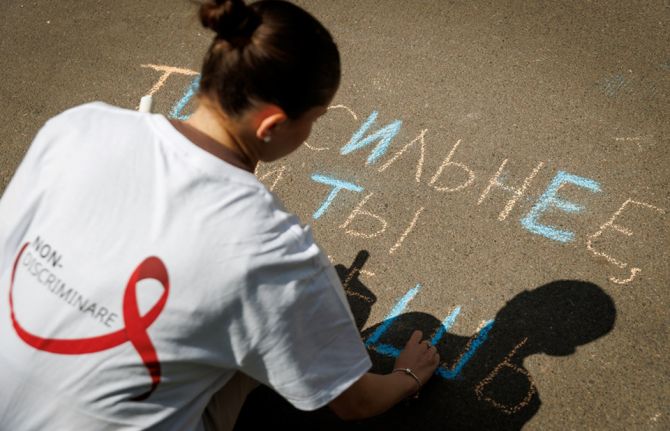
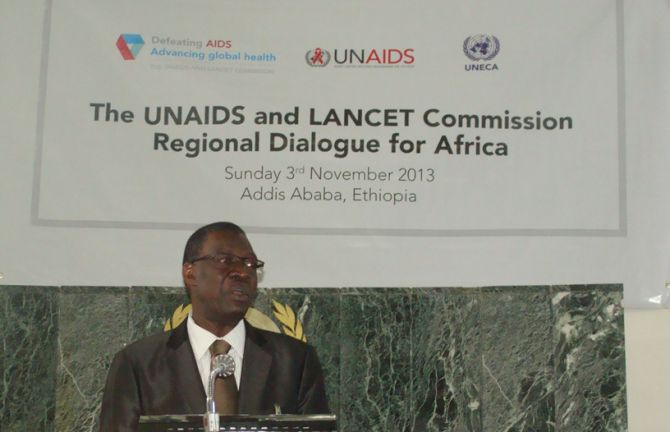
Mr Assane Diop, Director of Social Development policy division and Special Advisor to the Executive Secretary, UNECA
Feature Story
UNAIDS-Lancet Commission African dialogue calls for ending AIDS to be central to the post-2015 agenda
04 November 2013
04 November 2013 04 November 2013The first of a series in regional dialogues organized by the UNAIDS and Lancet Commission: Defeating AIDS - Advancing global health was held on 3 November in Addis Ababa. One of the main messages that emerged from the consultation was the need to include ambitious and measurable targets towards ending AIDS in the post-2015 development agenda.
Co-convened by the United Nations Economic Commission for Africa (UNECA) and UNAIDS, the Africa-focused dialogue was held on the margins of the Africa Regional Consultative Meeting on the Sustainable Development Goals. The aim of the consultation was to stimulate debate on how to ensure that the achievements of the AIDS response are carried forward to the new development agenda that is currently being worked on to replace the Millennium Development Goals when they expire in 2015.
Participants included officials from the African Union Commission, Regional Economic Communities, Ministers, Ambassadors, African Members of Parliament, as well as representatives of civil society, including networks of people living with HIV, young people, the private sector, and the UN system and other international organizations.
Over the coming weeks, additional regional dialogues are planned, including for Latin America (18 November), Asia-Pacific (19 November), Southern Africa (7 December) and Eastern Europe-Central Asia (13 December). The outcomes of these dialogues will help inform the recommendations of the UNAIDS and Lancet Commission to be presented in early 2014.
Quotes
Although AIDS remains the leading cause of death in Africa, recent dramatic scientific advances convince me that we can end AIDS in Africa. To realize this aim, I call on Africa to ensure a prominent position of AIDS in the next global development framework.
Ending AIDS is a critical element of Africa’s vision for the sustainable development goals – it will require shared responsibility and global solidarity and even more inclusive approaches.
I am from the generation that never experienced a world without HIV. It is my dream to see how the world feels without AIDS.
Related


UNAIDS Executive Director Michel Sidibé addressing the 10th Assembly of the World Council of Churches. Busan, Republic of Korea, 30 October 2013. Credit: Peter Williams/WCC

L to R: Anglican Archbishop Bernard Ntahoturi of Burundi; Archbishop of Canterbury Justin Welby; Mr Michel Sidibé, UNAIDS Executive Director; the Most Rev. Thabo Cecil Makgoba, Anglican Church of Southern Africa. Busan, Republic of Korea, 31 October 2013. Credit: Peter Williams/WCC

UNAIDS Executive Director Michel Sidibé (center) and people working on HIV through churches all over the world, some of whom are openly HIV-positive, pose for a group photo. Busan, Republic of Korea, 30 October 2013. Credit: UNAIDS
Feature Story
UNAIDS Executive Director addresses Christian communities at 10th Assembly in Korea
01 November 2013
01 November 2013 01 November 2013The World Council of Churches (WCC), a fellowship of Christian Churches, opened its 10th Assembly in the South Korean city of Busan on Wednesday 30 October. Some 3000 delegates from more than 100 countries gathered to focus on the theme ‘God of life: lead us to justice and peace.’
UNAIDS Executive Director Michel Sidibé was invited to participate in the conference and began his visit with a lively meeting with people living with HIV and people working on HIV through church communities across the world. He also met with the Anglican Archbishops of Canterbury, South Africa and Burundi where they discussed the role of the Church in the HIV response and the importance of speaking out to break the silence around sexual violence and HIV as well as the importance of access to affordable medicines.
Mr Sidibé was asked by the Assembly organisers to give a talk which would set the tone for the WCC Assembly’s discussions on ‘Justice and Peace’ and give direction for the WCC’s future action. Recognizing the critical role of churches in health care world-wide he the challenged delegates to push the boundaries on sensitive issues such as sexuality, to speak out against injustice, to push forward the drive to provide medicines for everyone in need and to rise to the challenge of bringing the most marginalized to the table where policy is set and decisions are made.
Mr Sidibé was joined in the thematic plenary session by the Anglican Bishop of Colombo, Dr Tawfik, a Theologian from the Coptic Orthodox Church of Alexandria and MÉlisande Schifter, a young theologian from Germany who challenged participants to focus their rich experience into suggestions for action to young people present at the Assembly.
Quotes
Social justice is close to your hearts — join us to make a call that no one should be left behind when it comes to treatment… We must not take our foot off the pedal now. We must redouble our efforts, I will refuse silence when what we look for is justice. If we don’t pay now as a global community to finish the task we have started, then we will pay forever — both financially and in human lives.
I was really struck by the challenge of providing access to medicines for people living with HIV and the push for global solidarity on that issue. This is something we too can throw our weight behind.
In the context of discussions around HIV and sexuality in the Church one of the very important groups is INERELA+ the International Network of Religious Leaders Living with and personally affected by HIV. This is a group of religious leaders some of whom have openly declared their HIV positive status. They have been a great help to many people in the Church who are living with HIV.
We will not get to zero without liberating sexuality as a faith community.
Speeches
Speeches
Press Release
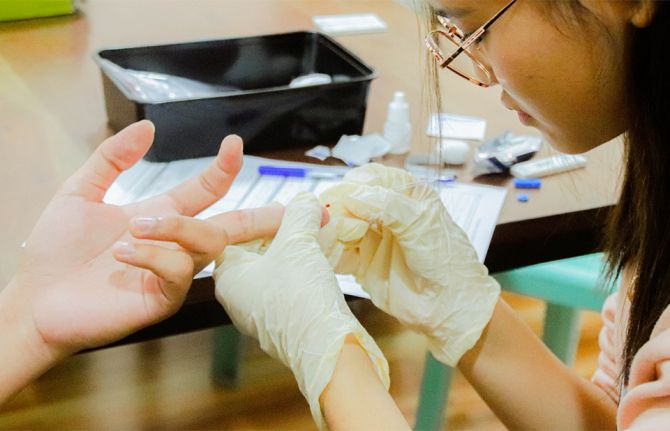
UNAIDS reports that more than 10% of adults living with HIV in low- and middle-income countries are aged 50 and over
01 November 2013 01 November 2013Shifting demographics of the AIDS epidemic demands a new focus to reach people above the age of 50––a population currently underserved by HIV services.
GENEVA, 1 November 2013—The United Nations Joint Programme on HIV/AIDS (UNAIDS) has released a supplement to the 2013 UNAIDS Report on the global AIDS epidemic focused on the issue HIV and aging.
The supplement reveals that out of the global total of 35.3 million [32.2 million – 38.8 million] people living with HIV, an estimated 3.6 million [3.2 million–3.9 million] are people aged 50 years or older. The majority––2.9 million [2.6 million–3.1 million]—are in low-and middle-income countries where the percentage of adults living with HIV who are 50 years or older is now above 10%. The supplement also reveals that in high-income countries almost one-third of adults living with HIV are 50 years or older.
“People 50 years and above are frequently being missed by HIV services,” said Michel Sidibé, UNAIDS Executive Director. “This is costing lives. Much more attention needs to be given to their specific needs and to integrating HIV services into other health services which people 50 years and over may already have access to.”
The “aging” of the HIV epidemic is due to three main factors: the success of antiretroviral therapy in prolonging the lives of people living with HIV, decreasing HIV incidence among younger adults––shifting the disease burden to older ages, and that people aged 50 and above are engaging in risk taking behaviour such as unprotected sex and injecting drug use which are leading to new HIV infections.
The supplement highlights that HIV prevention services, including HIV testing, tailored to the needs of people aged 50 and above, are essential and that these services should also reflect the needs of key populations in this age group. The supplement also outlines the importance of timely initiation of antiretroviral therapy as the immune system weakens with age.
The supplement concludes that HIV responses therefore need to adapt to this important demographic trend. It also underlines the need to integrate HIV services for people over the age of 50 with other health screening services available to this age group.
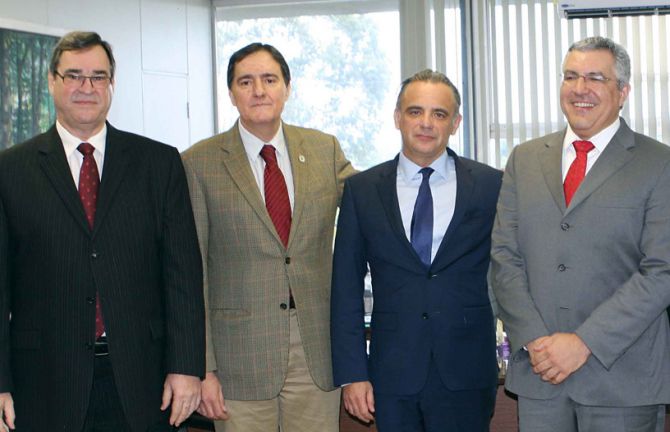
Left to right: OPAS Representative in Brazil Joaquin Molina; Vice-Minister of Health Jarbas Barbosa; UNAIDS Deputy Executive Director, Luiz Loures; and Minister of Health Alexandre Padilha. Credit: Luiz Philipe Leite/Brazil Health Ministry
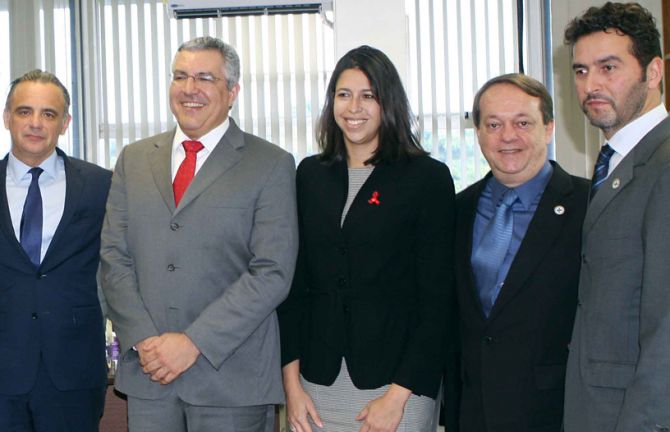
Left to right: UNAIDS Deputy Executive Director, Luiz Loures; Minister of Health Alexandre Padilha; UNAIDS Country Coordinator Georgiana Braga Orillard; Director National AIDS, STD and Viral Hepatitis Programme Fábio Mesquita; and Head of the International Affairs Office MoH Alberto Kleiman. Credit: Luiz Philipe Leite/Brazil Health Ministry
Feature Story
Brazil’s Minister of Health on country’s new innovative HIV initiative
01 November 2013
01 November 2013 01 November 2013The Minister of Health of Brazil, Alexandre Padilha met with UNAIDS Deputy Executive Director, Luiz Loures on the country’s new HIV strategy in Brasilia on October 31.
Later this year, Brazil is planning to launch a new approach to the HIV response. While the strategy’s plan to provide life-saving antiretroviral therapy (ART) to everyone has received widespread attention, Minister Padilha provided more details on two other innovative aspects of the programme.
The new strategy will focus HIV programmes on geographic regions where HIV prevalence is much higher than the rest of the country. It also plans to expand ART coverage by task shifting HIV treatment services from special clinics to primary health care clinics.
Quotes
All this will only be possible with a massive testing campaign. Innovative Brazilian-made rapid tests will be in the market in the first quarter of the year. This will make a difference to reach populations in remote areas such as the Amazon.
Brazil is at the forefront of the world’s HIV response and is a key player in ending the AIDS epidemic.

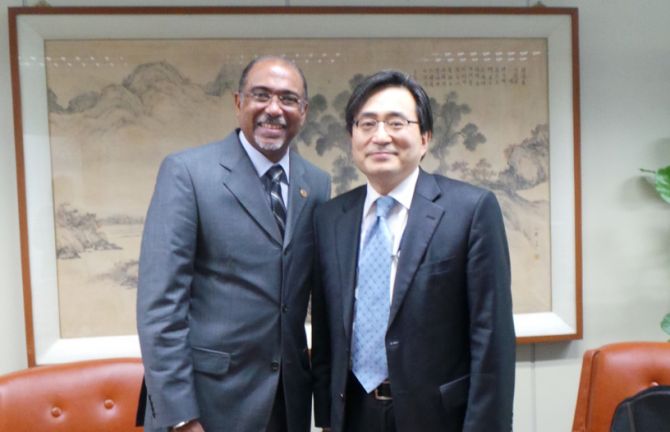
UNAIDS Executive Director Michel Sidibé (left) met with Republic of Korea's Deputy Foreign Minister for Multilateral Affairs, Shin Dong-ik. Seoul, 29 October 2013. Credit: UNAIDS
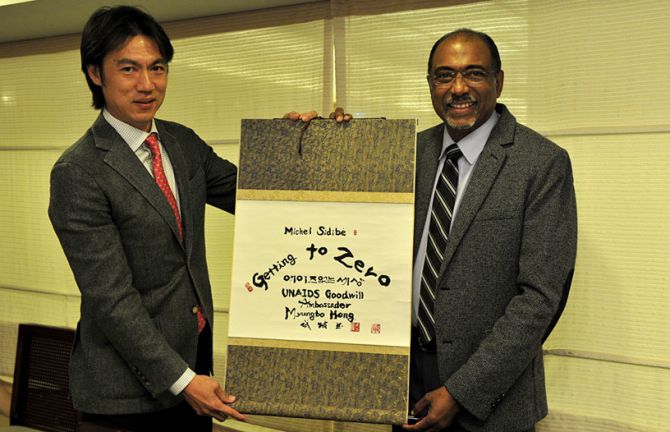
UNAIDS International Goodwill Ambassador, Myung-Bo Hong and Mr Sidibé. Seoul, 29 October 2013. Credit: UNAIDS
Feature Story
How Korea’s transformation could help strengthen global response to HIV
31 October 2013
31 October 2013 31 October 2013In recent years the Republic of Korea has transformed into a leading global powerhouse. It is the first major recipient of overseas development aid to become an important overseas donor itself and has become a model for economic and development progress.
Today, the Republic of Korea has one of the world’s largest global economies and is an active member of both the G20 and the Organisation for Economic Co-operation and Development. In a bid to learn from its experience and to use the lessons to further the global response to HIV, Michel Sidibé, Executive Director of UNAIDS made an important visit to the country to meet with some of the country’s leading political figures.
“Africa needs a knowledge economy and one of the best examples comes from the Republic of Korea,” said Mr Sidibé. “Korea can play a key role in helping countries in Asia and Africa to achieve the Millennium Development Goals.”
During a meeting with the Deputy Foreign Minister for Multilateral Affairs, Shin Dong-ik, Mr Sidibé highlighted the urgent need to extend access to HIV services to everyone in need. He also emphasised the historic opportunity to create an AIDS-free generation by preventing new HIV infections among children through increasing access to low-cost antiretroviral medicines and strengthening maternal-child health services. These global efforts, he said, needed the full support of the Republic of Korea to succeed. The Deputy Foreign Minister confirmed the Republic of Korea’s commitment to the AIDS response and to achieving the Millennium Development Goals (MDG’s) including MDG 6.
Joining Mr Sidibé on the visit was Han Young Sil, former president of Sookmyung Women's University and Special Advisor to UNAIDS Executive Director. She said that, "Past experience of Korean community empowerment was key for business and social transformation."
During his visit Mr. Sidibé also met with UNAIDS International Goodwill Ambassador, Myung-Bo Hong, Korean football star and Head Coach of the Korean National Football Team. As part of his HIV prevention work Mr Hong is teaming up with other footballers around the globe to support UNAIDS ‘Protect the Goal’ campaign, which seeks to create an AIDS-free generation by preventing new HIV infections among children.
“Mr Hong is a role model not just for youth but also for fans around the globe. His courage and support in mobilizing efforts for a world without HIV is invaluable,” said Mr Sidibé.